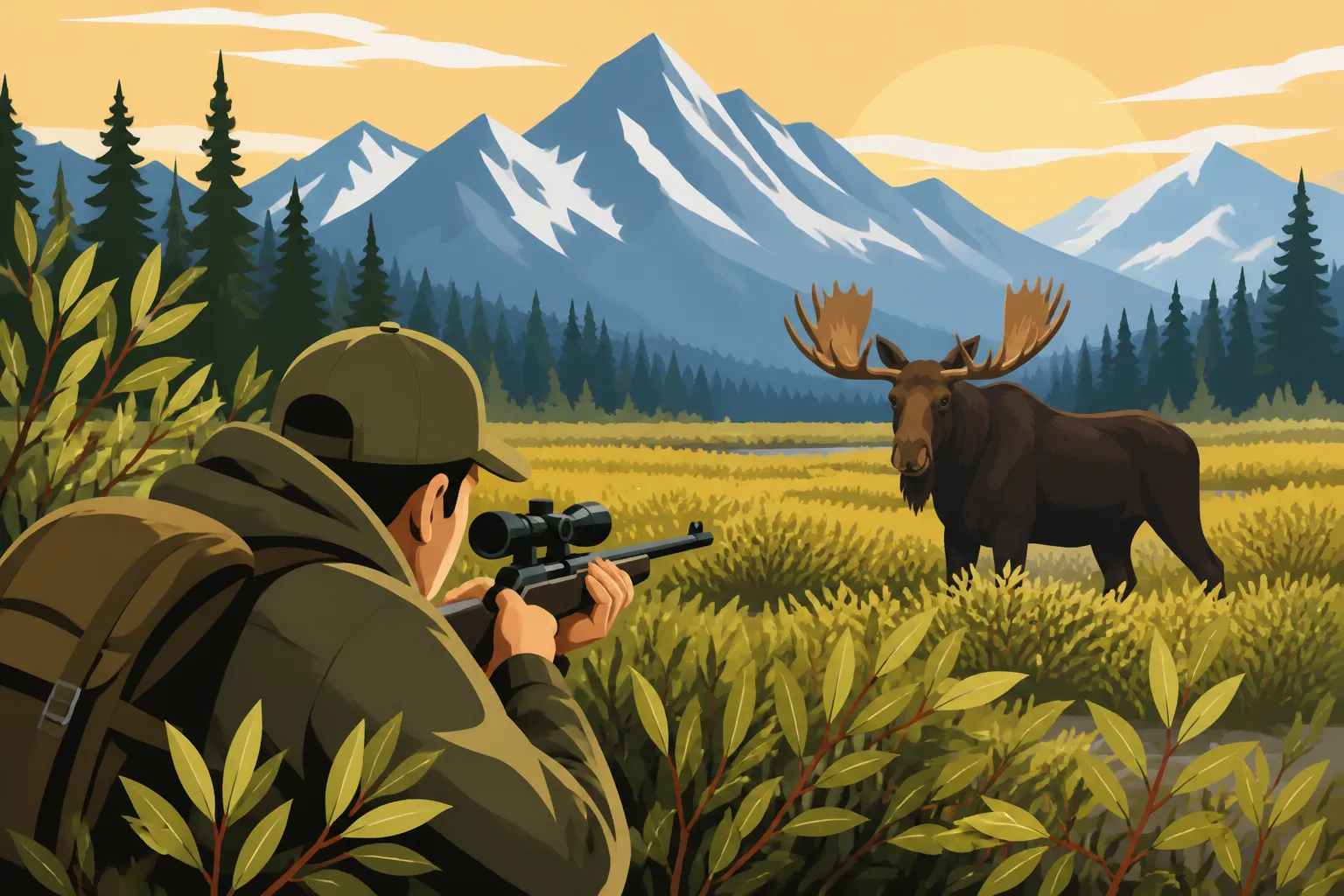
Hunting a Willow Flat in Moose Country
There's nothing quite like the immense challenge and equally immense reward of hunting British Columbia moose. Many hunters dream of calling in a massive bull, but the reality often involves slogging through some truly brutal terrain. One of the most common, yet often overlooked, habitats where these giants thrive is the willow flat. These dense, soggy, and often bug-infested areas can seem impenetrable, but they hold the key to finding success if you understand how to approach them. This guide will walk you through the nuances of hunting these productive, but tricky, moose havens, helping you strategize your next British Columbia adventure.
The Allure of Willow Flats for British Columbia Moose
Willow flats might not look like much to the casual observer — just a tangled mess of brush and wet ground. But for a moose, these areas are a five-star resort, offering everything they need to survive and thrive in British Columbia's vast wilderness. Understanding why moose gravitate to these areas is the first step in successfully hunting them.
Why Moose Love Willow Flats
Moose are creatures of comfort, and willow flats provide an abundance of it, especially when it comes to food and security. Imagine a buffet spread specifically designed for an animal that needs to consume vast quantities of browse daily. That's a willow flat to a moose.
Willows, as the name suggests, are the predominant plant species here, and they are a primary food source for moose. They'll strip the bark and leaves, especially the tender new growth. But it's not just willows; these flats often contain a diverse mix of other palatable browse species like dogwood, birch, and aspen saplings. In addition, the perpetually wet ground in many willow flats means aquatic vegetation can flourish in any small ponds or boggy areas, offering another highly nutritious food source that moose absolutely crave. They'll often wade into these shallow waters, sometimes completely submerging their heads, to graze on lilies and other plants. It’s a literal smorgasbord that keeps them fed and healthy, allowing them to put on the bulk needed to survive tough winters and grow those impressive antlers.
Beyond the food, willow flats offer unparalleled cover and security. The dense, interwoven branches of mature willows create thickets so dense that an animal as large as a moose can seemingly disappear into them. This provides excellent concealment from predators and hunters alike, allowing them to bed down feeling secure. These dense thickets also offer fantastic thermal cover, protecting them from harsh winds, driving rain, and intense sun, depending on the season. During the heat of the rut, or on a particularly warm early season hunt, a moose will seek the shade and cooler air trapped within these dense, moist environments.
Finally, willow flats are almost always associated with water. Whether it's a slow-moving creek, a series of beaver ponds, or simply perpetually saturated ground, water is never far away. Moose need a lot of water, not just for drinking, but also for staying cool. In summer, they'll often wallow in muddy areas or stand in shallow water to escape biting insects and regulate their body temperature. This constant access to hydration is a non-negotiable for moose, and willow flats deliver.
Identifying Productive Willow Flats
You can't just stumble into any patch of willows and expect to find moose. There are distinct topographical and environmental clues that point to truly productive willow flats, and a little pre-season reconnaissance can save you a lot of time and effort in the field.
Topographical maps and satellite imagery are your best friends here. Look for flat, low-lying areas, especially those adjacent to drainages, old creek beds, or natural depressions where water would collect. These areas often appear as distinct green or brownish-green patches on satellite images, standing out from surrounding timber or more open terrain. Tools like onX Hunt are incredibly valuable for this, allowing you to zoom in on specific areas, mark potential hot spots, and get a feel for the surrounding topography. You might notice fingers of willows extending from a main river system, or broad, flat benches in a valley bottom that look like prime moose habitat. Scouting a British Columbia Management Unit Online can provide a good foundation for this type of digital homework.
Once you've identified potential spots on a map, the real detective work begins on the ground. You're looking for clear signs of moose activity. Big, tell-tale tracks in the soft mud or damp earth are a dead giveaway. Look for fresh rubs on small trees or saplings, where bulls have scraped their antlers, often leaving behind a distinct scent or damaged bark. Droppings, particularly fresh ones, will confirm recent presence. Also, keep an eye out for "moose highways" – well-worn trails leading into and out of the densest parts of the willow flat. These paths often connect feeding areas to bedding sites or water sources. The more sign you find, the higher the probability that the willow flat is a consistent producer for moose.
| Sign Type | What it Looks Like | What it Tells You |
|---|---|---|
| Tracks | Large, cloven hooves, often deep in mud or soft ground | Recent moose presence, direction of travel. |
| Droppings | Oval pellets, often in piles; green/fresh means recent | Moose are feeding or bedding in the area. |
| Rubs | Scraped bark on small trees/saplings, especially willows | Bull moose marking territory or shedding velvet. |
| Browsing | Stripped leaves or bark on willows, aspen, dogwood | Active feeding area, indicates food source preference. |
| Beds | Depressions in dense cover, often with fresh droppings | Moose are bedding in the area for security or rest. |
| Wallows | Muddy depressions, often with disturbed vegetation | Moose using area to cool down or escape insects. |
Effective Scouting and Hunting Tactics in Willow Country
Hunting willow flats requires a specific set of strategies, both before and during the season. These areas are not for the faint of heart or those unwilling to get a little (or a lot) wet and dirty. But with careful planning and the right approach, they can be incredibly productive.
Pre-Season Reconnaissance
Your digital scouting, as mentioned, is paramount. Before you even set foot in the woods, spend hours poring over satellite imagery, paying close attention to terrain features. Not only can you identify the willow flats themselves, but you can also map out potential access routes. Are there old logging roads nearby? Is there a creek you can navigate, perhaps with a jet boat, to reach a remote flat? Jet Boat Access on British Columbia Rivers is something to consider if you're looking for less pressured areas. Marking these points on your onX Hunt app or other GPS device will be invaluable when you're actually in the field. Look for transition zones – where the dense willows meet more open timber, a hillside, or a creek bank. These are often travel corridors.
Early season physical scouting, ideally well before hunting pressure begins, allows you to verify what you saw on the maps. Walk the edges of these willow flats. You don't always need to dive into the densest parts to find good sign. Look for those "moose highways" that lead into and out of the thick stuff. Identify where they’re feeding most heavily. Are there specific pockets of younger willows they prefer? What are the dominant wind directions in that valley? All this information contributes to building a solid hunting plan.
It's also crucial to understand how moose movement patterns change throughout the day and with changing conditions. Early mornings and late evenings are typically prime feeding times, when moose are more likely to be out browsing on the fringes of the willow flats or in any associated open areas. During the middle of the day, especially if it's warm, they'll often retreat deep into the thickest cover to bed down and escape insects. Weather can also play a huge role; cooler, overcast days might see them more active for longer periods, while strong winds can make them skittish and harder to pinpoint. Knowing these patterns helps you time your approach. Glassing a Willow Flat for Moose can give you insights into observation strategies.
On-The-Ground Hunting Strategies
Once the season opens, approaching a willow flat requires patience, stealth, and often a willingness to adapt. The tactics you employ will depend on the time of year, whether you're alone or with a partner, and the specific terrain.
Still-hunting the edges is a classic, effective strategy. Instead of crashing through the densest part of the flat, which is noisy and often unproductive, slowly and meticulously work the perimeter. Use the wind to your advantage, always moving into it or with a crosswind to keep your scent from blowing ahead. Take a few steps, then pause for several minutes, scanning every shadow and listening intently. Moose are masters of camouflage, and their dark hides can blend seamlessly into the shadows of the willows. Look for horizontal lines (their back) in a world of vertical branches. Focus on small openings or where the willows thin slightly. This method works well for sneaking up on a moose feeding just inside the cover.
Calling moose can be incredibly effective, especially during the rut. The sounds of a cow in estrus or a bull grunting can draw an inquisitive moose out of the thick cover. Position yourself at the edge of the willow flat, preferably with some open ground in front of you for a shot, and call intermittently. If you get a response, be patient. A bull might circle downwind to scent-check before revealing himself, or he might take his sweet time crashing through the brush. Decoy strategies can also work, giving an approaching bull something to focus on other than you. Calling Moose in the Rut goes into more detail on this exciting technique. A general rule of thumb is to call, then wait much longer than you think you should before calling again or moving. Moose don't rush.
Finally, consider stand hunting or setting up ambush points. If you've done your pre-season scouting and identified specific travel corridors, feeding areas, or water sources within or leading into a willow flat, setting up a portable stand or finding a natural ground blind can be highly productive. This is particularly effective if you can overlook a large section of the flat or a well-used trail without being detected. Get in well before first light, set up downwind, and be prepared to sit patiently for several hours. This strategy minimizes your scent and movement, increasing your odds in these challenging environments.
Overcoming the Challenges of Willow Flat Hunts
Willow flats are not for the faint of heart. They present unique challenges that can test a hunter's patience, physical endurance, and mental fortitude. Being prepared for these obstacles is just as important as knowing where to find the moose.
Navigating Dense Cover and Wet Terrain
The sheer density of willow flats means you'll be pushing through thick brush, often for long stretches. This isn't quiet work. Proper gear is crucial:
- Footwear: Forget your lightweight hiking boots. You need waterproof, high-top boots or even rubber boots (hip waders or chest waders can be a lifesaver in certain areas). Your feet will get wet otherwise.
- Outerwear: Durable, waterproof, and snag-resistant clothing is essential. Layers are key, as you'll be working hard and sweating, even in cool weather, only to stop and get cold quickly.
- Navigation: A GPS device like your phone with onX Hunt maps downloaded, or a dedicated handheld unit, is non-negotiable. It's incredibly easy to get disoriented in thick willows where landmarks are few and far between. Always mark your starting point and be aware of your route. Finding Open Forest Roads in British Columbia can help you get to your starting point, but the real navigation begins once you leave the road.
Moving silently through these thickets is a constant battle. Take your time, step over logs instead of on them, and try to weave through branches rather than breaking them. Every crack and snap sends a warning signal. If you find yourself in truly impenetrable sections, it might be wiser to circle around, even if it means a longer path.
The wet ground is another significant hurdle. You'll encounter deep mud, boggy sections that try to suck your boots off, and shallow ponds that can quickly become deep holes. Test the ground ahead with a hiking pole or a sturdy stick. Be prepared for your pace to slow considerably. This isn't a quick walk; it's a grind.
Moose Recovery and Meat Care
So, you've done everything right, and a bull moose is down in the middle of a willow flat. Congratulations! Now the real work begins. A mature British Columbia bull moose is an enormous animal, weighing easily over a thousand pounds. Getting that much meat out of thick, wet terrain is one of the toughest parts of any moose hunt.
First, acknowledge the challenge. You are not dragging this animal whole. It's simply not feasible. Field dressing and quartering are not just recommended; they are absolutely necessary. You'll need a sharp knife, a saw, and a game bag for each quarter. Be prepared to spend a significant amount of time, possibly hours, breaking down the animal. This is exhausting work, often done on your knees in difficult conditions. In some parts of British Columbia, especially those with high grizzly bear populations, being efficient and vigilant during this process is critical. Quartering a Moose in Grizzly Country is a must-read for anyone hunting in bear country.
Packing out the meat is the next major hurdle. Depending on the distance and terrain, you might consider options like a game cart (if the terrain allows), a heavy-duty sled in winter, or, most commonly, multiple trips with a strong frame pack. Each quarter of a mature moose can weigh well over 100 pounds. This is where your physical fitness will be truly tested. If you're fortunate enough to be near a waterway, Getting a Moose Out on a British Columbia River might be an option, but often it's old-fashioned sweat equity. It's not uncommon for a single moose to require several full days of hard packing to get all the meat safely out of a challenging willow flat. Always prioritize getting the meat cooled quickly and kept clean, especially in warmer early seasons. Meat Care in British Columbia's Warm Early Seasons can give you more tips on preserving your hard-earned harvest.
Disclaimer
This article is for general informational purposes only and does not constitute professional advice. Laws, prices and regulations vary by location and change over time. Consult a qualified professional for guidance on your specific situation.