British Columbia Units You Can Road Hunt
It’s a common frustration for many hunters in British Columbia: the idea of epic backcountry adventures is appealing, but not everyone has access to horses, boats, or bush planes to get into those remote spots. Many of us rely on the vast network of roads to access hunting grounds. This guide is for those who need to know which British Columbia units offer solid road access and how to effectively hunt them, legally and ethically.
Understanding "Road Hunting" in British Columbia
The term "road hunting" can conjure up images that might not align with legal or ethical hunting practices. It’s important to clarify what this really means in the context of British Columbia. For most of us, it refers to accessing a hunting area via a vehicle on a road, then hunting away from that road, often on foot.
What "Road Hunting" Actually Means (and Doesn't)
Let's get this straight right off the bat: in British Columbia, it is illegal to shoot from a motor vehicle or from or across the travelled portion of a public highway or paved road. Period. This isn't about driving around with a rifle loaded on the dash, ready to blast the first deer you see. That's a surefire way to lose your hunting privileges and face serious fines.
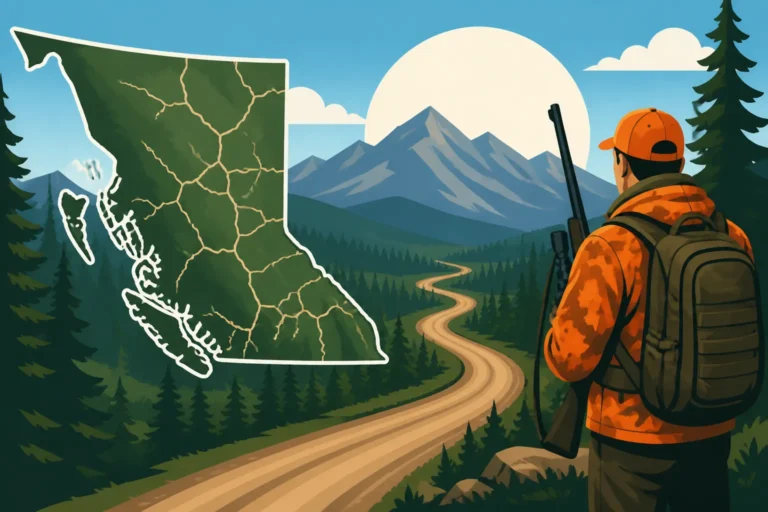
What we mean by "road hunting" is utilizing the extensive road networks – primarily Forest Service Roads (FSRs) – to drive into a general area, park your vehicle, and then hunt on foot in the surrounding timber, clearcuts, or open slopes. It's about access, not about hunting from the road itself. Many hunters find themselves limited to this kind of access, whether due to time constraints, physical limitations, or simply the lack of other means of transportation. It's a legitimate and often productive way to hunt, as long as you understand and respect the regulations and ethics involved. Think of the road as your highway to opportunity, not the hunting grounds themselves. The real hunting begins when you step out of your truck and into the bush, looking for Reading Blacktail Sign in Wet Ground or Glassing an Interior Hillside for Mule Deer.
Navigating British Columbia's Extensive Forest Service Road Network
British Columbia boasts a truly immense web of Forest Service Roads, stretching into almost every corner of its vast landscape. These gravel arteries are the lifeblood for hunters who don't have heli-access or a string of pack horses. However, navigating them isn't always straightforward. You'll encounter everything from well-maintained, active logging roads to overgrown, deactivated spurs that haven't seen a vehicle in decades.
Active logging roads present their own set of challenges and dangers. Always be aware of industrial traffic – large trucks moving at speed, often without warning. Using a VHF radio on the appropriate industry channel is crucial for safety. You’ll frequently see signs indicating channels, and ignoring them can put you and others at serious risk. Many FSRs, especially the older ones, are deactivated. This means they might be trenched, bermed, or have culverts removed, making vehicle access impossible beyond a certain point. These deactivated sections, however, often offer fantastic walk-in hunting opportunities, as they deter those unwilling to go the extra mile on foot. Before you head out, it's a good idea to research the condition of the roads in your chosen unit. Tools like onX Hunt are incredibly valuable for this, allowing you to scout satellite imagery and see road networks, helping you plan your approach and identify potential walk-in areas long before you leave home.
Identifying Promising Road-Accessible Units Across British Columbia
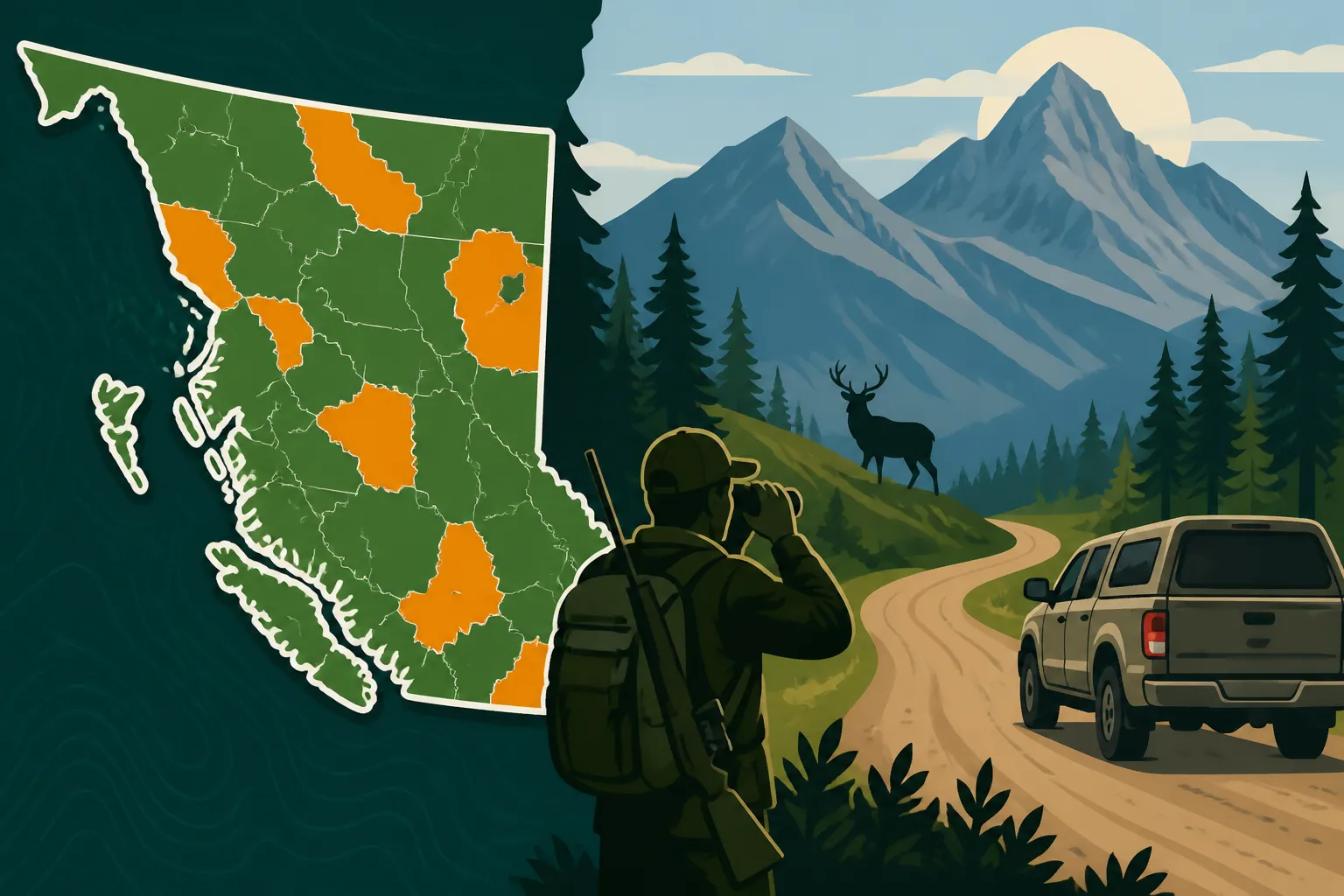
While practically any Management Unit (MU) in British Columbia will have some road access, certain regions and units are far more conducive to what we're calling "road hunting." These are areas where the FSR network is extensive, relatively well-known, and consistently provides access to productive habitat.
Interior Plateau Units for Deer and Moose
The Interior Plateau, including vast swaths of the Cariboo and Omineca regions, and parts of the Thompson-Okanagan, is a prime example of road-hunting country. Here, the landscape is often characterized by rolling hills, lodgepole pine and Douglas fir forests, and scattered clearcuts and burns. This habitat is excellent for Mule Deer Across British Columbia's Interior and Moose in British Columbia's Interior and North. The road network in these areas is generally extensive, originally built for logging and forestry operations that have been ongoing for decades.
You'll find countless main FSRs with numerous side spurs, many of which are now deactivated. These older, overgrown spurs are goldmines for walk-in hunters. Game often utilizes the edges of these clearings and the timbered slopes around them. Deer, in particular, will feed in newer clearcuts and retreat into the thicker timber during the day. For moose, look to willow bottoms, beaver ponds, and areas with young growth along cutblock edges. Expect to see other hunters in these accessible areas, especially during opening weekends. Patience and a willingness to explore beyond the immediate roadside are key. Don't be afraid to pull over, shut off the engine, and just listen and glass for an hour before deciding where to walk. Checking British Columbia Moose Season Dates for your chosen MU is essential, as some areas have stricter regulations or are LEH (Limited Entry Hunt) only for moose.
Kootenay and Northern Rockies for Elk and Bears
Moving eastward into the Kootenays and northward into the Northern Rockies, the terrain becomes more mountainous, but the FSR network remains a critical access point. These regions are renowned for Rocky Mountain Elk in British Columbia's East and Black Bears Across British Columbia, as well as moose in many areas. The roads here often follow valley bottoms, climbing steep slopes to access higher elevations or connect drainages.
In the Kootenays, the vast tracts of Crown land are crisscrossed by FSRs that lead into prime elk and bear country. You might find yourself driving up a steep gravel road, with clearcuts on either side, offering excellent glassing opportunities. Many of these roads eventually give way to deactivated sections or simply end at a saddle or high basin, creating perfect starting points for extended hikes. When hunting elk in these areas, focus on transition zones between timber and open areas, especially during the rut when calling can be effective. Bugling to a Roosevelt Elk Bull or Calling Moose in the Rut can bring game into closer range, sometimes surprisingly close to where you parked your truck. Bear hunting, particularly in spring, can be very successful along these road systems, as bears often emerge from dens and feed on new growth on south-facing slopes or in clearcuts. Remember Bear Safety While Hunting in British Columbia, as these areas are also home to grizzlies.
Coastal and Island Accessibility for Blacktail and Bears
While often known for its rugged, boat-access-only wilderness, British Columbia's Coast and Vancouver Island also offer significant road-hunting opportunities, especially for Black-Tailed Deer on British Columbia's Coast and black bears. The density of logging roads on Vancouver Island, for example, is truly staggering, though much of it is on private forest land that may require permits or has restricted access.
On Vancouver Island, particularly in the central and northern parts, extensive FSRs traverse second-growth timber blocks. Many of these roads are actively logged, requiring vigilance, but plenty of older roads and spurs provide quiet walk-in access. Blacktail deer thrive in this mosaic of clearcuts and regenerating forest. Hunting a British Columbia Island Clearcut Edge or Still-Hunting Second Growth for Blacktail are classic techniques. The thick brush and consistent rainfall make for challenging hunting, but the deer are there. For coastal black bears, estuaries and berry-rich clearcuts accessed by road can be highly productive in spring and fall. These areas are also very wet, so being prepared for Hunting in British Columbia's Coastal Rain is not just smart, it's essential for comfort and safety. Remember to check private land access rules, as many Vancouver Island roads are gated or require permits from companies like Mosaic Forest Management.
Strategies for Successful Road Hunting (Ethically and Legally)
Just because you're accessing your hunting area by road doesn't mean it's easy. Success in "road hunting" requires skill, preparation, and an understanding of animal behaviour in these accessible environments.
Effective Scouting and Map Reading
The key to successful road hunting lies in thorough pre-hunt scouting and meticulous map reading. Before you even set foot in the field, you should be pouring over maps, both topographical and satellite imagery. Tools like onX Hunt and GoHunt are invaluable for this. They allow you to identify potential access points, note deactivated roads, locate clearcuts, and pinpoint benches or draws that might hold game. Look for areas with diverse habitat – old growth adjacent to new clearcuts, natural meadows, water sources like creeks or beaver ponds. These are the places animals will frequent.
Satellite imagery can reveal recent logging, which might not be marked on older paper maps, creating new opportunities. Pay attention to contour lines on topo maps to understand the steepness of terrain; a road that looks flat on a basic map might be climbing a serious grade. Identify bottlenecks, natural funnels, or areas where different types of cover meet. These are often high-traffic zones for game. Using these resources, you can mark potential walk-in routes, plan escape routes, and identify areas that might see less pressure because they require a bit more effort to reach from the road. Having a good understanding of the topography before you go can save you countless hours of unproductive hiking. Make sure to consult the official BC government resources for Scouting a British Columbia Management Unit Online to verify regulations and boundaries.
Walk-In Hunting from Roadside Access
This is the core of ethical and legal "road hunting." Once you've driven in and found a promising area, the real work begins when you leave the vehicle. Park your truck well off the main thoroughfare, and if possible, in a spot that isn't immediately obvious to every passing vehicle, especially if you plan to be gone for a while. Your goal is to get away from the immediate road edge and into the cover where game feels safe.
This means quiet foot travel. Still-hunting, where you move slowly, stopping frequently to observe and listen, is incredibly effective. Focus on the edges of clearcuts, following game trails through the timber, or working along benches and ridges. Use your binoculars constantly to pick apart the shadows and look for tell-tale signs: an antler tip, the horizontal line of a deer's back in vertical timber, or the black sheen of a bear's hide on a berry slope. Animals in road-accessible areas are often warier, accustomed to vehicle noise and human presence. Moving quietly and using the wind to your advantage are paramount. Remember, the further you walk from the road, the less hunting pressure you're likely to encounter. Don't be afraid to commit to a mile or two walk down a deactivated road or into a drainage. This slight extra effort often puts you into areas where deer and moose are more relaxed.
Managing Pressure and Finding Undisturbed Areas
One of the biggest challenges in road-accessible units is dealing with other hunters. On opening weekends, popular FSRs can resemble a small town parade. To counter this, you need strategies to find pockets of undisturbed game. One common tactic is to simply drive further. Many hunters stop at the first promising clearcut or pullout they see. By pushing deeper into the road system, especially on less-maintained or deactivated sections, you can often get past the initial wave of hunters.
Another strategy is to look for those overgrown, trenched-off spur roads mentioned earlier. While they might block vehicle access, they often become excellent walking trails that lead to untouched areas. Many hunters aren't willing to walk more than a few hundred yards from their vehicle, so committing to a longer hike on one of these spurs can pay dividends. Topographical features can also help. Look for steep ravines, benches, or dense timber patches that are difficult to access directly from the road. Animals will often retreat to these less-pressured areas. Sometimes, simply choosing to hunt mid-week instead of on a busy weekend can make all the difference, as can hunting later in the season when many fair-weather hunters have packed it in. Understanding British Columbia Deer Season Dates by Region can also help you plan to hunt less popular times or units.
Here's a quick overview of some common road-accessible unit types and their characteristics:
| Unit Type/Region | Typical Road Conditions | Primary Game Species | Challenges | Opportunities |
|---|---|---|---|---|
| Cariboo/Omineca (Interior) | Extensive FSRs, many deactivated | Mule Deer, Moose, Black Bear | High pressure, dust, active logging | Abundant game, good walk-in access |
| Kootenays (East) | Steep FSRs, valley bottom access | Elk, Moose, Black Bear, Whitetail | Steep terrain, grizzly country, snow | Diverse species, remote feeling quickly |
| Thompson-Okanagan (Interior) | Well-maintained FSRs, some private | Mule Deer, Whitetail, Black Bear | High recreational use, private land | Good for shorter hunts, varied terrain |
| Vancouver Island (Coast) | Extensive logging roads, many gated | Blacktail Deer, Black Bear | Private land restrictions, thick brush | Dense blacktail populations, coastal bears |
| Northern Rockies (North) | Limited FSRs, long distances | Moose, Caribou (limited), Bears | Remote, long drives, fewer main roads | True wilderness feel, less pressure in some areas |
Disclaimer
This article is for general informational purposes only and does not constitute professional advice. Laws, prices and regulations vary by location and change over time. Consult a qualified professional for guidance on your specific situation.