Mule Deer Across British Columbia’s Interior
The thrill of chasing mule deer in British Columbia's vast interior is often matched only by the sheer frustration of trying to understand their complex movements and elusive habits. Many hunters feel overwhelmed by the sheer scale of the landscape and the ever-changing conditions, wondering how to consistently locate these magnificent animals. This comprehensive guide aims to demystify mule deer hunting in the diverse interior regions of BC, providing seasoned insights and practical strategies to help you navigate the terrain, interpret their behaviour, and ultimately find success in your pursuit.
Understanding British Columbia's Interior Mule Deer
British Columbia's interior is a truly special place, a mosaic of dry grasslands, sprawling lodgepole pine forests, rugged mountains, and deep river valleys. It's also home to some of the most sought-after mule deer in North America. These deer are incredible adaptations to a sometimes harsh, often beautiful environment, and understanding their fundamental biology is the first step toward becoming a more effective hunter.
Distinct Characteristics and Subspecies
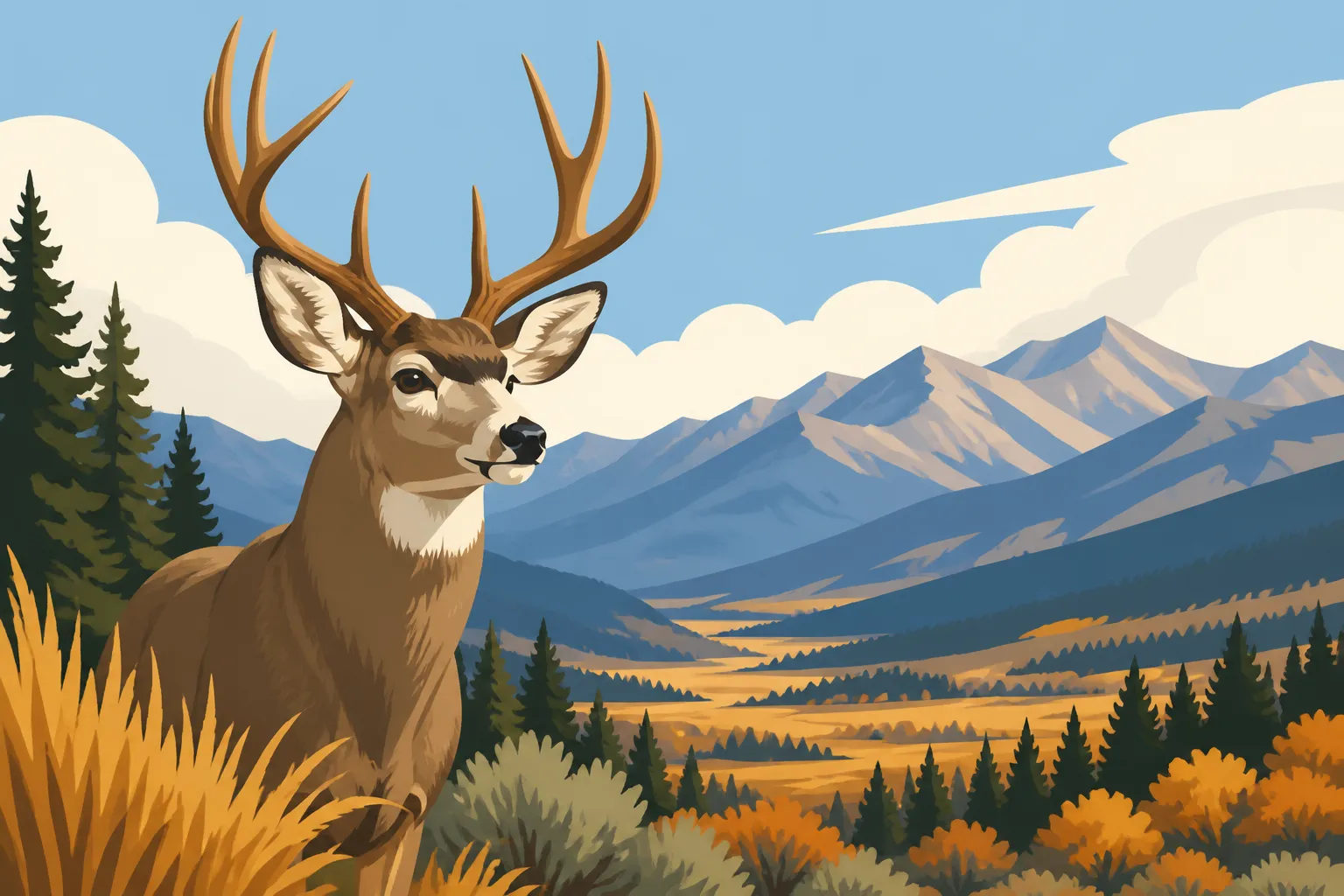
When we talk about mule deer in British Columbia's interior, we're primarily referring to the Rocky Mountain Mule Deer (Odocoileus hemionus hemionus). These are the classic "mulies" many hunters envision: large-bodied, with impressive antlers that typically fork and re-fork, giving them a distinct appearance from their whitetail cousins. They get their name from their large, mule-like ears, which are constantly swiveling to pick up sounds across vast landscapes. Their coat colour can vary, often a grayish-brown in winter, lightening to a reddish-brown in summer, with a distinctive white rump patch and a thin, black-tipped tail that sets them apart from the all-white flags of whitetails.
What makes them so fascinating is how perfectly they fit into their interior niches. Unlike the dense, almost claustrophobic coastal forests where blacktail thrive, interior mule deer are often found in more open, broken country. Their stocky build and powerful legs are perfectly suited for navigating steep, rocky slopes and covering vast distances across plateaus. Knowing what a British Columbia mule deer weighs can give you an idea of the kind of animal you're pursuing; mature bucks can easily tip the scales well over 200 pounds live weight, with some giants pushing 300 pounds in prime habitat. These are not small animals, and packing one out often reminds you of their impressive size and the effort required.
Population Trends and Distribution
British Columbia's interior mule deer populations have seen their share of ups and downs over the years. Like many big game species, their numbers are influenced by a complex interplay of habitat quality, predator populations (especially wolves and cougars), severe winters, and hunting pressure. Historically, regions like the Okanagan, Cariboo, and parts of the Kootenays have been renowned for their robust mule deer numbers, and while some areas have experienced declines, others are holding strong or even seeing slight increases.
The key is understanding that "the interior" isn't a monolithic entity. What's happening with deer populations near Kamloops might be very different from the situation north of Prince George or in the East Kootenays. Localized factors like recent wildfires, beetle-killed pine stands, or intensive logging can drastically alter habitat, sometimes creating temporary booms in forage but also potentially displacing deer or increasing their vulnerability to predators. Drought conditions in the dry interior can also impact forage availability, affecting overall herd health. It's a dynamic system, and hunters need to stay informed about specific management units. This is where resources like the annual regulations synopsis and local conservation officer reports become invaluable. Being able to read a British Columbia regional boundary and understand what each of the nine regions covers is essential for any serious hunter, as regulations and population dynamics can change significantly from one region to the next.
Dietary Habits and Nutritional Needs
Mule deer are primarily browsers, meaning their diet consists mainly of woody shrubs, forbs, and broad-leafed plants, rather than grasses. This is a critical distinction that helps us understand where to find them. While they will graze on grasses, especially tender new growth in spring, their preferred menu includes things like willow, aspen, saskatoon, chokecherry, serviceberry, and various types of sagebrush. In the dry interior, they also rely heavily on bitterbrush and junipers, especially during the lean winter months.
Their dietary needs drive their seasonal movements. They need a variety of nutritious forage to grow those impressive antlers and maintain their body condition, especially leading into the rut and through winter. What mule deer eat in the dry interior is a finely tuned balance of available plants that provide the necessary protein, fats, and minerals. If you can identify these key forage species, you're halfway to identifying prime mule deer habitat. For instance, an area rich in recent growth from a past fire, interspersed with pockets of mature timber for cover, often creates an ideal environment. Understanding these feeding patterns is fundamental to effective scouting and placing yourself in areas where deer are actively foraging, providing opportunities for Spot-and-Stalk Mule Deer in British Columbia.
Key Habitats and Seasonal Movements
Mule deer in British Columbia's interior are masters of adaptation, constantly adjusting their movements and habitat use based on the changing seasons, food availability, and snow depths. Understanding these shifts is paramount to consistently finding success. It's not just about knowing where they are, but why they are there at a given time of year.
Summer Range and High Country
As the snow melts and the interior valleys green up, many mule deer, particularly mature bucks, will gravitate towards higher elevations. Their summer range often includes subalpine meadows, open timber patches, and steep, brushy hillsides in the mountains. Here, they can escape the heat of the lower elevations, find abundant, nutritious forage, and enjoy relative peace from human disturbance. You'll often find them utilizing north-facing slopes, which tend to hold moisture longer and offer cooler bedding sites. This is where you might find yourself Hunting British Columbia's Alpine in Early September.
During these warmer months, bucks are busy putting on weight and growing their antlers, which is a massive energy drain. They'll often be found in bachelor groups, taking advantage of the rich smorgasbord of forbs and shrubs. Glassing an alpine basin for rams is similar in technique to glassing for summer mule deer; it requires patience and good optics to pick apart distant slopes. The key is to think about food, water, and security. Alpine basins with small creeks, scattered timber for midday bedding, and a variety of green growth are prime spots. Don't be afraid to put in the miles and climb high; the rewards often include seeing some of the biggest bucks before they get wise to hunting pressure.
Fall Migration and Staging Areas
As autumn colours begin to paint the landscape and the first dustings of snow appear on the peaks, mule deer start to shift. This is the beginning of their migration from summer range to winter range, a critical period for hunters. Why mule deer move to winter range is driven by survival; as snow accumulates, it covers their primary food sources and makes travel difficult, pushing them to lower, more accessible elevations where browse is still available.
During this transition, deer will often "stage" in certain areas. These staging grounds are typically at mid-elevations, often along prominent ridges, benches, or on the fringes of large timber blocks. They might spend a few weeks in these areas, feeding heavily, gathering in larger groups, and becoming more visible as they prepare for the full descent. This is a fantastic time to hunt, as deer are often on the move and less settled than during the peak of summer or the depths of winter. Look for areas with a mix of dense cover for bedding and open areas with good browse. Burned slopes two years on can be goldmines during this period, as new growth provides excellent forage. Accessing these areas often means navigating British Columbia's logging road network, which can provide excellent access but also brings its own challenges.
Winter Range and Survival Strategies
Once heavy snow truly sets in, mule deer are pushed down to their critical winter ranges. These are typically lower elevation, south-facing slopes, river bottoms, and lower benches that shed snow faster and offer more accessible browse. Areas with abundant bitterbrush, juniper, and Douglas fir stands are particularly important, as these provide both food and thermal cover. For example, Hunting an Interior Douglas Fir Bench can be very productive as these stands offer crucial protection from harsh winds and deep snow.
Survival on winter range is all about conserving energy. Deer will move less, often bedding down for extended periods, and their diet becomes more restricted to less palatable but readily available browse. This is where severe winters can be devastating for populations. For hunters, knowing these winter ranges is vital, as deer will often arrive here before the general open seasons close. However, it's also important to respect these areas and ensure ethical hunting practices, as deer are often at their most vulnerable. Understanding how elevation moves British Columbia game is key; a few hundred feet in elevation can mean the difference between deep snow and an accessible, snow-free feeding area.
Effective Scouting Strategies for Interior Mule Deer
Scouting is undeniably the backbone of successful mule deer hunting in British Columbia's vast interior. You can't just wander aimlessly and expect to consistently find mature bucks. It takes a strategic approach, combining modern technology with boots-on-the-ground effort.
Utilizing Digital Tools and Maps
In today's hunting world, digital mapping applications are absolute game-changers, especially in a complex landscape like BC's interior. Platforms like GoHunt, Gaia GPS, and even Google Earth are indispensable for pre-season scouting. They allow you to virtually "walk" the terrain from the comfort of your home, identifying potential habitat, access points, and glassing knolls.
When using these tools, focus on several key layers:
- Topography: Identify benches, ridges, draws, and saddles that deer might use for travel or bedding. Steep, broken country often holds deer.
- Vegetation: Look for different forest types, clearcuts (especially those 2-5 years old which provide excellent forage), burns, and areas with specific browse. You can often see the difference between dense timber and more open, mixed forest.
- Access: Pinpoint logging roads, deactivated roads, and old trails. This helps you plan your approach and understand potential hunting pressure. GoHunt, for instance, often integrates private land boundaries, which is crucial for respecting land access. Knowing how to use these tools for Scouting a British Columbia Management Unit Online is a fundamental skill.
By overlaying these features, you can develop a solid plan, marking waypoints for potential glassing points, bedding areas, and escape routes. This reduces wasted time in the field and helps you focus your efforts where deer are most likely to be. Remember, the goal isn't just to find a deer, but to find where the big deer are likely to be hiding, especially those elusive bucks that often seek out remote, challenging terrain.
On-the-Ground Reconnaissance
As valuable as digital scouting is, there's absolutely no substitute for getting your boots dirty. On-the-ground reconnaissance, ideally outside of hunting season, allows you to verify what you've seen on the maps and discover details a satellite image can't reveal. Drive the logging roads, hike into potential basins, and simply spend time observing the landscape.
Look for fresh sign: tracks, droppings, rubs on small trees (especially in the fall), and even shed antlers. Pay attention to how the terrain funnels deer movement. Are there natural corridors they use between bedding and feeding areas? What are the prevailing winds, and how might they influence a buck's bedding choice? Walk through potential bedding thickets to understand their density and sightlines. This firsthand experience allows you to confirm your digital hunches and identify the subtle nuances of the habitat. During the summer, you might even spot velvet-antlered bucks in their high country haunts, giving you a valuable head start on their location for the fall season. This is also a good opportunity to understand the local terrain, as getting meat out of steep British Columbia country is a significant challenge, and knowing your route beforehand can be a lifesaver.
Reading Sign and Interpreting Tracks
Learning to read deer sign is like learning a secret language that the animals leave behind. It tells a story about their presence, movements, and even their size and age.
- Tracks: Fresh tracks are, of course, the most obvious sign. Pay attention to the size and depth of the tracks. A mature buck will leave larger, deeper tracks than a doe or a fawn, especially if it's a heavy-bodied animal. Look for dewclaw marks (the small bumps behind the main hooves); often, only heavier animals or those moving quickly will press their dewclaws into the ground. A wide, splayed track can also indicate a large, heavy deer.
- Droppings: The size, shape, and consistency of droppings can tell you a lot. Pellets are common, but if you find larger, more elongated droppings, especially those that are clustered, it can indicate a bigger animal. The freshness (shiny and moist versus dry and dull) gives you an timeline.
- Rubs and Scrapes: In the late summer and fall, bucks will rub their antlers on small trees and shrubs to remove velvet and later to mark their territory and challenge rivals. Look for rubs on saplings, especially those that are well-established and repeatedly used. Bigger rubs on thicker trees usually indicate a larger buck. Scrapes, where a buck paws the ground and urinates, are also clear signs of buck activity, often found along travel corridors or near bedding areas.
By diligently practicing Reading Blacktail Sign in Wet Ground techniques, which often apply to mule deer, you'll develop an eye for these subtle clues. Piecing together these signs gives you a comprehensive picture of deer activity, helping you determine where the biggest interior bucks live and where they are currently spending their time.
Hunting Techniques for Different Terrain and Conditions
British Columbia's interior offers a diverse range of landscapes, and successful mule deer hunting often means adapting your approach to the specific terrain you're in. What works in a sprawling grassland bench won't necessarily be effective in dense timber, and vice-versa.
Spot-and-Stalk in Open Country
This is arguably the most iconic method for hunting mule deer in the interior, especially in the more open, sagebrush-dotted grasslands of the Okanagan or the high country alpine basins. Spot-and-stalk relies heavily on high-quality optics and immense patience.
- Glassing: Find a good vantage point that allows you to see a large area. Set up your spotting scope and binoculars, and meticulously pick apart every patch of cover, every shadow, every cluster of trees. Don't just scan; really study the landscape. Look for pieces of a deer – an ear, a leg, the glint of an antler. Many bucks will bed down in surprisingly open areas, relying on their camouflage and the vastness of the landscape for security. This method is perfectly suited for Glassing an Interior Hillside for Mule Deer or a sagebrush flat.
- The Stalk: Once you've spotted a deer, the real work begins. Plan your approach carefully, taking into account wind direction, terrain features that offer cover, and the deer's potential escape routes. Move slowly, deliberately, and be prepared to take a long time to cover what might look like a short distance on the map. Use all available cover – ridges, draws, scattered trees – to stay out of sight. A good stalk requires stealth, mental discipline, and often, crawling on your hands and knees to get within shooting range.
This technique is physically demanding but incredibly rewarding, offering a chess match between hunter and hunted. Success often hinges on your ability to remain unseen and unheard until the moment of truth.
Still-Hunting Timber and Thickets
While many mule deer are found in open country, some of the biggest, oldest bucks often seek refuge in dense timber, especially during periods of high pressure or after heavy snowfall. This is where still-hunting becomes incredibly effective. Still-hunting involves moving through the woods very slowly, pausing frequently to observe, listen, and simply be in the environment.
- Patience and Observation: Take one or two steps, then pause for several minutes. Use your binoculars to scan every tree trunk, every shadow, every clump of brush. Look for horizontal lines (a deer's back) in a vertical world, or a patch of hide that doesn't quite match the forest floor. Pay attention to deer ears swiveling. This is a technique that demands extreme focus and patience. You are essentially bringing the hunt to the deer in their secure cover.
- Wind and Sound: Always hunt into the wind to prevent deer from scenting you. Move as quietly as possible, picking up your feet and placing them down heel-to-toe to avoid breaking twigs. Wear quiet clothing. This can be challenging in dry, crunchy timber, but choose your steps wisely. Still-Hunting Second Growth for Blacktail can be very similar, as both species utilize dense cover, and the principles of quiet movement and keen observation are transferable.
This method often results in close-range encounters, where quick decision-making and shot placement are critical. It's a humbling way to hunt, teaching you to move with the forest rather than against it.
Hunting Near Water Sources and Feed Areas
Mule deer, like all living creatures, need water and food to survive. Identifying and focusing on these critical resources can be a highly effective hunting strategy, especially during drier periods or in specific habitats.
- Water Sources: In arid regions of the interior, such as parts of the Okanagan or Cariboo, water can be a limiting factor. Look for isolated springs, seeps, small ponds, or slow-moving creeks. During dry spells, deer will often visit these spots, particularly at dawn and dusk. Setting up near a discreet water source, downwind, and patiently waiting can pay off. It requires careful scouting to identify fresh tracks around the water to confirm deer activity.
- Feeding Areas: As discussed earlier, mule deer are browsers. Identify prime feeding areas with abundant preferred browse species like bitterbrush, aspen, willow, or young conifers. These could be recent burns (like Hunting a Burned Slope Two Years On), clearcuts that have started to regenerate, or natural shrubby draws. Deer will spend significant time in these areas, especially in the early morning and late evening. Hunting a British Columbia lakeshore for moose might not be the same animal, but the principle of targeting critical resources like water and lush browse along edges is very similar.
Always consider the deer's security. They won't feed in completely exposed areas for long. Look for feeding areas adjacent to dense cover where they can quickly retreat if disturbed. This interplay between food, water, and cover is the foundation of deer habitat use.
Gear Essentials for British Columbia Interior Mule Deer Hunting
The interior of British Columbia can throw a wide range of conditions at you, from scorching hot Indian summers to freezing early-season snowstorms. Having the right gear isn't just about comfort; it's about safety, effectiveness, and ensuring you can stay in the field as long as it takes to find success.
Optics: The Hunter's Best Friend
If there's one area where you absolutely should not skimp for interior mule deer hunting, it's optics. These aren't just tools; they're your primary means of locating deer in vast landscapes.
- Binoculars: A good pair of 10×42 or 12×50 binoculars is your constant companion. Look for clear glass, good low-light performance, and robust construction. You'll be using them constantly to scan hillsides, pick apart timber fringes, and confirm details. Brands like Vortex, Leica, Swarovski, and Zeiss are popular choices among serious hunters.
- Spotting Scope: For serious long-range glassing, especially in open country or high alpine, a spotting scope (e.g., 20-60×80) is invaluable. It allows you to resolve details at extreme distances, confirm if that distant speck is a deer, and, critically, evaluate antler size before committing to a grueling stalk. A sturdy tripod is equally important for stability.
- Rangefinder: Essential for ethical shooting, especially in the undulating terrain of the interior. Knowing the exact distance to your target helps with ballistic compensation and ensures a clean shot.
The patience to sit and thoroughly glass an area is often the single most important skill for mule deer hunting in BC's interior, and quality optics are what make that skill possible.
Footwear and Clothing for Variable Weather
British Columbia's interior weather is notoriously unpredictable. You can experience all four seasons in a single day, or certainly over a multi-day hunt. Layering is not just a suggestion; it's a necessity.
- Footwear: Your boots are your foundation. Invest in comfortable, supportive, waterproof, and breathable boots that are well broken in. If you're planning on covering significant ground in steep terrain, consider a boot with good ankle support and a stiff sole. For a hunt involving Horseback Access to British Columbia's Alpine, your boot choice might be slightly different to accommodate stirrups, but still prioritize comfort for when you're dismounted. Many experienced hunters prefer models from Kenetrek, Crispi, or Schnee's.
- Layered Clothing: Start with a moisture-wicking base layer (merino wool or synthetic). Add an insulating mid-layer (fleece or synthetic puffy jacket). Top it off with a waterproof and windproof outer shell. This system allows you to add or shed layers as temperatures and activity levels change. Don't forget a warm hat and gloves, even in early fall, as evenings can get very cold. In September, hunting above timberline in cold weather can rapidly become dangerous without proper layering. Camouflage patterns should match the local environment, but a good argument can also be made for solid earth tones, prioritizing functionality over fashion.
- Rain Gear: "Waterproof" often isn't truly waterproof for long in BC. Look for high-quality rain gear with Gore-Tex or similar technology that can withstand sustained downpours. Staying dry is critical for staying warm and avoiding hypothermia.
Being prepared for anything from warm sunshine to driving rain and snow is crucial for staying comfortable and safe in the backcountry.
Weapon Choices and Considerations
The choice of weapon for mule deer in British Columbia's interior largely depends on personal preference, hunting style, and season.
- Rifles: For most rifle hunters, a flat-shooting cartridge capable of handling shots from 100 to 400+ yards is ideal. Popular choices include .270 Win, .30-06, 7mm Rem Mag, .300 Win Mag, and 6.5 PRC. Ensure your rifle is sighted in accurately and that you practice shooting from various field positions, including prone, kneeling, and using shooting sticks. Legal rifle calibres for big game in BC start at .23 calibre and must use an expanding bullet. Remember, British Columbia's blaze orange rules require hunters to wear blaze orange during certain rifle seasons.
- Bows: For archery hunters, a compound or recurve bow with sufficient draw weight (minimum 40 lbs for deer in BC) is required. Practice extensively at various ranges, and ensure your broadheads are sharp and flying true. Archery hunting often requires getting much closer to the animal, demanding an even higher level of stealth and patience. Understanding when British Columbia's archery season opens is crucial for planning.
- Muzzleloaders: Muzzleloader hunting can be a challenging and rewarding pursuit. British Columbia has specific muzzleloader rules for big game, so be sure to check the regulations. Like archery, it often requires closer ranges and a deeper understanding of the animal's habits.
Regardless of your weapon, ethical hunting demands proficiency. Know your effective range, practice regularly, and always ensure you have a clean, humane shot. Pack sufficient ammunition and tools for minor repairs or adjustments in the field.
The Rut and Post-Rut Hunting Opportunities
The rut is often considered the holy grail for big game hunters, and for good reason. Mule deer bucks, usually shy and reclusive, become far more vulnerable during this intense breeding period. However, understanding the timing and behaviour during the rut and the subsequent post-rut period is key to capitalizing on these opportunities.
Timing the Rut in British Columbia's Interior
The timing of the mule deer rut in British Columbia's interior is fairly consistent, though it can vary slightly based on specific geographic location and annual weather patterns. Generally, the rut for mule deer peaks from mid-November through the first week or two of December. This is when bucks are most actively seeking out does, covering vast amounts of ground and often letting their guard down.
Leading up to the peak, usually from late October through early November, is the pre-rut phase. During this time, bucks begin to show increased activity, sparring with younger bucks, establishing dominance, and scent-checking does. This can be a fantastic time to hunt, as bucks are becoming more visible but haven't yet been worn down by the rigours of peak rut activity. Knowing When British Columbia's Mule Deer Rut Peaks allows hunters to align their schedules with the highest probability of encountering active bucks. For those hunting in areas with later general open seasons, this window is a prime opportunity to fill a tag.
Hunting Strategies During the Peak Rut
During the peak of the rut, traditional hunting strategies shift. Instead of solely focusing on feeding or bedding areas, the focus turns to does and areas where bucks are likely to search for them.
- Focus on Does: Find groups of does, and chances are, a buck won't be far behind. Bucks will constantly cruise areas where does congregate, checking for receptive females. These areas might include lower elevation benches, timber fringes, or draws where does typically winter or stage.
- Cruising and Glassing: Instead of sitting in one spot for hours, consider a more mobile approach, slowly covering ground, stopping frequently to glass and listen. Bucks can appear out of nowhere, often chasing does. Pay attention to movement in seemingly open areas, as a buck might be pushing a doe through.
- Calling: While not as common as for elk or moose, some hunters have success with fawn bleats or doe grunts to attract curious bucks. These calls can mimic a lost deer or a receptive doe, drawing in a buck that's already on high alert for breeding opportunities. However, use them sparingly and strategically, as overuse can make deer wary.
Remember, during the rut, bucks are expending an incredible amount of energy. They are often less cautious, making them vulnerable, but also making them physically exhausted. The biggest bucks might only breed with a few does and then retreat to conserve energy, so timing and persistent effort are key.
Late Season and Post-Rut Challenges
For hunters with late-season tags, the post-rut can still offer opportunities, albeit with different challenges. By mid-December and into January, the primary breeding period is generally over. Bucks are exhausted, often having lost a significant amount of body weight. They are now focused on one thing: recovering and finding food to survive the winter.
- Recovery Zones: Bucks will seek out secure, often thicker cover in or near prime winter range. They won't be moving as much and will focus on accessible, energy-rich browse. They become incredibly reclusive again, trying to regain condition before the harsh winter fully sets in.
- Snow Dynamics: Deep snow can push deer into concentrated areas. This can make them easier to locate but also more vulnerable. Identifying these crucial winter ranges and focusing your efforts there can be productive. However, always be mindful of ethical hunting practices in these vulnerable periods.
- Hunting Pressure: By the late season, many deer have been hunted for months and are extremely wary. They will be more likely to move at night or in very dense cover. Success often means getting off the beaten path, hiking deeper into less pressured areas, or focusing on areas that provide maximum security. Hunting Above Timberline in Cold Weather can still be an option if snow hasn't completely blanketed the high country, but expect deer to be moving lower.
Hunting in the post-rut demands patience, a deep understanding of winter deer behaviour, and a willingness to brave often cold, snowy conditions. It's not a hunt for the faint of heart, but it can yield some truly magnificent, hard-earned trophies.
Mule Deer Management and Conservation in BC
Effective wildlife management is a complex but crucial component of ensuring sustainable hunting opportunities for mule deer in British Columbia. Hunters play a vital role in this process, not only through their license fees but also through compliance with regulations and responsible practices.
Understanding Antler Restrictions
British Columbia employs various antler restrictions to manage its deer populations, with the "4-point or greater" rule being particularly common for mule deer in many interior management units. This regulation means that a buck must have at least four points (tines that are at least one inch long) on one antler to be legal for harvest.
- Goals of the Rule: The primary aim of the 4-point rule (or similar limited antler restrictions like "3-point or greater" or "spikes prohibited") is to protect younger, genetically superior bucks from harvest, allowing them to mature and contribute to the breeding population for longer. The thinking is that by letting these younger bucks walk, they have a chance to develop larger antlers and pass on those genetics. This can help improve herd age structure and, in theory, trophy quality over time. Understanding How Four-Point Rules Shape the Herd is key to appreciating this management strategy.
- Hunter Responsibility: It places a significant responsibility on the hunter to correctly judge an animal in the field. This can be challenging, especially in low light, dense cover, or when a buck is moving quickly. Misidentifying a legal animal can lead to serious fines and penalties. Hunters must be confident in their ability to judge a four-point mule deer buck before pulling the trigger. When in doubt, let it walk. Always check the specific regulations for your management unit, as rules can change annually or differ even within regions.
Compulsory Reporting and Data Collection
One of the most critical contributions hunters make to wildlife management is through compulsory reporting. In British Columbia, if you harvest certain species, including deer, you are required to submit a "Harvest Report" within 30 days of the harvest.
- Purpose of Reporting: This data is absolutely essential for wildlife biologists. It provides accurate, real-time information on harvest rates, success rates, and the distribution of hunter effort. This information, combined with aerial surveys, field observations, and other research, helps managers assess population health, track trends, and make informed decisions about future hunting seasons and bag limits. For example, if harvest reports show a consistent decline in deer taken from a particular management unit, it might trigger further investigation or a change in regulations. What information a harvest report needs typically includes the date of kill, species, sex, management unit, and antler points.
- Consequences of Non-Compliance: The 30-day reporting deadline is strict, and failing to report a harvest can result in fines or other penalties. It's not just a bureaucratic formality; it's a fundamental part of wildlife conservation. Every hunter's report contributes to the bigger picture, ensuring that hunting in British Columbia remains sustainable for generations to come. Even when hunting a general open season management unit, reporting is mandatory for deer.
Habitat Protection and Restoration Efforts
While harvest regulations are important, the long-term health of mule deer populations ultimately hinges on habitat. Conservation efforts in British Columbia focus heavily on protecting existing high-quality habitat and restoring degraded areas.
- Key Habitats: This includes preserving critical winter ranges, which are often the limiting factor for deer populations, as well as maintaining diverse summer and transitional habitats. Land use planning, forestry practices, and agricultural development all have an impact, and conservation groups work to influence these decisions.
- Restoration Projects: This can involve things like controlled burns to promote new forage growth, planting preferred browse species, or managing invasive plants. Collaborative efforts between government agencies, First Nations, and non-profit organizations are essential for these projects. Organizations like the Wild Sheep Society of British Columbia, while focused on sheep, also often engage in habitat work that benefits other ungulates like mule deer due to overlapping habitat needs, particularly in alpine and subalpine environments.
Hunters often contribute to these efforts through organizations like the BC Wildlife Federation and by paying the What the Habitat Conservation Surcharge Pays For when purchasing their licenses. This direct contribution helps fund vital conservation work that benefits mule deer and a myriad of other wildlife species.
Common Challenges and How to Overcome Them
Hunting mule deer in British Columbia's interior, while incredibly rewarding, comes with its own set of challenges. From dealing with other hunters to battling the elements, being prepared for these hurdles is as important as knowing where the deer live.
Dealing with Hunting Pressure
As more people head into the backcountry, hunting pressure becomes a significant factor, especially in easily accessible areas or during peak seasons like the rut. This pressure can make mule deer, particularly mature bucks, incredibly wary and nocturnal.
- Getting Off the Beaten Path: The most effective way to escape pressure is to go where others won't. This often means hiking farther, exploring areas beyond the reach of ATVs and easily drivable roads. Look at your maps (using tools like GoHunt or Gaia GPS) for remote basins, ridgelines, or deep timber pockets that require significant effort to reach. Remember, Hunting a Deactivated Road Beyond the Gate can open up vast, less-pressured areas.
- Timing Your Hunt: If possible, consider hunting mid-week rather than on opening weekend, or during less popular seasons. While the rut is appealing, so are the crowds. Sometimes, choosing an earlier or later season, or hunting outside of statutory holidays, can offer a more peaceful and productive experience.
- Adapting Tactics: When deer are pressured, they become incredibly sensitive to human presence. Move slower, be even more deliberate with your still-hunting, and use more subtle calling techniques. Focus on areas that offer maximum security and dense cover, as bucks will often retreat there during the day. Consider Hunting a Second-Growth Timber Block, as these areas provide both cover and forage and are often overlooked by road hunters.
The reality is that to find consistent success on mature bucks, you often need to outwork or outthink other hunters, not just the deer.
Weather Extremes and Adaptations
British Columbia's interior is renowned for its dynamic weather. A bluebird morning can quickly turn into a whiteout snowstorm, or a warm fall day can be followed by a deep freeze overnight. Being unprepared for these rapid changes can be dangerous and certainly uncomfortable.
- Preparation is Key: Always pack for worse weather than is forecasted. This means having proper rain gear, extra insulating layers, and a reliable fire-starting kit. A small, lightweight emergency shelter or bivy sack can also be a lifesaver if you get caught out. Knowing about Weather Windows in British Columbia's Mountains is useful for planning, but always be prepared for them to close unexpectedly.
- Staying Hydrated and Fueled: Cold weather, especially when combined with physical exertion, can lead to dehydration and rapid calorie burn. Carry ample water (or a filter) and plenty of high-energy snacks. Warm drinks in a thermos can also provide a much-needed boost.
- Navigational Skills: In heavy snow or fog, visibility can drop to mere feet. Relying solely on GPS is risky. Always carry a physical map and compass, and know how to use them. Mark your route on your GPS before you start hiking, and pay attention to landmarks. Emergency Planning in British Columbia's Backcountry should be a non-negotiable part of every hunting trip. This includes carrying satellite communication on a remote hunt, even if it's just a personal locator beacon (PLB) or satellite messenger.
Understanding that the weather is an uncontrollable variable, and adapting your plans and gear accordingly, is a hallmark of an experienced BC hunter.
Packing Out in Steep Country
You've done everything right: hours of scouting, a painstaking stalk, and a clean shot on a magnificent interior mule deer buck. Now the real work begins. Many of BC's prime mule deer areas are steep, rugged, and remote, making the pack out an extreme physical challenge.
- Physical Conditioning: This isn't just about hunting; it's an athletic event. Start training well before your hunt. Incorporate hiking with a weighted pack, stair climbing, and general cardiovascular and strength training. Your fitness level will directly impact your ability to get your animal out efficiently and safely. Packing Meat With a Frame Pack is often the only realistic option in steep country, and using one effectively requires physical strength and practice.
- Field Dressing and Quartering: Learn how to quickly and efficiently field dress and quarter a deer. This breaks the animal down into manageable pieces that are easier to carry. If you're deep in the backcountry, you'll need to know how to hang meat at a backcountry camp to cool it down, especially in warmer early seasons. Proper meat care in British Columbia's warm early seasons is vital to prevent spoilage.
- Teamwork: If possible, hunt with a partner or group. Many hands make light work, especially on a heavy pack out. Sharing the load is a game-changer. Even with a partner, getting meat out of steep British Columbia country is a monumental task.
- Tools: A sharp knife, game bags, a lightweight tarp or plastic sheet for keeping meat clean, and a robust frame pack are essential. Consider carrying a small saw for cutting through bone if needed.
The pack out is often where the mental toughness of a hunter is truly tested. But as you carry those heavy loads down the mountain, remember the incredible journey and the valuable meat you're bringing home. It’s a testament to the effort and respect for the animal.
| Aspect | Open Country / Alpine | Dense Timber / Thickets |
|---|---|---|
| Primary Method | Spot-and-Stalk | Still-Hunting |
| Key Gear | High-power binoculars, spotting scope, tripod, rangefinder | Quality boots, quiet clothing, reliable rifle/bow |
| Movement Style | Patient glassing from vantage points, slow calculated stalk | Extremely slow, deliberate steps, frequent pauses, scanning |
| Deer Behavior | May be bedded in open, rely on camouflage, visible movement | Seek thick cover, move cautiously, often heard before seen |
| Challenges | Long shots, physically demanding stalks, judging distance | Close-range encounters, limited visibility, quiet movement |
| Prime Times | Early morning, late evening (glassing), midday (stalking) | Midday (when deer are bedded), early morning, late evening |
| Wind Consideration | Crucial for stalk, scent detection at long distances | Absolutely paramount, hunt into the wind at all times |
Disclaimer
Hunting is an inherently dangerous activity. This guide provides general information and recommendations. Always consult the most current British Columbia Hunting Regulations Synopsis for specific rules, season dates, and management unit restrictions. Your safety is paramount; always hunt ethically, responsibly, and with proper preparation and knowledge.