Glassing for Bears on a Coastal Estuary
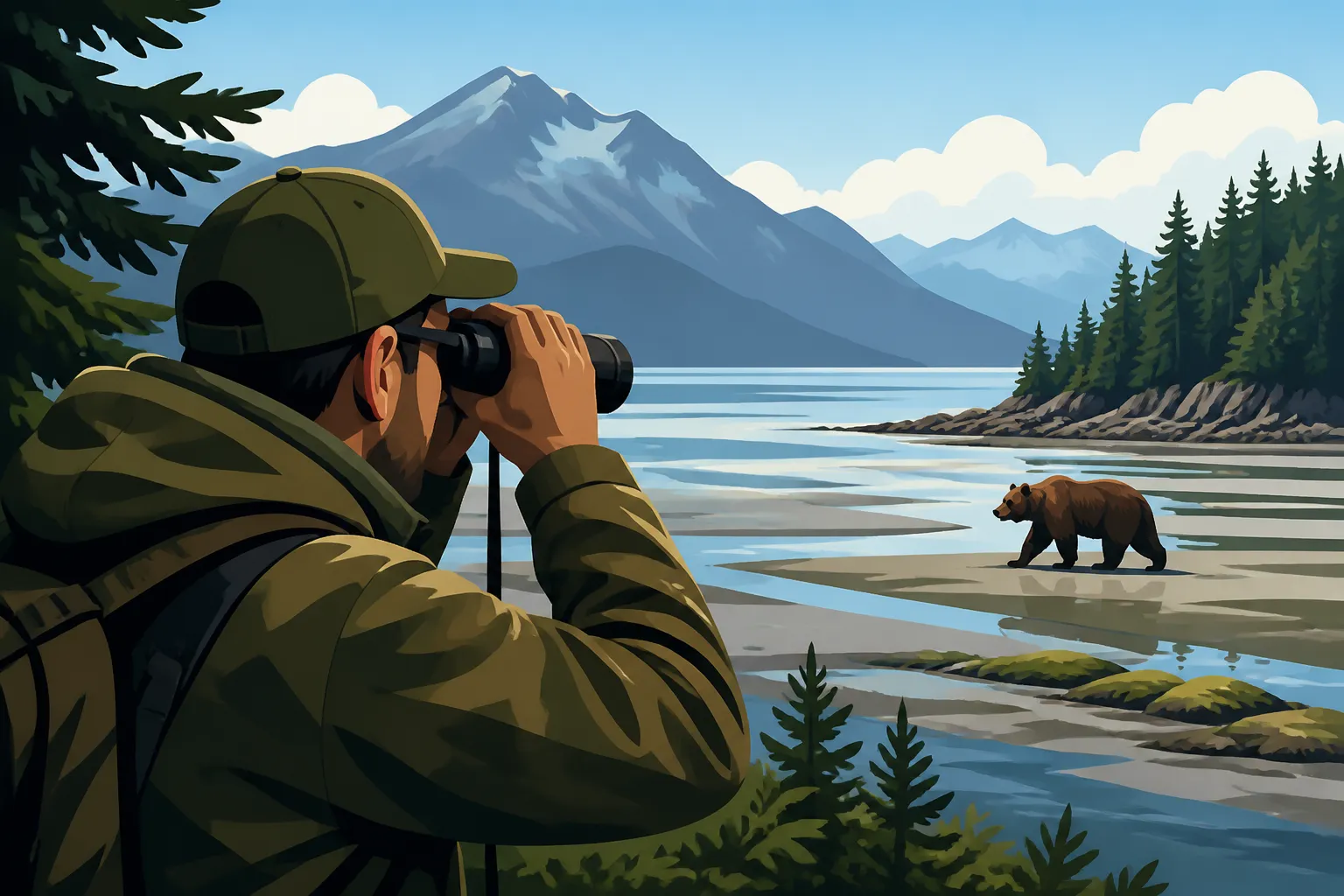
For many hunters, the thought of glassing vast open country for game conjures images of sun-baked alpine slopes or sprawling sagebrush flats. But out here on the wild coast of British Columbia, a different kind of wide-open search unfolds amidst the salty air and tidal flats of our countless estuaries. Finding bears in these expansive, often rugged environments can feel like searching for a needle in a haystack, especially when they’re camouflaged against dark timber or thick brush. This guide is all about honing those glassing skills to effectively locate and assess black bears as they emerge from the dense coastal forest to feed in these rich, transitional zones.
Understanding British Columbia's Coastal Estuaries as Bear Habitat
British Columbia's coastline is a labyrinth of inlets, islands, and river mouths, each creating unique estuary environments. These are truly dynamic landscapes, shaped by the push and pull of the ocean tides and the freshwater flow from the land. For black bears, these areas are a lifeline, providing crucial food sources throughout the year, especially during the lean early spring months and the salmon runs of late summer and fall. Learning to read these landscapes is your first step to successful glassing.
The Allure of Spring Green-Up and Tidal Flats
When winter finally begins to recede along the coast, typically from late March into May, the estuaries become magnets for hungry black bears. While the forest floor is still waking up, the open, nutrient-rich soil of the tidal flats and river deltas experiences an earlier and more vigorous green-up. This fresh growth, particularly sedges and other tender grasses, is an absolute delicacy for bears that have just emerged from their dens, often having lost a significant portion of their body weight. These early shoots are packed with easily digestible nutrients, making estuaries a prime feeding ground.
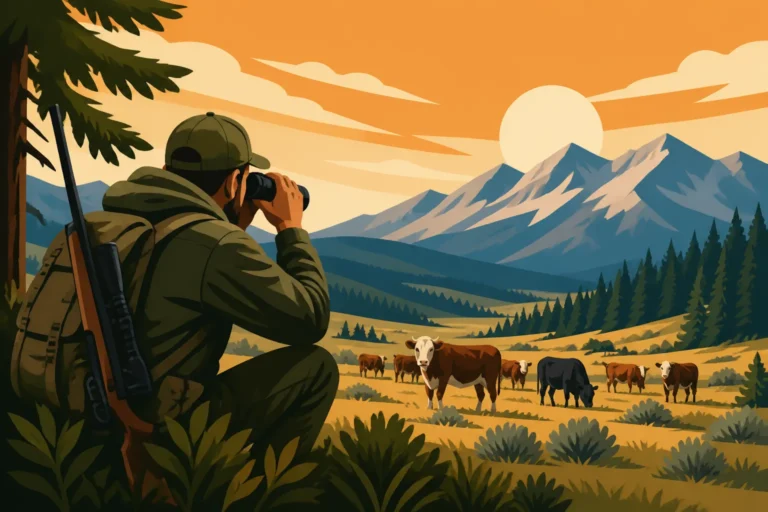
Imagine spending a cool, crisp May morning perched on a vantage point overlooking a broad estuary. You watch the tide slowly recede, exposing acres of lush green vegetation. Bears, much like cattle, will often follow this receding waterline, grazing intently on the newly uncovered greens. Their dark coats against the vibrant green can sometimes make them surprisingly visible, but often, they blend in perfectly with the shadows cast by the forest edge or the various stumps and driftwood strewn across the flats. Your job is to meticulously scan these areas, especially where the fresh water meets the salt, as the bears are often drawn to the slightly less saline vegetation. Keep an eye out not just for the bear itself, but for subtle disturbances – a patch of flattened grass, a broken branch, or a fresh track in the soft mud that indicates recent activity.
Identifying Key Bear Food Sources and Travel Corridors
While spring sedges are a major draw, coastal estuaries offer a buffet of other bear foods as the seasons progress. Later in the summer and fall, berries like salmonberries, huckleberries, and blackberries ripen along the forest fringe adjacent to these estuaries. Bears will often move between the open flats and the cover of the timber, alternating between grazing and foraging for these calorie-rich fruits. When the salmon runs begin – depending on the specific river system and species, this can range from late summer into late fall – the estuaries transform again. Bears will patrol the river mouths and shallow channels, honing in on spawning salmon.
Understanding these seasonal food shifts is paramount to knowing where and when to glass. For instance, in spring, focus your efforts on the exposed green flats and the immediate edges of the timber. As summer approaches, expand your search to include berry patches just beyond the tree line. In the fall, concentrate on the river channels and gravel bars where salmon are actively spawning. Beyond food, bears utilize specific travel corridors. These often include game trails leading from the dense timber down to the estuary, along old logging roads if present, or even through natural breaks in the brush. Identifying these likely paths, perhaps with the help of mapping tools like GoHunt to scout potential access points and terrain features, allows you to predict where a bear might emerge or disappear. A bear often follows the path of least resistance, making these corridors critical focal points for your glassing efforts.
Essential Gear for Coastal Estuary Glassing
Successfully glassing for bears on a coastal estuary requires more than just a good eye; it demands the right equipment, perfectly suited to the unique challenges of the British Columbia coast. The environment can be relentlessly damp, the light conditions often tricky, and the distances you need to resolve can be considerable. Investing in quality gear isn't just about comfort; it's about increasing your chances of spotting that elusive bear.
Optics: Binoculars, Spotting Scopes, and Tripods
When you're dealing with vast, open spaces and the subtle movements of an animal that could be hundreds or even thousands of yards away, your optics become your most critical tool. Forget relying on your naked eye, especially if you want to find a bear before it finds you or simply vanishes into the timber.
For initial wide-area scanning, a high-quality pair of binoculars is indispensable. Most seasoned coastal hunters favor 10×42 or 12×50 models. The '10x' or '12x' refers to the magnification, while the '42' or '50' indicates the objective lens diameter in millimeters, which directly impacts light gathering capability. In the often overcast or low-light conditions of coastal BC, that extra light-gathering power can make a huge difference in clarity and brightness, especially at dawn and dusk. Look for binoculars that are fully waterproof and fog-proof, as you'll inevitably encounter moisture. Brands like Swarovski, Zeiss, and Vortex are popular choices among hunters for their robust construction and superior glass.
Once you spot something that might be a bear – a dark blob, a moving shadow, or just something "off" – that's when a spotting scope comes into its own. A good spotting scope, typically with a magnification range from 20-60x or 15-45x, allows you to zoom in and confirm what you're seeing, and critically, to thoroughly assess the animal. You'll need to determine if it's a boar or a sow, if there are cubs present, and to accurately judge its size and condition. This level of detail is impossible with just binoculars.
Both your binoculars and especially your spotting scope need to be mounted on a sturdy tripod. Hand-holding optics, even binoculars, for extended periods introduces too much shake, leading to eye fatigue and missed details. A lightweight but stable carbon fiber tripod with a smooth fluid or pan head is ideal. It allows for effortless panning across the landscape and quick adjustments to maintain a steady image, which is vital when a bear is moving. A quick-release plate on your optics makes it easy to switch between binocular and scope.
Here's a quick comparison of common optics:
| Optic Type | Magnification Range | Objective Lens (mm) | Primary Use | Pros | Cons |
|---|---|---|---|---|---|
| Binoculars | 8x – 12x | 42 – 56 | Wide-area scanning, initial spotting | Portable, good field of view, fast target acquisition | Limited detail for long-range identification |
| Spotting Scope | 15x – 60x | 50 – 95 | Detailed observation, judging, long-range ID | High magnification, excellent detail | Requires tripod, narrower field of view, heavier/bulkier |
Navigating the Tides and Wet Environment
Hunting estuaries means dealing with water, and lots of it. Tides can fluctuate dramatically, sometimes by several meters in a matter of hours, and what was dry ground during low tide can become a rushing channel or a deep pool when the tide comes in. Ignoring the tides isn't just inconvenient; it can be dangerous, potentially stranding you or even putting you at risk.
Always consult a local tide chart before heading out. Understand the high and low tide times, and especially the predicted height. Plan your access and escape routes accordingly. For foot-based hunting, waterproof rubber boots, often knee-high or even chest waders, are absolutely essential. The mud can be deep, and crossing tidal creeks might be necessary. For boat-based hunting, ensure your vessel is sea-worthy and you have all required safety gear. A dry bag for your optics, electronics, and extra clothing is not optional – it's a requirement. The constant dampness, rain, and spray will quickly render unprotected gear useless. Even on clear days, dew and mist can settle quickly. Consider lens covers and a small microfiber cloth specifically for cleaning your optics. Remember, everything out here gets wet, so plan to keep your most critical items sealed and dry.
Clothing and Comfort for Long Watches
Glassing is often a sedentary activity, especially when you're settling into a prime vantage point for hours on end. This means dressing for warmth and comfort is paramount, even if the forecast seems mild. The coastal weather is notoriously fickle; a sunny morning can quickly turn into a cold, damp, and windy afternoon.
Layering is your best friend. Start with a moisture-wicking base layer, add insulating layers like fleece or merino wool, and top it all off with a genuinely waterproof and windproof outer shell. Look for Gore-Tex or similar highly breathable, durable materials. A good quality rain jacket and pants aren't just for heavy downpours; they protect against persistent drizzle, sea spray, and the general dampness that permeates everything on the coast. Consider investing in a comfortable, insulated seat pad or a small folding chair. Sitting on cold, damp ground for hours will not only make you miserable but can also compromise your ability to stay focused and still. Warm gloves, a beanie, and even hand warmers can make a significant difference in your ability to endure a long watch, allowing you to maximize your time glassing and minimize discomfort. Remember, if you're cold and wet, you'll be distracted and far less effective at spotting bears.
Strategic Glassing Techniques for Coastal Bears
Glassing is an art form, especially when you’re trying to pick apart the dense, complex landscapes of a coastal estuary. It’s not just about looking; it's about seeing, and that requires a systematic approach, immense patience, and an understanding of how bears utilize their environment. Without a strategy, you’re just aimlessly staring.
Breaking Down the Landscape into Grids
The sheer scale of many British Columbia estuaries can be overwhelming. To effectively cover such a large area, you need a method that ensures no potential bear hiding spot goes unexamined. This is where the grid system comes into play. From your chosen vantage point, mentally divide the entire area you intend to glass into smaller, manageable sections or "grids." Think of it like a chessboard or a series of overlapping squares.
Start with the grid furthest from you, usually along the distant timber line or where the estuary meets the main river channel. Begin by scanning the top edge of that grid from left to right, slowly moving your optics in tiny, overlapping increments. Don't rush! A common mistake is to sweep too quickly, allowing a bedded bear or a bear standing still to blend in perfectly. Once you reach the right side, drop your optics slightly and scan back from right to left across the next horizontal strip. Continue this methodical up-and-down or side-to-side pattern until you've thoroughly covered that entire grid. Then, move to the next adjacent grid and repeat the process. This disciplined approach ensures you don't miss any pockets of cover, any patches of new growth, or any potential travel routes where a bear might be active. Using a platform like GoHunt can help identify and virtually map out these potential grid sections before you even step foot in the field, giving you a clear plan of attack for your glassing routine.
Patience and Repetitive Scanning
If there’s one golden rule in glassing, it’s patience. Bears, especially on the coast, are often subtle. They don't always burst out into the open and announce their presence. They might emerge slowly from the timber, sometimes standing still for long periods before moving again. They might be bedded down in a patch of tall sedge or amongst a pile of driftwood, only detectable by the glint of an ear or the curve of a black back.
The real key here is repetitive scanning. Don't just scan an area once and assume it's clear. Bears move, they shift, they stand up, and they can seemingly appear out of nowhere. After completing a full grid scan of your entire area, take a short break, rest your eyes, and then start the whole process over again. What you missed the first time, you might catch the second or third. A bear that was hidden a moment ago might have just stood up to stretch, or moved into a more visible spot. I've personally seen bears appear in areas I've glassed meticulously just minutes before, simply because they either emerged from a hidden draw or changed their posture. This is especially true when hunting areas like Hunting a British Columbia River Estuary where bears use the fluctuating river levels. Often, you're not looking for a whole bear, but rather a piece of a bear – a shadow that doesn't quite look right, a flicker of movement, or a contrasting color against the natural backdrop. Persistence truly pays off.
Leveraging Tidal Movement for Optimal Viewing
Coastal estuaries are defined by their tides, and understanding how bears interact with these cycles is a game-changer for your glassing strategy. The incoming and outgoing tides dictate when certain food sources are available and how bears will move to access them.
During low tide, vast mudflats and vegetated areas are exposed. This is often when bears are most active on the open estuary, grazing on the exposed sedges or searching for invertebrates in the soft mud. Your glassing efforts should be concentrated on these newly exposed areas, particularly where the fresh, green growth is most prevalent. As the tide begins to push in, bears will often move ahead of the water, sometimes retreating towards higher ground or the edge of the timber. This can present excellent opportunities to spot them as they move across more open terrain. Conversely, as the tide recedes, bears will sometimes follow it out onto the flats, resuming their feeding as new areas become accessible.
Think about timing your arrival to coincide with a dropping tide, allowing you to glass the flats as more and more ground becomes exposed. Then, as the tide begins to turn and push back in, shift your focus to the forest edge and known travel corridors where bears might be seeking refuge. An important aspect of Hunting British Columbia's Coastal Rain is recognizing how animals adapt to these ever-changing conditions. They are creatures of habit and efficiency, and their movements are often dictated by the ebb and flow of the ocean. Observing these patterns will allow you to anticipate their movements and position yourself for the best glassing opportunities, even in challenging weather.
Interpreting Bear Behavior and Identifying Prime Candidates
Once you've spotted a bear, the real work begins. It’s not enough just to see it; you need to understand what it’s doing, what kind of bear it is, and whether it’s a legal animal to harvest. This requires careful observation and a keen eye for subtle details, honed by experience and knowledge of bear biology.
Recognizing Feeding Patterns and Body Language
Black bears feeding on coastal estuaries often exhibit very distinct patterns. In the spring, they graze much like a cow, with their heads down, systematically moving across a patch of sedges. They might lift their head periodically to scan their surroundings, often providing a fleeting chance for a clearer view of their head and neck profile. Observe how intently they feed. A bear that is aggressively foraging and moving purposefully is likely feeling secure and focused on food.
Pay attention to their overall body language. A bear that is constantly looking around, appears nervous, or is frequently moving in and out of cover might be aware of your presence, or it could be a sow with cubs being cautious. Conversely, a confident bear, perhaps a large boar, might feed steadily, occasionally scratching itself on a tree or rolling in the grass. A bear that suddenly sits up, stares intently in one direction, or becomes agitated could be reacting to another animal in the area, or it could be picking up your scent or movement. These behavioral cues are critical in assessing the situation and deciding on your next move. For instance, understanding What Bears Eat on a Coastal Estuary can give you clues as to their general disposition and energy levels. A bear gorging on protein-rich salmon will likely behave differently than one nibbling on early spring greens.
Differentiating Boars from Sows and Cubs
This is perhaps the most critical part of glassing for bears in British Columbia: accurately identifying a legal animal. Hunting sows with cubs is strictly prohibited, and deliberately doing so carries severe penalties. Therefore, before you even consider taking a shot, you must be 100% certain of the bear's sex and whether it has any accompanying cubs.
Sows often have a more delicate appearance, with a narrower head and a less muscular neck. When they walk, they can appear "cow-hocked," with their hind legs turning inwards. Boars, on the other hand, typically have a much broader head, a thicker, more muscular neck that seems to flow seamlessly into their shoulders, and often a more blocky, robust body shape. Their legs tend to be straighter and more upright. Look for indications of recent denning – thin, emaciated sows will often have very pronounced teats, especially if they’ve recently weaned cubs or are still nursing.
The presence of cubs is the absolute deal-breaker. Cubs can be incredibly small and easily hidden, especially in tall grass or brush. They might be behind the sow, just out of sight. A sow might bed down and the cubs could be nestled beneath her. Therefore, you must spend a significant amount of time observing the bear, looking for any sign of offspring. Watch for any smaller, dark shapes moving nearby, or listen for any faint squeaks or grunts. If you see one cub, assume there are more. Even if you only see the sow for an extended period, if there's any doubt whatsoever, you must pass. This is where patience and meticulous glassing truly separate the ethical hunter from the careless one. For more detailed guidance, reading up on Judging a Boar From a Sow With Cubs is essential for responsible hunting.
Judging Size and Age in an Open Environment
Once you've confirmed it's a boar and there are no cubs, you can then focus on judging its size and age. This is often subjective and requires practice, but estuaries offer a unique advantage: open ground. Without trees for scale, it can be tricky.
One common trick is to look at the ears. On a young bear, the ears will appear large in proportion to its head, and often look like they are set high. On an older, mature boar, the ears will appear much smaller relative to the size of its broad head, and seem to be set further apart and lower on its skull. Another indicator is the shoulder hump. While not as pronounced as in a grizzly, a mature black bear boar will often have a visible muscular hump over its shoulders, giving it a powerful, front-heavy appearance. A younger bear will typically have a flatter backline.
Body length and girth are also key. A large boar will have a long body and a deep chest, appearing somewhat barrel-chested, especially in the spring after a winter of relative inactivity. Compare the bear's size to known objects in the environment, such as logs, bushes, or the height of the grass. A bear that looks like a small dog could be a cub, a bear the size of a large dog is likely a yearling, and a truly large boar will command the landscape. Consider the time of year too; bears in the fall will generally be fatter and heavier than those in the spring. For coastal bears, which often have access to abundant food, they can grow quite large. Knowing What a Coastal Black Bear Weighs can help you visualize the scale of a mature animal. Always err on the side of caution; if you're not confident in your judgment, let the bear walk. There will always be another opportunity.
Accessing and Approaching Estuary Bear Country
Reaching these prime glassing locations on British Columbia's coast presents its own set of challenges and opportunities. While some estuaries might be accessible by vehicle via logging roads, many of the most productive and least pressured spots require boat access or a significant hike. Your mode of access will heavily influence your strategy and the gear you can bring.
Navigating by Boat: Considerations and Safety
For many coastal estuaries, a boat is not just a convenience; it's a necessity. British Columbia's coastline is riddled with remote inlets and river mouths that are simply unreachable by road. Using a boat, whether it's a larger cabin cruiser, a zodiac, or even a kayak, opens up a world of hunting opportunities for species like black bears. These Boat-Based Coastal Hunts in British Columbia allow you to cover vast distances efficiently and access areas that see minimal human pressure.
However, boat-based hunting comes with responsibilities and inherent risks. First and foremost, safety at sea. Always check marine forecasts, understand tidal currents, and ensure your boat is well-maintained and equipped with all necessary safety gear: life jackets for everyone, flares, a marine radio (VHF), a first-aid kit, and an anchor. Navigating coastal waters, especially in fog or rough conditions, demands experience. If you’re not comfortable, consider hiring a knowledgeable local boat operator or a guide.
When approaching an estuary by boat, stealth is key. Plan your approach with the wind in mind, and try to minimize engine noise as you get closer to your intended glassing area. Drop anchor well away from the prime feeding grounds, then use a smaller, quieter craft like a kayak, canoe, or even an inflatable dinghy to reach the shore or move quietly along the estuary edge. Be mindful of prop wash and wake near the shore, as these can disturb wildlife. Once ashore, secure your craft above the high tide line, ensuring it won't float away or be swamped by an incoming tide.
Shore-Based Access and Ethical Distances
Even without a boat, some estuaries can be accessed via logging roads or established trail networks. These might require a significant hike, but the effort can lead you to prime glassing spots overlooking the flats. Always be aware of land ownership and access rules. Much of British Columbia is Crown Land, but there can be private landholdings or industrial operations that restrict access. Checking with platforms like GoHunt for up-to-date mapping and private land information is a smart move before you head out.
When hunting from shore, selecting your glassing vantage point is crucial. Look for elevated positions that offer a panoramic view of the estuary, preferably with some cover to break up your silhouette. Think about sun position – you want the sun at your back or to the side, not directly in your eyes, to maximize visibility. Once you've spotted a bear, maintaining an ethical shooting distance is paramount. Estuaries are open, and while a bear might appear close, the actual distance can be deceiving. Rangefinders are indispensable. Practice shooting at various distances and from different field positions (prone, kneeling, using a backpack as a rest) to ensure you can make a clean, ethical shot if the opportunity arises. Avoid "sky-lining" yourself on a ridge, which makes you an obvious silhouette to anything below. Instead, stay just below the crest or use natural features to blend in. Remember, the goal is to observe and assess the animal without disturbing it, ensuring a calm, confident shot if you decide to harvest.
Safety and Ethics in Coastal Bear Hunting
Hunting black bears in British Columbia's coastal environment means operating in true wilderness. While the thrill of the hunt is undeniable, it's always secondary to safety and responsible, ethical conduct. These are foundational principles that every hunter must uphold.
Bear Safety in British Columbia's Coastal Terrain
The coast is home not only to black bears but also to healthy populations of grizzly bears. While grizzlies are protected in British Columbia and cannot be hunted, encounters are a possibility, and you must always be prepared. Your bear safety plan should be multi-faceted.
First, always carry bear spray, know how to use it, and have it immediately accessible on your hip or chest rig, not buried in your pack. This is your primary deterrent for any aggressive bear encounter. Second, carry a firearm for backup, if you are licensed to do so. For coastal black bear hunting, many hunters opt for calibers in the .30-06, .300 Win Mag, or 7mm Rem Mag range, which are capable of cleanly harvesting a black bear and also offer significant stopping power should a dangerous encounter occur. However, the most important "weapon" is your brain. Avoid surprising bears. Make noise when moving through thick brush, especially in areas with limited visibility. Always scan ahead, and be particularly vigilant around salmon streams or berry patches, which are prime bear feeding zones. Store all food and scented items in bear-resistant containers or hung from a tree, well away from your camp. If you do encounter a grizzly, the general advice is to make yourself look big, speak in a calm, firm voice, and slowly back away. Never run. For comprehensive information, consult resources like Bear Safety While Hunting in British Columbia.
Ethical Shooting and Meat Care in a Marine Environment
Taking an ethical shot is the cornerstone of responsible hunting. In the open environment of an estuary, this means waiting for a clear, broadside shot at a reasonable distance. Avoid rushed shots, head shots, or shots at moving animals unless absolutely necessary and you are highly confident in your abilities. Your goal is a quick, humane harvest and immediate recovery.
Once the bear is down, the work isn't over. Coastal environments present unique challenges for meat care. The high humidity, potential for warm temperatures in spring and early fall, and the ever-present biting insects mean you need to act fast. Field dress the bear immediately. Remove all entrails to allow the carcass to cool down as quickly as possible. Skinning the bear and quartering it into manageable pieces will further aid cooling. If you're on a boat, having large coolers with ice ready is ideal. If hiking out, quartering the bear and placing the meat in breathable game bags is crucial.
Keep the meat clean and away from sand or mud. Rinse off any blood with fresh water if available, but avoid soaking the meat directly in salt water. The salt can dry out and taint the meat. Bear meat, especially from spring bears, can be excellent table fare, but it requires diligent care. Be aware of the British Columbia Bear Bag Limits and ensure you comply with all regulations, including retrieving all edible meat. If you're planning on processing the meat yourself, consider where you'll do it. Many hunters transport their harvest to a local butcher or wild game processor for professional handling. For details on logistics, check out articles like Getting Meat Processed in British Columbia. Remember, proper meat care honours the animal and ensures you get to enjoy the fruits of your successful hunt.
Disclaimer
Please note that hunting regulations, seasons, and access can change. Always consult the most current British Columbia Hunting and Trapping Synopsis and any relevant local regulations before planning or undertaking any hunting trip. Ensure you have all necessary licenses, tags, and permits. Safety is paramount; always hunt responsibly and be prepared for wilderness conditions.