British Columbia’s Crown Land Access
There's nothing quite like looking at a map of British Columbia, seeing those vast swathes of green indicating Crown land, and feeling the pull of the wild. You imagine endless miles of untouched wilderness, ripe for exploration and hunting. But then reality hits: you drive for hours, excited for that promising logging road, only to find a locked gate. Or worse, the "road" on your map is now a washed-out, heavily reforested trail. It’s a common frustration, this dance between the promise of public land and the practicalities of actual access. This guide is here to unravel the complexities of British Columbia's Crown land access, helping you understand where you can go, what rules apply, and how to effectively plan your next hunting adventure.
Understanding British Columbia's Land Ownership Mosaic
Before we can even talk about how to get there, we need to understand what Crown land truly is in British Columbia and how it fits into the larger picture of land ownership across the province. It's a vast, complex quilt of different designations, and knowing the basics is your first step to successful and legal access.
What is Crown Land, Really?
In British Columbia, Crown land refers to land that is owned by the provincial government, or occasionally the federal government, on behalf of all Canadians. When you see that expansive green on a map, you're primarily looking at provincial Crown land. It’s a staggering amount, encompassing over 90% of the province's land base, which is incredible when you think about it. This is not private property, and generally, as a resident, you have the right to access it for recreational purposes, including hunting.
However, this is where the misconception often creeps in: "public land means public access everywhere." This isn't quite true. While the land itself is publicly owned, specific activities, existing tenures (like forestry or mining leases), and management objectives can influence how and if you can access certain areas. You might be gazing at a huge block of seemingly open Crown land on your map, only to find it checker-boarded with private timber holdings, First Nations reserves, or even areas under active industrial operations, all of which can affect your physical ability to get onto that "public" ground. It's not always as simple as driving right in, and navigating these nuances is key to avoiding frustration and staying legal.
The Different Faces of Crown Land
Not all Crown land is created equal, especially when it comes to hunting access. Different designations within the Crown land umbrella come with their own sets of rules and regulations. Knowing these distinctions is vital for planning your hunts.
The vast majority of Crown land that hunters interact with falls under Forest Lands. These are the expansive areas managed primarily for timber production, but also for mining, recreation, and wildlife. This is where most of your hunting opportunities will be found, characterized by extensive networks of Forest Service Roads (FSRs), old cutblocks, and vast tracts of timbered wilderness. While these areas are generally open to hunting, they are also active industrial zones, meaning you need to be aware of ongoing logging or other operations.
Another important designation is the Agricultural Land Reserve (ALR). While much of the ALR is private land, there can be parcels of Crown land within it. These areas are specifically designated to preserve land for agricultural use. While hunting might be permissible on Crown land within the ALR, access might be limited by surrounding private farms, and you need to be extra cautious about not disturbing agricultural operations or livestock. It’s always best to understand the specific rules for any Crown land you plan to access within or adjacent to the ALR.
Then we have Parks and Protected Areas. This is a critical distinction that often trips up new hunters. While Provincial Parks, Ecological Reserves, and National Parks are technically Crown land (or federal Crown land in the case of National Parks), hunting is almost universally prohibited within their boundaries. These areas are set aside for conservation and non-extractive recreation. You might find fantastic wildlife concentrations in these zones, but they are sanctuaries, not hunting grounds. Always consult specific maps and regulations, but generally, assume parks are off-limits for hunting. For more details on where hunting is restricted, you can refer to resources like British Columbia Provincial Park Hunting Rules.
Finally, we have Wildlife Management Areas (WMAs). These are specific tracts of Crown land (or sometimes private land with agreements) that have been designated and managed primarily for wildlife conservation and habitat. The good news for hunters is that unlike provincial parks, many WMAs do allow hunting, often with specific regulations tailored to the area's wildlife populations and conservation goals. These can be incredible opportunities for hunters who take the time to research their specific rules. They're like special pockets of hunting opportunity, often providing critical habitat for big game. You can learn more about these unique areas by reading British Columbia Wildlife Management Area Rules.
The Legal Framework of Crown Land Access for Hunters
Understanding the different types of Crown land is one thing, but knowing the specific rules that govern your presence there as a hunter is another. British Columbia has a clear, albeit sometimes nuanced, legal framework that dictates hunter's rights and responsibilities when accessing public lands.
Hunter's Rights and Responsibilities on Crown Land
As a resident of British Columbia, you generally have a legal right to access Crown land for recreational purposes, and this absolutely includes hunting, provided you hold the necessary licences and tags and are following all applicable hunting regulations. This is a fundamental right that differentiates our system from some other jurisdictions where public land access might be more restricted. You are permitted to walk, hike, camp, and hunt on these vast public domains.
However, this right is not an absolute free-for-all. Your right to access Crown land is always subject to other legitimate land uses and various provincial statutes. For example, while you can be on Crown land, you cannot impede active logging operations, damage property, or litter. The onus is entirely on the hunter to know what is allowed and what is not. This means understanding the boundaries of private property, respecting industrial activities, and being aware of any specific closures or restrictions that might be in place for public safety or conservation reasons. Simply put, ignorance of the law or of specific access restrictions is not considered a valid excuse if you find yourself in violation. It’s your responsibility to do your homework before you head out.
Understanding Road and Access Restrictions
One of the biggest hurdles for hunters accessing Crown land is often not the land itself, but the roads leading to it. British Columbia's backcountry is crisscrossed by an extensive network of Forest Service Roads (FSRs), which are the lifeblood for hunters seeking to get into remote areas. Many of these are open for public travel, allowing vehicle access deep into the woods. However, a significant number of FSRs are also subject to various restrictions.
Some FSRs are seasonally closed, often for wildlife protection, road maintenance, or to prevent damage during wet seasons. Others might be permanently gated or temporarily closed for active industrial operations like logging or mining. It’s incredibly important to research the current status of the FSRs you plan to use. Information on access can sometimes be found on government websites, but often local knowledge or scouting is required. For more general information on FSRs, check out British Columbia Forest Service Road Access.
Then there are deactivated roads. These are roads that were once actively used, typically for logging, but have since been "decommissioned." This deactivation often involves removing culverts, pulling out bridges, or installing large water bars to prevent vehicle access and promote natural reforestation. While a deactivated road might appear on older maps or even satellite imagery as a clear path, it is physically impossible and illegal to drive a vehicle on it. These roads essentially revert to hiking or biking trails. For the hunter willing to walk in, deactivated roads can be a gateway to less pressured hunting grounds, but they demand significantly more physical effort and planning. Understanding what a deactivated road means for your hunt is crucial, and you can learn more about Driving a Deactivated Logging Road to prepare.
Finally, industrial gates are a common sight across the BC landscape. These gates are often put in place by logging companies, mining operations, or private landowners whose property an FSR might cross. The purpose of these gates is usually for safety (preventing public access to active work sites), security, or to protect infrastructure. The frustration comes when a hunter sees a promising FSR on their map, only to find it locked up tight. Sometimes these gates are open on weekends or outside of active working hours, but this is highly variable and usually not posted publicly. Never assume a gate will be open, and critically, never cut a lock or attempt to bypass a locked gate, as this constitutes trespassing or vandalism. Always seek alternative access points if a gate blocks your way.
The Role of Guide Outfitter Territories
British Columbia has a unique system involving guide outfitters, and it's something resident hunters need to understand when accessing Crown land. There's a common misconception that guide outfitters own huge tracts of Crown land. This is simply not true. What they hold is a licence for exclusive hunting rights for non-resident alien hunters (and for non-residents of BC for certain species) within a defined territory. These territories are typically vast blocks of Crown land.
As a British Columbia resident, you absolutely can still hunt within these guide outfitter territories during general open seasons, provided you hold the correct resident licences and tags. Your resident hunting rights on Crown land are not superseded by an outfitter's territory. However, you need to be aware that you might encounter guided parties in these areas. While you have every right to be there, it's generally considered good ethical practice to give guided parties a wide berth and avoid disrupting their hunt if you can. A little mutual respect goes a long way in the backcountry. Guide outfitters are a vital part of BC's hunting economy, especially for international hunters, and understanding their role helps everyone share the landscape harmoniously. For a deeper dive, check out British Columbia Guide Outfitter Territories Explained.
Navigating the Challenges of Crown Land Access
So, you've grasped the basics of Crown land and the legal framework. Now let's get real about the actual challenges you'll face when trying to put boots on the ground in British Columbia's vast backcountry. It's rarely as simple as pointing to a spot on a map and driving straight to it.
Gates, Locks, and the Private Land Puzzle
This is perhaps the most common and immediate frustration for any hunter exploring new areas in BC. You've spent hours poring over maps, found what looks like a perfect logging road that winds deep into prime hunting territory, you make the long drive, full of anticipation… and then you're met with a heavy-duty, locked gate. It’s a moment many of us have experienced, and it can be incredibly disheartening.
These gates are often not just protecting industrial operations on Crown land, but frequently mark the boundary or passage through private timberlands or other private property that is "interspersed" with public ground. British Columbia's land ownership can be a real checkerboard, with private parcels (especially timber lands) often bordering or even surrounding tracts of Crown land. You cannot legally cross private land without explicit permission from the landowner, even if that private parcel is merely a narrow strip blocking your way to thousands of acres of Crown land beyond. This is why thorough scouting and using modern mapping tools are absolutely essential. Your options, once faced with a locked gate, are to find an alternate route (which might involve a much longer drive), accept that this route is simply closed to vehicles and prepare to walk, or abandon that particular access point for the day. Under no circumstances should you ever attempt to cut locks, climb over gates, or drive around them, as this is illegal and detrimental to future access for all hunters.
Deactivated Roads and the Foot Slog
Another common scenario: your map or a satellite image shows what appears to be a perfectly good road leading to your desired hunting area. But upon arrival, you find a collection of large earth mounds (water bars), missing bridges, or simply an overgrown track that's clearly impassable for any vehicle. Welcome to the world of deactivated roads. These are former logging roads that, once the timber was extracted, were "put to bed" to prevent erosion and encourage reforestation.
While frustrating if you were planning to drive, deactivated roads present a unique opportunity. They often lead to areas that receive significantly less hunting pressure simply because most hunters aren't willing or able to put in the foot miles. These can be prime spots to find undisturbed animals. The "pro" here is solitude and potentially better hunting. The "con" is the sheer physical effort involved. You'll need to be prepared for a substantial hike, often carrying all your gear on your back, and with the understanding that if you're successful, you'll be packing that animal out on foot, potentially for many miles. This is where physical fitness truly pays off in the BC backcountry. If you're serious about getting away from the crowds, learning to embrace the foot slog up a deactivated road is a valuable skill. For tips on dealing with the physical demands, consider resources like Packing Out of British Columbia's Steep Country and others on wilderness travel.
Conflicting Land Uses and Shared Spaces
It's important to remember that Crown land is not exclusively for hunting. It's a multi-use landscape, shared by a diverse range of users and activities. You'll encounter hikers exploring trails, campers enjoying recreation sites, ATV and dirt bike riders tearing up designated routes, anglers seeking remote lakes, and industrial workers managing forestry or mining operations. This shared space can sometimes lead to conflicting interests or unexpected encounters.
Be prepared for anything. Loud ATV groups might spook game, but within designated areas, they have every right to be there. Maintaining a courteous and respectful attitude towards all land users is paramount. A friendly wave or a brief chat can go a long way in fostering positive relationships between different user groups. More importantly, be extra vigilant for active industrial operations. Logging trucks have the right-of-way, and active cut blocks or mining sites are dangerous zones where public access might be strictly prohibited for safety reasons. Always heed posted warnings, listen for heavy machinery, and if you encounter industrial personnel, respect their directives. They are often working in dangerous environments, and your safety, and theirs, depends on your cooperation. Understanding the etiquette around industrial traffic, such as using Radio Channels on Active Logging Roads, can also be extremely helpful and safer.
Tools and Strategies for Identifying and Accessing Crown Land
Navigating the complexities of British Columbia's Crown land access might seem daunting, but thankfully, modern technology and smart planning can make a world of difference. Gone are the days of relying solely on outdated paper maps; today's hunter has a powerful arsenal of digital tools at their fingertips.
Digital Mapping Tools: Your Best Friends
Without a doubt, digital mapping applications have revolutionized how hunters approach Crown land. These tools are indispensable for planning, navigating, and ensuring you stay on the right side of the law.
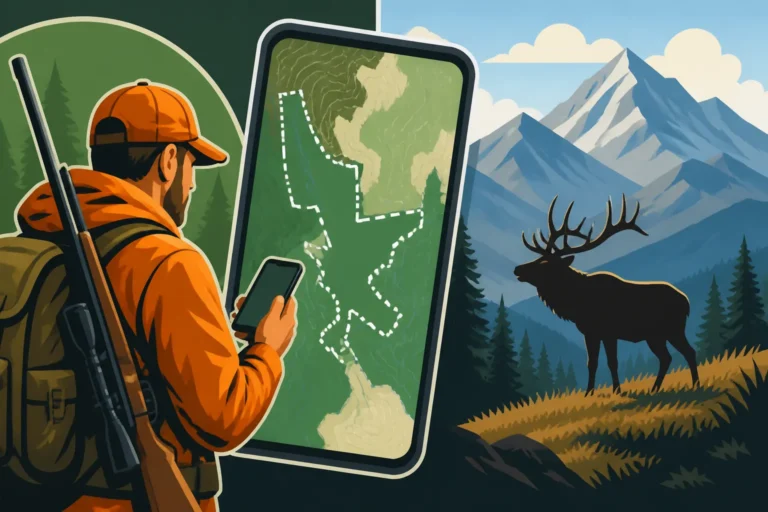
One of the absolute game-changers for land ownership clarity is onX Hunt. This app is phenomenal because it clearly delineates land ownership boundaries right on your phone screen. You can instantly see where Crown land ends and private property begins, where First Nations reserves are located, and where provincial or national parks are marked. This level of detail is invaluable for preventing accidental trespassing, which is a common concern for hunters navigating the checkerboard of BC lands. Beyond ownership, onX Hunt also displays FSRs (often with statuses like "open" or "gated" if reported), trails, topographic lines, and satellite imagery, all of which can be downloaded for offline use, essential when you lose cell service deep in the backcountry. Using a tool like this is truly a confidence booster when you're exploring new territory. If you want to dive deeper into how this specific tool can help, explore Using onX for British Columbia Crown Land.
Another excellent platform, often used for draw odds and hunt planning in the Western US, is GoHunt. While its primary focus isn't exclusively BC, GoHunt provides robust mapping capabilities that include land ownership overlays. For those looking to plan broader North American hunts, or simply seeking another angle on mapping and terrain analysis for BC, GoHunt can offer valuable insights. Its detailed maps and planning tools can help you visualize the access situation for a particular management unit or pinpoint potential routes into a desired area. Both onX Hunt and GoHunt, when used in conjunction with official provincial resources, offer a comprehensive view of the landscape.
Beyond these dedicated hunting apps, general tools like Google Earth are fantastic for virtual scouting. You can zoom in on satellite imagery to spot gates, identify the state of roads (whether they look actively maintained or heavily deactivated), locate clearcuts, and get a feel for the terrain before you even leave your living room. Official BC government mapping portals, while sometimes less intuitive for field use, can also provide authoritative information on land status and specific tenures. For broader strategies on using digital tools, you might find Scouting a British Columbia Management Unit Online helpful.
Understanding British Columbia's Management Unit Maps
While digital maps provide crucial land ownership information, the official British Columbia Management Unit (MU) maps remain your definitive guide for hunting regulations. These maps, issued by the provincial government, define the legal boundaries for specific hunting zones, indicating which species can be hunted, during what seasons, and under what conditions (e.g., antler restrictions, bag limits).
The key is to cross-reference your MU maps with the land ownership information you get from digital tools. An MU map tells you where you can hunt legally by regulation, while an app like onX Hunt tells you where you can physically and legally access the land. Together, they form a complete picture. Understanding how MUs are structured, how their boundaries are defined (often by natural features like rivers or ridge lines, or by FSRs), is fundamental. Don't rely solely on one type of map. Always have the official regulations synopsis and MU maps on hand, even if it’s a digital version on your phone. If you're new to deciphering these, Where to Get a British Columbia MU Map and Reading a British Columbia LEH Zone Map are excellent starting points to understand the official designations.
Scouting and Local Knowledge
Even with the best digital tools, nothing truly replaces boots-on-the-ground scouting or leveraging local knowledge. If you have the time, driving or hiking into an area you're interested in before the season opens allows you to confirm road conditions, check for new gates or deactivations, and identify fresh animal sign. You can see how the terrain truly looks, which might be different from satellite imagery, and identify potential bedding areas, feeding zones, or water sources.
When you can't physically scout, virtual scouting with satellite imagery (like on Google Earth or within onX Hunt) is the next best thing. Look for signs of human activity, areas of thick cover, and changes in elevation or vegetation. Beyond mapping, sometimes the best information comes from local sources. A chat with a local at a gas station, a hardware store, or a small-town diner can yield invaluable, up-to-the-minute information about recent road closures, areas with high game activity, or new access restrictions that haven't yet made it onto official maps. Online hunting forums and social media groups dedicated to BC hunting can also be surprising sources of current information, though always verify what you hear. Building a network of fellow hunters and exchanging information responsibly can be a huge asset.
Here's a quick summary of the different tools and their benefits for British Columbia Crown land access:
| Tool Type | Key Benefit | Example Brand/Source | Use Case for Crown Land Access |
|---|---|---|---|
| Mobile Mapping App | Real-time land ownership, offline maps, GPS tracking | onX Hunt | Pinpointing exact Crown land boundaries, avoiding trespass, finding open FSRs and trails. |
| Online Scouting Platform | Hunt planning, detailed maps, terrain analysis | GoHunt | Pre-trip planning, identifying potential access routes, understanding land use and topography. |
| Government Mapping Portals | Official regulations, land designations, active tenures | BC Government iMapBC | Verifying legal boundaries, checking for specific land designations or industrial tenures. |
| Satellite Imagery | Visual confirmation of roads/terrain, activity | Google Earth | Identifying gates, logging activity, deactivated roads, and general terrain features before travel. |
| Official MU Maps & Synopsis | Legal hunting boundaries, species, season dates | FLNRORD Website | Understanding specific regulations, bag limits, and legal zones for hunting. |
| Local Knowledge | Current conditions, unofficial closures, game movement | Local businesses, forums | Up-to-the-minute information on access, road conditions, and local game patterns. |
Respectful and Responsible Access Practices
As hunters, our privilege to access British Columbia's vast Crown lands comes with a profound responsibility. The way we conduct ourselves not only reflects on us individually but on the entire hunting community. Practicing respectful and responsible access ensures that these lands remain open and accessible for future generations, and fosters positive relationships with other land users.
Leave No Trace Principles
This isn't just a suggestion; it's a foundational ethic for anyone venturing into the backcountry, and especially for hunters on Crown land. The "Leave No Trace" principles are paramount, particularly because hunters often venture into more remote, less frequently visited areas. The core idea is simple: leave the area as, or better than, you found it.
This means packing out everything you pack in. And we truly mean everything. This includes all trash, spent casings, food wrappers, and anything else that wasn't naturally there. Go a step further and pack out any litter you might find that others have left behind. Proper disposal of animal remains is also crucial. When field dressing or quartering an animal, move well away from roads, trails, water sources, and any established recreation sites. Disperse the remains naturally so they can be scavenged and returned to the ecosystem without becoming an unsightly nuisance for other users or attracting predators too close to human activity. Minimizing your impact extends to how you travel. Stick to established trails, roads, or game trails where possible, rather than creating new ones that can lead to erosion or habitat disturbance. Be mindful of fragile ecosystems, alpine meadows, or sensitive riparian areas, and avoid driving or walking through them if alternative routes exist.
Engaging with Other Land Users
Crown land is a shared resource, and you're bound to encounter people engaged in all sorts of activities that aren't hunting. These could be hikers enjoying a peaceful trail, ATV riders exploring designated routes, mountain bikers, campers, or even commercial tourism operators. Your interactions with these individuals are critical.
Always approach encounters with courtesy and respect. A friendly wave, a polite greeting, or a brief, positive exchange can go a long way in shaping perceptions of hunters. If you're carrying a firearm, ensure it's handled safely and discreetly, and be aware that its presence might make some non-hunters uncomfortable, regardless of how legally and responsibly you're carrying it. If you encounter active industrial operations—logging crews, road construction, or mining activity—respect their space without question. Heed all posted signs, obey any directions given by personnel, and understand that these operations often involve heavy machinery and inherent dangers. Remember, many of the FSRs you rely on are maintained for industrial purposes, and maintaining good relationships with these operators is in everyone's best interest. You can find more specific advice on navigating these situations, such as communicating on Radio Channels on Active Logging Roads.
Safety and Preparedness
The vastness of British Columbia's Crown land means that many hunting areas are incredibly remote, often far beyond the reach of cell service or immediate emergency assistance. This makes safety and preparedness not just advisable, but absolutely essential.
Never venture into remote backcountry alone without a robust plan. Always carry essential survival gear, including a comprehensive first-aid kit, fire-starting supplies, extra food and water, shelter, and appropriate clothing for rapidly changing mountain weather. Critically, always have a reliable means of communication. Cell service is notoriously spotty in BC's mountains and valleys, so a satellite communication device (like a satellite messenger or phone) is a must-have for emergency situations. This allows you to call for help, even when miles from the nearest signal. Before every trip, tell someone responsible exactly where you're going, your planned route, and when you expect to return. This "trip plan" is your lifeline if something goes wrong. Beyond personal safety, be acutely aware of wildlife safety, especially in bear country. Carry bear spray, know how to use it, and understand bear behavior. Resources like Satellite Communication on a Remote Hunt, Emergency Planning in British Columbia's Backcountry, and Bear Safety While Hunting in British Columbia are vital reading for any backcountry hunter in BC. Being prepared isn't about expecting the worst; it's about being able to handle it if it happens.
Specific Considerations for Different Hunting Scenarios
The beauty of British Columbia's Crown land is its incredible diversity, which also means that how you access and hunt it will vary dramatically depending on your chosen method and target species. What works for a road-based hunt for grouse might be entirely inadequate for a deep backcountry sheep hunt.
Vehicle Access vs. Foot Access Hunts
Most hunters probably start with vehicle access hunts, and for good reason. Being able to drive on open Forest Service Roads (FSRs) allows you to cover vast amounts of territory, scout multiple areas in a day, and retrieve game much more easily. It’s ideal for species found closer to roads, or for accessing areas where you want to do a lot of glassing from vantage points reachable by truck. However, vehicle access often means you'll be sharing the woods with more hunters, and the areas directly adjacent to open roads typically receive higher pressure. Remember to always respect British Columbia Rules on Hunting From a Vehicle, which prohibit shooting from or across a highway or active road.
For those willing to put in the effort, foot access hunts offer a completely different experience and often yield greater rewards. This involves parking your vehicle at a gate or the end of a drivable FSR and continuing on foot into deactivated road systems or remote wilderness. The immediate benefit is solitude; you'll quickly leave behind the road hunters and enter areas that see significantly less pressure. These are the places where mature animals often seek refuge. The trade-off, of course, is physical demand. You'll need to be fit enough to carry all your gear, food, and water for multiple days, and crucially, strong enough to pack out an animal, potentially over challenging terrain and long distances. Many of BC's most sought-after big game animals are found deep in the backcountry, making foot access a necessary skill. If you're planning on venturing beyond the truck, resources like Hunting British Columbia Without a Truck and Hunting a Deactivated Road Beyond the Gate can provide practical guidance.
Horseback and Boat Access
For truly extensive backcountry exploration and accessing areas far beyond any road, horseback hunting becomes a game-changer. Horses allow you to cover incredible distances, navigate rugged terrain more easily than on foot, and most importantly, carry substantial amounts of gear and meat. For hunts targeting species like moose, elk, or sheep deep in the Northern Rockies or other remote mountain ranges, horses can mean the difference between getting there and getting out with your animal. They reduce the physical toll of packing heavy loads and open up vast new territories that are simply too far for most foot hunters. Learning how to manage and ride horses in rugged terrain, along with packing techniques, is a specialized skill but one that unlocks some of BC's most incredible hunting experiences. Consider articles like Horseback Access to British Columbia's Alpine and Using Horses to Pack Out in British Columbia if this type of adventure calls to you.
Similarly, boat access is indispensable for hunting in many parts of British Columbia, especially along the extensive coastline, on large interior lakes, or on navigable rivers. For coastal black bears, sea ducks, or even black-tailed deer on islands or remote inlets, a boat can be the only practical way to reach your hunting grounds. On the interior, jet boats allow access up shallow, braided rivers, taking hunters deep into moose or elk country that would otherwise be inaccessible. Boat-based hunting requires a different set of skills, including navigation, marine safety, and understanding tides or river currents. It opens up a unique dimension of hunting, especially for those targeting coastal or riparian species. Resources such as Jet Boat Access on British Columbia Rivers and Hunting From a Boat on the Coast can give you a head start.
Winter and Late Season Access
As the seasons change and snow begins to blanket the British Columbia landscape, access to Crown land transforms dramatically. While many FSRs are open through the fall, significant snowfall will often close them, making many popular hunting areas inaccessible by vehicle. This presents both challenges and unique opportunities for winter and late-season access.
Animals, particularly deer and elk, typically move to lower elevations during heavy snows, concentrating in winter ranges that might be closer to accessible roads or private agricultural lands. While this can offer easier access to game, it also means that the remaining open areas will likely see increased hunting pressure. Hunters pursuing late-season opportunities must be prepared for extreme cold, deep snow, and rapidly changing weather conditions. This includes having appropriate winter gear, survival supplies, and robust cold-weather clothing.
Furthermore, awareness of road closures on British Columbia Forest Roads due to snow or washouts becomes even more critical. A road that was open in October might be completely impassable by November or December. Always check road conditions before heading out, and have multiple backup plans. The rewards of late-season hunting—a chance at a mature buck or bull, often with a fresh coat of snow for tracking—can be immense, but the demands on preparedness and resilience are equally high. Learning about Hunting British Columbia Late When Snow Closes Roads can help you prepare for these unique conditions.
Future Trends and Advocacy for Crown Land Access
The landscape of Crown land access in British Columbia is not static; it's a dynamic environment influenced by ecological changes, industrial demands, population growth, and evolving public perceptions. As hunters, being aware of these trends and actively advocating for our access rights is crucial for the long-term health of our hunting heritage.
The Evolving Landscape of Access
British Columbia's Crown land is constantly changing. Active logging operations create new roads and clearcuts, while older areas are replanted and revert to second-growth timber, eventually leading to road deactivations and reclamation. New private parcels are sometimes created, further complicating the checkerboard pattern of land ownership. Wildfires can dramatically alter vast tracts of land, impacting access for years, while also creating new opportunities in regenerated areas. Even factors like climate change can influence road conditions, with more extreme weather leading to washouts and increased road closures.
These changes mean that the access you had to a particular hunting spot five or ten years ago might be completely different today. A once-open FSR might now be gated, or a deactivated road might have become completely overgrown. It's imperative for hunters to remain informed. Regularly check government updates regarding road conditions, closures, and land tenure changes. Engage with hunter-specific organizations and community groups that often share real-time updates and insights. Staying current with these changes isn't just about convenience; it's about ensuring you're always hunting legally and safely.
The Importance of Hunter Advocacy
Given the constant evolution of Crown land management and increasing pressures from various user groups, active participation in hunter advocacy is more vital than ever. Hunter organizations play a critical role in liaising with government bodies, industrial partners, and other stakeholders to ensure that hunting access on Crown land is maintained, and where possible, improved. These groups fight for fair access policies, advocate for the reopening of certain roads, and represent the interests of hunters in broader land-use planning discussions.
Your membership, your voice, and your engagement with these organizations contribute directly to their ability to influence policy and outcomes. Without a strong, unified voice, hunter access can be easily overlooked or eroded in favour of other interests. Getting involved means you're actively contributing to the future of hunting in British Columbia, ensuring that future generations have the same, if not better, opportunities to experience our wild places. It's about collective responsibility and safeguarding our traditions.
Balancing Conservation and Access
At its heart, responsible access to Crown land for hunting is inextricably linked to conservation. As hunters, we are often the first to notice changes in wildlife populations, habitat degradation, or environmental shifts in remote areas. Our presence can act as eyes and ears on the ground, helping to monitor and report issues. By consistently practicing ethical hunting, adhering to regulations, and implementing Leave No Trace principles, we demonstrate that hunters are not merely consumptive users, but dedicated stewards of the land and its wildlife.
The financial contributions from hunters, such as those generated by the Habitat Conservation Trust Foundation through surcharges on licences and tags, directly fund critical wildlife management initiatives, habitat restoration projects, and research across British Columbia, much of which occurs on Crown lands. Understanding that What the Habitat Conservation Surcharge Pays For means recognizing our direct financial contribution to conservation. It's a powerful statement that our access to Crown land is not just a right, but a privilege that we uphold through responsible action and dedicated conservation efforts. By balancing our desire for access with a deep commitment to environmental stewardship, we ensure a sustainable future for both British Columbia's wildlife and its hunting traditions.
Disclaimer
This article is for general informational purposes only and does not constitute professional advice. Laws, prices and regulations vary by location and change over time. Consult a qualified professional for guidance on your specific situation.