Hunting the Bonaparte Plateau
Finding productive hunting ground in British Columbia's vast interior can feel like searching for a needle in a hayfield, especially when you're trying to escape the crowds of more popular zones. Many of us have spent countless hours poring over maps, only to find gates locked or prime areas already scouted to death. This guide aims to pull back the curtain on a specific, often underestimated area: the Bonaparte Plateau, offering practical insights and strategies to help you successfully hunt its diverse landscape.
Understanding the Bonaparte Plateau's Unique Landscape
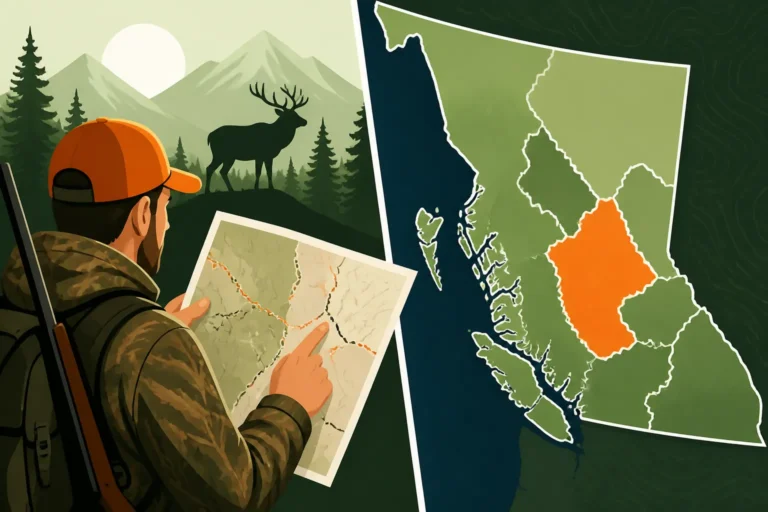
The Bonaparte Plateau, located in south-central British Columbia, isn't just one type of terrain; it's a rich tapestry of ecosystems that vary widely across its expanse. This isn't your classic "one-species-one-habitat" hunting zone; it demands versatility and a keen eye for subtle changes in the environment. Many hunters overlook its potential because it doesn't scream "trophy country" like some of the more remote, high-alpine destinations, but for those willing to learn its nuances, the Bonaparte offers consistent opportunities.
Geographical Features and Ecosystems
Stretching from the Cariboo Mountains in the east towards the Fraser Canyon in the west, the Bonaparte Plateau is defined by its rolling hills, numerous lakes, and a mix of timber stands, open grasslands, and marshy lowlands. You’ll find everything from mature Douglas fir and Lodgepole pine forests, often intermixed with aspen and birch, to expansive open sagebrush flats. The elevation varies quite a bit, from lower river valleys up to over 1,500 meters, which creates distinct microclimates and habitat zones. This varied topography means that game animals aren't uniformly distributed; they move and concentrate in specific areas based on feed, cover, and water availability. What works for finding deer in a timbered draw might not apply to spotting moose near a beaver pond just a few kilometers away. Understanding these subtle shifts is key to successful hunting here.
Key Game Species and Their Habitat Preferences
The Bonaparte Plateau is primarily known for its healthy populations of mule deer, moose, and black bears, with opportunities for smaller game birds like grouse. Each species has its preferred haunts on the plateau, and recognizing these patterns will dramatically improve your success.
- Mule Deer: Mule deer often favour the interface between open grasslands and denser timber. They thrive on the diverse forage found along forest edges, especially where recent logging has created new growth, or in areas with patches of willow and aspen. During the rut, they’ll be more active in timbered draws and benches, particularly on south-facing slopes that warm up faster in the morning sun. You might find them transitioning between the sagebrush flats for feeding and the safety of the timber during the day. Consider areas like Hunting a Sagebrush Bench in the Okanagan or Hunting an Interior Douglas Fir Bench for similar habitat insights.
- Moose: Moose are typically found in the wetter, low-lying areas, gravitating towards the numerous lakes, bogs, and river systems that crisscross the plateau. Willow and aspen stands are their bread and butter, especially during the rut when bulls are calling and raking brush. Don't overlook the edges of clearcuts near water sources; these can be hotspots for moose feeding. If you're looking for prime moose habitat, think about how moose utilize areas like Hunting a British Columbia Lakeshore for Moose or Hunting a Willow Flat in Moose Country.
- Black Bears: Black bears are ubiquitous across the plateau, drawn to its abundant berry patches in late summer and fall, and fresh green-up in the spring. They’ll frequent timbered areas, particularly those with a mix of deciduous and coniferous trees, and are often seen foraging along forest service roads and clearcut edges. Look for them around avalanche chutes in spring, or on berry-laden slopes in late summer. A good starting point for bear habitat can be found in Hunting Fall Bears on British Columbia Berry Slopes.
- Grouse: Ruffed grouse are common in alder bottoms and along creek drainages, while blue grouse prefer higher, drier timbered ridges. Spruce grouse are found in denser conifer stands.
Accessing and Navigating the Bonaparte Plateau
The Bonaparte Plateau is generally accessible, especially compared to some of British Columbia's more remote mountain ranges. However, "accessible" doesn't always mean "easy." You'll encounter a mix of well-maintained main forest service roads, rougher secondary roads, and deactivated spurs that require careful planning and a capable vehicle. The real trick is knowing where to go and how to ensure you're hunting on public land.
Forest Service Road Networks and Challenges
The plateau is crisscrossed by an extensive network of Forest Service Roads (FSRs), many of which are active logging routes. These main arteries provide decent access deep into the backcountry, but they also come with inherent challenges. Active hauling roads require vigilance, proper radio protocols, and yielding to industrial traffic. Deactivated roads, often marked by gates or cross-ditches, might mean parking and walking or using an ATV, which can significantly expand your hunting grounds away from road hunters. Always research current road conditions and closures before heading out. Sometimes a road marked "deactivated" on a map might still be passable with a high-clearance 4×4, while another "active" road could be completely washed out. This is where up-to-date mapping tools become invaluable. For navigating these complex road systems, knowing Finding Open Forest Roads in British Columbia and Driving a Deactivated Logging Road can be incredibly helpful.
Mapping Tools and Land Ownership
Understanding land ownership is paramount on the Bonaparte Plateau, as patches of private land, including ranch land and Indigenous territories, are interspersed with vast tracts of Crown land. Straying onto private land without permission can lead to serious legal issues and gives all hunters a bad name.
This is where digital mapping applications become indispensable. Tools like onX Hunt allow you to clearly see land ownership boundaries, FSRs, and topographical features right on your phone or GPS device. They can highlight Crown land, private parcels, and even specific hunting management units (MUs) with their boundaries. This functionality prevents accidental trespass and helps you pinpoint public access points. Similarly, applications like GoHunt can offer scouting layers and additional mapping data that complement traditional paper maps. Before any trip, spend time digitally scouting, identifying potential access points, and confirming land status. It's also wise to cross-reference with the official BC government land information resources when possible, as digital apps rely on regularly updated data.
| Feature | Description | Hunting Implication |
|---|---|---|
| Crown Land | Publicly owned land, generally open to hunting with appropriate licenses. | Primary hunting grounds. Focus scouting and access here. |
| Private Land | Owned by individuals or corporations (e.g., ranches, private timber). | Requires explicit permission to enter or hunt. Respect boundaries. |
| Forest Service Roads | Main roads for industrial access and public use. Vary in condition. | Good for vehicle access, but be aware of industrial traffic and potential closures. |
| Deactivated Roads | Roads no longer maintained, often gated or ditched. | Excellent for walking or ATV access to less pressured areas. |
| Lakes & Rivers | Numerous water bodies, particularly common in the eastern and central plateau. | Attract moose and waterfowl. Can offer boat access in some areas. |
| Open Grasslands | Patches of sagebrush and natural grasses, often interspersed with timber. | Prime feeding areas for deer; good for glassing. |
| Dense Timber | Lodgepole pine, Douglas fir, aspen, birch forests. | Provides cover and bedding areas for all big game; challenging for still-hunting. |
Navigating Backcountry and Remote Areas
Even with good roads, the Bonaparte Plateau has plenty of backcountry. Once you leave your vehicle, navigation becomes crucial. Rely on your GPS, map, and compass skills, especially in timbered areas where visibility can be limited. Topographic maps help identify saddles, draws, and benches that funnel game. Remember that cell service is unreliable, if not completely absent, in much of the plateau. A satellite communication device is a non-negotiable safety item for solo hunters or groups venturing far from main roads. Always tell someone your plans and expected return time. Safety in the backcountry is about being prepared for anything. Consider how you'd manage in situations like Emergency Planning in British Columbia's Backcountry and ensure you have reliable Satellite Communication on a Remote Hunt.
Hunting Strategies for the Plateau's Game
Hunting the Bonaparte Plateau successfully means adapting your tactics to the specific species and the varied terrain. It's a place where patience and keen observation often pay off more than simply covering vast distances aimlessly.
Mule Deer Tactics
Mule deer on the Bonaparte Plateau respond well to a combination of glassing and still-hunting. In the more open grassland and sagebrush areas, particularly during early morning and late evening, find a good vantage point and use your optics to systematically scan hillsides, draws, and forest edges. Look for subtle movements, unusual shapes, or the flick of an ear. Once a deer is spotted, a careful stalk is often required to close the distance. This is where understanding the terrain and wind direction becomes critical.
In the timbered areas, still-hunting is often more effective. Move slowly, taking one or two steps, then pausing for several minutes to scan for movement or listen for sounds. Pay attention to fresh tracks, rubs, and droppings – especially around bedding areas on north-facing slopes during warmer weather, or south-facing slopes when it's colder. Early season mule deer often hide in dense cover, making them tough to spot. Later in the fall, as the rut approaches and snow starts to fall, they might become more visible as they concentrate on winter range or become more active during daylight hours. Learning to spot sign and interpret animal movement is crucial, similar to Reading Blacktail Sign in Wet Ground, even though it's a different species.
Moose Calling and Tracking
Moose on the Bonaparte Plateau are typically found in and around wetlands, lakes, and dense willow thickets. During the rut, which usually peaks in late September and early October, calling can be incredibly effective. A bull moose will often respond aggressively to cow calls and bull grunts, especially if you can simulate the sound of a bull raking brush. Set up downwind of likely moose habitat, make your calls, and be prepared for a bull to approach quickly and silently. Patience is key here; don't give up on a setup too quickly.
Outside of the rut, tracking fresh sign in soft ground around water sources can lead you to feeding areas. Look for broken branches, tracks, and droppings. Moose are creatures of habit, often using the same travel corridors between feeding and bedding areas. Understanding how to interpret these signs and how Calling Moose in the Rut works can be the difference between seeing a bull or not. Always be mindful of wind direction, as a moose's sense of smell is legendary.
Bear Hunting Strategies
Spring bear hunting on the Bonaparte Plateau often revolves around finding areas of new green growth after the snow melts. Logging roads and clearcut edges, particularly those with good aspect (south-facing slopes) that warm up quickly, are prime spots. Bears will emerge from their dens seeking fresh grasses and forbs. Glassing these clearcuts and road systems from a distance in the early morning and late evening can be very productive. Glassing Logging Roads for Spring Bears is a classic strategy that works well here.
In the fall, bears shift their focus to berries. The plateau's diverse vegetation means you'll find huckleberries, saskatoons, and other berry-producing shrubs. Locating a good berry patch, often on south or west-facing slopes, and either patiently waiting or still-hunting through it can yield results. Remember bear safety protocols at all times, especially when hunting in dense cover. A bear's behaviour can be unpredictable, so carry bear spray and know how to use it, as highlighted in Bear Safety While Hunting in British Columbia.
Seasonal Considerations and Planning
Hunting the Bonaparte Plateau requires understanding how the seasons influence game movement, access, and overall hunting conditions. Each season presents its own opportunities and challenges.
Spring and Fall Opportunities
- Spring (April – June): This is prime time for black bear hunting. As snow recedes, bears are out foraging, often visible on greening clearcuts and avalanche paths. Access can be tricky early in spring due to snow lingering at higher elevations or muddy, soft roads. Focus on lower elevation areas and south-facing slopes. Moose and deer are recovering from winter and generally dispersed, making them harder to target.
- Fall (September – November): This is the busiest hunting season on the plateau, offering opportunities for mule deer, moose, and black bears.
- September: Archery season opens for deer and moose. Black bears are often still focused on berries. Temperatures can be mild, but mornings can be frosty. Water levels are typically lower, allowing access to some areas that are boggy earlier in the year. Hunting British Columbia's September Archery Opener would be highly relevant here.
- October: Rifle seasons open for many species. The mule deer rut is starting, and moose are in their full rutting phase. This is often when you'll see more hunters in the popular areas. Snow can begin to fall at higher elevations, pushing some game down. Pay attention to Hunting British Columbia's October Rifle Opener.
- November: Late-season deer hunts can be excellent as bucks are more active during the rut and snow often pushes animals into more accessible lower elevation winter ranges. However, roads can become impassable with significant snowfall, closing off large sections of the plateau.
Weather and Road Conditions
The weather on the Bonaparte Plateau can change rapidly, especially in the shoulder seasons. Early fall can see warm, dry days quickly turn to freezing temperatures and heavy snow. Always pack layers of clothing and be prepared for all conditions. Understanding Weather Windows in British Columbia's Mountains is crucial. Rain can turn dirt roads into slick, impassable mud traps, while early snow can mean getting stuck miles from the nearest paved road.
Before heading out, always check local weather forecasts. Also, consult with local Forest Service offices or logging companies for current road conditions and any active logging operations that might affect access or safety. Many FSRs are not maintained in winter, and gates may be locked as snow levels rise. A sturdy 4×4 vehicle with good tires is a necessity, and carrying chains is always a smart move in the late fall. Be prepared for self-rescue if you get stuck, which means having a shovel, traction aids, and a winch or recovery gear.
Essential Gear and Considerations for Plateau Hunting
Having the right gear isn't just about comfort; it's about safety and effectiveness when hunting in a diverse area like the Bonaparte Plateau. From navigation tools to packing out game, being prepared makes all the difference.
Optics and Scouting Equipment
Good optics are non-negotiable for hunting the Bonaparte Plateau, especially when glassing open grasslands and clearcuts for deer and bears. A quality pair of binoculars (10×42 or 12×50) and a spotting scope (15-45x or 20-60x) are essential for identifying animals at a distance and judging antler or horn size. Remember, a good tripod for your spotting scope and binoculars will save your eyes and reveal far more detail. Spend time before your hunt practicing with your optics, learning how to grid-search an area efficiently.
Beyond optics, reliable mapping on your phone or a dedicated GPS unit is critical. As mentioned, apps like onX Hunt or GoHunt are invaluable for understanding land ownership and navigating FSR networks. A compass and paper map should always be carried as a backup, in case your electronics fail. Scouting ahead of time, whether in person or using satellite imagery, helps you pinpoint potential game corridors, feeding areas, and bedding sites, saving precious hunting time. Learning to effectively use these tools is similar to Scouting a British Columbia Management Unit Online.
Packing Out and Meat Care
Successfully harvesting an animal on the Bonaparte Plateau is only half the battle; getting the meat out and cared for properly is the other, often more strenuous, part. The plateau's rolling hills can quickly turn into steep, brushy ravines, making packing out a heavy load a significant physical challenge.
Always bring a sturdy frame pack, game bags, and sharp knives. Even if you're hunting relatively close to a road, you might find yourself quartering an animal and packing it a few kilometers through tough terrain. If hunting during warmer early seasons, keeping meat cool is a priority. Consider bringing coolers with ice if you have a short pack out, or learning how to hang meat in the shade, particularly if you're setting up a more remote camp. For bigger animals like moose, having a partner or even two can be a game-changer. Think about strategies like Quartering a Moose in Grizzly Country or Packing Meat With a Frame Pack to prepare yourself. Proper meat care ensures you don't waste your harvest and honour the animal.
Disclaimer
This article is for general informational purposes only and does not constitute professional advice. Laws, prices and regulations vary by location and change over time. Consult a qualified professional for guidance on your specific situation.