Hunting Mule Deer on a British Columbia Burn
Finding the right spot to chase mule deer in British Columbia can feel like an endless puzzle, especially when you're looking at landscapes that have been dramatically altered by wildfire. It’s easy to look at a recently burned area and think it’s nothing but desolation, a wasteland where no self-respecting deer would dare to tread. But for the savvy hunter, these burn scars aren't just remnants of destruction; they can actually be dynamic, often overlooked havens that offer incredible opportunities if you know what to look for and how to approach them. This comprehensive guide will walk you through the nuances of hunting mule deer on a British Columbia burn, from understanding how fire changes the habitat to employing effective strategies in these unique environments.
Why Mule Deer Thrive (or Survive) in Burn Zones
It might seem counterintuitive, but many burned landscapes, particularly a few years post-fire, can become prime mule deer habitat. The immediate aftermath is certainly harsh, but nature's recovery process often creates a buffet of browse and new opportunities for these adaptable animals. Understanding this ecological shift is crucial to successfully hunting these areas.
Immediate Aftermath and Forage Response
When a wildfire sweeps through, especially in the interior of British Columbia where ponderosa pine and Douglas fir forests are common, it initially devastates everything. The forest floor is scorched, trees are often reduced to charcoal, and the immediate food sources are gone. However, this destruction is often a catalyst for renewal. Within a year or two, sometimes even sooner, sunlight can finally reach the forest floor that was once shaded by a dense canopy. This sudden influx of light, combined with nutrient-rich ash from the burned vegetation, triggers an explosion of new growth. Weeds, forbs, grasses, and fast-growing shrubs like willow, aspen, fireweed, and various berries begin to emerge, providing a smorgasbord of high-quality, digestible forage for mule deer. This new browse is often more nutritious and accessible than the older, tougher growth it replaces, making these areas incredibly attractive to deer seeking sustenance. If you're curious about how these changes affect local wildlife broadly, check out our piece on What Wildfire Has Done to British Columbia Game.
Shelter, Security, and Predation Concerns
While burns offer abundant food, they can initially lack the dense cover deer prefer for security and thermal regulation. In the first few years, large swaths might be wide open, making deer feel exposed. However, deer are incredibly adept at finding pockets of unburned timber, draws, or north-facing slopes that offer sanctuary. These unburned islands, even small ones, become critical escape routes and bedding areas. As the new vegetation grows taller and thicker, it slowly begins to provide more cover. Additionally, fallen timber from the fire can create natural obstacles and hiding spots. Hunters need to remember that predators like wolves and cougars also key into these areas, as the concentrated deer population offers easier hunting. This means deer in burned zones might be even more skittish and prone to seeking dense cover during hunting pressure. Understanding these dynamics is key, as deer might move into adjacent unburned areas or thick regeneration for bedding and security, venturing into the open burns primarily for feeding during low-light hours.
Seasonal Movements and Post-Burn Cycles
The attractiveness of a burn can change significantly with the seasons and over time. In early seasons, when new growth is succulent and abundant, mule deer will heavily utilize these areas. As the season progresses and the forage matures or snow begins to fall, deer might shift their focus. Older burns, perhaps five to ten years old, can be exceptionally good. The new growth has had time to establish, offering both food and increasingly dense cover that mature bucks cherish. However, very old burns, especially those twenty years or more, might see the re-establishment of a dense canopy, shading out the understory once again, making them less productive. It’s a cyclical process. Mule deer, especially the bigger bucks, are often found in areas with a mosaic of habitat types – a mix of old growth, new burns, and recovering forests. When you consider Why Mule Deer Move to Winter Range, these burn areas can also be critical transitional or wintering grounds, depending on their elevation and proximity to traditional ranges.
Strategic Scouting in Post-Fire Landscapes
Hunting a burn effectively starts long before you ever set foot in the woods. Thorough scouting, both from your computer and on the ground, is paramount to understanding how deer are using these altered environments.
Utilizing Topographic Maps and Satellite Imagery
Before packing your boots, dive into your mapping software. Tools like GoHunt are invaluable for researching potential burn areas. Start by identifying recent burns (within the last 2 to 10 years are often best, but some older ones can still be productive) within your target management unit. Look for areas with diverse terrain – draws, ridges, benches, and especially those pockets of unburned timber or thick regeneration that survived the fire. These unburned areas, often called "islands" or "skips," are critical. Pay close attention to the edges where the burn meets unburned forest. This transition zone is a high-traffic area. Use the historical satellite imagery feature on your mapping tool to see how the vegetation has recovered over time. A burn that looks completely barren on a 2019 satellite image might be lush with new growth in a 2023 image. Look for old logging roads, game trails, and water sources. Sometimes, fire suppression efforts create new access roads or water catchments that can become magnets for deer. This kind of diligent digital homework is part of what makes Scouting a British Columbia Management Unit Online so effective.
Ground Scouting and Identifying Key Sign
Once you have a few promising spots identified on your map, it's time to hit the ground. Be prepared for challenging travel; burned areas can be a maze of fallen timber, ash, and unstable soil. Your primary goal is to confirm what you saw on the map and find fresh deer sign. Look for tracks in the soft ash or mud around water sources. Droppings will indicate feeding and bedding areas. Pay extra attention to the edge of the burn, especially where it transitions into thick cover. Look for rub lines, which can be particularly evident on any surviving smaller trees or new saplings, especially during the rut. Browse lines on new growth will tell you what deer are eating and how frequently they're visiting. If you find a patch of unburned timber within the burn, explore it thoroughly for bedding sites – flattened areas of grass or pine needles, often under thick branches, where deer have rested. These ground observations are crucial for understanding the current usage of the burn.
Timing Your Scouting Efforts
The best time to scout a burn often depends on the season you plan to hunt. For a fall rifle hunt, a late summer or early fall scouting trip is ideal. This allows you to see the current forage conditions and identify fresh sign as deer begin their seasonal movements. If you're planning an archery hunt, getting in there a bit earlier, perhaps mid-summer, can give you a better idea of summer feeding patterns before hunting pressure sets in. During these early season scouting trips, you might even get a chance to do some Glassing an Interior Hillside for Mule Deer and identify specific bucks, though they will almost certainly change their patterns once hunting season begins. Remember that deer patterns can shift with changes in weather, food availability, and hunting pressure, so recent sign is always the most reliable indicator.
Effective Hunting Strategies for Burned Terrain
Hunting burned areas requires a different mindset and approach compared to traditional forested or open country. The unique characteristics of the landscape demand adaptive strategies.
Spot-and-Stalk Tactics in Open Burns
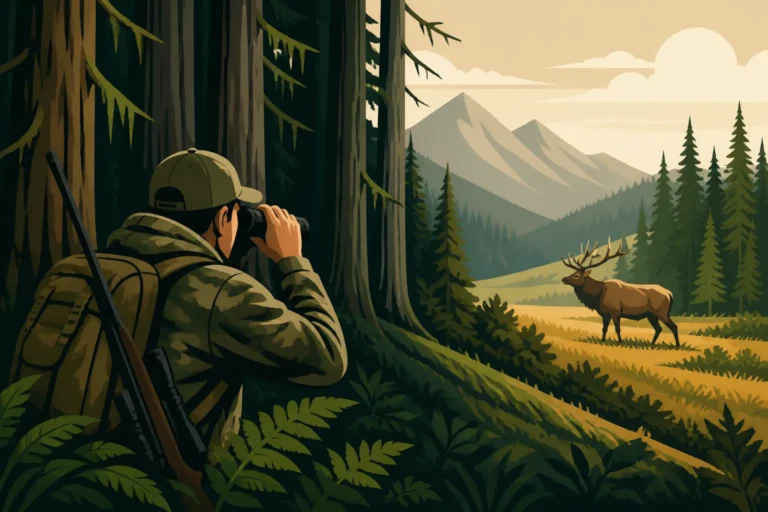
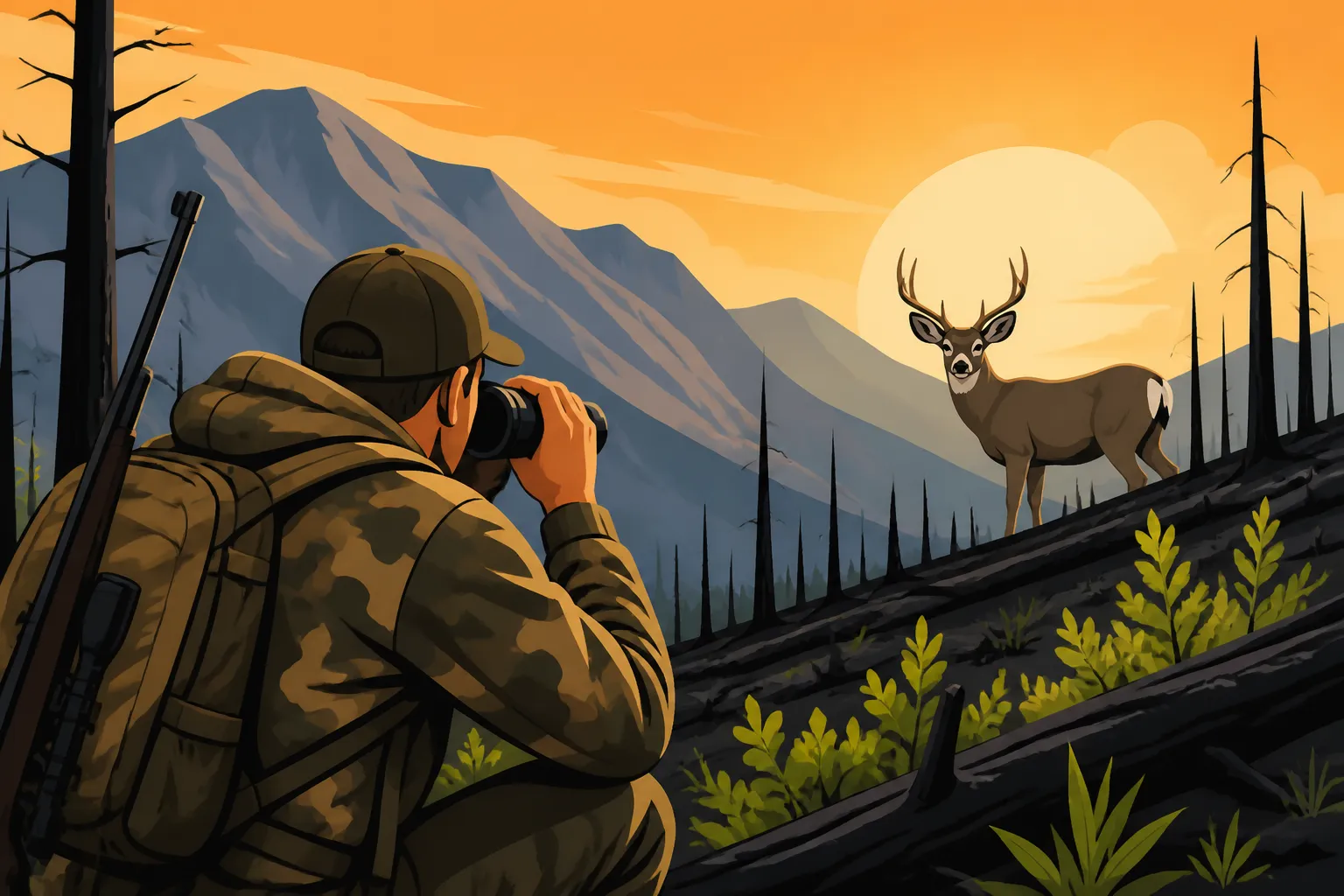
Many burns, especially those a few years old, can be quite open with excellent visibility, making them perfect for spot-and-stalk hunting. The key here is patience and optics. Find a high vantage point – a ridge, an unburned knoll, or even a strategic section of an old logging road. Use high-quality binoculars or a spotting scope to systematically glass the entire burn, focusing on edges, pockets of cover, and shaded slopes where deer might be bedding down. GoHunt's mapping features can help you identify these vantage points and plan your approach. Deer will often feed in the open areas during the first and last hours of light, then retreat to pockets of cover or the burn's edge during the day. Once you spot a buck, the stalk can be incredibly challenging. The ground is often noisy with fallen timber and brittle ash, and the lack of cover means you need to use every contour, every charred stump, and every piece of new growth to your advantage. Wind direction is absolutely critical; swirling winds are common in burns due to the broken canopy, so constant vigilance is required. For more general advice on this method, consider reading about Spot-and-Stalk Mule Deer in British Columbia.
Still-Hunting the Edges and Pockets
While spot-and-stalk is great for wide-open areas, many burns are not entirely devoid of cover. There will be fingers of unburned timber, gullies with thick regenerating shrubs, or dense patches of new growth. This is where still-hunting excels. Focus on slowly and quietly moving through these transition zones and cover pockets. Walk ten steps, stop, and glass intently for five minutes. Pay attention to movement, unusual shapes, or changes in texture. The stark contrast of black charred trees against vibrant new growth can make it hard to spot deer, as their natural camouflage blends surprisingly well. Use the wind, move into it, and be incredibly deliberate with every step. These areas are where deer feel safe, so they're often moving slowly, browsing, or bedded down, offering you a better chance for a close encounter. This method often overlaps with tactics for Hunting a Second-Growth Timber Block as young regenerating forests share some similar characteristics in terms of cover and forage.
Gear Considerations for Burned Areas
Hunting burns demands specific gear considerations. Footwear is paramount. You'll be walking on uneven, often soft, or slippery ash, over jagged burnt stumps, and through dense fallen timber. Sturdy, waterproof boots with excellent ankle support are non-negotiable. Be prepared for your gear, especially clothing, to get dirty and possibly acquire a smoky smell. Camouflage patterns that incorporate greys and browns will blend better with the charred landscape than traditional green forest patterns. Bring plenty of water, as natural sources might be scarce or contaminated by fire retardants, though in British Columbia's wet climate, many burns recover water sources quickly. A good pair of gaiters will help keep ash and debris out of your boots. Lastly, a sturdy frame pack is invaluable not just for carrying your gear, but also for getting a mule deer out of potentially difficult terrain. This applies particularly when considering Packing Out of British Columbia's Steep Country.
Navigating the Unique Realities of Burned Areas
Hunting in a post-wildfire landscape presents distinct challenges that go beyond just finding deer. Safety, access, and environmental awareness are critical.
Ash, Debris, and Terrain Hazards
The ground conditions in a burned area can be treacherous. Deep ash can hide unstable terrain, loose rocks, or even pits from burned-out stumps. Fallen trees, often referred to as "jackstrawed timber," create an obstacle course that can be exhausting to navigate. Standing dead trees, or "snags," pose a significant hazard as they can fall without warning, especially on windy days or after heavy rain. Always be aware of your surroundings, wear appropriate safety gear, and consider bringing a sturdy hiking pole for stability. The fine ash can also be incredibly dusty in dry conditions, making it uncomfortable to breathe and covering all your gear. Rain can turn ash into a slick, muddy paste, making footing even more difficult. These are the very real frustrations that hunters face, making careful preparation essential.
Water Sources and Fire Suppression Impacts
Wildfires can drastically alter hydrology. Smaller streams might dry up, and others might run black with ash and debris. While deer are resilient and will find water, be mindful of what you're drinking if filtering from natural sources; fine ash can clog filters quickly. Some burns may also have areas where fire retardants were dropped, which can be toxic. Always assume water sources are compromised and carry enough water for your trip, or verify the safety of local sources. On the flip side, fire suppression efforts can sometimes create new water sources or improve existing ones, like small ponds or dugouts for helicopter buckets. These become valuable focal points for wildlife and should be noted during your scouting.
Public Access and Road Conditions
Accessing burn areas can be a significant hurdle. Forest Service Roads that were once clear might be washed out, blocked by fallen timber, or deemed unsafe by forestry officials. Some roads might be temporarily closed for rehabilitation or logging of fire-damaged timber. Always check current road conditions and access restrictions with BC Wildfire Service, local forestry offices, or the relevant logging companies if accessing private land. GoHunt maps are a good starting point to identify roads, but they won't tell you about current closures. In some cases, a burn might improve access by clearing dense underbrush, allowing for easier travel off-road, but this is often short-lived as new growth quickly takes over. Be prepared for significantly longer travel times, and always have a contingency plan. Our guide on Hunting British Columbia's Logging Road Network offers additional insights into navigating these systems.
Here's a table summarizing the unique aspects of hunting in burned areas:
| Feature | Impact on Mule Deer | Hunter's Approach | Challenges for Hunters |
|---|---|---|---|
| Forage | Abundant, nutritious new growth (grasses, forbs, shrubs) post-fire. | Focus scouting on areas with 2-10 year old burns for optimal browse. | Overlooked due to initial desolation. |
| Cover/Security | Reduced initial cover; reliance on unburned pockets, regenerating growth, fallen timber. | Target edges of burns, unburned islands, and thick regeneration for bedding. | Deer can be skittish due to increased exposure; difficult stalking. |
| Visibility | Often greatly improved in open areas. | Utilize high vantage points for extensive glassing (spot-and-stalk). | Contrast of charred trees and new growth can make deer hard to spot. |
| Ground Travel | Ash, fallen timber, unstable soil, snags. | Wear sturdy boots, gaiters; carry a hiking pole; plan routes carefully. | Noisy, physically demanding, risk of injury from falling trees/unstable ground. |
| Water Sources | Can be scarce, contaminated, or altered by fire. | Carry ample water; verify safety of natural sources if used. | Filters can clog with ash; potential for toxins from fire retardants. |
| Access | Roads may be damaged, closed, or open due to fire suppression. | Check current road conditions, closures, and permits. Be prepared for walk-ins. | Road closures, washouts, difficult vehicle passage. |
| Predation | Potential increase in predator activity due to concentrated prey. | Be bear aware, especially with grizzlies; consider carrying bear spray. | Deer are more alert and prone to rapid escape. |
| Hunting Pressure | Can be lower initially as hunters avoid "dead" areas. | Explore less obvious spots; capitalize on early season opportunities. | Can increase in known productive burns. |
Disclaimer
Hunting is an inherently risky activity. The information provided in this guide is for informational purposes only and should not replace proper training, local regulations, or common sense safety practices. Always prioritize safety, respect wildlife, and adhere to all British Columbia hunting regulations. Conditions in burned areas can change rapidly, so stay informed and be prepared for all eventualities.