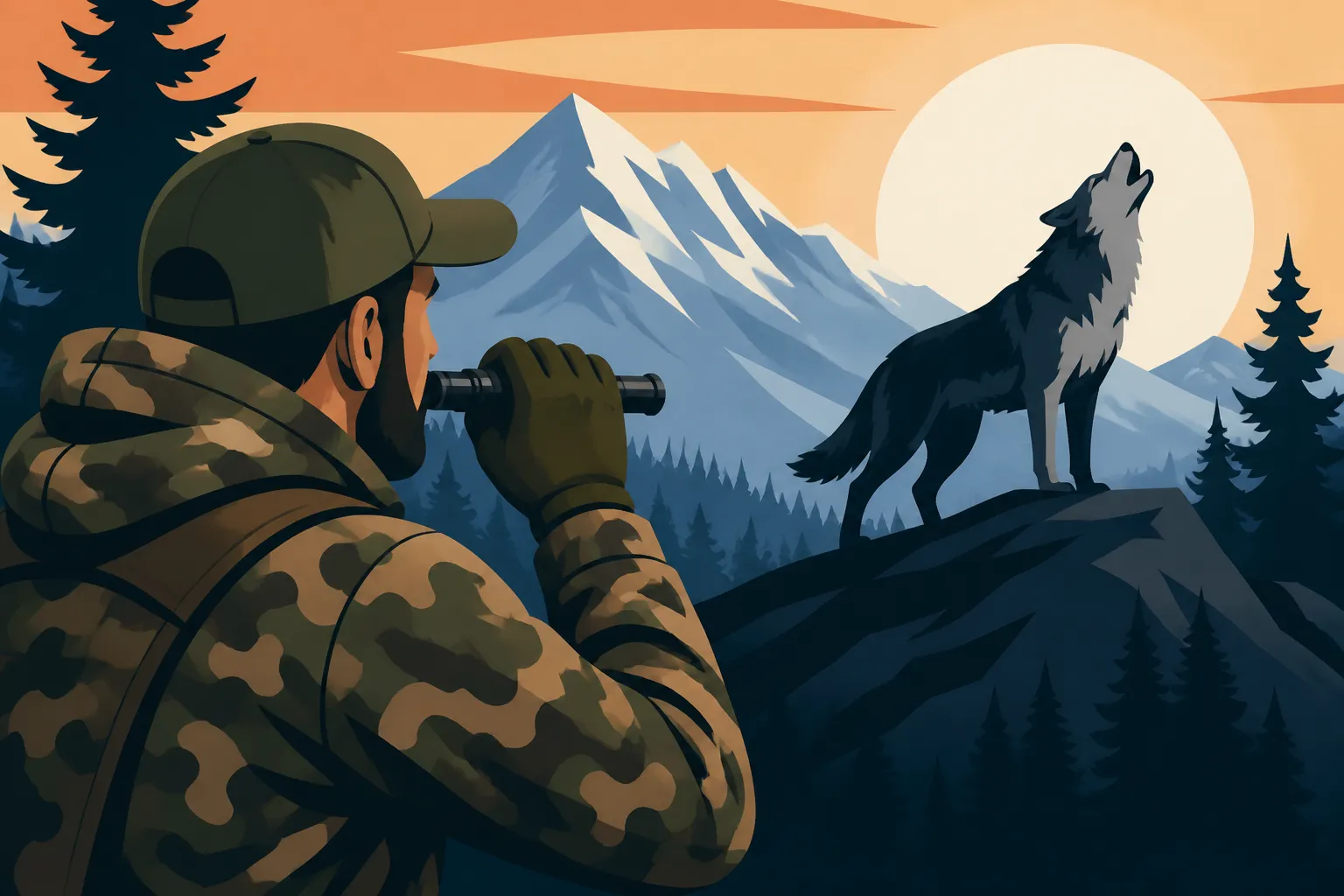
Calling Wolves in British Columbia
The elusive nature of wolves in British Columbia can make them one of the most challenging, yet rewarding, big game animals to pursue. Many hunters spend countless hours in the bush without ever catching a glimpse, let alone having an opportunity. This comprehensive guide will equip you with the knowledge and strategies to significantly improve your chances of successfully calling in these intelligent predators in BC's diverse landscapes.
Understanding British Columbia's Wolves and Their Behavior
Before you even think about blowing a call, you need a solid grasp of who British Columbia's wolves are and how they operate. These aren't just any predators; they are highly intelligent, social animals with incredibly sharp senses, making them a formidable quarry.
Wolf Distribution and Habitat in British Columbia
British Columbia is home to a robust wolf population, with varying densities and behaviors depending on the region. From the dense coastal rainforests of Vancouver Island and the Great Bear Rainforest to the vast interior plateaus and the rugged northern mountains, wolves have adapted to nearly every ecosystem. In the northern reaches, such as the Peace Region and Omineca, wolf packs can be found ranging across vast territories, often following migratory caribou or moose herds. In the Kootenays and Okanagan, they might be more localized, preying on deer and elk. Knowing the primary prey species in a given area can greatly inform your calling strategy, as a wolf accustomed to hunting elk will react differently than one primarily focused on deer. It’s critical to understand that their habitat is often tied directly to their food source, so scouting for game trails and areas of high ungulate activity is a great first step. Many hunters use platforms like GoHunt to overlay game distribution maps with public land access to identify potential wolf territories.
Wolf Vocalizations and Communication
Wolves communicate through an intricate array of vocalizations, each serving a specific purpose. The iconic howl is probably the most recognized, used for long-distance communication within the pack, to locate separated members, or to announce their presence to other packs. A "lonesome howl" can often be used by hunters to elicit a response, allowing them to pinpoint a pack's location. Barks, on the other hand, are typically alarm signals, indicating danger or a threat. Whimpers and yips are often associated with younger wolves or submissive behavior within the pack, and mimicking these can sometimes pique the curiosity of a dominant animal. Understanding these nuances is crucial because a misplaced or poorly executed call can either bring a wolf in or send it running in the opposite direction. Pay close attention to subtle changes in their vocalizations; a series of short, sharp barks might indicate they’ve winded you, while a drawn-out, rising howl could be an invitation.
Seasonal Influences on Wolf Activity
Wolf behavior, and thus their responsiveness to calls, shifts dramatically with the seasons. During the breeding season in late winter and early spring, males might be more aggressive and territorial, potentially responding to challenge howls. As spring turns to summer, and pups are born, packs are often more localized around dens. This can be a challenging time to call, as adults are highly protective and wary. The fall, particularly leading into the rut for deer and elk, often sees increased wolf activity as they are actively hunting and stocking up for winter. During the harsh British Columbia winters, when food can be scarce, wolves become highly opportunistic and might be more inclined to respond to distress calls, as any potential meal is worth investigating. Always check Wolf Season Dates and Bag Limits for your specific region, as these can vary. Understanding these seasonal patterns helps you decide not just when to call, but what call to use and where to focus your efforts.
The Art and Science of Wolf Calling
Calling wolves is less about brute force and more about finesse, patience, and a deep understanding of animal psychology. It’s a chess match in the wilderness, where every move matters.
Types of Calls: Manual, Electronic, and Voice
Wolf calling utilizes a range of tools, from simple manual calls to sophisticated electronic devices. Manual calls, like open-reed and closed-reed callers, offer incredible versatility. Open-reed calls are fantastic for mimicking a wide array of distress sounds, from a deer fawn bleat to a rabbit in agony, simply by varying lip pressure and airflow. They require practice but allow for extreme realism. Closed-reed calls, while often limited to one or two sounds, can produce consistent, high-quality prey distress sounds with less effort. Then there are electronic calls, which have revolutionized predator calling. Brands like Foxpro and Primos offer units pre-loaded with dozens of highly realistic wolf howls, pup yips, and a vast library of prey distress calls. Their ability to project sound at various volumes and switch calls instantly from a distance is a huge advantage, allowing you to control the sound without moving, thus keeping your position concealed. Learning to use your own voice for howls, mimicking a lonesome wolf or an excited pup, can also be surprisingly effective, adding a layer of natural realism that electronic calls sometimes lack.
Mimicking Prey Distress: Tapping into the Hunger Drive
One of the most effective strategies for calling wolves is to tap into their primary motivation: hunger. Mimicking a struggling or injured prey animal can be incredibly compelling. Fawn bleats are often a go-to, as a young deer in distress represents an easy meal for a pack. Rabbit or hare distress calls are also highly effective, particularly in areas where these small mammals are a significant food source. The sound of a coyote pup in distress can also be a potent attractant; wolves often view coyotes as competition and will investigate (and often dispatch) a distressed coyote. The key is to make these sounds believable. Start subtly, then increase intensity as if the animal is truly fighting for its life, then taper off. Wolves are incredibly wary, and an unrealistic, repetitive sound will quickly send them packing. Remember that wolves have an incredible sense of hearing, so even faint sounds can carry a long way, especially on calm days. When scouting, resources found on GoHunt can sometimes highlight areas with known high prey densities, helping you choose the most appropriate distress call.
Mimicking Wolf Vocalizations: The Social Play
Beyond distress calls, directly mimicking wolf vocalizations can also be highly effective, though it requires more caution and a nuanced approach. A "lonesome howl" is often used to locate a pack. You let out a short, clean howl and listen intently for a response. If you hear one, you've located them, and you can then switch to a distress call to try and bring them in. Challenge howls are more aggressive and might provoke a dominant male to investigate, but they can also warn a pack that another wolf is encroaching on their territory, potentially pushing them away. Assembly howls, mimicking a pack gathering, can sometimes draw in curious individuals or small groups looking for new pack members. Pup yips and whines, when used sparingly, can sometimes appeal to a pack's protective instincts or curiosity. The trick with wolf vocalizations is to listen and react. Are they curious? Aggressive? Are they trying to locate you? Each response dictates your next move. Patience and knowing when to use which type of howl are paramount.
Gear and Setup for Successful Wolf Calling
Having the right gear and knowing how to set up your ambush are just as vital as the calling itself. Wolves have incredible senses, and any mistake in your setup can quickly blow your chances.
Selecting the Right Caller for British Columbia Conditions
Your choice of caller can significantly impact your success. For British Columbia's vast and varied terrain, a versatile electronic caller with a broad range of pre-programmed sounds is often the most effective. Look for units that are durable, weatherproof, and have good battery life, especially if you're venturing into remote areas. Models that allow for a remote control with a clear display are ideal, letting you change sounds and adjust volume without moving a muscle. Some hunters prefer to carry both an electronic caller for its range and a manual call for more nuanced, close-in sounds, especially if a wolf hangs up just out of sight. When researching specific models, many hunters consult community forums or gear reviews, which can often be accessed through platforms like GoHunt to see what's performing well in similar British Columbia conditions. Remember that sound travels differently in dense timber compared to open country, so choosing a call with good projection and clarity is important.
Camouflage and Scent Control: The Unseen Hunter
Wolves possess an unparalleled sense of smell, estimated to be hundreds of times more powerful than a human's. This means scent control is not just important; it's absolutely critical. Wear clean hunting clothes, use scent-eliminating sprays, and always play the wind. Setting up where the wind blows your scent away from where you expect the wolves to approach is non-negotiable. Camouflage is equally important. While wolves don't see color like humans do, they are highly attuned to movement and contrast. Break up your outline, sit still, and use natural cover. Ghillie suits or similar highly effective camo can be a huge asset. Think like a wolf: where would they naturally approach from? Set up to conceal yourself from that direction, often with your back to dense cover, allowing you to observe their approach without being silhouetted. Neglecting scent or visual camouflage is a surefire way to educate a wolf and ensure it never comes to a call again.
Weapon Choice and Optics for Wolves
Given the wary nature of wolves, shot opportunities can be fleeting and at considerable distances. A flat-shooting rifle in a calibre suitable for deer and elk, such as .270, .30-06, 7mm Rem Mag, or .300 Win Mag, is generally recommended. Wolves can be surprisingly tough animals, so ethical shot placement with an adequate cartridge is paramount. Accuracy is key, so practice shooting from various field positions, including prone and off a bipod or shooting sticks. High-quality optics are also non-negotiable. A good pair of binoculars (10×42 or 12×50) for spotting movement and identifying wolves at a distance, and a rifle scope with clear glass and sufficient magnification (e.g., 3-9x or 4-12x), will greatly increase your chances of making an accurate shot when the moment arises. Many hunters also carry a rangefinder to precisely determine distances, especially in open country or when Hunting British Columbia's Alpine in September.
Advanced Strategies and Situational Awareness
Bringing in a British Columbia wolf often comes down to adapting your strategy on the fly and being acutely aware of your surroundings. It's about reading the situation and responding appropriately.
Reading the Terrain and Wind: Setting the Ambush
When setting up a calling stand, the terrain and wind are your two most important allies (or enemies). Always try to set up with the wind in your favor, blowing your scent away from where you anticipate the wolves will approach. Elevated positions, like a ridge or knoll, can offer better visibility but can also expose you. Conversely, setting up in a draw or thick timber might offer better concealment but limited visibility. Look for natural funnels or pinch points in the landscape where wolves are likely to travel, such as the edge of a timberline, a creek bottom, or a game trail. Consider the sun's position – don't set up facing directly into it, and ideally, have it at your back or to the side so approaching animals aren't backlit. Take advantage of natural cover, but ensure you have clear shooting lanes. Remember that wolves are masters of using cover, so they will likely approach from downwind, circling to get a sniff. This means you need to have a clear view of their likely approach paths. For hunters navigating vast areas, understanding how to read a British Columbia Management Unit Map and contour lines can reveal these critical ambush locations.
Calling Sequence and Duration: The Patient Approach
Wolf calling isn't a sprint; it's a marathon of patience. A typical calling sequence might start with a soft series of distress calls for a few minutes, followed by a period of silence (10-15 minutes), then perhaps a more intense distress call, or even a series of howls. The duration of your stand should generally be longer than for coyotes, often 30-60 minutes, as wolves are more cautious and take their time to investigate. Don't be afraid to mix it up. If distress calls aren't working, try a lonesome howl or a series of pup yips. Varying the volume and intensity is also crucial. Sometimes a soft, intermittent sound is more effective than a loud, continuous one, especially if you suspect wolves are already in the vicinity. Never give up too early; many successful wolf calls happen in the final minutes of a stand, as a wary animal finally commits. Keep your movements minimal and your eyes scanning constantly, as wolves can materialize silently and quickly.
Patience and Persistence: The Hunter's Virtues
Wolf hunting in British Columbia, especially with calls, demands an extraordinary amount of patience and persistence. You will likely make many stands without seeing a single wolf, or you might hear them respond but never see them commit. This is normal. Don't get discouraged. Every stand is a learning experience. Pay attention to wind shifts, animal tracks, and subtle changes in the environment. Note what worked (or didn't work) in different locations and conditions. Success often comes to those who are willing to put in the time, adapt their strategies, and learn from every outing. Persistence means scouting extensively, understanding Hunting British Columbia's Logging Road Network for access, and being willing to hike into more remote areas where wolves might feel safer. Remember that British Columbia is wild country, and preparedness for longer outings is key; consider Emergency Planning in British Columbia's Backcountry and carrying Satellite Communication on a Remote Hunt.
Safety and Ethics: Responsible Wolf Hunting
Responsible hunting practices are paramount when pursuing wolves. Always be aware of your surroundings, especially if you're calling in grizzly country; review Bear Safety While Hunting in British Columbia protocols before heading out. Know and strictly adhere to all British Columbia hunting regulations, including bag limits, season dates, and legal methods. Ethical hunting means making clean, humane shots and ensuring you can recover any animal you shoot. Wolves play a vital role in British Columbia's ecosystems, and respectful hunting helps maintain healthy populations and a positive public image for hunters. Always confirm your target and backstop before firing.
Here’s a quick overview of common wolf calling scenarios:
| Calling Scenario | Primary Call Type | Recommended Approach | Key Considerations |
|---|---|---|---|
| Locating a Pack | Lonesome Howl, Intermittent Howl | Short, sharp howls, listening intently for a response. Repeat every 15-20 minutes from a stationary vantage point. | Best in calm conditions. Use at dawn/dusk. Don't overdo it. Be ready to move to a calling stand if a response is heard. |
| Bringing in a Hungry Wolf | Prey Distress (Fawn, Hare, Pup) | Start softly, build intensity, then taper off as if prey is dying. Mix with periods of silence. Maintain for 30-60 minutes. | Play the wind. Use good camouflage. Be ready for a quick, silent approach. Electronic calls are highly effective for realism and hands-free operation. |
| Challenging a Dominant Wolf | Challenge Howl, Aggressive Howl | Use sparingly. Best during breeding season. A bold, confident howl followed by silence. Can elicit an aggressive response or a direct approach. | High risk, high reward. Can push wolves away. Only use if you're confident in your setup and shooting ability. |
| Curiosity/Social Engagement | Pup Yips, Whines, Assembly Howl | Soft, intermittent pup sounds or a short assembly howl. Focus on piquing curiosity rather than aggression or hunger. | Effective for younger, less wary wolves. Can sometimes draw in a lone wolf looking for a pack. Good for follow-up if initial distress calls fail. |
Disclaimer
Hunting in British Columbia carries inherent risks. The information provided in this guide is for informational purposes only and should not be considered a substitute for professional guidance or adherence to all local, provincial, and federal hunting regulations. Always prioritize safety, responsible hunting practices, and consult the most current British Columbia Hunting and Trapping Regulations Synopsis before any hunting activity.