Hunting a Powerline Right-of-Way
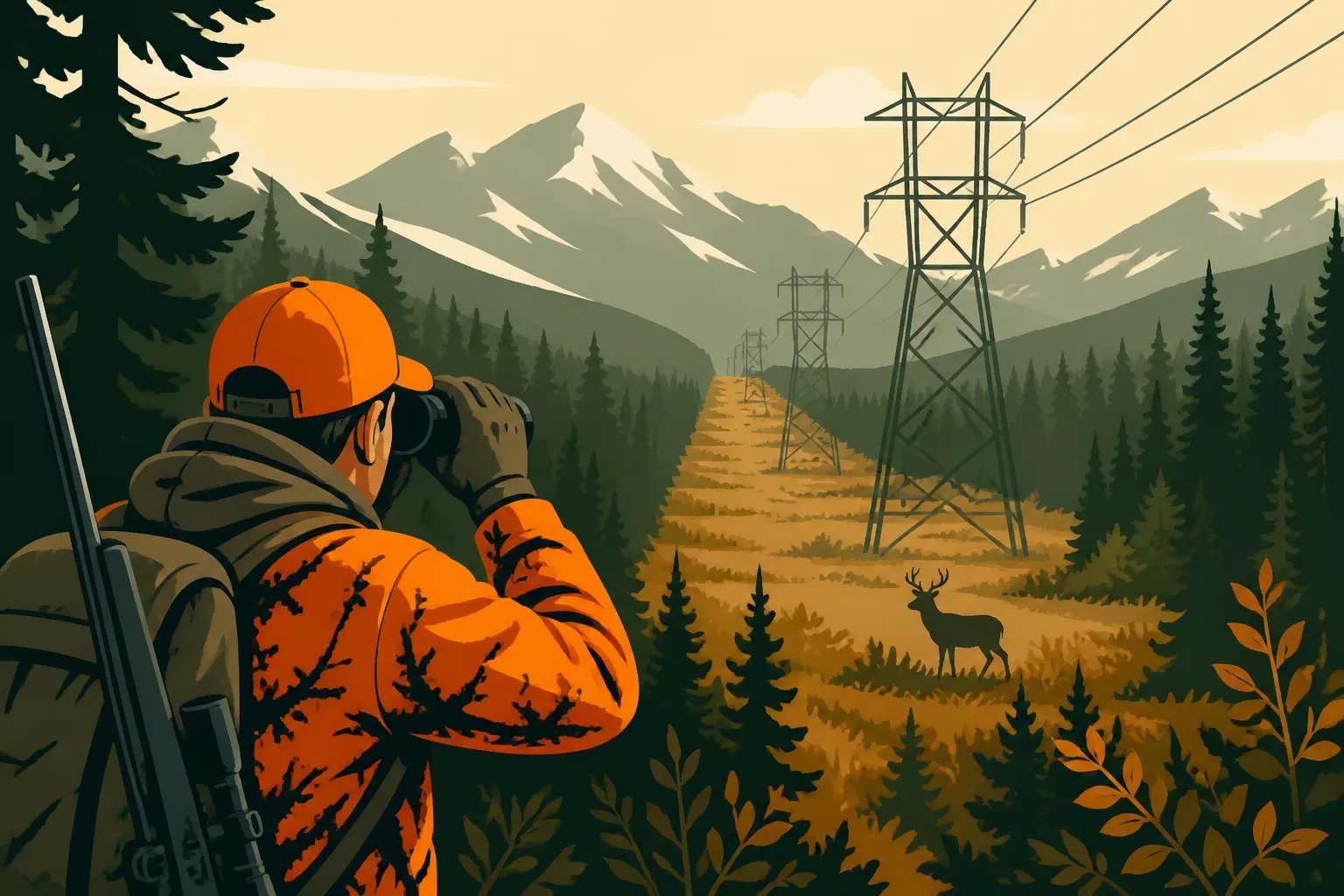
For many hunters, the sight of a clear-cut swath carving through the dense British Columbia forest, marked by towering transmission lines, might seem like an anomaly—a place best avoided due to human activity or perceived lack of natural habitat. However, overlooking these powerline rights-of-way means missing out on some genuinely fantastic hunting opportunities. These linear clearings often act as magnets for various game species, providing unique food sources, travel corridors, and vantage points that can be incredibly productive if you know how to approach them. This guide will walk you through understanding why these areas are valuable, how to effectively scout them, and the best strategies to employ for a successful hunt.
Understanding the Appeal of Powerline Rights-of-Way for Game
Powerline rights-of-way, or ROWS as they're often called, are much more than just corridors for electricity. They are linear clearings that run for miles, cutting through different terrain types and creating distinct ecological zones. This unique environment makes them surprisingly attractive to a variety of British Columbia's wildlife.
Diverse Forage and Edge Habitat
One of the biggest draws for game animals to powerline rights-of-way is the abundance of diverse forage they offer. Because these areas are regularly cleared of tall trees to prevent interference with the lines, sunlight reaches the forest floor, promoting the growth of various grasses, shrubs, and low-lying vegetation. This creates a smorgasbord for herbivores like deer and elk. You'll often find different successional stages of plant growth, from fresh shoots after recent clearing to more established berry bushes that attract bears in the fall.
Consider a section where a right-of-way passes through a mix of timber and a small boggy area. The bog might offer succulent sedges, while the drier sections sprout clover and various forbs. This patchwork of food sources, combined with the safety of the adjacent timber, creates ideal edge habitat. Animals can feed in the open, sunny corridor and quickly duck into the dense cover if they feel threatened. This "edge effect" is a well-known biological principle, and powerlines are essentially miles of engineered edge, ripe for exploration.
Natural Travel Corridors and Funnels
Beyond food, powerline rights-of-way serve as natural highways for wildlife. Imagine you're a deer trying to get from one timber patch to another, or an elk moving between feeding grounds. The clear, relatively easy-to-navigate path of a right-of-way offers a less arduous route than pushing through dense bush. These corridors often connect different habitat types, such as mature timber, young regenerating cutblocks, or even agricultural fields, acting as critical funnels that channel animal movement.
A moose, for instance, might use a powerline right-of-way to move from a willow-choked creek bottom to a higher feeding bench. Black bears, especially during spring and fall, will often follow these lines as they forage for berries or move between denning sites and food sources. Understanding these travel patterns means focusing your efforts on pinch points—areas where the right-of-way narrows, crosses a creek, or funnels into a small gap between obstacles. These are prime locations for ambushing animals as they traverse their daily routes. Hunting a Cleared Utility Corridor is very similar to how animals will use these features.
Pre-Hunt Scouting and Accessing Powerline Corridors
Successful hunting on a powerline right-of-way starts long before you ever step foot in the woods. Thorough scouting, both from your computer and on the ground, is absolutely essential. These areas can be extensive, and blindly wandering will likely lead to frustration rather than success.
Digital Reconnaissance with Mapping Tools
The first step in scouting any powerline right-of-way is to conduct a detailed digital reconnaissance. Mapping tools are your best friend here. Platforms like onX Hunt or even standard satellite imagery can reveal a wealth of information. Look for where the powerline crosses natural features such as creeks, river bottoms, ridges, or draws. These intersections often create bottlenecks that animals prefer to cross. Pay attention to changes in elevation, as deer and elk will often feed on sunnier slopes in the morning or bed on north-facing slopes during warmer parts of the day.
You can also identify potential access points, such as logging roads or old ATV trails that parallel or cross the right-of-way. It's crucial to identify if the land the powerline traverses is Crown land or private property, as access rules differ significantly. Many powerlines in British Columbia run through vast tracts of public land, but they can also cut through private timber holdings or even farms. Using a robust mapping platform like onX Hunt can help you visualize the terrain and identify potential game crossings long before you step foot on the ground. Scouting a British Columbia Management Unit Online should always be your first step.
Ground Scouting and Identifying Key Features
Once you've narrowed down some promising spots on your map, it's time for boots on the ground. Ground scouting a powerline right-of-way will confirm your digital findings and reveal subtle clues that maps can't. Look for fresh tracks, droppings, rub lines, and bedding areas. Animals will often stage just inside the timber edge before entering the open right-of-way, or they might bed down in dense pockets of cover adjacent to the clearing.
Identify specific trails animals are using to enter and exit the right-of-way. These trails will be more pronounced where animals feel secure. Pay attention to prevailing wind directions and how they interact with the topography of the clearing. A slight dip or rise might create a natural thermal draft that you can use to your advantage. Tools like GoHunt's mapping features can show topography and potential pinch points along these corridors, helping you plan your approach and exit routes silently. Also, remember to look for signs of human activity; heavy ATV or vehicle use might push game into quieter sections.
Effective Hunting Strategies for Powerline Rights-of-Way
Hunting powerline rights-of-way requires a blend of patience, stealth, and adapting your tactics to the unique environment. Since these areas are often quite open, traditional still-hunting in the timber can be combined with strategic stand hunting or glassing to maximize your chances.
Stand Hunting and Ambush Points
Because powerline rights-of-way funnel game, they are excellent locations for setting up a stand or finding a natural ambush point. Look for areas where game trails cross the right-of-way, especially near thicker cover or terrain features that encourage animals to cross in a predictable spot. A slight knoll or a cluster of stunted trees at the edge of the clearing can provide enough cover for you to set up undetected.
For deer or elk, consider setting up during the early morning or late evening, as these are prime times for animals to move out of heavy cover to feed or travel. If you're targeting bears in the spring, look for green-up along the edges or in wet depressions where they might be foraging. During the fall, berry patches are a huge draw. Your setup should ideally offer a clear line of sight down the right-of-way for a good distance, allowing you to spot approaching game and prepare for a shot. Ensure your scent is managed, as the open air can carry it far.
Still Hunting the Edges and Pockets
While the open nature of the right-of-way might tempt you to walk right down the middle, a more effective tactic is often to still-hunt or slow-stalk along the timbered edges. Move slowly, taking five steps and then stopping to observe for several minutes. Use your binoculars to pick apart the shadows and look for tell-tale signs like horizontal lines (a deer's back) or flicking ears. Animals will often parallel the open right-of-way just inside the treeline, using the cover for security while still benefiting from the nearby forage. Still-Hunting Second Growth for Blacktail emphasizes similar patience and observation.
Also, don't overlook small pockets of cover or islands of timber within the right-of-way itself. Sometimes, these small patches of trees, left for various reasons during clearing, become bedding areas or temporary hiding spots for game. Creep into the wind, always ready to stop and scan. If you're after something like a black bear, remember they can be surprisingly camouflaged against the ground vegetation, so always scrutinize dark shapes.
Glassing for Distant Game
The expansive views offered by powerline rights-of-way make them perfect for glassing. Find a good vantage point, perhaps a small rise or a spot where the right-of-way opens up significantly. Set up your spotting scope or high-powered binoculars and systematically scan the entire visible area, paying close attention to the edges, any dips or rises in the terrain, and where game might emerge from the timber. Glassing an Interior Hillside for Mule Deer provides excellent advice applicable here.
This strategy works particularly well for mule deer in more open, interior regions, or for elk moving across larger clearings. It requires patience, but it allows you to cover a vast amount of ground with your eyes without expending energy or risking spooking game by moving too much. If you spot an animal at a distance, you can then plan a careful stalk, using the topography and any available cover to close the distance undetected.
| Aspect of Powerline Hunting | Advantages for Hunters | Potential Challenges | Species Often Encountered |
|---|---|---|---|
| Visibility | Long sight lines, easier spotting | High exposure for hunter | Deer, Elk, Bear, Moose |
| Forage | Diverse plant growth, food sources | Can be too much open food | Deer, Elk, Bear, Grouse |
| Travel Corridors | Funnels game movement, predictable crossings | Can be heavily used by humans | Deer, Elk, Moose, Wolf, Coyote |
| Edge Effect | Animals use cover close to food | Requires careful approach | Deer, Blacktail, Bear |
| Access | Often paralleled by old roads/trails | Gates, private land, deactivated roads | All species if accessible |
Safety Considerations and Regulations When Hunting Near Powerlines
Hunting on or near powerline rights-of-way isn't just about strategy; it's also crucial to prioritize safety and adhere to specific regulations. The presence of electrical infrastructure introduces unique hazards, and land ownership can be complex.
High-Voltage Hazards and Safe Distances
The most obvious and critical safety concern around powerline rights-of-way is the electricity itself. These lines carry extremely high voltages, and direct contact is almost certainly fatal. Even coming too close can result in an arc flash. Always assume all lines are live and dangerous. Never touch or get near downed lines. If you see one, report it immediately to the local power authority.
Beyond the lines overhead, be aware of the towers or poles themselves. They are not designed for climbing, and doing so is incredibly dangerous. Maintain a safe distance from all electrical equipment. When shooting, always be aware of your backdrop. A bullet traveling down a right-of-way could impact a tower or other infrastructure, creating a hazardous situation, potentially damaging property, or worse. Ensure your shot is clear of any power equipment.
Respecting Land Ownership and Access Rules
While many powerline rights-of-way cross Crown land in British Columbia, some definitely pass through private property. It is your responsibility to know whose land you are on. Always verify land ownership using your mapping apps or official land registries. British Columbia Trespass and Private Land Law is clear on hunter responsibilities. Never assume a right-of-way grants public access across private land. If it's private, you need explicit permission from the landowner to hunt or even access that section.
Even on Crown land, access might be limited by gates or deactivated logging roads. Always respect "No Trespassing" signs or private property boundaries. Remember that power companies themselves often own the strip of land directly under the lines, or they have an easement. While this typically doesn't restrict hunting on public land, always be mindful of their operational needs and avoid interfering with any work crews.
Visibility and Shared Use of Corridors
Powerline rights-of-way are often used by more than just hunters and wildlife. ATV riders, dirt bikers, hikers, and even mushroom pickers frequent these cleared areas. This means visibility is not just about spotting game; it's about making yourself visible to other users. Always wear blaze orange, especially during rifle seasons. This is not just a good idea; it's often a legal requirement in British Columbia. British Columbia Blaze Orange and Safety Rules are there for a reason.
Being visible helps prevent accidents and promotes a positive image of hunters as responsible outdoor users. Also, be aware that you might encounter other hunters. Politeness and respecting others' space go a long way in ensuring everyone has a safe and enjoyable experience. Plan your hunt to minimize interaction if that's your preference, perhaps by hunting during off-peak times or in more remote sections of the right-of-way.
Disclaimer
This article is for general informational purposes only and does not constitute professional advice. Laws, prices and regulations vary by location and change over time. Consult a qualified professional for guidance on your specific situation.