Hunting an Estuary Flat at Low Tide
Hunting British Columbia's vast and diverse landscapes often conjures images of rugged mountains or dense forests, but for many seasoned hunters, the tidal flats and estuaries along our expansive coastline offer some truly unique and rewarding opportunities. The frustration of trying to navigate these dynamic environments without understanding their rhythm can be immense, leading to wasted time, missed chances, and even dangerous situations. This guide aims to demystify hunting estuary flats at low tide, providing practical insights to help you successfully plan and execute your next coastal adventure, whether you're after bears, deer, or waterfowl.
Understanding Estuary Flats and Their Allure for Hunters
Estuary flats, often vast expanses of mud, sand, and sediment, form where freshwater rivers meet the saltwater ocean. These unique ecosystems are incredibly rich in nutrients, creating a thriving environment that supports a surprising array of wildlife. For hunters, these areas are not just scenic backdrops; they are dynamic food factories that draw in game animals, especially when the tide recedes and exposes fresh feeding grounds.
What Makes an Estuary Flat So Productive?
Imagine a banquet hall that changes its menu every few hours, always fresh and inviting. That's essentially what an estuary flat is to wildlife. The daily ebb and flow of tides deposit new nutrients, expose shellfish, worms, and various marine invertebrates, and irrigate salt-tolerant vegetation. This constant renewal provides a consistent food source for everything from migratory birds to large mammals. On a given low tide, you might find fresh tracks from a black bear digging for crabs, a black-tailed deer browsing on succulent marsh grasses, or flocks of ducks and geese gorging on exposed mudflats. The interface between the marine and terrestrial environments is a powerful draw, creating concentrated pockets of animal activity that hunters can learn to predict.
Key Species to Pursue on Estuary Flats
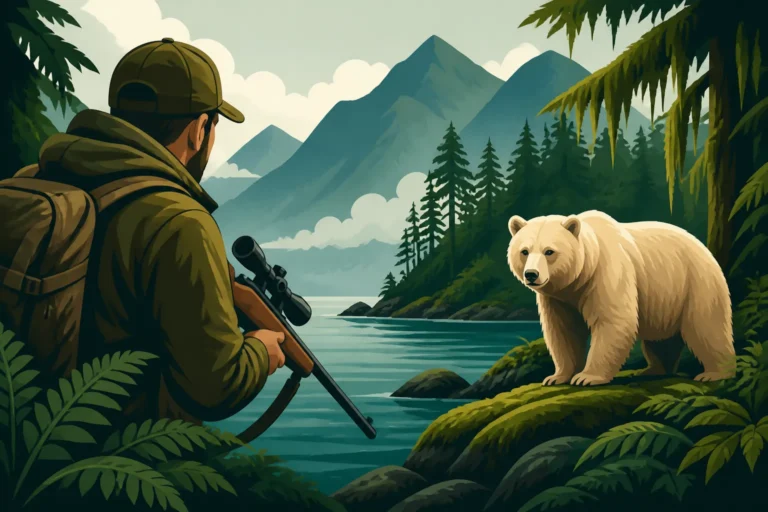
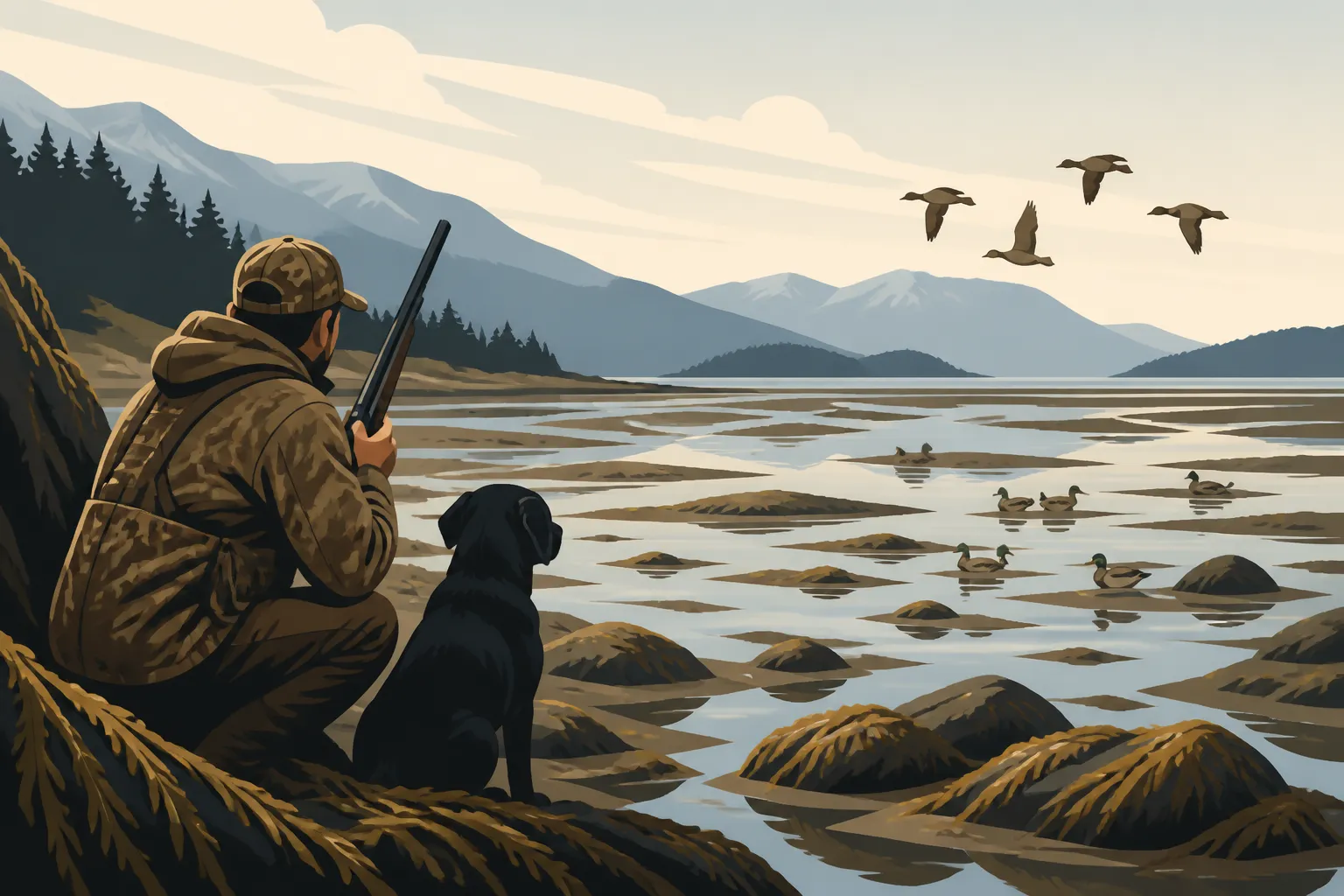
While the specific game available will vary by region and season, estuary flats are prime hunting grounds for several iconic British Columbia species. Black bears are a huge draw, especially in the spring and fall when they frequent the flats to gorge on protein-rich foods like crab, spawned-out salmon carcasses, and nutrient-dense grasses. You'll often see them flipping rocks or digging in the mud. What Bears Eat on a Coastal Estuary details some of their specific foraging habits. Black-tailed deer, particularly the coastal subspecies, are also very much at home here, moving onto the flats to browse on lush vegetation that grows along the edges and within the marsh itself. And, of course, waterfowl – ducks, geese, and various shorebirds – absolutely thrive in these food-rich environments, making for exceptional migratory bird hunting opportunities. Decoying Ducks on a Coastal Estuary provides more insight into pursuing these birds.
Timing Your Hunt: The Critical Role of Low Tide
Understanding the tide is not just important; it's paramount to a successful and safe estuary hunt. Many hunters new to coastal environments underestimate the power and speed of the tides, leading to difficult or even dangerous situations. Low tide isn't just a suggestion; it's the specific window of opportunity when the land you want to hunt becomes accessible.
Reading the Tides: More Than Just a Number
The tide schedule dictates everything. High tide can completely submerge vast areas of flat, turning accessible hunting grounds into impassable water. It's during the lowest tides that the expansive mudflats, sandbars, and marsh edges are exposed, revealing feeding opportunities for game and passage for hunters. You absolutely need to consult tide charts for your specific hunting location. Don't just look for "low tide," look for the lowest low tides of the day, and understand the range. A "minus tide," where the water level drops below the average low, will expose even more ground and typically concentrate game even further. Many outdoor apps, like onX Hunt, can integrate tide charts or link to reliable sources, making this crucial data readily available in the field. GoHunt's resources can also guide you on general coastal season timing, which you'll then overlay with precise tide data.
Consider not just the lowest point of the tide, but the entire period of a receding and rising tide. Animals will often move onto the newly exposed ground as the water pulls back, and then work their way back to higher ground as it starts to come in. This transition period, especially during the last few hours of the outgoing tide and the first few hours of the incoming, can be incredibly productive.
Safety Considerations in Tidal Environments
Hunting estuary flats carries unique safety concerns that must be respected. The primary danger is getting caught by a rising tide, which can quickly cut off your access back to solid ground. Mudflats, while appearing solid, can often be treacherous, with deep, sucking mud that can trap you. Always carry a satellite messenger or a fully charged cell phone (though cell service can be spotty in remote areas, Cell Service on a British Columbia Hunt covers this in more detail).
When planning your route, identify high ground or clear escape routes beforehand. Be acutely aware of how quickly the water can return, especially in narrow channels or around points of land. If you're on a flat that becomes an island at high tide, you absolutely must know your egress strategy. If boating, understand the channels and avoid getting stranded on a shallow flat. It’s always wise to hunt with a partner in these environments, and ensure someone back home knows your float plan or hunting area.
Strategies for Hunting Estuary Flats
Once you understand the 'where' and 'when,' the 'how' becomes the next focus. Hunting estuary flats requires a blend of patience, careful observation, and a precise approach to overcome the open terrain and often challenging conditions.
Approaching and Glassing the Flats
Given the often open nature of estuary flats, your approach needs to be stealthy and well-planned. Animals on the flats can see for long distances, making a direct, hasty approach almost certainly doomed to failure. Often, the best strategy is to arrive at a vantage point overlooking the flat well before the tide is fully out, preferably at first light or late evening when game is most active. Use your optics – binoculars and a spotting scope are indispensable here. Set up in a concealed position, perhaps in the edge timber, behind a rise, or using natural vegetation for cover, and patiently glass the entire area as the tide recedes. Look for movement, subtle colour changes, or even just the shape of an animal. Glassing for Bears on a Coastal Estuary offers great tips on how to effectively use your glass in these open environments.
Identify potential travel corridors, areas of specific forage (like crab beds for bears or lush grass patches for deer), and any elevated spots where animals might bed or pause. The mud itself can tell a story: fresh tracks indicate recent activity, so pay close attention to the size and direction of footprints.
Stalking and Taking the Shot
Once you've spotted an animal, the stalk is the next critical phase. This is where the challenges of the open environment truly come into play. Cover is usually sparse to non-existent on the flats themselves. You'll need to use any undulations in the terrain, tall marsh grasses, or even slow, deliberate movements during the animal's feeding cycles to close the distance. Wind direction is, as always, crucial. A slight shift in wind can carry your scent directly to an animal across hundreds of yards of open ground.
The ground itself can be a major factor. Mud can be noisy and difficult to walk through, making stealth a real test. Practice walking silently in varied terrain. Expect long shots. A reliable rangefinder and a firearm or bow you're proficient with at extended distances are essential. Often, you'll need to utilize a bipod or shooting sticks to get a stable rest in the open. For waterfowl, setting out decoys on the exposed flats and hiding in a blind on the edge is a classic and effective strategy.
Gear Considerations for Estuary Hunting
Your gear choices can make or break an estuary hunt. Waterproof is king. Hip waders or chest waders are often non-negotiable, allowing you to cross shallow channels or navigate muddy sections. Quality rain gear, even on clear days, is important due to coastal fog and sudden showers. Hunting in British Columbia's Coastal Rain goes into more detail about how to dress for these conditions. Your boots need excellent traction for slippery mud and comfort for potentially long walks.
Beyond clothing, a sturdy frame pack is vital for packing out game, especially if you're targeting larger animals like bears or deer. A shovel can be surprisingly useful if you find yourself stuck in deep mud, or if you need to quickly dig a blind. A reliable GPS or mapping app like onX Hunt, pre-loaded with tide data and satellite imagery, is essential for navigation, marking observations, and ensuring you don't get lost or cut off. Always carry enough water, snacks, and emergency supplies, as remote estuary flats can be very isolated.
Navigating Challenges and Ensuring Success
Estuary hunting, while rewarding, presents a unique set of challenges that can deter the unprepared. From the physical demands of the terrain to sharing the space with other users, a successful hunter anticipates and adapts.
The Treachery of Mud and Water
The most significant physical challenge on estuary flats is the mud. It can range from firm sand to deep, sticky muck that can pull off your boots or trap a vehicle. When scouting, pay attention to the types of sediment. Hard-packed areas may offer easier walking, while soft, silty sections should be approached with extreme caution, or avoided entirely. If you're on foot, test the ground ahead with a stick before committing your weight. If using an ATV or other vehicle, understand its limits and always proceed slowly in unfamiliar soft terrain. Remember, a retrieval from a muddy flat can be a monumental and costly undertaking. For those interested in accessing more remote areas, Jet Boat Access on British Columbia Rivers might offer solutions for crossing larger water bodies leading into estuaries.
The unpredictable nature of coastal weather also adds another layer of complexity. Sudden squalls, heavy fog (Navigating Fog on a British Columbia Coast Hunt), and driving rain are common. Your gear needs to be up to the task, and your mental fortitude for hunting in less-than-ideal conditions must be strong.
Sharing the Flats: Other Users and Regulations
Estuary flats are often multi-use areas. Fishermen, birdwatchers, hikers, and other recreationalists might be present, especially on more accessible flats. Be aware of your surroundings, practice extreme caution with firearm safety, and always respect other users of the land. A little courtesy goes a long way in fostering good relationships between different outdoor groups.
It's also crucial to be intimately familiar with British Columbia's specific hunting regulations for estuary areas. These can include restrictions on shooting near dwellings, roads, or within certain distances of water bodies. Understand boundary lines; onX Hunt is particularly valuable for clearly delineating private property, parks, or wildlife management areas where hunting may be restricted or prohibited. Always check the current British Columbia hunting synopsis for specific regulations regarding your target species, season dates, bag limits, and any special conditions for coastal regions. Compulsory reporting might also apply to certain species, Compulsory Reporting Within Thirty Days covers these requirements.
Table: Estuary Hunting Considerations
| Factor | Importance | Key Considerations |
|---|---|---|
| Tides | Critical for access & safety | Consult detailed tide charts (e.g., via onX Hunt or dedicated apps). Focus on lowest low tides. Plan ingress/egress carefully to avoid being cut off. Understand the speed of tidal flow in your specific area. |
| Terrain | Affects mobility, stealth, and safety | Mud can be extremely challenging; test ground. Identify firm walking paths. Be prepared for slippery conditions. Long distances mean sturdy, comfortable, waterproof footwear is a must. Consider the impact of rain on mud consistency. |
| Species | Guides tactics and timing | Black bears often dig for crabs; look for overturned rocks/fresh digs. Black-tailed deer browse marsh grasses; target edges of cover. Waterfowl will feed widely on exposed ground; decoys are key. Research local species habits, as covered in articles like British Columbia's Coastal Black Bears or Black-Tailed Deer on British Columbia's Coast. |
| Visibility | Open country, but also fog | Use high-quality optics for spotting distant game. Plan stalks using minimal cover and wind direction. Be prepared for fog (common in coastal areas) which can drastically reduce visibility and disorient you. |
| Access | Determines how you get there | Consider boat access (Hunting From a Boat on the Coast), vehicle access to road ends, or long walks. Be aware of private land boundaries, which mapping apps like onX Hunt can clearly show. Know whether any deactivated logging roads or trails provide entry, as discussed in Finding Open Forest Roads in British Columbia. |
| Weather | Can change rapidly, impact conditions | Always carry full rain gear. Be prepared for wind, cold, and sudden changes. Strong winds can make long shots difficult and make glassing challenging. Hunting British Columbia's Coastal Rain is a must-read for preparing for these conditions. |
| Regulations | Ensure legal and ethical hunt | Check the current BC hunting synopsis. Understand specific rules for estuaries, migratory bird zones, and any nearby wildlife management areas. Be aware of trespass laws, especially near private shorelines. GoHunt often provides valuable overview info on regional regulations that can help guide further research. |
| Emergency Prep | Vital for remote coastal environments | Carry satellite communication (e.g., InReach or Garmin inReach Mini) as cell service is unreliable. First-aid kit, emergency shelter, fire starter are critical. Inform someone of your plans. Emergency Planning in British Columbia's Backcountry is an excellent resource for any remote hunt. |
Ultimately, hunting an estuary flat at low tide is a truly unique British Columbia experience. It combines the thrill of pursuing game in a wild setting with the intellectual challenge of understanding a complex, dynamic ecosystem. By respecting the tides, preparing for the elements, and employing smart hunting strategies, you'll open up a whole new world of coastal hunting possibilities.
Disclaimer
This article is for general informational purposes only and does not constitute professional advice. Laws, prices and regulations vary by location and change over time. Consult a qualified professional for guidance on your specific situation.