How Coastal Rain Changes Animal Behaviour
Hunting the rugged, rainforest-clad coast of British Columbia is an experience unlike any other, but it often comes with a persistent companion: the rain. Many hunters get frustrated, thinking a rainy forecast means a ruined trip, but the truth is, coastal rain doesn't just stop animals in their tracks; it fundamentally alters their behaviour, senses, and movement patterns. This guide will walk you through how these frequent downpours influence game animals and, more importantly, how you can adapt your hunting strategies to turn challenging weather into a genuine advantage.
The Immediate Impact of Rain on Animal Senses and Movement
When the skies open up on the British Columbia coast, it's not just humans who feel the change. Every creature from the smallest mouse to the largest Roosevelt elk has to contend with altered sensory input and a shifting environment. Understanding these immediate effects is crucial for any hunter hoping to navigate the wet woods successfully.
Scent and Sound Disruption
One of the most profound effects of rain is its impact on a game animal's primary defense mechanisms: scent and sound. When the ground is soaked and the air is laden with moisture, scent molecules are literally washed away or weighed down, making it much harder for an animal to pick up the lingering smell of a predator, or even another animal. Imagine a heavy downpour flushing a forest floor – it's doing the same thing to scent trails. This means that a blacktail deer, usually hyper-vigilant to airborne scent, might be less likely to detect your approach from a distance.
Similarly, rain creates a continuous blanket of noise. The drumming on leaves, the dripping from branches, the gurgle of swollen creeks, and the general hiss of precipitation all work to mask subtle sounds. Your footsteps, even if you’re trying to be quiet, might be covered by the natural symphony of the rain. This doesn't mean you can stomp around carelessly, but it does mean that a well-executed, slow stalk can be incredibly effective, as animals are relying less on their ears to pinpoint threats. The key is to blend with the natural ambient noise, moving when the wind gusts or the rain intensifies, using nature's white noise to your advantage.
Reduced Visibility and Animal Alertness
Just like us, animals experience reduced visibility in heavy rain, and sometimes even in a thick coastal mist. While their vision is often adapted for low light, driving rain can create a hazy, distorted view, making it harder for them to spot movement in the undergrowth or judge distances accurately. This isn't to say they become blind, but their visual field is definitely compromised.
Interestingly, this reduced visibility can sometimes lead to a paradox: animals may be less inherently alert to distant threats because the chances of seeing them are already low. They might rely more heavily on their other senses, which, as we discussed, are also being disrupted by the rain. A big Roosevelt elk might still be wary, but in a driving rain, it's less likely to pick out a hunter trying to slip through the dense timber at 100 yards, compared to a clear, calm day. This can create opportunities for hunters to close distances that would otherwise be impossible. This is where patience and meticulous slow-hunting become paramount.
Changes in Movement Patterns
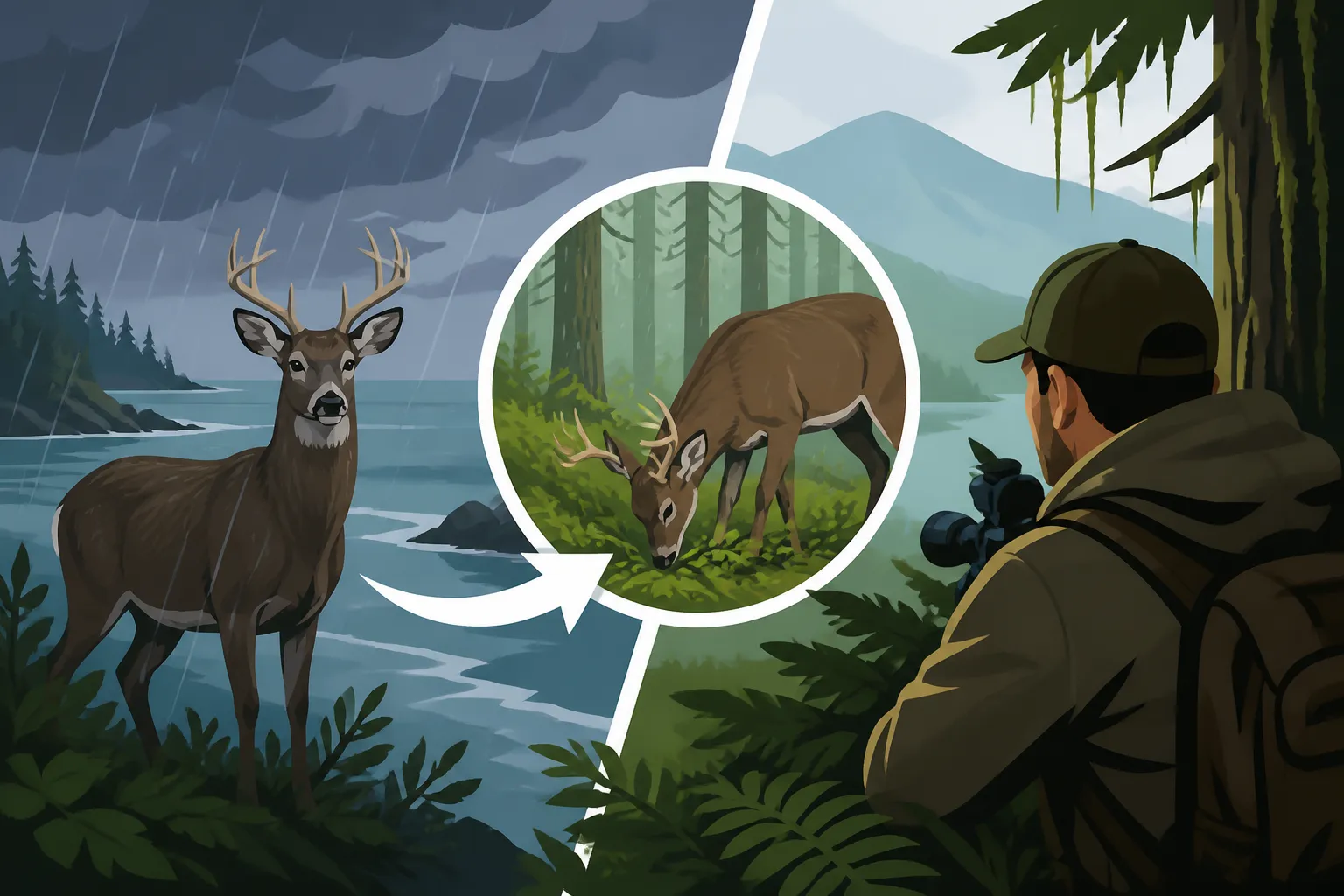
Animals don't typically enjoy being out in an absolute deluge any more than we do. Their movement patterns will shift significantly. In light rain, they might continue browsing or moving, perhaps even becoming more active as the cool, damp air can be pleasant. However, in heavy, prolonged downpours, they will actively seek shelter. This often means moving into thicker cover: dense stands of old-growth timber, deep ravines, under thick canopies of hemlock or cedar, or beneath rock overhangs.
You'll find that primary travel routes might be abandoned for more sheltered paths. Deer might move from open clearings into the edge of a timber block. Black bears might den up or find thick brush to weather the storm. Understanding these shelter-seeking tendencies is vital. Instead of looking for animals out in the open, focus your efforts on these protected areas. This also applies to bedding sites; animals will choose places that offer the most protection from the elements, often on leeward slopes or under dense forest cover. Looking at detailed topo maps, perhaps on an app like GoHunt, can help you identify these natural shelters before you even hit the trail.
How Prolonged Wet Weather Alters Habitat Use and Feeding
Beyond the immediate sensory changes, sustained coastal rain creates long-term shifts in how animals utilize their habitat and what, where, and when they choose to feed. It’s not just a momentary inconvenience; it’s a re-shaping of their daily lives.
Seeking Shelter and Thermal Regulation
One of the primary concerns for any animal in cold, wet weather is maintaining body temperature. Getting soaked to the bone and then being exposed to cold wind is a recipe for hypothermia, even for animals with thick coats. As such, during prolonged periods of rain, animals will prioritize thermal regulation. This means spending more time in sheltered areas that break the wind and shed water.
Think about dense conifer stands on a north-facing slope, or the deep, dark timber that often characterizes British Columbia's old-growth forests. These areas provide excellent overhead cover, protecting animals from direct rainfall and helping to retain some ambient warmth. You'll find elk often move into the thickest timber, sometimes bedding down for extended periods. Deer will tuck into wind-protected pockets or under heavy brush. Understanding these thermal refuges is key to finding them. This is especially true for Hunting British Columbia's Coastal Rain, where constant moisture is a fact of life.
Feeding Behavior and Forage Accessibility
Rain can also have a complex effect on feeding. On one hand, a light, steady rain can soften vegetation and make it more palatable, leading to increased browsing activity. Forage that was dry and tough might become tender and easier to digest. Animals like blacktail deer might take advantage of this to feed more openly, particularly in areas with good cover nearby.
On the other hand, a continuous, heavy downpour can make feeding uncomfortable and inefficient. Animals might seek temporary shelter, waiting for a break in the weather before venturing out to graze or browse. Furthermore, intense rain can wash away certain food sources, or make access to them difficult. Consider salmon spawning streams: while bears might thrive in wet conditions around these streams, if the water levels rise too quickly due to heavy rain, the fish might be harder to catch, or the bears might opt to find shelter until conditions stabilize. Using a tool like GoHunt to understand typical feeding areas and then cross-referencing with weather patterns can give you an edge.
Water Runoff and Access to Water Sources
You might think that in a rainy environment, water isn't a concern for wildlife. While direct access to water might be abundant, heavy rain can transform landscapes and affect how animals interact with water sources. Small creeks can become raging torrents, making them impassable or dangerous. Low-lying areas might flood, forcing animals to higher ground.
This means that while animals won't be actively seeking water for drinking (it's everywhere!), their movement might be dictated by avoiding flooded areas or navigating swollen waterways. Look for animals to be utilizing ridges, benches, or established high-ground trails that stay above the runoff. Conversely, game may use the sound of rushing water to move more freely along creek bottoms, as the natural noise provides excellent cover for their movements. For larger animals like moose, which inhabit some coastal transitional areas, heavy rain might influence their movement through boggy areas, making them stick to slightly higher, firmer ground.
Strategic Adaptations for Hunting in Coastal Rain
Alright, so the rain is coming down. Instead of packing it in, how do you actually turn this challenging weather into a successful hunt? It’s all about adjusting your mindset and your methods.
Adjusting Your Stalk and Approach
This is where the rain truly becomes your ally. With the reduced visibility and disrupted soundscape, you have an unparalleled opportunity to move closer to animals undetected.
- Slow Down, Way Down: Your pace needs to be agonizingly slow. Each step should be deliberate, testing the ground for crunching leaves or snapping twigs before committing your weight. When the rain is heavy, you have more cover for sound, but that doesn't mean you can be noisy. Use the lulls and surges of the rain to your advantage, moving during the louder moments.
- Embrace the Water: Don't be afraid to get wet yourself. Walking through wet brush or even shallow water might be uncomfortable, but it creates less noise than rustling through dry undergrowth. Your waterproof gear is your best friend here.
- Utilize Terrain and Cover: Animals will be seeking shelter, so focus your efforts there. Stalk into thick timber, along the edges of sheltered ravines, and through dense canopy. Use the terrain to break up your silhouette, just as you would on a sunny day, but now with the added benefit of rain obscuring your form. Consider hunting techniques like still-hunting, where you move incredibly slowly, pausing frequently to observe and listen, mimicking the unhurried movement of feeding animals.
Utilizing Weather to Your Advantage
The weather isn't just a backdrop; it's a dynamic tool you can wield.
- Post-Rain Burst Activity: Often, after a significant rain system moves through, especially if it breaks to lighter precipitation or even sunshine, animals will become very active. They'll emerge from cover to feed, stretch their legs, and move to new areas. This can be an incredible time to be out. Plan your hunt to coincide with these post-storm windows.
- Wind Direction is Still Key: While scent is disrupted, wind direction remains paramount. Animals will still tend to bed down with the wind at their back, allowing them to detect threats approaching from their rear. Always play the wind, even in heavy rain. A sudden shift in wind can still carry your scent to an animal that's already on edge.
- Navigating Fog and Mist: Coastal British Columbia is famous for its fog and mist, which often accompany or follow rain. This can further reduce visibility, creating incredible opportunities for close-range encounters. Just like with rain, move slowly and deliberately, using the visual cover to your advantage. Be extra careful with your shot placement in such conditions, ensuring positive target identification. For hunters familiar with Hunting British Columbia's Coastal Rain, this is often when the magic happens.
Gear and Personal Preparedness for the Wet
You cannot effectively hunt in the coastal rain if you are miserable, cold, and wet. Your personal preparedness is paramount.
- Layer Up, Stay Dry: Invest in high-quality, breathable rain gear. This means a good waterproof jacket, pants, and gaiters. Layering is crucial: synthetic or wool base layers that wick moisture, mid-layers for insulation, and your waterproof shell as the outer defense. Avoid cotton at all costs; once wet, it stays wet and will chill you to the bone.
- Waterproof Boots are Non-Negotiable: Your feet will get wet. It's inevitable. But good waterproof boots, combined with quality wool socks, will keep them warm and minimize discomfort. Pack extra socks and change them often at camp.
- Protect Your Optics and Firearm: A scope cover, lens cloths, and even a simple plastic bag can protect your optics from water droplets that obscure your view. For your firearm, consider a waterproof case for transport and a simple gun sock or cloth for protection while stalking. Wipe down your rifle regularly, especially at the end of the day, to prevent rust. Carrying a small amount of oil for quick application can be a lifesaver.
- Navigation Tools: While many hunters use their phones for navigation, wet conditions can quickly drain batteries. Always carry a physical map and compass, and know how to use them. A reliable GPS unit with extra batteries is also a smart choice. Pre-loading your hunting areas on an app like GoHunt can be invaluable, especially if you lose cell service in remote areas. Emergency Planning in British Columbia's Backcountry is something every hunter should take seriously.
Species-Specific Responses to British Columbia's Coastal Downpours
While general principles apply, different game animals on the British Columbia coast respond to rain in slightly nuanced ways, largely dictated by their preferred habitat and natural behaviour.
Blacktail Deer: Masters of the Coastal Jungle
Coastal blacktail deer are perhaps the most quintessential rain hunters' quarry. They live in it, they thrive in it, and they know how to use it.
- Habitat Use: During heavy rain, blacktails will often seek out the thickest second-growth timber, deep ravines, or the dense understory of old-growth stands. They're masters of concealment, and the rain simply adds another layer to their invisibility cloak. Don't overlook the edge of Hunting a British Columbia Island Clearcut Edge where dense regrowth meets the older timber, as they will often seek shelter just inside the tree line.
- Feeding Patterns: In lighter rain, blacktails can become quite active, browsing on succulent new growth. As the rain intensifies, they’ll bed down, often in sheltered spots, waiting for a break. However, they're not afraid to move in a downpour if a prime food source is nearby. They’re very opportunistic feeders.
- Hunting Strategy: Focus on still-hunting through dense cover, paying close attention to thickets and sheltered slopes. Move against the wind, using the rain to mask your sound. Look for fresh sign where they’ve been browsing or bedding. Understanding How Blacktail Use Second Growth will be hugely beneficial.
Coastal Black Bears: Embracing the Wetness
British Columbia's black bears are incredibly adaptable to wet conditions, and the coast is prime bear country.
- Habitat Use: Bears will often use rain as cover for movement, especially if they are feeding on salmon in streams or berries on open slopes. In severe downpours, they might den up or seek shelter under large trees or rock overhangs. But don't assume they're completely inactive; they're driven by hunger.
- Feeding Patterns: Rain can actually enhance some food sources. Berries can become more palatable, and salmon runs often swell with rain, making fish more accessible. Bears will frequently be found near salmon-bearing streams or on berry-laden slopes, even in light to moderate rain. Understanding What Bears Eat on a Coastal Estuary is crucial, as estuaries are often wet places.
- Hunting Strategy: Scout prime food sources, like clearcuts with berry bushes or salmon streams. Be prepared to glass patiently, even in the rain, focusing on these high-value areas. Approach silently, as bears have excellent hearing, but the rain can help you mask your footfalls. For Spring Bear Hunting British Columbia's Logging Roads, rain can make the ground soft, allowing for quieter walking.
Roosevelt Elk: Movement in the Old Growth
Roosevelt elk are giants of the coastal forests, and they handle the rain with impressive resilience.
- Habitat Use: These large animals will often move into the thickest old-growth timber or dense second growth during heavy rain. The massive canopies provide significant shelter. They are less likely to be found in open clearcuts or meadows during downpours, preferring the protection and thermal regulation offered by dense forests.
- Feeding Patterns: Elk will continue to feed in light to moderate rain, especially if the forage is good. In heavy rain, they will seek shelter, often bedding down for extended periods. However, they are still very mobile animals and will move through thick timber with surprising stealth.
- Hunting Strategy: This is where tracking skills become invaluable. Fresh elk tracks in wet mud are easy to follow, and the rain helps cover your sound. Focus on still-hunting through dense timber and along the fringes of old growth. Listening for the distinct "clack" of antlers or the rustle of a large body moving through brush can be your best bet. Calling can also be effective in the rain, as the sound carries differently and can sometimes pique an elk's curiosity, especially during the rut. For Bugling Roosevelt Elk on the Coast, you might find the rain dampens the sound slightly, requiring you to be closer.
Coastal rain is not a hindrance; it's an integral part of the British Columbia hunting experience. By understanding how it affects animal senses, movements, and habitat use, and by adapting your own strategies and gear, you can unlock incredible opportunities that clear, sunny days might never provide. Embrace the wet, learn its rhythm, and you'll find a whole new world of hunting possibilities opens up.
| Animal Behavior Element | Light/Moderate Rain | Heavy/Prolonged Rain | Hunter Adaptation |
|---|---|---|---|
| Scent Detection | Reduced, but still a factor | Significantly reduced; scents washed away | Play the wind, but rely less on animals detecting you by scent. |
| Sound Detection | Slight masking; animals still cautious | Significant masking; continuous ambient noise | Move slowly and deliberately; use rain/wind gusts to cover sound. |
| Visibility | Mildly reduced; misty/hazy | Heavily reduced; driving rain, fog | Stalk closer; use visual cover; verify target carefully. |
| Movement | Active; may feed more openly | Seek shelter; reduced overall movement; use sheltered trails | Focus on thick cover and thermal refuges; look for movement post-storm. |
| Feeding | Active; softer forage is appealing | Intermittent; seek shelter; wait for breaks | Target sheltered feeding areas; hunt during breaks in heavy rain. |
| Shelter Seeking | May seek cover from wind, not necessarily rain | Prioritize dense cover, overhangs, deep timber | Focus efforts in thick forest, leeward slopes, deep ravines. |
Disclaimer
This article is for general informational purposes only and does not constitute professional advice. Laws, prices and regulations vary by location and change over time. Consult a qualified professional for guidance on your specific situation.