Where to Look for Sheds in the Interior
The British Columbia Interior is a vast, wild place, and for many of us, the idea of finding a majestic set of dropped antlers out in that expanse feels like looking for a needle in a haystack. It’s a common frustration to spend hours or even days hiking through promising country only to come up empty-handed. But with a bit of knowledge about animal behaviour, habitat, and some strategic searching, you can significantly increase your odds of success. This guide is all about helping you focus your efforts and understand where to concentrate your energy when looking for sheds in British Columbia's diverse interior landscapes.
Understanding the "Why" and "When" of Shed Hunting in the BC Interior
Before you lace up your boots and head out, it's really helpful to understand why and when deer and elk drop their antlers. It's not just a random event; there's a biological rhythm to it, heavily influenced by local conditions. Knowing this rhythm is your first step to being in the right place at the right time.
When British Columbia Bulls Drop Their Antlers
The timing of antler drop is crucial. You don't want to be out there too early, disturbing animals that haven't shed yet, or too late, after other shed hunters or rodents have had their pick. For mule deer and elk in the BC Interior, the typical window for antler drop generally runs from late winter through early spring.
- Mule Deer: Often, mule deer bucks will start dropping their antlers in late December or early January, with the peak usually occurring in February and March. However, a buck's overall health, age, and nutritional status can influence this. A buck that's been stressed by a tough rut or a harsh winter might shed earlier. Older bucks sometimes hold onto their antlers longer than younger ones, but it’s not a hard and fast rule. In the Interior, where winter conditions can vary wildly from mild to severe, you might find sheds earlier in areas with less snowpack or later in deeper snow.
- Elk: Elk bulls tend to hold their antlers longer than deer, typically shedding from late February through April, with March being a prime month. Again, their physical condition after the rut plays a big role. A bull that spent a lot of energy bugling and fighting during the fall will often shed sooner than one that had an easier season. For a deeper dive into their seasonal movements, check out When British Columbia Bulls Drop Antlers.
The best time to actually go looking for sheds is usually in March and April, once the majority of the animals have dropped their antlers and the snow has receded enough to make access feasible. This is particularly true for higher elevation wintering grounds or north-facing slopes that hold snow longer.
Why Deer and Elk Drop Antlers Where They Do
Animals don't just drop their antlers anywhere; they often shed them in specific types of areas. Think about where deer and elk spend their time during the late winter and early spring when they're most likely to be dropping. This means focusing on their winter range and the routes they use to access it.
They're conserving energy after the rut and during the leanest part of the year. So, they'll be found in places that offer:
- Shelter: Protection from harsh weather, especially cold winds and deep snow. Dense conifer stands, south-facing slopes, and pockets of timber offer thermal cover.
- Food: Access to available browse, grasses, or even agricultural fields if they're in proximity. Animals will spend a lot of time feeding, and that means a lot of time with their heads down, increasing the chances of an antler popping off.
- Security: Areas where they feel safe from predators, with good visibility or dense escape cover nearby.
Antlers are often jarred loose by physical activity. Imagine a buck jumping a fence, pushing through dense brush, or even just lowering its head to feed. These everyday movements can cause a weakened pedicle to finally give way. Therefore, focus your search on areas where these actions are common.
Key Habitats and Terrain Features to Focus On
Now that you understand the "when" and "why," let's zero in on the "where." The BC Interior is huge, but by understanding typical deer and elk behaviour, you can eliminate vast amounts of unproductive ground and focus on high-potential areas.
Winter Range: The Mother Lode for Shed Hunters
This is, without a doubt, the most important place to start your search. Deer and elk, especially during the harsh interior winters, concentrate in specific areas to survive. These wintering grounds are where they spend weeks, sometimes months, and thus where they're most likely to drop their antlers.
- South-Facing Slopes and Aspect: These slopes get the most sunlight, melting snow faster and exposing valuable forage earlier in the spring. They also absorb more warmth, making them more comfortable for animals. Look for benches, draws, and scattered timber on these slopes. Animals will often bed down in these sun-drenched spots.
- Lower Elevations: While some animals winter high, the vast majority of deer and elk in the Interior will move to lower elevations as snow depths increase. River valleys, major creek systems, and the lower benches of mountains are prime wintering habitat. Think about the big drainages that cut through the landscape.
- Proximity to Forage: Identify areas with accessible food sources. This could be native grasses, shrubs like Saskatoon berry or willow, or even deciduous trees that offer palatable twigs. Hunting a Sagebrush Flat for Mule Deer or Hunting an Interior Douglas Fir Bench describes environments that often fit this bill. Animals spend a lot of their day browsing, and the repeated motion of their heads, especially when pushing through thickets, can help dislodge an antler.
- Sheltered Timber Pockets: Within these broader winter ranges, look for islands of dense timber, often conifers, that provide crucial thermal cover from cold winds and snow. These are prime bedding areas where animals might spend long periods, increasing the chance of an antler being dropped quietly while resting.
Before heading out, a good mapping application like a digital topo map or even something like GoHunt can be invaluable. Use it to identify south-facing aspects, elevation changes, and areas with suitable vegetation. You can also use it to scout out potential winter ranges from home, noting access points and contours.
Transition Zones and Travel Corridors
Animals don't stay in one spot forever. As winter breaks and spring green-up begins, they start to move from their constricted winter ranges towards their summer feeding grounds. These transition zones and travel corridors are excellent places to find sheds.
- Natural Funnels: Look for areas where topography naturally funnels animals. This could be a narrow valley bottom, a saddle between two peaks, a pinch point along a river, or even a section of dense timber that gives way to a more open feeding area. Any place where a large number of animals are forced into a smaller area is a hot spot.
- Ridgelines and Benches: As animals ascend from lower wintering grounds, they often follow ridgelines or prominent benches that offer easier travel and less snow. These routes can be well-worn with game trails, making them easier to identify.
- Creek and River Crossings: Waterways often act as natural barriers, and animals will use specific, easier crossing points. The effort of navigating these crossings can jar loose an antler. Look along banks, sandbars, and the immediate approaches to crossings.
- Fencelines and Obstacles: A classic spot for finding sheds is along fencelines, especially where animals have to jump over or squeeze through. The impact of landing or the pressure of forcing their body through can be enough to dislodge an antler. Pay close attention to corners, gates, and sections of fence that show heavy game use.
These areas might not have the same density of sheds as a core winter range, but the sheds you do find here often represent the movements of animals that have successfully weathered the winter and are in good condition.
Feeding Areas and Bedding Sites
These are the two places where animals spend the most significant amount of their time each day, making them high-probability zones for finding sheds.
- Primary Feeding Areas: Identify meadows, clearings, or open timber stands where browse is abundant. Animals will return to these spots daily to feed. Walk slowly and deliberately through these areas, paying close attention to any depressions in the ground where an animal might have bedded down.
- Bedding Sites: These are often found in sheltered areas that offer security and comfort. For deer, this might be a thicket of young fir, a patch of dense juniper, or a clump of sagebrush on a south-facing slope. Elk might bed in denser timber, often on small knobs or benches that offer a vantage point. Look for flattened grass, droppings, and signs of heavy use. Animals often drop antlers while lying down or when getting up after a long rest.
- Historic Rub Lines: While rubs are primarily associated with the rut, some animals will continue to rub their antlers on small trees or brush even after the rut is over. Finding areas with significant rub lines from previous seasons can indicate where bucks and bulls spent time and might have dropped an antler. Reading Blacktail Sign in Wet Ground offers insights into reading game sign that can be adapted to the Interior.
Think like the animal. Where would you go to eat, rest, and feel safe during the late winter and early spring? That's where you need to be looking.
Strategies for Successful Shed Hunting
Finding sheds is rarely about luck; it's about strategy, persistence, and keen observation. There are specific methods and tools that can make your time in the woods more productive and enjoyable.
Systematic Searching and Reading the Landscape
Wandering aimlessly is a recipe for frustration. A systematic approach will cover ground more efficiently and increase your chances.
- Grid Searching: In smaller, high-potential areas like a known wintering patch or a specific bench, consider walking in a grid pattern. This ensures thorough coverage. Even a slightly zig-zagging pattern can help you scan a wider area as you walk.
- Contour Hunting: Instead of just walking up and down hills, try walking parallel to the contours of the land. This allows you to effectively glass (scan with binoculars) the slope above and below you, and it's less physically demanding. As you traverse, you'll naturally cross various micro-habitats and game trails.
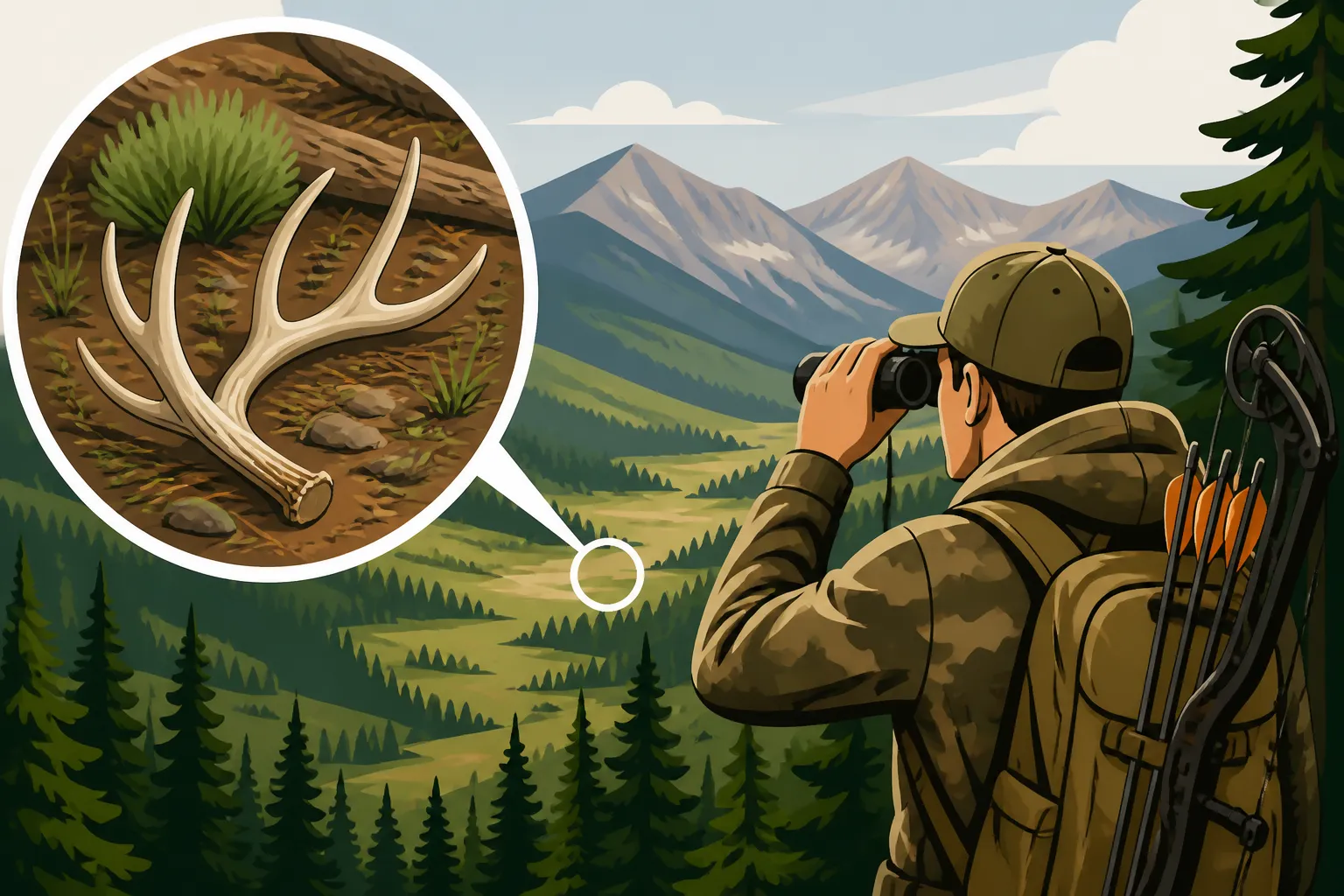
- Glassing from a Distance: Use good binoculars or a spotting scope to scan distant slopes and benches from a vantage point. A shed, especially a light-coloured one, can often stand out against the darker background of timber or rocks. This is particularly effective in open country common to the Interior. You might spot an antler that would take hours to stumble upon. This strategy is also useful for Glassing an Interior Hillside for Mule Deer.
- Slow and Deliberate Pace: Shed hunting isn't a race. Walk slowly, stop frequently, and scan the ground ahead and to your sides. Don't just look for an entire antler; train your eyes to spot the curve of a beam, the tip of a tine, or the distinct colour against the natural foliage. Antlers can blend in surprisingly well.
Utilizing Technology for Scouting and Navigation
Modern technology has revolutionized how we scout and navigate, making shed hunting much more efficient.
- Mapping Applications: Tools like GoHunt or other robust GPS mapping applications are indispensable. They allow you to:
- Identify Public vs. Private Land: Crucial for avoiding trespass, especially in areas with mixed ownership.
- Analyze Topography: Pinpoint south-facing slopes, saddles, ridgelines, and benches. You can trace potential travel corridors and winter ranges before you even leave home.
- Mark Waypoints: Drop pins where you find sheds, see fresh sign, or identify promising areas for future hunts.
- Track Your Route: See where you've already walked, ensuring you cover ground thoroughly without redundant efforts.
- Satellite Imagery: High-resolution satellite imagery available on these apps helps you visualize vegetation density, open areas, and logging cutblocks. This can give you clues about potential bedding areas or feeding grounds that might not be obvious on a contour map alone. Understanding Hunting a Recent Cutblock in Its Third Year can also inform where animals might be moving.
- Historical Data: If you've been hunting an area for deer or elk, use your knowledge of their general movements or past harvest locations to inform your shed hunt. Animals often use the same wintering grounds year after year, especially if conditions are favourable.
Before you rely solely on your phone, ensure you have downloaded offline maps for the area, as cell service in much of the BC Interior is non-existent. A dedicated GPS unit can also be a reliable backup.
Reading the Sign and Animal Behavior
Sheds are ultimately a byproduct of animal presence. Learning to read the subtle clues animals leave behind will guide you to higher probability areas.
- Tracks and Trails: Fresh tracks in mud or snow can tell you if animals are currently using an area. Well-worn game trails indicate consistent travel routes. Follow these trails, as antlers can often be knocked off while animals navigate them.
- Droppings: Piles of deer or elk droppings indicate where animals have spent time. Look for areas with a high concentration of droppings, particularly fresh ones. These areas were likely used recently.
- Browsed Vegetation: Look for signs of feeding on shrubs and small trees. Clipped twigs and browsed leaves tell you what animals are eating and where they're spending their feeding time. This is especially useful for understanding What Mule Deer Eat in the Dry Interior or What British Columbia Elk Eat Through Winter.
- Rub Marks and Scrapes: While most prominent during the rut, some rubbing can occur outside this period. Fresh rubs indicate recent activity. Pay attention to fence lines or dense brush where antlers could snag.
By combining these strategies with your understanding of habitat and animal behaviour, you'll transform your shed hunting from a random walk into a targeted, exciting adventure.
Ethical Considerations and Regulations for Shed Hunting in British Columbia
Shed hunting is a wonderful way to connect with nature and appreciate the wildlife around us, but it comes with responsibilities. It’s crucial to be aware of the ethical considerations and specific regulations in British Columbia to ensure you're protecting wildlife and respecting the land.
Respecting Wildlife and Their Wintering Grounds
This is perhaps the most important ethical consideration. Late winter and early spring are incredibly stressful times for deer and elk. They are often at their leanest, having expended significant energy during the rut and trying to survive on sparse winter forage.
- Avoid Disturbing Animals: Your presence in wintering areas can cause animals to expend precious energy unnecessarily. If you see deer or elk, give them a wide berth. If they raise their heads and watch you, you’re too close. Alter your route to avoid stressing them. The goal is to find their sheds, not to push them around.
- Stay Out of Designated Winter Closures: Some areas in British Columbia are designated as critical winter range and may have seasonal access restrictions to protect wildlife. Always check local regulations and mapping apps to ensure you're not entering a closed area. Respecting these closures is vital for herd health.
- Leash Your Dogs: While it's tempting to bring a dog with a good nose, it’s imperative to keep them on a leash, especially during critical winter periods. An unleashed dog, even a well-behaved one, can harass or push already stressed animals, leading to unnecessary energy expenditure that can be fatal for wildlife in harsh conditions. Always check regulations regarding dogs and wildlife.
Remember, the health of the herds directly impacts future hunting opportunities and the ability to find sheds. Responsible behaviour ensures these resources are protected.
Access and Land Ownership in British Columbia
Understanding where you can and cannot go is fundamental to any outdoor activity in British Columbia, including shed hunting.
- Crown Land: Much of British Columbia is Crown land, which is generally open for public access and activities like shed hunting. However, even on Crown land, there can be specific restrictions, such as those mentioned for winter range closures, or areas designated as parks or wildlife management areas that have different rules. It's important to know British Columbia's Management Units and Regions and Public Hunting Land in British Columbia.
- Private Land: Entering private land without permission is trespassing. Always know who owns the land you're on. Many ranchers and farmers have private land in key wintering areas, and approaching them respectfully to ask for permission can sometimes yield access. Always carry a map that clearly distinguishes between Crown and private land. For more details, consult British Columbia Trespass and Private Land Law.
- Forest Service Roads (FSRs): FSRs often provide access to prime shed hunting areas. However, be aware that many FSRs can be active logging roads, meaning you'll need to exercise extreme caution, use appropriate radio channels, and adhere to any posted signage regarding access or closures. Some FSRs may also be deactivated beyond a certain point. Navigating British Columbia's Forest Service Road Network requires awareness.
Always do your homework on land ownership and access before you go. A quick check of your mapping app can save you a lot of trouble and ensure you’re acting responsibly.
Reporting and Collection Rules
Unlike hunting game animals, the rules around collecting antlers that have been naturally shed are generally less restrictive in British Columbia. However, there are still a few things to keep in mind.
- No Permit Required (Generally): For recreational collection of sheds from Crown land, you typically do not need a special permit in British Columbia. This is different from collecting antlers attached to a skull, which falls under possession of dead wildlife regulations.
- Commercial Collection: If you intend to collect sheds for commercial purposes (i.e., selling them), there might be different rules or permits required. Always verify with the provincial wildlife authority if this is your intention.
- Compulsory Reporting: While you don't report shed antlers, remember that if you are hunting and harvest an animal, there are British Columbia's Compulsory Reporting Rules to follow for the animal itself.
- Respect for Other Users: British Columbia's backcountry is shared by many. Be respectful of other shed hunters, hikers, and recreationalists. Leave gates as you found them, pack out all your trash, and leave no trace.
Shed hunting is a fantastic excuse to get out into British Columbia’s beautiful interior and explore some incredible country. By understanding the animals, their habitat, and your responsibilities as a shed hunter, you’ll not only increase your chances of finding those elusive antlers but also deepen your connection to the wild landscape. Happy hunting!
| Habitat Type | Shed Potential | Best Time to Search | Key Features to Look For | Typical Challenges |
|---|---|---|---|---|
| South-Facing Slopes | High | Early Spring | Open timber, benches, grass patches, sparse brush for bedding | Can be steep, early snowmelt creates muddy conditions |
| River/Creek Bottoms | Medium-High | Mid to Late Spring | Willows, cottonwoods, dense riparian cover, transition zones | Thick brush, wet ground, potential for high water |
| Logging Roads/Cutblocks | Medium | Mid Spring | Road edges, skid trails, re-growth areas, browsed stumps | Active logging traffic, dense slash, private land issues |
| Juniper/Pine Stands | Medium | Early Spring | Dense pockets for thermal cover, bedding sites, browse | Reduced visibility, thorny brush |
| Fencelines | High | Early Spring | Along the fence line, jump-over points, squeeze-throughs | Often near private land, specific, narrow areas to search |
| Old Burns/Avalanche Chutes | Medium-High | Mid-Spring | New growth offering browse, exposed obstacles, escape routes | Ash, fallen timber, steep/unstable terrain |
| Alpine/Subalpine Basins | Low to Medium | Late Spring/Summer | Higher elevation winter range (smaller % of animals), meadows | Deep snow, difficult access, later melting seasons |
Disclaimer
This article is for general informational purposes only and does not constitute professional advice. Laws, prices and regulations vary by location and change over time. Consult a qualified professional for guidance on your specific situation.