Why Interior Game Moves With the Snow Line
It’s a tale as old as time for hunters in British Columbia’s vast interior: you scout a promising area in late summer, full of game sign, only to return a few weeks later when the first snow flies, and everything seems to have vanished. The frustration is real, and it’s a direct result of one of nature's most reliable and challenging phenomena: the annual migration of interior game animals in response to the ever-shifting snow line. This guide will walk you through the intricate dance between snow, terrain, and animal survival, helping you understand why British Columbia's interior game moves with the snow line and how you can adapt your hunting strategies to these dynamic conditions.
The Annual Cycle of Snow and Sustenance
The snow line isn't just a pretty demarcation of white on the mountainside; it's a critical boundary that dictates the availability of food and shelter for British Columbia's interior big game species. Their very survival hinges on moving with this line, seeking areas where foraging is possible and energy expenditure is minimized.
The Winter Crunch: Survival at Lower Elevations
As winter digs its heels in and snow accumulates, especially in the higher elevations and on north-facing slopes, the vast smorgasbord of summer forage becomes buried and inaccessible. This isn't just an inconvenience for animals; it's a life-or-death situation. Every calorie they burn has to be replaced, and deep, powdery snow makes both locomotion and digging for food incredibly energy-intensive.
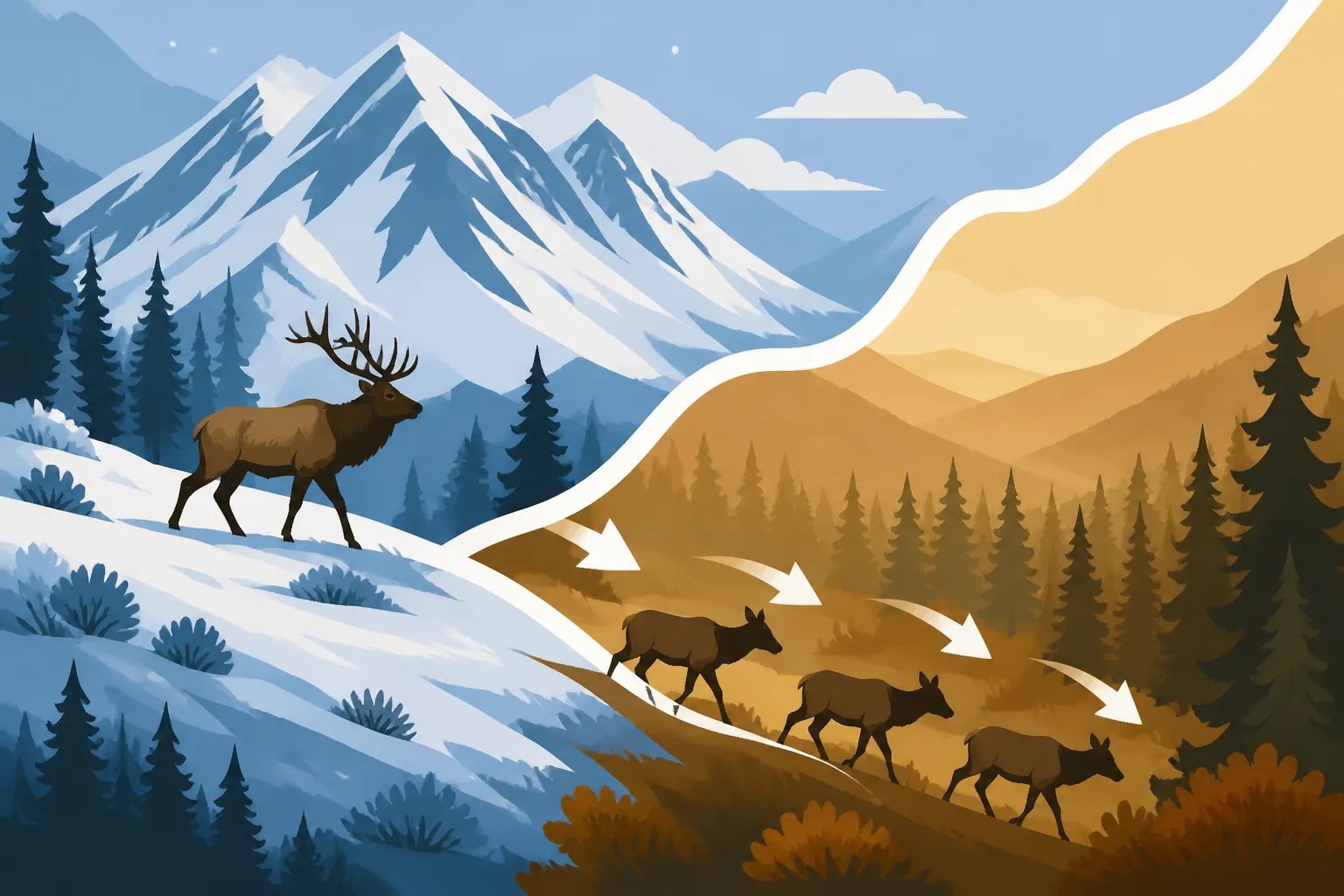
Animals like mule deer, elk, and moose will begin a deliberate, often ancestral, migration down to their winter ranges. These lower elevations, often south-facing slopes, river bottoms, or open grasslands, receive more direct sunlight, which helps melt snow faster and can sometimes support hardy forage or dormant shrubs that are still reachable. It's a strategic retreat to conserve energy, find what limited food is available, and escape the harshest conditions. Predator avoidance also plays a role here; deep snow can impede escape from wolves or cougars, making lower, more open ground a safer bet in some cases. The depth of the snow isn't the only factor; its consistency – light and fluffy versus heavy and crusted – drastically changes how accessible forage is and how much effort animals must exert. This is why you'll often find game concentrated in surprising pockets where the snow cover is just a few inches less, or where a warm microclimate provides a brief reprieve. This movement is a key consideration when you're thinking about Why Mule Deer Move to Winter Range.
Spring Thaw: Following the Green-Up
Just as winter’s grip forces a descent, spring’s gentle hand draws animals back up the mountainsides. The spring thaw is a slow, methodical process, and game animals are masters at following its progression. As the snow melts, it reveals the first tender shoots of new grass, forbs, and deciduous browse – a burst of highly nutritious food after months of sparse, lower-quality winter sustenance.
This "green-up" provides vital energy replenishment, crucial for does and cows that are pregnant or have recently given birth. The snow line becomes a moving feast, and animals will push up the mountainsides, day by day, week by week, to access this fresh growth. It's not a mad dash; it’s a calculated advance, balancing the availability of new forage with the lingering snow and potential for late-season storms. The specific rate of snowmelt and vegetation emergence can vary wildly from year to year and even from one slope to the next, meaning that game movements are never perfectly predictable. Hunters need to be acutely aware of these rapidly changing conditions. In areas like a subalpine basin, this green-up can bring a flurry of activity, something to consider if you're Hunting a Subalpine Basin at First Light.
Understanding Different Species' Responses to Snow
While all interior big game animals respond to the snow line, their strategies and sensitivities differ based on their physiology, preferred habitat, and dietary needs. Understanding these nuances is key to anticipating their movements.
Mule Deer: The Masters of Vertical Migration
Mule deer are perhaps the most iconic example of vertical migration in British Columbia's interior. Their survival is intrinsically linked to their ability to move efficiently between high-elevation summer ranges and lower-elevation wintering grounds. They possess a remarkable knack for traversing varied, often steep, terrain, making the most of every change in elevation and aspect.
These deer tend to prefer transitional zones where timber meets more open slopes, allowing them access to both browse and cover. When the snow begins to deepen at higher elevations, they will follow traditional migration corridors, sometimes travelling many miles to reach sheltered river valleys, south-facing benches, or open grasslands in the Okanagan or Cariboo regions. A few inches of snow can be enough to trigger a significant move, especially if it's wet and heavy. Their large ears and keen eyesight are well-suited for these environments. However, once the snow gets too deep – say, over 18-24 inches of soft, powdery snow – it becomes a major impediment, making travel difficult and escape from predators challenging. This is when you'll find them tightly concentrated in their preferred wintering areas. Using mapping tools, like those offered by GoHunt, can help you identify these critical winter ranges and historical migration routes, giving you a better understanding of where deer might be headed when the snow starts to fall. When you're attempting Glassing an Interior Hillside for Mule Deer, knowing their likely elevation is paramount.
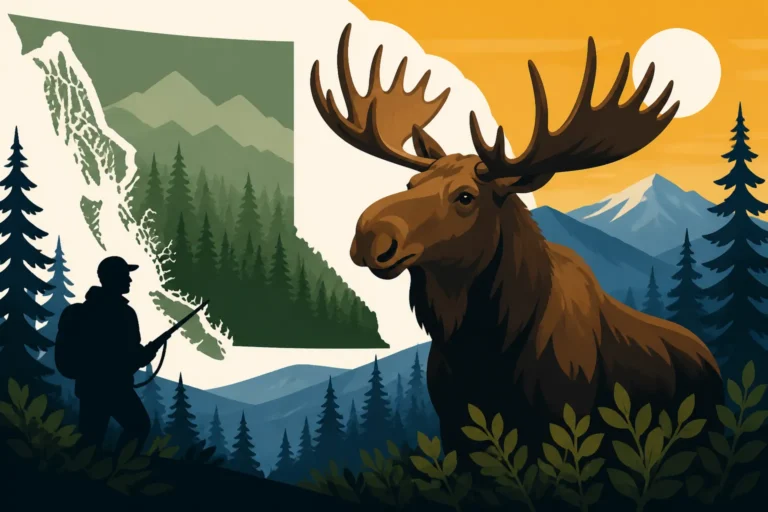
Moose: Adapting to Deeper Snow
Moose, with their long legs and immense body mass, are far better equipped to handle deep snow than deer. They can comfortably navigate snow depths that would completely immobilize a mule deer, often tolerating up to three or even four feet of snow, especially if it's powdery and not crusted. This allows them to stay in higher, more timbered areas later into the season and move into new areas as the snow builds up in others.
While they do still move in response to snow, their migrations are often less pronounced and more localized than those of mule deer. Their primary concern is access to browse, particularly willow, dogwood, and aspen, which are often found in river bottoms, swamps, and dense timber where snow might accumulate. They'll often "yard up" in dense stands of timber, creating intricate networks of trails where they can move and feed with less energy expenditure. If the snow becomes extremely deep and crusted, however, even a moose can struggle, leading them to seek out more sheltered, lower-elevation areas, especially during harsh winters. Understanding these unique adaptations is critical when pursuing Moose in British Columbia's Interior and North.
Elk: A Mix of Grazers and Browsers
Elk present a fascinating blend of adaptive strategies, falling somewhere between mule deer and moose in their response to snow. As large herd animals, their movements are often influenced by the group dynamic as much as individual need. Like mule deer, they will migrate from high alpine summer ranges to lower winter ranges, but their preference for open grasslands and meadows means they often seek out wind-swept ridges or south-facing slopes where snow cover is minimal or melts quickly.
Their broad hooves allow them to paw through moderate snow depths to access residual grasses, but deep, heavy snow will push them down into river valleys or sheltered timber. In some areas, like the Kootenays, Rocky Mountain Elk in British Columbia's East will utilize vast tracts of timber, switching to a more browsing diet of conifer needles and bark when grasses are buried. They also have a strong social structure that can influence their movements; larger herds may break into smaller groups as winter progresses, spreading out to find sufficient forage. Elk are also highly sensitive to human disturbance, and hunting pressure can push them into thicker timber or more remote areas, regardless of snow depth. This means that while snow is a primary driver, understanding human impacts on their behavior is also crucial.
| Species | Typical Snow Depth Tolerance | Primary Winter Forage | Winter Movement Strategy | Key Adaptation to Snow |
|---|---|---|---|---|
| Mule Deer | Low (6-18 inches) | Shrubs, browse, residual grass | Significant vertical migration to lower, sheltered areas | Strategic use of south-facing slopes, migration corridors |
| Moose | High (3-4+ feet) | Willow, dogwood, aspen | Localized movements, yarding in dense timber | Long legs, large body mass, powerful neck for browsing |
| Elk | Medium (1-3 feet) | Grasses, browse, conifer needles | Vertical migration, utilizing wind-swept ridges, valleys | Herd movement, pawing for forage, varied diet |
| Black Bear | Hibernate | Denning in dens | Hibernate; emerge after snowmelt | Hibernation as primary survival strategy |
Note: These are general observations; actual tolerance and behaviour can vary significantly by individual, location, and specific environmental conditions.
Factors Influencing Snow Line Movement and Game Behavior
It's never as simple as "more snow equals lower game." The snow line itself is a dynamic, complex boundary, and several factors conspire to make game movement an ever-shifting puzzle.
Elevation and Aspect: Key Terrain Elements
The interplay of elevation and aspect is arguably the most critical factor influencing where the snow line sits and, consequently, where game can be found. Picture a British Columbia mountain range: a west-facing slope might catch the prevailing storms and accumulate deep snow, while a parallel east-facing slope is relatively drier. Similarly, south-facing slopes receive far more direct solar radiation throughout the day, causing snow to melt much faster and exposing forage earlier in spring and maintaining access longer in fall.
Conversely, north-facing slopes remain shaded and cold, retaining snow much longer, sometimes well into summer. This creates stark differences in habitat availability across short distances. Game animals are incredibly tuned into these microclimates. A south-facing timbered bench might be a winter haven for deer when the north-facing side of the same ridge is impenetrable with snow. In spring, the first green-up will explode on those sunny slopes, drawing animals upwards in stages. Smart hunters use tools like topographical maps and satellite imagery (often found in apps like GoHunt) to analyze these aspects and elevations, predicting where animals will gain or lose access to forage and escape cover. This helps tremendously when planning where to focus your efforts, perhaps by considering Hunting an Avalanche Chute in September when the snow is just starting to creep down from the peaks.
Snow Depth and Density: More Than Just Inches
When we talk about snow, it's not just about how many inches have fallen. The type of snow is equally, if not more, important to game animals. Light, fluffy powder, while deep, can be relatively easy for some animals to push through, especially larger species like moose. It's also often easier to dig through to access buried browse. However, fluffy snow can rapidly become heavy and wet as temperatures fluctuate, or it can be compacted by wind into dense, hard drifts.
Crusted snow, particularly if it forms a hard layer over softer powder, is the bane of many animals. It can cut their legs, make travel incredibly noisy, and, most importantly, create a barrier that's almost impossible to break through to reach forage. A hard crust might support a wolf, giving it a significant advantage over a deer that breaks through with every step. I've seen areas with only a foot of heavily crusted snow that effectively shut down game movement more completely than three feet of fresh powder. Conversely, a thin, wind-blown layer of dry snow on an open ridge might reveal patches of ground that are accessible, becoming a magnet for grazing animals. This variability means you can't just look at a snow depth report; you need to understand the conditions on the ground.
Predator Pressure and Human Activity
While food and locomotion are primary drivers, predator pressure and human activity also heavily influence how game animals respond to the snow line. Animals are constantly balancing the need for food with the need for safety. Even if a specific area has accessible forage, if it's heavily trafficked by wolves or cougars, or if hunting pressure is intense, game might opt for a less ideal but safer location.
During hunting seasons, particularly the later rifle seasons when snow has begun to push animals down, many hunters are concentrating on those lower, more accessible winter ranges. This concentrated human activity can push game into thicker cover, less optimal feeding areas, or into pockets of private land where they feel secure. I've seen deer hold out in relatively deep snow on a north-facing slope, simply because the pressure on the south-facing "easy access" side was too great. Conversely, remote areas with less human disturbance might see animals exhibiting more natural movement patterns in response to snow. Understanding both natural predation patterns and human hunting pressure is a layer of complexity that effective hunters must account for, especially when scouting British Columbia's Management Units and Regions.
How Hunters Can Adapt to Snow Line Movements
Successfully hunting in British Columbia's interior when the snow line is a factor means being adaptable, observant, and well-prepared. It requires more than just checking the weather; it demands an understanding of the entire ecosystem.
Seasonal Scouting and Observation
One of the most valuable things you can do is conduct seasonal scouting. Don't just scout in the summer; make an effort to observe your hunting areas in late fall as the first snows arrive, and even in late winter or early spring if access allows. This will give you firsthand knowledge of how the snow impacts specific slopes and drainage. Where does the snow accumulate first? Which ridges blow clear? Where do the shadows linger longest? These observations are gold.
Many outfitters and seasoned hunters use mapping applications and satellite imagery to study historical snow lines and identify potential travel corridors and winter ranges. Apps like GoHunt offer detailed topo maps, public land overlays, and often provide information that can help you visualize the terrain's interaction with snow. Looking at past satellite images can sometimes reveal trends in snowmelt patterns. Moreover, pay close attention to local weather patterns: a sudden cold snap with heavy, wet snow can cause an immediate and dramatic shift in game location, while a prolonged warm spell can push the snow line higher again, sometimes temporarily pulling game back up the mountain. Always be learning and adapting; British Columbia’s landscape is dynamic. Tools to help with Scouting a British Columbia Management Unit Online are invaluable here.
Interpreting Tracks and Sign in Snow
Snow transforms the landscape into a giant, readable canvas. It reveals the secrets of animal movement in a way that dry ground rarely does. When you're in the field and the snow is falling or has recently fallen, pay meticulous attention to tracks and other sign. Fresh tracks are your most reliable indicator of where game has been, and more importantly, where they are going.
Look for areas where multiple tracks converge, indicating a travel corridor. Note the depth of the tracks in relation to the snow—this can tell you if animals are struggling or moving easily. Are the tracks heading uphill or down? Are they moving towards a particular type of cover or feed? Scrapes and rubs will also become more obvious against the white backdrop, indicating recent activity. Pay attention to how game is using terrain features in the snow: are they following old logging roads or clearcuts to conserve energy? Are they skirting dense timber, or plunging through it? By reading the snow, you’re reading the landscape through the animal’s eyes. Even something as simple as Reading Blacktail Sign in Wet Ground can be adapted to snowy conditions to tell you a story.
Timing Your Hunt: Patience and Flexibility
Knowing when to hunt relative to the snow line can be just as crucial as knowing where. Early season hunts, particularly in September, might find animals still up high, close to timberline, something to consider if you're Hunting British Columbia's Alpine in September. As October and November progress, and the snow starts to fall in earnest, game will begin its descent. The first major snowfall can often be a prime hunting window, as animals are actively moving and might be caught between their summer and winter ranges.
However, a sudden dump of deep, heavy snow can also make travel for you incredibly difficult, and animals might hole up for a few days before resuming movement. Flexibility is key. If a big storm rolls in, it might be wise to wait a day or two for the conditions to settle and for game to establish new patterns, or for new snow to make old tracks unreadable. Continuously monitoring weather forecasts and using tools like GoHunt to track snow accumulation in your chosen hunting units can give you a significant advantage. Sometimes, patiently waiting for the right "weather window" is the most effective strategy, especially when considering Hunting Above Timberline in Cold Weather.
Disclaimer
This article is for general informational purposes only and does not constitute professional advice. Laws, prices and regulations vary by location and change over time. Consult a qualified professional for guidance on your specific situation.