What Each of the Nine Regions Covers
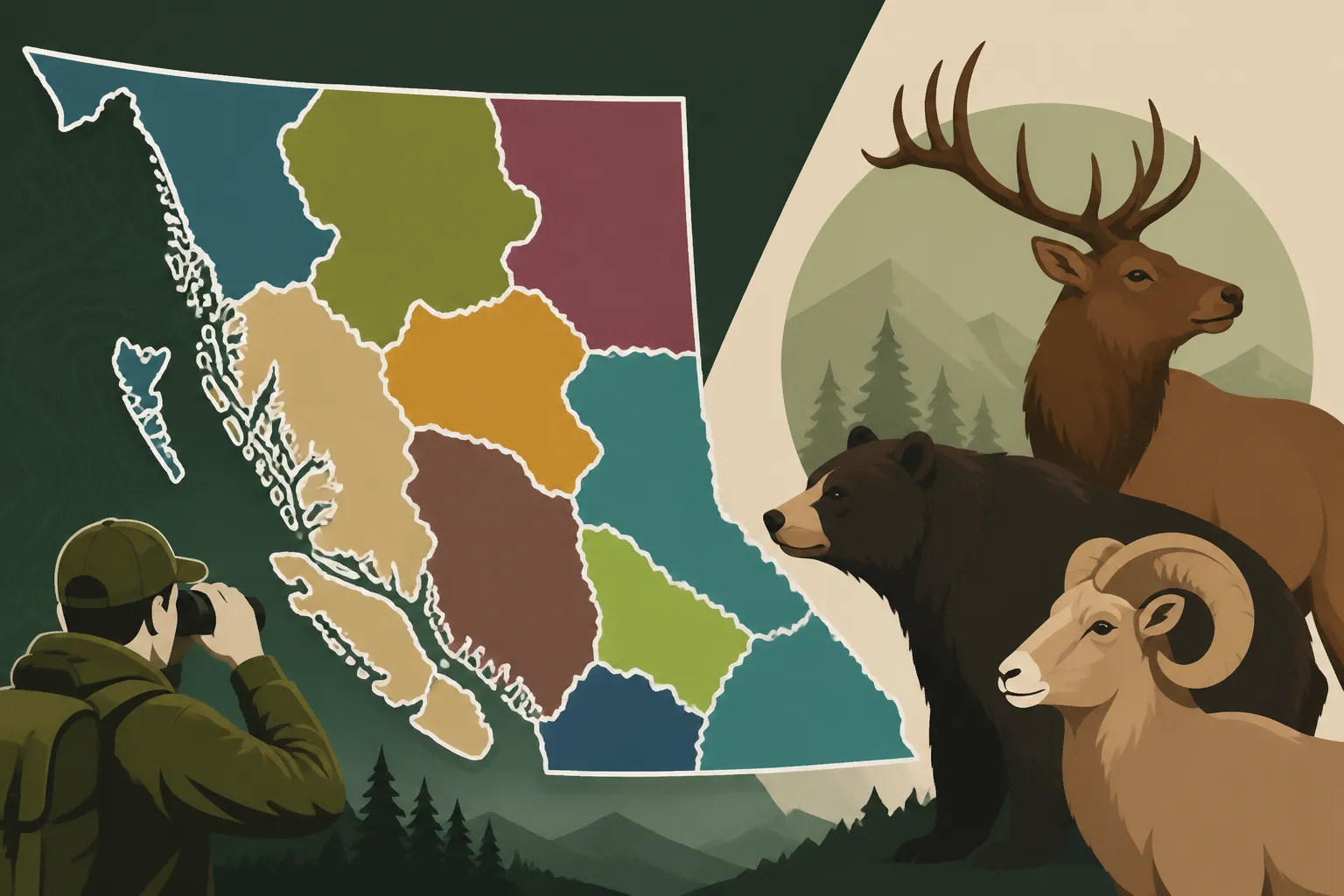
Trying to make sense of British Columbia's hunting regulations can feel like deciphering an ancient scroll, especially when you encounter references to "regions." It's not always immediately clear what these regions actually encompass, how they differ, and why they matter so much for your hunting plans. This guide is here to demystify British Columbia's nine hunting regions, breaking down what each area covers, the unique ecosystems you'll find, and the specific big game and small game opportunities they present.
Understanding British Columbia's Hunting Regions
British Columbia is a vast and incredibly diverse province, encompassing everything from temperate rainforests and rugged coastlines to arid grasslands, high alpine peaks, and sprawling boreal forests. To effectively manage wildlife populations and hunting opportunities across such varied terrain, the province is divided into distinct administrative hunting regions. These aren't just lines on a map; they represent significant ecological, climatic, and geographical differences that directly influence the type of hunting experience you'll have and the game you'll pursue.
The Rationale Behind Regional Boundaries
The provincial government establishes these regional boundaries primarily for administrative and wildlife management purposes. Think of them as large-scale zones where wildlife managers can implement specific conservation strategies, monitor game populations, and set appropriate hunting regulations. Each region often contains a unique blend of habitats, from dense coniferous forests and river valleys to open rangeland and towering mountain ranges. This diversity means that species distribution, population densities, and even the timing of the rut can vary significantly from one region to another. For hunters, understanding these fundamental differences is crucial because the regulations for a particular species, like mule deer, can be vastly different in Region 3 (Thompson-Okanagan) compared to Region 5 (Cariboo), even if both regions hold mule deer. These divisions allow for tailored management that responds to local conditions rather than a one-size-fits-all approach across the entire province, which simply wouldn't work in a place as ecologically varied as British Columbia.
Navigating the Regulations Synopsis by Region
When you crack open the annual British Columbia Hunting and Trapping Synopsis, the first thing you'll notice is how everything is organized by these numbered regions. This isn't just a formatting choice; it's your primary navigation tool for understanding legal hunting activities. Every season date, bag limit, antler restriction, and species-specific rule is tied directly to a particular region and often further refined by specific Management Units (MUs) within that region. Failing to correctly identify the region and MU where you plan to hunt can lead to serious compliance issues, as what's legal just a few kilometers away in a different region might be entirely prohibited where you are. For instance, a general open season for elk might exist in parts of the Kootenays (Region 4), while in other regions, elk hunting might be restricted to specific Limited Entry Hunting Zones. Always double-check your intended hunting location against the current synopsis and map resources, like those found on the official BC hunting website or through tools like GoHunt, to ensure you're referencing the correct regulations for your chosen region. It can be a steep learning curve, but mastering this regional framework is the first step toward a successful and lawful hunt.
Region 1: Vancouver Island and the Gulf Islands
Jutting off the southwest coast of mainland British Columbia, Region 1 offers a unique hunting experience heavily influenced by its maritime climate and rugged topography. It encompasses Vancouver Island itself, along with the smaller Gulf Islands dotting the Salish Sea.
Coastal Temperate Rainforest Ecosystem
The dominant feature of Vancouver Island is its lush, often impenetrable coastal temperate rainforest. This means incredibly dense vegetation, towering old-growth timber, and vast tracts of second-growth forests characterized by thick alders, salmonberry bushes, and huckleberry undergrowth. The climate is notoriously wet, with abundant rainfall, especially during the fall and winter months. This constant moisture shapes everything, from the types of game animals that thrive here to the challenges hunters face. The terrain is often steep and broken, cut by countless creeks and rivers cascading down to the ocean. When you're Hunting in British Columbia's Coastal Rain, you'll quickly learn the importance of good rain gear and sturdy waterproof boots, as you'll be slogging through wet brush and slippery terrain, often in low visibility conditions.
Key Game Species and Hunting Challenges
The primary draw for hunters on Vancouver Island is the Columbian blacktail deer. These elusive creatures thrive in the dense cover, making them a challenging quarry. You can read more about Black-Tailed Deer Hunting in British Columbia, but on Vancouver Island specifically, hunters often focus on Hunting Vancouver Island Blacktail in Second Growth, where clearcuts provide browse and slightly more open terrain for spotting. Black bears are also abundant across the island, with many growing to impressive sizes due to the rich coastal environment. For those seeking bigger game, the island is home to significant populations of Roosevelt elk, the largest subspecies of elk in North America. These majestic animals inhabit the deep timber and remote valleys, often requiring significant effort and specialized knowledge to locate. Beyond big game, there are also opportunities for waterfowl along the coast and in various estuaries, adding another layer of diversity to the island's hunting scene. The biggest challenges here are often the thick cover, the incessant rain, and navigating active logging roads or deactivated routes to access prime hunting spots.
Region 2: Lower Mainland and Southwestern BC
Region 2 is perhaps the most complex and often frustrating region for hunters, as it balances significant urban and suburban development with vast, rugged wilderness. This region stretches from Metro Vancouver eastward into the Fraser Valley, extending north into the Coast Mountains and south to the US border.
Urban Interface and Agricultural Zones
A large portion of Region 2 is densely populated, encompassing Vancouver, Surrey, Abbotsford, and numerous other communities. This means that hunting opportunities are extremely limited, often restricted, or non-existent in areas directly adjacent to human habitation. Hunters in these areas must be acutely aware of "No Shooting" bylaws, private property boundaries, and provincial park regulations, as many parks prohibit hunting entirely. However, amidst the agricultural lands of the Fraser Valley, particularly around communities like Chilliwack and Agassiz, there are opportunities for waterfowl hunting and small game. These areas require careful planning, often necessitating permission from landowners for field access, and understanding specific migratory bird regulations. For many residents of the Lower Mainland, serious big game hunting often means traveling further afield, either north into the Coast Mountains or to other regions entirely, due to the inherent challenges of hunting so close to millions of people.
Mountainous Terrain and Coastal Inlets
Venture away from the urban sprawl, and Region 2 quickly transforms into rugged, snow-capped Coast Mountains interspersed with deep river valleys and coastal inlets. While challenging to access for many, these wilderness areas offer opportunities for a range of species. Black bears are common throughout the mountainous reaches, thriving on berry slopes and along salmon-bearing streams. Small pockets of blacktail deer can be found in the timbered hills, and some mule deer might be present in the higher elevations further east. For the most adventurous, mountain goats inhabit the most remote and steepest peaks. Access into these areas often involves navigating complex systems of active and deactivated logging roads, or in some cases, utilizing boats to reach secluded coastal areas. The season dates and specific rules for these mountainous zones are critical, as they can differ significantly from the more populated valley bottoms, often due to elevation-dependent wildlife migration patterns.
Region 3: Thompson-Okanagan
Moving inland from the coast, Region 3 presents a dramatically different landscape: the dry, often arid interior of British Columbia. This region stretches from the Fraser Canyon in the west, through the Thompson and Okanagan valleys, to the Monashee and Selkirk Mountains in the east.
Arid Valleys and Sagebrush Flats
The southern parts of Region 3 are characterized by deep, dry valleys with expansive sagebrush flats and Ponderosa pine forests. This is classic mule deer country, with some of the province's most renowned herds residing here. Hunters frequently find themselves glassing open hillsides and draws, trying to spot the telltale grey coat of a big buck. Mule Deer Hunting in British Columbia is a prominent activity in this region, with tactics like Hunting a Sagebrush Flat for Mule Deer being particularly effective. Beyond mule deer, this region also supports California bighorn sheep populations on specific, protected rangelands, though these are typically managed through highly coveted Limited Entry Hunts. Upland birds like California quail and chukar also thrive in the arid climate, offering unique small game opportunities. Challenges include extreme heat in early seasons, vast private land holdings in the valley bottoms requiring careful access planning, and often challenging, steep terrain in the higher elevations.
Pine Forests and Interior Mountains
As you gain elevation in Region 3, the landscape transitions into cooler, denser forests of Douglas fir and lodgepole pine, eventually giving way to subalpine zones. These higher elevations provide habitat for a broader array of big game. Here, you'll find healthy populations of moose and elk, particularly in the northern and eastern parts of the region. Black bears are common throughout the forested areas, often utilizing clearcuts and natural openings. Whitetail deer have also expanded their range into parts of this region. Access is often facilitated by an extensive network of Hunting British Columbia's Logging Road Network, allowing hunters to penetrate deeper into the backcountry. Opportunities for Hunting British Columbia's Grouse Season are excellent in these mixed forests, with ruffed and spruce grouse being common. GoHunt can be an invaluable tool for researching past harvest data and understanding species distribution within the various Management Units here.
Region 4: Kootenay
The Kootenay region, nestled in the southeastern corner of British Columbia, is an iconic hunting destination, renowned for its rugged beauty and diverse big game populations. It's bordered by the Rocky Mountains to the east and the Purcell and Selkirk ranges to the west.
Rocky Mountain Range and Large River Systems
Region 4 is defined by its dramatic mountain ranges, including the main spine of the Canadian Rockies, and major river systems like the Kootenay and Columbia. This creates a mosaic of habitats, from dense coniferous forests in the valley bottoms to sprawling subalpine meadows and stark alpine peaks. The region boasts an incredible array of big game. It is perhaps best known for its robust populations of Rocky Mountain elk, making Elk Hunting in British Columbia a significant draw. Hunters here also pursue mule deer and healthy numbers of whitetail deer, which thrive in the valley bottoms and lower forested slopes. Moose are found in the wetlands and higher elevation forests, while bighorn sheep and mountain goats inhabit the most rugged, high-alpine terrain. Black bears are abundant throughout, and cougars and wolves are also present, adding to the region's wilderness character. The Kootenays hold a strong hunting tradition, and public land access is generally excellent, though understanding specific access rules for forestry roads and private parcels is always key.
Diverse Habitats and Hunting Strategies
The varied topography of the Kootenays necessitates a range of hunting strategies. Valley bottoms and lower slopes provide excellent still-hunting and spot-and-stalk opportunities for deer, especially where they feed on agricultural edges or in recent timber cuts. As you move into the mid-elevations, elk hunters might focus on timbered basins or utilize calling strategies during the rut. For those seeking sheep or goats, the game shifts to rigorous backpack hunts into the high alpine, often requiring specialized gear and significant physical endurance. Much of the region is accessible via a well-developed network of logging and forest service roads, but true wilderness experiences are still readily available for those willing to hike in further. Specific areas like the Elk Valley and Flathead Drainage are renowned for their elk populations, with hunters often engaging in strategies like Hunting Elk in British Columbia's Kootenay Valleys. Whether you're chasing an elk through a timbered drainage or glassing a rocky cirque for a ram, the Kootenays offer a truly classic British Columbia mountain hunting experience.
Region 5: Cariboo
The Cariboo region, located in the central interior of British Columbia, is a vast and ecologically rich area characterized by extensive forests, thousands of lakes, and traditional ranching country. It stretches from the Fraser River in the west to the Cariboo Mountains in the east, and north towards the Omineca.
Lakes, Forests, and Ranching Country
This region is often referred to as "moose country" for good reason. Its extensive network of wetlands, willow flats, and mixed forests provides ideal habitat for Canada moose. Hunters frequently spend time glassing clearcuts, still-hunting through timbered areas, or calling moose in the rut. Beyond moose, the Cariboo is home to healthy populations of mule deer, particularly in the drier grasslands and Ponderosa pine stands, and increasing numbers of whitetail deer in the more mixed forests and agricultural interfaces. Black bears are common, thriving on the abundant berry crops and natural food sources throughout the region. The landscape is a mosaic of Crown land, private ranchland, and forestry tenures, which means hunters must always be mindful of land ownership and access regulations. You'll encounter active ranching operations, cattle grazing allotments, and often a mix of open and gated forest service roads.
Abundant Backcountry Opportunities
For those willing to venture off the beaten path, the Cariboo offers immense backcountry potential. Its vastness means that even during popular hunting seasons, it's possible to find solitude and undisturbed areas. Hunters often utilize ATVs or trucks to get deep into the road network, then strike out on foot. Remote lakes provide opportunities for fly-in or boat-access hunts, sometimes combining hunting with fishing for rainbow trout or kokanee salmon. Moose Hunting British Columbia's Interior is a flagship experience here, with many hunters focusing on tactics like Calling Moose in British Columbia's Interior or Hunting Moose Around a Beaver Pond. While much of the hunting here is accessible via established roads, the true trophy animals often come from areas requiring more effort, making this a prime region for extended backwoods excursions or even Horseback Hunting British Columbia's Backcountry. GoHunt can be particularly helpful in this expansive region for identifying historical harvest hotspots and terrain features to target.
Region 6: Skeena
Region 6, the Skeena, is located in northwestern British Columbia and is synonymous with vast wilderness, towering coastal mountains, and some of the province's most iconic big game species. This region is truly where the wild heart of BC beats strongest.
Coastal Mountains and Major River Drainages
The Skeena region is characterized by an incredible diversity of landscapes, from the rugged, fjord-carved coastlines of the Pacific Ocean to the formidable peaks of the Coast Mountains and the interior plateaus drained by mighty rivers like the Skeena and Nass. This unique geography creates a rich tapestry of habitats. The western parts are dominated by temperate rainforests, similar to Vancouver Island, giving way to dryer interior forests and eventually the alpine tundra. This region is famous for its abundant black bear populations, including the unique Kermode bear (Spirit Bear) in protected areas. It's also prime territory for moose, mountain goats, and the highly sought-after Stone's sheep. While grizzly bears are prevalent throughout the region, hunting them is no longer permitted in British Columbia. Access here is often significantly more challenging than in southern regions, with many prime hunting areas requiring jet boats, float planes, or extensive backpacking to reach.
Remote Wilderness and Unique Opportunities
The Skeena offers truly remote, expeditionary hunting experiences. For many, it's the ultimate destination for mountain hunting, with the chance to pursue magnificent Stone's sheep in their high-alpine domain. Hunters planning these trips will find the article Hunting Stone's Sheep in Northern British Columbia particularly insightful. The vastness and challenging terrain mean that successful hunts often involve arduous climbs and long pack-outs, potentially necessitating strategies like Packing Out of British Columbia's Steep Country. Many of the best hunts here are conducted with experienced outfitters, especially for species like sheep and goat, making Booking a British Columbia Sheep Hunt a common pursuit. Even for resident hunters, the Skeena demands serious preparation and self-sufficiency. Black bear hunting along coastal estuaries or logging roads provides a more accessible, yet still rewarding, experience. The sheer scale of the wilderness means minimal hunting pressure in many areas, offering a truly wild and unforgettable adventure for those up to the challenge.
Region 7: Omineca
The Omineca region, nestled in the central northern part of British Columbia, is a vast expanse of boreal forest, countless lakes, and meandering river systems. It's a land of long winters and endless summers, a true northern wilderness.
Extensive Forested Habitat and Waterways
This region is largely defined by its extensive coniferous and mixed forests, interspersed with vast wetlands, bogs, and thousands of lakes and rivers. This moist, productive environment is prime habitat for moose, which are the undisputed kings of the Omineca. Black bears are also very common, benefiting from the rich berry crops and varied food sources found throughout the region. While mule deer are present, their populations are generally lower and more scattered than in the southern interior. Whitetail deer are also found in localized areas, particularly where agricultural clearings or disturbances provide suitable forage. The terrain is generally less mountainous than the Coast or Rocky Mountain regions, characterized instead by rolling hills, expansive plateaus, and dense timber. This means hunting often involves working through thick brush and navigating extensive road networks.
Moose Country and Backwoods Exploration
The Omineca is quintessential moose country, drawing hunters from across the province and beyond. Strategies often revolve around locating willow flats, beaver ponds, and clearcuts, where moose prefer to browse. Calling during the rut is a highly effective tactic, and you can learn more about it in Calling Moose in British Columbia's Interior. Hunters often spend days exploring vast tracts of Crown land, utilizing forest service roads to access remote areas. Many memorable hunts involve identifying promising wetland areas, then walking or boating in to find fresh sign. The sheer number of lakes also provides unique opportunities for Hunting Moose Around a Beaver Pond or even utilizing small boats or canoes for access. For those seeking a truly immersive experience, extended trips into the roadless backcountry, often with a spike camp, are possible. It's a region where patience, persistence, and a good understanding of moose behaviour are key to success.
Region 8: Peace
The Peace region, located in the far northeastern corner of British Columbia, stands apart from much of the province with its unique blend of boreal forest, vast agricultural lands, and rolling foothills. It's a gateway to the broader Peace River Country, which extends into Alberta.
Agricultural Interfaces and Boreal Transitions
Unlike the mountainous terrain dominating much of British Columbia, the Peace region features significant tracts of agricultural land interspersed with boreal forests, aspen parkland, and river valleys. This mix of open fields, bush, and wetlands creates diverse habitat that supports a wide range of game species. The region is well-known for its strong populations of elk, particularly where agricultural fields meet the forest edge. Hunters often focus on these transition zones, utilizing the cover of the bush while keeping an eye on open feeding areas. Whitetail deer thrive in the agricultural landscapes and mixed forests, often growing to impressive sizes. Moose are abundant in the extensive boreal forests and wetland areas, especially further north. Black bears are also common, taking advantage of the rich food sources found throughout the region. The open nature of some of the landscape means different hunting tactics, often involving longer shots and extensive glassing of fields and clearings.
Waterfowl and Upland Bird Opportunities
Beyond big game, the Peace region offers some of British Columbia's finest opportunities for waterfowl and upland birds. The agricultural fields attract vast numbers of migratory geese and ducks, making for exciting field hunting and decoying opportunities, especially during the fall migration. The numerous wetlands and sloughs scattered throughout the region also provide excellent jump-shooting for ducks. For upland bird enthusiasts, the aspen parkland and mixed forests are home to ruffed grouse and sharp-tailed grouse. You can delve deeper into these birds by exploring Hunting British Columbia's Interior Sharptails. The interface between the forests and grasslands also supports healthy populations of coyotes and wolves, offering predator hunting opportunities. Hunters here need to be mindful of private land boundaries, especially around active farm operations, and secure permission before accessing fields. Tools like GoHunt can provide useful insights into public land access and historical harvest data for various species in this unique northeastern hunting landscape.
Region 9: Northern Rockies and Liard
Pushing into the absolute furthest reaches of British Columbia, Region 9, often informally referred to as the Northern Rockies or Liard region, represents the pinnacle of true wilderness hunting. While administratively part of larger northern regions, its unique character and extreme remoteness warrant a distinct focus for serious hunters.
Rugged Mountain Ranges and Pristine Wilderness
This is a land of massive, unspoiled mountain ranges, including the Northern Rockies and the Cassiar Mountains, carved by vast river systems like the Liard, Kechika, and Turnagain. It's an expanse of alpine tundra, glaciers, and dense boreal forests, stretching north to the Yukon border. The climate is harsh, with short summers and long, cold winters. This formidable environment is home to British Columbia's most sought-after big game animals: Stone's sheep, mountain goats, and robust populations of Canada moose. Caribou are also present in limited, often restricted areas, subject to conservation efforts. While grizzlies roam these mountains, their hunting is prohibited. This region embodies the term "backcountry" – vast, roadless, and teeming with wildlife accustomed to minimal human presence. The sheer scale and difficulty of travel contribute to the exceptional quality of hunting available.
Logistical Challenges and Expeditionary Hunts
Hunting in the Northern Rockies and Liard is not for the faint of heart. It demands significant physical fitness, extensive planning, and often, considerable financial investment. Access to prime hunting grounds typically involves chartering a float plane to a remote lake or river, utilizing horses to pack into the mountains, or embarking on long, arduous backpacking treks. These are true expeditionary hunts, often lasting 10-14 days, where hunters must be completely self-sufficient and prepared for any eventuality. For Stone's sheep, in particular, hunters face brutal climbs into high-altitude terrain, glassing vast basins for rams. An article like Hunting Stone's Sheep in Northern British Columbia truly captures the essence of this demanding pursuit. Similarly, mountain goat hunts require navigating treacherous rock slides and steep cliffs. Packing Out of British Columbia's Steep Country becomes a critical skill here. Many hunters opt to hire a licensed guide outfitter for these remote and challenging trips, especially for sheep and moose, making Booking a British Columbia Sheep Hunt or Booking a British Columbia Moose Hunt with an experienced outfitter a common approach. The rewards, however, are unparalleled: an immersive wilderness experience and the chance to harvest truly magnificent animals in one of North America's last wild frontiers.
Navigating Regional Specifics with Modern Tools
Understanding British Columbia's hunting regions is just the first step. To truly unlock successful and responsible hunting in this province, you need to integrate that knowledge with modern tools and time-tested methods. The landscape of hunting information has evolved dramatically, offering unprecedented resources to hunters willing to do their homework.
Leveraging Digital Mapping and Regulatory Resources
In today's hunting world, digital tools are indispensable. Platforms like GoHunt, as well as the official BC government's iHunter app and various online mapping services, have revolutionized how hunters research and plan their trips. These resources allow you to overlay hunting region boundaries, Management Unit (MU) lines, private land parcels, and even Crown land designations directly onto satellite imagery. This is incredibly helpful for tasks like Scouting a British Columbia Management Unit Online from the comfort of your home. You can identify potential access points, pinpoint clearcuts or old burns that might hold game, and verify land ownership before you even step foot in the field. When planning, use these digital maps to cross-reference with the official BC Hunting and Trapping Synopsis. For instance, if the synopsis states a specific season for mule deer in MU 3-20, you can instantly locate that MU on your digital map, see its boundaries, and visualize the terrain. This integrated approach helps prevent accidental trespass and ensures you're always hunting legally within the correct regional and MU regulations. GoHunt, for example, often provides valuable data overlays, indicating past harvest success rates or terrain features that might concentrate certain species, enhancing your planning significantly.
The Importance of Local Knowledge and Scouting
While digital tools are powerful, they are best used in conjunction with traditional wisdom and boots-on-the-ground scouting. No satellite image can tell you about the fresh rubs on a particular ridge or the density of berries in a specific patch of timber. Local knowledge, gained from years of hunting a specific area or from conversations with fellow hunters and locals, provides invaluable context that digital maps simply can't. Furthermore, physically scouting your chosen region and Management Unit before the season opens is paramount. This allows you to verify access points, check for recent road closures, assess game sign, and get a feel for the terrain that a 2D map can only hint at. Even just a few days of pre-season scouting can dramatically increase your chances of success by helping you understand animal movements, identify preferred bedding and feeding areas, and anticipate challenges like dense cover or water crossings. Relying solely on one method, whether it's pure digital planning or just showing up blind, will limit your effectiveness. A blend of modern technology, a thorough understanding of the regional regulations, and good old-fashioned legwork is the winning combination for hunting British Columbia.
| Region No. | Region Name | Primary Ecosystems | Key Big Game Species | Key Small Game/Bird Opportunities | Typical Access Challenges |
|---|---|---|---|---|---|
| 1 | Vancouver Island | Coastal temperate rainforest, rugged mountains | Blacktail Deer, Roosevelt Elk, Black Bear | Waterfowl | Dense cover, wet weather, active logging roads |
| 2 | Lower Mainland | Urban interface, agricultural, Coast Mountains | Blacktail Deer, Black Bear, Mountain Goat | Waterfowl, some Upland Birds | Population density, "No Shooting" zones, private land |
| 3 | Thompson-Okanagan | Arid valleys, sagebrush flats, pine forests | Mule Deer, Bighorn Sheep (LEH), Moose, Elk, Black Bear | Upland Birds (Quail, Chukar, Grouse) | Heat, private land access, open terrain |
| 4 | Kootenay | Rocky Mountains, Purcell/Selkirk ranges, river valleys | Rocky Mountain Elk, Mule Deer, Whitetail, Moose, Sheep, Goat, Black Bear | Grouse | Steep terrain, high elevations |
| 5 | Cariboo | Forests, lakes, ranchland, interior plateaus | Moose, Mule Deer, Whitetail, Black Bear | Grouse, Waterfowl | Vastness, mix of Crown/private land |
| 6 | Skeena | Coastal mountains, major river drainages, wilderness | Stone's Sheep, Mountain Goat, Moose, Black Bear | Limited Bird | Extreme remoteness, boat/float plane often required |
| 7 | Omineca | Boreal forest, wetlands, numerous lakes | Moose, Black Bear, Whitetail | Grouse, Waterfowl | Extensive road network, but also vast roadless areas |
| 8 | Peace | Agricultural fields, boreal forest, foothills | Elk, Whitetail, Moose, Black Bear | Waterfowl (Ducks, Geese), Sharp-tailed Grouse | Mix of private/Crown land, navigating farm areas |
| 9 | Northern Rockies / Liard | Remote high mountains, alpine tundra, boreal forest | Stone's Sheep, Mountain Goat, Moose, Caribou (LEH) | Limited Bird | Ultimate remoteness, aircraft/horses often required |
Disclaimer
The information provided in this guide is for general informational purposes only and does not constitute legal advice. Hunting regulations in British Columbia are complex and subject to change. It is the hunter's sole responsibility to consult the most current British Columbia Hunting and Trapping Synopsis, relevant provincial legislation, and local bylaws before engaging in any hunting activities. Always verify specific season dates, bag limits, antler restrictions, and access rules for your chosen Management Unit and Region. Failure to do so can result in significant penalties.