Booking a British Columbia Sheep Hunt
Dreaming of a British Columbia sheep hunt is one thing; actually booking and preparing for one is an entirely different beast. The sheer remoteness, rugged terrain, and specific regulations can feel overwhelming, especially if you're a non-resident unfamiliar with the province's unique requirements. This comprehensive guide is here to demystify the process, walking you through every critical step from understanding the different species and legal necessities to selecting a reputable outfitter and getting physically ready for the hunt of a lifetime.
The Allure and Challenge of British Columbia Sheep Hunting
There’s something truly magnetic about sheep hunting. It’s not just about the animal; it’s about the untamed landscapes, the grueling climbs, and the immense satisfaction of earning a hard-won ram. British Columbia stands as one of the world's most coveted destinations for wild sheep, drawing hunters from across the globe, and for good reason.
Why British Columbia is a Premier Sheep Destination
British Columbia boasts a remarkable diversity of wild sheep, offering opportunities for Stone's sheep, Rocky Mountain bighorns, and California bighorns, with a small population of Dall's sheep in its furthest reaches. These animals inhabit some of the most stunning and rugged mountain ranges on earth, from the vast, rolling plateaus of the northern wilderness to the jagged peaks of the Coast and Rocky Mountains. The sheer scale of the hunting grounds, combined with the province's commitment to wildlife management, means that BC frequently produces rams that meet or exceed record book standards. For many, a BC sheep hunt isn't just a hunt; it's an expedition into true wilderness, a test of will and endurance that few other pursuits can match. The thrill of spotting a band of rams high on a distant ridge, the calculated stalk across scree slopes, and the breathtaking views from above timberline are etched into the memory of every hunter who embarks on such a journey.
Understanding the Unique Difficulties of Sheep Hunting
Let’s not sugarcoat it: sheep hunting is tough. It's often referred to as the pinnacle of mountain hunting for a reason. The primary challenges are physical. You'll be traversing extremely steep, rocky, and often unstable terrain, sometimes at high altitudes where the air is thin and every step is a monumental effort. Expect long days of glassing, followed by even longer days of climbing with heavy packs. Remoteness is another significant hurdle; many prime sheep areas are fly-in only or require extensive horseback travel, meaning you're often days away from any road access or medical help. Weather in the mountains is notoriously unpredictable, shifting from warm sunshine to driving snow or freezing rain in a matter of hours, adding another layer of complexity and potential danger. Finally, sheep themselves are incredibly wary animals with keen eyesight, living in open country where cover is minimal, making the final stalk a true test of patience and skill. These factors combine to create a low success rate, even for guided hunts, but it's this very difficulty that makes the achievement all the more rewarding.
Types of Sheep and Where to Find Them in British Columbia
British Columbia is unique in that it offers hunters a chance at three distinct species of wild sheep, plus a tiny population of a fourth. Each species presents its own unique habitat, challenges, and allure, making it crucial for hunters to understand what they're pursuing.
Stone's Sheep: The Northern Icons
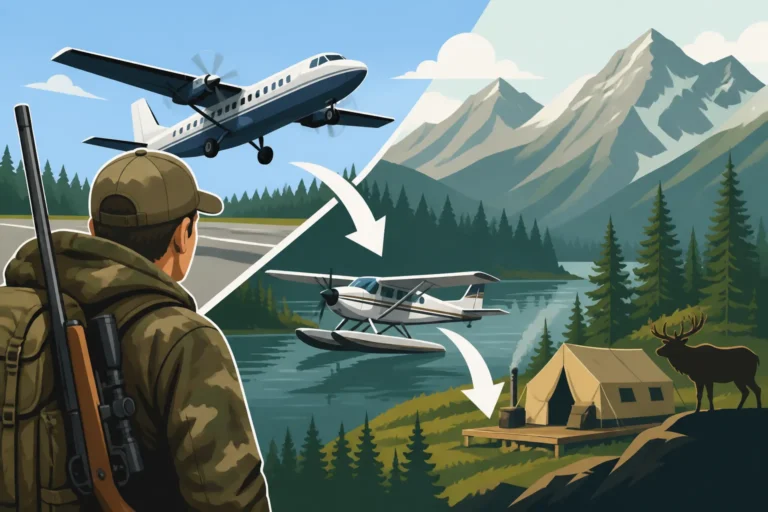
When most people think of BC sheep hunting, the iconic Stone's sheep often comes to mind. These beautiful dark-bodied sheep, often with a white rump patch and muzzle, are primarily found in the vast northern reaches of British Columbia. Their range extends through the Cassiar and Stikine mountain ranges, encompassing some of the most remote and pristine wilderness left on the continent. A hunt for Stone's sheep is typically a multi-day expedition, often involving bush planes to access remote lakes or airstrips, followed by horseback treks or backpack hunting deep into their mountainous strongholds. The terrain can vary from rolling alpine tundra to incredibly steep, broken rock faces. Their impressive dark horns, which can grow into massive full curls, are highly prized by collectors worldwide. For an in-depth look at hunting these magnificent animals, check out Stone's Sheep in Northern British Columbia. The commitment required to hunt Stone's sheep is substantial, but the reward of a magnificent ram in such a wild setting is unparalleled.
Bighorn Sheep: Rocky Mountain and California Varieties
British Columbia is home to two subspecies of bighorn sheep: the Rocky Mountain bighorn and the California bighorn. Both are characterized by their lighter, brownish-grey coats and the impressive, heavily ridged horns of the rams.
The Rocky Mountain bighorn is found predominantly in the southeastern part of the province, primarily within the Kootenay region and along the main Rocky Mountain trench. These sheep typically inhabit steep, rugged mountain slopes and foothills, often near open grass and forage, utilizing the broken terrain for escape from predators. Hunts for Rocky Mountain bighorns often involve extensive glassing from valley bottoms or lower elevations, followed by challenging ascents into their high-country domains. They are a classic mountain game animal, and their pursuit tests both patience and physical conditioning. For more details on where these robust animals live, see British Columbia's Rocky Mountain Bighorns.
The California bighorn, on the other hand, is found in the dry, interior regions of BC, particularly in the Okanagan, Thompson, and Chilcotin areas. These sheep prefer the steep, arid grasslands and sagebrush-covered hillsides of the interior plateaus and river canyons. Their habitat can be drastically different from their Rocky Mountain cousins, often requiring a hunter to navigate dry, dusty slopes and deep coulees. Hunting California bighorns can involve long hikes through sun-baked country, with emphasis on finding rams in open, exposed terrain. Their numbers are managed carefully, and tags are often highly sought after. You can learn more about their specific range and characteristics in British Columbia's California Bighorn Range.
Dall's Sheep: A Rare BC Gem
While not as common as Stone's or bighorn sheep in British Columbia, a small, isolated population of Dall's sheep exists in the extreme northwestern corner of the province, bordering Yukon and Alaska. These striking, pure white sheep are more commonly associated with those northern territories, but their presence in BC adds to the province's incredible biodiversity. Due to their limited numbers and remote habitat, opportunities to hunt Dall's sheep in British Columbia are exceedingly rare and typically fall within the most exclusive guide outfitter territories. A successful Dall's sheep hunt in BC would truly be a once-in-a-lifetime achievement, representing the utmost challenge in mountain hunting. For those interested in the distribution of these beautiful white sheep, refer to Dall's Sheep in the Far Northwest. It's a testament to BC's vast and varied wilderness that such a rare species can still be found within its borders.
Why a Guide is Essential for Non-Residents (and often for Residents)
For many hunters, the idea of hiring a guide can feel like an extravagance, but when it comes to British Columbia sheep hunting, especially for those coming from outside the province, it's often a legal necessity and almost always a strategic advantage. The complexities of the terrain, the regulations, and the sheer remoteness make a knowledgeable guide an invaluable asset.
British Columbia's Non-Resident Guiding Laws
British Columbia has specific regulations in place regarding non-resident hunters. If you are not a resident of British Columbia, you are legally required to hunt "big game" with either a licensed guide outfitter or be accompanied by a resident of British Columbia who holds a valid "Permit to Accompany." For an animal like sheep, given the specialized knowledge and effort involved, a guide outfitter is overwhelmingly the chosen path for non-residents. This law is in place to ensure ethical hunting practices, promote safety in remote areas, and manage wildlife resources effectively, especially for high-demand species like sheep. Attempting to hunt sheep as a non-resident without meeting these requirements could lead to significant legal penalties, including fines and the loss of hunting privileges. Understanding this foundational rule is the first step in planning any non-resident hunt in BC. For a deeper dive into these rules, consult Why Non-Residents Need a Guide in British Columbia.
The Value a Professional Guide Brings to a Sheep Hunt
Beyond the legal requirement, a professional guide outfitter brings an unparalleled level of expertise and support that can make or break a sheep hunt. First and foremost, guides possess intimate knowledge of their guiding territories, including the specific movements and habits of sheep within those areas. They spend countless hours scouting, allowing them to put you in the best position for success. Their experience navigating the treacherous mountain terrain safely is critical, mitigating risks associated with falls, rockslides, and unpredictable weather.
Logistically, guides handle everything from transportation (bush planes, horses, ATVs) to camp setup, food, and communication, freeing you to focus solely on the hunt. They are experts at reading animal behavior, judging trophy quality (especially crucial with BC's specific curl regulations), and executing difficult stalks. Furthermore, they are trained in first aid and bear safety, providing an essential layer of security in remote, unforgiving environments. They are the ones who understand the nuances of British Columbia Guide Outfitter Licensing Rules and ensure your hunt remains compliant. For many, the physical and mental toll of a sheep hunt is immense, and having a seasoned professional to lead the way, offer encouragement, and manage the logistics allows you to push your limits with confidence.
Choosing the Right Outfitter: More Than Just a Price Tag
Selecting an outfitter for a British Columbia sheep hunt is one of the most critical decisions you'll make. This isn't just about finding someone with a tag; it's about finding a partner who aligns with your hunting style, expectations, and safety standards for what will be a significant investment of time, effort, and money.
Researching Reputable Outfitters
The process of finding the right outfitter should be thorough and patient. Start by consulting official sources like the Guide Outfitters Association of British Columbia (GOABC), which provides a directory of licensed outfitters. Online platforms dedicated to hunting trips, such as BookYourHunt, can also be valuable resources, allowing you to browse different operations and read reviews. Many hunters also use specialized mapping and research tools like GoHunt to understand hunt units and terrain, which can indirectly help in discussions with outfitters about their specific areas.
Once you have a list of potential outfitters, the real work begins: vetting them. Request references from past clients—and make sure to call them, asking specific questions about the guide's professionalism, camp conditions, food, animal encountered, and overall experience, not just whether they killed a sheep. Inquire about their success rates, but more importantly, ask about their effort rates—how hard do they and their guides work? Ask about safety protocols, their experience in specific types of terrain, and their contingency plans for emergencies or bad weather. A truly reputable outfitter will be transparent and eager to share this information. This detailed research is key to How to Vet a British Columbia Outfitter and ensures you avoid unpleasant surprises.
Understanding Guiding Territories and What They Mean for Your Hunt
In British Columbia, guide outfitters operate within specific, exclusive guiding territories granted by the province. This means an outfitter has the sole right to guide non-resident hunters for particular species within a defined geographical area. Understanding this system is paramount because it dictates where and for what species an outfitter can take you.
Each territory has its own unique characteristics: some may be vast, remote, and only accessible by air or horseback, while others might be smaller and allow for truck-based access to certain areas. The quality and density of sheep populations can vary significantly between territories, as can the typical size of rams. When speaking with an outfitter, ask them to clearly delineate their territory and discuss the type of terrain and animal concentrations within it. This also impacts the style of hunt you can expect; a large, roadless territory often means a backpack or horseback hunt, whereas smaller territories might offer a combination. This exclusivity helps manage wildlife and ensures that each outfitter has a vested interest in the long-term health of the game within their assigned area. Familiarizing yourself with British Columbia's Guide Outfitter Territories will provide valuable context.
What to Look for in a Sheep Hunting Package
Sheep hunting packages can vary widely, so it's crucial to understand what's included and what's not. Typically, a sheep hunt package will specify the duration of the hunt (e.g., 10-14 days), the target species, and the mode of transportation to and from the remote camp (e.g., float plane, horseback ride, hike). Most reputable outfitters include accommodation (spike camps, wall tents, cabins), food, a licensed guide, and field preparation of your trophy and meat.
However, always clarify what's not included. This almost always involves your hunting licence, species tag, government taxes, meat processing beyond field prep, trophy export fees, taxidermy, personal gear, and travel to the outfitter's rendezvous point. Tips for the guide and camp staff are also an additional, customary expense. Some outfitters might offer combination hunts for other species if seasons overlap, which can be an exciting bonus. Carefully review the contract, ask about cancellation policies, and ensure every detail is clear before committing. This diligent approach helps manage expectations for your significant investment. For a detailed breakdown of what to expect, refer to What a British Columbia Guided Sheep Hunt Includes.
Planning Your British Columbia Sheep Hunt Logistics and Costs
A British Columbia sheep hunt is a dream for many, but transforming that dream into reality requires meticulous planning, especially concerning financial investment and physical readiness. It's a journey that demands foresight, patience, and unwavering commitment.
The Reality of Sheep Hunt Costs
Let's address the elephant in the room: a British Columbia sheep hunt is a significant financial undertaking. These are not budget hunts; they represent the pinnacle of North American hunting experiences, and their costs reflect the extreme logistics, specialized equipment, guide expertise, and the inherent scarcity and demand for these tags. The overall expense will encompass the outfitter's fee, which covers the guide, logistics, and often lodging and food during the hunt. Beyond this, you'll need to budget for your hunting license, species tags, and any applicable taxes. Don't forget travel expenses to and from British Columbia, often involving commercial flights and potentially charter flights to remote areas. Gratuities for your guide and any camp staff are customary and should be factored in. Then there are the costs for specialized gear, meat processing, trophy care, and shipping. While specific figures are always in flux, understand that you are investing in an experience that few ever get to undertake. It's crucial to have open and honest conversations with potential outfitters about all associated costs to avoid surprises. For a comprehensive overview of the financial commitment, check out What a British Columbia Sheep Hunt Costs.
Timing Your Application and Booking Your Hunt
The timeline for booking a British Columbia sheep hunt is not measured in weeks or months, but often in years. Many of the most sought-after outfitters and territories have bookings stretching out several seasons, if not a decade or more, in advance. This is due to limited availability, high demand, and the provincial regulations that govern harvest quotas.
Once you've identified a suitable outfitter, expect to place a substantial deposit to secure your spot. These deposits are typically non-refundable, reflecting the outfitter's commitment to holding that specific hunt date for you. The application process for your actual hunting licence and species tag will follow closer to the hunt date, but the commitment to the outfitter needs to happen much earlier. Some outfitters also manage a Limited Entry Hunting (LEH) draw for residents, which has its own application deadlines and draw results, but non-residents typically book directly with an outfitter who holds the guiding rights. Begin your research and discussions with outfitters as soon as possible to understand their booking lead times and payment schedules. Planning for Booking a British Columbia Hunt Years Ahead is not an exaggeration, especially for prime sheep opportunities.
Physical Preparation: A Non-Negotiable Aspect
A British Columbia sheep hunt is arguably one of the most physically demanding hunts you can undertake. This is not the time to "get in shape" once you arrive; you need to be in peak physical condition long before you set foot in the mountains. Imagine climbing thousands of feet of elevation daily, often with a heavy pack, over uneven, rocky, and potentially snowy terrain, at altitudes where the air is noticeably thinner.
Your preparation should focus on cardiovascular endurance, strength training (especially legs and core), and flexibility. Activities like hiking with a weighted backpack on steep trails, stair climbing, trail running, and even CrossFit can be highly beneficial. Don't neglect proper footwear and break in your hunting boots well in advance to prevent debilitating blisters. Mental toughness is equally important; the ability to push through discomfort, maintain a positive attitude in challenging conditions, and remain focused during long days is crucial. Many hunters also consider altitude training if their home environment is at sea level, as experiencing the effects of thin air can be a significant shock. Think of your physical conditioning as an investment in your safety and your success. This aspect of the hunt cannot be overstated, and for more specific advice on preparing your body, delve into Fitness for a British Columbia Sheep Hunt.
Navigating Regulations, Tags, and Compulsory Inspections
Hunting in British Columbia, especially for iconic species like sheep, comes with a specific set of rules and administrative procedures. Understanding these thoroughly is not just about compliance; it's about respecting the wildlife and ensuring a smooth, legal hunting experience.
Obtaining Your British Columbia Hunting Licence and Sheep Tag
Every hunter in British Columbia, resident or non-resident, must first acquire a basic hunting licence. For non-residents, this will be a non-resident licence, which is distinct from a resident licence. Once you have this foundational licence, you then purchase specific species licences or "tags" for the animals you intend to hunt. For sheep, this means acquiring a sheep species licence.
Your outfitter will typically guide you through this process, advising you on the exact type of licence and tag you'll need. These purchases are usually made online through the provincial government's system, and it's essential to do this well in advance of your hunt. Ensure all your personal information matches your identification documents perfectly to avoid any issues. The fees for these licences and tags are separate from your outfitter's fees, and it's wise to budget for them appropriately. Familiarize yourself with the overall system described in British Columbia Hunting Licences and Fees and then specifically for species-specific tags in British Columbia's Species Licences and Tags to understand the structure.
Understanding Curl Rules and Judging Rams
British Columbia has specific antler/horn regulations for sheep, often referred to as "curl rules," designed to promote the harvesting of mature rams and conserve younger animals. For most sheep species, a ram must typically be "full curl" or "four-fifths curl" (depending on the specific regulation and species), meaning the horn must complete a certain percentage of a circle when viewed from the side, or reach the bridge of the nose. These rules can be nuanced, and misjudging a ram in the field can lead to a violation and potential penalties, including the loss of your animal.
This is where your guide's expertise becomes absolutely invaluable. Experienced sheep guides are masters at quickly and accurately judging rams in the field, often at great distances, using spotting scopes and binoculars. They understand the subtle indicators of age and horn development that differentiate a legal ram from an illegal one. It's imperative to trust your guide's judgment implicitly. Before your hunt, discuss these regulations with your outfitter, and if possible, review photos or diagrams of legal versus illegal rams. You can find more information on judging a ram's specific horn characteristics in Judging a Full-Curl Ram in the Field.
Compulsory Inspection and Reporting Requirements
After a successful sheep hunt in British Columbia, your responsibilities don't end with the field dressing. The province has mandatory compulsory inspection and reporting requirements for certain big game species, and sheep are typically on this list. This means that within a specified timeframe (often 30 days, but always check current regulations), you must present the skull and horns of your harvested ram to a provincial wildlife official for inspection.
During this inspection, wildlife biologists collect valuable data on the health, age, and genetics of the harvested animal, which is critical for ongoing wildlife management and conservation efforts. They will often remove a tooth for aging and officially "seal" the horns, indicating legal harvest. In addition to physical inspection, you'll also be required to complete a harvest report, detailing the date, location (Management Unit), and other specifics of your hunt. Your outfitter will coordinate the inspection process, often by taking the skull and horns to the nearest inspection station or arranging for an official to meet them. Failure to comply with these compulsory inspection and reporting rules can result in penalties. For a current list of species requiring inspection, consult Which Species Still Need Compulsory Inspection.
The Hunt Itself: Expectations, Challenges, and Trophies
The actual sheep hunt is where all the preparation, planning, and investment culminate. It's an immersive experience that will test you physically and mentally, offering moments of breathtaking beauty alongside grueling challenges. Understanding what to expect can help you embrace the journey, regardless of the outcome.
Life in a Backcountry Sheep Camp
Forget luxury hotels; life in a backcountry sheep camp is rugged, minimalist, and deeply connected to the wilderness. Depending on the outfitter and the territory, your camp might be a comfortable wall tent with a wood stove, a sturdy cabin, or a lightweight spike camp set up high in the alpine. Food is typically hearty and nourishing, designed to fuel demanding physical activity, but don't expect gourmet meals. Days begin early, often before first light, with a quick breakfast before heading out to glass. Evenings are spent discussing the day's observations, planning for tomorrow, and perhaps enjoying a well-earned hot drink.
The conditions can be challenging: cold nights, damp mornings, and the constant presence of various insects, depending on the season. Personal hygiene will be basic, relying on wet wipes and infrequent sponge baths. This is a place where camaraderie with your guide and fellow hunters forms quickly, born from shared effort and mutual respect for the mountain. The remoteness means limited to no cell service, reinforcing the need for satellite communication devices for emergencies. Getting comfortable with these Spartan conditions is part of the adventure. Many guides will establish a Setting a Spike Camp Above Timberline to minimize travel time to prime hunting areas, further emphasizing the need to be self-sufficient and adaptable.
The Mental and Physical Grind of a Mountain Hunt
Even if you arrive in peak physical condition, the sheer grind of a mountain sheep hunt can be astonishing. Days are long, typically involving hours of patient glassing for tiny specks that might be sheep, followed by arduous climbs. You'll navigate scree slopes, boulder fields, and steep, broken rock, often with significant elevation gains. The thin air at high altitudes will make every breath and every step feel heavier. It's a constant push, and even for seasoned hunters, the physical demands can be overwhelming.
Beyond the physical, the mental challenge is immense. You'll likely face setbacks: sheep that vanish, weather systems that roll in and force you off the mountain, or simply days where no legal rams are spotted. Persistence is key. The ability to remain positive, motivated, and focused despite fatigue, cold, and disappointment is crucial. Your guide will be your biggest motivator, but the internal drive must come from you. Embracing the journey, the process, and the sheer privilege of being in such wild country is often more important than the harvest itself. For an idea of the terrain and conditions you might encounter, read about Hunting British Columbia's Alpine in September.
Caring for Your Trophy and Meat Post-Harvest
Should you be successful, the work immediately shifts to field care, which is vital for preserving your trophy and the meat. Your guide will be an expert in this, but understanding the process is beneficial. The first priority is to properly field dress the animal to cool the meat quickly. Sheep meat is delicious and should be treated with the same respect as the trophy.
Caping the animal involves carefully removing the hide, specifically the cape (head and neck skin) with the skull and horns attached, for taxidermy. This is a skilled job, ensuring no damage to the cape or horns. The meat is then broken down into manageable pieces for packing. Given the remote locations, packing out a sheep can be an extremely demanding task, often requiring multiple trips or the use of pack animals if available. Keeping the meat cool and clean, especially in warmer early seasons, is paramount. Once out of the field, your outfitter will arrange for transport of the trophy and meat to a processor or taxidermist, and will assist with any necessary permits for export, especially if you are crossing international borders. This includes ensuring proper documentation like CITES permits for certain species. Proper care here ensures your memories last a lifetime. Learn more about the challenges of extraction in Packing Out of British Columbia's Steep Country and the export procedures in Exporting a Trophy From British Columbia.
Here’s a comparison of the primary British Columbia sheep species:
| Feature | Stone's Sheep | Rocky Mountain Bighorn Sheep | California Bighorn Sheep |
|---|---|---|---|
| Appearance | Dark brown/black body, white rump, muzzle | Light brown/grey body, white rump | Light brown/grey body, smaller white rump |
| Horn Color | Dark brown to black | Brownish-amber | Brownish-amber, often slightly smaller horns |
| Primary Range | Northern British Columbia (Cassiar, Stikine) | Southeastern BC (Kootenays, Rocky Mountains) | South-central BC (Okanagan, Thompson, Chilcotin) |
| Habitat | Alpine ridges, subalpine valleys, open slopes | Steep rocky mountain slopes, grassy foothills | Arid grasslands, sagebrush hills, river canyons |
| Access | Remote, often fly-in or extensive horseback | Road access with significant hiking, some pack-in | Road access with extensive hiking in dry country |
| Hunt Difficulty | Extremely high (remoteness, terrain, weather) | High (steep terrain, physical endurance) | High (arid terrain, keen eyesight, physical endurance) |
| Trophy Value | Very high (highly prized, expensive hunts) | High | High |
Disclaimer
This article is for general informational purposes only and does not constitute professional advice. Laws, prices and regulations vary by location and change over time. Consult a qualified professional for guidance on your specific situation.