Hunting in British Columbia’s Coastal Rain
Hunting in British Columbia's coastal regions presents a unique set of challenges, from relentless rain and thick, tangled undergrowth to slippery terrain that tests even the most seasoned hunter. It’s a place where dampness can seep into your bones and fog can obscure your vision in mere moments, often leaving hunters frustrated and chilled. This comprehensive guide will walk you through the specifics of preparing for, navigating, and ultimately succeeding in the demanding yet incredibly rewarding environment of British Columbia’s coastal rainforest.
Understanding the Coastal Rain Environment
British Columbia's coast is a world unto itself, a place of immense beauty and raw, untamed wilderness. But it’s also a challenging landscape for hunting, defined by its incredible rainfall and dense, temperate rainforests. To succeed here, you first need to truly understand the environment you’re stepping into.
The Unique Climate and Its Impact
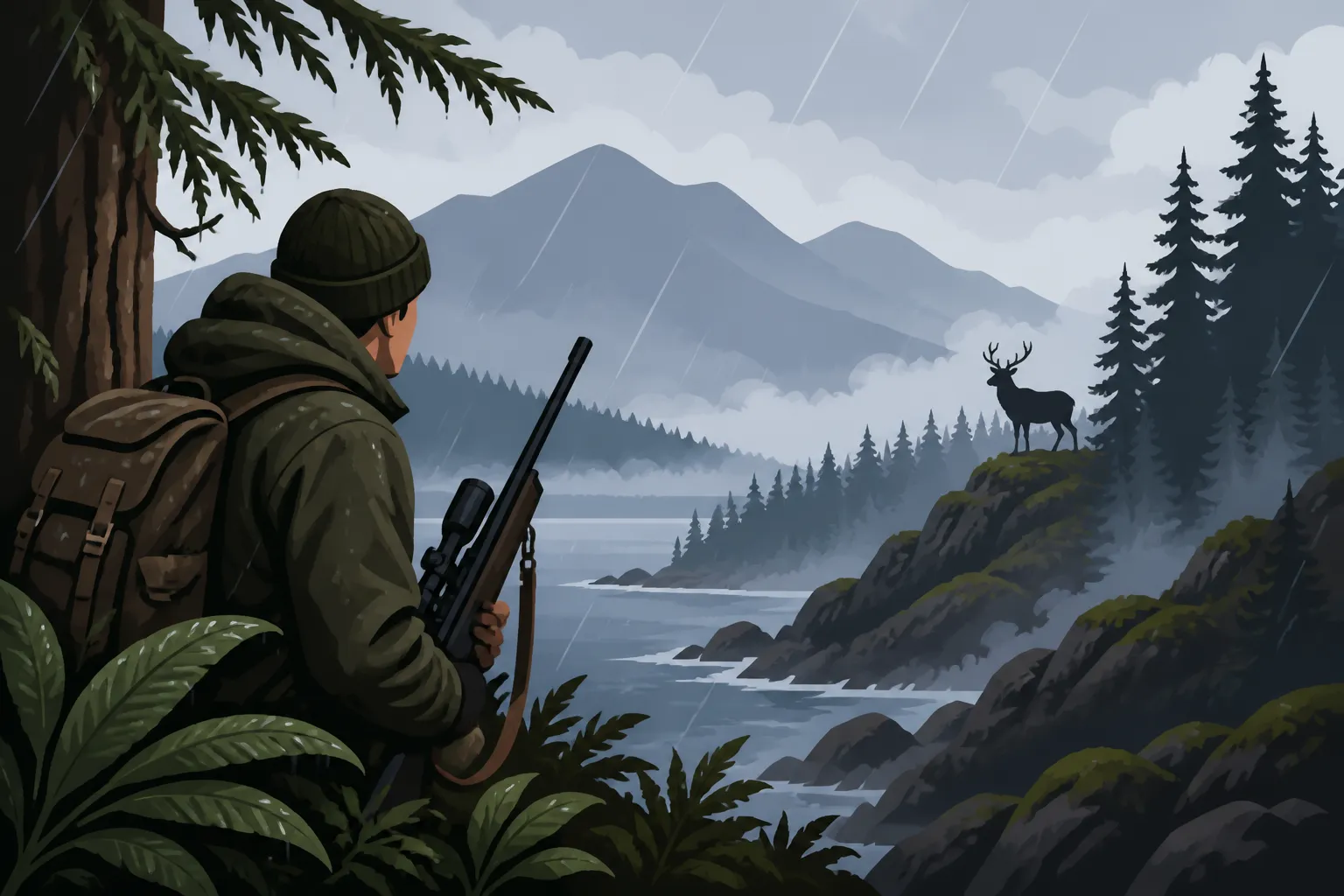
When we talk about coastal rain in British Columbia, we're not just talking about a passing shower. We're talking about a climate where precipitation is the norm, often measured in metres per year rather than millimetres. This consistent moisture sculpts the landscape, creating incredibly lush, dense temperate rainforests that are a far cry from the drier, more open forests of the interior. The air is almost perpetually saturated, leading to persistent humidity, regular fog, and often, a drizzle that can last for days. This constant dampness doesn't just make you wet; it affects everything from your gear's performance to how animals move and where they bed. Visibility can drop to mere yards in the thick fog or during a heavy downpour, making long-range glassing a pipe dream and demanding close-quarters hunting tactics.
The terrain itself is often steep, rugged, and characterized by slick moss-covered rocks, fallen old-growth timber, and muddy trails. Creek crossings can become significant obstacles after heavy rain, turning trickles into raging torrents. The dense canopy, formed by towering old-growth conifers like Sitka spruce, western hemlock, and red cedar, allows little sunlight to penetrate, contributing to the dark, shadowy understory. This creates a labyrinth of salal, huckleberry, and devil's club, forming almost impenetrable thickets that are both a challenge to traverse and excellent cover for game. This isn’t a place for the faint of heart or the ill-prepared; it demands respect, resilience, and the right approach.
Beyond the immediate discomfort, the persistent dampness also impacts the forest floor. While it muffles sound, making quiet stalking easier, it also means that everything is perpetually wet. Your hands will get pruney, your boots will feel heavy, and drying gear at camp becomes a significant daily challenge. Condensation builds up inside tents, even with good ventilation, and metal items can rust quickly if not properly maintained. The constant moisture also influences scent; while rain can wash away a hunter's scent, it can also intensify animal scent in the air, creating a complex olfactory environment. Understanding these nuances is crucial for developing effective hunting strategies and maintaining morale in what can feel like an unending battle against the elements.
Key Game Species in Wet Conditions
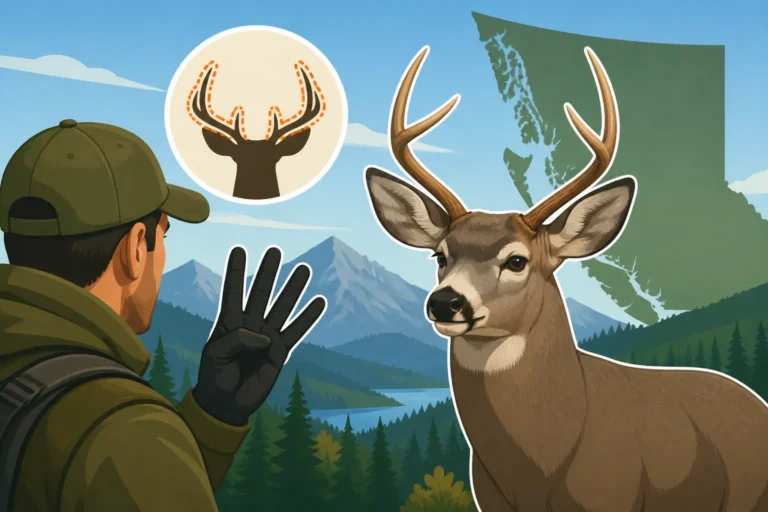
The coastal rain environment, while challenging for hunters, is a thriving ecosystem for several key game species that have adapted perfectly to its damp, dense conditions. Among these, the Columbian Black-tailed deer stands out as the quintessential coastal quarry. These deer are masters of camouflage and silent movement in the thick rainforests. They rely heavily on the abundant browse found in the understory and thrive in the shelter provided by both old-growth timber and the regenerating clearcuts known as "second growth." Their behaviour is deeply intertwined with the coastal climate; they often seek refuge in dense timber during heavy rain and can become more active during lulls or after a storm passes. Understanding their habits in these wet conditions is paramount for success, as a fleeting glimpse is often all you get. You can learn more about these resilient animals by checking out our guide on Black-Tailed Deer on British Columbia's Coast.
Another iconic species of the coastal rainforest is the Roosevelt Elk. These majestic animals are the largest subspecies of elk in North America, and they flourish in the lush, temperate rainforests of Vancouver Island and the coastal mainland. Roosevelt elk prefer the dense cover of old-growth timber, utilizing its shelter from the elements and its rich forage. They are often found near creek bottoms, in dense timber stands, or on the edges of clearcuts, where they can find both food and sanctuary. Their massive size and tendency to inhabit incredibly dense terrain make hunting them a true test of physical endurance and tracking skill. Bugling for these giants during the rut can be an exhilarating experience, but be prepared for a difficult pack-out if you are successful deep in their thick, wet habitat. Our article Roosevelt Elk on British Columbia's Coast dives deeper into hunting these impressive animals.
Black bears are also incredibly common across British Columbia’s coast, thriving on the abundance of berries, vegetation, and especially salmon during their annual runs. The wet environment provides ample food sources and dense cover for these omnivores. Coastal black bears can grow to impressive sizes, with the lush environment contributing to their robust health. During the spring, they often emerge to feed on new green growth in avalanche chutes and along logging roads, while in the fall, they can be found gorging on berries in clearcuts or fishing in salmon-spawning streams. Hunting bears in the rain can be a distinct advantage, as it dampens your scent and sound, allowing for closer approaches. However, it also means exercising extreme caution, especially when you're in areas with strong salmon runs, as bears can be concentrated and protective. For a deeper dive into these powerful animals, consider reading British Columbia's Coastal Black Bears.
Essential Gear for Wet Weather Hunting
Hunting in British Columbia’s coastal rain demands more than just standard hunting gear; it requires a specialized approach to keep you dry, comfortable, and performing at your best. The right gear won't just make your hunt more enjoyable; it can genuinely be a matter of safety and success in such a demanding environment.
Layering for Comfort and Performance
Proper layering is the absolute cornerstone of staying comfortable and safe in the persistent coastal rain. Forget bulky, single-layer waterproof suits that promise protection but often leave you clammy and cold. Instead, think of your clothing system as a series of interconnected elements, each with a specific job. The outer shell is your first line of defense against the rain and wind. It needs to be completely waterproof and, crucially, highly breathable. Materials like Gore-Tex or similar advanced membranes are essential for allowing sweat and moisture vapor to escape from the inside, preventing that clammy feeling that quickly leads to a chill. Look for jackets and pants with features like sealed seams, waterproof zippers, and adjustable cuffs and hoods to keep the deluge out. A durable water repellent (DWR) finish is also important, as it helps water bead up and roll off the fabric, preventing saturation.
Beneath your waterproof shell, a quality mid-layer provides insulation. In a wet environment, synthetic insulations like fleece or polyester puffy jackets are superior to down. While down is incredibly warm when dry, it loses almost all its insulating properties once wet. Synthetic materials, on the other hand, retain a significant amount of their warmth even when damp, which is a critical advantage when you’re out in the constant drizzle or working up a sweat. Having multiple mid-layers of varying thickness allows you to easily adjust your insulation based on your activity level and the ambient temperature, preventing overheating during strenuous climbs and warding off the chill during periods of glassing or still-hunting. Consider packing an extra, dry puffy layer in a waterproof stuff sack for emergencies or for when you stop for lunch.
Finally, your base layers are responsible for wicking moisture away from your skin. This is absolutely paramount for comfort and preventing hypothermia. Never, ever wear cotton as a base layer in coastal BC; cotton absorbs moisture and holds it against your skin, making you feel cold the moment you stop moving. Instead, opt for synthetic performance fabrics or merino wool. Merino wool is an excellent choice as it provides warmth even when wet and has natural odor-resistant properties, which is a bonus on multi-day hunts. By effectively managing moisture at every layer, from your skin outwards, you can maintain a stable core temperature and stay much more comfortable, allowing you to focus on the hunt rather than shivering in discomfort.
Footwear, Packs, and Accessories
When it comes to footwear for British Columbia's coastal rain, compromise is simply not an option. You need boots that are unequivocally waterproof, durable, and offer excellent traction on slick, uneven terrain. Look for boots with full-grain leather or high-quality synthetic uppers, combined with a waterproof membrane like Gore-Tex. Ensure they have a robust rubber sole with aggressive lugs for grip on moss, wet rock, and mud. Beyond the boots themselves, a good pair of gaiters is an absolute game-changer. These waterproof covers extend from your boots up to your knees, preventing rain, mud, and debris from getting inside your boots or soaking your pants. Always pack multiple pairs of moisture-wicking socks, preferably merino wool, and change them frequently. Nothing saps morale faster than cold, wet feet, and having a dry pair to swap into can feel like a luxury in the backcountry.
Your pack, much like your clothing, needs to be prepared for the wet. While many hunting packs are made from somewhat water-resistant materials, very few are truly waterproof. The best approach is a combination of an external waterproof pack cover and internal dry bags or waterproof stuff sacks. Use the dry bags to compartmentalize your critical gear like spare clothes, electronics, sleeping bag, and food. This way, even if your pack cover gets snagged or you take a tumble in a creek, your essentials stay dry. For optics, invest in rain covers for your binoculars and spotting scope. Fogged or wet lenses are useless, and clear vision is paramount for spotting game in the dense coastal environment. Many hunters also carry a small, quick-drying microfiber cloth for wiping lenses and rifle scopes.
Don't overlook the smaller, yet equally important, accessories. Headlamps should be waterproof, and always carry spare batteries in a dry pouch. Make sure your calls (especially mouth calls) function well when wet or have a waterproof alternative. A reliable knife that can handle the elements, along with a sharpening stone, is essential. Also, consider carrying a small, lightweight tarp for setting up a quick shelter during a downpour, or for protecting your kill while field dressing. Items like a compass and a GPS device are also critical, as visibility can rapidly deteriorate in coastal fog, and trails are often faint or non-existent. GoHunt offers excellent mapping tools that can be downloaded for offline use, proving invaluable when cell service is non-existent, helping you track your movements and pinpoint your location even in the densest fog.
Hunting Strategies for Coastal Rain
Hunting in British Columbia's coastal rain isn't just about enduring the elements; it's about leveraging them to your advantage. The unique conditions dictate a different approach than hunting in drier climates, requiring patience, stealth, and a keen understanding of animal behaviour in wet weather.
Still-Hunting and Tracking in Dense Cover
The persistent moisture of the coastal rainforest transforms the forest floor into a surprisingly quiet hunting environment. Soft, damp moss, decaying leaves, and muddy ground muffle your footsteps, making silent movement significantly easier than on dry, crunchy terrain. This makes still-hunting – moving slowly and deliberately, stopping frequently to observe and listen – an incredibly effective strategy for deer and elk in the dense coastal cover. Instead of trying to cover vast distances, focus on moving at a snail's pace, pausing for minutes at a time to scan every shadow, listen for the rustle of leaves, or the snap of a twig. Use the dense vegetation to your advantage, breaking up your silhouette and moving from one piece of cover to the next. The limited visibility works both ways: it makes it harder for you to see game, but it also makes it harder for game to see you, allowing for much closer encounters.
Reading the subtle signs left by game becomes even more critical in the dense coastal environment. The wet ground readily holds tracks, allowing you to clearly discern the size, direction, and freshness of an animal's passage. Look for fresh deer or elk tracks in the mud, especially along old logging roads, game trails, or near creek crossings. Beyond tracks, pay close attention to rubs on trees, fresh droppings, and browse lines. Black-tailed deer, in particular, will leave subtle signs as they move through the thickets, browsing on salal, huckleberry, and other understory plants. The constant moisture means these signs can remain fresh for longer, providing a clearer picture of recent animal activity. Our guide on Reading Blacktail Sign in Wet Ground offers detailed insights into interpreting these subtle clues.
The art of still-hunting in coastal rain is about truly immersing yourself in the environment. Use your ears as much as your eyes. The sound of rain can mask your approach, but it can also mask the sounds of game. Listen for the distinct sound of an animal moving through wet brush, the soft thud of hooves on damp earth, or the sudden rush of wings from a flushing grouse. Pay attention to changes in elevation and vegetation density. Often, deer and elk will use the thickest cover as bedding areas, moving to slightly more open, browse-rich areas to feed. By systematically working through these areas with extreme stealth, you increase your chances of ambushing a game animal before it detects you. Patience is your most powerful weapon; the coastal rainforest rewards those who move with purpose, but also with profound respect for its quiet complexities.
Utilizing Weather Patterns and Topography
While persistent rain can be a deterrent, savvy coastal hunters learn to leverage specific weather patterns to their advantage. Animals, like people, often seek shelter during the heaviest downpours. However, during lulls in the rain, or especially just after a prolonged storm breaks, game often becomes much more active. Deer and elk will emerge from their dense bedding areas to feed, stretch, and move. These post-rain periods can offer some of the best hunting opportunities, as animals are more likely to be on their feet and potentially less wary as they revel in the momentary reprieve from the weather. Keep a close eye on weather forecasts and be prepared to capitalize on these "weather windows." A brief break in the deluge can be the perfect time to be in your prime hunting spot.
Topography plays an enormous role in how animals navigate the coastal rainforest, especially in wet conditions. Ridges, draws, creek bottoms, and the edges of clearcuts act as natural travel corridors, funnelling game through specific areas. Even in the thickest brush, animals will often choose the path of least resistance. Focus your efforts on these features. During heavy rain, animals may seek the relative shelter of benches or leeward slopes. Clear-cuts, especially those that are a few years old with regenerating growth, can be excellent feeding areas, and the edges where they meet older timber often provide ideal ambush points. Pay particular attention to saddles, natural funnels, and areas where different types of vegetation meet. For more on this, consult our article on Hunting a Coastal Second Growth Block.
Hunting above the fog line is another tactic unique to coastal mountain hunting. Often, in periods of heavy fog or low cloud cover, the visibility lower down in the valleys and at sea level can be virtually zero. However, if you can gain elevation and get above the cloud layer, you might find yourself in clear, sunny conditions, looking down on a sea of fog. Animals, particularly black-tailed deer, sometimes move to these higher, clearer benches and ridges, where they can escape the dampness and potentially find more sunlight. While it requires a significant physical effort to gain this elevation, the reward can be breathtaking views and unpressured game. This strategy, though demanding, can offer an entirely different hunting experience when the lower country is socked in. Our article on Hunting Blacktail Above the Fog Line offers further guidance on this method.
Safety and Meat Care in a Wet Environment
The coastal rain environment isn't just about hunting challenges; it also presents significant safety concerns and unique demands for meat preservation. Being prepared for these aspects is just as important as knowing where to find game.
Navigating Treacherous Terrain and Water
The coastal rainforest, while beautiful, is inherently treacherous, especially when wet. The constant moisture means that everything is slick: moss-covered rocks, fallen logs, steep muddy slopes, and exposed roots. A simple misstep can lead to a serious fall, causing injury and potentially leaving you stranded in a remote area. Always wear appropriate footwear with excellent traction and use trekking poles for added stability, especially when traversing steep or uneven ground. Take your time, test your footing, and be acutely aware of your surroundings. Creek and river crossings can become dangerous, even deadly, after heavy rains. Always assess the water flow, depth, and potential hazards before attempting to cross. If in doubt, find an alternative route or wait for water levels to recede. Never underestimate the power of fast-moving water.
Hypothermia is a very real and significant risk in British Columbia's coastal rain, even in temperatures that might not seem dangerously cold. Prolonged exposure to wet, cold conditions, especially combined with exhaustion, can rapidly lower your core body temperature. This is why proper layering and a focus on staying dry are absolutely critical. Always carry emergency essentials, including a waterproof fire starter, a space blanket or emergency bivy, and extra dry layers packed in a waterproof bag. Know the signs of hypothermia (shivering, confusion, lethargy) and how to treat it. Having a reliable means of communication, such as a satellite messenger, is non-negotiable for remote coastal hunts, as cell service is often non-existent. For a more detailed guide on preparing for the unexpected, read our article on Emergency Planning in British Columbia's Backcountry.
Beyond the terrain, British Columbia's coastal regions are home to a healthy population of both black bears and grizzly bears. While black bears are more common, grizzlies are present in many coastal areas, especially those with salmon-spawning streams. Encountering a bear in dense cover and pouring rain can be startling. Always carry bear spray, know how to use it, and keep it accessible. Make noise as you move through thick brush to avoid surprising a bear. Be extra vigilant when hunting near salmon streams or berry patches, as bears will be focused on feeding. If you do harvest an animal, especially in grizzly country, work quickly, stay alert, and consider hanging your meat off the ground if you need to leave it for any period. Understanding bear behaviour and implementing proper safety protocols is crucial for a safe and successful hunt. Delve deeper into these essential practices with our guide on Bear Safety While Hunting in British Columbia.
Preserving Your Harvest in Humid Conditions
Once you’ve successfully harvested an animal in the coastal rain, the challenge immediately shifts to proper meat care. The high humidity and often mild temperatures common in coastal British Columbia can accelerate spoilage if not handled correctly. Rapid field dressing is paramount. As soon as the animal is down, get to it and begin the process of gutting and skinning to allow the carcass to cool as quickly as possible. Removing the entrails and hide dissipates heat, which is the primary enemy of fresh meat. In pouring rain, this can be a messy but necessary job. Try to position the animal on higher ground or on a tarp to keep the meat out of standing water and mud. Our detailed guide on Field Dressing in British Columbia's Wet Weather provides practical steps for this challenging task.
Protecting the meat from rain, dirt, and insects during the pack-out is the next critical step. Once skinned and quartered, use breathable game bags to protect the meat. Avoid plastic bags, which can trap heat and moisture, promoting bacterial growth. Instead, opt for cloth game bags that allow air circulation while keeping flies and debris off. If rain is persistent, you might need an outer layer of waterproof material (like a lightweight tarp or even contractor bags) over the game bags, but ensure there's still some airflow around the meat if possible. When packing, avoid direct contact between meat and your body heat by using a sturdy frame pack that allows for air circulation around the quarters.
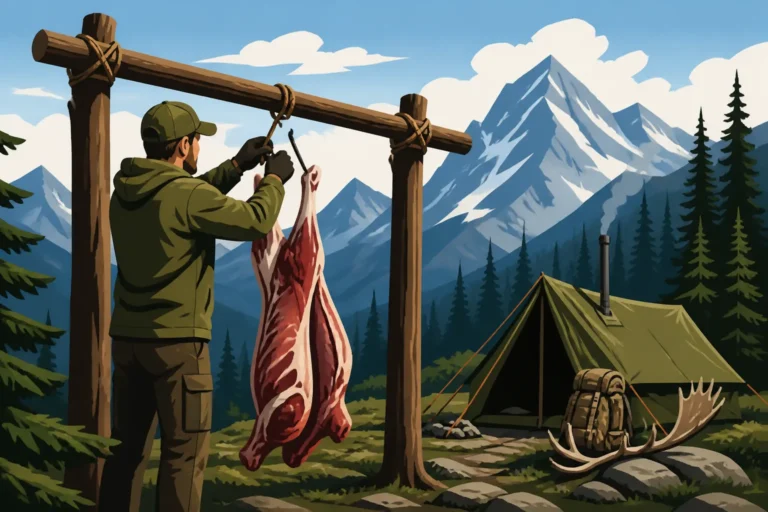
Upon reaching camp or your vehicle, the work isn't over. The goal is to get the meat cooled down to below 4°C (40°F) as quickly as possible and keep it dry. If you're still in the backcountry, hang the meat in a shady, well-ventilated spot, protecting it from scavengers. In some coastal areas, this might mean hanging it over a log with a tarp providing a makeshift roof. Once out, transport the meat directly to a cooler with ice, ensuring the meat is not sitting directly in meltwater. Drain the cooler regularly or use frozen water bottles that won't leak. For long trips home, consider professional processing and vacuum sealing at a local butcher, which can significantly extend the shelf life and protect the meat from further moisture exposure.
Specific Coastal Hunting Scenarios
The diverse landscapes of British Columbia's coast offer various hunting scenarios, each with its own strategies and challenges. Understanding these specific environments will better prepare you for success.
Hunting Coastal Estuaries and Inlet Systems
Coastal estuaries and inlet systems present a unique hunting opportunity, particularly for black bears and black-tailed deer. These dynamic zones, where freshwater rivers meet the saltwater ocean, are incredibly rich in nutrients and support a diverse array of life. Critically, during the fall, these are the highways for salmon returning to spawn, making them prime feeding grounds for bears. Hunting these areas often involves navigating by boat, allowing access to remote river mouths, tidal flats, and beaches that are otherwise inaccessible. The tides play a crucial role here; at low tide, vast mudflats and beaches are exposed, providing feeding opportunities for deer that graze on intertidal vegetation, and bears that forage for shellfish or salmon carcasses. At high tide, these areas are submerged, pushing animals higher up into the adjacent timber. Knowing the tide charts is as important as knowing the weather forecast. You can learn more about how to navigate these environments by reading Hunting an Estuary Flat at Low Tide.
Hunting from a boat on the coast is a common and effective method, but it comes with its own set of considerations. Whether you're using a small aluminum skiff or a larger cabin cruiser, safety is paramount. The ocean can be unpredictable, and rapidly changing weather conditions can turn calm waters into a dangerous chop. Always carry appropriate safety gear, including PFDs, flares, and a reliable marine radio or satellite communication device. When hunting from a boat, you'll often be glassing the shorelines, avalanche chutes, and the edges of clearcuts for movement. It’s important to understand the regulations regarding shooting from a boat and ensuring you are on public land or have permission for private land access. This mode of hunting allows you to cover vast amounts of territory and access areas that would be impassable on foot, opening up opportunities for both spot-and-stalk and still-hunting scenarios along the rugged coastline. For more on this, check out our article Hunting From a Boat on the Coast.
Visibility in coastal inlet systems can vary dramatically. Fog and mist are frequent visitors, often rolling in suddenly from the ocean and obscuring entire mountainsides. This can turn a promising glassing session into a zero-visibility ordeal in minutes. Always be aware of your surroundings and have a plan for navigating back to your boat or camp if the fog descends. While fog can limit visibility for glassing, it can also aid in a stealthy approach, muffling sounds and making your silhouette less distinct. It’s a double-edged sword that demands adaptability. Conversely, on clear, crisp days, the vastness of the inlets can offer incredible glassing opportunities, especially at first light and last light, when animals are most active. The key is to be prepared for all conditions and have the flexibility to adjust your strategy to what the coast throws at you.
Targeting Blacktail in Second Growth
Vancouver Island and much of coastal British Columbia are characterized by extensive logging history, leaving behind vast tracts of regenerating forests known as "second growth." While dense and often seemingly impenetrable, these areas are prime habitat for black-tailed deer. The challenge lies in the extremely limited visibility; negotiating head-high salal, tangled huckleberry, and thick coniferous saplings can feel like pushing through a wall of green. This habitat often frustrates hunters accustomed to more open country, as spotting a deer at more than 20-30 yards can be a rare occurrence. However, this density is precisely what attracts blacktail, providing them with both abundant forage and exceptional cover from predators and hunters alike. The trick is to embrace the close-quarters nature of the hunt and adapt your tactics accordingly. For detailed strategies, our guide Still-Hunting Second Growth for Blacktail offers invaluable advice.
Effective hunting in second growth relies heavily on finding and following deer trails, rubs, and bedding areas within the thickets. Blacktail are creatures of habit and will often use the same, barely discernible game trails to move between feeding and bedding areas. These trails might look like tunnels through the brush to human eyes, but for a deer, they are highways. Look for areas where the vegetation is slightly pressed down, where twigs are broken, or where small rubs indicate a buck has passed. Pay close attention to areas with concentrations of preferred browse plants, such as salal, huckleberry, and sword ferns, as these are where deer will be spending their time feeding. Bedding areas are often found in the densest, most sheltered parts of the second growth, typically on a slight rise or ridge where deer can watch their backtrail. Approaching these areas requires extreme stealth and patience, as deer can easily vanish into the labyrinth of vegetation.
Utilizing clearcut edges and old logging roads as travel corridors is another key strategy. While the interior of a second-growth block might be too thick to navigate efficiently, the edges where the clearcut meets older timber or where it abuts an old road often serve as natural transition zones. Deer will frequently use these edges, especially at dawn and dusk, to move into feeding areas or to browse along the slightly more open fringes. Old, deactivated logging roads, even those heavily overgrown, can also act as excellent travel routes for both hunters and deer. The slightly more open canopy above these roads allows more sunlight to penetrate, encouraging new growth that deer will feed on. Still-hunting slowly along these features, constantly scanning the thickets to either side, and being prepared for a quick shot at close range, is often the most productive way to hunt blacktail in this challenging but rewarding habitat.
Planning Your British Columbia Coastal Hunt
Successfully hunting in British Columbia's coastal rain requires more than just field skills; it demands thorough planning and preparation, both in terms of understanding regulations and physically preparing for the demanding environment.
Understanding Regulations and Access
Before you even think about setting foot in the coastal rainforest, you absolutely need to dive deep into British Columbia's hunting regulations. These are complex and change frequently, so relying on outdated information is a recipe for disaster. Start by obtaining the current British Columbia Hunting and Trapping Regulations Synopsis, which is available online. Pay close attention to the specific Management Units (MUs) you plan to hunt, as regulations regarding species, season dates, bag limits, and antler restrictions can vary significantly even within a short distance. For example, some areas might have antlerless deer seasons, while others are strictly antlered, or have specific four-point antler restrictions. Utilizing resources like GoHunt or the provincial government's online mapping tools can be incredibly helpful for identifying specific MU boundaries and cross-referencing them with the regulations. This diligence is crucial for a legal and ethical hunt.
Accessing prime coastal hunting grounds can be another significant hurdle. While British Columbia boasts vast tracts of Crown land, much of the coastal forest is managed by private timber companies. Access to these private forest lands often requires permits, which can sometimes be purchased online or from specific company offices. These permits might also come with restrictions on vehicle access or specific entry/exit points. It's imperative to research the specific land ownership of your target hunting area and secure any necessary permits well in advance. Ignorance of private land boundaries or permit requirements is no excuse and can lead to fines or confiscation of game. Always check for signs, gates, or other indicators of private property, and respect all posted rules. Our article Getting Onto Private Forest Land in British Columbia provides practical steps for navigating these access challenges.
Beyond land access, always check for road and area closures. Wildfires, despite the wet climate, can still occur, and post-fire rehabilitation or active logging operations can lead to temporary road closures. Coastal storms can also wash out roads or cause mudslides, cutting off access to entire regions. Utilizing resources like DriveBC for road conditions, and provincial government websites for wildfire and park closures, is essential. Furthermore, understand rules surrounding vehicle use on Crown land, as some areas may restrict motorized vehicles beyond a certain point, requiring you to hike in. Finally, always inform someone of your hunting plans, including your route, expected return time, and who to contact in case of emergency. The ruggedness and remoteness of many coastal areas mean self-reliance and clear communication are key safety measures. Tools like GoHunt's map features, which can highlight land ownership and road networks, are indispensable for this level of planning.
Physical and Mental Preparation
Hunting in British Columbia's coastal rain is not for the physically unprepared. The terrain is often steep, relentlessly slippery, and densely vegetated, demanding a high level of cardiovascular fitness, strength, and endurance. You'll be climbing steep slopes covered in wet moss and roots, navigating treacherous creek crossings, and pushing through thick brush, all while carrying a pack, sometimes in persistent rain. Training should focus on building leg strength, core stability, and endurance. Incorporate hiking with a weighted pack on uneven terrain, stair climbing, and exercises that mimic the movements of hunting in dense cover. Don't underestimate the physical demands; a successful hunt can often mean a long, grueling pack-out through the same difficult terrain, made even harder by the weight of an animal. Your physical conditioning directly impacts your safety, your ability to hunt effectively, and your enjoyment of the experience.
Equally important to physical fitness is mental resilience. The coastal rain can be a relentless adversary, testing your patience and resolve. Days of persistent drizzle, heavy fog, and the constant dampness can be mentally draining, leading to discomfort and a desire to give up. Hunters who succeed in this environment possess a strong mental fortitude, an ability to embrace the challenge, and a positive attitude despite the hardships. Be prepared for things to go wrong, for gear to get wet, and for long periods without seeing game. Develop coping strategies, such as focusing on the beauty of the rainforest, appreciating the small successes, or simply reminding yourself that every step is part of the adventure. The satisfaction of a hard-earned harvest in these wild, rugged conditions is immensely rewarding and often more meaningful than a hunt under blue skies.
Finally, practice your shooting skills in challenging conditions. Hunting in the coastal rainforest often means close-range shots at moving animals in limited visibility, sometimes in the rain. Practice shooting offhand, from kneeling positions, and quickly acquiring targets. Ensure your optics are fog-proof and your rifle is zeroed. The moment of truth can arrive suddenly and unexpectedly, and you need to be ready. The combination of thorough planning, rigorous physical preparation, and unwavering mental toughness will significantly increase your chances of a safe, successful, and truly memorable hunting experience in British Columbia's unique coastal rain.
Coastal vs. Interior Hunting: A Comparison
To further illustrate the unique aspects of hunting in British Columbia's coastal rain, here's a comparison with hunting in the province's drier interior regions. This table highlights the primary differences in challenges and necessary adaptations.
| Feature | Coastal Rain Hunting | Interior Dry Hunting |
|---|---|---|
| Climate | Frequent heavy rain, high humidity, fog, mild temps | Drier, more extreme temperatures (hot summers, cold winters), less fog |
| Vegetation | Dense temperate rainforest, thick undergrowth, moss | More open forests (pine, fir), grasslands, sagebrush |
| Visibility | Very limited, often <50 yards due to fog/dense cover | Generally good, glassing large areas is common |
| Terrain | Steep, wet, slippery, mossy rocks, fallen logs, muddy | Varied: steep mountains, open hillsides, valleys, dry washes |
| Primary Game | Black-tailed deer, Roosevelt Elk, Black Bear | Mule Deer, Rocky Mountain Elk, Moose, White-tailed Deer |
| Stalking/Tracking | Easier to move quietly on wet ground, clear tracks | Harder to be silent on dry leaves/twigs, faint tracks |
| Gear Focus | Waterproof everything, breathability, synthetic insulation | Layering for temp swings, good boots for rocky terrain |
| Access | Often boat-dependent, old logging roads, private timber land | Extensive FSR network, ATV trails, some wilderness |
| Challenges | Hypothermia, slick terrain, meat preservation in humidity | Dehydration, extreme temps, fire bans, widespread pressure |
Disclaimer
Hunting is a challenging and inherently risky activity. The information provided in this guide is for informational purposes only and should not be considered a substitute for professional training, comprehensive research of current regulations, or common sense. Always prioritize safety, respect wildlife, and adhere to all local, provincial, and federal laws and regulations. Weather and terrain conditions in British Columbia can change rapidly; always be prepared for the unexpected and inform others of your hunting plans.