What to Bring on a British Columbia Guided Hunt
The anticipation of a British Columbia guided hunt is exhilarating, isn't it? You've booked the trip, dreamt of the majestic landscapes and incredible game, but now the reality hits: what on earth do you pack? It's easy to feel overwhelmed, fearing you'll forget something crucial for such a remote and demanding environment. This comprehensive guide will walk you through everything you need to consider bringing, ensuring you're well-prepared for an unforgettable adventure.
The Essentials: Your Paperwork and Core Gear
Embarking on a British Columbia hunting trip, especially a guided one, means you're relying on careful planning and preparation. Forgetting a key document or a critical piece of gear can throw a wrench into your entire experience, and trust me, nobody wants to be scrambling in a remote town looking for forgotten items when they should be focused on the hunt.
Critical Documents and Licenses
Before you even think about packing your boots, you need to ensure all your ducks are in a row regarding paperwork. The bureaucracy can be a bit daunting, especially for non-residents, and a missed document can mean a missed hunt. It's a common source of anxiety for hunters travelling to a new region, so let's break it down.
First and foremost, you absolutely need your British Columbia Hunter Number (FWID), your basic hunting licence, and any specific species licences or Limited Entry Hunting (LEH) authorizations for the animals you plan to pursue. For non-residents, this also means having your valid photo identification, such as a passport, ready and easily accessible. Imagine arriving at your guide's camp, buzzing with excitement, only to realize you left your essential paperwork back home. It's a nightmare scenario that's easily preventable with a meticulous pre-trip checklist. You can find detailed information about what you'll need in British Columbia Hunting Licences and Fees and British Columbia's Species Licences and Tags.
If you're bringing your own rifle from outside of Canada, you'll need to complete a Non-Resident Firearm Declaration form in triplicate. This is a critical step and needs to be handled correctly to avoid any issues at the border. Having all your firearm details readily available for customs officials will make the process much smoother. Don't forget any proof of hunter education if required for your licence type, like your CORE card for residents. Beyond the official hunting documents, it's also wise to have copies of your guided hunt booking confirmation and a list of emergency contacts, both for yourself and for your guide. Services like BookYourHunt often provide comprehensive booking details that can be printed and kept with your documents, making it easier to confirm everything with your outfitter upon arrival. Proper planning here means less stress later on. Understanding Rules for Non-Residents Hunting British Columbia is paramount. For those bringing firearms, be sure to review Bringing Firearms Into British Columbia and The Non-Resident Firearm Declaration thoroughly.
Your Weapon of Choice and Ammunition
Your primary hunting tool, whether it's a rifle, bow, or crossbow, is a deeply personal choice, but its readiness for a BC hunt is universal. Showing up with a brand-new, untried rifle that you've barely shot is asking for trouble. British Columbia terrain can be unforgiving, and shot opportunities might be fleeting, often at unexpected ranges. You need to be intimately familiar with your weapon, its ballistics, and your own shooting capabilities. That means thorough practice before you even leave home.
When it comes to rifles, choosing an appropriate calibre for the game you're after is important. You'll want something that delivers enough energy for a clean, ethical kill on large animals like moose or elk, but also something you can shoot accurately and comfortably. Generally, for bigger game in BC, anything from a .270 upwards is a common choice, with many hunters favoring calibres like .30-06, .300 Win Mag, or 7mm Rem Mag. Always carry sufficient ammunition for your hunt, and then some. A good rule of thumb is to bring at least two boxes, if not more, just in case you need to re-zero or take some extra practice shots, or if your hunt extends unexpectedly. For more specifics, check out Legal Rifle Calibres for Big Game.
Archery hunters have specific considerations as well. Ensure your bow has the legal draw weight for big game in British Columbia, and that your broadheads are sharp and suitable for the species you're targeting. Practice shooting from various positions and at different distances, mimicking potential field scenarios. Crossbow users should also be aware of the specific regulations governing their use in British Columbia. Regardless of your weapon, bring a basic cleaning kit and any essential tools for minor adjustments or field maintenance. A loose scope screw or a minor bow issue can ruin a hunt, and your guide might not have the specific tools for your setup. For archery specific details, look into Bow Draw Weight Rules in British Columbia and When a Crossbow Is Legal to Use.
Navigating British Columbia's Weather with the Right Clothing
British Columbia is notorious for its rapidly changing weather patterns, especially in the mountains or along the coast. One moment you could be enjoying a sunny autumn day, and the next you're battling driving rain, hail, or even early season snow. This is where a proper layering system becomes your best friend. Don't just pack for one type of weather; pack for all of them. This is a crucial element for comfort and safety. As a starting point, check out Hunting in British Columbia's Coastal Rain or Hunting Above Timberline in Cold Weather to get a sense of what you're up against.
Your clothing system should consist of three main layers: a base layer, a mid-layer, and an outer shell. The base layer, typically made of merino wool or synthetic materials, wicks moisture away from your skin, keeping you dry and warm. Avoid cotton at all costs – it absorbs moisture and will make you cold. The mid-layer provides insulation, trapping warmth. Fleece jackets or puffy synthetic insulated jackets are excellent choices. Finally, your outer shell is your fortress against the elements. It absolutely must be waterproof and breathable, allowing moisture vapour to escape while preventing rain and wind from penetrating. Look for high-quality fabrics that are quiet in the bush.
Footwear is another non-negotiable item. Invest in a pair of high-quality, waterproof hunting boots that are well broken-in. New boots on a multi-day hunt in rugged BC terrain are a recipe for blisters and misery. Consider the terrain you'll be hunting; if it's steep and rocky, a stiffer sole with good ankle support is crucial. Gaiters are also highly recommended to keep snow, mud, and water out of your boots, especially when traversing wet undergrowth or snow patches. Bring multiple pairs of wool or synthetic socks, changing them daily to prevent blisters and maintain foot hygiene. Your feet are your engine in the backcountry; treat them well. You'll find more advice on Boots for Steep British Columbia Country.
Don't forget accessories like a warm hat and gloves, ideally waterproof. Even if the forecast looks mild, mountain temperatures can drop dramatically. Lastly, be aware of British Columbia's blaze orange requirements. Many seasons and areas mandate wearing a certain amount of blaze orange for safety, so pack a vest and/or a hat. Your guide will confirm the specific requirements for your hunting area. Ensuring you meet these safety standards is covered in British Columbia Blaze Orange and Safety Rules.
Staying Safe and Connected in the Backcountry
British Columbia's wilderness is vast and beautiful, but it's also incredibly remote. Unlike many hunting grounds closer to urban centres, you often won't have reliable cell service, and help can be hours, or even days, away. This isn't meant to scare you, but to highlight the importance of self-sufficiency and having the right tools to navigate and communicate effectively.
Navigation and Communication Tools
The notion that your cell phone will be your primary navigation and communication device in British Columbia's backcountry is a dangerous misconception. While useful in areas with coverage, cell service quickly vanishes once you venture beyond main highways or populated valleys. Knowing Where British Columbia Cell Coverage Ends is vital for proper planning.
A dedicated GPS device is a far more reliable tool. Load it with detailed topographic maps of your hunting area. Even better, bring a physical map and a compass as a backup – and know how to use them both! Batteries die, electronics fail, but a paper map and a compass are timeless tools that don't rely on power. Many hunters use apps like Gaia GPS or OnX (if available for the region) on their phones, but these should always be used in conjunction with a physical map and a plan for offline access and charging. GoHunt often provides mapping resources that can be downloaded for offline use, which can be a lifesaver in areas without service. Remember, your guide will have their own navigation, but knowing your location and having personal backups is a smart move. Scouting a British Columbia Management Unit Online can help you pre-load maps.
Perhaps the most critical piece of modern backcountry safety gear is a satellite communication device. Whether it's a Garmin inReach, a Zoleo, or a satellite phone, these devices allow you to send and receive text messages, track your movements, and, most importantly, send an SOS signal in a true emergency, even when miles from the nearest cell tower. This isn't just a convenience; it's a potentially life-saving tool. Ensure it's charged, has an active subscription, and that you know how to operate it under pressure. Carrying a robust power bank and appropriate charging cables for all your electronic devices is also non-negotiable. For a deeper dive, consider Satellite Communication on a Remote Hunt and Emergency Planning in British Columbia's Backcountry.
Bear Safety and First Aid Preparations
British Columbia is truly wild, and that means you'll be sharing the landscape with a diverse array of wildlife, including bears. Both black bears and grizzly bears call BC home, and while encounters are often uneventful, being prepared is essential for your safety and peace of mind. Your guide will have extensive experience in bear country, but personal preparedness is paramount. Learn more about Bear Safety While Hunting in British Columbia.
Bear spray is a non-lethal deterrent and a critical piece of safety gear. Ensure you have a fresh canister, a holster that allows for quick access, and that you know how to deploy it effectively. Practice drawing and aiming it (without actually deploying, of course) so that the motion becomes second nature. It's not enough to simply carry it; you need to be proficient. Always store it in an easily accessible location on your person, not buried in your pack. Familiarize yourself with basic bear encounter protocols – how to identify bear sign, what to do if you encounter a bear, and when and how to use bear spray. For specific advice, it's worth reading What to Do If You See a Grizzly.
Beyond wildlife encounters, accidents can happen in the backcountry. A comprehensive first-aid kit is absolutely mandatory. Don't skimp here. Your kit should include items for cuts, scrapes, blisters, sprains, insect bites, pain relief, and any personal medications you require. If you have any allergies or pre-existing conditions, ensure your guide is aware and that you have all necessary medications, like an EpiPen, readily available. Taking a basic wilderness first-aid course before your trip is an excellent idea, as knowing how to use the contents of your kit is just as important as having them. A whistle and a signal mirror are also small but effective additions to your kit for signaling for help in an emergency.
Personal Comfort and Camp Necessities
Even on a guided hunt, where many logistical details are handled for you, personal comfort items and certain camp necessities will make your experience much more enjoyable. Remember, you're often in remote camps for days, sometimes weeks, and a little forethought can make a big difference in morale and overall well-being.
Personal Care and Camp Comfort Items
While your guide will undoubtedly provide a functional camp, a few personal items can elevate your experience from rugged to truly comfortable. Basic hygiene is important, even in the bush. Pack a small, biodegradable soap, a toothbrush and toothpaste, and any other essential toiletries. Consider quick-drying towels. You'll thank yourself after a long day of hiking when you can freshen up a bit, even if it's just a quick rinse.
A reliable headlamp with spare batteries is absolutely essential. You'll use it for everything from navigating camp in the dark to packing up before dawn and field dressing after dusk. A small, multi-tool is another indispensable item that proves useful for countless tasks, from minor gear repairs to opening packages. When you're in camp after a hard day, slipping into comfortable clothes and shoes can be incredibly rejuvenating. Pack a pair of lightweight camp shoes or slippers, and some clean, relaxed clothing for downtime. Many guides operate out of wall tents or cabin camps, and having that comfortable gear makes all the difference. While BookYourHunt and GoHunt are great for finding and planning hunts, they can also indirectly provide insights into typical camp setups through photos or outfitter descriptions, helping you gauge what level of comfort to expect and what additional personal touches might be welcome.
Don't forget to pack a durable water bottle or a hydration reservoir. While your guide will ensure you have water, having your own readily accessible means you stay hydrated on the trail. A small water filter or purification tablets can also be a smart backup. High-energy snacks, like granola bars, trail mix, or jerky, are perfect for quick boosts of energy during long days afield. They're easy to carry in your daypack and can prevent the dreaded "bonk" when you're miles from camp.
Field Care and Meat Handling Gear
As ethical hunters, our responsibility extends beyond the shot to the respectful and efficient care of the harvested animal. In British Columbia, where distances can be vast and weather unpredictable, proper field care is paramount to preserving your hard-earned meat. While your guide will certainly have the necessary tools and expertise, having some personal gear as backup or for personal preference is a good idea. Knowing how to perform basic field dressing efficiently is a skill every hunter should possess. Reviewing Field Dressing in British Columbia's Wet Weather can be particularly helpful.
Sharp knives are non-negotiable. Bring at least two good quality, sharp hunting knives, and a sharpening stone or a compact sharpening tool. A small bone saw can also be incredibly useful for quartering larger game like moose or elk, making the pack-out much more manageable. You absolutely want to ensure your tools are razor-sharp to make clean cuts and reduce the effort required, which is especially important when you're tired. Game bags are another essential item. These breathable, lightweight bags protect your meat from flies, dirt, and debris while allowing it to cool properly. Bring several, suitable for the size of animal you're hoping to harvest. For advice on keeping your meat in top condition, refer to Keeping Meat Cool in an Early Season.
Hygiene is critical during field dressing. Pack several pairs of latex or nitrile gloves to wear when handling meat. This not only keeps your hands clean but also helps prevent contamination of the meat. A length of paracord can be surprisingly useful for hanging game, tying off game bags, or countless other tasks around camp and in the field. A small, lightweight tarp can also be handy for laying meat on a clean surface during processing. While your guide will likely have all of these items, having your own backups ensures you're never caught unprepared, and demonstrates your commitment to proper game care. Lastly, understanding Hanging Meat at a Backcountry Camp is good knowledge to have.
Specialized Gear for Specific Hunts and Terrain
British Columbia offers an incredibly diverse range of hunting experiences, from glassing vast alpine basins for sheep to still-hunting dense coastal timber for blacktail deer. The specific type of hunt you're on will dictate some of your more specialized gear choices. Tailoring your kit to the target species and terrain will significantly increase your comfort and success rate.
Optic Choices for Different Landscapes
Good optics are an investment, but they are absolutely invaluable in British Columbia's diverse and often expansive landscapes. Spotting game before it spots you is often the key to success, especially in open country or high alpine environments. You simply cannot hunt effectively without them. Consider the advice in Glassing an Interior Hillside for Mule Deer for specific applications.
For general use, a pair of 8x or 10x binoculars are a hunter's constant companion. They're perfect for quickly scanning terrain, evaluating animals, and following movement. Ensure they are waterproof and durable, and consider a bino harness to keep them secure and easily accessible on your chest. For hunts where long-range glassing is crucial, such as sheep, goat, or open country mule deer, a spotting scope becomes essential. A 15-45x or 20-60x scope paired with a lightweight, sturdy tripod will allow you to pick apart distant hillsides, evaluate horn curl, or judge antler points without having to hike miles to get a closer look. This saves valuable time and energy. Being able to determine if that distant speck is a legal ram or simply a ewe can make or break a mountain hunt. You'll find great tips in Glassing an Alpine Basin for Rams.
No matter your optics setup, a good quality rangefinder is an absolute must. Knowing the precise distance to your target is critical for ethical shot placement, especially with modern cartridges that have flatter trajectories over longer distances. It eliminates guesswork and allows you to make informed decisions about your shooting capabilities in the field. Practice using your rangefinder in varying light conditions and on different types of terrain to ensure you're proficient when it counts. The combination of binoculars, a spotting scope, and a rangefinder forms the optical trifecta for serious big game hunting in British Columbia.
Packing Systems for Success
Even on a fully guided hunt, you'll still be responsible for carrying your personal essentials each day. This means having a well-designed packing system that works for you and the type of hunting you'll be doing. The right pack ensures comfort, easy access to gear, and the capacity to bring home what you've earned.
For daily excursions from camp, a comfortable day pack is vital. This pack should be large enough to carry your immediate necessities: extra layers of clothing, water, snacks, your first-aid kit, bear spray, binoculars, and perhaps a small camera. Look for a pack with good ergonomics, comfortable shoulder straps, and a hip belt to distribute weight effectively. It should also be durable and relatively quiet to wear in the bush. Think about pockets and compartments that allow for easy organization and quick access to frequently used items.
If your hunt involves any potential for packing out meat yourself, or if you're venturing into particularly remote, rugged terrain, you might consider bringing a frame pack or a pack capable of handling heavy loads. While your guide will be the primary person for packing out game, accidents or unforeseen circumstances can happen. Being able to assist or carry some of the load, especially if you harvest an animal far from a trail or access point, can be incredibly helpful. Packing out an animal from British Columbia's steep country is a demanding task, and having a pack designed for it can make a significant difference. You might find it useful to read Packing Meat With a Frame Pack and Getting Meat Out of Steep British Columbia Country for more insight.
Finally, think about protecting your gear from the elements. British Columbia's wet climate means rain can often be a factor, even if your outer layers are waterproof. Pack several dry bags or heavy-duty garbage bags to line your pack and protect sensitive items like extra clothing, electronics, and sleeping bags from moisture. Keeping your gear dry is not just about comfort; it's about safety, as wet clothing can quickly lead to hypothermia in cooler temperatures.
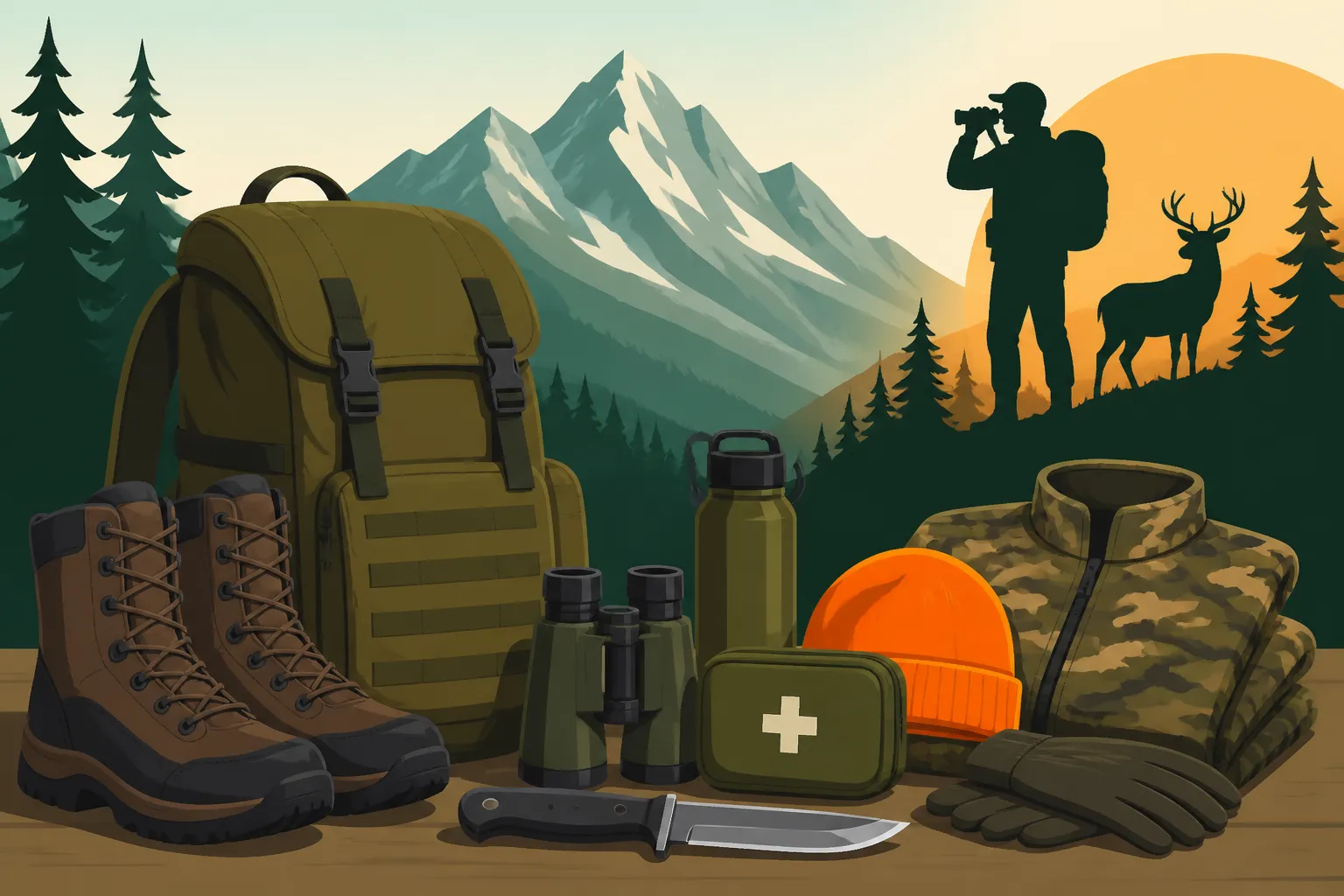
| Category | Item | Notes |
|---|---|---|
| Documents | Hunter Number (FWID) | Essential for all BC hunters |
| Basic Licence | Resident, Non-Resident, Non-Resident Alien | |
| Species Tags/LEH Authorization | For each animal you intend to harvest | |
| Valid Photo ID | Passport for non-residents, Driver's Licence for residents | |
| Firearm Declaration Form | If bringing a rifle from outside Canada | |
| Proof of Hunter Education | If applicable (CORE card) | |
| Booking Confirmation | Details of your guided hunt from your outfitter (e.g., from BookYourHunt) | |
| Weapon & Ammo | Rifle/Bow/Crossbow | Clean, sighted in, familiar, appropriate for species |
| Ammunition | Sufficient quantity (at least 2 boxes), legal for species | |
| Cleaning Kit & Tools | For minor field adjustments and maintenance | |
| Clothing | Layering System | Base (wool/synthetic), mid (fleece/puffy), outer (waterproof/breathable shell) |
| Waterproof Hiking Boots | Broken in, suitable for rugged terrain, extra laces | |
| Gaiters | To keep snow/water/debris out of boots | |
| Plenty of Socks | Wool or synthetic, multiple pairs for daily changes | |
| Hat, Gloves | Warm and waterproof options, suitable for cold and wet conditions | |
| Blaze Orange Vest/Hat | Mandatory in many seasons/areas, check regulations | |
| Safety & Comm. | GPS Device & Maps | Loaded with offline maps, backup paper maps & compass (GoHunt often has good map data) |
| Satellite Communicator | InReach, Zoleo, or satellite phone for emergencies and communication | |
| Power Bank & Cables | To recharge all electronics | |
| Headlamp & Spare Batteries | Indispensable for dark mornings and evenings | |
| Bear Spray | And a quick-access holster, practice deployment | |
| First-Aid Kit | Comprehensive, including personal medications, moleskin for blisters | |
| Whistle/Signal Mirror | For emergency signaling | |
| Field Gear | Binoculars | 8x-10x recommended for general use, bino harness for easy access |
| Spotting Scope & Tripod | For long-range identification, crucial for mountain hunts | |
| Rangefinder | For accurate shot placement | |
| Day Pack | Comfortable, holds essentials for daily hunts (water, snacks, layers, etc.) | |
| Game Bags | Clean, breathable; for protecting meat from dirt and flies | |
| Sharp Knives & Sharpener | For efficient field dressing, bring a bone saw if targeting large game | |
| Gloves (Nitrile) | For hygiene during field dressing | |
| Personal Items | Toiletries | Basic hygiene essentials (biodegradable where possible) |
| Water Bottle/Reservoir | And water purification tablets/filter as backup | |
| High-Energy Snacks | For quick boosts on the go during long hunting days | |
| Camp Shoes/Slippers | For comfort around camp after a long day in boots | |
| Small Multi-tool | Always handy for various tasks |
Disclaimer
This article is for general informational purposes only and does not constitute professional advice. Laws, prices and regulations vary by location and change over time. Consult a qualified professional for guidance on your specific situation.