Bringing Firearms Into British Columbia
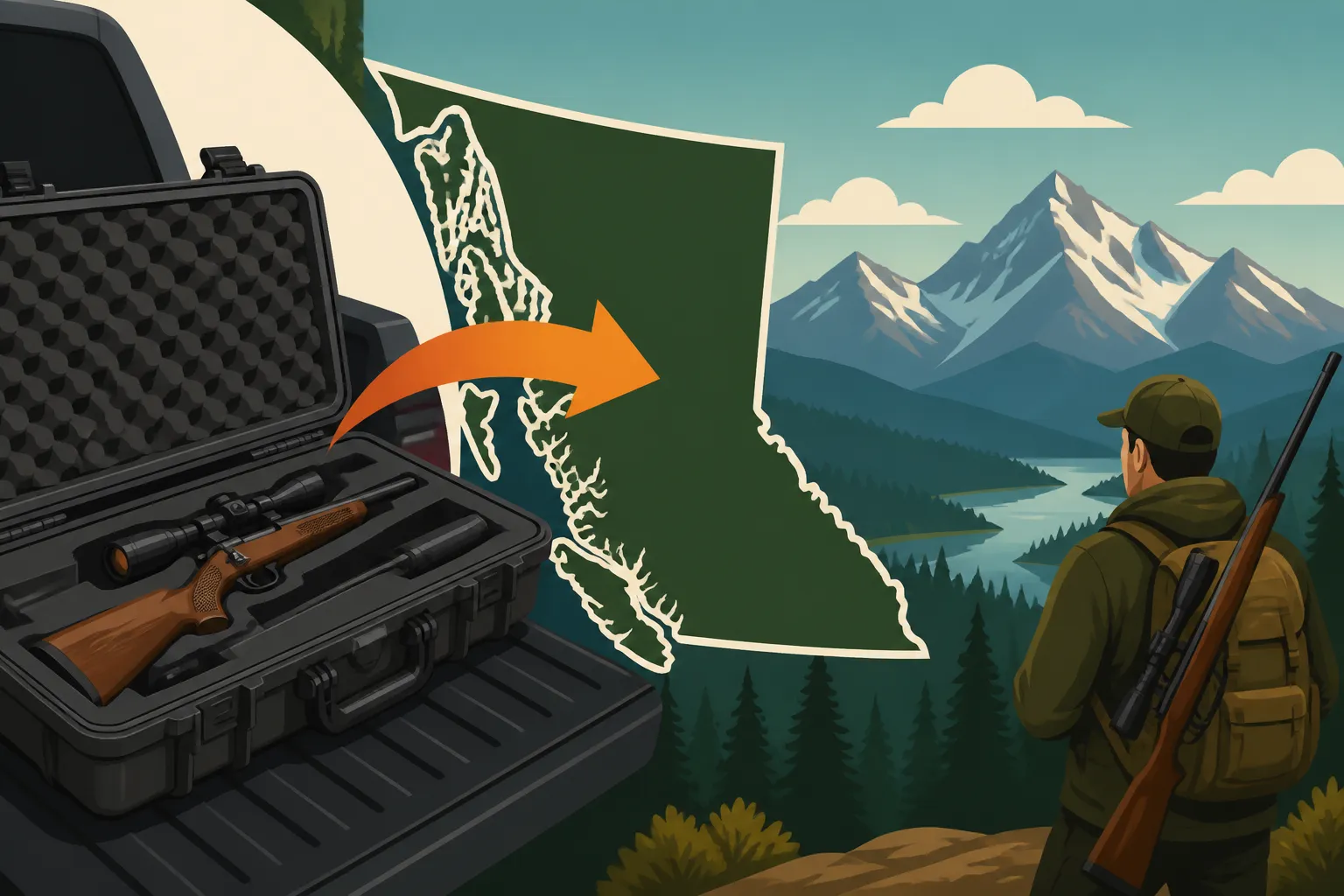
Crossing international borders with firearms can feel like navigating a minefield, especially when you’re planning an exciting hunting trip to British Columbia. Many hunters worry about the complex paperwork, unexpected fees, and the daunting prospect of having their gear confiscated at the border. This guide is designed to demystify the process, providing clear, step-by-step instructions and practical advice to ensure your firearms enter British Columbia smoothly and legally, so you can focus on the hunt itself.
Understanding Canadian Firearm Regulations for Hunters
The thought of bringing your trusted hunting rifle into another country can be anxiety-inducing. Canada has its own set of firearm laws, and while they might seem complex at first glance, they are quite manageable once you understand the core principles. The biggest hurdle for many is simply wrapping their head around the terminology and the specific forms required, which often differ significantly from what they might be used to in their home country.
The Basics of Non-Restricted Firearms
For most hunters traveling to British Columbia, your firearms will likely fall into the "non-restricted" category. This is excellent news because non-restricted firearms are generally straightforward to bring across the border, provided you follow the proper declaration procedures. What exactly falls into this category? Think your standard hunting rifles, like a bolt-action .30-06 or a pump-action 12-gauge shotgun, designed for sporting purposes. These are the workhorses of the hunting world and are perfectly legal for non-residents to bring into Canada for hunting or target shooting.
However, it’s crucial to understand what is not allowed. Canada has strict prohibitions on certain types of firearms. Fully automatic firearms are an absolute no-go, as are most handguns (with very few, highly specific exceptions for competitive shooters, which rarely apply to hunters). There are also length restrictions for barrels and overall firearm length that can push a firearm into a restricted or prohibited category. For example, some semi-automatic rifles and shotguns, even if legal in your home country, might be deemed "restricted" or "prohibited" in Canada due to their design or capacity, making them illegal for you to import. Always double-check your specific firearm against Canadian regulations well in advance of your trip. Websites like the RCMP's Canadian Firearms Program are invaluable resources, or consider using a planning tool like GoHunt to help you verify details.
Why the Rules Can Feel Overwhelming
Let's be honest: government regulations, especially those spanning international borders, often feel like they're written in another language entirely. The forms can be dense, the jargon confusing, and the sheer volume of information can make anyone's head spin. The fear of making an honest mistake and facing severe consequences—like delays, fines, or even having your cherished hunting rifle confiscated—is a very real and valid concern for many visiting hunters.
You’re not alone in feeling this way. I've heard countless stories from hunters who were intimidated by the process, almost to the point of canceling their trip. The key is to break it down into manageable steps and allocate ample time for preparation. Think of it less as a bureaucratic obstacle course and more as a detailed checklist that, once mastered, becomes a routine part of your pre-hunt preparations. The Canadian government is not trying to make it impossible for legitimate hunters; they simply want to ensure firearms are controlled and properly documented. Taking the time to understand the nuances of things like British Columbia's Blaze Orange and Safety Rules or the specific Legal Rifle Calibres for Big Game will not only make your border crossing smoother but also your entire hunting experience safer and more enjoyable.
The Non-Resident Firearm Declaration Form (RCMP 5589)
This form is the cornerstone of bringing your firearm into British Columbia. It's not just a piece of paper; it acts as your temporary Canadian firearm license. For non-residents, completing this form correctly is paramount. Don't leave it to the last minute, and certainly don't try to fill it out in a rush at the border checkpoint.
Step-by-Step Guide to Filling Out the Form
The Non-Resident Firearm Declaration (form RCMP 5589) must be completed in triplicate (three copies). You can download it from the Canada Border Services Agency (CBSA) or Royal Canadian Mounted Police (RCMP) websites and fill it out electronically, which is highly recommended for legibility. Here's a breakdown of the key sections:
- Personal Information: This includes your full legal name, date of birth, address, and contact information. Ensure this matches your passport or other identification exactly.
- Firearm Details: This is where precision is critical. You'll need to list each firearm you're bringing in, providing the:
- Manufacturer: (e.g., Remington, Winchester, Savage)
- Type: (e.g., Rifle, Shotgun)
- Action: (e.g., Bolt-action, Pump-action, Lever-action)
- Calibre/Gauge: (e.g., .30-06 Springfield, 12 Gauge)
- Serial Number: Double-check this for accuracy! A single digit off can cause serious issues.
- Barrel Length: Measure it precisely.
- Purpose: Clearly state "Hunting" or "Sporting Competition."
- Duration of Stay: Indicate the expected length of your stay in Canada. The declaration is valid for a maximum of 60 days, but you can apply for an extension if needed.
- Important Note: Do not sign the form until you are in front of a Canada Border Services Agency (CBSA) officer. They need to witness your signature.
Having a digital copy of the form filled out, ready to print and sign, will save you a lot of time and potential stress. Some hunters even print out a blank form as a backup, just in case.
What to Expect at the Border
Once you arrive at the Canadian border crossing (whether driving or flying into an airport like Vancouver International), you'll proceed to a CBSA officer. This is where your preparation pays off.
- Declare Your Firearms Immediately: This is non-negotiable. When asked if you have anything to declare, state clearly and unequivocally, "Yes, I am declaring firearms for hunting." Honesty and transparency are your best friends here.
- Present Your Documentation: Hand over your completed, unsigned RCMP 5589 forms, your passport, and any other supporting documents (more on these below).
- Verification and Signature: The CBSA officer will review the forms, verify the firearm details, and inspect the firearms themselves (which should be unloaded and properly stored, as we'll discuss). Once satisfied, they will have you sign the forms and then sign them themselves.
- Pay the Fee: There is a CAD $25 fee for the Non-Resident Firearm Declaration. This fee covers all firearms listed on that single declaration. It's valid for 60 days. Keep the yellow copy of the confirmed declaration with you at all times while in possession of your firearms in Canada, as it serves as your temporary license. The white and green copies will be retained by the CBSA.
- Be Patient and Polite: Border crossings can sometimes be busy, and officers have a job to do. Answer all questions truthfully and courteously. A calm, prepared demeanor goes a long way. Many hunters find that resources like GoHunt offer updated advice on border crossing procedures, which can be invaluable.
Remember, this declaration acts as a temporary Possession and Acquisition Licence (PAL) for non-restricted firearms. Without it, you cannot legally possess your firearms in Canada. This is a critical distinction that hunters often overlook, mistaking it for just another travel document. It’s much more than that. For those flying into British Columbia with a rifle, the process at the airport customs will be similar, but with additional steps regarding airline firearm transportation regulations.
Essential Documentation and Preparation
It’s not enough to just have your firearm declaration in order. A truly prepared hunter will have a comprehensive set of documents and will have taken the necessary steps to ensure their firearms are travel-ready and compliant with all Canadian laws. This forethought will not only expedite your border crossing but also provide peace of mind throughout your entire trip.
Beyond the Declaration: What Else You Need
Think of your border crossing as a legal presentation. The more thoroughly you can prove your legitimate purpose and compliance, the smoother it will be.
- Valid Passport or Travel Document: Obvious, but essential. Ensure it's current and valid for the duration of your trip.
- British Columbia Hunting License: You absolutely need this. You can usually purchase your British Columbia Hunting Licences and Fees online from the BC government's hunting portal (BC Hunting & Crabbing). Have a printed copy readily available.
- Species Tags: If you've purchased specific tags for deer, moose, elk, or bear, bring proof of these. This demonstrates your clear intent for a legal hunt. For example, if you plan on British Columbia Deer and Elk Tags or British Columbia Moose and Bear Tags, have those documents handy.
- Proof of Ownership: While not always explicitly requested, having a bill of sale, receipt, or even a past hunting license where the firearm is listed can be helpful if questions arise about ownership.
- Invitation Letter (if applicable): If you are hunting with an outfitter, a guide, or even a resident friend, an invitation letter detailing the purpose of your visit, the dates, and where you'll be hunting can be a huge asset. This is particularly important if you’re utilizing a British Columbia guide outfitter or if a resident is providing a What a Permit to Accompany Allows.
- Return Ticket/Itinerary: Proof of your intended departure from Canada helps confirm you are a visitor and not attempting to immigrate.
Having all these documents organized in a clear folder makes a fantastic impression on border agents and significantly speeds up the process. It signals that you are a responsible, law-abiding hunter.
Transporting Your Firearms Safely and Legally
The legal requirements for transporting your firearms are just as important as the declaration itself. Canada has strict rules to prevent unauthorized access to firearms, both while in transit and when stored at your hunting camp.
- Unloaded: Your firearm must be unloaded. Remove all ammunition from the firearm itself, including the magazine (if detachable) and the chamber.
- Trigger Lock/Cable Lock: The firearm must be equipped with a secure trigger lock, cable lock, or a similar device that renders it inoperable.
- Securely Encased: The firearm must be encased in a robust, non-transparent case that is designed for firearms. A hard-sided case, ideally lockable, is generally preferred. For air travel, this is a non-negotiable requirement.
- Ammunition Storage: Ammunition must be stored separately from the firearm, preferably in a separate locked compartment or container. There are limits on the amount of ammunition you can bring into Canada, typically 5,000 rounds per person, which is far more than most hunters need for a trip. Do not bring prohibited ammunition types (e.g., certain armour-piercing rounds).
- Vehicle Transport: When driving, your firearms should be kept out of sight, ideally in the trunk or a locked compartment, and remain unloaded, trigger-locked, and encased. Avoid having them openly displayed or easily accessible from the passenger compartment. Even when you're just driving a British Columbia's Logging Road Network to your hunting area, adherence to these rules is vital. Understanding the specific British Columbia Rules on Hunting From a Vehicle is also critical for safety and legality.
Failure to follow these transportation and storage rules can result in charges, fines, or confiscation of your firearms, even if your declaration form is perfectly in order. Always err on the side of caution and prioritize safety and compliance.
Common Pitfalls and Troubleshooting
Despite the best intentions and meticulous preparation, sometimes things can go sideways. Understanding common mistakes and knowing how to respond can make a world of difference in mitigating potential problems. The goal is to avoid these issues entirely, but being prepared for them offers a valuable safety net.
Avoiding Costly Mistakes at the Border
Many of the issues encountered at the border are preventable. A little extra attention to detail can save you a tremendous amount of stress, time, and money.
- Incorrect or Incomplete Forms: The most frequent error. Ensure all fields on the RCMP 5589 are filled out accurately, especially serial numbers and barrel lengths. Any discrepancies, no matter how minor, can flag your declaration for further scrutiny or rejection. Don't rely on memory; use actual measurements and verify against your firearm's markings.
- Undeclared Firearms: This is perhaps the most serious and easiest mistake to avoid. Always declare your firearms. Attempting to conceal them or "forget" to mention them is a criminal offense and can lead to severe penalties, including seizure of your firearms, fines, and potentially being barred from entering Canada in the future.
- Prohibited Items: Bringing a firearm or accessory that is prohibited in Canada, even if legal in your home country, will cause major problems. This includes certain handguns, specific semi-automatic rifles, high-capacity magazines (often over 5 rounds for centerfire semi-auto rifles, or over 10 rounds for centerfire semi-auto shotguns, depending on the model), and some types of ammunition. Research this thoroughly before packing. The Canadian Firearms Program website is your definitive source for this information.
- Lack of Supporting Documentation: While the RCMP 5589 is primary, not having your hunting license, species tags, or an invitation letter can raise suspicion about your true intent, leading to more questions and delays.
- Misunderstanding the Rules: Don't assume Canadian laws are the same as your local laws. For instance, the exact rules for transporting firearms when driving into British Columbia with firearms might differ slightly from those for Flying to British Columbia with a Rifle. Make sure you understand the nuances.
Summary of Common Firearm Classifications for Hunters
| Firearm Type | Canadian Classification | Requirements for Non-Residents | Key Considerations |
|---|---|---|---|
| Bolt-action Rifle | Non-restricted | RCMP 5589 | Most common hunting rifles. |
| Lever-action Rifle | Non-restricted | RCMP 5589 | Popular for bush hunting. |
| Pump-action Shotgun | Non-restricted | RCMP 5589 | Common for birds and slugs. |
| Single-shot Rifle/Shotgun | Non-restricted | RCMP 5589 | Simplest to transport. |
| Semi-automatic Rifle (Sporting) | Non-restricted/Restricted | RCMP 5589 or Prohibited | Varies greatly by make/model. High scrutiny. |
| Semi-automatic Shotgun (Sporting) | Non-restricted/Restricted | RCMP 5589 or Prohibited | Varies greatly by make/model. Magazine capacity critical. |
| Handguns | Restricted/Prohibited | Generally NOT allowed | Very few exceptions for target shooting competitions. |
| Full Automatic Firearms | Prohibited | Absolutely NOT allowed | Illegal in Canada. |
Note: This table provides a general overview. Always verify your specific firearm with official Canadian government resources.
What If Something Goes Wrong?
Even the most prepared hunter can encounter unexpected issues. Staying calm and knowing your options is crucial.
- Be Honest and Cooperative: If an officer finds a discrepancy or an undeclared item, explain the situation truthfully and calmly. Do not argue or become defensive.
- Refusal of Entry/Confiscation: In severe cases, an officer may refuse you entry into Canada or confiscate your firearm. If this happens, try to understand the exact reason. If confiscation occurs, you'll typically be given a receipt. You may have the option to voluntarily abandon the firearm or have it shipped back to your home country (at your expense), but this is not guaranteed and can be a lengthy process. This is why thorough research on "The Non-Resident Firearm Declaration" and all Canadian firearm laws is so critical.
- Contact Your Outfitter/Host: If you've booked a guided hunt, immediately contact your outfitter. They are often experienced in dealing with border issues and may be able to offer advice or assistance. Some outfitters might even offer Racking a Rifle From a British Columbia Outfitter as a backup option if yours is refused entry, though this should never be your primary plan.
- Seek Legal Counsel: For serious infractions, consulting a lawyer specializing in Canadian firearm law might be necessary. This is a last resort but an important one for protecting your rights.
The goal, of course, is to avoid all these scenarios through meticulous planning. Use resources like GoHunt forums and official government sites to research every detail. Familiarize yourself with all aspects, from British Columbia's Species Licences and Tags to local regulations that could affect your travel plans, such as whether a particular region has specific restrictions or if you might encounter any issues with British Columbia's Four-Point Antler Restriction upon returning. Taking the time to understand everything beforehand will empower you to navigate the border confidently and smoothly, ensuring your British Columbia hunting adventure starts on the right foot.
Disclaimer
This guide provides general information for bringing firearms into British Columbia for hunting purposes. Regulations can change, and individual circumstances vary. Always consult the official websites of the Canada Border Services Agency (CBSA) and the Royal Canadian Mounted Police (RCMP) for the most current and specific regulations before your trip. The author and publisher are not responsible for any issues arising from reliance on this information.