Hunting a Rock Slide for Goats
Hunting mountain goats in British Columbia's formidable rock slides is not for the faint of heart. It’s a challenge that tests every fiber of a hunter’s resolve, demanding incredible physical stamina, keen observational skills, and an unwavering commitment to safety. This guide aims to demystify the process, offering practical, grounded advice for those determined to pursue these magnificent animals in some of the most unforgiving terrain British Columbia has to offer.
Understanding British Columbia's Mountain Goats and Their Rocky Domain
British Columbia's mountains are truly wild, and the habitat these incredible animals call home reflects that untamed spirit. When you're thinking about Hunting Mountain Goat on British Columbia Rock, you're not just looking for an animal; you're immersing yourself in an ecosystem designed by raw geology and harsh weather. Rock slides are an integral part of this.
Why Goats Favor Rock Slides
Mountain goats aren't just in rock slides; they thrive in them. These aren't just random piles of scree; they're often dynamic, ever-changing landscapes that offer a unique blend of security, forage, and escape routes. Goats are masters of vertical movement, and a steep, broken rock slide, which looks like an impassable mess to us, is their superhighway. They find security here because most predators, even savvy ones like cougars or wolves, struggle to navigate the unstable footing and steep inclines with the same agility. Plus, these slides often lead directly into high alpine meadows or benches, providing easy access to prime feeding grounds while keeping them within a short scramble of their impenetrable fortresses. It’s a harsh environment, but for goats, it’s home.
Identifying Productive Rock Slide Features
Not all rock slides are created equal when it comes to holding goats. You're looking for specific features that concentrate them. Think about slides that funnel into a small, grassy bench or pocket of subalpine fir, especially those with some running water nearby, even if it's just a trickle. These small oases provide crucial forage in an otherwise barren landscape. Pay close attention to slides that have different aspects – south-facing slopes might melt out earlier in the spring, offering fresh greens, while north-facing slopes could hold snow later, providing valuable moisture in late summer. Also, look for those natural "highways" or game trails that spiderweb across the rock face. Goats are creatures of habit, and they'll use the easiest, most efficient paths, even if "easy" is a relative term in their world. Tools like onX Hunt can give you an invaluable overhead view, helping you identify these features before you even step foot on the mountain, showing you changes in elevation, vegetation, and potential travel corridors.
Scouting and Locating Goats in Avalanche Chutes and Slides
Finding a goat in a vast expanse of rock and ice can feel like finding a needle in a haystack, especially if you're unfamiliar with the nuances of their habitat. Effective scouting, both from afar and on the ground, is absolutely critical.
Pre-Season Digital Reconnaissance
Before you even load up the truck, a significant amount of your scouting can and should be done from the comfort of your home. High-resolution satellite imagery on mapping apps is your best friend. Look for areas marked by consistent steepness, particularly those with a mosaic of rock, small timber patches, and isolated pockets of green vegetation. Identify potential bedding areas – often small ledges or depressions that offer a commanding view of the terrain below and above. You're also looking for natural funnels or pinch points where goats might be forced to traverse a more predictable path. Using mapping software like onX Hunt allows you to overlay different map layers, marking waypoints for potential glassing knobs, water sources, and escape routes. This digital work helps you narrow down vast tracts of mountainsides to manageable, promising areas. You can also review information on specific British Columbia's Mountain Goat Numbers in certain management units to get a sense of population densities.
Effective Glassing Techniques for Rocky Terrain
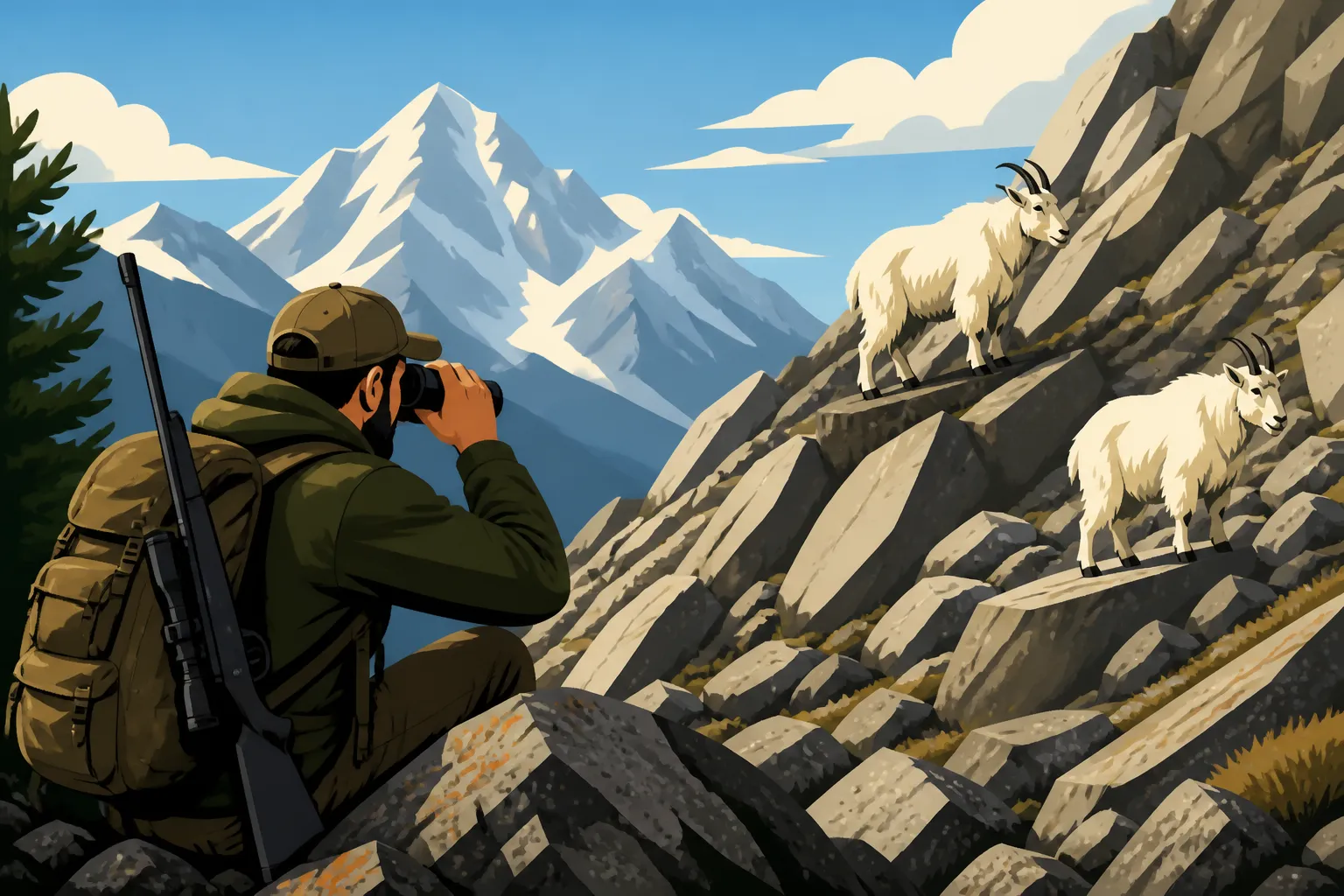
Once you’re in the field, your optics are your primary hunting tool. Good glass, and the patience to use it, will save you countless miles and energy. Start by finding a vantage point that offers a wide, unobstructed view of the entire rock slide and surrounding areas. This might mean hiking to an opposing ridge or climbing to a high point overlooking the basin. Begin by systematically dissecting the terrain, starting with the highest points and working your way down, or from left to right across the entire slope. Don't just scan for a whole goat; often, you'll pick up a white patch against the grey rock, a distinct horn shape, or a subtle movement. Look for "goat country" first – the small pockets of green, the ledges, the snow patches, and the saddles between peaks. Take your time. Spend hours behind the spotting scope, not minutes. Goats are masters of camouflage in their rocky homes, and often they'll appear out of nowhere once your eyes adjust. Remember the principles you’d use for Glassing an Alpine Basin for Rams; goats demand similar patience and scrutiny.
Executing the Stalk and Shot on Treacherous Slopes
Actually getting into a position for a shot on a rock slide goat is often the hardest part of the hunt. It's a combination of physical endurance, mental fortitude, and precise execution.
The Art of the Ascent and Approach
Approaching a goat in a rock slide is a chess match played on a vertical board. Goats have incredible eyesight and are very alert. Your primary goal is to use the terrain to your advantage – broken rock, small ridges, sparse timber, and even snow patches can offer concealment. Move slowly, deliberately, and always be aware of your scent and the wind direction. Wind can swirl unpredictably in the mountains, so a small puff bottle or milkweed is invaluable. When you think you're getting close, take a long break and re-glass the area extensively, not just for the goat you're after, but for any other goats that might act as sentinels. A group of nannies and kids can ruin a stalk just as easily as a dominant billie. Keep your pack light but ensure you have all essentials; every ounce counts when you're gaining thousands of feet of elevation. Remember, the rule of thumb for Why Goat Hunting Is the Hardest Pack Out isn't just about the pack out; it's about the climb in as well.
Positioning for a Clean Shot
Getting into a stable shooting position on a steep, unstable rock slide is often the crux of the hunt. You won't always have a perfectly flat prone position. Practice shooting from kneeling, sitting, and even awkward standing positions, using your pack, trekking poles, or a natural rock feature as a rest. The terrain is often littered with loose scree, so be mindful of your footing and ensure you have a solid anchor before you take the shot. Goats, especially billies, can be incredibly tough, so a well-placed shot is paramount. Aim for the vitals, understanding that the angle of the shot will be dramatically different on a steep slope than on flat ground. Consider the downward angle, and adjust your aiming point accordingly. Take your time, control your breathing, and only shoot when you are absolutely confident in your shot placement. If you miss or wound the animal, retrieving it from an even more precarious spot can become exponentially more dangerous.
Essential Gear and Safety Protocols for Rock Slide Hunts
No matter how experienced you are, hunting rock slides without the right gear and a solid safety plan is inviting disaster. The mountains of British Columbia demand respect, especially when you're chasing animals that live on the edge.
Critical Gear for Steep, Rocky Terrain
Your gear list for a rock slide goat hunt isn't just about comfort; it's about survival. First and foremost, footwear: investing in high-quality, stiff-soled mountaineering boots with excellent ankle support is non-negotiable. These are your foundation on unstable ground. Pair them with sturdy gaiters to keep scree out of your boots. A good frame pack is essential, not just for carrying your gear up, but for the inevitable heavy load on the way down, reinforcing the reality of Getting Meat Out of Steep British Columbia Country. Don't skimp on optics – a high-power spotting scope and quality binoculars are your eyes in this vast landscape. Other key items include a reliable rangefinder, trekking poles (they're lifesavers for balance and stability), an emergency shelter, a first-aid kit, and plenty of water or a robust filtration system. Having proper layering for unpredictable mountain weather is also vital, as conditions can change drastically in minutes, a lesson learned quickly when Hunting Above Timberline in Cold Weather.
Prioritizing Safety in Mountain Goat Country
Safety should be your absolute top priority. Mountain goat country is unforgiving. Always hunt with a partner, or at the very least, make sure someone knows your detailed plans and expected return time. Carry a satellite communication device like a satellite phone or a two-way satellite messenger. Cell service is often non-existent in these remote areas. Pay close attention to weather forecasts, but be prepared for sudden changes regardless. Fog, heavy rain, or snow can roll in quickly, drastically reducing visibility and making dangerous terrain even more treacherous. If you're unfamiliar with Emergency Planning in British Columbia's Backcountry, now is the time to learn. Be mindful of falling rocks, both from your own movements and those of the goats above you. After a successful shot, approach the animal cautiously, assessing the stability of the terrain around it. Retrieving a goat from a dangerous spot can be the most hazardous part of the hunt, and no trophy is worth risking your life over. If the recovery is too risky, be prepared to walk away. This isn't just about rules; it's about making it home safely to hunt another day.
| Aspect of Rock Slide Hunting | Key Challenge | Essential Gear/Strategy | Safety Consideration |
|---|---|---|---|
| Location | Vast, featureless terrain | High-power optics, mapping apps (e.g., onX Hunt) | Don't get lost, mark waypoints |
| Approach | Goats' keen senses, unstable footing | Use terrain for cover, test footing constantly | Falls, rock slides initiated by movement |
| Shot Placement | Steep angles, difficult rests | Practice awkward shooting positions, rangefinder | Wounded animal, dangerous retrieval |
| Recovery | Extreme steepness, loose rock | Frame pack, strong ropes, teamwork | No trophy is worth your life, know when to stop |
| Weather | Rapid, unpredictable changes | Layered clothing, emergency shelter, sat comms | Hypothermia, whiteout conditions |
| Physical Demands | High altitude, strenuous climbing | Mountaineering boots, trekking poles, conditioning | Exhaustion, injuries |
Disclaimer
This article is for general informational purposes only and does not constitute professional advice. Laws, prices and regulations vary by location and change over time. Consult a qualified professional for guidance on your specific situation.