Hunting a Salmon Stream for Bears
There's nothing quite like the feeling of heading into the British Columbia wilderness, knowing that a big, fat bear might just be waiting near a teeming salmon stream. But let's be real, while it sounds idyllic, actually finding and successfully hunting a bear in such a dynamic, often wet environment, especially when they're focused on the ultimate protein buffet, can be incredibly challenging and sometimes downright intimidating. This guide is here to walk you through the nuances of hunting bears around these crucial salmon streams, helping you understand their patterns, master your scouting, and approach your hunt with confidence and ethical consideration.
Understanding Bear Behaviour on Salmon Streams
Hunting bears on salmon streams is less about sheer luck and more about deep understanding of their biology and seasonal movements. When those salmon start running, it’s like a five-star buffet opening for the bears, and they flock to it with predictable intensity.
Why Bears Are Drawn to Salmon Streams
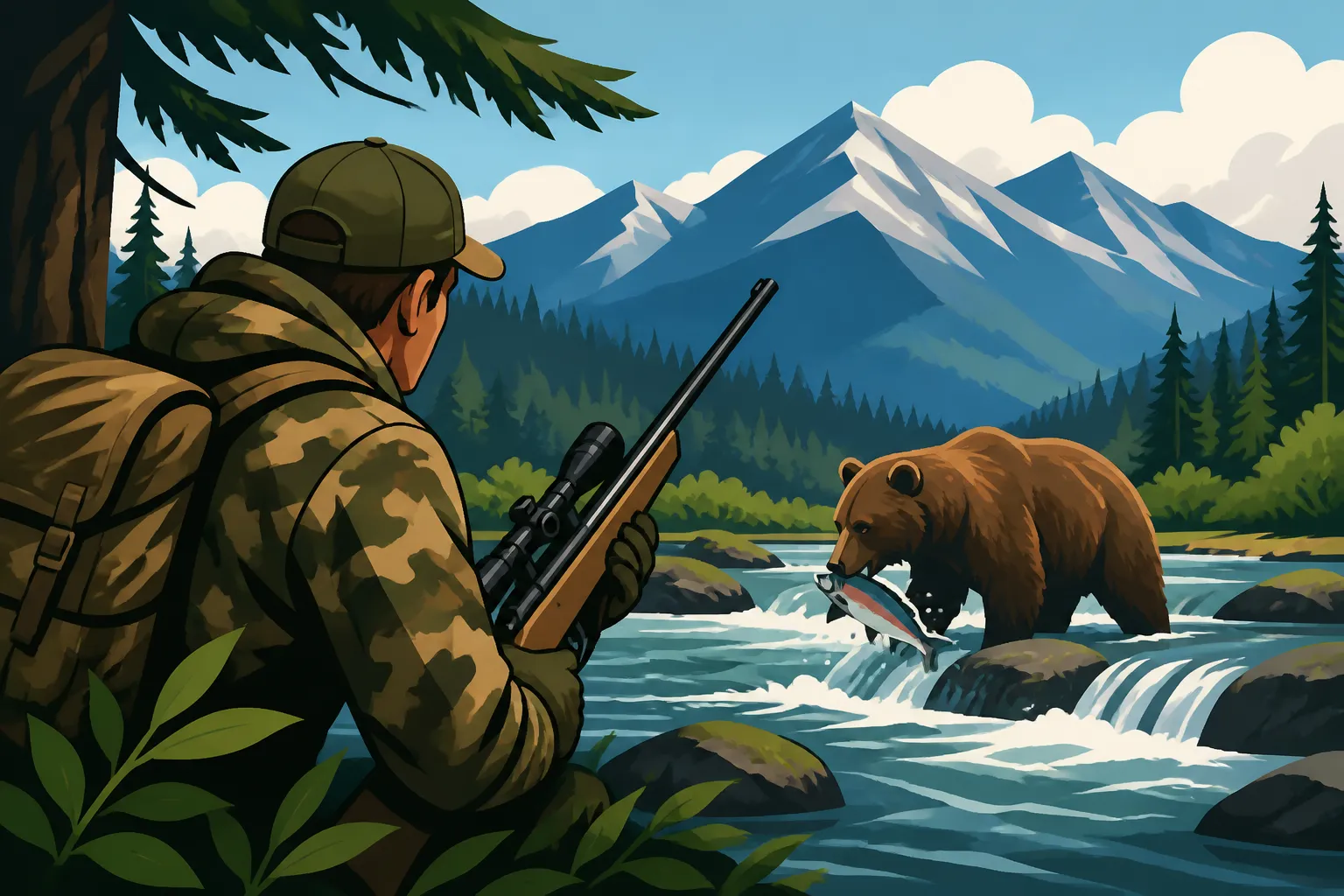
The allure of a salmon stream for a bear is pretty simple: it's a massive, concentrated food source, rich in fats and protein, perfect for packing on calories before winter hibernation. This isn't just a snack for them; it's a critical annual feast. Different bear species have slightly different strategies, but the core attraction is the same. Black bears, often more numerous and widespread, will frequent smaller creeks and tributaries, often focusing on catching fish directly in the shallows or scavenging carcasses. Grizzlies, being larger and more dominant, will often stake out prime spots on bigger rivers, though they'll certainly use smaller streams too if the pickings are good. They're often seen patrolling gravel bars, waiting for an opportunity, or even flipping rocks in the water to find salmon eggs.
Think about it from their perspective: why expend massive energy climbing mountains for berries or chasing deer through thick timber when a bounty of nutritious fish is literally swimming upstream? It’s a predictable and relatively easy meal. This predictability, however, is a double-edged sword for hunters. While it tells you where bears will be, it also means they're highly tuned into their surroundings, constantly alert for competition from other bears, wolves, or even us. You'll find that their activity often concentrates at specific points where salmon are bottlenecked or spawning, like shallow riffles, log jams, or tight bends in the river. What Salmon Runs Do to Bear Behaviour delves deeper into how this ecological event shapes their entire year.
Timing Your Hunt with the Salmon Spawning Run
Timing is everything when it comes to hunting salmon stream bears. The salmon runs in British Columbia aren't a single, uniform event; they vary by species of salmon, by river system, and even by specific stretches of water. Generally, these runs begin in late summer and can extend well into the fall, peaking anywhere from late August to October depending on the specific location and salmon species. Early season runs might see bears more spread out, perhaps still supplementing their diet with berries or other forage, but as the salmon numbers swell, their focus shifts almost entirely to the streams.
You need to do your homework to pinpoint the peak of the run for your chosen stream. Local fishing reports, discussions with area residents, and even a quick call to a fish and wildlife office can provide invaluable insights. Arriving too early might mean sparse bear activity, as the salmon haven't arrived in force yet. Arriving too late could mean the main run is over, the carcasses are picked clean, and the bears have either moved to other streams or started looking for den sites. The weather also plays a huge role; heavy rains can blow out rivers, making it impossible for bears (and you) to effectively hunt or spot fish, while prolonged dry spells can delay runs or make certain streams too shallow for salmon to ascend. This hunt often coincides with the general fall bear seasons, allowing you to target bears when they are at their fattest and their hides are in prime condition.
Scouting and Locating Productive Salmon Streams
You can't just wander into any old stream and expect to find a bear. Effective scouting is about reading the landscape and the animal signs with a keen eye, focusing your efforts where bears are most likely to be.
Identifying Key Bear Sign Along the Water
When you're walking a salmon stream, you're not just looking for bears; you're looking for their calling cards. Tracks in the mud and sand along the banks are a dead giveaway. Look for large paw prints, often with prominent claw marks, indicating a bear's travel corridor. Fresh scat, especially if it's full of fish scales and bones, tells you a bear has been feeding there recently. Pay attention to the size and freshness – a pile of scat from a few hours ago is much more encouraging than an old, weathered one.
Beyond tracks and scat, keep an eye out for rub trees. Bears, particularly large boars, will rub against trees, often cedar or pine, leaving hair and claw marks as a territorial marker. These are like bear bulletin boards, and active rub trees mean active bears. Scratched-up logs or overturned rocks in the stream bed are signs of a bear digging for eggs or reaching for fish under cover. Also, listen for the sounds of crashing in the brush or splashes in the water – bears aren't always silent, especially when they're enthusiastically wrestling a salmon. Observing areas where salmon are actively spawning or dying after spawning, like shallow gravel beds, will naturally draw bears, as that's where the food source is most concentrated and accessible. This kind of detailed observation is crucial for Scouting a British Columbia Management Unit.
Using Maps and Technology for Stream Selection
Before you even step foot in the woods, leverage technology to narrow down your options. Topographic maps and satellite imagery are your best friends here. Look for drainages that lead to known salmon-bearing rivers. Identify areas with gentle slopes leading down to the water, as these provide easier access for bears (and you) than steep, cliff-ridden banks. Look for confluences of smaller creeks into larger rivers, which can create natural funnel points for salmon and, by extension, for bears.
Modern hunting apps like onX Hunt are incredibly useful for this kind of reconnaissance. You can overlay satellite imagery with private land boundaries, elevation contours, and even identify potential access points or deactivated logging roads. Use it to mark potential bear hot spots, rub trees, and dense cover areas where bears might bed down after feeding. Similarly, platforms like GoHunt can offer data points on draw odds and harvest success, though for general open season black bear hunting on streams, it's more about understanding the habitat. These tools help you visualize the terrain, identify potential pinch points or travel corridors, and plan your approach long before you're on the ground. Think about how a bear would move from bedding to feeding and back again – these maps help you anticipate those movements. Knowing how to use these tools effectively is key to Scouting a British Columbia Management Unit Online.
Effective Hunting Strategies for Salmon Stream Bears
Hunting bears on salmon streams requires a blend of stealth, patience, and a deep respect for the animal and its environment. It's often close-quarters work in dense cover, demanding your full attention.
Stealth and Approach Considerations
Bears have an incredible sense of smell, far superior to a deer's, and surprisingly good hearing. The wind is your absolute master here. Always hunt into the wind or with a crosswind, constantly checking its direction with a wind checker. A bear catching your scent means your hunt is likely over before it even began. Move slowly, deliberately, and quietly. The rustle of leaves, the crunch of a twig, or the splash of water can alert a bear to your presence. Wear quiet clothing that won't snag or make noise as you move through thick underbrush.
When you're approaching a stream, avoid silhouetting yourself against the sky or moving directly towards open stretches of water where a bear might spot you. Utilize cover – fallen logs, dense stands of timber, rocky outcrops – to break up your outline and mask your movements. Many salmon streams are in dense, wet coastal forests, so be prepared for Hunting in British Columbia's Coastal Rain conditions. Your goal is to see the bear before it sees, smells, or hears you. This might mean hours of slow, deliberate walking, stopping frequently to glass ahead and scan the banks for any sign of movement. Patience is your most valuable asset.
Stand Hunting and Ambush Tactics
While spot-and-stalk is always an option, the dense cover along many salmon streams often makes stand hunting or ambush tactics highly effective. Once you've identified a promising stretch of stream with fresh sign and concentrated salmon activity, consider setting up a static position. Look for elevated ground that offers good visibility into the stream and along the banks. A natural blind from dense brush or a large tree can provide excellent concealment.
Bears often follow predictable patterns on these streams. They'll feed, then perhaps move a short distance into thicker cover to bed down and digest, only to return to the stream later. Identifying these travel corridors or preferred feeding areas is key. Set up downwind of these areas, ideally 50-100 yards away, and be prepared to sit for hours, especially during peak feeding times around dawn and dusk. This requires immense patience, but it puts you in a low-impact position where you're not constantly pushing scent and noise through their habitat. Remember, bears are acutely aware of their surroundings, so minimize movement, even slight head turns. For coastal bears, Glassing for Bears on a Coastal Estuary can give you an idea of their predictable movements and how to best position yourself.
Safety Precautions in Bear Country
Hunting bears, especially in areas with salmon streams, means you're in prime bear habitat, often shared with grizzlies. This isn't just about hunting black bears; it's about being profoundly aware of your surroundings and prepared for any encounter, potentially with a much larger and more formidable animal. Always carry bear spray, readily accessible on your hip or chest, not stowed away in your pack. Know how to use it, and consider carrying a backup.
Understand the visual differences between black bears and grizzlies. While colour isn't a reliable indicator, look for a prominent shoulder hump on grizzlies, a dish-shaped face, and smaller, rounder ears. Black bears typically have a straighter facial profile and larger, more pointed ears. If you encounter a grizzly, or are unsure, err on the side of caution. Give them space. Make noise if you're traveling through thick brush to avoid surprise encounters. Hunt with a partner if possible, as two sets of eyes and ears are always better than one, and a second person can deter an inquisitive bear. Always ensure your firearm is ready for deployment in an emergency. Being prepared for What to Do If You See a Grizzly and understanding Bear Safety While Hunting in British Columbia is not just smart, it's essential for your survival.
Ethical Considerations and Meat Care
Successfully harvesting a bear on a salmon stream is just the beginning. The ethical hunter understands that the responsibility continues long after the shot.
Shot Placement and Follow-Up
When targeting a bear, especially one that might be moving or focused on salmon, shot placement is paramount. You owe it to the animal to make a clean, ethical kill. Aim for the vital zone—the lungs and heart—which is typically just behind the shoulder. Bears are incredibly tough animals, and a poorly placed shot can lead to a prolonged search or, worse, a wounded animal that is never recovered. Take your time, ensure a clear shot, and only pull the trigger when you're confident you can make it count.
After the shot, observe the bear's reaction and mark the spot where it was standing. Do not rush in immediately. Bears can travel a surprising distance, even with a mortal wound. Wait at least 20-30 minutes for a lung shot, and longer if you suspect a gut shot, to allow the animal to expire and stiffen up. When you do begin to track, proceed cautiously. Follow the blood trail methodically, looking for disturbed earth, broken branches, or other signs. Bears often run downhill or to the nearest thick cover. If the trail runs cold, expand your search pattern in ever-widening circles. Losing a bear is a heartbreaking and avoidable outcome with proper shot placement and a disciplined follow-up. For insights on the quarry, consider What a Coastal Black Bear Weighs.
Processing and Protecting Your Harvest
Once you've located your bear, the real work begins. Given that salmon stream hunts often happen in warmer, early fall weather, prompt field dressing and cooling of the meat are critical to prevent spoilage. Bears can carry a lot of body heat, and their thick hides act like an insulating blanket. Get the hide off quickly, quarter the animal, and remove all internal organs. This is not the time to be squeamish. Speed and cleanliness are your allies.
The meat, especially from salmon-fed bears, can have a distinct flavour, but it's excellent table fare if handled correctly. Many hunters choose to cut the meat into manageable pieces, get it into game bags, and get it cooled as quickly as possible. This might mean submerging the game bags in a cold stream for a short time (being mindful of water contamination and regulations), or getting it to ice as soon as you're off the mountain. The fat layer on a bear can be quite thick; many hunters trim this off during processing to reduce any strong flavour. Don't forget the hide; if you plan to keep it, cool it rapidly and get it salted or frozen as soon as possible. Cooling a Bear Hide in Warm Weather provides practical advice for this crucial step.
Here's a quick look at some key aspects to consider when planning your salmon stream bear hunt:
| Aspect | Black Bear Considerations | Grizzly Bear Considerations (for awareness) |
|---|---|---|
| Size & Temperament | Generally smaller, often more tolerant of human presence. | Larger, more powerful, can be more territorial and unpredictable. |
| Diet Focus | Will actively fish, scavenge, and utilize other forage. | Highly specialized on salmon; often dominant on prime stretches. |
| Sign Identification | Smaller tracks, rub trees with hair, scat (fish, berries). | Larger tracks, deep claw marks on rub trees, large fish-filled scat. |
| Hunting Strategy | Spot & stalk, ambush from cover, often in dense areas. | Extreme caution; identifying and avoiding confrontation is paramount. |
| Habitat Preference | Often smaller, brushy streams; access dense cover quickly. | Larger rivers, open gravel bars, and prime fishing pools. |
| Safety Gear | Bear spray, loud communication, situational awareness. | Bear spray (larger canister), firearm (if skilled), maximum vigilance. |
Hunting a salmon stream for bears in British Columbia offers an incredible experience, connecting you to the wild rhythms of nature and the pursuit of a challenging animal. It demands preparation, respect, and a keen eye for detail. Whether you're navigating the thick coastal rainforest or exploring interior river systems, remember to prioritize safety, ethics, and the responsible harvesting of your game. Knowing the rules about British Columbia Spring Bear Season Dates and Fall Bear Season Dates by Region for your specific area is crucial. Good luck out there, stay safe, and enjoy the adventure.
Disclaimer
This article is for general informational purposes only and does not constitute professional advice. Laws, prices and regulations vary by location and change over time. Consult a qualified professional for guidance on your specific situation.