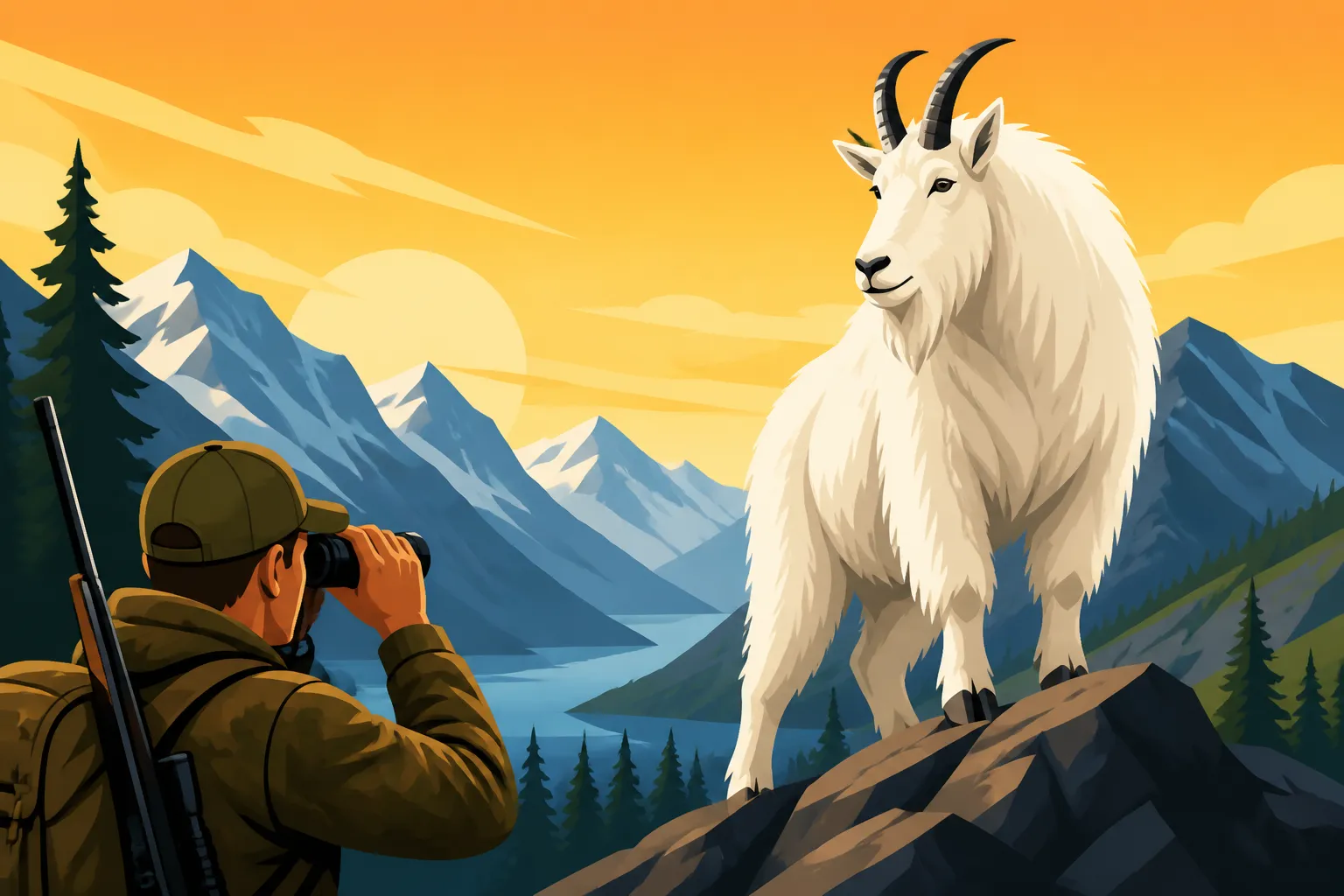
British Columbia’s Record Mountain Goat
The dream of a record-book mountain goat is something that stirs the soul of any serious hunter who has spent time in British Columbia's alpine. These incredible creatures live in some of the most unforgiving terrain on the planet, making any harvest a significant accomplishment, let alone one that might etch your name in the record books. This guide will walk you through what distinguishes a record mountain goat, where these majestic animals are typically found in BC, and the critical skills needed to pursue them.
The Allure of a British Columbia Mountain Goat
There’s an undeniable mystique to British Columbia’s mountain goats. They represent the pinnacle of mountain hunting—a true test of will, endurance, and skill. Just getting into their habitat is an adventure in itself, often involving steep climbs, unpredictable weather, and days spent glassing remote rock faces.
Why Record Goats Are So Prized
Hunting a mountain goat is rarely an easy affair. Their natural environment, the high alpine, demands peak physical condition, meticulous preparation, and often a fair bit of grit. Many hunters consider simply being in goat country a privilege, regardless of whether they punch a tag. So, when you add the potential for a record-book animal, the allure intensifies exponentially. A record mountain goat isn't just about the size of the horns; it's a testament to the hunter's dedication, the animal's resilience, and the wildness of British Columbia itself. These hunts are an investment of time, physical effort, and mental fortitude. The unique white hide and dark, dagger-like horns make them an iconic trophy, far removed from the more common deer or elk. It's a truly wild animal in truly wild country, and bringing home a big one is a memory that lasts a lifetime. For more on these incredible animals, check out our piece on Mountain Goats in British Columbia's Peaks.
Understanding Mountain Goat Biology and Habitat
Mountain goats are incredibly adapted to their harsh, high-altitude existence. They thrive on precipitous cliffs, rocky ledges, and alpine meadows, often above the timberline. Their specialized hooves provide incredible traction, allowing them to navigate terrain that would be impossible for other large ungulates. They feed on a variety of grasses, forbs, and lichens, moving between feeding areas and bedding sites on steep, north-facing slopes, often seeking relief from summer heat or protection from winter storms. Understanding these movements and preferences is crucial. During the warm months, they’ll often be found near snowfields, both for cooling and for the succulent vegetation that grows at the snow's edge. As winter approaches, they might descend slightly for more accessible forage, but always remaining within reach of their secure, rocky escape routes. Their biology, which includes relatively slow reproduction rates, makes careful management and selective hunting essential for maintaining healthy populations.
What Constitutes a Record Mountain Goat
When we talk about "record" animals, we're almost always referring to those measured and recorded by organizations like Boone and Crockett Club for firearms harvests or Pope and Young Club for archery harvests. These organizations set the standards for what makes a trophy animal truly exceptional.
Scoring Systems Explained
The scoring system for mountain goats primarily focuses on the length and circumference of their horns. It’s a fairly straightforward measurement compared to antlered game, but precision is key. For each horn, two main measurements are taken:
- Length of Horn: This is measured along the outer curve from the base to the tip. Imagine a flexible tape measure following the curve of the horn.
- Circumference of Horn: This measurement is taken at the base of the horn, at its largest point. Sometimes, additional circumference measurements might be taken at specific points along the horn, but the base circumference is typically the most significant for mass.
The final score is usually the sum of these measurements for both horns. Symmetry is highly valued in most scoring systems, meaning horns that are similar in length and mass will generally score higher than asymmetrical ones. While there aren't typically "deductions" for abnormal points like with deer antlers, overall mass and horn condition are important. Hunters aiming for a record-book animal are looking for long, heavy horns that carry their mass well up towards the tips, with minimal breakage or brooming.
Key Characteristics of a Trophy Goat
Beyond the raw numbers of length and circumference, a true trophy mountain goat exhibits certain characteristics that speak to its age and dominance.
- Horn Length and Base Circumference: These are the primary drivers of score. A truly impressive goat will have horns that appear long and thick even from a distance. While specific measurements vary by system and category, you’re generally looking for horns well over nine inches in length, with substantial bases.
- Age and Mass: Older billies, or male goats, typically have thicker bases that carry their mass well throughout the horn. Their horns will often show more distinct annual growth rings and might have tips that are "broomed" or blunted from years of fighting and rubbing. This mass gives the animal a much more impressive look and contributes significantly to the score.
- Overall Condition: A healthy, mature goat from a robust population is more likely to have developed large horns. Look for a robust body, a thick winter coat, and a generally dominant appearance. This isn't part of the score, but it’s often correlated with exceptional horn growth.
Where British Columbia's Biggest Goats Are Found
British Columbia is renowned as one of the premier mountain goat hunting destinations in the world. Its vast, rugged mountain ranges provide ideal habitat for these high-country specialists.
Geographic Hotspots for Record Potential
While mountain goats are distributed throughout many of BC's mountain ranges, certain areas consistently produce larger, older billies with greater trophy potential. These areas often share common traits: remote access, abundant high-quality forage, and relatively low hunting pressure due to the sheer difficulty of reaching them.
- The Northern Rockies: Extending through parts of the Peace Region and into the Northern Skeena, these ranges are vast and untamed. The sheer scale of the wilderness here allows goats to reach impressive maturity, and the diverse forage supports robust populations. This region often requires significant logistical planning, whether by horseback, bush plane, or extensive backpacking.
- The Coast Range: From the border all the way up through the Great Bear Rainforest, BC’s Coast Range is famous for its ruggedness. While much of this area is extremely challenging to access, the abundant rainfall and lush vegetation in some pockets contribute to excellent horn growth. These hunts often involve boat access to remote inlets, followed by gruelling ascents.
- The Cassiar and Stikine Mountains: In the far northwest of the province, these remote ranges are truly wilderness. With limited road access and immense expanses of untouched alpine, opportunities exist for finding truly old, unpressured goats. This country demands serious commitment and preparedness for remote conditions.
- Specific Management Units (MUs): While general regions are a good starting point, within these larger areas, some specific MUs or drainages are known to consistently produce bigger goats. Researching harvest data and talking to seasoned hunters or guides can help pinpoint these areas. Remember that access plays a huge role; the harder it is to get to, the more likely you are to find less-pressured, older animals. For detailed information on specific areas, researching Mountain Goat Season Dates by Region is crucial.
Factors Contributing to Large Goats
Several environmental and demographic factors contribute to the growth of truly exceptional mountain goats in British Columbia.
- Habitat Quality and Forage: Goats need a consistent supply of nutritious forage to grow large bodies and, subsequently, impressive horns. Areas with diverse alpine vegetation, mineral licks, and stable food sources tend to support healthier, larger animals.
- Limited Hunting Pressure: In areas with difficult access, hunting pressure is naturally lower. This allows more billies to live longer and reach their full genetic potential in terms of horn growth. Easy-to-access areas are often hunted more heavily, leading to a younger age structure in the male goat population.
- Genetics: Like all wildlife, genetics play a role. Certain populations simply have the genetic potential for larger horn growth. This isn't something a hunter can directly influence, but it's part of why some regions are consistently better than others for trophy animals.
- Age Structure of the Herd: Healthy, well-managed herds with a good proportion of mature males are more likely to produce record-class animals. Sustainable hunting practices, including selective harvest of older billies, are crucial for maintaining this balance. The commitment to preserving strong genetics in these herds is why British Columbia continues to be a world-class destination for mountain goat hunting.
How to Judge a Mountain Goat in the Field
Field judging mountain goats is notoriously challenging due to their white colour, the vast, open terrain they inhabit, and the deceptive nature of distance in the mountains. What looks big through a spotting scope can often shrink when you get close. However, with practice and a few key reference points, you can significantly improve your accuracy.
Estimating Horn Length and Circumference
The primary challenge is to accurately estimate length and mass from afar. Here's how experienced hunters approach it:
- Ear as a Reference: A mountain goat's ear is a fairly consistent length, typically around 5-6 inches. If a horn looks to be twice the length of the ear, you're likely looking at a 10-12 inch horn. This is a quick initial assessment.
- Head Size as a Reference: Compare the horn length to the overall size of the goat's head. A truly exceptional horn will look significantly longer than the head itself.
- Carrying Mass: Observe how much mass the horn carries up from the base. A trophy goat's horns will remain thick and robust for most of their length, only tapering sharply near the tip. Younger goats often have horns that taper quickly, appearing spindly.
- Optics are King: High-quality optics are absolutely essential. A powerful spotting scope (20-60x or higher) on a stable tripod is invaluable for sitting and studying goats for extended periods. This allows you to discern details like horn rings, tip wear, and the nuances of horn shape. A good rangefinder is also crucial to reduce "ground shrinkage" by confirming distance.
Assessing Age and Maturity
Age is a huge factor in horn size. You want to target older billies. Here are some cues:
- Horn Rings: Mountain goats develop annual growth rings on their horns, much like a tree. With good optics, you can often count these rings, though they become less distinct near the base. A goat with numerous, well-defined rings is likely an older animal.
- Body Size and Build: Older billies tend to have a larger, more blocky body shape compared to nannies (females) or younger billies. Look for a thick neck, heavy shoulders, and an overall robust frame.
- Brooming/Blunting of Tips: The tips of older billies' horns often appear blunted or "broomed" from years of fighting, rubbing, and general wear. Younger goats and nannies typically have sharper, finer horn tips.
- Horn Shape and Spacing: Billies generally have horns that are heavier, more deeply curved, and often spread wider at the tips than nannies. Nannies' horns tend to be straighter, thinner, and more erect. The space between the horns at the base can also be a subtle indicator; billies often have a wider space between the horn bases.
Here’s a quick comparison table to help differentiate between billies and nannies in the field:
| Characteristic | Billie (Male) | Nanny (Female) |
|---|---|---|
| Body Size | Generally larger, more blocky, heavy shoulders/neck | Smaller, more slender, often appears pregnant |
| Horn Thickness | Heavier, thicker bases, carry mass well | Thinner, more delicate |
| Horn Curvature | More pronounced, deeper curve, often wider spread | Straighter, more erect, less spread |
| Horn Tips | Often blunted, "broomed," worn | Sharper, finer, more pointed |
| Behavior | Often solitary or in small bachelor groups | Usually with kids, in larger groups |
| Black "Robe" | Often has a darker, more prominent black patch | Less pronounced black patch |
This table is a general guide, and exceptions exist. Always observe an animal for a sustained period to confirm your judgment.
Planning Your Record Mountain Goat Hunt
Chasing a record mountain goat in British Columbia is not a spur-of-the-moment decision. It requires extensive planning, physical conditioning, and often, significant investment.
DIY vs. Guided Hunts
The choice between a do-it-yourself (DIY) hunt and a guided hunt is a major one, particularly for mountain goats.
- DIY Hunts: For a resident hunter with extensive backcountry experience, a DIY goat hunt is certainly possible, but aiming for a record animal significantly raises the bar. It demands exceptional navigation skills, wilderness survival knowledge, the ability to pack heavy loads over extremely challenging terrain, and the self-reliance to handle any emergency. You'll need to conduct thorough scouting, often using mapping software like GoHunt, and be prepared for potential adverse weather conditions. Success on a DIY record goat hunt is a testament to extraordinary effort and skill. For non-residents, a DIY hunt for mountain goats (or any big game) is generally not permitted unless accompanied by a resident with a Permit to Accompany Explained.
- Guided Hunts: For most hunters, especially non-residents, a guided hunt is the most practical and often the most successful route to a record mountain goat. Experienced British Columbia outfitters have intimate knowledge of their territories, including traditional goat ranges, bedding areas, and travel corridors. They provide the logistical support (horses, spike camps, bush plane access), expert field judging, and critical safety protocols needed for such a demanding hunt. While more costly, a reputable guide significantly increases your odds of not just harvesting a goat, but finding one with record potential. This is especially true for species like sheep and goat, where specialized knowledge of habitat and movement is paramount. You can learn more about booking such adventures in articles like Booking a British Columbia Sheep Hunt.
Essential Gear and Physical Preparation
Success on a mountain goat hunt hinges on having the right gear and being in peak physical condition.
- Gear:
- Boots: Invest in high-quality, stiff-soled, waterproof mountain hunting boots. Ankle support is crucial for navigating scree, rock slides, and steep slopes. This is probably the most important piece of gear. Read more about Boots for Steep British Columbia Country.
- Optics: A top-tier spotting scope (20-60x or higher) on a sturdy tripod, high-power binoculars (10x or 12x), and a reliable rangefinder are non-negotiable. You'll spend hours glassing.
- Backpack: A robust internal or external frame pack capable of comfortably carrying 70-100+ pounds is essential for packing out meat, hide, and horns, which can be a brutal endeavor. Why Goat Hunting Is the Hardest Pack Out.
- Clothing: Layering is key. Expect rapid weather changes, from sun to snow, even in summer. Bring waterproof and windproof outerwear, insulating layers (down or synthetic), and moisture-wicking base layers.
- Navigation: GPS device with pre-loaded maps, compass, and paper maps are vital. Satellite communication devices (like an inReach or Spot) are also highly recommended for emergencies in remote areas.
- Physical Preparation: This cannot be overstressed. You must be able to hike steep grades for extended periods with a heavy pack. Incorporate hiking with weight, stair climbing, and cardiovascular training into your routine months before the hunt. Mental toughness is equally important; these hunts will push your limits.
Utilizing Scouting Tools
Even with a guide, or especially for DIY, digital scouting is a game-changer.
- Online Mapping Platforms: Tools like GoHunt or other satellite imagery software are invaluable. You can virtually scout terrain, identify potential bedding areas (steep, north-facing slopes with good escape cover), feeding grounds (alpine meadows, snowline vegetation), and access routes. Look for pinch points, rock slides, and basins that might funnel animals.
- Historical Data: Reviewing historical harvest data (if publicly available) for specific Management Units can provide insights into areas that have produced large goats in the past. This often highlights MUs with good populations and mature animals.
- Topographic Maps: Understanding contour lines will help you visualize the steepness of the terrain, potential cliff bands, and more gradual approaches. Overlaying this with satellite imagery on platforms like GoHunt gives you a powerful combination. Utilizing these resources can save you countless hours in the field. For further reading, check out Scouting a British Columbia Management Unit Online.
Ethical Hunting and Conservation
Hunting a record-book mountain goat comes with a profound responsibility: to the animal, to the resource, and to the hunting community.
The Importance of Selective Harvest
Ethical hunting, especially for trophy species like mountain goats, emphasizes selective harvest. This means targeting mature, older billies while avoiding younger animals or nannies (unless specifically permitted and desired for management reasons, which is rare in trophy hunting).
- Maintaining Herd Health: Removing older, post-prime males helps maintain a healthy age structure within the population, allowing younger billies to mature and contribute to future generations.
- Preserving Genetics: By focusing on mature animals, you're not depleting the breeding stock of prime-age animals.
- The Ethical Imperative: True trophy hunting is not about simply shooting the first animal you see. It's about respecting the animal and its environment, and patiently waiting for the right opportunity to harvest a truly magnificent, mature specimen. This thoughtful approach ensures the sustainability of mountain goat populations for generations to come.
Preservation of the Resource
Beyond selective harvest, responsible hunting practices are crucial for the long-term health of British Columbia's mountain goat populations and their fragile alpine habitat.
- Leave No Trace: Practice strict "Leave No Trace" principles. Pack out everything you pack in, including all garbage, and minimize your impact on the delicate alpine environment.
- Meat Care: In remote mountain terrain, proper field dressing and meat care are paramount. Getting the meat cooled quickly and kept clean is essential, particularly in warmer early seasons. Keeping Meat Cool in an Early Season provides excellent guidance.
- Adherence to Regulations: Always know and strictly follow all British Columbia hunting regulations, including season dates, bag limits, and specific rules for mountain goats. This includes rules around compulsory reporting and inspection. British Columbia has Which Species Still Need Compulsory Inspection and compulsory reporting within thirty days for certain species, and mountain goats are usually among them. Ensure you understand and fulfill all requirements. These regulations are designed to protect the resource and ensure its future.
- Respect for Wildlife: Remember, you are a guest in their home. Give other animals space, minimize disturbance, and always prioritize the safety and well-being of yourself, your hunting partners, and the wildlife you pursue.
Disclaimer
This article is for general informational purposes only and does not constitute professional advice. Laws, prices and regulations vary by location and change over time. Consult a qualified professional for guidance on your specific situation.