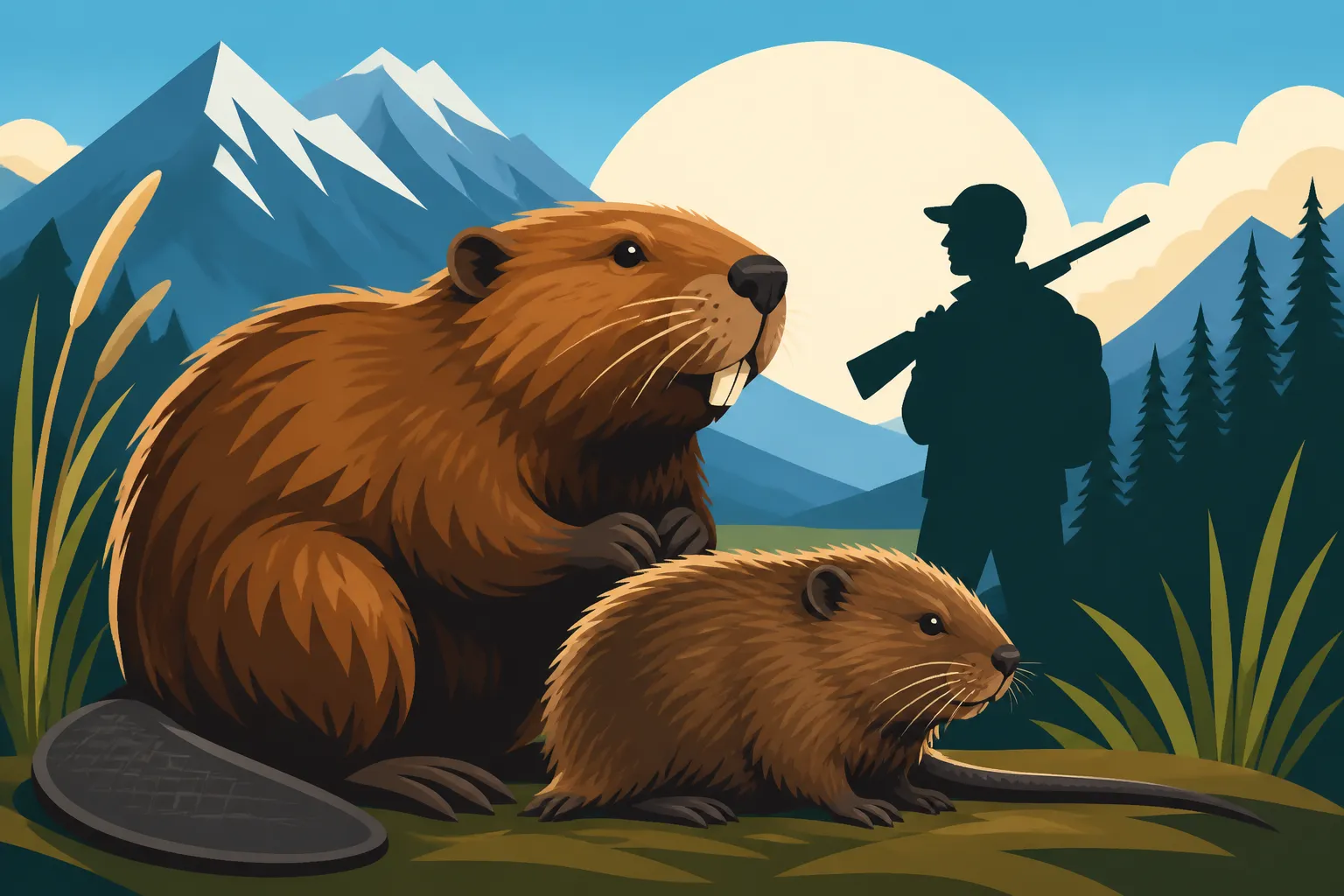
Beaver and Muskrat in British Columbia
It’s easy to overlook the humble beaver and muskrat when we think about British Columbia’s diverse wildlife. They aren't the majestic elk or the elusive mountain goat, but these semi-aquatic rodents are, without a doubt, two of the most influential, and often misunderstood, architects and inhabitants of our province’s waterways. From shaping entire landscapes with their dams to quietly populating vast marshlands, they play crucial roles that impact everything from water flow to predator populations. This guide dives deep into the lives of beavers and muskrats, exploring their unique biology, their surprising ecological contributions, and how they factor into the world of British Columbia hunters and trappers.
The Ingenious Engineer: British Columbia's Beaver
When you talk about British Columbia's wetlands and waterways, you absolutely cannot ignore the beaver. These incredible animals are not just cute, buck-toothed rodents; they are true environmental engineers, capable of transforming entire landscapes with their tireless work. They’re a cornerstone of many aquatic ecosystems, and understanding their habits is key to appreciating their impact, both positive and, at times, challenging.
A Closer Look at Beaver Biology and Habitat
Castor canadensis, the North American beaver, is the largest rodent in North America, and British Columbia is home to a healthy population. An adult beaver can easily weigh between 30 to 60 pounds, though some have been recorded much heavier. Their bodies are built for life in and around water: a broad, flat, scaly tail acts as a rudder, prop, and a warning signal, while webbed hind feet propel them through the water with surprising speed. Their front paws are highly dexterous, perfectly adapted for digging, carrying mud, and, of course, felling trees. Those famous incisors, always growing, are incredibly strong and allow them to cut through surprisingly large trees, leaving behind those tell-tale hourglass-shaped stumps. Beavers typically live for 10-15 years in the wild, constantly contributing to their watery world.
Their diet is strictly vegetarian. Beavers aren't interested in your fish or your game birds. They primarily feed on the cambium layer of trees – the soft, growing tissue just under the bark – from species like aspen, willow, birch, and alder. During warmer months, they supplement this with a variety of aquatic plants, roots, and grasses. They're clever about food storage too; as winter approaches and ice begins to form, they'll cache large piles of branches underwater near their lodge, creating a readily accessible pantry for the colder months when foraging on land becomes difficult. You’ll often see these food caches sticking up above the water near a beaver pond in the fall.
Beavers are incredibly adaptable when it comes to habitat, but they do have preferences. They thrive in areas with abundant water and woody vegetation. You'll find them in slow-moving streams, rivers, ponds, and small lakes across virtually all of British Columbia, especially in the Interior and Northern regions where suitable deciduous trees are plentiful. They're less common in the highest alpine regions or the driest grasslands but are certainly not restricted to any single geographical zone within the province. From the vast network of streams in the Cariboo to the smaller creeks running into the Fraser, if there's water and trees, there's a good chance you'll find beaver sign.
The Impact of Beaver Dams and Lodges
This is where the beaver truly shines as an ecosystem architect. Their most iconic creation, the beaver dam, serves a crucial purpose: to create and maintain deep, stable water levels. This deeper water protects their lodge entrance from predators and allows for underwater food storage. These dams are engineering marvels, constructed from sticks, mud, rocks, and debris, often built across small streams or drainage ditches. The beavers continuously maintain and repair them, responding to changes in water flow or damage.
The ecological benefits of these dams are vast and profound. Beaver ponds create new wetland habitats, which are incredibly diverse and productive ecosystems. They provide homes for numerous species of amphibians, fish, invertebrates, and waterfowl. By slowing water flow, dams help filter sediments and pollutants, improving water quality downstream. They also play a significant role in water retention, raising the water table in surrounding areas and helping to mitigate drought conditions during dry spells. For instance, a small stream that might dry up in late summer can become a vibrant, year-round pond thanks to beaver activity, benefiting everything from trout to various species of ducks that utilize Waterfowl Hunting British Columbia's Estuaries or Hunting British Columbia's Interior Marshes further downstream.
Their lodges, often impressive domes of sticks and mud, are usually built in the middle of a pond created by their dam or occasionally dug into a riverbank. These lodges provide a secure, insulated home, offering protection from predators like wolves, coyotes, and bears, as well as a warm, dry refuge from the harsh British Columbia winter. The underwater entrance makes them incredibly difficult for most predators to access.
However, the beaver’s engineering prowess isn't always celebrated by humans. Their damming activities can lead to significant conflicts. Imagine a logging road suddenly submerged due to a new beaver dam, or a farmer's field flooded, destroying crops. Beavers can block vital culverts, causing road washouts, or flood valuable timber stands. In some cases, their extensive burrowing along riverbanks can undermine dikes or shorelines, leading to erosion or structural damage. When these conflicts arise, human intervention often becomes necessary, which can range from installing flow devices to live trapping and relocation, or even lethal removal. It's a constant balancing act between appreciating their ecological contributions and managing their impact on human infrastructure.
The Wetland Dweller: British Columbia's Muskrat
While often overshadowed by their larger, dam-building cousins, muskrats are equally fascinating and integral to British Columbia’s freshwater ecosystems. These smaller, yet prolific, aquatic rodents are often seen quietly navigating the cattail fringes of ponds and slow-moving rivers, playing a vital role in the food web.
Muskrat Life and Preferred Environments
The muskrat, Ondatra zibethicus, is considerably smaller than the beaver, typically weighing between 2 to 4 pounds, with a body length of about 10-14 inches and a tail nearly as long. Their appearance is distinct: a rich, dark brown fur, a slightly flattened, hairless tail that aids in propulsion, and partially webbed hind feet. Unlike the beaver's broad, paddle-like tail, the muskrat's tail is more like a flattened rudder, laterally compressed. They are prolific breeders, often having multiple litters a year, which helps sustain predator populations.
Their diet is almost exclusively vegetarian, focusing heavily on aquatic vegetation. Muskrats are connoisseurs of cattails, sedges, rushes, and other wetland plants, often eating the tender bases of the stalks and leaving behind tell-tale piles of cuttings on logs or small floating platforms. Occasionally, they might supplement their diet with small invertebrates like mussels or snails, but plant matter remains their primary sustenance. You can often spot their feeding platforms, little mats of vegetation in a marsh, where they sit to eat their aquatic greens.
Muskrats are highly specialized for marshy, shallow water environments. They thrive in areas where cattails, reeds, and other emergent vegetation are abundant, providing both food and shelter. You’ll find them in marshes, sloughs, slow-moving rivers, shallow lakes, and even irrigation ditches across British Columbia. They often coexist peacefully with beavers, utilizing the deeper water created by beaver dams while still preferring the shallower edges of the pond. Their adaptability allows them to colonize a wide range of aquatic habitats, from the interior marshes of the Cariboo to the sloughs of the Fraser Valley, provided there's enough suitable vegetation and relatively still water.
Dens, Push-ups, and Ecological Role
Muskrats construct two main types of homes. In areas with stable banks, they prefer to dig burrows into the soil, creating tunnels that lead from underwater entrances to dry chambers above the water line. These bank burrows offer excellent protection and are common along riverbanks, pond edges, and even road embankments. The other common type of muskrat dwelling is the "push-up" or "lodge," especially prevalent in marshy areas with little firm soil for burrowing. These are conical structures built from mud and cattail stalks, piled up from the marsh bottom to create a small, insulated living chamber just above the water. They are smaller and less robust than beaver lodges, but serve the same purpose: shelter from predators and harsh weather.
Muskrats play a critical role in the broader ecosystem, primarily as a significant food source for a wide array of predators. Their abundance and relatively small size make them a staple for animals like mink, foxes, coyotes, owls, hawks, and eagles. Even larger predators, like bears, won't turn down a muskrat if the opportunity arises. This position in the food web helps to transfer energy from aquatic vegetation to terrestrial predators, highlighting their importance in maintaining ecosystem balance.
Furthermore, muskrats impact the vegetation structure of wetlands. By consuming large quantities of specific plants, they can create "eat-outs" or open water areas within dense cattail stands, which can in turn benefit other wetland species that prefer open water or mixed habitats. While not as dramatic as a beaver dam, their feeding habits contribute to the dynamic nature of marsh ecosystems.
Opportunities for Hunters and Trappers: Beaver and Muskrat
For many years, and indeed still today, beavers and muskrats have been valuable furbearers in British Columbia. While the fur market has its fluctuations, these animals continue to provide opportunities for those interested in sustainable harvesting, whether for their pelts, meat, or as part of nuisance wildlife management.
Navigating Seasons and Regulations
If you're considering hunting or trapping beaver or muskrat in British Columbia, the absolute first step is to consult the official regulations. Unlike some big game species, beaver and muskrat often have more liberal or extended seasons, sometimes even year-round in certain management units, particularly when they are designated as nuisance animals. However, it is crucial to remember that these regulations can vary significantly by region and management unit. What's legal in the Kootenays might be different in the Peace River region, for example. Always consult British Columbia's Two-Year Regulations Synopsis for the current cycle and refer to specific British Columbia's Management Units and Regions to confirm dates and any special conditions. You'll also need the appropriate British Columbia Trapping Licences or a general hunting licence. Many hunters find platforms like GoHunt useful for cross-referencing management unit boundaries and active season dates, but always double-check with the official government synopsis.
The designation of these animals as furbearers means that trapping plays a major role in their management and harvest. Trapping seasons are typically longer than hunting seasons for these species. For hunters, while specific seasons exist, opportunities might be more localized, often focusing on nuisance animals or during general open seasons for small game. Ensure you understand bag limits, methods of take, and any reporting requirements.
Ethical Methods for Harvesting
Responsible and ethical harvesting is paramount. For both beavers and muskrats, the goal is always a quick, humane take.
Trapping:
Trapping is historically and currently the primary method for harvesting these animals for their fur. Several types of traps are used:
- Body-grip traps (Conibear-style): These traps are designed to kill the animal quickly by striking it behind the head or neck. They are often placed in runways, dam breaks, or underwater entrances to lodges. Proper sizing and placement are crucial for humane dispatch.
- Foothold traps: These traps are designed to hold the animal without causing injury. For aquatic furbearers like beaver and muskrat, footholds are almost always set as drowning sets, meaning the animal is quickly submerged after being caught. This requires careful setup, including a heavy anchor or a slide wire leading to deep water.
- Snares: Snares are often used for beavers in specific situations, particularly in underwater runs or pinch points. Like other trapping methods, proper setup and checking are critical for humane dispatch.
Regardless of the trap type, trappers must understand trap placement, setting techniques, and the importance of checking traps frequently to minimize animal suffering. Safety for both the trapper and other wildlife is also a key consideration.
Hunting:
Hunting beaver and muskrat typically involves small calibre firearms.
- For Muskrats: A .22 rimfire rifle is ideal for muskrats, offering precision at close to moderate ranges. Shotguns with fine shot can also be effective in marshy areas where muskrats are abundant, though precision is less. Archery can also be employed by skilled bowhunters. Muskrats are often taken from boats, along marsh edges, or from shore where they are feeding or swimming. Be mindful of safe backstops, as bullets can ricochet off water.
- For Beavers: Beavers are larger and tougher. A .22 rimfire can be used with precise headshots at close range, but many prefer a .17 HMR or even a .22 Magnum for more reliable dispatch, especially if shooting them on land (e.g., on a dam or bank). They can be hunted from a boat or from shore. Spot-and-stalk tactics along creek banks can be effective, especially at dawn or dusk when they are most active. Again, shooting near water requires extreme caution regarding ricochets. British Columbia Rules on Shooting Near a Road may apply if you're hunting along accessible areas.
Pelts and Meat:
Both beaver and muskrat pelts are valuable. Beaver fur, with its dense undercoat, is highly prized for its warmth and durability. Muskrat fur is also a commercial staple, often used for trim. Learning to properly skin, flesh, and stretch a pelt is a crucial skill for any furbearer harvester, maximizing the value of the animal.
As for the meat, it's often overlooked but both beaver and muskrat are edible and can be quite tasty when prepared correctly. Beaver meat is red and can be rich, often compared to pot roast or venison, requiring slow cooking. Muskrat meat is typically darker and has a distinct, strong flavour often described as "marshy," but can be excellent when properly handled and cooked (often needing to be parboiled or stewed). Proper Meat Care in British Columbia's Warm Early Seasons is just as important for these animals as it is for big game, ensuring the meat is cooled quickly and kept clean.
Managing and Coexisting with Aquatic Rodents
While beavers and muskrats are vital components of British Columbia’s natural world, their activities can sometimes bring them into conflict with human interests. Learning to manage these interactions, whether through intervention or fostering coexistence, is an ongoing challenge and an important aspect of living in a province rich with wildlife.
When Beavers and Muskrats Become a Problem
Despite their ecological benefits, there are times when the industrious nature of beavers, in particular, creates significant problems for people. Their damming can lead to localized flooding that impacts private property, agricultural fields, timber stands, or even septic systems. Water levels might rise to the point of inundating homes, access roads, or blocking culverts, causing washouts and infrastructure damage. For instance, a beaver dam across a small drainage ditch on a backcountry road could quickly lead to impassable conditions, much like issues you might face when Hunting British Columbia's Logging Road Network.
Muskrats, while less impactful with their dams, can also cause issues. Their extensive bank burrowing can undermine dikes, pond banks, irrigation canals, and even roadbeds, leading to erosion and structural failures. In farm country, they can damage crops growing near water sources. When these situations arise, merely appreciating their role in the ecosystem isn't enough; practical management solutions are required.
Approaches to managing nuisance beavers and muskrats vary. Non-lethal methods are often attempted first. For beavers, this can include installing "flow devices" or "beaver deceivers" – specialized culvert protectors or pipe systems that allow water to flow through a dam at a controlled level, preventing destructive flooding without removing the beaver or its dam. Wire mesh fencing can protect individual trees from being felled. For muskrats, protecting vulnerable banks with riprap or heavy mesh can deter burrowing.
However, when non-lethal methods are impractical or insufficient, or when damage is severe, lethal removal may become necessary. This is often carried out by licensed trappers or wildlife control operators, who adhere to strict regulations. The goal in these situations is typically to resolve the immediate conflict while minimizing harm to the overall population, emphasizing that such actions are usually a last resort driven by specific, pressing concerns.
Their Vital Role in British Columbia's Ecosystems
It's easy to focus on the occasional inconvenience caused by beavers and muskrats, but it's crucial to remember their overwhelmingly positive and vital role in British Columbia's ecosystems.
Beavers are often called "ecosystem engineers" for a reason. Their dam-building creates and expands wetlands, which are among the most biodiverse habitats on Earth. These ponds and marshes provide critical habitat for numerous species of waterfowl, fish, amphibians, reptiles, and insects. They act as natural sponges, holding water on the landscape, slowly releasing it during dry periods, which can be immensely beneficial for downstream flows and mitigating the effects of drought. Beaver ponds filter water, removing sediments and pollutants, and create diverse microclimates that support a wider array of plant and animal life. For a hunter Scouting a British Columbia Management Unit, a series of beaver ponds can indicate excellent habitat for moose, waterfowl, and even deer. Similarly, British Columbia Wildlife Management Areas often contain extensive wetlands sustained by beaver activity.
Muskrats, in turn, are essential members of the wetland food web. As prolific herbivores, they help manage aquatic vegetation, preventing certain plant species from completely dominating a marsh. More importantly, they serve as a critical food source for a vast array of predators, supporting populations of mink, coyotes, foxes, raptors, and even large game fish. Their abundance helps stabilize predator populations, indirectly benefiting other prey species. Without muskrats, the delicate balance of many wetland ecosystems would be significantly altered, demonstrating their fundamental importance despite their small size.
Together, beavers and muskrats enrich British Columbia’s natural landscapes, shaping the environment in ways that benefit countless other species and contribute to the overall health and resilience of our province’s diverse ecosystems. Understanding their lives and managing our interactions with them ensures that these fascinating creatures continue to thrive and contribute to the wild beauty of British Columbia.
| Feature | Beaver (Castor canadensis) | Muskrat (Ondatra zibethicus) |
|---|---|---|
| Size (Adult) | 30-60 lbs, up to 3 ft body + 1 ft tail | 2-4 lbs, up to 14 in body + 10 in tail |
| Tail Shape | Broad, flat, paddle-like | Laterally compressed, rudder-like |
| Primary Diet | Bark, cambium of trees (aspen, willow), aquatic plants | Aquatic vegetation (cattails, sedges), occasional invertebrates |
| Den/Shelter | Large lodges of sticks/mud, bank burrows | Smaller push-ups of vegetation, extensive bank burrows |
| Habitat Preference | Slow streams, rivers, ponds, lakes with woody vegetation | Marshes, shallow lakes, slow rivers with emergent vegetation |
| Ecosystem Impact | Major ecosystem engineers: damming, wetland creation | Herbivore; food source for many predators; vegetation management |
| Social Structure | Family units (colonies) | Solitary or small groups |
| Gestation Period | ~128 days (1 litter/year) | ~28 days (multiple litters/year) |
Disclaimer
This article is for general informational purposes only and does not constitute professional advice. Laws, prices and regulations vary by location and change over time. Consult a qualified professional for guidance on your specific situation.