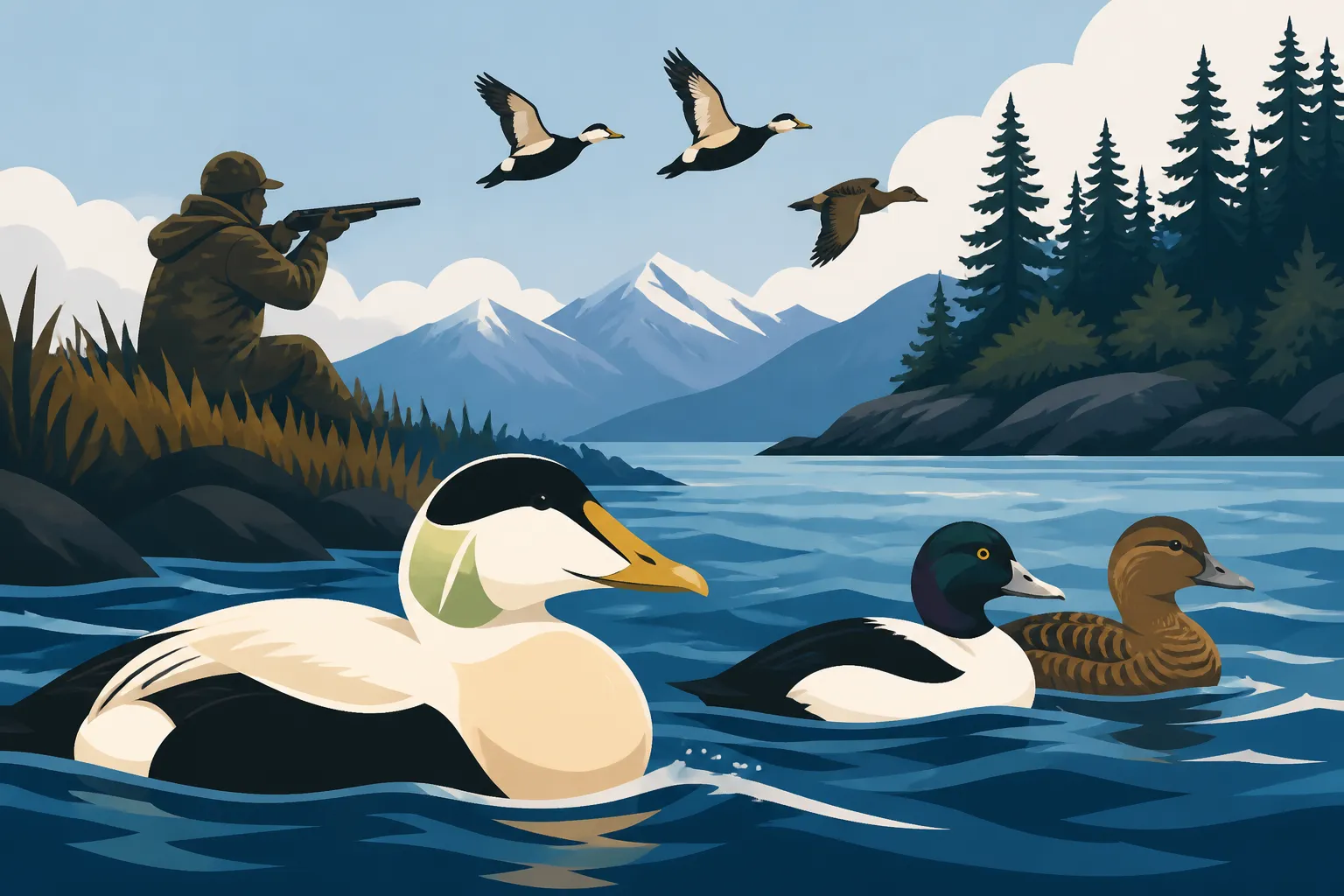
Sea Ducks Along the British Columbia Coast
The British Columbia coast, with its endless inlets, roaring tides, and rugged shores, offers a waterfowl hunting experience unlike any other. But let's be honest, chasing sea ducks here isn't like sitting in a comfy blind over a prairie pothole. It’s a wild, often unforgiving pursuit that demands serious preparation, local knowledge, and a respect for the power of the ocean. If you’ve ever felt the sting of salt spray or the frustration of trying to anchor decoys in a ripping current, you know exactly what I mean. This guide is all about helping you understand the unique world of sea ducks along our incredible coastline, and how to successfully and safely pursue them.
Unveiling British Columbia's Coastal Sea Ducks
Hunting sea ducks along the British Columbia coast is a truly unique pursuit, a world away from field hunting geese or jump-shooting a slough in the interior. These birds are built for the salt, for the constant motion of waves, and for diving deep into cold water to feed. They're often hearty, beautiful, and present a formidable challenge to even experienced waterfowlers. Understanding these incredible birds – their habits, their preferred haunts, and what makes them tick – is the first step to a successful hunt.
A World Apart: What Makes Sea Ducks Unique
Unlike dabbling ducks that feed on the surface of shallow freshwater, sea ducks are specialized marine foragers. Their bodies are denser, their wings are often smaller and set further back for efficient underwater propulsion, and their plumage is incredibly robust to handle saltwater and icy winds. You'll find them congregating in large rafts on the open ocean, in sheltered bays, or along rocky shorelines, often quite far from land. Their diet primarily consists of shellfish, crustaceans, and marine invertebrates, which means they spend a good portion of their lives diving. This diving behaviour heavily influences how and where you'll hunt them, as they can often appear and disappear with frustrating speed. The very nature of their existence, constantly battling the elements and relying on the ocean's bounty, makes them a resilient and fascinating quarry. They don't mind a stiff breeze or choppy water; in fact, they often thrive in it.
Key Species You'll Encounter
British Columbia's coast is a vital migration and wintering ground for a variety of sea duck species. Each has its own quirks and preferences, but all share that common bond with the ocean. Knowing what you're looking for, and where you're likely to find it, is crucial. You might be targeting a big bull scoter one day, and a colourful harlequin the next.
-
Scoters: We have three species here: Surf, White-winged, and Black Scoters. Surf Scoters are the most numerous and identifiable, with their chunky bodies and often iridescent black plumage, highlighted by white patches on their head and nape. White-winged Scoters have a distinct white speculum visible in flight and a small white patch under the eye. Black Scoters are less common but are uniformly black with a prominent knob on the bill. Scoters are big, powerful birds that fly in tight formations, often low over the water. They love mussel beds and rocky reefs, frequently rafted up in large groups where the current brings food. They can be incredibly tough birds, requiring solid hits.
-
Goldeneyes: Both Common and Barrow's Goldeneyes are present. They're smaller than scoters, with distinctive bright yellow eyes. Common Goldeneyes have a round white spot at the base of their bill, while Barrow's have a crescent-shaped spot. These birds are fast, agile flyers and are often found in slightly more sheltered waters, closer to shore, or even in coastal rivers and estuaries. They'll dive readily and are known for their quick, erratic flight patterns.
-
Buffleheads: These tiny, dapper ducks are a favourite for many hunters. The males are unmistakable with their striking black and white patterns, often described as a "clown face." They are incredibly fast in the air and dive with astonishing speed, often disappearing and reappearing far from where you last saw them. They prefer more sheltered coves, estuaries, and calm bays, often feeding in shallower waters than their larger cousins. Their small size means they don't offer much meat, but their challenging flight makes them a rewarding target.
-
Harlequin Ducks: Perhaps the most beautiful and elusive of British Columbia's sea ducks, the Harlequin male is a kaleidoscope of blue, chestnut, and white. They are incredibly hardy, thriving in turbulent, rocky coastal areas with heavy surf. Hunting them is exceptionally challenging, often requiring careful stalking or pass shooting along wave-pounded ledges. They are generally found in smaller groups and are notoriously wary.
-
Long-tailed Ducks (formerly Oldsquaw): These are truly magnificent birds with their striking black and white plumage and elongated tail feathers on the males. They are exceptionally vocal, with a distinctive call that echoes across the water. Long-tails are deep divers, often found in open water far from shore, where they feed on bottom-dwelling invertebrates. They fly with incredible speed and can be quite agile.
-
Mergansers: While not always considered "table fare" by everyone due to their fishy diet, Common and Red-breasted Mergansers are still legal game birds and can offer exciting pass shooting opportunities. They are unmistakable with their slender, serrated bills, ideal for catching fish. They are fast, direct flyers, often seen patrolling shorelines or flying up and down coastal rivers.
Here’s a quick overview of some common sea ducks and their coastal preferences:
| Species | Average Size | Preferred Habitat | Flight Pattern | Key Characteristics |
|---|---|---|---|---|
| Surf Scoter | Large | Rocky shores, mussel beds, open bays, estuaries | Fast, low, tight groups | Chunky body, black with white head patches |
| White-winged Scoter | Large | Open coastal waters, sandy bottoms | Fast, strong, distinct wing flash | White speculum, large bill knob in males |
| Black Scoter | Large | Open ocean, estuaries | Fast, direct | Uniformly black, small bill knob |
| Common Goldeneye | Medium | Sheltered bays, coves, coastal rivers | Very fast, erratic | Yellow eye, round white spot near bill |
| Barrow's Goldeneye | Medium | Rocky coastlines, fjords, calm bays | Very fast, agile | Yellow eye, crescent white spot near bill |
| Bufflehead | Small | Sheltered bays, estuaries, calm inlets | Extremely fast, erratic | Striking black and white, dives quickly |
| Harlequin Duck | Small-Medium | Turbulent, rocky coastlines, heavy surf | Fast, strong, low | Beautiful blue, chestnut, white plumage |
| Long-tailed Duck | Medium | Open ocean, deep bays | Fast, direct, low | Distinctive long tail (males), vocal |
| Common Merganser | Large | Coastal rivers, estuaries, sheltered inlets | Very fast, straight | Sleek body, serrated bill, often in singles/pairs |
Knowing these species, their habits, and where to find them will give you a significant advantage. This information is often crucial when planning your hunt and can be found by consulting local knowledge or resources like GoHunt, which can help you understand specific zones and their likely inhabitants.
Navigating the Coastal Gauntlet: Challenges and Safety
Hunting sea ducks isn't just about finding the birds; it's about mastering the environment. The British Columbia coast is breathtakingly beautiful but can also be incredibly dangerous if you don't treat it with the respect it demands. The biggest challenge isn't usually the ducks themselves, but the forces of nature that dictate when and where you can hunt. Many hunters, especially those new to coastal hunting, underestimate these factors, and that's where trouble starts.
Understanding British Columbia's Tides and Weather
Imagine setting a perfect decoy spread, only to have a rising tide sweep them away, or a falling tide leave them high and dry on a mud flat. Tides are the absolute king of coastal hunting in British Columbia. They dictate where birds feed, where you can safely anchor a boat, and even whether you can access a particular hunting spot. A 10-foot tide swing isn't uncommon in many areas, completely transforming the landscape in just a few hours. Always consult tide charts for your specific hunting area and plan your hunt around them. A high tide might be perfect for setting up on a flooded point, while a low tide might expose new feeding flats that birds will flock to. Conversely, trying to retrieve birds or move a boat during an ebb tide can leave you stranded or battling powerful currents.
Weather on the BC coast is equally fickle and ferocious. You can wake up to calm, clear skies, and within an hour, be battling driving rain, howling winds, or a dense fog that rolls in without warning. Navigating Fog on a British Columbia Coast Hunt is a skill unto itself, demanding constant vigilance and reliance on GPS. Strong winds can make boat travel treacherous, turn calm waters into whitecaps, and make holding a steady shooting position nearly impossible. Rain, often horizontal, can soak through inadequate gear faster than you think, leading to hypothermia even in seemingly mild temperatures. You need robust rain gear, layered clothing, and a deep appreciation for conditions. Never head out without checking the marine forecast for your specific area, and always have a backup plan. If the weather turns, be prepared to pack it in and seek shelter.
Essential Boat Safety and Gear for Coastal Waters
For most sea duck hunting, a boat is not just a convenience; it's a necessity. But it's also your biggest risk. You're not just crossing a lake; you're often traversing open ocean, exposed bays, and tidal currents. Investing in a reliable, seaworthy boat that's appropriate for the conditions you plan to hunt in is paramount. This isn't the time for a leaky johnboat. A solid aluminum boat with a reliable outboard, or even a larger fiberglass vessel, is a common choice.
Beyond the boat itself, your safety gear is non-negotiable. Personal flotation devices (PFDs) for everyone on board are a must, and they should be worn, not just stowed. Hypothermia is a real and immediate danger in cold coastal waters. Consider wearing an immersion suit or a float coat for added protection. You absolutely need reliable navigation tools – a marine GPS (with up-to-date charts) is essential, not just a smartphone app. A marine VHF radio is crucial for communication, as cell service is notoriously spotty or non-existent in many remote coastal areas. A satellite messenger or phone, like those often promoted on platforms like GoHunt, is an excellent investment for truly remote areas, allowing you to Emergency Planning in British Columbia's Backcountry and call for help even without cell signal. Don't forget essentials like anchor and rode (and possibly a spare!), paddles, bailing device, repair kit, first-aid kit, and emergency signalling devices. Always tell someone where you're going and when you expect to return. Hunting From a Boat on the Coast can be an incredible experience, but safety must always come first.
Mastering the Art of Sea Duck Hunting
Once you've wrapped your head around the challenges of the coastal environment, it's time to focus on the hunt itself. Sea ducks, while hardy, aren't impossible to fool. It often comes down to clever decoy spreads, good concealment, and knowing when and where to set up. There's a certain satisfaction that comes from pulling off a successful sea duck hunt in adverse conditions, knowing you've outsmarted birds that truly live by their wits.
Decoying Strategies for Diverse Species
Decoys are the backbone of most sea duck hunts. Unlike puddle ducks that might respond to a few mallard blocks, sea ducks often require large, realistic spreads that mimic their rafting behaviour. They are often less concerned with exact realism and more with visibility and numbers. Dark, high-contrast decoys tend to stand out best on choppy, grey water.
-
Scoters and Long-tailed Ducks: For these species, "mass" often matters. Think large rafts of 2-3 dozen decoys, sometimes even more. Spreads should be visible from a distance, suggesting a safe, abundant feeding area. Long lines of decoys anchored together can be effective, stretching out from a point or blind. Position them so that incoming birds will naturally swing towards your shooting lane. Consider adding a few motion decoys, like a flag or even a large black buoy, to simulate movement in the water. Remember, these birds often fly low, so your spread needs to be prominent on the surface.
-
Goldeneyes and Buffleheads: These smaller, faster ducks might not require such massive spreads. A dozen to two dozen decoys, often mixed with a few scoters for visibility, can be very effective. They tend to frequent slightly more sheltered waters or closer to shore, so a spread positioned off a point or around a rocky outcrop where they feed can work well. They are attracted to movement, so a jerk cord or a few keel-weighted decoys that bob naturally in the swell can be very enticing. Their erratic flight means you need to be quick on the trigger.
-
Harlequins: Decoying harlequins is a whole different ballgame. They are less prone to large rafts and more to small family groups. A handful of hyper-realistic harlequin decoys placed right in the rough water they prefer, close to shore or on wave-battered rocks, is often the most effective. Sometimes, no decoys at all are used, relying instead on pass shooting as they hug the contours of the shoreline. This is where Hunting a Coastal Inlet From a Boat or Hunting an Estuary Flat at Low Tide can be strategic, using the natural features to funnel birds past.
Heavy anchors are a must for all sea duck decoys. You'll be setting them in strong currents and potentially rough water. Mushroom anchors or heavy lead weights on robust lines will prevent your spread from drifting away, saving you a frustrating recovery effort.
Choosing Your Coastal Blind and Setup
Your blind setup for sea ducks is just as critical as your decoy spread, and it's heavily dictated by the specific coastal environment. You won't find many traditional field blinds here.
-
Boat Blinds: This is arguably the most common and versatile setup. Your boat itself becomes your blind. Specialized boat blinds that deploy quickly and offer good concealment are excellent investments. Camouflage patterns should blend with the rocky, often dark, coastal landscape or the reflections of the water. Mobility is a huge advantage with a boat blind, allowing you to move with the birds or adjust to changing tides and weather. When using a boat, consider the sun's position throughout the day to avoid being silhouetted and to ensure good visibility for shooting.
-
Shore Blinds: If you've found a consistent flight path or a reliable feeding area accessible from shore, a temporary shore blind can work. Think natural cover – driftwood piles, large rocks, or thick coastal vegetation. Digging into a bank or using a layout blind on a rocky point can also be effective. The challenge here is ensuring safe access and egress with the tides, and being prepared to move if the birds shift their patterns due to tidal changes.
-
Pass Shooting Locations: Sometimes, the best strategy is simply finding a natural funnel where birds fly consistently, like a narrow inlet, a point of land they cut across, or a gap between islands. This is less about decoying and more about strategic positioning and fast reflexes. Decoying Ducks on a Coastal Estuary might involve setting up at the mouth of a river where ducks fly in and out with the tide, offering prime pass shooting opportunities. When pass shooting, concealment is king; be still, be quiet, and blend into your surroundings.
Regardless of your chosen setup, warmth and dryness are paramount. What to Wear for British Columbia's Coastal Rain goes beyond just a good jacket; it means waterproof pants, insulated layers, and reliable footwear that can handle slippery rocks and cold water. Your comfort directly impacts your ability to stay focused and make good shots.
The Critical Role of Non-Toxic Shot and Firearm Choices
There's no getting around it: if you're hunting waterfowl in British Columbia, you must use non-toxic shot. This isn't just a recommendation; it's a legal requirement designed to protect our environment from lead contamination. Steel shot is the most common and affordable option, but it performs differently than lead. Heavier-than-steel options like bismuth, tungsten-iron, or tungsten-polymer offer denser patterns and more energy retention, but come at a higher cost. Understanding Non-Toxic Shot Requirements for Waterfowl is not optional. Practice with your chosen non-toxic load to understand its pattern and effective range.
For firearms, a 12-gauge shotgun is almost universally preferred for sea ducks. These birds are tough, often flying fast and in windy conditions, and a 12-gauge delivers the payload needed. Open chokes (like Improved Cylinder or Modified) are generally recommended for decoying birds, as they give a wider pattern to account for erratic flight and quick shots. If you're primarily pass shooting, a slightly tighter choke like Modified or Light Full might be beneficial for extending your effective range. Barrel length is less critical than reliability and resistance to corrosion from saltwater. Always rinse your shotgun thoroughly with fresh water after a saltwater hunt, and apply a good quality gun oil. Ignoring this crucial step will lead to rust and damage surprisingly quickly.
Regulations, Ethics, and Conservation for Coastal Bird Hunters
Hunting sea ducks in British Columbia, like all hunting, comes with a set of responsibilities. It’s not just about what you can do, but what you should do to ensure sustainable populations and a positive public image for our sport. Ignorance of the rules is no excuse, and ethical considerations are paramount when dealing with such a unique and sensitive environment.
Understanding Permits and Bag Limits
Before you even think about loading your shotgun, you need the proper documentation. For any migratory game bird in British Columbia, including all sea ducks, you need two things:
- A valid British Columbia Resident Hunter Number (FWID) and Basic Hunting Licence: This is your provincial authorization to hunt.
- A valid Federal Migratory Game Bird Hunting Permit and Wildlife Habitat Conservation Stamp: This permit is issued by the federal government and is specifically for migratory birds. You can often purchase these through the same system as your provincial licence, or through authorized vendors. The Federal Migratory Game Bird Permit is absolutely essential.
Beyond these permits, you must be intimately familiar with the specific season dates and bag limits for sea ducks. These can vary not only by species but also by management unit or region along the coast. Some species, like Harlequins, often have very conservative bag limits (sometimes only one per day or season), reflecting their more sensitive populations. Scoters, Goldeneyes, and Buffleheads often have more generous limits. Always check the current British Columbia Hunting and Trapping Synopsis, as regulations can change. Pay close attention to British Columbia Duck Season Dates for your specific area. Also, be aware of British Columbia Shooting Hours, which typically start half an hour before sunrise and end half an hour after sunset. Violating these rules can lead to significant fines and loss of hunting privileges.
Respecting the Resource and Other Users
Ethical hunting goes beyond legal compliance; it's about respectful conduct and thoughtful stewardship. One of the biggest ethical considerations with sea ducks is preventing unnecessary crippling. Due to their tough nature and the often rough conditions, a poorly placed shot can lead to a wounded bird that's impossible to recover. Take clean, ethical shots within your effective range. If a bird is wounded, prioritize its immediate retrieval to ensure it doesn't suffer and that no game is wasted. Bringing a good retriever dog is a massive asset in coastal environments, as they can navigate choppy water and heavy cover much more effectively than a human.
Another critical aspect is being mindful of other users of the coast. British Columbia's coastline is a busy place, shared with commercial fishing boats, recreational boaters, kayakers, wildlife viewers, and even residents whose homes might be near potential hunting areas. Always maintain a safe distance from other vessels and property. Be courteous and respectful. Avoid shooting too close to occupied dwellings, docks, or active recreational areas. Your actions reflect on all hunters, so always strive to be a responsible ambassador for our sport. Before heading out, consider checking resources like GoHunt for mapping tools that show property boundaries and public access points, helping you avoid accidental trespass or conflicts. Leave no trace behind – pack out all your shells, trash, and anything else you bring in. The beauty of the British Columbia coast is a shared treasure, and hunters play a vital role in its preservation.
Disclaimer
This article is for general informational purposes only and does not constitute professional advice. Laws, prices and regulations vary by location and change over time. Consult a qualified professional for guidance on your specific situation.