Interior Mule Deer Herds and Their Numbers
Hunting mule deer in British Columbia's vast interior can feel like a game of hide-and-seek where the deer are always one step ahead. It’s a real challenge, particularly when you’re trying to understand where the herds are thriving, where they’re struggling, and why. Hunters often grapple with conflicting information or simply don't know where to start looking for reliable data on population trends, which makes planning a hunt frustratingly difficult. This comprehensive guide aims to peel back the layers of mystery surrounding British Columbia's interior mule deer herds, exploring their numbers, the factors that influence them, and what this all means for your next hunting adventure.
Understanding British Columbia's Interior Mule Deer
The interior of British Columbia is a mosaic of diverse landscapes, from arid sagebrush flats to high alpine forests, and these varied terrains are home to robust, resilient mule deer. These iconic deer are a cornerstone of our province's hunting heritage, but their lives are intricately tied to the health of their environment.
Distinguishing Interior Mule Deer
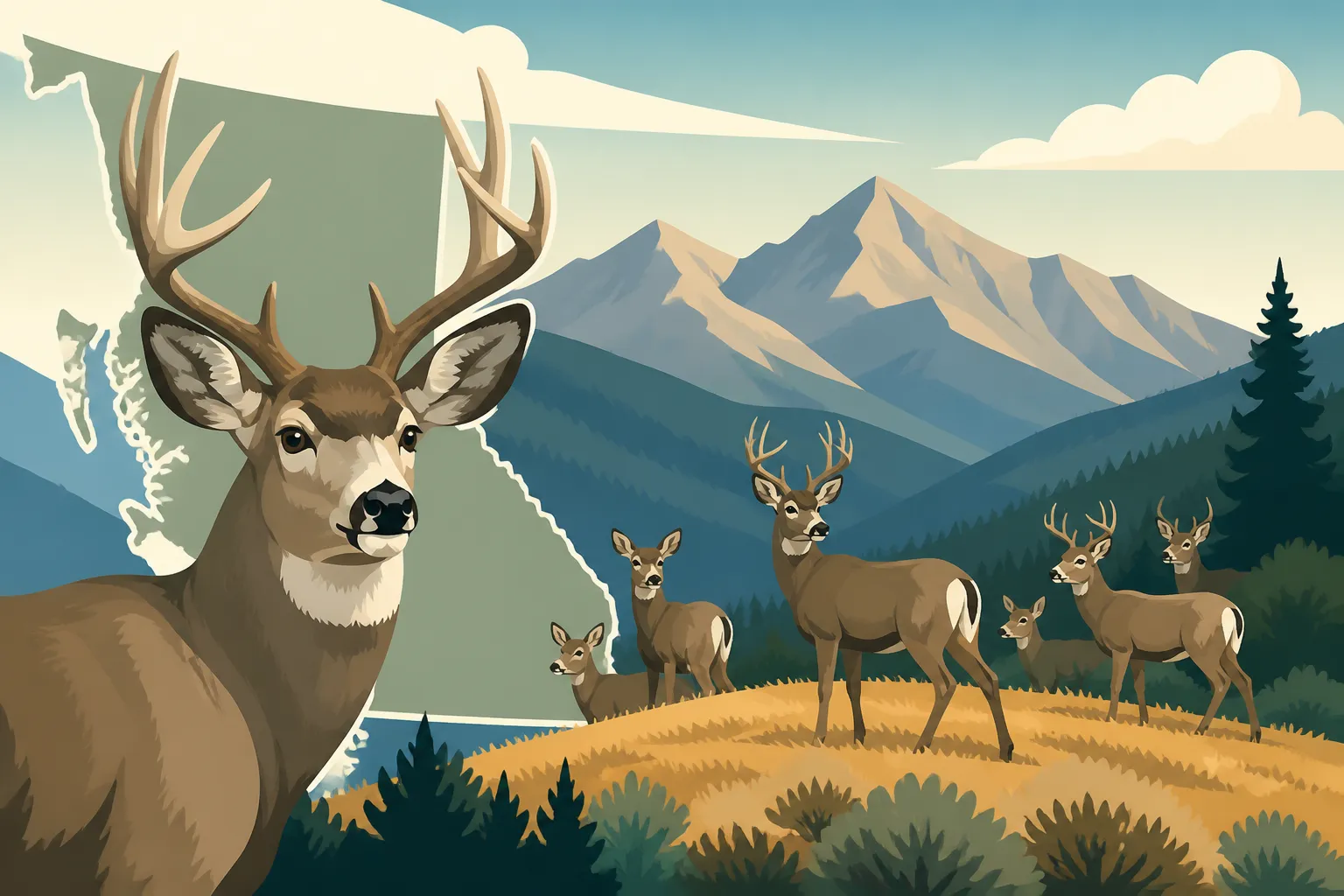
British Columbia's interior mule deer ( Odocoileus hemionus hemionus) are distinct from their coastal blacktail cousins. They're typically larger-bodied, with the classic mule-like ears that give them their name. Their antlers usually fork, rather than having a main beam with tines, a key characteristic many hunters look for when Judging a Four-Point Mule Deer Buck The size and antler growth of these deer can vary significantly depending on the region, forage availability, and overall herd health. A mature buck in a prime area like the Cariboo or Okanagan can be a truly impressive animal, often heavier than many other deer species, sometimes pushing well over 200 pounds live weight, as we often discuss when we look at What a British Columbia Mule Deer Weighs
These deer are masters of their environment, capable of navigating everything from the open grasslands of the Okanagan to the dense timber of the northern interior. Their coloration, usually a brownish-grey with a white rump patch and a small, rope-like tail tipped with black, helps them blend seamlessly into their surroundings, making them incredibly challenging to spot, especially in dense cover.
Typical Habitat and Range
Interior mule deer are remarkably adaptable, making their homes across a vast swathe of British Columbia. You'll find them predominantly in the dry, interior regions east of the Coast Mountains, extending from the US border right up into the Peace River country. Their preferred habitats are often characterized by a mix of open areas for foraging and dense cover for security and bedding. Think about those sun-drenched hillsides dotted with Douglas fir and ponderosa pine, interspersed with sagebrush and grassy slopes – that's prime mule deer country.
In the Okanagan, they frequent the dry grasslands and benches, utilizing riparian areas along creeks and rivers. Further north in the Cariboo, they thrive in the mosaic of aspen stands, pine forests, and open rangeland. Even in the more rugged Kootenays, they find niches in the valley bottoms and lower mountain slopes. This adaptability means that while certain characteristics are consistent, the specific local environment plays a huge role in how a herd lives and moves, impacting everything from their diet to their antler growth, as we learn when exploring What Mule Deer Eat in the Dry Interior
Seasonal Movements and Behavior
Mule deer are renowned for their migratory patterns, which are largely dictated by snow depth and forage availability. As the seasons change, so too do the deer's habits and locations. In the spring and summer, after fawning, they disperse into higher elevations and denser cover, taking advantage of lush vegetation. This is when they're working hard to put on weight and grow those impressive antlers.
As fall approaches, particularly with the first significant snowfalls, these deer begin their annual migration to lower-elevation winter ranges. These crucial wintering grounds, often south-facing slopes or valley bottoms, offer more accessible forage and less snow accumulation. Understanding this migratory pattern is absolutely critical for successful hunting, especially when planning a trip for Hunting British Columbia's October Rifle Opener. For instance, a buck you saw high on a mountain in September could be a significant distance away by November. Knowing Why Mule Deer Move to Winter Range is key to understanding where to focus your hunting efforts as the snow starts to fly. These movements can be gradual or quite dramatic, depending on the severity of the weather.
Key Factors Influencing Mule Deer Numbers
Mule deer populations are dynamic, constantly ebbing and flowing in response to a complex interplay of environmental factors. It's not just one thing that impacts their numbers, but a combination of challenges that can make or break a herd's success. As hunters, appreciating these factors helps us understand the bigger picture of wildlife management.
Habitat Loss and Fragmentation
Perhaps one of the most significant long-term threats to interior mule deer is the ongoing loss and fragmentation of their habitat. Urban sprawl, agricultural expansion, resource extraction like logging and mining, and even increased recreational use can all shrink the amount of viable land available to deer. This isn't just about losing a chunk of forest; it's about disrupting crucial migratory corridors, reducing access to vital winter range, and fragmenting populations, which can limit genetic diversity and make herds more vulnerable.
For instance, the development of new subdivisions near traditional wintering grounds in the Okanagan or Kootenays can displace entire herds, forcing them into less ideal habitats where survival rates might be lower. Logging, while often seen as detrimental, can also create beneficial early-seral browse in the short term, but if not managed sustainably, it can remove essential older growth cover or negatively impact sensitive riparian zones. When we discuss topics like Hunting a British Columbia Burn, we often highlight how these changed landscapes impact deer movement and feeding, showing that habitat alterations are a double-edged sword that require careful stewardship.
Predation Pressures
Predation is a natural and healthy part of any ecosystem, but for mule deer, especially fawns, it's a constant threat that significantly influences herd numbers. The primary predators of mule deer in British Columbia's interior include wolves, cougars, and black bears. Grizzly bears also contribute to predation, particularly on fawns in certain areas. The impact of these predators can vary greatly depending on their local populations and the health of the deer herd itself.
When deer populations are already stressed due to poor habitat or harsh winters, intense predation can suppress recovery. For example, a severe winter followed by high predator numbers can be a devastating combination for fawn recruitment, meaning fewer young deer survive to adulthood. This balance is incredibly delicate. In some areas, sustained high predator densities, particularly wolves and cougars, can keep mule deer populations from reaching their potential, creating ongoing management challenges. Understanding the dynamics of predator-prey relationships is crucial for comprehensive wildlife management, and it's something that often sparks passionate debate among stakeholders.
Disease and Winter Severity
Mother Nature herself plays a huge role in shaping mule deer populations. Harsh winters, with deep snow and prolonged cold temperatures, can be incredibly tough on deer, particularly the young, old, or those already in poor condition. During these periods, deer expend more energy to move through snow and stay warm, while forage becomes scarce or difficult to access. This can lead to significant winter kill events, where a large percentage of the herd succumbs to starvation or cold.
Diseases can also take a toll. While British Columbia has been fortunate to avoid widespread outbreaks of Chronic Wasting Disease (CWD) so far, other ailments like adenovirus hemorrhagic disease (AHD) or even parasites can weaken deer and make them more susceptible to other stressors. A severe winter following a summer drought, which might have limited forage quality, can exacerbate these issues. It's not just the immediate impact of a harsh winter that matters; the lingering effects on the health and reproductive success of the surviving deer can affect herd numbers for several years. This is why careful monitoring of herd health and environmental conditions is so important for wildlife biologists.
Regional Variations in Interior Mule Deer Populations
British Columbia is a massive province, and the interior isn't a monolithic entity. What's happening with mule deer in the Okanagan might be very different from the trends observed in the Cariboo or the far northern reaches. Understanding these regional nuances is key to appreciating the overall health of the species and planning effective hunting strategies.
Okanagan and Kootenay Herds
The Okanagan and Kootenay regions are iconic for their mule deer. These areas, particularly the dry, sunny valleys and benches, have historically supported some of the densest mule deer populations in the province. Think about the productive grasslands near Penticton or the timbered slopes around Cranbrook; these are classic mule deer hotspots. However, these regions also face significant pressures. Rapid human population growth, vineyard expansion, and increasing recreational use all contribute to habitat fragmentation and disturbance.
In many parts of the Okanagan, herds tend to be more stationary, with less dramatic long-distance migrations due to milder winters and fragmented habitats. In contrast, the Kootenays, with their more mountainous terrain and often harsher winters, see more pronounced seasonal movements. While trophy potential in these regions is still high, managing human-wildlife conflict and securing critical winter range remain significant challenges. Hunters often find success glassing the open hillsides for mule deer, especially during the rut when bucks are more active. Platforms like GoHunt are particularly useful here for scouting and understanding specific management unit boundaries and habitat features before you ever set foot in the field.
Cariboo and Thompson Regions
Moving northward, the Cariboo and Thompson regions offer a different flavor of mule deer country. These areas, encompassing the vast Cariboo Plateau and the rugged canyons of the Thompson River, present extensive mixed forest and grassland habitats. Mule deer here are often characterized by their strong migratory behaviors, moving between widespread summer ranges and traditional wintering grounds. The scale of these regions means that habitat loss from human development is less intense than in the Okanagan, but industrial activities like logging and forestry are more prevalent.
Herds in the Cariboo and Thompson can fluctuate more dramatically with winter severity. A mild winter might see strong fawn survival, leading to a bump in numbers a few years down the line, while a severe one can cause significant declines. Hunters here need to be prepared for larger tracts of wilderness and often more rigorous access challenges. This is also where you might find some truly exceptional animals, as we often consider Where the Biggest Interior Bucks Live. The sheer amount of undeveloped country allows bucks to mature and express their full antler potential.
Northern Interior Populations
As you venture into British Columbia's northern interior – areas like the Omineca, Peace, and Skeena regions – the mule deer populations tend to be sparser but can still offer incredible hunting opportunities for those willing to put in the effort. The habitat shifts here, with more boreal forest, extensive wetlands, and colder, longer winters. Mule deer often share their range with moose, elk, and caribou, and competition for forage can be a factor.
Predator populations, particularly wolves, can also be quite robust in these more remote northern areas, exerting more consistent pressure on deer. Hunting here often involves more remote access, potentially requiring jet boats or ATVs to reach prime areas. The rewards, however, can be substantial, with the chance at mature bucks that have seen little human pressure. For those willing to explore these wilder territories, the northern interior represents the true backcountry hunting experience, and services like GoHunt can be invaluable for mapping out these vast, often unroaded, zones and checking regulations for British Columbia Deer Season Dates by Region.
Tracking Herd Health and Trends
For any hunter, understanding the health and trends of the mule deer herds you pursue is paramount. It’s not just about finding deer; it’s about participating in sustainable hunting and contributing to conservation. Thankfully, there are systems in place that allow us to monitor these populations, even if the data isn't always perfectly precise.
Government Surveys and Data Collection
The provincial government, primarily through the Ministry of Forests, Lands, Natural Resource Operations and Rural Development (FLNRORD), conducts various surveys and collects data to monitor wildlife populations, including interior mule deer. These efforts often involve aerial surveys, where biologists fly over specific management units to count deer, classify them by age and sex (e.g., fawn-to-doe ratios, buck-to-doe ratios), and assess habitat conditions. This information is crucial for estimating population sizes, reproductive success, and overall herd health.
However, these surveys are incredibly expensive and labor-intensive, so they can't be done everywhere, every year. They often focus on key winter ranges or representative areas. The data collected helps wildlife managers make informed decisions about hunting regulations, such as setting antler restrictions or determining the number of Limited Entry Hunting (LEH) authorizations. It's a complex process, and the information is often compiled into reports or summaries that can be accessed by the public, providing valuable insights into localized trends.
Hunter Observations and Reporting
Hunters are absolutely vital partners in wildlife management, acting as eyes and ears on the ground. Your observations and hunting success reports provide critical data that complements official surveys. Every time you submit a compulsory harvest report for a deer, you're contributing valuable information about where deer are being harvested, what their age and sex are, and even their general condition. This collective data helps paint a more complete picture of herd dynamics.
Wildlife agencies also encourage hunters to report unusual sightings, like deer showing signs of disease, or significant winter kill events. Programs like the Provincial Ungulate Winter Range Review and other online resources compile information on Scouting a British Columbia Management Unit Online, often including access to management unit maps. When you're out there, pay attention not just to the deer you're pursuing, but to all the signs of wildlife. Your input, even anecdotal, can be incredibly helpful for wildlife managers who are trying to piece together population trends across vast landscapes. Tools like GoHunt facilitate this research by allowing hunters to overlay various data points on maps, helping them synthesize information for more effective scouting.
Understanding Population Cycles
Mule deer populations, like many wildlife species, naturally experience boom and bust cycles. These cycles are driven by a combination of factors, including habitat conditions, predator numbers, disease prevalence, and weather patterns. You might have a few years of mild winters and abundant forage, leading to strong fawn survival and a growing herd. Then, a couple of severe winters coupled with increased predation could cause a significant dip in numbers.
It's a continuous fluctuation, not a steady state. As hunters, understanding these cycles means managing expectations. A management unit that was teeming with deer five years ago might be experiencing a downturn now, and vice-versa. Regulations, such as the Hunting British Columbia's Four-Point Antler Rules, are often designed to help manage these cycles by protecting younger bucks and allowing more deer to reach maturity, aiming to ensure a healthy reproductive population. Learning to read the subtle signs of these cycles – like observing fawn-to-doe ratios in the field – can give you a deeper appreciation for the ecosystem and inform your hunting strategy.
Implications for Hunters
The fluctuating numbers and varying health of British Columbia's interior mule deer herds have direct and significant implications for hunters. It's not just about where to go, but how to approach the hunt ethically and effectively, while also respecting the conservation goals for these magnificent animals.
Adapting Hunting Strategies
When herd numbers are robust, hunters might find more success with traditional methods like Glassing an Interior Hillside for Mule Deer, covering ground, or working familiar areas. However, during periods of decline or in areas with lower densities, a more refined approach is often necessary. This could mean spending more time scouting, focusing on less accessible areas, or employing different tactics. For example, if habitat has changed due to a wildfire or logging, understanding Hunting a Recent Cutblock in Its Third Year, or a burned slope, can give you a significant advantage.
Successful hunters are adaptable. They don't just hunt the same way year after year. They adjust their strategies based on current conditions, herd reports, and their own observations. This might involve changing the timing of their hunts, focusing on different elevations, or even shifting to different management units. The ability to pivot and learn from the landscape is what truly sets experienced hunters apart, especially in dynamic environments like British Columbia's interior.
Navigating Antler Restrictions
Antler restrictions are a common tool used in British Columbia to manage deer populations, particularly mule deer. The most prevalent is the "four-point or better" rule, which means a buck must have at least four points on one antler (excluding the brow tine) to be legal. This regulation is designed to protect younger bucks, allowing them to mature and contribute to the breeding population for several seasons before being harvested. This helps ensure a healthier buck-to-doe ratio and better genetic distribution within the herd, ultimately benefiting the overall population.
While these rules can sometimes be frustrating for hunters who pass up smaller bucks, they are crucial for long-term sustainability. It forces us to be more discerning in the field and really examine an animal before making the decision to harvest. Knowing exactly what constitutes a legal animal, as discussed in Judging a Four-Point Mule Deer Buck, is non-negotiable for ethical hunting in British Columbia. Before heading out, always double-check the specific regulations for the management unit you plan to hunt, as rules can vary by region and even within different seasons.
The Role of Limited Entry Hunts
For certain species, or in specific management units where populations are particularly sensitive or trophy quality is exceptional, British Columbia utilizes a Limited Entry Hunting (LEH) system. This lottery-based draw limits the number of hunters who can pursue a particular species in a specific area, thereby controlling harvest pressure and supporting population management objectives. Mule deer are often included in LEH opportunities, especially for antlered bucks in certain high-demand zones.
Applying for an LEH authorization requires planning and research. You need to understand the odds, the draw periods, and the specific regulations for each LEH zone. While it can be disappointing to not draw a tag, the LEH system is a critical component of British Columbia's wildlife management strategy, ensuring that hunting pressure remains sustainable and that quality hunting experiences are preserved for future generations. For many hunters, drawing a coveted LEH mule deer tag is the culmination of years of applying, representing a truly special opportunity. These draws are designed to provide opportunities in areas that couldn't sustain general open season pressure, preserving the health of the local herd.
Conservation Efforts and Future Outlook
The future of British Columbia's interior mule deer herds hinges on ongoing and proactive conservation efforts. It's a collective responsibility, involving government agencies, conservation organizations, hunters, and the general public, to ensure these iconic animals continue to thrive in our province.
Habitat Restoration Initiatives
One of the most impactful ways to support mule deer populations is through active habitat restoration and enhancement. This includes initiatives like planting native vegetation on winter ranges, removing invasive species that outcompete crucial forage, and improving water sources in arid regions. Projects aimed at mitigating the impact of human development, such as building wildlife crossings or fencing off sensitive areas, also play a significant role.
Conservation groups like the Mule Deer Foundation, the British Columbia Wildlife Federation, and regional rod and gun clubs often lead or contribute to these on-the-ground projects. These efforts don't just benefit mule deer; they improve the health of entire ecosystems, supporting a wide array of other wildlife. It's a continuous process, as landscapes are always changing, whether from natural disturbances like wildfire or human-caused alterations. Investing in these projects is an investment in the long-term health of our deer herds and the broader environment.
Predator Management Debates
The role of predators in mule deer dynamics is a complex and often contentious issue. While natural predation is essential, in certain situations, localized predator management can be considered as part of a broader strategy to support struggling deer herds. This might involve targeted removal of problem predators or other interventions. However, these decisions are never taken lightly and are typically based on extensive scientific research and public consultation, aiming to find a balance that supports both prey and predator populations.
The debate around predator management highlights the challenges of balancing ecological principles with human values and hunting interests. There are strong arguments on all sides, and solutions are rarely simple. Open dialogue and reliance on sound science are critical for navigating these discussions and implementing management strategies that are effective and ethically defensible. Understanding these dynamics is crucial for anyone interested in the long-term health of mule deer, as predators are a constant factor in their survival.
The Hunter's Role in Conservation
Hunters have historically been, and continue to be, the most significant drivers of wildlife conservation in North America. The funds generated from hunting license sales, species tags, and excise taxes on hunting equipment directly finance wildlife management and habitat restoration efforts. Beyond financial contributions, hunters contribute invaluable data through compulsory reporting, participate in habitat projects, and act as ethical stewards of the land.
Being a responsible hunter means more than just following the regulations; it means advocating for sound wildlife management, supporting conservation organizations, and educating others about the importance of sustainable hunting. It means understanding that your actions, both in the field and within the broader community, directly impact the health of British Columbia's interior mule deer herds. By being informed, engaged, and ethical, hunters ensure that the tradition of pursuing these magnificent animals continues for generations to come. Your participation in British Columbia hunting is integral to the overall success of these conservation efforts.
Regional Mule Deer Population Trends and Challenges (Selected Regions)
| Region / Key Area | General Population Trend (Last 5-10 yrs) | Primary Habitat Types | Key Challenges | Hunting Approach Considerations |
|---|---|---|---|---|
| Okanagan Valley | Stable to Slight Decline | Dry grassland, Ponderosa pine, riparian zones | Urbanization, habitat fragmentation, vehicle collisions | Spot-and-stalk, focus on early & late seasons, utilize GoHunt for property boundaries |
| Kootenay Region | Generally Stable | Steep timber, valley bottoms, subalpine | Winter severity, predation (wolves, cougars), increasing human access | Road hunting in accessible areas, backcountry trips for untouched zones |
| Cariboo Plateau | Fluctuating (winter dependent) | Mixed forest, extensive rangeland, wetlands | Winter severity, logging impacts, some localized predation | Focus on migratory routes in fall, Hunting the Cariboo Cattle Range can be productive |
| Thompson Area | Stable to Slight Decline | Sagebrush, Douglas fir, rugged canyons | Habitat changes, some predation, localized pressure | Glassing open slopes, longer stalks, understand Hunting a Grassland Draw in the Okanagan |
| Peace Region | Sparsely Distributed but Stable | Boreal forest, agricultural fringe, river breaks | Predator pressure, extensive wilderness access challenges | Remote access, focus on forest fringes and river bottoms, patience is key |
Note: Population trends are generalized and can vary significantly within specific management units.
Disclaimer
The information provided in this guide is for general informational purposes only and is not intended as legal advice. Hunting regulations in British Columbia are complex and subject to change. Always consult the most current British Columbia Hunting and Trapping Synopsis, published by the provincial government, before planning any hunting trip. It is your responsibility to understand and adhere to all applicable laws and regulations.