Where Dall’s Sheep Range in British Columbia
For many hunters, the thought of pursuing wild sheep in British Columbia conjures images of majestic rams atop windswept peaks. But pinpointing exactly where these incredible animals reside, especially the elusive Dall's sheep, can feel like trying to find a needle in an immense, mountainous haystack. This guide is here to shed light on the very specific, remote corners of British Columbia where Dall's sheep call home, helping you understand their habitat and the unique challenges of finding them.
The Northernmost Domain: Dall's Sheep in British Columbia
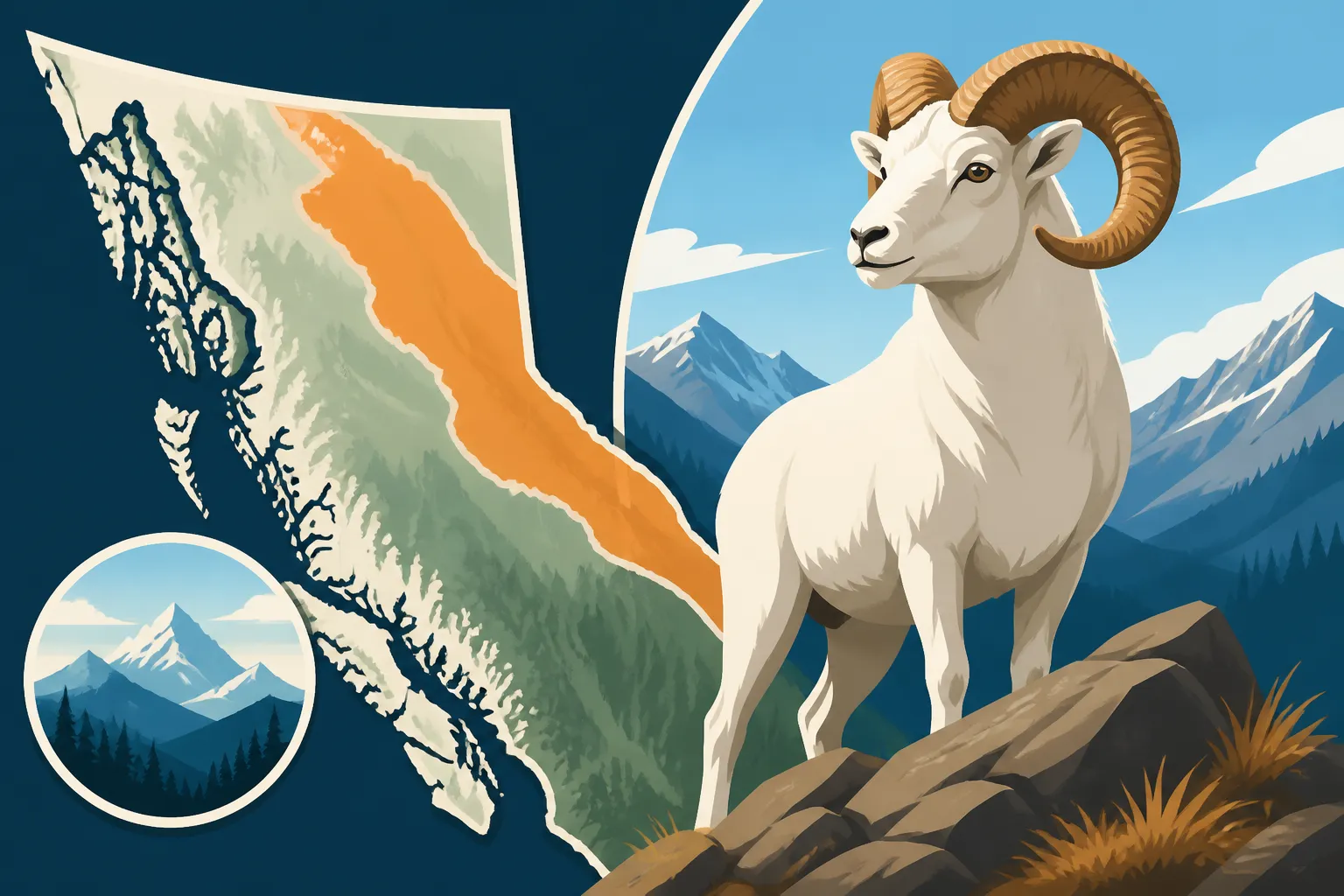
When you talk about Dall's sheep in British Columbia, you're not talking about widespread populations. Unlike some other big game species, their presence here is incredibly restricted, almost to the very tip-top corner of the province. Their range in British Columbia is essentially an extension of larger populations found in the Yukon and Alaska, clinging to the highest, most desolate peaks of the extreme north. We're talking about areas that are truly wild, remote, and often only accessible by bush plane or extensive horseback packing trips.
These aren't the sheep you'll stumble upon while grouse hunting near Prince George or elk hunting in the Kootenays. This is genuine backcountry, where mountains soar, valleys are deep, and human presence is minimal. The very limited range of Dall's sheep in British Columbia means that any discussion of these magnificent animals immediately zeros in on the far northwest. You're looking at areas that are part of the larger boreal and alpine ecosystems, characterized by vast tracts of wilderness, unforgiving terrain, and weather that can change dramatically in a matter of hours. Understanding this geographical isolation is key to appreciating their status as a truly special, and highly sought-after, big game animal.
Specific Regions Where Dall's Sheep May Be Found
To be truly specific about where Dall's sheep range in British Columbia, you need to turn your attention to the most northerly reaches of the province, primarily within what's known as the Cassiar Mountains and the Stikine Plateau. This includes Management Units (MUs) that butt right up against the Yukon border. Think of areas near Dease Lake, Cassiar, and further north towards Atlin and Telegraph Creek. Even within these northern regions, their presence isn't universal; they are restricted to specific, high-alpine environments.
Historically, Dall's sheep populations in British Columbia have been small and somewhat tenuous, primarily because the province represents the very southern fringe of their continental range. They don't typically extend much further south than the 60th parallel (the BC-Yukon border) in significant numbers. This makes them a distinct and rare sight for hunters and wildlife enthusiasts within British Columbia itself. When you're poring over maps, perhaps using a tool like GoHunt to visualize the terrain, you'll be looking for expansive areas of high-elevation, open, rocky country that transitions into alpine tundra. These sheep prefer areas with minimal tree cover, relying on their keen eyesight and agility in rugged terrain to evade predators. The extreme conditions of these northern MUs dictate not just their presence, but also their numbers, which are typically much lower than the more widespread Stone's sheep found further south in the province.
The Cassiar Mountains and Stikine Plateau
The Cassiar Mountains, an imposing range spanning parts of both British Columbia and the Yukon, are arguably the primary, albeit limited, stronghold for Dall's sheep in British Columbia. These mountains are characterized by dramatic, jagged peaks, extensive rock and scree slopes, and high plateaus that offer the ideal, wide-open habitat these sheep require. It's a land of big sky and even bigger mountains, a truly wild frontier where one can feel utterly insignificant amidst the grandeur.
Within this region, specific MUs that border the Yukon are where the occasional Dall's sheep may be encountered. These are not areas where you'd expect to find large, thriving populations, but rather small, isolated bands that have extended their range south from the Yukon. Accessing these areas often means multi-day pack trips, either on foot or, more commonly, with horses. The logistics involved in a hunt here are substantial, demanding meticulous planning, rugged gear, and a deep understanding of backcountry survival. For hunters researching these incredibly remote areas, platforms like GoHunt can be invaluable for understanding topography, access points, and historical data, even if the Dall's sheep information specifically for BC is sparse due to their limited presence. The sheer scale of the landscape means that even when you're in the right general area, finding these sheep requires immense effort, patience, and a bit of luck. Hunting Stone's Sheep in the Far North will give you a sense of the kind of remote challenges involved in northern sheep hunting.
Understanding the Habitat: What Dall's Sheep Look For
Dall's sheep are creatures of the high alpine. Their preferred habitat is intrinsically linked to the specific environmental conditions found at extreme elevations. They thrive in rugged, mountainous terrain above the timberline, where exposed rock, sparse vegetation, and steep slopes offer both forage and protection. This means open ridges, rocky outcrops, and vast expanses of alpine meadows are their go-to spots. The kind of place that looks utterly barren to us often holds the subtle, nutrient-rich plants they depend on.
They are master navigators of vertical landscapes, using the broken terrain to their advantage against predators like wolves and grizzlies. The wind-swept ridges often clear snow, exposing crucial winter forage, which is why these areas are vital year-round. They need a mix of escape terrain – steep, rocky cliffs that large predators can’t easily navigate – and milder slopes where they can feed and rest. This constant need for a balance of safety and sustenance dictates their movements and concentrations within their limited range. When you're glassing these expansive landscapes, you're not just looking for a white speck; you're looking for the specific features of the land that would sustain and protect a Dall's sheep herd. It’s a game of reading the landscape as much as it is finding the animal.
Distinguishing Dall's Sheep from Stone's Sheep in British Columbia
One of the biggest questions that often arises when discussing British Columbia's wild sheep is how to tell the difference between a Dall's sheep and a Stone's sheep, especially since their ranges, though distinct, can be geographically close in the northern part of the province. Both are thinhorn sheep, but their colouration is the primary distinguishing feature. Dall's sheep are known for their pristine, almost pure white coats, which helps them blend into snowy, high-alpine environments. Stone's sheep, on the other hand, are typically much darker, ranging from a dark brown to black, often with a contrasting white rump patch and muzzle. There's also a "Fannin" sheep, which is essentially a Dall's x Stone's hybrid, exhibiting a greyish or mottled appearance, further complicating identification in areas where their ranges meet.
For hunters, accurate identification isn't just a matter of interest; it's a legal requirement. British Columbia's regulations are specific, and mistakenly harvesting the wrong species can lead to serious consequences. The physical range is a critical clue. If you are significantly south of the Yukon border, odds are you are looking at a Stone's sheep. The true Dall's sheep in BC will be found almost exclusively in that extreme northwest corner. This is why thorough scouting and knowledge of the specific MU you're in, combined with visual identification, are paramount. Understanding these nuances is part of the deep respect hunters have for these animals and their ecosystems. Learning Telling a Bighorn From a Stone's Sheep can further refine your identification skills for other BC sheep species.
The Importance of Colouration and Geographic Location
The pure white coat of a Dall's sheep is not just a beautiful aesthetic; it's a critical adaptation to their predominantly snowy, high-alpine environment. This stark white fleece helps them camouflage against snowfields and rocky slopes, offering a degree of protection from predators. In contrast, the darker coat of the Stone's sheep is better suited to the often-darker, treed, and less snow-covered alpine terrain found further south in Northern British Columbia. This colour difference is the most reliable visual identifier when you're glassing a distant hillside.
Geographic location acts as a definitive tie-breaker. If you are hunting in the vast northern reaches of the province, say in the remote areas of the Muskwa-Kechika or other central-northern areas, you are almost certainly looking at a Stone's sheep. Only when you push to the very edge of the Yukon border, in those few specific MUs mentioned earlier, does the possibility of encountering a pure Dall's sheep arise. This geographic specificity simplifies identification considerably for hunters planning their trips. Using detailed mapping systems like those offered by GoHunt or similar providers, and overlaying wildlife distribution maps, can provide invaluable context for these nuanced distinctions. British Columbia's Wild Sheep and Where They Live delves deeper into the distribution of all sheep species in the province.
Here's a quick comparison of British Columbia's wild sheep for clarity:
| Species | Primary Colouration | Main Range in BC | Habitat Preference | Status in BC (Approx.) |
|---|---|---|---|---|
| Dall's Sheep | Pure White | Extreme North-West (Cassiar Mts. near Yukon border) | High Alpine, Open Rock | Very Restricted/Rare |
| Stone's Sheep | Dark Brown to Black | Northern BC (Cassiar, Stikine, Omineca, Northern Rockies) | Alpine/Sub-Alpine, less treed | More Widespread North |
| Fannin Sheep | Greyish/Mottled | Overlap zones between Dall's and Stone's (Rare) | High Alpine, Open Rock | Extremely Rare |
| Rocky Mountain Bighorn | Tan/Brown body, white rump, dark tail | South-Eastern BC (Kootenays, Okanagan) | Grassland, Timbered Slopes | Well-Established |
| California Bighorn | Tan/Brown body, smaller horns, white rump | South-Central BC (Chilcotin, Fraser Canyon, Okanagan) | Dry Grassland, Open Hillsides | Specific Localized Herds |
Hunting and Conservation Considerations for Dall's Sheep
Hunting Dall's sheep in British Columbia is an extremely specialized pursuit, not just because of their rarity and remote location, but also due to the significant conservation efforts surrounding them. Given their limited numbers and the challenges of accessing their habitat, opportunities are incredibly scarce. Many, if not all, Dall's sheep hunting opportunities in British Columbia are managed through the Limited Entry Hunting (LEH) draw system, meaning you have to apply and be lucky enough to draw a tag. Even if you draw, the hunt itself is an arduous expedition into some of the province's most unforgiving terrain.
Conservation of these fragile populations is paramount. Their numbers are naturally low, and they face challenges from habitat loss (though less so in their remote range than other species), climate change, and predation. Ethical hunting practices, including precise animal identification and rigorous adherence to regulations, are crucial for ensuring the health and viability of these small populations. Hunters who pursue Dall's sheep are often deeply committed to conservation, understanding that the privilege of hunting these animals comes with a significant responsibility to protect them and their wild places. If you are ever lucky enough to draw a tag, be sure to study Mountain Sheep Season Dates and Curl Rules and prepare for a true mountain adventure. Sheep and Goat Hunting in British Columbia provides an overview of what it takes to pursue these animals in the province.
Accessing British Columbia's Dall's Sheep Country
Gaining access to British Columbia's Dall's sheep country is a formidable undertaking. Unlike areas accessible via extensive Hunting British Columbia's Logging Road Network, these high-alpine domains are typically roadless. This means that hunters must often rely on remote fly-in camps, or embark on multi-day horseback or backpack trips to reach the desired elevations. Outfitters who specialize in these ultra-remote areas are often the most practical option for non-residents, and even for many residents, given the complex logistics, specialized gear, and local knowledge required.
The terrain itself is a significant barrier. You're looking at steep, rocky climbs, traversing scree slopes, and navigating through unpredictable weather conditions that can range from blistering sun to sudden snowstorms, even in late summer. Fitness levels need to be peak, and experience with backcountry travel in harsh environments is essential. Supplies must be carefully planned, and emergency preparedness is not an option, but a necessity. Satellite communication devices are a must, as cell service is non-existent. These are true wilderness expeditions, where the journey to the hunting grounds is as challenging and rewarding as the hunt itself. For more on preparing for such an adventure, consider Backpacking Into British Columbia Sheep Country. Another way to reach these remote areas and cut down on travel time is to use services such as Flying Into a Remote British Columbia Camp.
The Future of Dall's Sheep Hunting in BC
The future of Dall's sheep hunting in British Columbia, much like the presence of the sheep themselves, remains a delicate balance. Given their limited numbers and the peripheral nature of their range within the province, opportunities are likely to remain extremely rare. Conservation efforts will continue to focus on understanding their habitat needs, monitoring populations, and ensuring that any hunting pressure is sustainable. This often involves very conservative tag allocations and strict reporting requirements.
For aspiring sheep hunters, the focus will likely remain on British Columbia's more robust Stone's sheep populations, which offer more widespread (though still challenging) opportunities. However, the allure of the pure white Dall's sheep will always draw a certain type of adventurer – those willing to put in the extraordinary effort for an incredibly rare and memorable experience. The ongoing management of these species, through science-based decisions and the active participation of the hunting community, is vital to ensure that Dall's sheep, and all of British Columbia's wild sheep, continue to thrive in their spectacular mountain homes for generations to come. What a Hard Winter Does to Sheep can give you an insight into the challenges these animals face.
Disclaimer
This article is for general informational purposes only and does not constitute professional advice. Laws, prices and regulations vary by location and change over time. Consult a qualified professional for guidance on your specific situation.