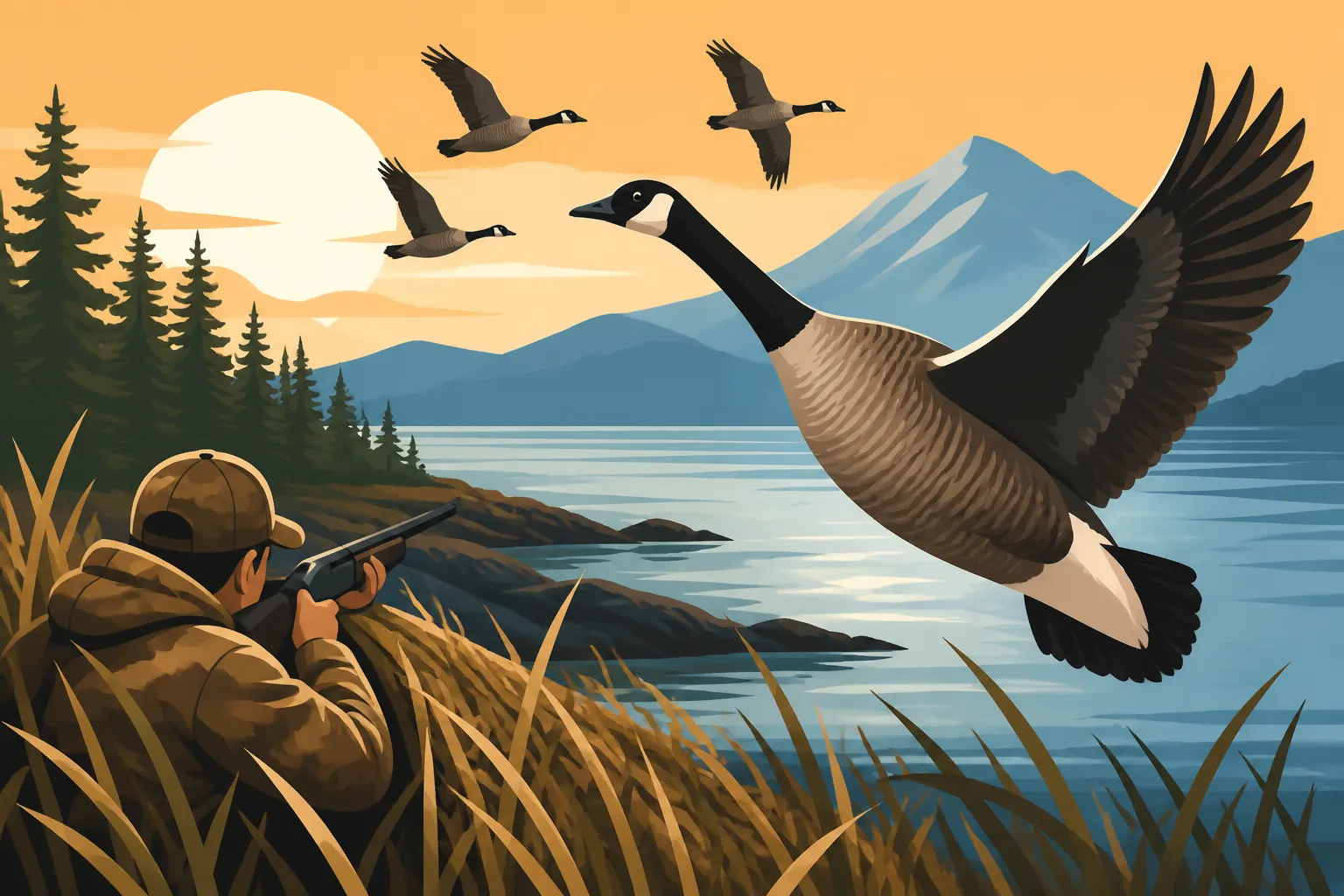
Brant Along the British Columbia Shoreline
For many seasoned waterfowlers and newcomers alike, the idea of hunting Brant along British Columbia's vast and wild coastline presents a unique, sometimes daunting, challenge. Unlike the more common inland geese, Brant are creatures of the salt marsh and tidal flats, demanding a different approach and a deep understanding of their specific habits. This guide aims to unravel the complexities of pursuing these magnificent birds, offering insights into their biology, habitat, and the specialized tactics required for a successful and respectful hunt on our Pacific shores.
Understanding British Columbia's Unique Brant Populations
Brant geese are not your typical field-grazing Canada geese. They are primarily coastal dwellers, intricately tied to the marine environment, and their presence along the British Columbia shoreline is a testament to the rich biodiversity of our province. Getting to know their specific characteristics and behaviours is the first step in becoming a successful Brant hunter.
The Pacific Brant: A Coastal Specialist
The Brant found along British Columbia's coast are specifically Pacific Brant, a subspecies distinct from their Atlantic cousins. These birds are smaller than Canada geese, with a dark head and neck, a black breast, and a distinctive small white neck patch. Their calls are less honking and more guttural or growling, a sound that quickly becomes unmistakable once you've spent time listening on the flats. What truly sets them apart is their diet. While other geese might dabble in agricultural fields, Brant are almost exclusively herbivorous marine birds, feeding primarily on eelgrass and sea lettuce found in intertidal zones. This unique dietary preference dictates their habitat and migration patterns, making them incredibly predictable once you understand the tides and the availability of their preferred forage. They spend their summers breeding in Arctic tundras of Alaska and Canada, then embark on a remarkable journey south, with significant numbers wintering along the Pacific Coast, including parts of British Columbia. This migration funnel brings them to our estuaries and protected bays, offering a prime opportunity for those willing to brave the coastal elements.
Migration Patterns and Key Coastal Habitats
The annual migration of Pacific Brant is a spectacle, and British Columbia plays a crucial role as a stopover and wintering ground. As early as September, and increasingly through October and November, these birds begin to arrive from their northern breeding grounds. They concentrate in specific, nutrient-rich estuaries and protected bays where eelgrass beds thrive. Think of places like Boundary Bay in the Fraser Delta, parts of Vancouver Island, and numerous sheltered inlets along the mainland coast. These areas provide the critical food resources they need to refuel and sustain themselves through the colder months. Understanding these major staging and wintering areas is paramount. It’s not about finding a random field; it's about locating healthy, accessible eelgrass beds. They often move with the tides, flying out to open water at high tide to rest and returning to the exposed flats at low tide to feed. Their flight paths are typically low over the water, hugging the contours of the shoreline and bays, making for challenging but incredibly rewarding decoy setups. They are creatures of habit, often using the same flight lines and feeding areas year after year, which can be a huge advantage for astute hunters who scout diligently and observe their movements over time.
Navigating British Columbia's Brant Regulations and Seasons
Hunting Brant in British Columbia isn't as simple as heading out for ducks. There are specific regulations tied to migratory birds and provincial rules that every hunter absolutely must understand and follow. Getting this wrong can lead to severe penalties, so it's always worth taking the time to thoroughly review the current regulations before planning your hunt.
Federal Permits and Provincial Seasons
First and foremost, because Brant are migratory game birds, you'll need a federal Migratory Game Bird Hunting Permit, in addition to your provincial basic hunting licence. This federal permit also requires you to purchase a Canadian Wildlife Habitat Conservation Stamp. These stamps fund critical habitat conservation projects across the country, so you're directly contributing to the health of the very ecosystems you're hunting in. The season dates for Brant can vary from other waterfowl seasons and are often quite specific to certain management units (MUs) or regions. They tend to be shorter and sometimes occur later in the fall or even early winter, aligning with peak migration or wintering periods. It’s crucial to check the most current British Columbia Hunting and Trapping Synopsis, published annually, to confirm the exact season dates, shooting hours, and daily bag limits for the specific area you intend to hunt. For instance, a particular coastal management unit might have a Brant season that opens in late November and runs for only a few weeks, with a very conservative bag limit. Don't assume the Brant season aligns with general goose seasons; it often does not. Tools like GoHunt can be incredibly useful for quickly cross-referencing these dates with specific geographical areas.
| Species | Permit Required | Typical Season Window | Daily Bag Limit (Example) | Non-Toxic Shot Required |
|---|---|---|---|---|
| Canada Goose | Federal MGBH + Stamp | Sept – Mar | 5-10 | Yes |
| Mallard Duck | Federal MGBH + Stamp | Sept – Jan | 8 | Yes |
| Brant Goose | Federal MGBH + Stamp | Late Nov – Dec/Jan (Short) | 1-2 | Yes |
| Blue Grouse | BC Basic Licence only | Sept – Oct | 5 | No (but recommended) |
Note: Season dates and bag limits are examples and vary significantly by region and year. Always consult the official British Columbia Hunting and Trapping Synopsis for current regulations.
Non-Toxic Shot and Conservation Zones
A critical rule for all migratory bird hunting in British Columbia, including Brant, is the mandatory use of non-toxic shot. This is not optional; it's a legal requirement aimed at protecting waterfowl from lead poisoning, which can occur when birds ingest lead pellets from spent ammunition. Steel, bismuth, or tungsten-based shots are common alternatives. Make sure your shotgun is patterned effectively with non-toxic loads and that you're using appropriate shot sizes for Brant, which are hardy birds. You'll also encounter specific areas, often important estuaries or wildlife refuges, that may have further restrictions or be entirely closed to hunting. These are often designated as Wildlife Management Areas (WMAs) or migratory bird sanctuaries. Always consult detailed maps of your intended hunting area, which are often available through provincial government resources or via digital mapping platforms. Before you head out, make sure you know exactly where you can and cannot hunt. Sometimes a particular bay might be open, but a small section within it is designated as a sanctuary. Understanding these nuances is key to a legal and ethical hunt. Remember to always know your target and what’s beyond it, especially on busy coastal waters where other recreational users might be present. Always refer to Non-Toxic Shot Requirements for Waterfowl for detailed information.
Effective Strategies for Hunting Brant on the Coast
Hunting Brant is a truly immersive coastal experience, often involving bracing winds, shifting tides, and unique logistical challenges. It’s not just about hiding in a bush; it's about understanding the rhythm of the ocean and the birds that call it home.
Scouting and Decoy Spreads
Successful Brant hunting begins long before opening day with meticulous scouting. You need to identify key feeding areas, which almost always means healthy eelgrass beds exposed at low tide, and observe their flight lines. Pay attention to how the birds approach these areas and where they prefer to land. Often, these will be the same spots year after year. When it comes to decoys, Brant are notoriously wary. You'll need a good spread, usually consisting of full-body or shell decoys that accurately mimic their distinct profile. They typically group tightly, so a dense, realistic spread of 1-3 dozen decoys can be effective. Consider using a few sentry or feeder decoys to add realism to your spread. Their feeding posture is heads-down, dabbling in the eelgrass. Given their preference for tight groups, you might try setting up small clusters of decoys rather than one long, sprawling line.
Beyond the decoys themselves, the placement relative to the current and wind is critical. Brant typically land into the wind, so position your blinds downwind of your decoys to allow for ethical shots as they commit to the spread. The tides are your ultimate guide here; set your decoys where the birds will be feeding as the tide drops and they come in to eat, or as the tide rises and they begin to raft up before moving to rest. A successful setup means anticipating their movements with the water. For digital scouting, a platform like GoHunt can provide valuable topographical and land ownership data to help identify potential access points and areas with suitable habitat. Once you’ve located prime spots, observing from a distance for a few tides will tell you everything you need to know about their patterns.
Concealment and Calling Tactics
Brant possess incredible eyesight, and they will flare at the slightest hint of danger. Effective concealment is paramount. This often means using layout blinds on the open flats, or leveraging natural cover like driftwood piles, rocky outcroppings, or tall marsh grass. Whatever your choice, ensure your blind blends seamlessly with the surroundings. Avoid anything that creates a strong silhouette against the sky. Drab colours, earth tones, and camouflage specific to coastal environments will serve you best. Don't forget to camouflage your face and hands, as these can easily give you away.
Calling Brant requires a specific touch. Their call is a low, guttural "crr-onk" or "rronk," quite different from the loud honk of a Canada goose. Using a dedicated Brant call, or a short-reed goose call capable of producing these softer, raspier tones, is essential. Don't overcall; a few soft murmurs as they approach are often more effective than aggressive hailing. The goal is to reassure them, to sound like contented birds feeding on the flats. Focus on subtle, realistic vocalizations that mimic a flock feeding or resting. Timing your calls with their wing beats or as they cup their wings to commit can be incredibly effective. Remember that Brant are often found in relatively shallow water, sometimes just a few inches deep, so waders are usually a requirement for setting up and retrieving birds.
Hunting from Shore versus Boat
The decision to hunt from shore or a boat largely depends on the specific location and your preferred style. Both have their advantages and disadvantages.
Shore Hunting:
- Pros: Can be simpler logistics-wise if you find accessible public land. Allows for comfortable blinds and can be very effective if birds consistently feed within shooting range of the bank. You don't need a boat, meaning fewer maintenance worries and potentially lower costs. Look for areas like Hunting an Estuary Flat at Low Tide where conditions are right for shore-based hunting.
- Cons: Access can be a major challenge, as much of British Columbia's desirable shoreline is private property or difficult to reach. You're limited to where the birds come to you, and shifting patterns can leave you high and dry. Retrieval can also be an issue if a bird falls in deeper water or across tidal channels. Remember to check British Columbia Trespass and Private Land Law before planning any hunt on private land.
Boat Hunting:
- Pros: Offers unparalleled mobility, allowing you to follow the birds, access remote tidal flats, and adjust your setup based on bird movement and tide. You can often get to areas that are inaccessible on foot. This is particularly useful for areas like Hunting From a Boat on the Coast where water access is key.
- Cons: Requires significant investment in a reliable boat, motor, safety equipment, and the skills to navigate coastal waters, which can be unpredictable and dangerous. Launching, retrieving, and anchoring can be a lot of work, especially in adverse weather. You'll need to know Jet Boat Access on British Columbia Rivers or how to safely navigate estuaries. Keeping your boat hidden and retrieving birds quickly are important considerations. Rough weather can quickly turn a fun day into a perilous situation. Always prioritize safety on the water, checking marine forecasts and ensuring all safety gear is aboard.
Consider the specific geography of your hunting spot. Some areas lend themselves perfectly to setting up a comfortable layout blind on the sandbar, while others demand a robust shallow-water boat to navigate complex tidal channels and access productive eelgrass beds.
Conservation and the Future of Brant Hunting
As with all hunting, pursuing Brant carries a significant conservation responsibility. These birds, while doing well in many areas, face ongoing challenges, and hunters play a vital role in ensuring their populations remain healthy for generations to come.
Habitat Challenges and Population Management
Brant populations are highly dependent on healthy marine ecosystems, particularly robust eelgrass beds. These vital habitats are vulnerable to coastal development, pollution, and climate change impacts like sea-level rise and ocean acidification. Loss or degradation of eelgrass can directly impact Brant numbers, as it forms the cornerstone of their diet. Because of their specialized feeding habits, they are less adaptable to habitat changes than generalist species. This makes monitoring and management crucial. Conservation efforts often focus on protecting and restoring coastal wetlands and estuaries.
Hunters, through their licence and stamp purchases (like the Canadian Wildlife Habitat Conservation Stamp), contribute directly to these conservation initiatives. The relatively conservative bag limits and shorter seasons for Brant in British Columbia reflect a cautious approach to management, ensuring that hunting pressure remains sustainable. Biologists constantly monitor population trends and adjust regulations as needed. Participating in hunter surveys or reporting your harvest, which is often mandatory for migratory birds, provides valuable data for these management efforts. This commitment to conservation is what makes ethical hunting a sustainable activity.
The Hunter's Role in Sustainable Brant Hunting
Being a responsible Brant hunter goes beyond simply following the rules; it's about being an active steward of the resource. This means practicing ethical hunting techniques, minimizing disturbance to the birds and their habitat, and setting an example for others. Always strive for clean, quick kills to minimize crippling losses. If a bird is wounded, make every effort to retrieve it. This is where a good retriever dog can be an invaluable partner, especially in the often difficult terrain of coastal mudflats and tidal channels.
Beyond the hunt itself, you can contribute by educating yourself and others about Brant ecology and conservation. Support organizations that work on coastal habitat preservation. Consider volunteering for local conservation projects aimed at protecting estuaries or cleaning up shorelines. By understanding the intricate relationship between Brant, their environment, and human activities, hunters ensure that the tradition of pursuing these iconic coastal geese can continue. It’s about celebrating the wildness of our British Columbia shoreline and the incredible journeys these birds undertake. Just like when preparing for Waterfowl Hunting British Columbia's Estuaries, understanding the ecosystem is paramount.
Disclaimer
This article is for general informational purposes only and does not constitute professional advice. Laws, prices and regulations vary by location and change over time. Consult a qualified professional for guidance on your specific situation.