How Wildfire Changes Game Range Here
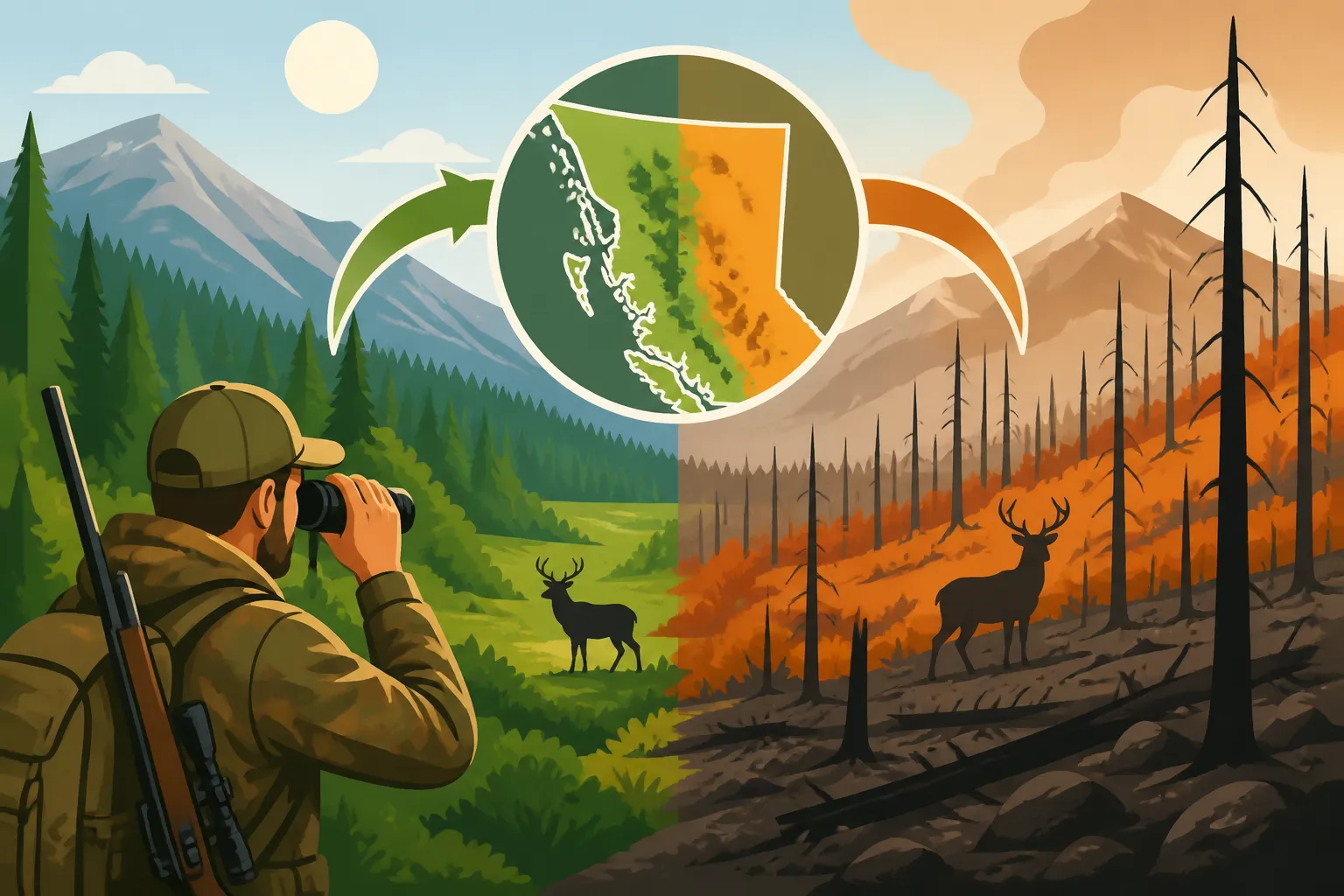
It can be incredibly disheartening to watch news reports of wildfires raging across British Columbia, painting vast swathes of our beautiful province in shades of orange and grey. For many of us who cherish these wild places, our first thoughts might turn to the wildlife—where do they go, how do they survive, and what happens to their homes? This guide is here to shed light on exactly how wildfire, as destructive as it can seem, fundamentally reshapes game range in British Columbia, often creating new opportunities and challenges for the animals and for us hunters.
The Immediate Aftermath: Scorch and Renewal
When a wildfire tears through a landscape, the immediate scene is one of devastation. Forests that once offered dense cover and abundant forage are reduced to ash, charred trunks, and smouldering earth. It’s a stark picture, and it understandably raises concerns about the well-being of our game animals.
Initial Devastation and Displacement
In the direct path of an intense fire, the impact is undeniably severe. Animals, especially those that are less mobile or caught off guard, can perish. Larger animals like deer, moose, and bears often have an instinct to flee, pushing them out of their familiar territories and into adjacent, unburned areas. This displacement can lead to increased pressure on existing resources in those neighbouring zones, temporarily concentrating animals and sometimes causing conflicts or further stress on their populations. The landscape itself becomes alien: familiar bedding areas are gone, water sources might be contaminated, and the ground is often too hot or unstable to travel easily.
For a hunter scouting a potential area after a recent fire, the silence can be eerie. You might find tracks leading out of the burn, or evidence of animals that simply couldn't escape the inferno. It’s a stark reminder of the raw power of nature. Access into these fresh burns can be treacherous, with unstable snags, deep ash pits, and eroded trails making travel difficult and dangerous. Many areas might even be officially closed to public access for safety reasons, so it's critical to check current regulations before planning any trip.
The First Signs of Life: Pioneer Species and New Growth
Yet, even in the most thoroughly scorched areas, life begins to emerge with surprising speed. The ash itself, while initially sterile, can actually enrich the soil, depositing nutrients that were previously locked up in woody biomass. Then, the sun, no longer filtered by a dense canopy, can finally reach the forest floor. This combination creates a perfect storm for pioneer species – plants that specialize in colonizing disturbed ground. Within weeks, sometimes even days, green shoots begin to emerge from the black.
You’ll see fireweed pushing up through the ash, its vibrant purple flowers a striking contrast against the dark backdrop. Various grasses, sedges, and young shrubs also quickly take root. These plants, often high in protein and minerals, represent a sudden burst of easily accessible, highly nutritious forage for grazers and browsers. This initial flush of growth can draw certain game species back into the periphery of the burn surprisingly quickly, especially those like deer and elk that are keen to capitalize on new food sources. It’s a testament to the resilience of nature, and a clear signal that the land is already beginning its long journey of recovery.
Mid-Term Transformation: Habitat Diversification and Edge Effects
As the years pass after a wildfire, a burned area doesn't just recover; it transforms. What was once a uniform forest becomes a mosaic of different habitats, offering a wider variety of resources for various game species. This mid-term stage is often where hunters start to see the most significant and beneficial changes.
New Forage Hotspots for Ungulates
For species like mule deer, moose, and elk, a regenerating burn can become an absolute buffet. The sunlight pouring onto the forest floor, combined with nutrient-rich ash, stimulates an incredible explosion of new growth. Think about a dense, dark coniferous forest before a fire—the understory is often sparse, with little for a deer to browse. After a fire, however, deciduous shrubs like willow, aspen, birch, and various berry bushes (like huckleberry and saskatoon) flourish. These plants are often preferred browse for ungulates.
Mule deer, in particular, are drawn to these open, shrub-rich environments. The two-to-five-year post-fire mark can be particularly productive for them, offering succulent new growth. They might find excellent forage in these areas, especially on south-facing slopes that warm quickly. This can drastically improve their body condition and antler growth. If you're Hunting Mule Deer on a British Columbia Burn, understanding these regeneration cycles is key. Moose, while also benefiting, tend to prefer more established willow and aspen stands, often found in older burns or along riparian areas within the burn, as highlighted in discussions around How Wildfire Did to Moose Habitat.
Predatory Opportunities and Challenges
While ungulates often thrive on the new forage, the altered landscape also creates a different dynamic for predators. The reduction in dense cover initially makes animals more vulnerable. A wide-open burn, while great for glassing for a deer, is also great for a wolf or cougar looking for a meal. Young fawns and calves can be particularly at risk in the initial years post-fire due to the lack of hiding spots. This increased visibility can lead to higher predation rates in some areas, which can be a natural (albeit sometimes brutal) part of ecosystem balancing.
However, as the burn regenerates, the new, dense shrubbery can eventually provide excellent escape and hiding cover for game, making the hunting game more complex for both predators and human hunters. From a hunting perspective, this means you might find both predator and prey activity concentrated around the edges of burns, where animals can quickly access both food and cover. It adds another layer to your scouting efforts, as you'll be looking not just for game, but also for the sign of the animals that pursue them.
Increased Visibility and Access for Hunters
One of the more immediate and often appreciated changes for hunters in a post-fire landscape is the drastically improved visibility. What was once thick timber, impenetrable to glassing, might now be an open expanse where you can spot animals at great distances. This opens up new tactical opportunities, particularly for spot-and-stalk hunting. Areas previously too dense to hunt effectively suddenly become accessible. This can be especially true if you are comfortable with Spot-and-Stalk Mule Deer in British Columbia.
However, this increased visibility comes with its own set of challenges. Navigating a burned area can be dangerous. Charred trees, known as "snags," are prone to falling, especially in windy conditions. The ground can be uneven, full of hidden holes where roots have burned away, and covered in deep ash that makes walking exhausting and dirty. Erosion can also be a significant issue, creating new gullies and washing out old trails. While it might be tempting to rush in, caution and preparedness are paramount. Understanding these new landscape features is crucial for safety and successful hunting in these transformed zones.
Long-Term Ecological Shifts: Mature Burns and Ecosystem Resilience
The story of a wildfire's impact on game range doesn't end after a few years of regeneration. It's a decades-long saga of ecological succession, constantly shifting and evolving the landscape and the types of game it supports. These long-term changes illustrate the incredible resilience of British Columbia's ecosystems.
The Evolving Landscape: Shelter and Successional Changes
As a burn matures, the landscape continues to change. Those fast-growing pioneer plants eventually get outcompeted by taller shrubs and young trees. What was once an open, grassy area might become a dense thicket of lodgepole pine, aspen, or birch saplings. This creates new forms of cover and forage. While the initial flush of highly nutritious browse might decline, these older burns begin to offer critical thermal cover, especially for animals like moose and elk seeking shelter from harsh winter conditions or intense summer heat. The mosaic effect, where patches of unburned timber, regenerated areas, and riparian zones intermingle, creates a diverse habitat that can support a wider array of species for different purposes—feeding, bedding, and security.
A mature burn area, say 15-20 years old, will look vastly different from a two-year-old burn. Instead of open vistas, you'll be navigating dense young stands, often incredibly challenging to move through but offering excellent security cover for big game. Hunters might find themselves adapting their tactics from long-range glassing to more close-quarters still-hunting, as game will often bed down in these dense pockets. These older burns can also become important corridors for game movement, providing continuous cover and browse between larger forested areas.
Impact on Specific Species
Different game species respond to the various stages of a burn differently, a testament to their unique ecological niches.
-
Mule Deer: They tend to thrive in the early to mid-successional stages of burns, capitalizing on the abundant, nutrient-rich browse that emerges. As these areas mature and dense canopy returns, mule deer might move to newer disturbances or the edges of older burns. Understanding their preference for particular stages is key, especially if you're trying to figure out Why Mule Deer Move to Winter Range and how burns factor into that. The increased forage can mean healthier does and larger bucks, provided there's still adequate escape cover.
-
Moose: Moose have a strong affinity for the regenerating deciduous browse found in burns, particularly willow and aspen. They often frequent burns that are a bit older than what deer prefer, where these shrubs have grown into more substantial stands. A moose might use a burn for years, moving through the thick regrowth for both food and shelter. The removal of dense coniferous canopy allows sunlight to hit the ground, promoting the very plant species moose rely on for a significant portion of their diet, particularly in the Interior regions. This is closely related to How Wildfire Did to Moose Habitat by influencing the prevalence of their preferred forage.
-
Black Bears: These opportunistic omnivores absolutely love burns. The initial flush of grasses and forbs provides early spring forage, but the real draw comes a few years later when berry bushes—huckleberries, blueberries, cranberries—explode in production. These open, sunny areas are perfect for berry growth, turning mature burns into prime feeding grounds for bears in late summer and fall. If you're considering Hunting Fall Bears on British Columbia Berry Slopes, you'll often find these slopes were once impacted by fire. A productive berry crop in a burn can lead to very healthy bears building up fat reserves for winter.
-
Caribou: Unfortunately, not all species benefit from wildfire. Caribou, particularly woodland caribou, are often negatively impacted by large-scale fires. They rely heavily on old-growth forests for arboreal lichens, which form a crucial part of their winter diet. When these old-growth stands burn, it can take decades, even centuries, for the lichen populations to recover. This loss of critical winter habitat is one of the many challenges facing British Columbia's Caribou Recovery Effort, and it highlights how fire can have vastly different effects on different animals.
Adapting Your Hunting Strategy to Burned Areas
Hunting in a burned area requires a different approach than hunting in an unburned forest. The landscape has been fundamentally altered, and successful hunters are those who can adapt their scouting, tactics, and safety protocols to these new conditions.
Scouting and Planning in Post-Fire Landscapes
The first step to hunting a burn effectively is thorough scouting, and that often begins long before you even set foot in the field. Utilize modern mapping tools like GoHunt, which often have layers indicating recent burn perimeters. This allows you to identify areas that might now offer excellent forage, improved visibility, or new access points. Look for burn intensity too – some areas might have been completely scorched, while others had a low-intensity ground fire, leaving much of the canopy intact. This mosaic can be key to finding where animals are concentrating.
Once you’ve identified potential areas, cross-reference them with aerial imagery from different years to see the progression of regrowth. Are there unburned pockets within the larger burn? What do the adjacent, unburned areas look like? Animals will often transition between the rich forage of a burn and the security cover of nearby unburned timber. When you're physically in the field, look for distinct game trails leading into and out of the burn, areas where new browse has been heavily nipped, and concentrations of droppings. Don't forget to check the edges of the burn, where the transition from open to dense cover often provides prime habitat. Remember that good scouting is critical for any hunt, and even more so when the landscape has undergone such dramatic changes, as detailed in Scouting a British Columbia Management Unit Online.
Hunting Techniques for Burned Habitat
Hunting a burn can be an exhilarating experience, offering unique opportunities. The increased visibility in many burn areas lends itself well to glassing. Find a good vantage point, settle in with your optics, and systematically pick apart the slopes and openings. Animals might be more visible but also more exposed, making long-range spotting crucial. This is particularly effective for Glassing an Interior Hillside for Mule Deer or even spotting black bears foraging on a berry slope.
When you do spot game, the approach can be tricky. While the open nature of the burn means fewer obstacles like dense trees, it also means less cover for your stalk. You'll need to use any remaining topography—rolls in the land, small draws, or unburned patches—to your advantage. Footing can be a major challenge, so ensure you have sturdy boots that can handle uneven ground, ash, and potential erosion channels. Always be aware of your surroundings, especially with dead standing timber, which can fall without warning. In more mature burns with dense regrowth, still-hunting through the regenerating thickets, taking your time and moving slowly, can be highly effective. The key is to be adaptable; the burn itself dictates the best approach, not your preconceived notions of how to hunt.
| Burn Stage | Key Characteristics | Preferred Game Species | Hunting Strategy Best Suited | Potential Challenges |
|---|---|---|---|---|
| 0-2 Years Post-Fire | Scorch, ash, pioneer grasses/forbs, very open | Elk, early-season Deer | Long-range glassing, edge hunting | Unstable ground, limited cover, extreme exposure |
| 2-10 Years Post-Fire | Dense shrub regeneration, young deciduous trees | Mule Deer, Moose, Bears | Glassing, spot-and-stalk, still-hunting | Dense browse, navigating fallen timber |
| 10-25 Years Post-Fire | Thickets of young conifers, maturing shrubs | Moose, Elk, Bears, Deer | Still-hunting, tracking, patience | Very dense cover, reduced visibility, difficult travel |
| 25+ Years Post-Fire | Developing forest, mosaic of old/new growth | All Big Game Species | Varied, dependent on specific micro-habitat | Identifying productive areas within vast regrowth |
Disclaimer
This article is for general informational purposes only and does not constitute professional advice. Laws, prices and regulations vary by location and change over time. Consult a qualified professional for guidance on your specific situation.