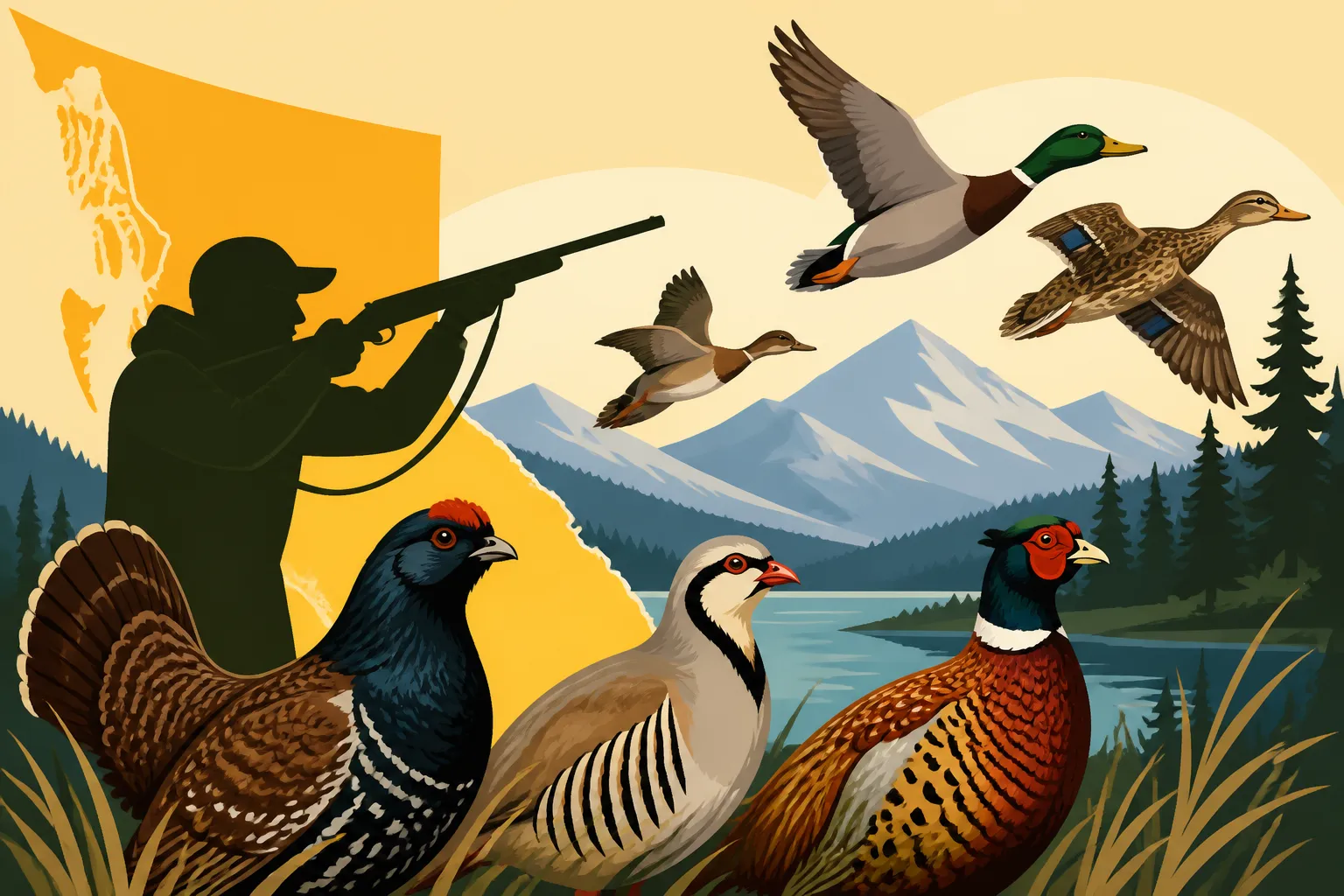
British Columbia’s Game Birds and Waterfowl
There’s nothing quite like the rush of a covey of quail exploding from cover, or the majestic sight of geese cupping their wings to land in your decoy spread. For many hunters, myself included, the pursuit of British Columbia’s diverse game birds and waterfowl offers a unique blend of challenge, beauty, and incredible outdoor experiences. But understanding where to go, what to hunt, and how to navigate the specific rules for everything from tiny grouse to massive Canada geese can feel overwhelming. This guide is here to untangle that complexity, offering a deep dive into the fantastic bird hunting opportunities that British Columbia proudly offers.
The Allure of Upland Bird Hunting in British Columbia
Upland bird hunting in British Columbia is a world unto itself, offering diverse landscapes from dense timber to high alpine ridges, each holding its own feathered treasures. Unlike big game hunting, which often requires immense patience and long waits, upland bird hunting is a dynamic, active pursuit that keeps you moving and your senses sharp. It's about experiencing the land up close, listening for the flush, and working closely with a good dog, if you have one. The sheer variety of species here means that almost every type of cover holds a different game bird, providing year-round opportunities for dedicated hunters.
Ruffed Grouse: Drumming in the Timber
The ruffed grouse, often affectionately called "ruffies," is a quintessential forest bird in British Columbia. You'll find them almost everywhere there's suitable deciduous and mixed forest cover, from the valley bottoms to mid-elevations. Their distinctive drumming sound, produced by the male beating its wings, is an unmistakable sign that they're nearby, especially in the spring and fall. These birds prefer edges—the transition zones between different types of cover, like where an old logging road meets dense aspen or alder thickets.
Hunting ruffed grouse is often an exercise in patience and quick reflexes. They are notorious for holding tight until you're right on top of them, then exploding into a flurry of wings, often with timber between you and them. Walking old logging roads, hiking trails, or the edges of clearcuts are prime ways to find them. The season for these birds is generally quite long, offering opportunities from early September right through to December in many regions. A good bird dog can be invaluable for finding these birds, especially if they've run off into thicker cover after being flushed, helping you recover downed birds that might otherwise be lost.
Blue Grouse and Spruce Grouse: Forest Dwellers
British Columbia is home to several other forest-dwelling grouse species, each with its own preferred habitat and hunting style. The blue grouse, or dusky grouse (often referred to simply as "blues"), are found in drier, more open coniferous forests, particularly in the Interior and mountainous regions. They tend to move higher in elevation as the season progresses, often found on open slopes dotted with Douglas fir or pine. Hunting blues involves a lot more walking, often uphill, but the reward is a larger, hardier bird. When flushed, they often fly up into the trees, making for challenging shots against the canopy.
Spruce grouse, sometimes called "fool hens" due to their remarkable lack of fear, inhabit dense, dark coniferous forests. You'll often find them along logging roads or trails deep within spruce, fir, and pine stands. While they aren't as dynamic a target as ruffies or blues, their unique habitat provides a different kind of challenge. They're often found pecking gravel on roadsides or quietly foraging in dense undergrowth. Identifying a Blue Grouse From a Spruce Grouse is a useful skill for any hunter heading into these varied forest environments, as knowing your quarry helps with both management and hunting strategy.
Ptarmigan: The Alpine Phantoms
For those willing to put in the vertical miles, British Columbia's alpine country offers a truly unique bird hunting experience: ptarmigan. We have three species here: willow, rock, and white-tailed ptarmigan, all masters of camouflage, changing their plumage from mottled brown in summer to pure white in winter. You'll find them high above timberline, often in rocky, exposed terrain, or along the edges of subalpine meadows. This isn't a hunt for the faint of heart; it requires good physical fitness, stout hiking boots, and a willingness to brave unpredictable mountain weather.
Hunting ptarmigan is an incredible way to experience British Columbia's stunning high country. These birds, particularly the willow and rock ptarmigan, are often found in coveys, making for exciting flushes. They'll hold tight in the rocks and will often surprise you when they burst out. While they might not be as challenging a shot as a ruffed grouse in thick timber, the demanding terrain makes for a formidable hunt. Understanding British Columbia's Three Ptarmigan Species and their preferred niches is key to locating them, as subtle differences in their habitat preferences can mean the difference between seeing birds and a long, quiet hike.
Chukar, Quail, and Pheasants: Interior and Valley Treasures
Moving from the dense forests and high alpine, British Columbia's drier interior regions and agricultural valleys present a different array of game birds. These species often thrive in more open, arid landscapes, offering fast-paced hunting in unique environments. This is where you'll find birds that prefer thorny brush, rocky slopes, and the cover offered by cultivated fields.
Chukar and California Quail: The Dry Interior Challengers
The semi-arid regions of British Columbia, particularly areas like the Okanagan Valley, the Fraser Canyon, and Boundary Country, are home to both chukar partridge and California quail. Chukar are perhaps one of the most physically demanding game birds to hunt. They inhabit steep, rocky hillsides, often covered in sparse sagebrush and bunchgrass, and they are masters of running uphill when pressured. These birds are found in coveys, and when flushed, they typically fly downhill at incredible speeds, then quickly run back up the opposite slope. It's truly a test of endurance, often referred to as a "poor man's sheep hunt" due to the rugged terrain involved. Success often comes from getting above the birds and working your way down.
California quail, with their distinctive topknots and charming calls, are also found in these dry interior areas, often preferring riparian zones, brushy draws, and the edges of agricultural fields. They are much smaller than chukar but offer equally challenging shooting. Quail coveys can be quite large, and when they explode from cover, the air fills with wings and calls. Hunting with a good pointing dog is almost essential for both chukar and quail, as it allows you to pinpoint the covey's location and get into a better shooting position before they scatter. The thrill of a covey rise is truly unforgettable.
Ring-necked Pheasants: Stocked Opportunities
While not native to British Columbia, ring-necked pheasants have been introduced and are maintained through stocking programs in various agricultural areas, primarily in the Fraser Valley and parts of the Okanagan. These stunning birds provide fantastic hunting opportunities, especially for those who prefer less physically demanding terrain. They thrive in farmlands, dense hedgerows, tall grasses, and cornfields, providing excellent cover. British Columbia's Pheasant Release Program is vital for sustaining these populations, making them accessible to many hunters.
Hunting pheasants is often a social affair, enjoyed with friends and dogs. Pheasants prefer to run rather than fly, so working a field systematically with blockers and flushers, often with retrievers or pointing dogs, is a common and effective tactic. The explosion of a rooster pheasant from cover, with its vibrant colours and cackling call, is a moment every bird hunter cherishes. The seasons for pheasants are generally shorter and more localized compared to native species, so it’s crucial to check the regulations for specific areas where they are stocked. Checking When Pheasant Season Opens in British Columbia will be your first step in planning a trip for these magnificent birds.
Sharp-tailed Grouse: The Disappearing Icon
Sharp-tailed grouse, with their distinctive pointed tails and vibrant mating dances, are a native species that represents a more niche hunting opportunity in British Columbia. Their populations have declined significantly due to habitat loss and fragmentation, primarily in the province's grasslands and open parklands. You might still find limited opportunities in specific areas of the Cariboo and Peace River regions, where suitable habitat persists.
Hunting sharp-tailed grouse is a special experience, connecting hunters with a unique piece of British Columbia's ecological heritage. They are typically found in more open country, preferring areas with a mix of grassland, light brush, and aspen bluffs. Like pheasants, they can be runners, making a good dog helpful. However, due to their sensitive population status, hunters must be extremely diligent in checking local regulations, which are often very restrictive or even closed to hunting in many areas to support conservation efforts. Enjoying British Columbia's Interior Sharptails requires a deep respect for their precarious situation and adherence to sustainable harvesting.
British Columbia's Waterfowl Diversity: A Flyway Haven
British Columbia lies along the Pacific Flyway, making it a critical staging and wintering ground for an incredible variety of migratory waterfowl. From the vast estuaries of the coast to the numerous lakes, rivers, and marshes of the Interior, the province offers world-class duck and goose hunting. The sheer scale and diversity of waterfowl hunting here are astounding, drawing hunters who revel in the challenge of decoying, calling, and braving the elements.
Ducks: From Potholes to Estuaries
British Columbia's duck hunting opportunities are incredibly varied, ranging from puddle ducks (dabblers) in shallow marshes and grain fields to diving ducks on larger lakes and coastal waters. Common dabblers include mallards, American wigeon, green-winged teal, and northern pintails. These birds are often found in freshwater environments, feeding in shallow water or agricultural fields. Hunting them typically involves setting up decoy spreads, using calls, and hiding in blinds along shorelines or field edges. Decoying Ducks on a Coastal Estuary offers a prime example of targeting these species in specific habitats. The thrill of watching a group of mallards cup their wings and commit to the decoys is an experience that keeps hunters coming back year after year.
Diving ducks, such as canvasbacks, redheads, scaup, and goldeneyes, prefer larger, deeper bodies of water, including big lakes and coastal inlets. They dive to feed on aquatic vegetation and invertebrates. Hunting divers often requires different tactics, including larger, more robust decoy spreads, often anchored in deeper water, and sometimes hunting from boats. The seasons for ducks generally open in September or October and run through to January, with specific dates and bag limits varying by region and species. British Columbia Duck Season Dates provides the essential details for planning your outings.
Geese: Large and Loud
British Columbia is home to substantial populations of several goose species, offering some truly epic hunting experiences. Canada geese are abundant across the province, found in everything from agricultural fields to large lakes and rivers. They are often hunted over large decoy spreads in fields, where their sheer numbers can make for an incredible spectacle. Their distinctive honking calls are an integral part of the hunting experience, and mastering the art of calling these wary birds can be incredibly rewarding. Field Hunting Snow Geese in the Fraser Delta highlights another spectacular opportunity for goose hunters, where thousands upon thousands of these birds descend upon agricultural fields, offering fast-paced action.
Beyond Canada geese and snow geese, hunters can also find brant along the coastal shorelines, particularly during their spring and fall migrations. Brant are smaller, darker geese that feed almost exclusively on eelgrass in saltwater environments. Hunting brant is a specialized pursuit, often requiring boat access and specific tidal conditions. The challenging nature of hunting these coastal birds adds another layer to British Columbia's diverse waterfowl scene. Goose hunting seasons are typically similar to duck seasons, often running from early fall into winter, with varying bag limits. Always consult Goose Season Dates by Region to ensure you're hunting within the legal framework.
Sea Ducks: Coastal Adventures
For the adventurous waterfowler, British Columbia's extensive coastline offers unique opportunities to pursue sea ducks. Species like scoters (surf, white-winged, and black), harlequin ducks, and Barrow's and common goldeneyes call these coastal waters home for much of the fall and winter. These ducks are hardy birds, adapted to the saltwater environment, and often feed on shellfish and crustaceans. Hunting them typically involves using boats, as they frequent open waters, rocky shorelines, and tidal flats.
Sea duck hunting can be a thrilling experience, often combining breathtaking coastal scenery with challenging shooting. Hunters often use specialized decoy spreads designed for choppy water, and robust boats are essential for safety and access. The weather can be a significant factor, with strong winds and rough seas adding to the challenge. While not as universally popular as puddle duck hunting, pursuing sea ducks offers a distinctive and memorable British Columbia waterfowl adventure. Be sure to check regulations closely, as some species like harlequin ducks have very restrictive bag limits.
Essential Gear and Tactics for Bird Hunters
Embarking on a bird hunt in British Columbia requires not just knowledge of the birds and their habitats, but also the right equipment and understanding of effective tactics. The gear you choose can significantly impact your comfort, safety, and success in the diverse environments you’ll encounter, from dense forests to open estuaries.
Shotguns, Ammunition, and Non-Toxic Requirements
The trusty shotgun is, of course, central to any bird hunt. For most upland birds like grouse, a 20-gauge or 12-gauge shotgun is suitable, with smaller shot sizes (like 7.5 or 6) being effective. For larger birds like pheasants or chukar, heavier loads and perhaps larger shot (like 5 or 6) might be preferred. When it comes to waterfowl, a 12-gauge is almost standard, given the need for heavier loads and the larger size of ducks and geese. Selecting the right choke — the constriction at the end of your barrel — is also crucial. An improved cylinder or modified choke is generally versatile for upland birds, while modified or full chokes are often preferred for waterfowl, especially for longer shots over decoys.
A critical consideration for waterfowl hunters in British Columbia is the use of non-toxic shot. Federal regulations mandate the use of non-toxic shot (e.g., steel, bismuth, tungsten alloy) when hunting migratory game birds and in many upland areas, particularly those adjacent to water. This is a vital conservation measure to prevent lead poisoning in birds that ingest spent shot. Ignoring Non-Toxic Shot Requirements for Waterfowl is not only illegal but also harms the very wildlife we cherish. Always double-check local regulations for any specific non-toxic shot zones, even for upland birds, as these areas are becoming more common.
Decoys, Calls, and Blinds: The Art of Deception
For waterfowl hunters, mastering the art of deception is paramount. Decoys are fundamental, mimicking resting or feeding birds to draw them into shooting range. A good spread typically includes a variety of duck or goose decoys, strategically placed to appear natural. The size of the spread can vary from a small handful in a marsh to hundreds of decoys in a large field for snow geese. Coupled with decoys, effective calling can seal the deal. Learning to use a duck call or a goose call to imitate various vocalizations—from contented feeding murmurs to excited landing calls—is a skill that takes practice but pays dividends.
Concealment is the third pillar of waterfowl hunting success. Blinds are used to hide hunters from the keen eyesight of approaching birds. These can range from natural brush blinds built into the landscape, to portable panel blinds, layout blinds in fields, or boat blinds on open water. The key is to blend seamlessly with the surroundings, breaking up your outline and remaining still as birds approach. Companies like GoHunt provide excellent resources for scouting new areas and understanding terrain, which can be invaluable when deciding where to set up a blind for optimal concealment and bird traffic.
Hunting Dogs: Your Best Ally in the Field
For many bird hunters, the experience is simply incomplete without a good dog. Hunting with dogs enhances the enjoyment and significantly increases success rates, especially for retrieving downed birds. For upland hunting, pointing breeds like English setters, German shorthaired pointers, orBrittany spaniels excel at finding and holding birds, allowing the hunter to get into position for a flush. Flushers like springer spaniels are also highly effective at working cover and driving birds into the air.
For waterfowl, retriever breeds like Labrador retrievers and Chesapeake Bay retrievers are indispensable. Their natural instinct to fetch, combined with their ruggedness and tolerance for cold water, makes them perfect for recovering birds from lakes, rivers, and marshes. A well-trained bird dog not only makes the hunt more productive but also helps prevent the wasteful loss of game. Training a bird dog is a significant commitment, but the bond formed and the assistance provided in the field are truly priceless. Understanding Using a Bird Dog in British Columbia Timber can illuminate the specific benefits and techniques for working with canine companions in our varied landscapes.
Navigating Seasons, Regulations, and Access in BC
Hunting in British Columbia is a privilege, and with that comes the responsibility of understanding and adhering to a comprehensive set of regulations. These rules are designed to ensure sustainable wildlife populations and safe hunting practices. Navigating the yearly synopsis, obtaining the correct permits, and understanding land access are crucial steps for any bird hunter in the province.
British Columbia Game Bird Seasons and Bag Limits
British Columbia's hunting regulations are compiled into a comprehensive "Synopsis of Hunting Regulations," which is updated every two years. This document is your go-to source for all legal aspects of hunting, including specific season dates, bag limits, and regional variations for every game bird species. It's not enough to simply know a species is open; you need to understand the nuances of the season in your specific Management Unit (MU) or region. For example, British Columbia Grouse Season and Limits will detail the precise start and end dates, as well as daily and possession limits for ruffed, blue, and spruce grouse, which can vary across the province.
Similarly, specific regulations apply to British Columbia Ptarmigan Season and Limits, often dictating seasons based on elevation or specific areas. Bag limits are in place to ensure sustainable harvesting and prevent overexploitation of bird populations. Always review the most current synopsis before heading out, as regulations can change. Ignorance of the law is never a valid excuse, and enforcement officers take these rules very seriously to protect our shared wildlife resources.
Migratory Bird Permits and Conservation Stamps
For anyone hunting migratory game birds in British Columbia—this includes all ducks, geese, and snipe—two additional federal permits are required beyond your provincial hunting licence and species tags. First, you must possess a Federal Migratory Game Bird Hunting Permit. This permit is an annual requirement and contributes directly to waterfowl conservation efforts across Canada. It's a small cost for a significant impact.
In addition to the permit, you also need a Canadian Wildlife Habitat Conservation Stamp, which is affixed to your permit. This stamp is another crucial funding mechanism for habitat conservation projects. Both of these are generally available from Canada Post outlets or online. Neglecting to purchase and carry these federal permits is a serious offence, separate from provincial violations. You can learn more about The Federal Migratory Game Bird Permit and its importance to conservation, ensuring you're always properly licensed before you hit the marsh or field.
Accessing Public and Private Lands for Bird Hunting
One of the most frequently asked questions for hunters in British Columbia is about land access. The vast majority of British Columbia is Crown land (public land), which is generally open to hunting unless specifically restricted (e.g., within parks, wildlife sanctuaries, or specific municipal boundaries). However, even on Crown land, you must respect private property boundaries, active logging operations, and other users of the land. It’s essential to use mapping tools, like those available through GoHunt, to identify Crown land, private parcels, and any relevant access restrictions.
Private land, which includes agricultural fields, private forests, and residential properties, requires explicit permission from the landowner before you can hunt. Trespassing is illegal and can damage the reputation of hunters as a whole. Always ask for permission respectfully and be prepared for a "no." When hunting near agricultural areas, be mindful of livestock and cultivated crops. Forest company lands may have their own access rules or require permits, so always research these specific conditions. British Columbia's extensive Forest Service Road Network provides access to vast tracts of Crown land, but some roads may be deactivated or gated, requiring foot access. Knowing British Columbia Trespass and Private Land Law is fundamental for responsible hunting.
Conservation and Ethical Hunting Practices
Hunting game birds and waterfowl in British Columbia isn't just about bagging birds; it's about being an active participant in conservation and upholding the highest ethical standards. As hunters, we are stewards of the land and its wildlife, and our actions directly impact the future of these resources.
Species Management and Habitat Preservation
British Columbia's diverse bird populations are managed through a combination of scientific research, habitat protection, and regulated hunting seasons. Many game bird populations, particularly forest grouse and waterfowl, are relatively stable thanks to active management. However, some species, like sharp-tailed grouse, face significant challenges due to habitat loss and require careful monitoring and conservation efforts. Hunters contribute to this management through licence and tag fees, which fund research, habitat acquisition, and enforcement.
Moreover, hunter organizations often volunteer time and resources for habitat enhancement projects, demonstrating a commitment beyond simply harvesting. Protecting wetlands, restoring grassland ecosystems, and managing forest health are all critical to the long-term viability of these species. Understanding the ecological needs of British Columbia's grouse species or the importance of staging areas for ducks and geese along the Pacific Flyway helps us appreciate the broader context of our hunting activities. When you buy your The Wildlife Habitat Conservation Stamp, you're directly contributing to these vital efforts.
Ethical Considerations and Fair Chase
Ethical hunting practices are the cornerstone of responsible hunting. For bird hunters, this means several things. First, always strive for clean, humane kills. This involves practicing your shooting to ensure proficiency and knowing your effective range. Second, make every effort to retrieve all downed birds. Wasting game meat is not only unethical but illegal in British Columbia. A well-trained dog can be an invaluable asset in ensuring quick and efficient retrieval.
Fair chase is another crucial principle. This means giving the animal a reasonable chance to evade the hunter. For birds, this typically involves hunting them in their natural environment without unfair advantages. It also means respecting bag limits and not "high-grading" or selectively shooting only the largest or most colourful birds while leaving others. Respect for the resource, other hunters, and non-hunters is paramount. This includes proper behaviour in the field, responsible waste disposal, and avoiding conflict. The hunting community relies on upholding these ethical standards to maintain its social license.
Safety First: From Firearms to Field Conditions
Safety is non-negotiable on any hunting trip, and bird hunting is no exception. Firearm safety rules, such as treating every gun as if it's loaded, keeping the muzzle in a safe direction, keeping your finger off the trigger until ready to shoot, and being sure of your target and what's beyond it, are paramount. When hunting in groups, clear communication and awareness of each other's positions are vital to prevent accidents, especially when birds flush unpredictably. British Columbia has specific Blaze Orange and Safety Rules for big game hunting, and while not always mandatory for bird hunting, wearing highly visible clothing can significantly enhance safety, particularly in dense cover or during low light conditions.
Beyond firearm safety, field conditions pose their own risks. British Columbia's weather can change rapidly, especially in mountainous or coastal regions. Always be prepared for rain, cold, or sudden shifts in temperature. Carry appropriate clothing, navigation tools (GPS or map and compass), a first-aid kit, and sufficient water and food. For those venturing into more remote areas, bear safety is a year-round consideration; carrying bear spray and knowing how to use it is a wise precaution. The challenging terrain, particularly for species like ptarmigan or chukar, demands good physical conditioning to prevent injuries. Remember, the goal is always to return home safely, with or without game.
Planning Your British Columbia Bird Hunting Adventure
A successful and enjoyable bird hunting trip in British Columbia isn't just about showing up with a shotgun. It requires thoughtful planning, preparation, and an understanding of the nuances of our wild spaces. Taking the time to plan will not only increase your chances of success but also ensure a safer and more rewarding experience.
Scouting and Research for Productive Spots
One of the biggest keys to successful bird hunting is knowing where to find the birds. This begins long before the season opens with dedicated scouting and research. Start by consulting maps – topographical maps, forestry maps, and online satellite imagery tools are invaluable. Platforms like GoHunt allow you to examine terrain features, identify different habitat types (e.g., dense timber, open fields, riparian zones), and pinpoint potential access points, old logging roads, or clearcuts that are ideal for grouse. You'll want to look for edges, water sources, and areas with diverse vegetation.
Pre-season field scouting is also incredibly beneficial. Walking potential hunting areas in the off-season allows you to identify game trails, learn the lay of the land, find old bird sign, and confirm access routes without the pressure of an open season. Pay attention to food sources, such as berry bushes for grouse or grain fields for waterfowl. Talk to local hunters, check in with outfitters or local fish and wildlife organizations for general conditions, and use your observations to narrow down your focus. This diligent preparation will save you countless hours of unproductive hunting once the season begins.
Physical Preparation and Field Skills
Bird hunting, especially for upland species in British Columbia's diverse terrain, can be physically demanding. Walking miles through dense brush, climbing steep hillsides for blue grouse or chukar, or wading through marshes for ducks requires a reasonable level of fitness. Incorporate regular exercise into your routine well before your hunt, focusing on cardiovascular endurance and leg strength. There's nothing worse than being physically unprepared and having to cut a hunt short due to exhaustion or discomfort.
Beyond physical fitness, developing strong field skills is crucial. This includes proficient navigation using a GPS or map and compass, the ability to read terrain, and understanding bird behaviour. Learning to identify bird sign—tracks, droppings, feather piles, or dusting bowls—can tell you if birds are present in an area. Being able to move quietly through the bush, anticipate flushes, and make quick, accurate shots are skills honed over time. For waterfowl, understanding wind direction, water currents, and how birds approach a decoy spread takes practice. These skills, combined with knowledge of the local environment, elevate a casual outing to a truly strategic hunt.
The Satisfaction of a Successful Bird Hunt
Ultimately, the true reward of bird hunting in British Columbia extends far beyond the number of birds in your vest or on your strap. It's about the entire experience: the crisp morning air, the challenging hike, the thrill of a dog on point, the explosive flush of a covey, and the camaraderie shared with hunting partners. The memories forged in these wild places, whether it's the taste of a wild grouse cooked over a campfire or the sound of geese honking under a sunset, are what truly define a successful hunt.
And let's not forget the culinary aspect! British Columbia's game birds and waterfowl offer some of the finest wild game meat available. Whether it's pan-fried grouse breasts, roasted pheasant, or a rich duck stew, preparing and enjoying your harvest is a deeply satisfying part of the hunting cycle. This connection from field to fork, knowing exactly where your food came from and the effort it took to procure it, is a powerful and rewarding experience that epitomizes the sustainable and ethical nature of hunting.
British Columbia Game Birds and Waterfowl Comparison
| Species Group | Key Species | Primary Habitat | Typical Hunting Method | Conservation Status (General) |
|---|---|---|---|---|
| Forest Grouse | Ruffed Grouse, Blue Grouse, Spruce Grouse | Mixed forests, coniferous forests, forest edges | Walk-up, dog work, still-hunting | Stable |
| Alpine Birds | Willow, Rock, White-tailed Ptarmigan | High alpine, rocky slopes, subalpine meadows | Hike-and-flush, dog work | Stable |
| Interior Uplands | Chukar Partridge, California Quail, Ring-necked Pheasant | Dry hillsides, brushy draws, agricultural fields, riparian | Walk-up, dog work (pointing/flushing), decoying (pheasant) | Stable (Quail, Chukar), Stocked (Pheasant), Localized (Sharptail) |
| Dabbling Ducks | Mallard, Wigeon, Green-winged Teal, Pintail | Marshes, potholes, agricultural fields, rivers | Decoying, calling, jump-shooting | Stable to Good |
| Diving Ducks | Scaup, Goldeneye, Redhead, Canvasback | Large lakes, coastal inlets, deep rivers | Decoying (boat-based), pass-shooting | Stable to Good |
| Geese | Canada Goose, Snow Goose, Brant | Agricultural fields, estuaries, large lakes | Decoying, calling, field hunting | Stable to Abundant |
| Sea Ducks | Scoters, Harlequin Duck | Coastal marine environments, rocky shorelines | Boat-based decoying, pass-shooting | Stable (Scoters), Restrictive (Harlequin) |
Disclaimer
The information provided in this guide is for general informational purposes only. Hunting regulations in British Columbia are complex and subject to change. It is the sole responsibility of every hunter to consult the most current British Columbia Hunting and Trapping Regulations Synopsis and any relevant federal regulations before engaging in any hunting activity. Always adhere to all local, provincial, and federal laws.