Goose Season Dates by Region
It can be incredibly frustrating to sift through the detailed regulations to find specific goose season dates in British Columbia. You're not alone if you've ever felt like you need a law degree just to figure out when and where you can pursue these amazing birds. Our regulations are comprehensive, but they can be a maze. This guide is here to help you unravel the complexities of goose season dates across British Columbia's diverse hunting regions, ensuring you're ready for the field with accurate, up-to-date information.
Understanding British Columbia's Waterfowl Hunting Regions
British Columbia is a vast province, and its hunting regulations reflect this incredible diversity, breaking down the entire landscape into distinct hunting regions and smaller Management Units (MUs). For waterfowl, especially geese, these regional divisions are critical because season dates, bag limits, and even species-specific rules can vary significantly from one region to the next. It’s not a one-size-fits-all situation by any stretch of the imagination, and failing to understand these boundaries can lead to a ruined hunt or, worse, a violation.
The Nine Primary Hunting Regions of British Columbia
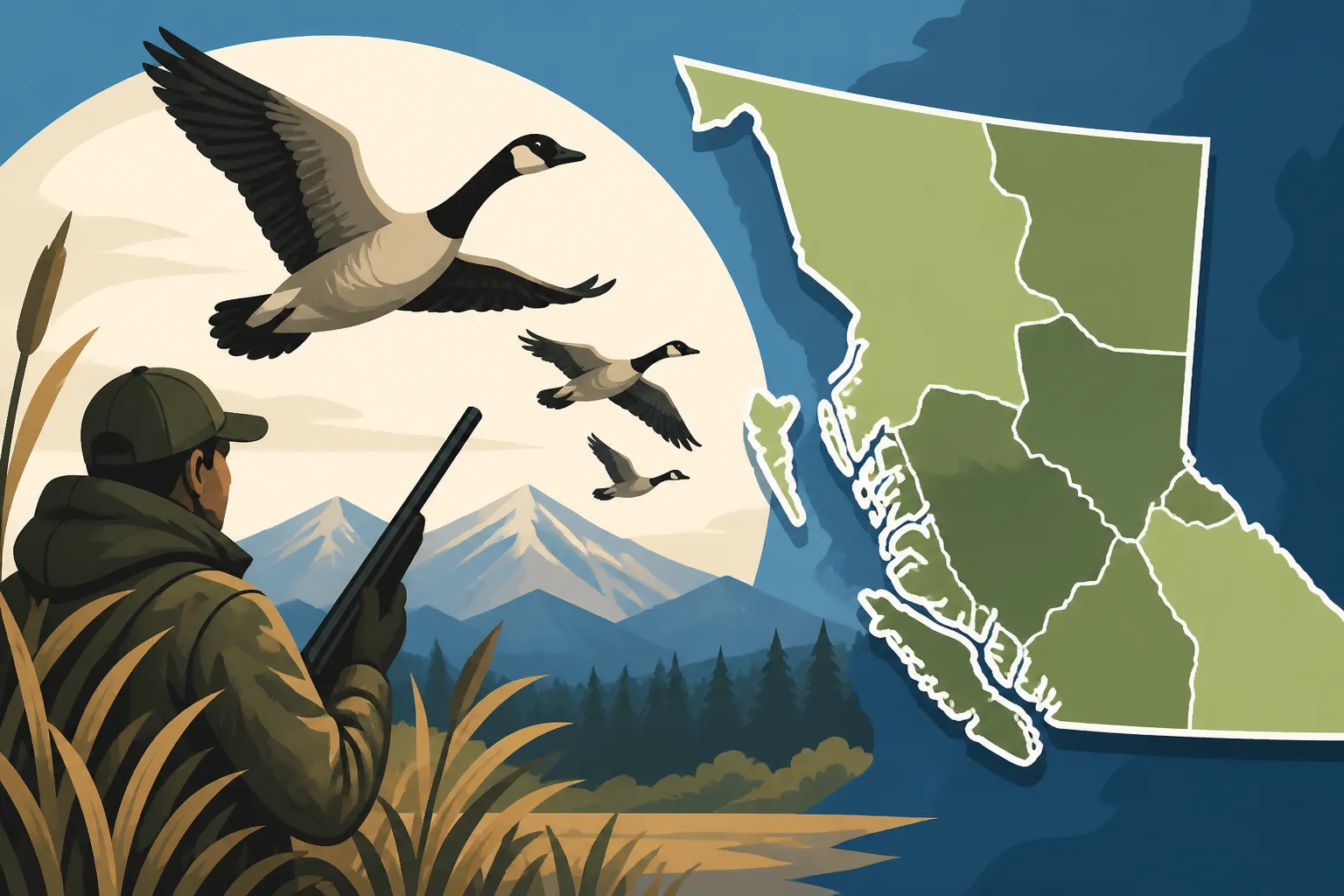
The province is divided into nine administrative hunting regions, each with its own unique geography, climate, and wildlife populations. When it comes to waterfowl, especially geese, these regions become the fundamental building blocks for understanding season dates. For instance, the mild coastal climate of Vancouver Island and the Lower Mainland allows for different migratory patterns and therefore different hunting opportunities than the frosty northern reaches of the Peace Region. Hunters really need to pay close attention to which region a specific Management Unit falls into, as a general open season might run for weeks longer in one area compared to another. This is where resources like the British Columbia's Management Units and Regions can be extremely helpful.
Region 1 is the Vancouver Island and Sunshine Coast area, known for its mild winters and excellent coastal waterfowl opportunities. Region 2 covers the Lower Mainland, a bustling area but still offering significant agricultural fields and estuaries vital for geese. Region 3, the Thompson-Okanagan, encompasses dry interior grasslands and larger lakes. The Kootenays are Region 4, with mountain valleys and numerous rivers. The Cariboo, Region 5, is famous for its vast lakes and mixed forests. Skeena, Region 6, is the central coast and interior north. Omineca is Region 7, a vast northern interior landscape. Finally, the Peace Region (often seen as 7A and 7B) in the far northeast is a major agricultural zone and hosts incredible numbers of migratory birds. Each of these regions presents different challenges and rewards for the dedicated goose hunter, and understanding your chosen hunting grounds starts with knowing which region it belongs to.
How Management Units Affect Goose Seasons
Beyond the broader regions, British Columbia further subdivides these areas into hundreds of Management Units (MUs). While most goose seasons are defined at the regional level, specific MUs can sometimes have localized exceptions or special regulations. This is particularly true for certain species or within specific areas that might be experiencing conservation challenges or have unique agricultural concerns. You might find a general regional goose season, but then a particular MU within that region has a slightly different opening or closing date, or even a reduced bag limit. Always, and I mean always, check the specific MU you plan to hunt within, even if you’re familiar with the broader regional dates. It's easy to assume consistency, but those little details can make all the difference. Using a digital mapping tool like GoHunt can be incredibly beneficial here, as it allows you to overlay MU boundaries directly onto your scouting maps, ensuring you're always aware of where you stand relative to the specific regulations for that particular parcel of land.
Goose Season Dates Across British Columbia's Regions
Now, let's dive into the nitty-gritty: the actual goose season dates. While precise dates can shift slightly with each two-year synopsis, the general patterns remain fairly consistent. Hunters primarily focus on Canada Geese, Snow Geese, and occasionally Brant. Each species has its own set of dates, and these often differ dramatically based on their migration patterns and local populations within each region. It's a dance with Mother Nature, and the regulations try to accommodate.
Canada Goose Seasons by Region
Canada Geese are probably the most commonly hunted goose species in British Columbia, and their seasons are typically quite generous, reflecting robust populations in many areas.
- Region 1 (Vancouver Island & Sunshine Coast): Often sees an early opening, sometimes as early as September 1st for resident birds, extending well into January or even February. These coastal birds offer fantastic opportunities throughout the fall and winter, with many hunters focusing on agricultural fields and coastal estuaries.
- Region 2 (Lower Mainland): Similar to Region 1, with an early September start for some zones, particularly those with significant local populations, running through January. The Fraser Delta is a prime spot here, with massive numbers of birds using the rich farmlands.
- Region 3 (Thompson-Okanagan) & Region 4 (Kootenays): Seasons generally kick off in early September or mid-September, extending through December or early January. These interior regions often have excellent field hunting opportunities as birds migrate through or stage on larger lakes.
- Region 5 (Cariboo) & Region 6 (Skeena): Seasons here tend to align with the general interior pattern, often opening in September and closing by December or early January, depending on the specific MU.
- Region 7 (Omineca) & Region 7A/7B (Peace): These northern regions usually have September openings, but the seasons can be shorter, often closing by late November or early December as winter takes hold and birds push south. The Peace Region, with its vast grain fields, offers some of the province's most incredible goose hunting. For more general information on waterfowl opportunities, check out British Columbia's Game Bird Seasons.
Snow Goose and Brant Seasons
Snow Geese and Brant offer more specialized hunting opportunities, and their seasons are often much more restrictive, reflecting different population dynamics and migratory routes.
- Snow Geese: The vast majority of Snow Goose hunting in British Columbia occurs in the Region 2 (Lower Mainland), particularly the Fraser Delta. Here, massive numbers of lesser Snow Geese stage during the fall and winter. Seasons typically run from mid-October or early November through March, with liberal bag limits reflecting the abundant population. This is a very specific hunt, often involving large decoy spreads in agricultural fields. For those interested in this unique experience, "Field Hunting Snow Geese in the Fraser Delta" provides a deeper dive.
- Brant Geese: Brant hunting is a highly specialized pursuit, primarily occurring along the coastal areas of Region 1 (Vancouver Island & Sunshine Coast) and Region 2 (Lower Mainland). Their seasons are typically very short, often only a few weeks in late February or early March, and bag limits are low (often one bird per day). This reflects their specific habitat requirements and more limited populations. You absolutely need to check the current synopsis for precise dates if you're planning a Brant hunt, as they are not open every year in every location. They are truly a unique challenge, often hunted from blinds along tidal flats.
Other Goose Species
While Canada, Snow, and Brant geese are the primary targets, British Columbia is also home to other goose species like Greater White-fronted Geese. These birds are often found mixed in with Canada Geese and Snow Geese, particularly in the Fraser Delta and other rich agricultural areas. Their season dates generally align with the longer Canada Goose seasons, but it is always crucial to be able to positively identify your target species in the field to avoid any issues. Always consult the official two-year regulations synopsis for precise identification guidelines and season specifics. This is one of those areas where a seasoned hunter's knowledge combined with up-to-date regulations is truly invaluable.
Important Considerations Beyond Season Dates
Knowing the dates is just the first step. To have a successful and legal goose hunt in British Columbia, you need to be aware of several other critical regulations and practical considerations. It's not just about when you can shoot, but also how, what you can carry, and where you can go.
Bag Limits and Possession Limits
Each goose species, and sometimes even specific regions or MUs, will have defined daily bag limits and aggregate possession limits. A typical daily bag limit for Canada Geese might be 5 or 8 birds, while Snow Geese in the Fraser Delta can be as high as 10 or 20. Brant, as mentioned, are often restricted to a single bird per day. The possession limit is the maximum number of birds you can have in your possession at any given time, whether in the field, your vehicle, or at home. This is often twice the daily bag limit. It's not uncommon for hunters, especially those new to waterfowl, to get excited and overharvest, only to realize later they've exceeded their limit. Always count your birds, and know your limits before you head out. These details are clearly laid out in the "British Columbia Game Bird Seasons" section of the synopsis.
Non-Toxic Shot Requirements
One of the most important regulations for waterfowl hunters in British Columbia, and indeed across North America, is the mandatory use of non-toxic shot. This rule is in place to protect waterfowl and the ecosystems they inhabit from lead poisoning. Lead shot, when ingested by birds, can cause illness and death. Therefore, for all migratory bird hunting, including geese, you must use approved non-toxic shot, such as steel, bismuth, or tungsten alloys. This applies to shotguns of all gauges. Using lead shot for waterfowl is a serious offense, and conservation officers are vigilant about enforcement. Make sure you stock up on non-toxic shells well in advance of the season. For a complete breakdown of what's required, refer to the "Non-Toxic Shot Requirements for Waterfowl" regulations.
Federal Migratory Game Bird Permits
In addition to your provincial hunting licence and species tags (though waterfowl usually don't require separate tags beyond your general licence), you are required to purchase a Federal Migratory Game Bird Hunting Permit (MGBH Permit) and the accompanying Canadian Wildlife Habitat Conservation Stamp. This is a federal requirement that applies across Canada for hunting all migratory game birds, including all species of geese and ducks. The funds from these permits go directly towards waterfowl research, habitat conservation, and management efforts. You can purchase this permit online or at many post offices. Don't forget this crucial piece of paper! It's an easy one to overlook, especially if you're primarily a big game hunter, but absolutely mandatory. More information on this can be found under "The Federal Migratory Game Bird Permit."
Navigating Regulations and Planning Your Goose Hunt
British Columbia's hunting regulations are dynamic and can be dense. Successfully planning a goose hunt involves more than just knowing a few dates; it requires careful study, smart use of available tools, and a healthy dose of flexibility.
The Official British Columbia Hunting & Trapping Regulations Synopsis
The single most important document for any hunter in British Columbia is the official "British Columbia Hunting and Trapping Regulations Synopsis." This comprehensive guide is updated every two years, and it contains all the legal requirements, season dates, bag limits, and general rules for hunting in the province. While online resources and guides like this one can provide excellent overviews, nothing replaces the official synopsis.
Always download or pick up a current copy. Read it cover to cover for your target species and region, paying close attention to any regional or MU-specific notes. It’s also crucial to remember that the synopsis is a summary; the actual law is in the Wildlife Act and its regulations. While rare, errors in the synopsis can occur, so being familiar with the spirit of the law is helpful. Before you head out, do a quick check for any last-minute amendments or closures, which are typically posted on the BC government's hunting regulations website.
Utilizing Online Resources and Mapping Tools
In the digital age, hunters have access to incredible tools that can simplify the planning process significantly. These resources are invaluable for confirming season dates, understanding geographical boundaries, and scouting potential hunting spots.
- Official Government Websites: The provincial government's hunting website is the authoritative source for the regulations synopsis, any in-season updates, and information on getting your FWID and purchasing licences. Make it a regular stop in your hunt planning.
- Mapping Applications: Tools like GoHunt (or OnX, HuntStand, etc.) are game-changers for understanding hunting access and boundaries. They allow you to overlay Management Unit lines, private property boundaries, Crown land, and even satellite imagery. This is incredibly useful for finding legal access to public hunting lands, identifying key agricultural fields where geese might feed, or understanding complex private forest land rules. For example, using GoHunt, you can easily verify if a specific field falls within a "No Hunting" zone or if it's part of a private land access program. You can also use it for more general planning, like "Scouting a British Columbia Management Unit Online".
- Weather and Migration Forecasts: Keep an eye on weather patterns and bird migration reports. A sudden cold snap can push birds south quickly, drastically changing local hunting opportunities. Websites like eBird or local birding groups can offer insights into current bird movements.
- Community Forums and Social Media: While not official sources, local hunting forums or social media groups can be great places to ask questions, learn about general conditions, and connect with other hunters. Just remember to always verify any information against the official regulations.
| Region No. | Region Name | Primary Goose Species | Typical Season Start | Typical Season End | Key Hunting Areas & Notes |
|---|---|---|---|---|---|
| 1 | Vancouver Island & Coast | Canada, Brant | Sept. 1 (Canada) | Jan. 31 (Canada) | Coastal estuaries, agricultural fields. Brant season very short. |
| 2 | Lower Mainland | Canada, Snow, Brant | Sept. 1 (Canada) | Mar. 10 (Snow) | Fraser Delta, agricultural fields. Primary Snow Goose hunting. |
| 3 | Thompson-Okanagan | Canada, White-fronted | Sept. 10 | Dec. 31 | Large lakes, river valleys, grasslands. |
| 4 | Kootenays | Canada, White-fronted | Sept. 10 | Dec. 31 | River valleys (e.g., Kootenay, Columbia), agricultural areas. |
| 5 | Cariboo | Canada, White-fronted | Sept. 10 | Dec. 31 | Large lake systems, interior rangeland. |
| 6 | Skeena | Canada | Sept. 1 | Dec. 31 | Coastal inlets, interior river systems. |
| 7 | Omineca | Canada | Sept. 1 | Dec. 20 | Northern lakes and rivers, remote areas. |
| 7A/7B | Peace (NE Region) | Canada, Snow | Sept. 1 | Dec. 20 | Vast grain fields, major staging area for Canada & Snow Geese. |
Note: These dates are typical ranges. Always consult the most current BC Hunting and Trapping Regulations Synopsis for exact dates by specific Management Unit.
Logistics and Ethical Hunting Practices
Successful goose hunting isn't just about dates and limits; it's also about preparation and ethical conduct. Make sure your gear is in order, including appropriate camouflage, sufficient decoys, and calls. Decoying Ducks on a Coastal Estuary or "Hunting Canada Geese on British Columbia Fields" can offer insights into effective strategies. Always prioritize safety, especially when hunting with others and around water. Be respectful of private property, even if unposted, and always secure permission if you suspect you're near private land. Most importantly, practice responsible game retrieval and meat care. Geese are fantastic table fare, and wasting game meat is not only unethical but illegal. Remember to transport your game legally, ensuring "Evidence of Sex Requirements" are met if applicable, and all tags are properly affixed if required. Always pack out everything you pack in, leaving no trace. Good planning and ethical practices ensure that goose hunting remains a cherished tradition in British Columbia for generations to come.
Disclaimer
The information provided in this guide is for general informational purposes only and is not a substitute for the official British Columbia Hunting and Trapping Regulations Synopsis. Hunters are solely responsible for knowing and adhering to all current provincial and federal hunting regulations. Always consult the most recent official synopsis and relevant government websites before planning and undertaking any hunting activity. Regulations can change, and it is the hunter's responsibility to stay informed.