Black Bears Across British Columbia
It's no secret that British Columbia is absolutely teeming with black bears. They're practically everywhere you look, from the misty coastal rainforests to the dry interior grasslands and high up in the alpine. But for many hunters, especially those new to the province or targeting bears for the first time, understanding their widespread habits and how to effectively and ethically hunt them can feel like an overwhelming task. This comprehensive guide is here to unravel the complexities of British Columbia's black bear populations, covering everything from their intriguing biology and diverse habitats to the most effective hunting strategies, crucial safety precautions, and essential post-harvest practices for navigating this incredible province.
The Widespread Presence of Black Bears in British Columbia
Black bears are, without a doubt, the most prevalent large carnivore in British Columbia. Their adaptability is truly remarkable, allowing them to thrive in almost every corner of the province. This ubiquity, while exciting for hunters, also means understanding their localized behaviour and patterns is key to a successful and responsible hunt.
Distribution and Population Density Across BC
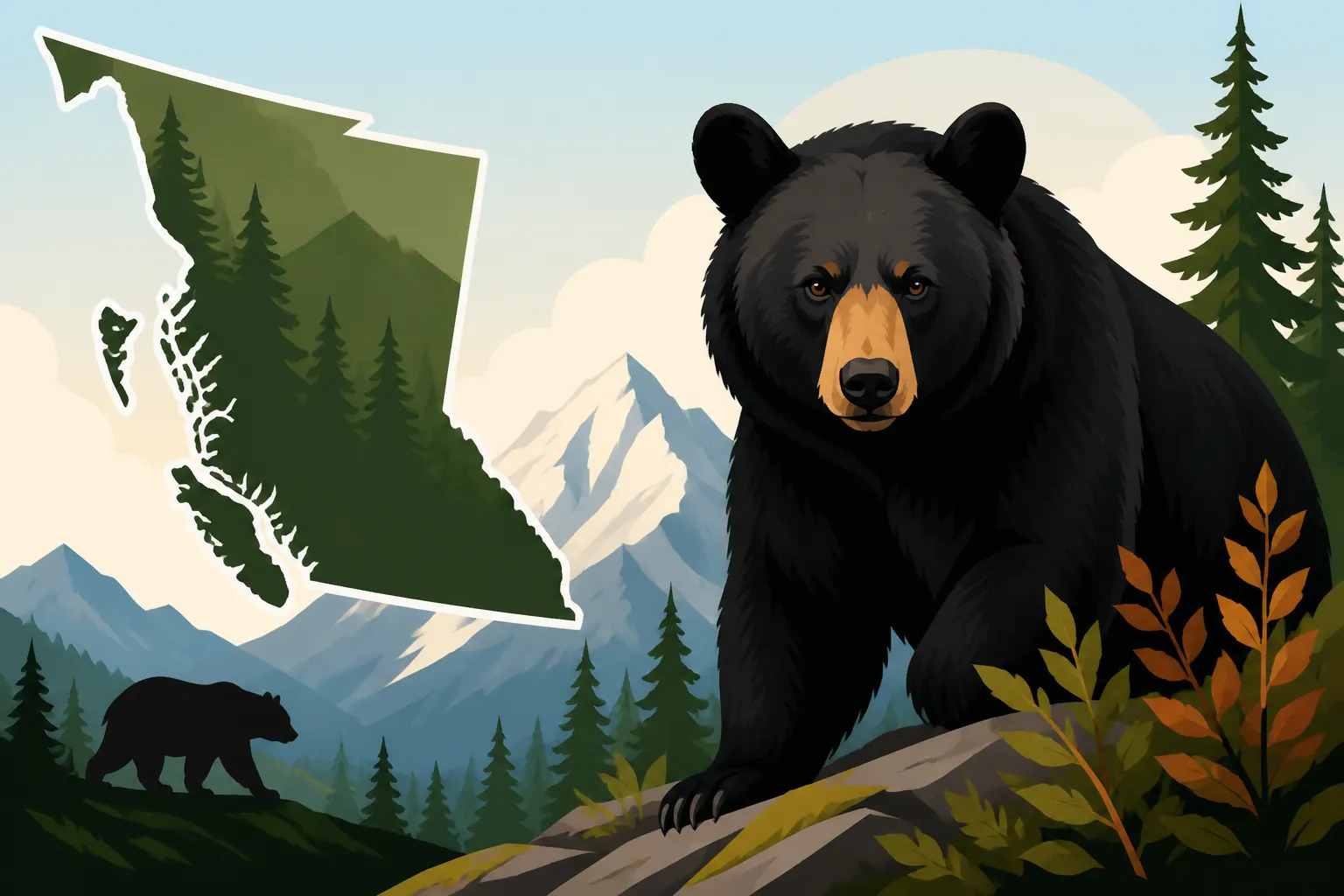
When you think about where black bears live in BC, the answer is pretty much "everywhere." They are found from sea level right up into the subalpine, stretching from the rugged Pacific coast all the way to the Rocky Mountains on the eastern border. The only places you'd be hard-pressed to find a black bear are on some of the smaller, isolated offshore islands or in the most extreme, barren high-alpine environments. This incredible range means they’re an accessible game species for many resident hunters. Current estimates suggest a robust population, often cited in the range of 120,000 to 150,000 individuals, making them a cornerstone of BC's wildlife.
It's interesting to note the differences between coastal and interior bear densities. Coastal bears often benefit from richer, more consistent food sources, particularly salmon runs, which can lead to higher densities and larger average sizes. These bears have adapted to a diet heavily reliant on marine resources during certain times of the year, transforming their physique and local movements. Interior bears, while also plentiful, tend to be more spread out and rely on a broader array of vegetation, insects, and ungulate fawns. They might not always reach the sheer mass of their coastal counterparts, but they're incredibly resilient. The constant march of human development, particularly logging, has undoubtedly impacted bear distribution over the decades. However, black bears are surprisingly adaptable to disturbed areas, frequently utilizing newer clearcuts and regenerating forest blocks for abundant foraging opportunities.
Diverse Habitats Across the Province
British Columbia’s landscape is incredibly diverse, and so are the habitats black bears call home. From the lush, temperate rainforests of the coast to the vast, drier interior forests, and the open subalpine zones, each environment presents unique challenges and opportunities for bears to survive and thrive. For hunters, this translates into varied hunting experiences and demands different scouting and hunting approaches.
Consider the contrast: on the coast, you'll find them navigating dense, moss-draped old-growth forests and emerging onto rich, green coastal estuaries. These tidal flats offer an incredible buffet of sedges, grasses, and, crucially, salmon when the runs are on. Further inland, they roam through sprawling timber, often utilizing a maze of logging roads and the mosaic of cutblocks that define much of the working forest. In the mountain ranges, bears move up into the alpine during the summer and fall, feasting on ripening berries in high-elevation meadows. Each of these specific environments influences a bear's diet, their movements, and their overall behaviour, which savvy hunters can learn to predict.
Seasonal changes are a huge influencer on how bears use these varied habitats. In the dead of winter, they’re tucked away in their dens, often in hollow logs, rock crevices, or dense brush. Come spring, when British Columbia bears leave the den, they emerge lean and hungry, seeking out the first green-up on south-facing slopes, digging for roots, and scavenging any carrion from winter-killed animals. As summer progresses, berries become a primary food source, and their focus shifts to these sugary treats. By fall, they enter a period of hyperphagia, a feeding frenzy to pack on critical fat reserves for the coming winter. This means they will concentrate on areas with abundant high-calorie foods like huckleberries, saskatoons, acorns, and, in salmon-bearing regions, the incredible bounty of spawning fish. Understanding these seasonal shifts in diet and habitat use is foundational for successful bear hunting.
Black Bear Biology, Behavior, and Characteristics
To hunt black bears effectively and ethically, it's absolutely essential to understand their basic biology and behaviour. They're not just big, furry animals; they have complex lives, distinct physical traits, and predictable (and sometimes unpredictable) patterns that are crucial for hunters to recognize.
Physical Attributes and Size Variation
A British Columbia black bear is a formidable animal, but their size can vary dramatically depending on genetics, age, and most importantly, their diet. On average, adult boars (males) can weigh anywhere from 200 to 400 pounds, with sows (females) being considerably smaller, typically ranging from 120 to 250 pounds. However, these are just averages. When you consider what a coastal black bear weighs, it’s not uncommon to encounter truly massive individuals, sometimes tipping the scales at over 600 pounds, especially those with consistent access to abundant salmon runs. This rich protein source fuels exceptional growth, leading to some of the largest black bears found anywhere in North America.
There's a good reason why British Columbia grows big black bears, and it boils down to prime habitat, diverse food sources, and relatively low hunting pressure in many remote areas, allowing bears to reach older ages. These older, larger bears are often the ones making it into the record books. For hunters, being able to distinguish between a boar and a sow in the field is paramount. Boars typically have larger, blockier heads, a wider neck, and a more robust, heavier-set body with broader shoulders. Sows often appear more refined, with a narrower head and neck, and a more slender, athletic build. These subtle visual cues become clearer with practice and careful observation through optics.
Colour Phases and Their Significance
One of the most fascinating aspects of British Columbia black bears is their incredible array of colour phases. While they are called "black bears," not all are actually black! You can encounter individuals that are cinnamon, blonde, chocolate brown, and even a stunning blue-grey. These colour variations are purely genetic and do not signify a different species. They are simply different expressions of the same gene pool, sometimes even appearing within the same litter of cubs. Understanding these colour phases in British Columbia black bears adds an extra layer of identification and appreciation for the species.
Perhaps the most famous of these colour phases is the Kermode bear, often referred to as the "Spirit Bear." These are a rare subspecies of black bear with a recessive gene that causes their fur to be white or creamy-white. They are not albino, but rather a unique genetic variant, and they are found primarily in the Great Bear Rainforest region of BC's central coast. The Kermode bear is culturally significant to First Nations communities and is strictly protected from hunting. For hunters, recognizing these different colour phases is important for both ethical reasons (like avoiding a protected Kermode) and for simply appreciating the incredible diversity of the species you're pursuing. Always be certain of your target and its legal status before taking a shot.
Seasonal Cycles: Diet, Denning, and Rut
Black bear activity is heavily dictated by the seasons, revolving around their feeding, reproduction, and hibernation cycles. When British Columbia bears leave the den in spring, typically in April or May, they are incredibly hungry after months of fasting. Their initial diet consists of emerging green vegetation like sedges, grasses, and skunk cabbage, as well as scavenging for winter kills. As the spring progresses, they become more active, moving lower in elevation as green-up expands. This period is often a prime time to find them on south-facing slopes and logging roads.
As summer settles in, their diet shifts towards a wider variety of berries, insects (especially ants and their larvae), and the occasional fawns of deer or elk. By mid-to-late summer, in coastal regions, the salmon runs begin, and what bears eat on a coastal estuary becomes dominated by these protein-rich fish. This time provides an immense calorie boost. The rut, or breeding season, for black bears typically peaks from late May through July. During this period, boars become highly active, covering vast distances in search of receptive sows, often leading to increased visibility and interaction between bears.
By fall, black bears enter a critical phase called hyperphagia, where they intensely focus on consuming as many calories as possible to build up fat reserves for winter hibernation. This diet consists of whatever high-energy foods are available: huckleberries, cranberries, saskatoons, hazelnuts, acorns, and of course, salmon in riparian areas. This intense feeding can lead to bears becoming quite concentrated in specific areas with abundant food. Finally, as temperatures drop and food sources dwindle, usually by late October or November, bears will select a den site and begin their winter dormancy, completing another annual cycle.
Navigating British Columbia's Black Bear Hunting Seasons
For hunters, understanding the provincial regulations is not just important—it's absolutely critical. British Columbia offers distinct opportunities for black bear hunting in both spring and fall, each with its own advantages and considerations, and these opportunities vary by region and specific Management Unit (MU).
Understanding Spring and Fall Season Structures
British Columbia bear season dates provide hunters with two primary windows: a spring season and a fall season. The spring season generally runs from April through June, while the fall season typically spans from late August through November. It's crucial to understand that these dates are not uniform across the entire province. Each of British Columbia's nine hunting regions and their numerous management units (MUs) will have specific start and end dates. For instance, coastal regions might see earlier spring openers due to milder weather, while some northern MUs might have later openers and closures.
The variations within these seasons offer different hunting experiences. Early spring, just as bears are emerging from their dens, they can be lean but often quite visible on snow-free slopes and roads as they seek the first green growth. Later in the spring, during the rut, boars are more active and travelling widely, which can increase encounter rates. Fall hunting often coincides with prime berry seasons, where bears can be found concentrated in specific patches, and their coats are at their thickest and most luxurious, making them desirable for hide hunters. Always consult the most current British Columbia Hunting and Trapping Synopsis, which is released every two years, to confirm the exact dates for your intended hunting area. Many hunters find tools like GoHunt invaluable for pinpointing specific management units and their associated regulations.
Bag Limits, Tags, and Compulsory Reporting
When it comes to British Columbia bear bag limits, the regulations generally allow for a harvest of one or two bears per year, but this again varies significantly by region and specific management unit. Some areas might have a bag limit of one bear, while others might permit two. It's imperative to verify the specific bag limit for your chosen hunting area before heading into the field. To hunt black bears, you must possess a valid BC hunting license and a specific black bear species tag, which must be purchased in addition to your general hunting license. These tags are generally affordable for residents and are part of the system that helps fund wildlife management in the province.
Beyond securing your license and tags, compulsory reporting is a non-negotiable aspect of black bear hunting in British Columbia. Every hunter who harvests a black bear is legally required to report their kill to the provincial government within a specified timeframe, usually 30 days. This mandatory reporting is absolutely critical for wildlife managers. The data collected from these harvest reports – including the sex of the bear, the management unit where it was taken, and the date – provides vital information for assessing population health, monitoring trends, and making informed decisions about future hunting regulations. Failure to report a harvest can result in penalties, so always make sure this step is completed promptly and accurately. It’s part of our collective responsibility as conservation-minded hunters.
Effective Strategies for Hunting British Columbia Black Bears
Hunting black bears in British Columbia can be an incredibly rewarding experience, and there are several effective strategies that hunters employ, each suited to different terrains and seasons. While some methods common elsewhere are restricted here, focusing on legal and ethical approaches is key.
Spot-and-Stalk Techniques
Spot-and-stalk is arguably the most common and effective method for hunting black bears in British Columbia, especially in areas offering good visibility. This technique is particularly successful in places like recent cutblocks, powerline clearings, avalanche chutes, and open alpine or subalpine meadows. The strategy involves using high-quality optics – binoculars and spotting scopes – to locate bears from a distance, then carefully planning and executing an approach to get within ethical shooting range. Early morning and late evening are often prime times, as bears are most active during these cooler periods.
Before heading out, diligent scouting for sign is crucial. Look for tracks in soft soil, scat (bear droppings often contain berries or vegetation), and overturned rocks or logs where bears have been foraging for insects. Once a bear is spotted, the real work begins. A successful stalk requires incredible patience, careful attention to wind direction, and intelligent use of terrain features for cover. Bears have an exceptional sense of smell, so staying downwind is paramount. The goal is a quiet, deliberate approach that positions you for a clean, ethical shot, typically within 200 yards. This method truly epitomizes fair chase hunting and offers an immersive experience in the BC backcountry. When Spring bear hunting British Columbia's logging roads, this technique is absolutely essential, as those open corridors provide ideal glassing opportunities.
Still-Hunting and Calling
Still-hunting is another effective method, particularly suited for denser timber where long-range glassing isn't an option. This involves moving incredibly slowly and deliberately through bear habitat, pausing frequently (often for several minutes at a time) to scan your surroundings, listen for sounds, and observe any movement. It's a game of patience and heightened awareness, relying on your ability to detect a bear before it detects you. This method is effective in thick second-growth forests or along game trails in heavy cover where bears might be moving between feeding and bedding areas.
Calling can also be an effective tactic, though it requires caution and preparation. Distressed animal calls, such as a fawn bleat or rabbit squeal, can pique a bear's curiosity and draw them in. This can be especially potent during the rut (late spring/early summer) when boars are actively cruising for sows. If you choose to use calling, always be prepared for a close encounter. Have your rifle or bow at the ready, ensure you have a clear shooting lane, and always be aware of your surroundings, especially if hunting alone. While Calling predators in British Columbia is often associated with wolves or coyotes, the same principles of mimicking prey distress can be applied to bears, though with even greater vigilance.
Other Considerations: Baiting and Dog Hunting
It's absolutely vital for any hunter, resident or non-resident, to understand that baiting black bears is illegal in British Columbia. Unlike some other jurisdictions in North America, placing bait to attract bears for hunting purposes is strictly prohibited across the province. This regulation reflects BC's commitment to fair chase principles and ensuring bears are hunted through active pursuit rather than attraction to a fixed food source.
Similarly, hunting bears with hounds for recreational purposes is generally not permitted for the vast majority of hunters in British Columbia. While hounds are used for specific management tasks or for hunting other species like cougars by licensed guide outfitters under strict conditions, the general recreational hunter cannot use dogs to pursue or tree black bears. These restrictions are in place to maintain ethical hunting standards and manage wildlife populations responsibly. Always ensure you are fully aware of and compliant with all provincial regulations before planning your hunt.
Locating Black Bears in Diverse British Columbia Landscapes
British Columbia's vast and varied topography means that finding black bears requires different approaches depending on the specific environment you're hunting. What works on the coast might not work in the interior, and vice versa.
Coastal Estuaries and Rainforests
Hunting bears on a coastal estuary in May is a truly unique experience. The rugged coastline, with its countless inlets, fjords, and islands, provides prime habitat. Bears are drawn to these estuaries, particularly at low tide, to feed on protein-rich green sedges and grasses that emerge early in the spring. Later in the summer and fall, these areas become prime locations as salmon begin their spawning runs up the rivers and creeks, offering an unparalleled food source. Accessing these areas often involves using boats, carefully navigating the tides and intricate shorelines. Hunters typically glass clearcuts and open slopes adjacent to the ocean, watching for bears as they emerge from the dense rainforest cover.
The challenges of coastal hunting are significant: dense vegetation, often referred to as "jungle," can make tracking and recovering game incredibly difficult. The weather is notoriously unpredictable, with sudden downpours and thick fog being common. Furthermore, most of BC's coast is also prime grizzly bear habitat, meaning constant vigilance and knowing what to do if you see a grizzly are non-negotiable. It's a wilderness experience that demands careful preparation and a high level of situational awareness.
Interior Forests and Logging Roads
Move inland, and the landscape changes dramatically, but black bears are just as prevalent. The interior of BC is crisscrossed by an extensive network of logging roads, which paradoxically provide both access for hunters and prime habitat for bears. Hunting British Columbia's logging road network is a common strategy, as bears frequently utilize these roads and the associated clearcuts for foraging. In spring, south-facing slopes and cutblocks are hot spots for early green-up, attracting hungry bears seeking fresh vegetation. Hunters will often drive slowly, stopping frequently to glass clearings and roadsides for bears. Look for fresh tracks and scat along the road shoulders – they are tell-tale signs of recent activity.
As fall approaches, the focus shifts to areas with abundant berry crops. Hunting fall bears on British Columbia berry slopes means identifying areas with prolific huckleberries, saskatoons, or other wild fruits. These can be on old clearcuts, natural avalanche paths, or open timbered hillsides. Bears will concentrate heavily in these areas to gorge themselves, making them predictable targets if you can find the food source. However, be prepared for dense brush and potentially steep terrain. Online resources, including detailed maps and intelligence from platforms like GoHunt, can help you identify promising areas for both spring green-up and fall berry patches.
Alpine and Subalpine Zones
For those willing to put in the effort, British Columbia's alpine and subalpine zones offer incredible opportunities for spot-and-stalk black bear hunting. As the snow melts in late spring and early summer, bears will follow the receding snowline, moving higher in elevation to feed on new green growth, roots, and eventually, the abundant berry crops that ripen later in the summer and fall. These open, high-elevation environments provide excellent glassing opportunities, allowing hunters to scan vast basins and mountain faces for distant bears.
The challenges here are primarily physical: strenuous hiking in rugged, often steep terrain, and the constant threat of unpredictable weather changes, which can go from sunshine to snow or fog in a matter of hours. Access often involves hiking in for miles or utilizing backcountry trails. Focus your efforts on avalanche chutes, which offer a natural buffet of vegetation, and subalpine meadows, especially during the early morning and late evening hours when bears are most active. This type of hunting is physically demanding but incredibly rewarding, offering breathtaking scenery and a true wilderness experience.
Safety, Ethics, and Post-Harvest Practices
Hunting black bears, like any big game pursuit, carries significant responsibilities. Beyond simply finding and harvesting an animal, it’s about safety in the field, making ethical decisions, and ensuring proper care of the animal post-harvest.
Bear Safety in the Field
When you're out hunting black bears in British Columbia, it's absolutely critical to always assume a grizzly is present, especially in most backcountry areas away from urban centres. While this guide is about black bears, grizzly encounters are a real possibility across much of the province. Carrying bear spray and knowing how to use it effectively is a non-negotiable piece of gear. Make sure it's accessible and you've practiced deploying it. For a comprehensive guide, check out Bear Safety While Hunting in British Columbia.
Beyond bear spray, consistent bear safety protocols are essential. Make noise while hiking, especially in dense brush, to avoid surprising a bear. Travel in groups whenever possible, and in camp, meticulously secure all food, garbage, and scented items away from your tent to prevent attracting curious bears. Be constantly aware of your surroundings, especially when retrieving a harvested animal, as the smell of blood can attract other bears. If you do encounter a bear, it's important to differentiate between black bear and grizzly behaviour. Generally, with black bears, you should stand your ground, make yourself look large, and make noise. If a black bear attacks, fight back. For grizzlies, often the best defence is to use your bear spray and play dead if contact is made, though every situation is different.
Ethical Hunting and Shot Placement
Ethical hunting dictates that we strive for the cleanest, most humane kill possible. This means practicing your shooting skills extensively from various field positions, not just from a bench rest. Understand your rifle or bow's capabilities and your own limitations. Avoid taking marginal shots; if you have any doubt about making a clean kill, don't take the shot.
Shot placement for bears is crucial. Aim for the "vital triangle" which encompasses the lungs and heart. This area provides the largest target for a quick, humane dispatch. Avoid head-on shots, extreme quartering shots, or shots at a bear that is rapidly moving, as these significantly increase the risk of wounding the animal. After the shot, give the bear time. If it runs, wait a minimum of 30 minutes, or longer if you suspect a gut shot, before beginning to track. Approach the downed animal cautiously, always assuming it could still be alive. Responsible tracking and recovery are non-negotiable parts of the hunt.
Meat Care and Hide Preservation
Black bear meat, when handled properly, is absolutely delicious and makes for excellent table fare. However, bear meat can spoil quickly, especially during British Columbia's warm early seasons. It's paramount to get the meat cooled down as fast as possible. This means field dressing immediately, skinning the bear, and breaking it down into quarters or smaller pieces to allow air circulation. For insights on this, refer to Keeping Meat Cool in an Early Season.
If you plan to have the hide and skull cap taxidermied, proper skinning and caping are essential in the field. Learning how to properly cape a bear for a rug or shoulder mount is a skill every bear hunter should acquire. For a detailed guide, refer to Skinning and Caring for a Bear Hide. In warmer weather, cooling a bear hide in warm weather means getting it off the bear quickly, fleshing off as much fat as possible, and then heavily salting it to begin the curing process. If freezing is an option, that’s ideal. Transporting meat and hides needs to be done with care to prevent spoilage and ensure all legal requirements for evidence of sex and proper tagging are met. The hide and skull must remain together with the tag until inspected (if required) or properly prepared.
Conservation and Future of Black Bear Hunting in BC
British Columbia has a long history of wildlife management, and black bears are a prime example of a species that thrives under sound conservation principles. As hunters, we play a direct and crucial role in the continued health and abundance of this remarkable animal.
Population Management and Monitoring
British Columbia's black bear populations are remarkably robust and are managed through a comprehensive system that relies heavily on scientific data. Hunting, far from being detrimental, is a vital tool in this management framework. It helps maintain healthy population levels, prevents overpopulation in certain areas, and, through the sale of licenses and tags, provides essential funding for ongoing wildlife research, habitat improvement projects, and enforcement of regulations.
A cornerstone of this management is the compulsory reporting of all harvested bears. This data, collected from thousands of hunters each year, allows wildlife biologists to track population trends, monitor age and sex ratios, and identify any potential issues or changes in distribution. This information is meticulously analyzed to inform regulatory decisions, ensuring that hunting pressure remains sustainable and that black bear populations remain healthy and resilient for future generations to enjoy. It's a testament to the collaborative effort between wildlife agencies and the hunting community. Many hunters rely on resources like GoHunt to stay informed on these regulations and population trends.
The Hunter's Role in Conservation
As hunters, our responsibility extends far beyond the moment of harvest. We are stewards of the land and its wildlife, and our actions profoundly impact public perception and the future of hunting. Adherence to all hunting regulations – including season dates, bag limits, and reporting requirements – is paramount. Reporting any suspected poaching or wildlife violations is also a critical duty. The Report All Poachers and Polluters (RAPP) line is an invaluable resource for this.
Furthermore, being an ambassador for ethical hunting is essential. This means sharing your knowledge, demonstrating responsible practices, and educating others, both hunters and non-hunters, about the vital role hunting plays in modern wildlife conservation. Our financial contributions through the purchase of licenses and species tags directly feed into the conservation framework, funding the very research and management efforts that ensure species like the black bear continue to thrive. Ultimately, our commitment to ethical, sustainable hunting is the most powerful conservation tool we possess for British Columbia's black bears and all its wildlife.
Disclaimer
The information provided in this guide is for general informational purposes only and is subject to change. Hunting regulations in British Columbia can be complex and are updated regularly. It is the sole responsibility of every hunter to consult the most current British Columbia Hunting and Trapping Synopsis, available from the provincial government, before engaging in any hunting activities. Always verify season dates, bag limits, specific management unit rules, and any other relevant regulations for your chosen hunting area. Failure to do so can result in significant penalties.