Hunting a British Columbia Lakeshore for Moose
Finding a majestic bull moose in the vast, dense wilderness of British Columbia can feel like searching for a needle in a colossal haystack, especially with their incredible ability to vanish into the timber. Many hunters get bogged down in the endless forest, overlooking a surprisingly productive and often more accessible habitat: the British Columbia lakeshore. This comprehensive guide will walk you through understanding moose behaviour around these vital water bodies, effective hunting strategies, essential gear, safety considerations, and how to overcome the unique challenges of hunting moose along a lakeshore.
Understanding Moose Behavior Around British Columbia Lakeshores
Moose are creatures of habit, and their reliance on water bodies, especially lakeshores, is a key part of their survival and daily routine. Recognizing why they are drawn to these areas and when they use them most can dramatically increase your chances of success.
Why Moose are Drawn to Lakeshores
Lakeshores aren't just pretty backdrops; they're essential feeding grounds, cooling stations, and travel corridors for moose. Picture yourself in a thick, dense forest. Now imagine the easier travel and abundance of unique food sources a lake's edge provides.
One of the primary draws is food. Moose are prodigious eaters, and aquatic vegetation is a significant part of their diet. Plants like water lilies, pondweeds, and various sedges, rich in minerals and easily digestible, are irresistible to them. They'll wade out into the shallows, sometimes almost fully submerged, to graze on these underwater buffets. This is particularly true during the warmer months when these plants are at their peak. Beyond the aquatic menu, the riparian zones immediately adjacent to lakes often boast a lush growth of willow, alder, and young aspen – prime terrestrial browse that complements their aquatic diet. These areas often recover quickly from disturbances like logging or wildfire, providing diverse and nutritious forage.
Thermal regulation is another huge factor, especially for such large animals. Moose have incredibly dense coats, which are fantastic for keeping warm in the bitter cold of winter but can quickly lead to overheating during hotter summer and early fall days, especially when they're exerting themselves. Wading into a cool lake, often up to their bellies, provides a much-needed respite from the heat and biting insects. You'll often see them seeking shade near the water's edge during midday in warmer temperatures.
Lakeshores also offer a measure of safety. While moose are formidable animals, they are still prey for wolves and bears. Being near water allows for quick escape; they can often outswim many predators or use the water as a barrier. The dense cover that often grows right up to the water's edge provides excellent concealment, allowing them to feel secure while feeding or resting. Finally, lakeshores can act as natural travel corridors, providing easier passage than pushing through tangled blowdowns or thick underbrush. A bull might walk miles along a shoreline, barely touching the denser timber until he needs to bed down or feed on specific terrestrial plants.
Seasonal Patterns and Moose Activity
Moose activity around lakeshores isn't constant; it ebbs and flows with the seasons, heavily influenced by food availability, temperature, and the breeding cycle. Understanding these shifts is crucial for timing your hunt.
In spring and early summer, as the ice melts and aquatic plants begin to flourish, moose activity on lakeshores spikes. This is when they spend significant time wading and grazing on the fresh, nutrient-rich greens. While these aren't hunting seasons, observing these patterns during scouting trips can reveal prime feeding areas for later in the year. The same goes for early fall, particularly September. While cooler temperatures reduce the immediate need for thermal regulation in the water, moose still frequently visit lakeshores to feed on the last of the aquatic plants and the succulent terrestrial browse that grows abundantly along the edges. This can be an excellent time to spot a bull, especially as they begin to transition into pre-rut behaviours.
The rut, typically peaking in late September and extending into October, is arguably the most exciting time to hunt lakeshores for moose. Bulls, driven by the urge to find cows, become incredibly active and vocal. Cows, often with calves, are also drawn to these accessible areas. The open nature of many lakeshores allows for sound to travel further, making it a natural stage for bull moose to challenge each other with their deep grunts and the crashing of antlers. Bulls will actively cruise shorelines, scent-checking for cows and establishing dominance. You might catch them wallowing in muddy depressions near the water, leaving behind a potent scent to attract mates. This is when a patient hunter, positioned correctly, can witness incredible interactions.
As late fall and winter set in, and temperatures drop, aquatic vegetation dies back, and moose generally move away from the exposed shorelines. They seek out thicker thermal cover in the timber, often moving to areas with denser stands of spruce or fir, or into lower elevation valleys to escape deep snow. However, they will still access open water for drinking if it's available and not completely frozen over. So, while lakeshore hunting might be less productive in the dead of winter, it's not entirely out of the question, particularly if there are open springs or flowing water nearby.
Reading the Landscape for Moose Sign
Becoming adept at reading moose sign is like learning to read a secret language etched onto the landscape. Around lakeshores, certain signs become particularly telling. Your success hinges on interpreting these subtle clues.
The most obvious sign is browsing. Moose are known for their "strip-and-stomp" feeding style, tearing leaves and twigs from woody plants. Look for snapped branches, frayed ends of willow, alder, or aspen at varying heights, often much higher than deer browsing. During the rut, you'll also see evidence of rubs, where bulls have thrashed their antlers against saplings and small trees. These rubs are often found along travel paths leading to and from the lake, serving as both a dominance display and a way to shed velvet. A heavily rubbed tree is a clear indicator that a bull has been in the area recently.
Tracks are another invaluable clue. Moose leave distinct, large hoof prints, often accompanied by drag marks from their dewclaws, especially in soft mud, sand, or snow near the water's edge. Pay close attention to the size and freshness of the tracks. A mature bull will leave a much larger, blunter track than a cow or a younger animal. Fresh tracks, especially those with clear edges and no dried mud, indicate recent presence. Follow these tracks carefully, as they often lead to bedding areas or preferred feeding spots.
Beyond tracks and browsing, look for beds—depressions in tall grass, moss, or soft earth near the water. These often contain fresh droppings, which can tell you how recently an animal was there and even what it’s been eating. Fresh, moist droppings mean a moose is likely nearby. During the rut, listen and look for wallows—muddy, churned-up depressions where bulls will roll, urinate, and deposit scent, an undeniable sign of a bull actively seeking a cow. These wallows are usually found in muddy, low-lying areas near the water, often under heavy cover. The more fresh sign you find, the higher your chances of encountering a moose.
Effective Hunting Strategies for Lakeshore Moose
Hunting moose on a British Columbia lakeshore demands a blend of patience, precise observation, and strategic movement. It’s not just about walking the shore; it’s about understanding the nuances of the environment and moose behavior.
Stealth and Observation: The Key to Success
Moose possess incredible senses, particularly their hearing and sense of smell. To outsmart them, stealth and keen observation are paramount. You simply cannot afford to be loud or careless.
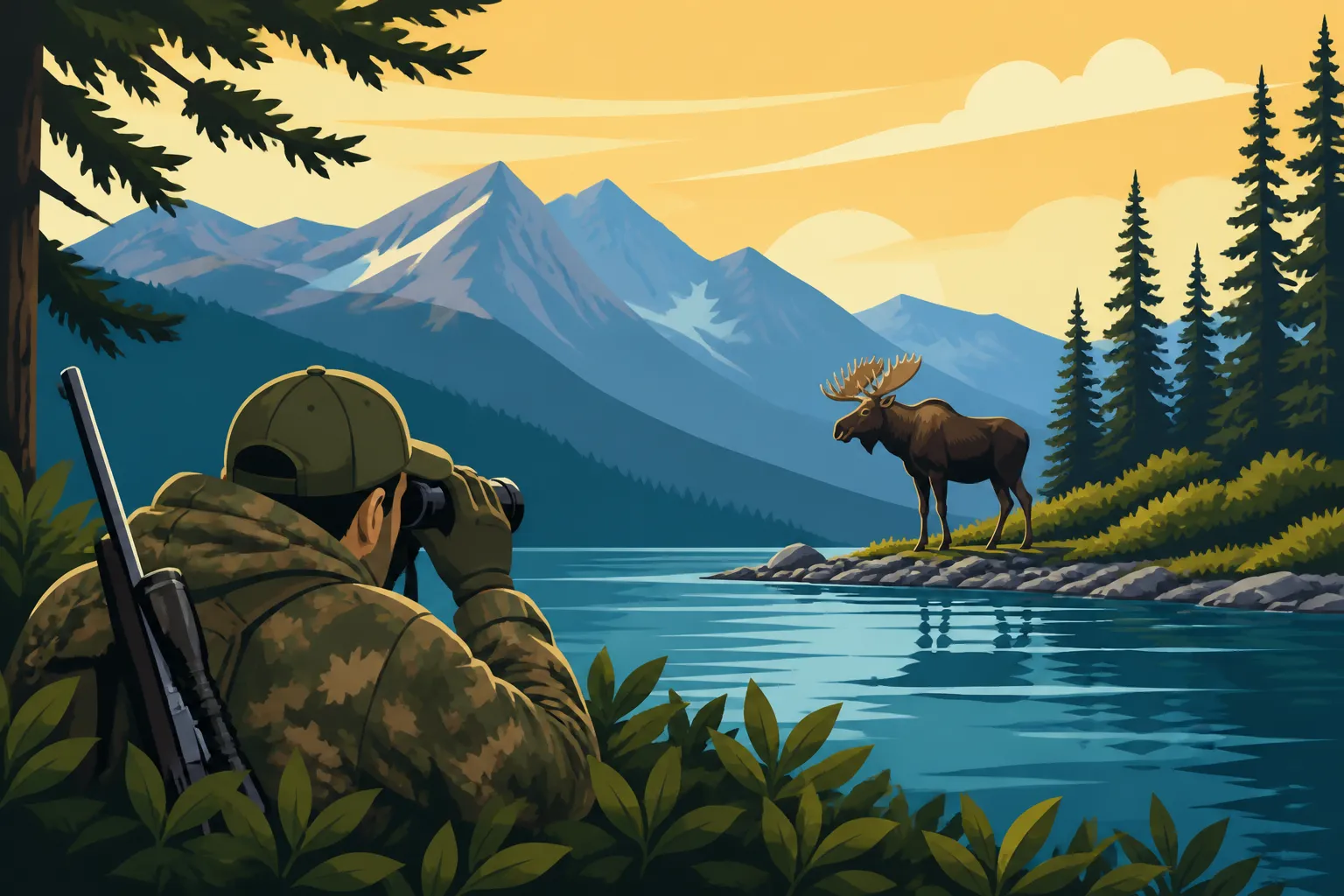
Patience is your most potent weapon. Instead of constantly moving, pick a vantage point that offers good visibility of a stretch of shoreline or a willow flat and settle in. Use your optics – a good pair of 10×42 or 12×50 binoculars, or even a spotting scope, is indispensable. You’re not just looking for a whole moose; you’re looking for a dark shape, a flick of an ear, the shine of an antler, or a patch of hair through the brush. Spend at least 15-20 minutes systematically glassing an area before moving on. The skill of scanning and discerning game from cover is one you'll hone with practice, much like you would if you were Glassing an Interior Hillside for Mule Deer. Don’t just look for movement; look for things that don’t belong. A horizontal line in a vertical forest, a patch of solid colour, or a subtle change in texture can all give away a hidden moose.
Wind direction is absolutely critical. Moose have an incredible sense of smell, capable of detecting human scent from astonishing distances. Always plan your approach and your stand locations so the wind is in your face or quartering across you, carrying your scent away from where you expect moose to be. Check the wind frequently using a wind checker. If the wind shifts unfavourably, you need to adjust your position or wait.
When travelling along the shoreline, move slowly and deliberately. Utilize any natural cover – thick stands of spruce, large boulders, or changes in elevation – to break up your silhouette. Avoid walking directly on open beaches or exposed points unless absolutely necessary. When you do have to cross open ground, do so quickly and efficiently, then get back into cover. Early mornings and late evenings are prime times, as moose are often most active during these low-light periods. During midday, they might be bedded down in thick cover near the water, so still-hunting through those areas with extreme caution can be productive.
Calling Techniques Around Water
The rut is undoubtedly the best time to engage with moose through calling, and lakeshores offer unique acoustics that can work to your advantage. A well-executed call can bring a curious bull right into your shooting lane.
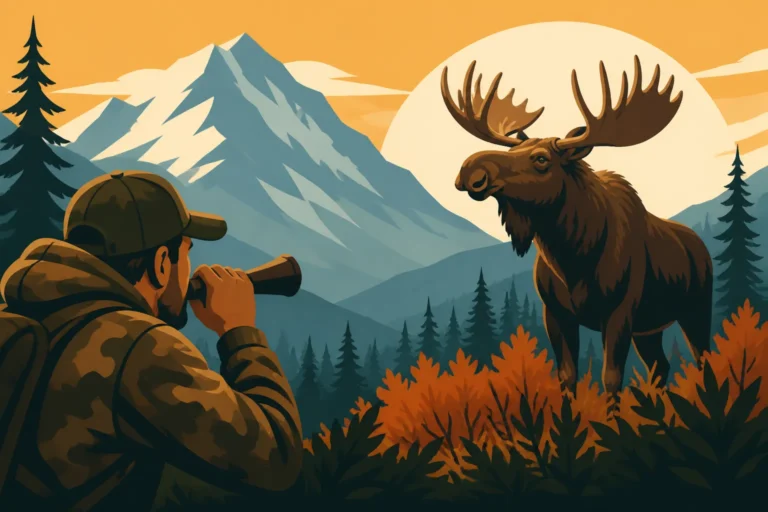
The most common and often effective call is the cow call. This mournful, pleading sound can be irresistible to a bull searching for a mate. Practice mimicking the long, drawn-out moans of a cow in estrus. You want it to sound authentic, not forced. Pair your cow calls with occasional shorter, sharper grunts to convey a sense of urgency. When a bull responds, don't immediately call back. Let him work a bit. He might circle downwind to try and scent-check you, so be ready to adjust your position.
For those more aggressive bulls, or when you want to challenge a bull you've located, consider using a grunt tube to mimic a bull's guttural grunts. You can also simulate the sound of antlers clashing by Raking Brush for a Bull Moose or using actual shed antlers. The sound of a bull thrashing brush creates the illusion of a competitor, often drawing a dominant bull in to investigate or challenge. A real-life scenario might involve raking a small tree with a stick or a piece of shed antler, then following it with a deep bull grunt.
One unique advantage of lakeshore hunting is the ability to use the water itself to enhance your calling. Mimic the sound of a moose wading through shallow water, splashing occasionally. This can sound incredibly realistic and convince a bull that another moose is feeding or moving nearby. You can even combine splashes with soft cow calls to paint a picture of a cow feeding contentedly in the shallows. Just remember, these calls are best used during the rut when bulls are actively seeking company; outside of this period, they can be far less effective and might even spook an alert moose.
Accessing Lakeshores: Boat, Foot, or ATV
How you access the lakeshore can make or break your hunt, influencing both your stealth and your ability to cover ground. Each method has its pros and cons, and often a combination is best.
Boating is often the most efficient and stealthy way to cover long stretches of a lake's edge. A small, quiet boat like a canoe, kayak, or even a modest Jon boat with an electric trolling motor allows you to move silently and access areas that would be impassable on foot due to dense shoreline brush or marshy terrain. You can hug the shoreline, glassing as you go, and then beach your boat quietly when you spot game or want to still-hunt a promising section. This method is particularly effective on larger lakes with extensive shorelines. However, it requires careful planning for launching and retrieving, and you need to be aware of weather conditions, as large lakes can become very rough quickly. While larger vessels are used for more significant waterways, the principles of quiet travel on water are similar to those for Jet Boat Access on British Columbia Rivers, just scaled down.
Hiking in is the most traditional method and offers the ultimate in stealth, but it can be incredibly demanding. Many British Columbia lakes are surrounded by thick timber and dense undergrowth, making shoreline travel on foot a true bushwhacking challenge. You might need to utilize old game trails, dry creek beds, or even game trails created by moose themselves to navigate. Often, accessing a prime lakeshore spot means taking advantage of British Columbia's extensive Hunting British Columbia's Logging Road Network to get close, then shutting off the vehicle and hiking the last few kilometres. This approach allows you to move slowly, pay close attention to fresh sign, and adapt your route based on conditions. The downside is the physical exertion and the limited ground you can cover in a day.
ATVs or UTVs can get you closer to remote lakes, but their use is often restricted, especially near or on the lakeshore itself. While they're invaluable for hauling gear to a staging area, driving directly along a sensitive lakeshore is usually illegal and highly disruptive to wildlife. Always consult local regulations before using any motorized vehicle. Once you reach an access point, it's typically best to park the vehicle and proceed on foot or by boat. The noise of an ATV can spook game from miles away, negating any advantage of quicker access. Always prioritize stealth over speed when actually hunting.
Gear and Safety Considerations for Lakeshore Hunts
Hunting British Columbia lakeshores comes with its own set of gear and safety requirements. Being prepared for the environment and potential wildlife encounters is crucial for a successful and safe trip.
Essential Gear for the Shoreline Hunter
Your gear choices can significantly impact your comfort, safety, and ultimately, your success when hunting moose along British Columbia lakeshores. The right equipment helps you stay out longer and focus on the hunt.
First and foremost, high-quality optics are non-negotiable. As mentioned, 10×42 or 12×50 binoculars are a must for detailed glassing, and a spotting scope can be invaluable for identifying moose at long distances across open water or distant shorelines without needing to move. Remember, a lot of lakeshore hunting is about patient observation.
Next, prioritize waterproof clothing and footwear. British Columbia weather can be notoriously unpredictable, and lakeshores are inherently damp environments. A good quality Gortex or other waterproof jacket and pants are essential, as are rubber boots or even hip waders, especially if you plan to wade into the shallows for better views or to retrieve game. Being wet and cold will quickly end your hunt.
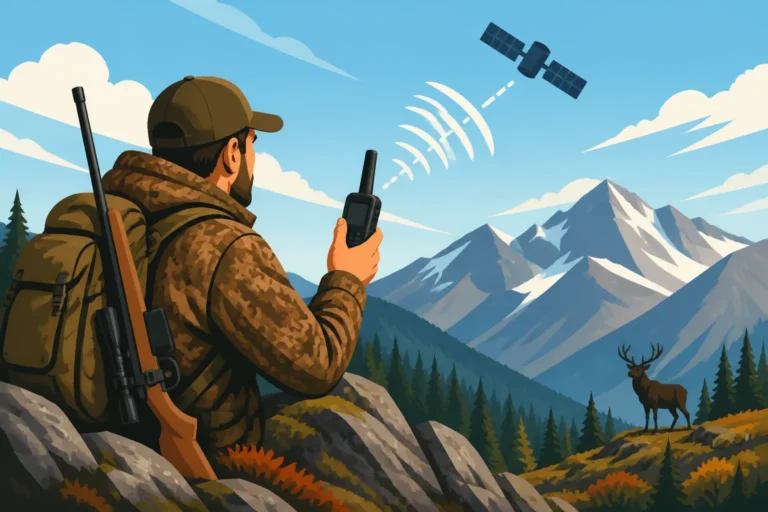
Navigation tools are critical, as cell service is often unreliable in many remote British Columbia areas. A reliable GPS unit loaded with detailed topo maps, coupled with a physical map and compass, provides redundant navigation. Even better, consider a satellite messenger or communicator. While expensive, a device like an inReach or Zoleo allows you to send and receive messages, access weather forecasts, and, most importantly, trigger an SOS in an emergency, offering peace of mind when you're truly off-grid. For more on this, check out Satellite Communication on a Remote Hunt.
Don't forget bug repellent, especially in early fall. Lakeshores are often mosquito and blackfly havens, and being constantly swarmed can make it impossible to focus. A comprehensive first-aid kit, tailored for remote backcountry situations, is also non-negotiable. Finally, proper game bags and processing tools are vital. Once you have a moose down, the clock starts ticking. You'll need sharp knives, a game saw, a good bone saw, and plenty of strong, breathable game bags to protect the meat. Getting a moose broken down and out quickly is paramount, especially in warmer conditions. You can read more about efficient animal processing in situations like Quartering a Moose in Grizzly Country and Field Dressing in British Columbia's Wet Weather.
Bear Safety and Encounter Preparedness
Hunting moose in British Columbia means you are absolutely in bear country—both black bears and grizzlies are present across much of the province. Lakeshores, with their abundance of food sources (including salmon runs in some areas), can be prime bear habitat, so constant vigilance and preparedness are non-negotiable.
Always carry bear spray, and know how to use it effectively. Practice drawing it quickly and being aware of wind direction. It should be easily accessible, not buried in your pack. Many hunters also carry a firearm for bear defense, but bear spray is often considered the first line of defense due to its effectiveness at deterring an attack without lethal force.
Making noise as you travel through dense areas, especially when visibility is limited, can help avoid surprise encounters. A simple "hey bear!" every now and then can alert a bear to your presence, giving it a chance to move off before you get too close. Always be aware of your surroundings, constantly scanning the shorelines, timber edges, and any dense cover. Look for fresh bear sign like tracks, scat, and overturned rocks.
Proper food storage at your camp is paramount. All food, garbage, and scented items should be stored in bear-resistant containers or hung from a tree well away from your sleeping area. Never cook or eat where you sleep. When you make a kill, the risk of a bear encounter increases dramatically. Quarter and bone out the animal as quickly as possible, and get the meat cooled and hung, ideally away from the gut pile. If you are alone, consider breaking down the animal and then leaving the area temporarily, returning with help to pack out the meat. This minimizes your time vulnerable at the kill site.
Planning and Regulations
A successful lakeshore moose hunt starts long before you even leave home, with meticulous planning and a thorough understanding of British Columbia's hunting regulations. Ignorance of the rules is never an excuse.
Your first step should always be to consult the current British Columbia Hunting and Trapping Synopsis. This is the ultimate authority on all regulations, season dates, bag limits, and specific rules for each Management Unit (MU) and region. These regulations change every two years, so ensure you have the most up-to-date version. Pay close attention to the specific MU you intend to hunt, as moose seasons and bag limits can vary dramatically even within relatively close areas. Some areas may have general open seasons for bulls, while others might be Limited Entry Hunting (LEH) only. Familiarize yourself with the overall Moose Hunting British Columbia's Interior context, and specifically check British Columbia Moose Season Dates for your chosen zone.
Understanding antler restrictions is also critical. British Columbia has various antler point restrictions for moose, often specifying "spike-fork" or "bull with three points on one antler" or "any bull." Misidentifying a legal animal can lead to severe penalties, so take the time to study antler identification guides.
Beyond species-specific rules, you need to understand general Crown Land use regulations. This includes rules around camping, fires, and vehicle access. Some areas might have restrictions on motorized vehicles near lakeshores or in specific wildlife management areas. Research these details thoroughly. Online mapping tools like iHunter BC or even the government's own mapping services can be incredibly helpful for scouting potential access points, identifying Crown Land boundaries, and understanding the topography of the lakeshore. A tool like GoHunt can also be invaluable for researching draw odds, unit statistics, and finding detailed maps that combine all the necessary layers of information, making your planning much more efficient.
Finally, remember the "Leave No Trace" principles. Pack out everything you pack in, and strive to leave the area cleaner than you found it. Respect wildlife, other users of the land, and the environment. This ensures these incredible hunting opportunities remain for future generations.
Overcoming Challenges and Maximizing Your Chances
Hunting British Columbia lakeshores for moose is incredibly rewarding, but it’s rarely easy. The terrain, weather, and the sheer size of the animal all present unique challenges. Being prepared for these obstacles and having strategies to overcome them will dramatically improve your chances.
Dealing with Dense Cover and Visibility Issues
While lakeshores offer more open areas than the deep forest, they can still be surrounded by incredibly dense cover that makes spotting moose difficult and tracking even harder. This is a common frustration for many hunters.
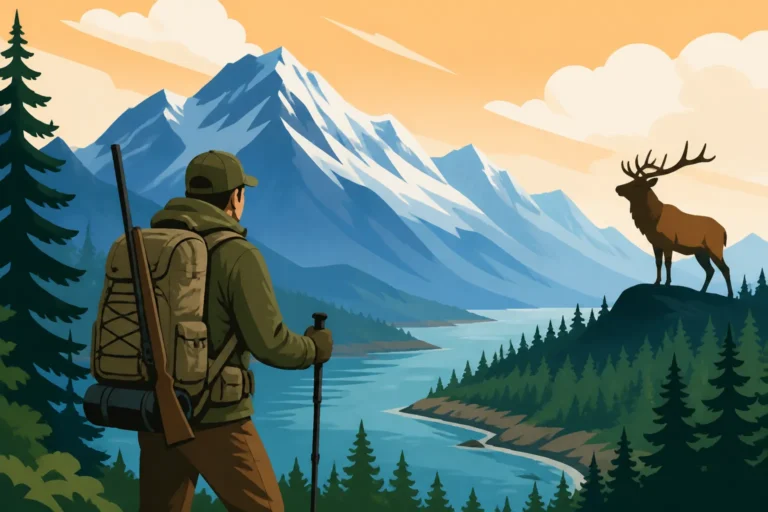
One of the best strategies to combat dense cover is to use elevation to your advantage. If possible, find a rocky knoll, a small ridge, or even a cut block overlooking the lake. From a higher vantage point, you can often see into pockets of timber, willow flats, and marshy areas that are invisible from the shoreline itself. This allows you to glass effectively for extended periods, covering a vast amount of ground with your optics. Sometimes, even a slight rise of 50-100 feet can open up an entirely new perspective.
Focus your efforts on "edge hunting." Moose frequently use the transition zones where dense timber meets the open shoreline or where a thick alder patch borders a more open marsh. These edges offer both food and cover, providing security while they feed. Still-hunt these edges slowly and quietly, stopping frequently to listen and glass. Remember, your goal isn't to walk through the cover as much as it is to observe the edges of it.
Silence, as always, is golden. When you do move through dense brush, do so with extreme care to minimize noise. Try to avoid snapping twigs or rustling branches excessively. Sometimes, waiting out a noisy section or making a wide detour is better than pushing through and alerting every animal in the vicinity. Use the wind and other environmental sounds, like rustling leaves or running water, to mask your approach.
Weather and Environmental Adaptations
British Columbia's weather is famous for its variability, and lakeshore environments can amplify these challenges. Being able to adapt your strategy to changing conditions is a hallmark of a seasoned hunter.
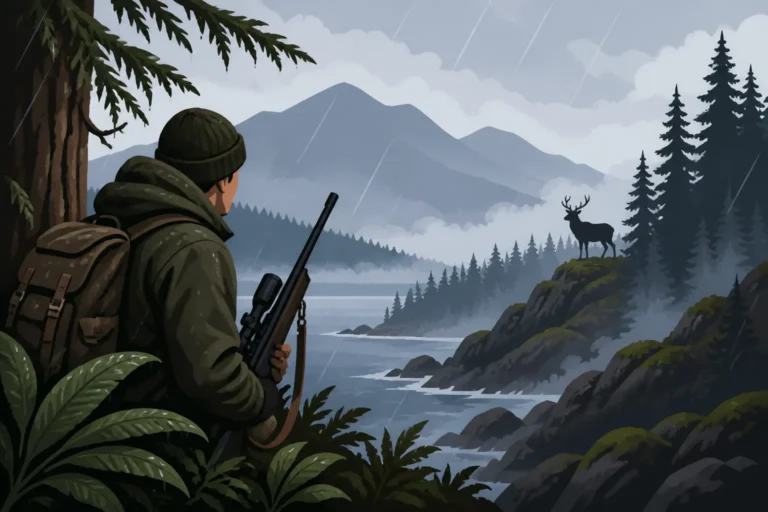
Rain and fog are common, especially in coastal or mountainous regions. While they can make hunting miserable, they can also work to your advantage. Rain helps to muffle your footsteps, making it easier to approach silently. Fog can provide excellent visual cover, allowing you to move into positions you might not otherwise be able to. However, both can severely reduce visibility, making spotting game harder and navigation more challenging. In very heavy rain or thick fog, it might be safer to hunker down and wait for a break, as frustrating as that can be. If you're Hunting British Columbia's Coastal Rain, you know this intimately. Sometimes waiting for those crucial Weather Windows in British Columbia's Mountains is the best call.
Wind can be a double-edged sword. A strong wind can make calling nearly impossible, as your sounds are dispersed and the moose's ability to hear is hampered. However, wind also masks your scent and the sounds of your movement. When it's windy, focus on still-hunting or stalking with the wind in your face, using the ambient noise to cover your approach. Avoid calling directly into a strong wind; instead, try to get into a sheltered bay or draw where your calls might carry better.
Fluctuating water levels can dramatically change the landscape of a lakeshore. High water might flood traditional feeding areas or travel paths, forcing moose into different patterns. Low water can expose new mudflats or expand existing ones, creating new feeding opportunities or allowing easier walking access. Always pay attention to water levels during your scouting and adjust your hunting areas accordingly. A stretch of shoreline that was impenetrable last year might be easily walkable this year, or vice versa.
Post-Harvest Challenges and Meat Care
Congratulations, you've successfully harvested a moose! Now comes perhaps the most physically demanding challenge of all: getting this massive animal out of the bush and caring for the meat properly. This is where many hunters face their toughest test, especially from a lakeshore.
A mature bull moose can weigh upwards of 1,000 to 1,500 pounds, meaning you could be looking at 400-600 pounds of boned-out meat. Getting this out of a wet, potentially soft, and often remote lakeshore environment is an incredible undertaking. Your absolute priority is to break down the animal quickly. This means skinning, quartering, and potentially boning out the meat on-site. The quicker you do this, the faster the meat can cool, preventing spoilage.
Lakeshores present unique challenges for meat care. The ground might be soft and muddy, making it difficult to keep the meat clean. You might have to use tarps or even the boat itself as a clean working surface. In early season hunts, especially, keeping the meat cool is paramount. If permitted and safe, cold lake water can be used to rapidly cool quarters by submerging them in mesh bags for a short period, then air-drying them. However, be cautious about regulations and ensure the meat is not contaminated. For comprehensive advice, refer to Meat Care in British Columbia's Warm Early Seasons.
Packing out a moose will almost certainly require multiple trips, and ideally, multiple people. If you're hunting alone, this becomes a monumental task. Consider bringing a sturdy frame pack designed for heavy loads. If you have boat access, you're at a huge advantage, as you can load quarters directly into the boat, drastically reducing the packing distance. If no boat is available, plan your extraction route carefully beforehand, noting any dry ridges or easier paths back to your vehicle. Never underestimate the difficulty of this part of the hunt. It will test your physical and mental limits, but the reward of a freezer full of wild game is well worth the effort.
| Access Method | Pros | Cons | Ideal Scenario |
|---|---|---|---|
| Boat (Canoe/Kayaka/Jon Boat) | Stealthy, covers large distances, accesses remote shorelines, easier game retrieval (if close to water). | Weather dependent (rough water), requires boat transport/launching, limited by lake size/shape. | Large lakes, complex shorelines, good weather, multiple hunters. |
| Foot (Hiking) | Ultimate stealth, low equipment cost, allows for detailed scouting, minimal environmental impact. | Physically demanding, slow, limited range, difficult for game retrieval, exposure to elements. | Smaller lakes, specific target areas, good physical conditioning, close to access roads. |
| ATV/UTV | Quick access to trailheads, hauls gear efficiently. | Noisy, often restricted from direct shoreline access, can spook game, requires trails/roads. | Long distances to staging areas, transporting heavy gear, use as primary transport to hike-in spots. |
Disclaimer
Hunting is an inherently risky activity. This guide provides general information and strategies, but it is your responsibility to understand and comply with all current British Columbia hunting regulations, obtain the necessary licenses and tags, and practice safe hunting methods. Always be prepared for emergencies, inform others of your hunting plans, and prioritize safety above all else. Local conditions, regulations, and wildlife populations can change rapidly, so continuous research and adaptation are critical.