Hunting Mountain Goat on British Columbia Rock
Let's be real, chasing mountain goats in British Columbia isn't for the faint of heart. It's an endeavour that will test your physical and mental limits like few other hunts. Many aspiring hunters dream of the majestic white phantom against the backdrop of our rugged peaks, only to be intimidated by the sheer scale of the challenge. This comprehensive guide is here to walk you through the realities, preparations, and strategies needed to successfully hunt mountain goats on British Columbia’s unforgiving rock.
Understanding British Columbia's Mountain Goat Habitat
British Columbia is home to a significant population of mountain goats, and their presence is inextricably linked to the province's dramatic, vertical terrain. These incredible animals are perfectly adapted to environments that most other large game species wouldn't even dare to approach, let alone call home. If you're going to hunt them, you first need to truly understand where they live and why.
The Alpine Domain of Goats
When we talk about hunting mountain goats on British Columbia rock, we're essentially talking about hunting in the alpine and subalpine zones. These animals thrive in incredibly steep, rocky environments, often preferring sheer cliff faces, precipitous ledges, and rugged alpine basins above timberline. Think jagged peaks, exposed rockslides, and sparse vegetation clinging to impossible slopes. Regions like the Coast Range, the Northern Rockies, and the Purcell Mountains are prime examples of the kind of unforgiving topography these animals inhabit.
Goats choose these precarious habitats primarily for predator avoidance. A grizzly bear or a pack of wolves might occasionally venture into their world, but the goats' agility and comfort on vertical terrain provide them with a natural fortress. They can navigate crumbling rock and icy chutes with an ease that baffles even the most seasoned mountaineers. Their specialized diet consists of various alpine grasses, forbs, and lichens that grow in these harsh environments. They've also evolved thick, insulated coats that provide incredible thermal regulation, allowing them to withstand the brutal winds and freezing temperatures common at high elevations. Understanding this preference for vertical relief is your first step in learning Mountain Goats in British Columbia's Peaks and how to hunt them.
Reading the Landscape for Goat Sign
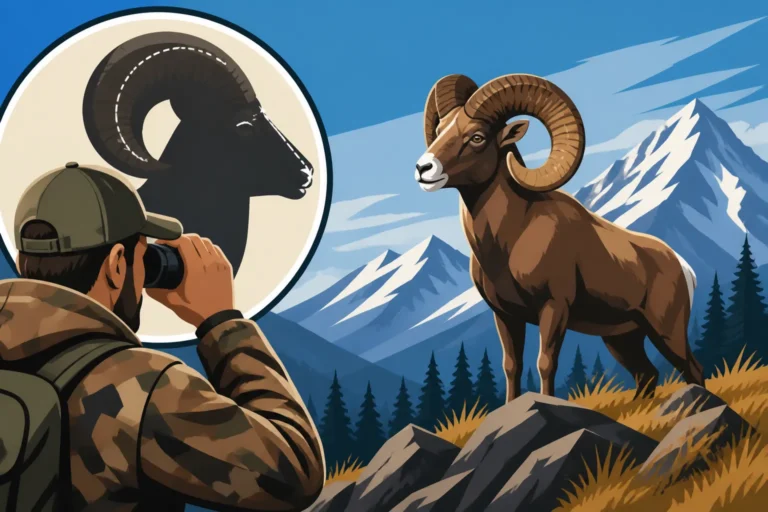
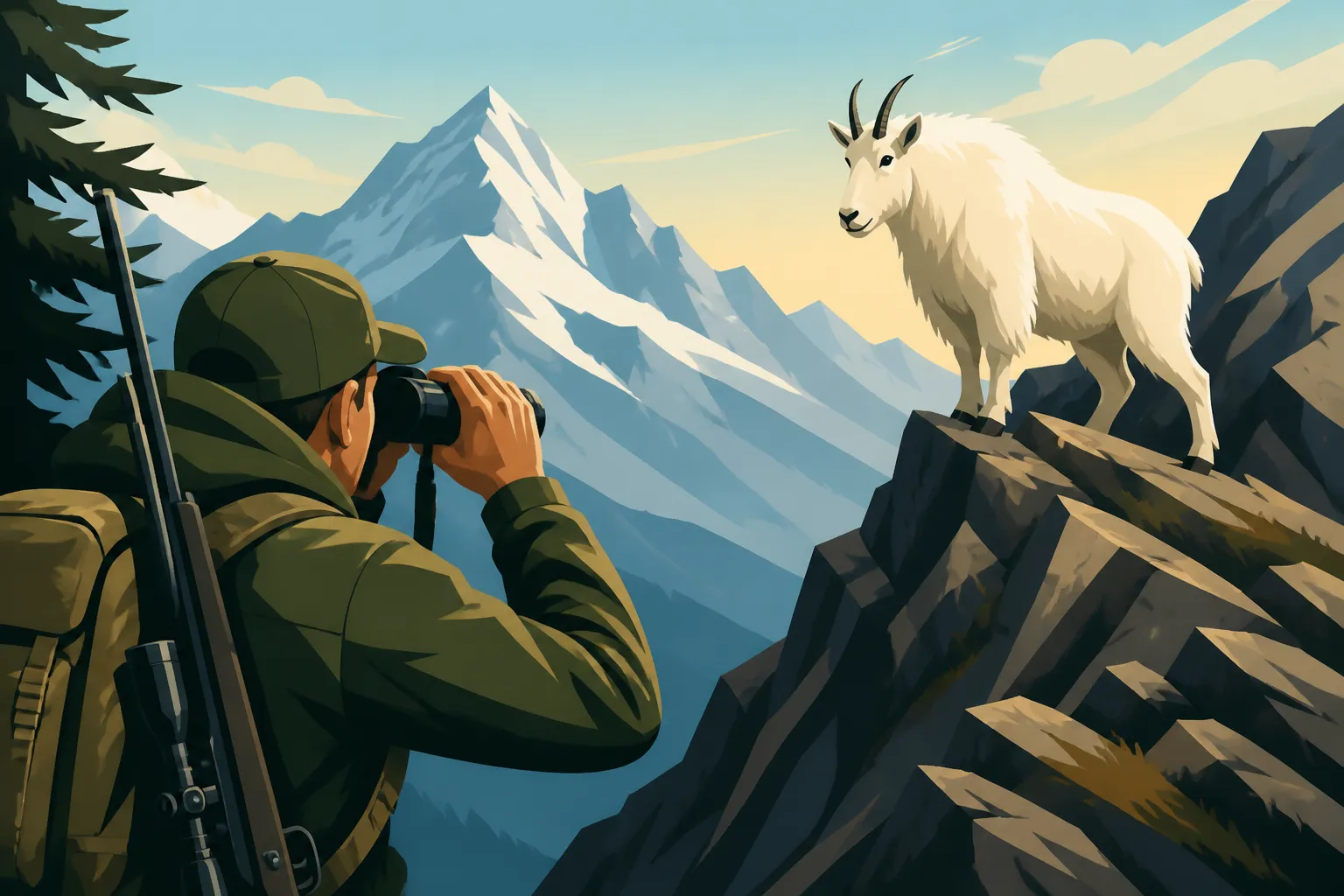
Successfully locating mountain goats begins with effectively reading the vast, intimidating landscape they call home. From a distance, even with powerful optics, goats can blend surprisingly well into the grey and white tapestry of rock and snow. When you're glassing, you're not just looking for a white animal; you're looking for a tiny white speck that moves, or a shape that just doesn't quite look like a rock.
Systematic glassing, often with a good spotting scope on a sturdy tripod, is paramount. Break down the vastness into smaller, manageable sections. Look for "goat highways"—narrow, well-worn trails traversing seemingly impossible ledges. You'll often find distinct bedding areas on small benches or sheltered ledges where goats rest, leaving behind depressions and droppings. Tracks in dusty chutes or lingering snow patches can also reveal their presence and travel patterns. Pay close attention to south-facing slopes in cooler weather, as they'll seek sun exposure, and north-facing, shadier aspects during warmer parts of the season to escape the heat. Early season hunts, such as Hunting British Columbia's Alpine in September, can find goats still relatively high. Later in the season, as snow pushes down, they might utilize lower, but still steep, rocky areas that offer some protection or forage. Platforms like GoHunt can sometimes provide satellite imagery and topographic maps that help identify potential goat habitat even before you set foot on the mountain.
Essential Gear and Physical Preparedness for High-Altitude Hunts
The mountains demand respect, and hunting mountain goats on British Columbia rock amplifies that demand tenfold. This isn't a walk in the park; it's an extreme athletic event combined with meticulous planning and mental fortitude. Your gear choices and your physical conditioning will literally make or break your hunt, and in some cases, determine your safety.
Specialized Clothing and Footwear
The weather in British Columbia’s alpine can change faster than you can say "billy." You're going to face brutal winds, driving rain, sudden snow squalls, and intense sun, sometimes all in the same day. Layered clothing is not just a recommendation; it’s a non-negotiable survival strategy. Start with moisture-wicking base layers, add insulating mid-layers like fleece or down, and top it all off with a bombproof waterproof and windproof shell jacket and pants. Avoid cotton at all costs; it loses all insulating properties when wet.
Perhaps the most critical piece of gear you'll carry, besides your rifle, is your footwear. Forget your comfortable deer hunting boots. You need mountaineering-grade boots with exceptional ankle support, a stiff sole for edging on rock, and uncompromising waterproofing. Brands like Scarpa, La Sportiva, or Salomon are often favoured by experienced goat hunters. These boots are designed to protect your feet over miles of sharp talus, provide stability on precarious ledges, and handle the constant abuse of abrasive rock. Investing in high-quality boots will prevent blisters, provide crucial support, and potentially save you from a nasty fall. Remember, Boots for Steep British Columbia Country are your direct connection to safety and performance on the rock.
Optics, Packs, and Safety Equipment
High-quality optics are not a luxury; they are an absolute necessity for mountain goat hunting. You’ll spend far more time glassing than walking, so a premium set of 10x binoculars and a powerful, clear spotting scope (20-60x or higher) on a lightweight tripod are essential. Look for optics with excellent light transmission for those crucial dawn and dusk hours.
Your pack needs to be robust, comfortable, and capable of carrying heavy, awkward loads. Once you harvest a goat, you'll be packing out several hundred pounds of meat, hide, and skull from extremely challenging terrain. A sturdy external or internal frame pack designed for heavy loads is vital. When considering options, some hunters check out gear reviews on specialized platforms like GoHunt for insights on packs that excel in demanding backcountry conditions. Look for ample suspension, a comfortable hip belt, and durable materials. For tips on how to handle the inevitable, refer to Packing Meat With a Frame Pack.
Finally, safety equipment: never, ever skimp here. A reliable GPS device or a smartphone with downloaded topo maps is fundamental for navigation in featureless alpine terrain or sudden whiteouts. A satellite messenger or satellite phone is critical for emergency communication, as cell service is non-existent in most goat country. This is literally a lifeline in remote areas, so understanding Satellite Communication on a Remote Hunt is vital. A comprehensive first-aid kit, emergency shelter, fire starter, and bear spray are also non-negotiable. Knowing Bear Safety While Hunting in British Columbia is critical when venturing into these wild places.
Strategies for a Successful Mountain Goat Hunt on Rock
Mountain goat hunting is less about speed and more about calculated patience and precision. The strategies employed must account for the unique characteristics of the animal and its challenging environment. It’s a chess match played on a vertical board, where every move is critical.
The Art of Glassing and Patient Observation
As mentioned, glassing is the cornerstone of mountain goat hunting. You'll spend hours, even days, behind your binoculars and spotting scope, meticulously scanning every rock band, every snow patch, and every pocket of vegetation. Find a vantage point that offers a broad view of promising goat habitat, ideally from across a drainage or canyon. Set up your spotting scope on a tripod, get comfortable, and begin your systematic grid search.
Patience is not just a virtue here; it's a requirement. Goats can blend in astonishingly well, often appearing as nothing more than a sunlit rock until they move. Look for subtle cues: a flash of white, a slight shift in a "rock" that wasn't there before, or the distinctive silhouette against the sky. The best times to glass are often early morning and late evening when goats are typically more active, moving to feed or change bedding areas. The light can also be softer, creating shadows that reveal contours and shapes. Don't be afraid to sit in one spot for hours. Sometimes, the goats you're looking for will reveal themselves only after a long wait, making the payoff all the more rewarding.
Stalking and Approaching Goats in Vertical Terrain
Once you've spotted a goat you want to pursue, the real challenge begins: the stalk. Closing the distance on a mountain goat in its natural environment without spooking it is incredibly difficult. Their keen eyesight, combined with their ability to navigate vertical terrain effortlessly, means they have every advantage. The stalk itself will likely involve significant elevation gain and traverse unstable, dangerous ground.
Use every available terrain feature for cover: ridges, rock bands, pockets of stunted trees. Move slowly, deliberately, and above all, quietly. One misplaced rock or a moment of carelessness can send rocks tumbling, alerting the goat and ruining your meticulously planned approach. Pay absolute attention to wind direction; thermals in the mountains are notoriously fickle, often rising during the day and falling at night. A shifting wind can carry your scent directly to the goat, sending it scrambling to an even more inaccessible position. This isn't just about stealth; it's about minimizing risk in a high-consequence environment. Sometimes, you'll reach a point where the terrain simply won't allow a safe approach, and you'll have to back out and try again another day. Consider the immense effort and planning involved in any high-country pursuit, similar to Backpacking Into British Columbia Sheep Country.
Shot Placement and Recovery in Steep Country
When you finally get into a shooting position, the immense difficulty of the shot and the subsequent recovery must be at the forefront of your mind. Shot placement is absolutely paramount. A well-placed shot is crucial for a quick, ethical kill and to prevent the animal from falling into an unrecoverable location. Goats, especially billies, are incredibly tough animals. Aim for the vitals, generally a broadside or slightly quartering-away shot, understanding the anatomy well.
However, the real danger is not just missing the vitals, but the potential for the animal to tumble down steep slopes, over cliffs, or into glacial crevasses, rendering it unrecoverable. Many experienced goat hunters will tell you that a slightly less ideal shot that pins the animal or knocks it down on a relatively safe ledge is often preferable to a perfectly placed shot that sends it careening over a thousand-foot cliff. Sometimes, you must wait for the animal to move to a safer, flatter position before taking the shot, no matter how tempting the current opportunity might be. This might mean hours of waiting, or even letting the animal walk away. The phrase "shoot for the feet" is sometimes used—aiming low in the chest to prevent the goat from going over the top and potentially causing it to drop in its tracks. The logistical nightmare of retrieving a downed goat in these conditions is exactly Why Goat Hunting Is the Hardest Pack Out is a common refrain among those who've done it.
Overcoming the Unique Challenges of British Columbia Goat Hunting
Beyond the hunt itself, the environment presents its own set of formidable obstacles that require careful planning, robust gear, and an unshakeable mindset. These challenges are what truly set mountain goat hunting apart.
Weather and Terrain Hazards
British Columbia’s mountains are beautiful but brutal. Rapid weather changes are the norm, not the exception. A clear, sunny morning can quickly devolve into a whiteout blizzard, heavy rain, or thick fog, making navigation treacherous and visibility zero. Being prepared for these sudden shifts with appropriate gear and contingency plans is vital.
The terrain itself is a constant hazard. Loose rock, crumbling scree, slippery moss-covered ledges, and hidden crevasses demand constant vigilance. Rockfall is a real danger, both from above and from dislodging rocks yourself. You must move slowly and deliberately, testing every step, and always being aware of what's below and above you. The mental and physical toll of navigating this kind of country, sometimes for days on end, cannot be overstated. It's exhausting, both physically and mentally. Knowing your limits, and having the discipline to turn back when conditions become too dangerous, is a sign of a wise hunter, not a failed one. Even relatively stable ground can present unexpected challenges, especially if you're Hunting an Avalanche Chute in September.
Field Care and Pack Out Logistics
You've done it. After days of glassing, a harrowing stalk, and a precise shot, you have a magnificent British Columbia mountain goat on the ground. Congratulations! Now the real work begins. The pack out from goat country is legendary for a reason. Even a modest goat can weigh upwards of 200-300 pounds live weight, and you'll be quartering and packing out that meat, hide, and skull from an extremely steep, often remote, and high-altitude location.
Field dressing and quartering a goat on a narrow, exposed ledge requires immense care and precision. Keeping the meat clean and cool is challenging, especially if you're exposed to sun or wind. You'll need game bags, a sharp knife, and probably a second pair of hands if you’re hunting with a partner. For detailed guidance, learn about Keeping Meat Cool in an Early Season and apply those principles rigorously. The sheer physical effort of lifting heavy quarters onto a frame pack and then carefully descending steep, unstable terrain is truly grueling. Many hunters choose to make multiple trips, packing out essential meat first, then returning for the hide and skull. The logistics involved can be overwhelming, but platforms like GoHunt often feature discussions and articles on efficient field care and pack-out strategies that can be invaluable for preparing for this phase of the hunt. This is truly where the concept of Getting Meat Out of Steep British Columbia Country becomes a lived, challenging experience.
Here's a quick overview of essential gear considerations for your mountain goat hunt:
| Gear Category | Key Considerations | Examples/Notes |
|---|---|---|
| Footwear | Mountaineering-grade, stiff sole, excellent ankle support, waterproof, broken-in. | Scarpa, La Sportiva, Salomon boots. Critical for safety and performance on rock. |
| Layered Clothing | Moisture-wicking base, insulating mid-layers (down/fleece), durable waterproof/windproof outer shell. | Synthetic or merino wool base layers; GORE-TEX or similar shells. No cotton. |
| Backpack | Internal or external frame, minimum 60-80L capacity, capable of carrying 80-100+ lbs comfortably, durable materials. | Kifaru, Mystery Ranch, Stone Glacier, EXO Mtn Gear. |
| Optics | High-quality binoculars (10x minimum), powerful spotting scope (60x+ recommended), lightweight, sturdy tripod. | Swarovski, Leica, Zeiss, Kowa. Crucial for long-range scouting. |
| Navigation | GPS device with downloaded maps, compass, paper maps (topo), satellite messenger/phone. | Garmin inReach, Zoleo, SPOT. Emergency communication. |
| Shelter/Sleep | Lightweight, robust tent or bivy for alpine conditions, warm sleeping bag (rated well below expected temps), insulated sleeping pad. | 4-season tent. |
| Field Care | Sharp hunting knife (fixed blade recommended), folding saw, game bags (lightweight, breathable), cordage. | Replaceable blade knives can be convenient. |
| Safety Items | Comprehensive first-aid kit, bear spray (and holster), fire starter, headlamp with extra batteries, emergency bivy/blanket, whistle. | Practice using all safety gear. |
| Water/Food | Water filter/purifier, multiple water bottles/reservoir, high-calorie, lightweight backpacking food. | Pack more food than you think you need. |
Hunting mountain goats on British Columbia rock is a profound experience that pushes you to your limits and rewards you with incredible memories and a deep connection to some of the wildest places on earth. It's not a hunt for everyone, but for those who answer the call of the high country, it's an unforgettable adventure.
Disclaimer
The information provided in this guide is for general informational purposes only and does not constitute professional advice. Hunting regulations, safety protocols, and wilderness conditions can change rapidly. Always consult the most current British Columbia Hunting Regulations Synopsis, obtain proper licenses and tags, and prioritize safety when planning and executing any hunting trip. Wilderness activities carry inherent risks, and hunters are responsible for their own safety and adherence to all applicable laws.