What to Do If You See a Grizzly
The chilling thought of encountering a grizzly bear in British Columbia's vast wilderness is a real, visceral fear for many hunters and outdoor enthusiasts. It’s not just an abstract risk; it’s a tangible concern that can weigh heavily on your mind when you're deep in the backcountry, far from help. This guide isn't about fear-mongering; it's about empowering you with the knowledge and practical strategies you need to minimize risk and respond effectively if that intense moment of coming face-to-face with a grizzly ever happens.
Understanding Grizzly Behavior and Why Encounters Occur
It's easy to picture grizzlies as apex predators always on the hunt, but the reality is often more nuanced. Most grizzlies would rather avoid you than confront you. Understanding their natural behaviour, motivations, and the circumstances that lead to conflicts is crucial for staying safe in their territory.
Why Grizzlies Are Found Where You Hunt
Grizzly bears are incredibly adaptable creatures, and British Columbia offers them a diverse range of habitats, from dense coastal rainforests to high alpine meadows and vast interior forests. They are highly territorial and constantly on the move, searching for food. You'll find them almost anywhere there's ample forage, including berries, roots, carrion, insects, and, crucially, salmon in coastal areas. This means that if you're out hunting deer, elk, or moose, you're very likely sharing the landscape with grizzlies. Knowing Where British Columbia's Grizzlies Are Densest can help you assess your risk level for specific hunting areas, but remember, a grizzly can turn up almost anywhere. They are opportunistic and will utilize whatever resources are available in their home range.
It's a common misconception that grizzlies are only in remote, untouched wilderness. While they thrive there, they often venture into areas impacted by human activity, like recent clearcuts or old logging roads, especially if those areas offer good food sources. A new cutblock, for example, might quickly sprout berry bushes, drawing bears in to feed. Understanding these habitat preferences means recognizing that when you're hunting British Columbia's diverse terrain, you're almost certainly in grizzly country.
Common Triggers for Bear Attacks
Despite their formidable size, grizzlies aren't inherently aggressive towards humans. The vast majority of encounters are fleeting, with the bear quickly moving away. However, certain situations can trigger defensive or predatory behaviour, leading to dangerous confrontations. The key is to avoid these situations if at all possible.
Firstly, surprising a bear at close range is a major cause of defensive attacks. Imagine a sow with cubs hidden in dense brush, or a bear intently focused on feeding, perhaps on a fresh carcass. If you inadvertently stumble upon them, their immediate reaction will often be to defend themselves or their food source. This is especially true When British Columbia Bears Leave the Den in spring, as sows are particularly protective of their newborn cubs. They might charge to drive you away, not necessarily to harm you, but the outcome can still be devastating.
Secondly, food conditioning and habituation can lead to problems. Bears that associate humans with food, either from improperly stored camp food or discarded gut piles too close to trails, can become bolder. While not common with grizzlies, it does happen. Lastly, a rare but terrifying scenario is a predatory attack, where a bear sees a human as potential prey. This is exceedingly uncommon with grizzlies, typically occurring when a bear is severely food-stressed, sick, or injured, but it's why understanding their behaviour is paramount. Knowing What Salmon Runs Do to Bear Behaviour can also highlight times and places where bears are highly concentrated and focused on feeding, increasing the chance of an unexpected encounter.
Preventative Measures and Staying Alert in Grizzly Country
The best defense against a grizzly encounter is prevention. Being proactive and constantly aware of your surroundings can drastically reduce your chances of a dangerous situation. It's about making yourself known, making it difficult for bears to surprise you, and not giving them a reason to be interested in you.
Making Noise and Staying Visible
One of the simplest yet most effective ways to avoid surprising a grizzly is to make noise, especially when moving through dense cover, along noisy creeks, or in areas with limited visibility. This isn't about shouting constantly, but rather periodically calling out "Hey bear!" or clapping your hands. The idea is to give any bears in the vicinity a heads-up that you're coming, allowing them time to move off before you get too close.
This strategy is particularly vital when you're moving into the wind, as your scent will be carried away from the bear, or in thick undergrowth where visual contact is difficult. Think about still-hunting in a timber block or traversing a dense willow flat – these are prime areas for accidental close-range encounters. Carrying a bell on your pack is often suggested, but many veteran hunters find them less effective than verbal calls, as the constant jingle can become background noise to both you and the bear. A loud, sudden vocalization is often better. Wearing brightly coloured clothing can also help you stand out against the natural backdrop, giving a bear a clearer visual cue of your presence from a distance, reinforcing the message that you are human and not prey.
Carrying Bear Spray and Firearms
When travelling in grizzly country, you absolutely need to be prepared for an encounter, and that means carrying appropriate deterrents. Bear spray is widely regarded as the most effective non-lethal deterrent against aggressive bears. It's a powerful capsaicin-based repellent that creates an irritating cloud, deterring a charging bear without causing permanent harm. Crucially, it must be instantly accessible – not buried in your pack. A chest holster is ideal. Practice deploying it beforehand, so you know how it feels in your hand and can react instinctively under pressure. You don't want to be fumbling with safety clips when a bear is thirty yards away and closing fast.
For those who are legally able and proficient, a firearm can offer a last line of defense. However, it requires extensive training, quick reflexes, and the ability to place accurate shots under extreme stress. It's not a substitute for bear spray, but an additional tool. Many hunters carry a large-calibre handgun or their hunting rifle as a secondary option. The key, whether you choose bear spray or a firearm, or both, is proficiency and immediate access. This ties directly into Bear Spray and Firearms in Camp and what constitutes proper readiness in the backcountry. Always understand the specific regulations for carrying firearms in British Columbia, especially if you are a non-resident.
Secure Food and Game Meat
Proper food and meat management are critical in preventing bears from becoming habituated or food-conditioned. Any time you're in the backcountry, whether camping, hunting, or scouting, all food, cooking gear, and scented items (like toiletries) must be stored securely away from your tent. Bear canisters, electric fences, or hanging food from a tree well away from camp are standard practices.
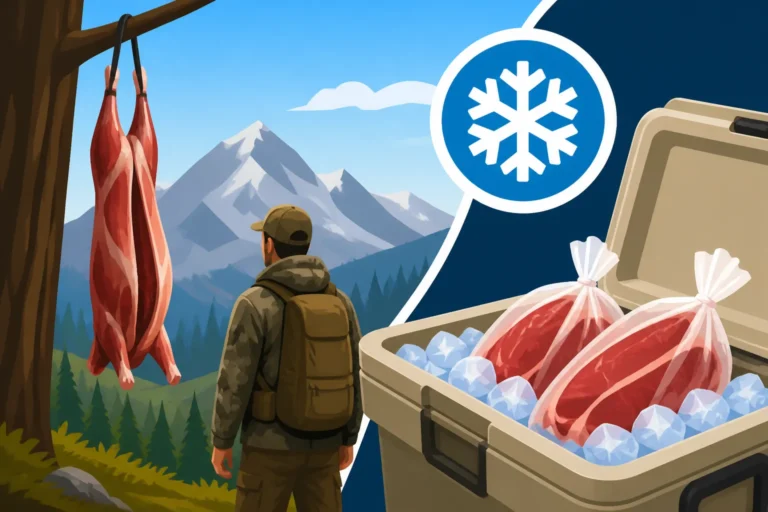
When you've successfully harvested an animal, the situation becomes even more critical. The smell of fresh blood and gut piles is an irresistible magnet for grizzlies. Field dress your animal as quickly as possible, away from your camp or main travel routes. If possible, quarter and get your meat off the kill site quickly. Hang meat in breathable game bags high in trees, well away from camp, or secure it in a robust cooler if accessible by vehicle. Never sleep near your meat. The temptation for a grizzly to investigate a potential food source is powerful, and you don't want to become part of that investigation. Pay close attention to Meat Care in British Columbia's Warm Early Seasons as proper meat handling not only preserves your harvest but also minimizes bear attractants. Utilizing a mapping service like GoHunt can help you identify suitable trees or terrain features for hanging meat away from dense bear travel corridors.
What to Do During an Encounter
Even with the best preventative measures, encounters can happen. The way you react in the crucial first moments can dictate the outcome. It's about assessing the bear's behaviour and responding in a way that de-escalates the situation.
Identifying the Type of Encounter
Not all bear encounters are created equal. It's vital to quickly determine if the bear is defensive, curious, or, in rare cases, predatory. A defensive bear often feels threatened by your presence, particularly if it's protecting cubs, a food source (like a carcass), or if you've surprised it at close range. Signs of a defensive bear include huffing, jaw popping, pawing the ground, and making short charges (bluff charges) that stop short of contact. The bear is trying to tell you to back off.
A curious bear might stand up on its hind legs to get a better look, sniff the air, or even slowly approach you out of pure inquisitiveness. This is often less immediately threatening than a defensive bear, but still requires careful management to prevent it from escalating. These bears usually aren't aggressive, but you don't want them to get too comfortable. Predatory behaviour, while rare for grizzlies, involves a quiet, deliberate stalk, often with the bear appearing focused and unafraid, sometimes circling you. Understanding these distinctions is critical for choosing the right response.
Non-Aggressive Bear Encounters
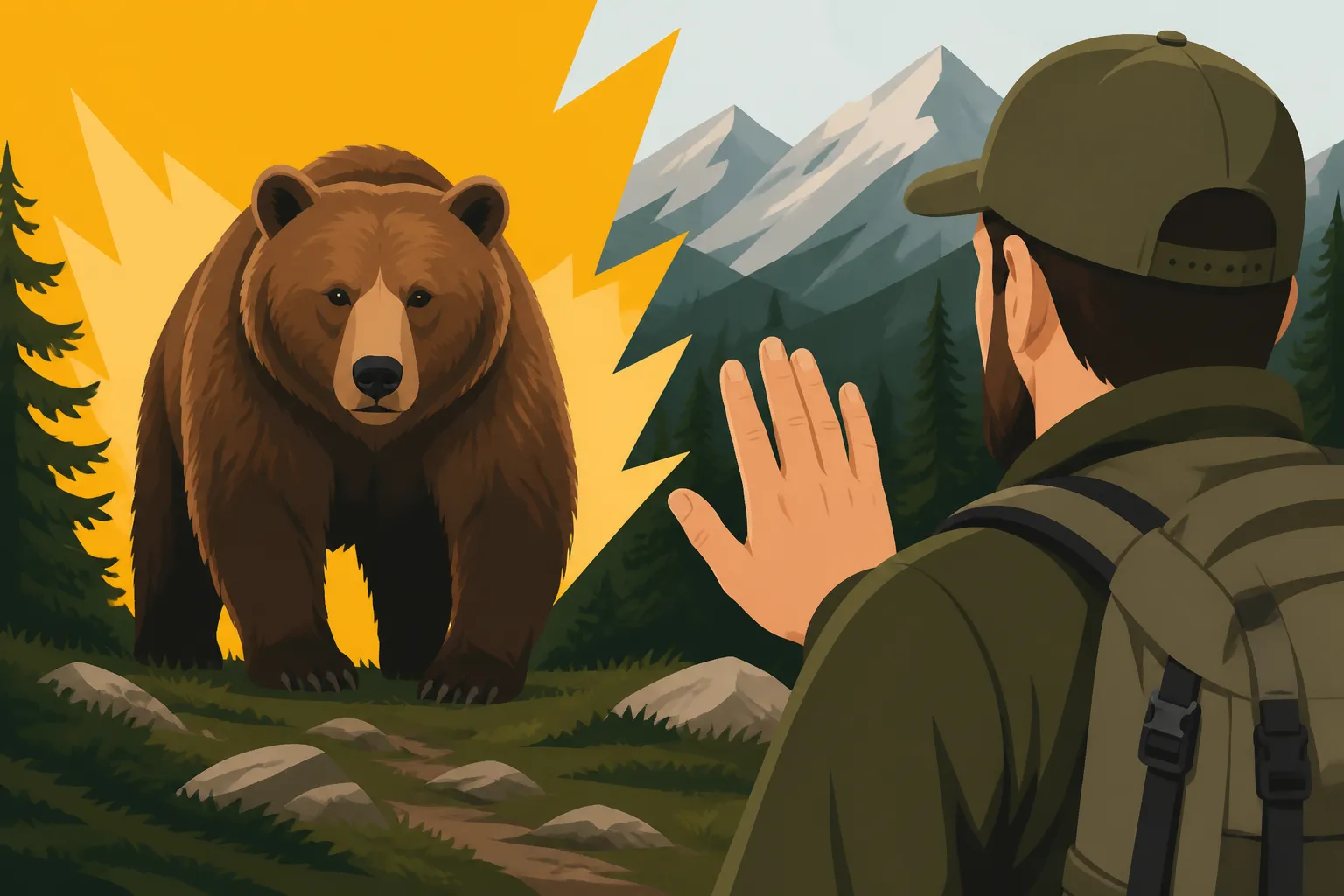
If you encounter a grizzly that is not acting defensively or aggressively – perhaps it’s feeding in the distance, or simply walking along a game trail – the best course of action is almost always to avoid conflict. Make your presence known by speaking calmly in a low voice, but do not shout. The goal is to let the bear know you are human and not a threat or prey. Slowly and calmly back away, giving the bear ample space. Avoid direct eye contact, as this can be perceived as a challenge.
Never run. Running can trigger a chase response in bears, and you won't outrun a grizzly. Continue to speak calmly and keep an eye on the bear, but focus on moving out of its path. If you are with others, group together to appear larger. Keep your bear spray ready. Remember, most grizzlies will choose to avoid confrontation if given the chance. Your goal is to facilitate that avoidance by staying calm, making yourself known, and slowly removing yourself from the situation. It’s also wise to remember the lessons from Grizzly Bears in British Columbia Today regarding their intelligence and ability to learn from interactions.
Defensive Bear Encounters
This is where things can get truly intense. If a grizzly is acting defensively – huffing, swatting, bluff charging – it means it feels threatened and wants you to leave. Your primary goal here is to convince the bear you are not a threat and that you are leaving. Continue to speak calmly and firmly, reassuring the bear you mean no harm. Do not run. Slowly back away, again avoiding direct eye contact.
If the bear charges and makes contact, play dead. Drop to the ground on your stomach, clasp your hands behind your neck to protect it, and spread your legs to prevent the bear from rolling you over. Try to remain absolutely still. Most defensive attacks last only a minute or two; the bear will typically leave once it feels the threat has been neutralized. Wait several minutes after the bear has left before slowly and cautiously getting up, always scanning your surroundings. This can be an incredibly difficult and terrifying thing to do, but studies show it significantly increases survival rates in defensive grizzly attacks.
Dealing with an Aggressive or Predatory Grizzly Encounter
While rare, a predatory or persistent aggressive encounter with a grizzly is the most dangerous scenario, and it calls for a very different, more assertive response.
Fighting Back Against a Predatory Bear
If a grizzly is showing signs of predatory behaviour – stalking, not making defensive noises, approaching silently, or attacking without a perceived provocation – do not play dead. This is the time to fight back with every ounce of strength you have. Aim for the bear's face, eyes, and nose. Use bear spray, a knife, your rifle as a club, rocks, or anything you can find. The bear sees you as prey, and your only chance is to convince it that you are not worth the effort.
This is a scenario no hunter ever wants to face, but understanding the difference between a defensive and predatory attack is literally a matter of life and death. Predatory attacks are often characterized by the bear approaching silently, sometimes circling, and often happening in daylight. While rare, they require an immediate, aggressive, and sustained counter-attack.
Using Bear Spray Effectively
Bear spray is your primary tool in a close-range, aggressive encounter. When a bear is charging, wait until it's within about 10-15 yards before deploying. You want the spray to hit the bear's face, creating an irritating cloud for it to run into. Aim slightly downward, and sweep the spray side to side to create a wall of deterrent. Don't spray too early, as wind can dissipate the cloud, and you might run out of spray before the bear reaches you.
Remember, wind direction is critical. Try to position yourself so the wind carries the spray towards the bear, not back into your face. Bear spray typically has a range of about 25-30 feet, so timing and aim are crucial. Practicing with an inert canister can build muscle memory and confidence. The Guide Outfitters Association of British Columbia often emphasizes the importance of knowing your gear inside and out, and that certainly applies to bear spray.
Last Resort: Using a Firearm
For those carrying a firearm, it serves as a last resort in a life-threatening, aggressive encounter where bear spray has failed or isn't an option. If a grizzly is charging and you've decided to use your firearm, aim for the central nervous system – the brain or spine – if possible. These are small targets on a moving, charging animal, which is why proficiency under pressure is absolutely essential. A head-on shot can be incredibly difficult due to the bear's thick skull and dense fur.
The goal is to stop the bear's charge immediately. This is not a hunting shot; it is a defensive shot. Calibre matters here, with larger calibres generally preferred for their stopping power against large bears. However, the most powerful rifle is useless if you can't get a shot off accurately. Your decision to carry a firearm for bear defense should be based on your comfort level, training, and strict adherence to all British Columbia firearms regulations. Integrating a comprehensive plan into your overall Emergency Planning in British Columbia's Backcountry is essential.
Post-Encounter Actions and Moving Forward
Surviving a grizzly encounter, whether aggressive or not, can be a profoundly shaking experience. Your actions immediately afterward are important for your safety and for helping wildlife management.
Assessing the Situation and Seeking Safety
After any bear encounter, especially a defensive or aggressive one, your first priority is to ensure your immediate safety. Take a few deep breaths, assess yourself and your hunting partners for any injuries, and then slowly and cautiously leave the area. Do not stay to investigate or linger. The bear may still be nearby, and you don't want a second encounter. If you were playing dead, ensure the bear has truly left before moving.
Head for higher ground or a more open area where visibility is better. Make plenty of noise as you leave, continuing to scan your surroundings. It's often best to abandon your hunting plans for the day and return to your vehicle or camp, taking a different route if possible. Your adrenaline will be high, and your judgment might be impaired, so prioritizing safety and extraction is paramount. Reviewing your route on a tool like GoHunt's mapping feature can help you find the safest way out.
Reporting the Incident
Reporting all bear encounters, especially aggressive ones or those involving injuries, is crucial for wildlife management and public safety. Contact the BC Conservation Officer Service (COS) as soon as you are in an area with cell service or can use a satellite communicator. Provide as much detail as possible: the date, time, location (GPS coordinates are best), type of bear (grizzly or black bear), its size, behaviour, what triggered the encounter, your actions, and any outcomes (e.g., bluff charge, physical contact, use of bear spray/firearm).
This information helps conservation officers track bear movements, identify potential problem bears, and issue public safety advisories for specific areas. Your report contributes to a broader understanding of bear-human interactions and can help prevent future incidents. Even if it was just a non-aggressive sighting, it's good practice to report it if it feels significant.
Psychological Impact and Moving Forward
A bear encounter, particularly a close call or an aggressive one, can have a significant psychological impact. It's perfectly normal to feel shaken, anxious, or even traumatized afterward. Don't dismiss these feelings. Talk about what happened with your hunting partners, friends, or family. For some, the experience might even lead to a reluctance to return to the backcountry, or an increased sense of hyper-vigilance.
It's important to process the event, learn from it, and if necessary, seek support. Remember that while encounters can be terrifying, they are relatively rare, and most bears are not looking for trouble. Use the experience to reinforce your commitment to bear safety, perhaps re-evaluating your gear or practicing your bear spray deployment. The backcountry is an incredible place, and being prepared helps you continue to enjoy it responsibly. Exploring areas like Hunting British Columbia's Logging Road Network or Hunting British Columbia's Alpine in September still offers incredible experiences, but always with heightened awareness.
| Encounter Type | Bear Behavior Indicators | Recommended Response |
|---|---|---|
| Distant/Non-Aggressive | Bear is unaware or ignoring you; feeding, walking away, at a distance. | Make your presence known by talking calmly. Slowly back away, giving the bear ample space. Avoid direct eye contact. Keep bear spray ready but not brandished. |
| Curious/Investigative | Bear stands on hind legs, sniffs air, slowly approaches, head up, ears forward, not vocal. | Talk calmly and firmly. Do not run. Group together if with others to appear larger. Slowly back away. Be assertive; make yourself look big if it gets too close. Prepare bear spray. |
| Defensive | Huffing, jaw popping, ground swatting, bluff charges (stopping short), focused on cubs/carcass. | Speak calmly and reassuringly. Do NOT run. Slowly back away. If charged and contact made, PLAY DEAD (face down, hands clasped behind neck, spread legs). Remain still until bear leaves. |
| Predatory/Aggressive | Silent approach, stalking, circling, appears focused and unafraid, attacks without provocation. | Do NOT play dead. FIGHT BACK AGGRESSIVELY with everything you have. Aim for face/eyes/nose. Use bear spray, knife, rocks, sticks, or firearm as a last resort. Make noise, make yourself as big and intimidating as possible. Do not give up. |
Disclaimer
The information provided in this guide is for informational purposes only and is not a substitute for professional training or local expertise. British Columbia's wilderness presents unique challenges, and bear encounters can be highly unpredictable. Always exercise extreme caution in bear country, be aware of your surroundings, and prioritize safety. Regulations regarding bear safety and firearm use can change, so it's essential to consult the most current British Columbia hunting regulations and local authorities before heading into the field.