Bear Spray and Firearms in Camp
There's a unique thrill that comes with setting up camp deep in British Columbia's wild places, whether you're chasing elk in the Kootenays or blacktail on Vancouver Island. But let's be honest, that thrill often comes with a healthy dose of anxiety about what else calls these woods home – primarily, bears. The question of how to best protect yourself and your camp, especially when it comes to bear spray and firearms, can be confusing and even a little intimidating. This guide aims to cut through the noise, offering realistic insights into managing wildlife encounters in your British Columbia camp.
The Ever-Present Reality: British Columbia's Wildlife
British Columbia is, by its very nature, wild. It's a place of vast, untamed wilderness, and that's precisely why many of us are drawn to it. But with that wilderness comes an incredible array of wildlife, including some animals that demand respect and careful consideration, especially when you're making yourself at home in their backyard.
Understanding the Threats in the Backcountry
When you're out hunting or simply camping in BC, you're sharing the landscape with creatures like black bears, grizzly bears, and cougars. These aren't just animals you see in documentaries; they're a very real part of the ecosystem, and encounters are a distinct possibility, not just a rare event. I've had more than my fair share of close calls and distant sightings, and each one reinforces the need for preparedness. A young black bear rummaging too close to camp, a grizzly sow with cubs in an unexpected thicket, or even a curious cougar can escalate quickly if you're not ready. Understanding their behaviour and habits is step one in staying safe. This isn't about fear-mongering; it's about realistic assessment and proactive measures. Black Bears Across British Columbia and British Columbia's Grizzly Bears in British Columbia Today offer great insights into these animals and their territories.
Prevention Is Your First Line of Defense
Before you even think about bear spray or firearms, your primary goal should be to avoid an unwanted encounter in the first place. A safe camp is a clean camp, and proper food management is paramount. That means never, ever storing food or scented items in your tent. Use bear-resistant canisters, hang your food high in a tree, or utilize an electric fence system if you're in a more established camp. Cook away from your sleeping area, and immediately clean up all food scraps and cooking utensils.
Situational awareness isn't just for the hunting trail; it's crucial in camp too. Scan your surroundings regularly. Listen for unusual sounds. Make noise when moving around camp, especially in dense brush, to avoid surprising an animal. When picking a campsite, try to avoid areas known for high bear activity, such as berry patches or salmon streams. Look for open areas where visibility is good, and steer clear of dense cover or game trails that animals might use. A little foresight in Setting a Spike Camp Above Timberline or any other remote location can make a huge difference.
Bear Spray: The Immediate Deterrent
Once you've done everything you can to prevent an encounter, you need to be prepared for the worst. Bear spray is often misunderstood, but it's a vital tool in any backcountry adventurer's kit.
What Bear Spray Is and How It Works
First off, let's be clear: bear spray is not the same as personal pepper spray. It's specifically formulated for bears, containing a higher concentration of active capsaicinoids and designed to project a wider, more powerful cloud or fog that can temporarily incapacitate a charging animal. When deployed, it causes extreme irritation to the bear's eyes, nose, throat, and lungs, giving you precious seconds to escape. Most canisters have a range of several meters, but you need to understand its limitations, especially in windy conditions. The spray pattern is usually an expanding cloud, which makes aiming less critical than with a firearm, but still requires practice.
The key to bear spray's effectiveness lies in its ability to deter an aggressive bear before physical contact. It's a non-lethal tool that aims to de-escalate a dangerous situation without permanently harming the animal. Knowing its range and how the spray disperses is crucial. Many seasoned hunters and outdoor enthusiasts use resources like GoHunt to research potential hunting areas and understand the local wildlife dynamics, which can help inform their choice of safety gear based on predicted bear activity.
Legality and Practical Considerations in British Columbia
In British Columbia, carrying bear spray for self-defense against wildlife is perfectly legal, provided it's clearly labelled as such. This isn't a weapon for human-on-human altercations; it's strictly for animal defense. The most important practical consideration is accessibility. Your bear spray does absolutely no good if it's buried at the bottom of your pack. It needs to be on your hip, on a chest harness, or somewhere you can grab it and deploy it in literally seconds. I always carry mine in a holster on my hip when I'm walking around camp or in the bush.
You also need to be aware of its expiry date – these things don't last forever, and you don't want to find out yours is dead when a bear is 10 yards away. Temperature extremes can also affect performance. Keep it protected from freezing or extreme heat. The biggest practical challenge is accidental discharge; they're powerful, and a blast to the face, even from a small puff, is debilitating. Practice drawing your bear spray with the safety on so that when the moment comes, you can remove the safety and deploy it instinctively. Wind direction is another critical factor; always try to spray with the wind at your back, if possible, to avoid getting a dose yourself.
| Feature | Bear Spray |
|---|---|
| Purpose | Non-lethal deterrent for aggressive wildlife |
| Active Ingredient | Capsaicinoids (high concentration) |
| Effective Range | Typically 5-10 meters (15-30 feet) |
| Target Zone | Face, eyes, nose, mouth of animal |
| Legality (BC) | Legal for wildlife defense, not against humans |
| Training Needs | Practice drawing, removing safety, aiming |
| Limitations | Wind, expiry dates, accidental discharge |
| Pros | Non-lethal, high success rate in studies, easy to carry, immediate deterrent |
| Cons | Limited range, wind affected, expiry, potential self-contamination |
Firearms in Camp: A Layer of Last Resort
While bear spray is an excellent primary deterrent, there are situations where a firearm might be the only viable option. Understanding its role, legality, and proper use is crucial for safety.
Legalities of Carrying Firearms for Wildlife Protection in British Columbia
For licensed hunters and firearms owners in British Columbia, carrying a firearm for legitimate self-defense against wildlife is permissible. This isn't about open-carrying a handgun in town, but rather having a rifle or shotgun in your camp or on your person while in the backcountry for hunting or defense. Your hunting rifle, already present for the hunt, is often the most practical choice. Larger calibres suitable for big game, such as .30-06, .300 Win Mag, or 12-gauge shotguns with slugs, are generally considered adequate for bear defense.
It's absolutely essential that you are properly licensed and that the firearm is stored and transported legally. This means understanding Canadian firearm regulations regarding safe storage (unloaded, locked) and transportation (unloaded, trigger-locked or in a locked case). While in camp, the "readily accessible" versus "safely stored" argument is a fine line. Most experienced backcountry hunters keep their firearm within quick reach, but unloaded, with ammunition nearby. For more specifics on appropriate calibers, you might want to read Legal Rifle Calibres for Big Game.
When and How to Employ a Firearm for Bear Defense
A firearm is the absolute last resort. It's for those rare, terrifying moments when an animal, particularly a charging grizzly, has escalated past all other deterrence methods and poses an immediate, life-threatening danger. These situations are traumatic, fast-moving, and demand a clear head and precise action. We're talking about a bear that is committed to an attack, not just bluff charging or being curious.
Using a firearm for bear defense requires immense proficiency, not just with shooting, but with understanding animal behavior and exercising good judgment under extreme duress. You need to be able to quickly acquire your target, remain calm, and place a shot accurately to stop the charge, typically into the bear's central nervous system or vitals. This isn't a situation where a wound is acceptable; you need to stop the threat immediately.
The psychological impact of using a firearm on an animal, even in self-defense, is profound. There's also significant legal scrutiny that follows such an event, requiring detailed reporting to authorities. It's a serious decision with serious consequences, which is why it's imperative to exhaust all other options first. If you find yourself in such a situation, knowing What to Do If You See a Grizzly or Grizzly Safety on a British Columbia Hunt can make all the difference. Booking a hunt through a reputable platform like BookYourHunt often means their outfitters will provide thorough briefings on bear safety and firearm handling in bear country.
Integrating Both for Maximum Safety
The best approach to camp safety in British Columbia's wilderness isn't an either/or proposition between bear spray and firearms. It's about understanding the strengths and weaknesses of each and integrating them into a comprehensive safety plan.
The Complementary Roles of Spray and Firearm
Think of bear spray as your immediate, close-range, non-lethal deterrent. It's for those moments when an aggressive bear is within spitting distance, or you need to turn a bluff charge into a retreat. It buys you time and space without ending a life. The firearm, on the other hand, is your ultimate, last-ditch protection against a truly life-threatening, unavoidable attack. It's for when the bear spray has failed, or the bear is already on you, and your life is in imminent danger.
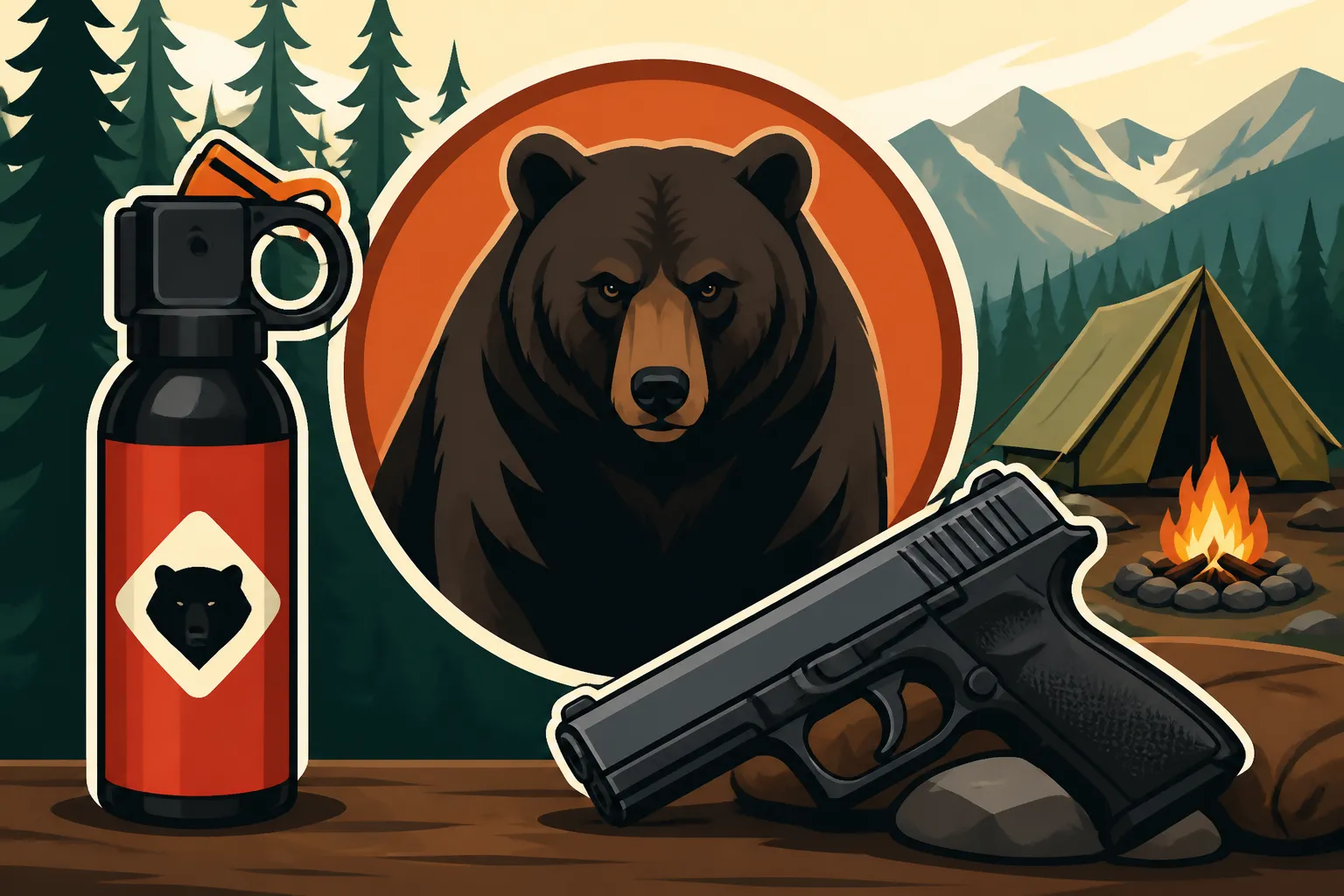
Many experienced hunters carry bear spray on their person, easily accessible, while their firearm is also readily available nearby, perhaps leaning against a tree at the edge of camp, or in a scabbard on an ATV, quickly unloaded but with rounds nearby. The ideal setup allows you to grab the spray first, but transition to the firearm if the situation demands it. This layered approach maximizes your chances of survival by giving you options for different scenarios. Remember to always consider British Columbia Rules on Hunting From a Vehicle when transporting firearms to and from your camp.
Training, Practice, and Mindset
Having the tools is one thing; knowing how to use them under pressure is another entirely. Bear spray requires practice: draw it, remove the safety, and aim. You can buy inert cans for practice or simply go through the motions regularly. For your firearm, consistent range practice is non-negotiable. You need to be intimately familiar with your rifle or shotgun, confident in your ability to cycle rounds, aim accurately, and place a shot quickly and decisively. What British Columbia Guides Expect You to Shoot highlights the importance of this proficiency.
Beyond the physical skills, cultivate a strong mental game. Scenario planning and mental rehearsal can help you react instinctively and calmly when faced with a threat. Think about what you would do if a bear appeared in your camp, how you would deploy your spray, and when you would consider using your firearm. Having an Emergency Planning in British Columbia's Backcountry strategy, including communication devices like satellite messengers, is also crucial for overall safety. A calm, decisive mindset, honed by practice and preparation, is your most powerful tool in the face of a wildlife encounter.
When you're researching potential hunting areas or booking trips, particularly through services like GoHunt or BookYourHunt, always inquire about the prevalence of bears and the safety protocols recommended by locals or outfitters. Knowing the terrain and animal density beforehand will help you prepare your camp safety strategy.
Disclaimer
This article is for general informational purposes only and does not constitute professional advice. Laws, prices and regulations vary by location and change over time. Consult a qualified professional for guidance on your specific situation.