Hunting Mountain Goat in British Columbia’s Coast Range
Hunting mountain goats in British Columbia's Coast Range isn't just a hunt; it's often a true wilderness expedition, pushing your physical and mental limits against some of the most unforgiving terrain imaginable. Many hunters dream of pursuing these majestic, white-coated creatures, but the reality of their high-alpine habitat, coupled with unpredictable coastal weather, makes it an endeavor fraught with challenge. This guide will walk you through the nitty-gritty of preparing for and executing a successful, ethical mountain goat hunt in the spectacular, yet demanding, Coast Range of British Columbia.
Understanding Mountain Goat Habitat in the Coast Range
The Coast Range of British Columbia is a formidable landscape, a jagged spine of mountains rising abruptly from the Pacific Ocean, often shrouded in cloud and mist. This is the domain of the mountain goat, an animal perfectly adapted to survive where few other large mammals can. Understanding their preferred habitat is the first crucial step to finding success.
The Unique Alpine Environment
Mountain goats thrive in extreme alpine and subalpine environments, preferring steep, rocky cliffs, ledges, and open slopes that offer both escape terrain from predators and access to forage. In the Coast Range, this typically means elevations well above the timberline, often between 4,000 and 8,000 feet, though they can occasionally be found lower down, especially during certain times of the year or in areas with direct access to suitable cliffs. These areas are characterized by vast expanses of exposed rock, permanent snowfields and glaciers, and sparse vegetation, primarily alpine grasses, sedges, mosses, and lichens that cling to life in the harsh environment. The air is thin, the weather is volatile, and the ground is almost always steep and unforgiving. Think sheer rock faces, precarious scree slopes, and icy ledges – places that require specialized climbing skills just to navigate, let alone hunt.
Winter Range and Seasonal Movements
While mountain goats spend much of their summer in the high alpine, feeding on nutrient-rich vegetation, their movements can change with the seasons and local conditions. In early fall, before heavy snows set in, they might still be found in the highest basins, taking advantage of the last green growth. As winter approaches and deep snow blankets the high country, goats will often move to lower, south-facing slopes, or areas with less snow accumulation, often referred to as winter range. However, "lower" for a mountain goat still means steep, cliffy areas that offer protection and access to forage that might be blown clear of snow. These movements aren't always predictable, and factors like avalanche risk, predator pressure, and mineral licks can also influence where goats choose to be. Understanding these potential shifts is vital for pre-season planning, especially if you're targeting specific seasons.
Identifying Key Goat Terrain
When you're trying to figure out where British Columbia's mountain goats live, it really boils down to looking for the vertical. Goats are cliff dwellers. They need those steep, rocky outcrops, avalanche chutes, and broken bluffs that other animals can't easily navigate. When you're poring over maps, whether it's a traditional paper map or a digital tool like those offered by GoHunt, focus on areas with tightly packed contour lines indicating steepness, especially those with visible rock features. Look for basins that funnel into cliff systems, or high ridges with dramatic drop-offs on either side. These areas provide both food and security.
Pay close attention to historical sightings or harvest reports within your chosen management unit. While goats are relatively widespread in suitable habitat across the Coast Range, their populations can be localized, often tied to specific mountain ranges or even individual peaks. They don't typically roam vast distances horizontally; their world is more vertical. Identifying water sources, mineral licks, and small alpine meadows adjacent to escape terrain will further narrow down your search. Remember, a goat's entire existence revolves around safety on the steepest ground, so if it looks too flat or too timbered, it's probably not ideal goat country. You’re looking for those dramatic, almost impossible-looking slopes where a goat can truly feel at home.
Essential Gear for a British Columbia Goat Hunt
Embarking on a mountain goat hunt in British Columbia's Coast Range is akin to a mountaineering expedition, and your gear list needs to reflect that. Unlike many other big game hunts, gear failure here can have serious consequences, ranging from frostbite to a life-threatening fall. Every item needs to be lightweight, durable, and perform flawlessly under extreme conditions.
Optics: Glassing for Ghostly White Targets
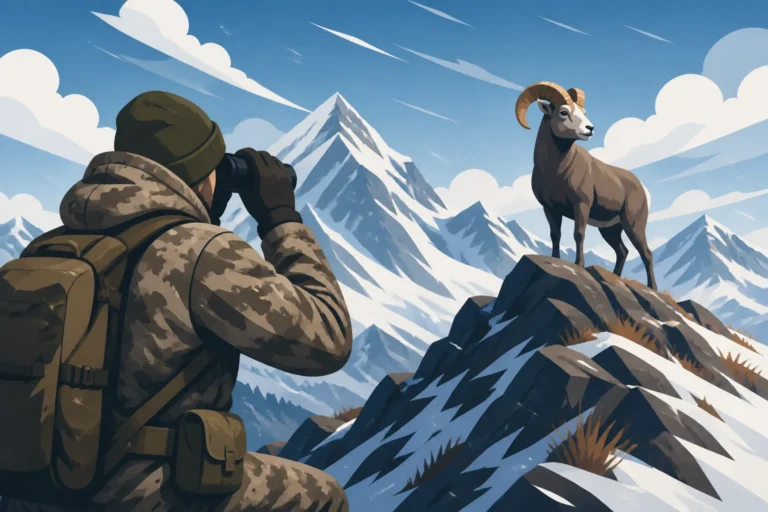
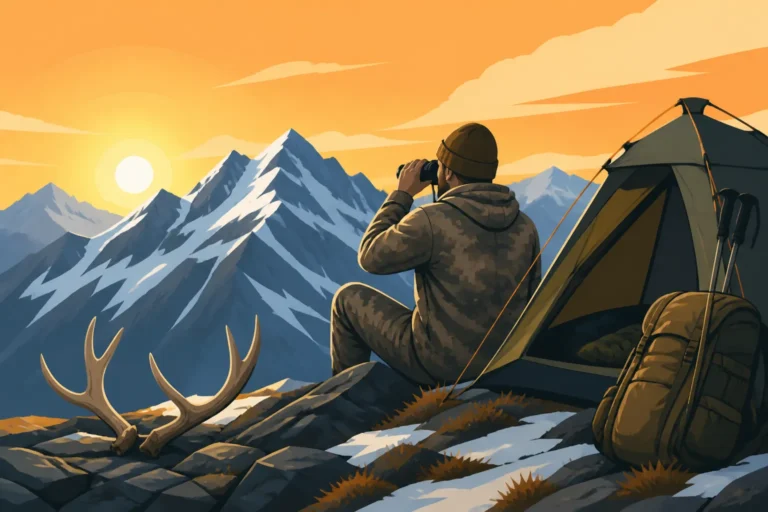
Good optics are the undisputed king of goat hunting gear. You’ll spend far more time behind glass than actually hiking. The vast, open, and rugged landscape makes it nearly impossible to spot goats without powerful binoculars and a spotting scope. Start with high-quality 10x or 12x binoculars. These are your primary scouting tools, used for hours on end to scan mountainsides for that telltale patch of white against rock or snow. Think about a chest harness to keep them accessible and secure.
Next, a powerful spotting scope (20-60x or 25-75x magnification) is absolutely critical. This is what you'll use to confirm if that distant white speck is indeed a goat, and more importantly, to field judge its age and sex. A stable tripod for your spotting scope is non-negotiable; you can't properly evaluate an animal from miles away with a shaky image. Some hunters even use a smaller, lighter tripod for their binoculars as well, especially during extended glassing sessions. Given the frequent rain and fog in the Coast Range, ensure your optics are fully waterproof and fog-proof. Top-tier brands like Swarovski, Zeiss, or Vortex offer excellent clarity, light transmission, and ruggedness that stand up to these conditions. When you're Glassing an Alpine Basin for Rams, the principles apply equally to finding goats.
Layered Clothing and Rain Protection
The Coast Range is infamous for its mercurial weather. You can experience all four seasons in a single day, or even a single hour. A robust layering system is not just recommended; it's mandatory. Start with a moisture-wicking synthetic or merino wool base layer. This pulls sweat away from your skin, which is crucial for staying warm when you stop moving. Mid-layers can be fleece or puffy synthetic insulation, offering warmth without excessive bulk. For outer layers, a highly durable, waterproof, and breathable jacket and pants are essential. Gore-Tex or similar proprietary membranes are your best friends here. You’ll be constantly moving between strenuous climbs and stationary glassing sessions, often in precipitation, so your clothing needs to adapt.
Forget cotton; it absorbs moisture and loses all insulating properties when wet, a recipe for hypothermia. Pack extra layers, including a heavy puffy jacket for glassing breaks or camp, and always have a dry set of clothes for sleeping. Even if the forecast looks good, assume you’ll encounter rain, fog, and chilling winds. Remember, Hunting British Columbia's Coastal Rain is a common scenario, and being prepared for it is non-negotiable for comfort and safety.
Footwear and Traction for Steep Terrain
Your boots are perhaps the single most important piece of gear after your rifle and optics. They need to be incredibly supportive, waterproof, and provide exceptional traction. Look for stiff-soled mountaineering or serious backpacking boots, preferably with a high ankle cuff for stability on uneven ground. Brands like Scarpa, La Sportiva, or Kenetrek are popular choices for a reason. They offer the rigidity needed to edge on steep slopes and the durability to withstand abrasive rock. Break them in thoroughly before your hunt to avoid debilitating blisters.
Beyond boots, you'll need supplemental traction devices. Microspikes or lightweight crampons are often indispensable for navigating lingering snowfields, glacier ice, or frozen scree slopes, especially in the early morning. Trekking poles are also non-negotiable; they save your knees on descents, aid stability on sketchy terrain, and help probe snow depth or uneven ground. These seemingly small details can be the difference between a successful hunt and a dangerous misstep in challenging goat country.
| Gear Category | Essential Items | Purpose | Key Considerations |
|---|---|---|---|
| Optics | 10x/12x Binoculars, Spotting Scope (20-60x), Tripod | Locating and judging goats at long distances | Waterproof, fog-proof, high light transmission, stable tripod |
| Clothing | Base layers (merino/synthetic), Mid-layers (fleece/puffy), Waterproof/Breathable Outer Shell, Extra Puffy Jacket | Moisture management, warmth, protection from elements | No cotton, durable, lightweight, easily layered |
| Footwear | Stiff-soled Mountaineering Boots | Ankle support, traction, protection for feet | Waterproof, breathable, well broken-in, compatible with traction devices |
| Traction | Microspikes/Crampons, Trekking Poles | Stability and grip on snow, ice, steep rock, and uneven terrain | Lightweight, durable, easily deployed |
| Navigation | GPS Device, Satellite Messenger, Topo Maps | Route finding, emergency communication, location tracking | Reliable battery life, waterproof, familiar with operation |
| Shelter | Lightweight Tent/Tarp, Sleeping Bag, Pad | Protection from elements, warmth for recovery | Four-season rated, compact, sufficient warmth for alpine conditions |
| Backpack | Internal Frame Pack (65-90L) | Carrying gear, packing out meat and trophy | Comfortable, adjustable, durable, good weight distribution, meat shelf (optional) |
| Safety | First-aid Kit, Bear Spray, Signalling Device, Repair Kit | Addressing injuries, wildlife encounters, emergencies, gear malfunctions | Comprehensive, accessible, bear spray readily available, know how to use all items |
| Food & Water | High-energy food, Water Filter/Purifier | Sustaining energy levels, hydration | Lightweight, calorie-dense, reliable water purification method |
Pre-Season Scouting and Planning for Goats
Mountain goat hunting is far more about preparation than the actual moment of the shot. Success often hinges on the meticulous planning, research, and physical conditioning you undertake long before your boots hit the trail. This preparation is what helps you navigate the complex regulations and the even more complex terrain.
Researching Management Units and Regulations
Before you even dream of spotting a goat, you need to understand the regulatory landscape. Mountain goat tags in British Columbia are almost exclusively allocated through the Limited Entry Hunting (LEH) draw system. This means you need to apply well in advance, usually in the spring, for a chance to draw a tag in a specific management unit (MU). Researching British Columbia's Limited Entry Hunting Draws is crucial. You'll want to pore over the LEH synopsis and draw odds, often available through online platforms like GoHunt, to identify units that have huntable populations and, ideally, reasonable draw odds.
The Coast Range spans several regions of BC, each with its own nuances in terms of access, weather patterns, and goat populations. Familiarize yourself with the specific regulations for your chosen MU, including season dates, legal harvest criteria (e.g., minimum horn length or male-only restrictions), and any compulsory inspection or reporting requirements. Don't forget about general hunting regulations, such as minimum calibre requirements for big game, or restrictions on vehicle use. Every detail matters when planning a British Columbia hunt.
Utilizing Topographical Maps and Satellite Imagery
Once you have an LEH authorization in hand, or if you're scouting for future draw applications, it's time to hit the maps. Online tools like Google Earth, Gaia GPS, or the mapping features within platforms like GoHunt are invaluable for remote scouting. Start by identifying potential access points – deactivated logging roads, old mining trails, or drainages that might offer a reasonable, albeit still challenging, ascent. Then, zoom in on the terrain itself. You're looking for those aforementioned steep, rocky areas that scream "goat habitat."
Pinpoint potential bedding areas (often sheltered ledges), feeding zones (alpine meadows adjacent to cliffs), and escape routes. Pay attention to aspect – south-facing slopes melt out earlier and often hold more forage. Look for benches, saddles, and ridge lines that might offer strategic vantage points for glassing or serve as travel corridors. Use the 3D terrain features to visualize the landscape as best you can. While online tools are fantastic, nothing beats a detailed physical topographical map and compass as a backup in the field, especially in areas where GPS signals can be unreliable due to extreme terrain or dense cloud cover. Learning how to read a British Columbia MU Map effectively is a core skill for this kind of hunting.
Physical Conditioning and Mental Preparation
This isn't just about being "in shape"; it's about being mountain-fit. A mountain goat hunt in the Coast Range will likely be the most physically demanding hunt of your life. You'll be climbing thousands of feet of vertical elevation with a heavy pack, often scrambling over loose rock, crossing snowfields, and navigating difficult terrain, all while carrying your rifle, optics, and camping gear.
Your training regimen should include serious cardiovascular work (running, cycling, stair climber), strength training (especially legs and core), and, crucially, loaded pack training. Hike local hills with the same pack weight you expect to carry, simulating the arduous conditions. Don't underestimate the importance of mental toughness either. There will be days of relentless rain, thick fog, unexpected setbacks, and moments of doubt. Developing resilience and a positive mindset is just as important as strong quads. Visualize the challenges, problem-solve scenarios, and cultivate the patience required for a truly difficult hunt. Remember, the challenge is part of the reward of Why Goat Hunting Is the Hardest Pack Out.
On-the-Mountain Hunting Strategies for Goats
Once you're actually in goat country, the real game begins. The strategies you employ on the mountain will dictate your success, and they revolve around patience, smart movement, and keen observation.
Spot-and-Stalk Techniques in the Alpine
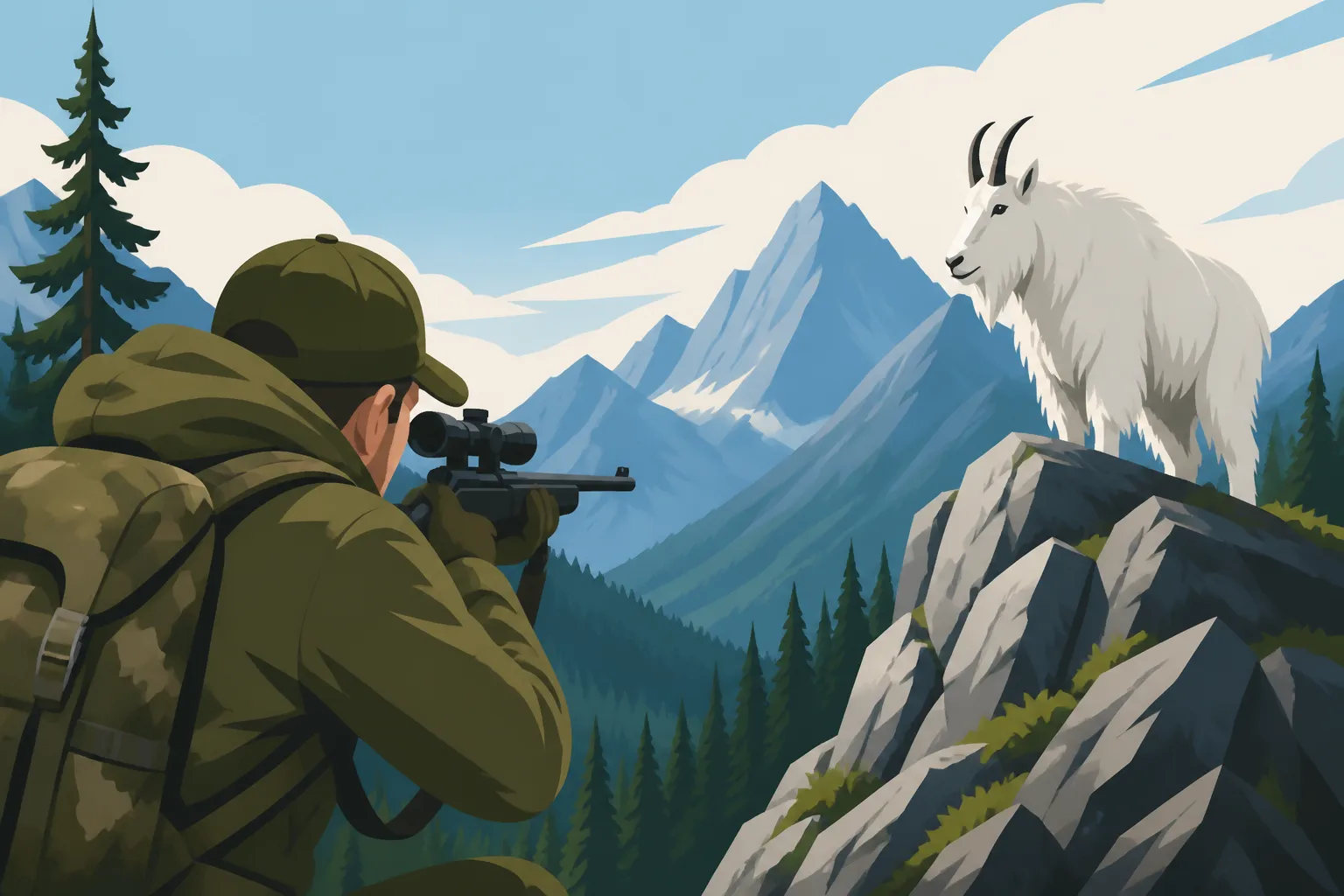
Mountain goat hunting is almost exclusively a spot-and-stalk affair. You don't call them, you rarely ambush them from a blind. It's about finding them with your optics, assessing the animal, and then devising a plan to close the distance without being detected. This process can take hours, or even days. Start your mornings glassing from a high vantage point, often before dawn, waiting for the first light to illuminate the mountainsides. Goats often move and feed in the cooler hours of the morning and evening, but they also bed down on open ledges, making them visible.
Once you spot a goat, the real work begins. Carefully study its location, its movements, and the surrounding terrain. Plan your stalk meticulously, looking for natural cover like ridge lines, rock formations, and depressions. Wind direction is critical; goats have an excellent sense of smell. Always approach from downwind, or with a crosswind that carries your scent away from them. Take your time, move slowly and deliberately, and be prepared for changes in conditions. A goat can vanish into seemingly impossible terrain in seconds, so maintaining visual contact during your stalk is crucial. This is similar to Spot-and-Stalk Mule Deer in British Columbia, but often on a much steeper, more exposed playing field.
Judging a Mountain Goat in the Field
Field judging a mountain goat can be tricky, especially for newcomers. The goal is often to harvest a mature billy (male), as they typically have larger horns and the population management often encourages harvesting males. Nannies (females) often have smaller bodies, finer horn bases, and their horns tend to be straighter or have less curvature. Billies, especially older ones, will have thicker horn bases and a more pronounced curve, sometimes hooking back more sharply. They also tend to have a blockier, more muscular build, particularly around the shoulders and neck.
A key indicator is the horn base circumference relative to the eye. On a mature billy, the horn base will appear quite thick, often nearly as wide as the eye socket. Nannies' horn bases are usually noticeably thinner. Observing behavior can also help; billies are often found alone or in smaller bachelor groups, while nannies are typically with kids or in larger nursery groups. Don't be afraid to spend an hour or more behind the spotting scope, observing the animal from multiple angles, before committing to a stalk. While not perfectly applicable, the general principles of Judging a Full-Curl Ram in the Field for sheep can be adapted to understanding trophy characteristics in goats.
Dealing with Weather and Visibility Changes
The Coast Range is notorious for rapid and drastic weather changes. Sunny skies can turn into thick fog, heavy rain, or even snow in a matter of minutes. This can completely derail a stalk, reduce visibility to mere yards, and create dangerous conditions on already treacherous terrain. Be prepared to hunker down or retreat if conditions deteriorate. Knowing Hunting Above Timberline in Cold Weather is essential, as temperatures can drop quickly.
Always have your rain gear readily accessible. If fog rolls in, it's often best to stop, mark your position with GPS, and wait for it to clear, rather than risking a dangerous fall or getting completely disoriented. Having a reliable GPS with pre-loaded maps and knowing how to use it proficiently is critical for navigation when visibility is poor. Never push your luck in bad weather; a goat isn't worth risking your life. Patience and flexibility are your greatest assets when the weather turns.
Field Care and Pack Out Challenges
You've successfully harvested your mountain goat; now the real physical test begins. Getting the meat and trophy off the mountain is often harder than the hunt itself, especially in the vertical world of the Coast Range.
Quartering and Cooling Meat in Remote Areas
Once the goat is down, the clock starts ticking, particularly in warmer early seasons. Get to the animal quickly and begin the field dressing process immediately. Mountain goats are relatively small compared to moose or elk, but they are dense, and you'll want to get the hide off and the quarters separated as efficiently as possible. Skinning them out for a full cape for taxidermy is often preferred given their unique beauty. Be meticulous if you plan on a full body mount or a life-size rug. You'll need a sharp knife, game bags, and ideally, a small tarp or plastic sheet to keep the meat clean.
Working on steep, uneven terrain presents its own challenges. Secure the animal so it doesn't slide down the mountain. Quarter the animal into manageable pieces – usually four quarters, the backstraps, tenderloins, neck meat, and ribs. Hang the meat in game bags in a shady, cool spot if possible, away from direct sunlight and predators, to allow it to cool. This is a critical step for preserving meat quality, especially in a warm early season. Always consider bear safety while hunting in British Columbia, as the smell of fresh meat can attract unwanted visitors.
Packing Out: The Ultimate Test of Endurance
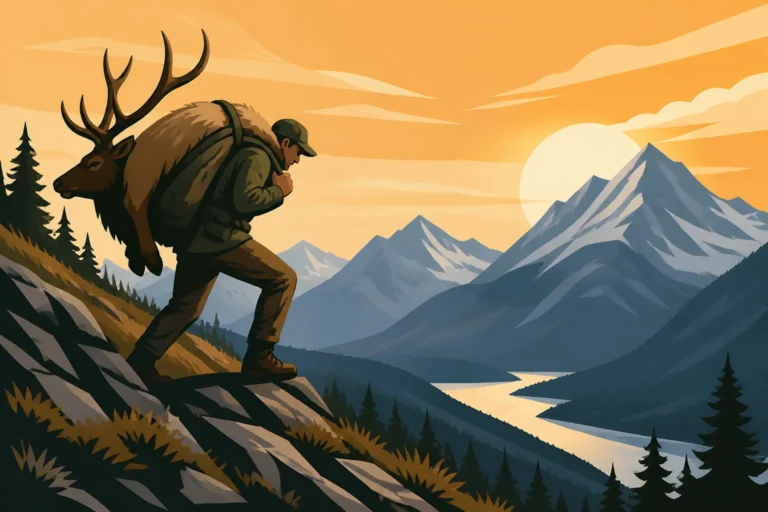
The pack out from a successful mountain goat hunt is legendary for its difficulty. Imagine descending thousands of feet over treacherous terrain with a heavy, unbalanced load. A mature billy can weigh anywhere from 150-300 pounds live weight, meaning you'll be packing out 60-120 pounds of meat, hide, and skull, plus your personal gear. This is where your pre-season physical conditioning truly pays off.
You'll need a robust internal frame pack designed for heavy loads. A pack with a dedicated meat shelf or large external pockets can make the job easier, allowing you to secure quarters directly against the frame. Distribute the weight evenly and secure everything tightly to prevent shifting, which can throw you off balance on steep slopes. Consider making multiple trips if the terrain is too dangerous for a single, heavier load, or if hunting with a partner to share the load. Even with a partner, Getting Meat Out of Steep British Columbia Country will push you to your absolute limits. Take your time, watch your footing, and descend slowly and carefully.
Caping and Trophy Care Considerations
If you're after a trophy, the hide and skull require careful attention to preserve their quality. For a shoulder mount, you'll need to know how to properly cape the animal, making the correct cuts to ensure enough hide is left for the taxidermist. The head should be removed with enough neck vertebrae attached. If you're doing a full mount, the entire hide will need to be carefully removed. Once separated, flesh off as much excess meat and fat as possible from the hide. This is crucial for cooling and preventing hair slippage.
In the field, especially in warm weather, the hide should be salted heavily with non-iodized salt if you're not planning to get it to a freezer or taxidermist within a day or two. Roll it up, flesh-side in, and place it in a breathable bag. The skull plate with horns should also be cleaned of as much brain and tissue as possible and can be boiled or pressure-washed later, but ensure the horn sheaths are protected if you plan to keep them attached. Proper care ensures your trophy will last a lifetime, honoring the incredible effort it took to harvest such a magnificent animal.
Safety and Ethical Considerations
Mountain goat hunting is inherently dangerous due to the extreme terrain and remote nature of the hunt. Beyond the physical demands, there are critical safety and ethical considerations that every hunter must embrace.
Bear Safety and Other Wildlife Encounters
The Coast Range is home to both black bears and grizzly bears. While black bears are more common at lower elevations, grizzlies can be found anywhere, including high alpine environments. Always carry bear spray, make sure it’s easily accessible (in a chest holster, not buried in your pack), and know how to use it. Make noise while hiking, especially in dense brush or low visibility, to avoid surprising a bear. If you encounter a bear, especially a grizzly, know how to react appropriately – often by speaking calmly, making yourself look big, and slowly backing away. When field dressing an animal, be extra vigilant; the smell of fresh blood can attract bears from a considerable distance. Keep your rifle handy and a hunting partner should keep watch while one person works on the animal. Being aware of What to Do If You See a Grizzly is vital.
Beyond bears, you might encounter other wildlife like wolves, wolverines, or even cougars. While these are less of a direct threat to a hunter, it's important to be aware of your surroundings and understand how to react to any potentially dangerous animal encounter.
Hunting Ethics and Shot Placement
Ethical hunting demands a clean, humane kill. For mountain goats, this means being absolutely confident in your shot placement and the animal's position. Goats often stand on precarious ledges, and a poorly placed shot can result in a wounded animal falling into an inaccessible canyon, or slowly dying in a location you cannot reach. A chest shot is generally preferred, aiming for the vitals (lungs and heart). Practice shooting from various positions, including prone, kneeling, and using your pack as a rest, as you're unlikely to get a perfect bench rest scenario on a steep mountain.
Only take a shot when you are certain you can make a clean kill and the animal is in a recoverable position. If a goat is standing on the very edge of a cliff with a sheer drop below, waiting for it to move to a safer spot, even if it means sacrificing the shot, is the ethical choice. Losing an animal to an unrecoverable fall is a heartbreaking and deeply unethical outcome. This commitment to ethical hunting is paramount in such challenging terrain.
Emergency Planning and Communication
Hunting in the remote Coast Range demands comprehensive emergency planning. Cell service is non-existent in much of this terrain, so you'll need reliable satellite communication. A satellite messenger (like a Garmin inReach or Zoleo) is indispensable for sending messages, checking weather updates, and, most importantly, initiating an SOS in a true emergency. Test it before you leave. Share your detailed hunt plan, including your route, expected return date, and emergency contacts, with someone reliable back home.
Carry a comprehensive first-aid kit that's tailored for wilderness emergencies, including trauma supplies, blister care, and any personal medications. Know how to use everything in it. Pack fire-starting materials, a headlamp with extra batteries, an emergency shelter (like a bivy sack or lightweight tarp), and extra food. Weather windows in British Columbia's mountains can be short and unforgiving, so be prepared to spend an unexpected night out. Always consider worst-case scenarios and pack accordingly. Your life, or your hunting partner's life, could depend on it. Always have a plan for Emergency Planning in British Columbia's Backcountry.
Disclaimer
The information provided in this article is for general guidance only and does not constitute legal advice. Hunting regulations in British Columbia are complex and subject to change. It is the responsibility of every hunter to consult the most current British Columbia Hunting Regulations Synopsis, available from the BC government, and any relevant local bylaws before engaging in any hunting activities. Always ensure you have the appropriate licenses, tags, and permits. Safety in the backcountry is paramount; hunt responsibly and ethically.