Hunting Rocky Mountain Elk in British Columbia
Hunting Rocky Mountain elk in British Columbia can feel like chasing a ghost if you don't know where to start. These majestic animals thrive in some of the province's most rugged and breathtaking terrain, presenting unique challenges for even seasoned hunters. This guide is designed to cut through the noise, offering practical, in-depth advice on understanding, locating, and successfully pursuing Rocky Mountain elk in BC, ensuring your efforts in the mountains are well-spent and your freezer is full.
Understanding British Columbia's Rocky Mountain Elk
British Columbia is home to two distinct elk subspecies: the Roosevelt elk along the coast and the Rocky Mountain elk in the interior. While both offer incredible hunting opportunities, the Rocky Mountain elk population presents a different kind of challenge and reward. Understanding their specific range, historical presence, and seasonal behaviours is foundational to a successful hunt.
Their Range and Population Hotbeds
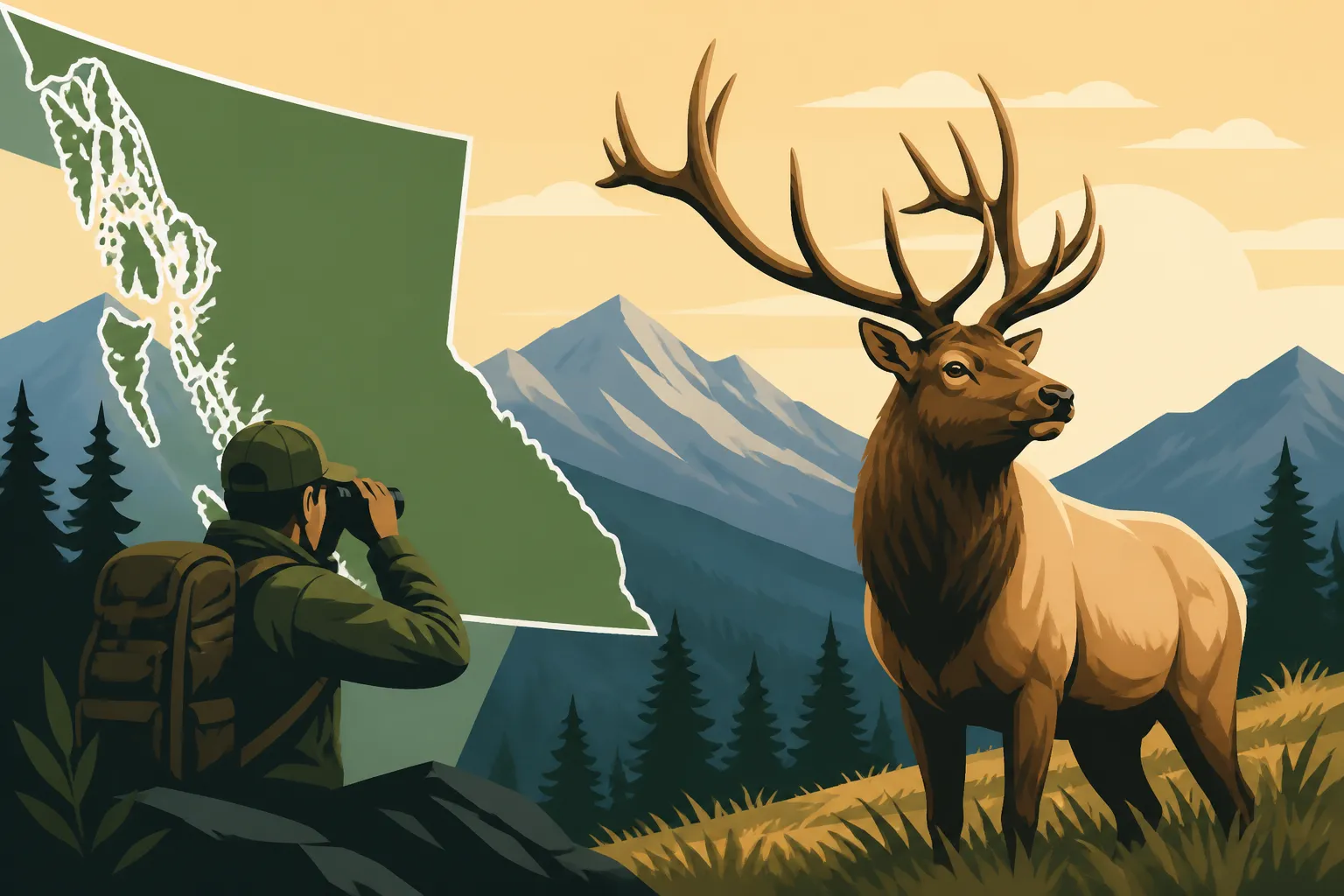
Rocky Mountain elk in British Columbia are primarily found in the southeastern part of the province, particularly throughout the Kootenay region, as well as extending into some areas of the Peace River region in the northeast. Historically, these elk populations faced significant declines due to overhunting and habitat loss in the early 20th century. However, dedicated conservation efforts, including reintroductions and strict management, have led to a healthy rebound in many areas. Today, the Kootenays remain the stronghold, with robust herds flourishing in the vast wilderness and agricultural interfaces.
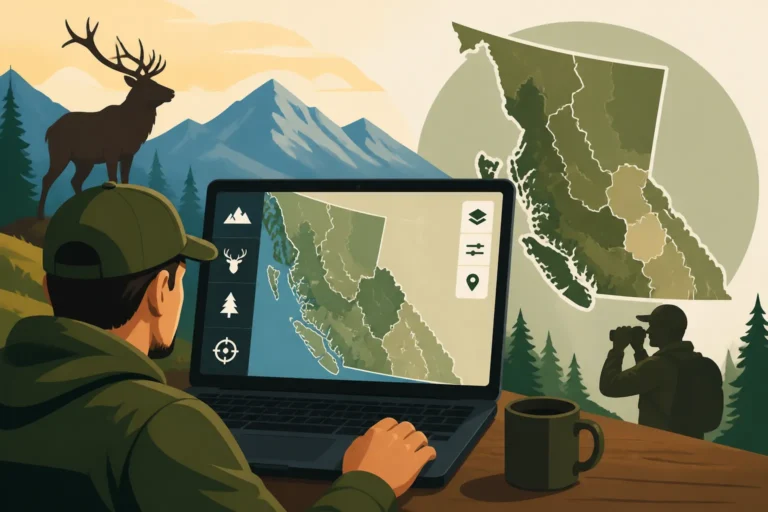
The sheer ruggedness of the terrain where they live means these animals are tough and savvy. They thrive in a mix of open grasslands, timbered slopes, and river bottomlands. Areas like the Elk Valley, Flathead drainage, and parts of the Rocky Mountain Trench are well-known for their significant populations and offer some of the most consistent opportunities. For hunters looking to analyze specific areas, tools like GoHunt can provide valuable mapping resources to pinpoint potential zones, although nothing beats on-the-ground scouting. Understanding Rocky Mountain Elk Numbers in the Kootenays can give you a clearer picture of where to focus your efforts for the best chance at success.
Distinguishing Rocky Mountain from Roosevelt Elk
While both are impressive, Rocky Mountain elk and Roosevelt elk have notable differences. Rocky Mountain elk are generally lighter in body colour, often a tan or greyish-brown, with a distinct buff-coloured rump patch. Their antlers tend to be longer and more slender, with multiple tines coming off a long main beam, often sweeping back and then up. A mature bull can stand over five feet at the shoulder and weigh upwards of 700 pounds, though they are typically slightly smaller than their coastal Roosevelt cousins.
Roosevelt elk, on the other hand, are often darker, with a richer brown coat, and their antlers are typically thicker, shorter, and denser, forming a "crown" or mass at the tips. They are generally found in the dense coastal rainforests, like on Vancouver Island, and are known for their immense body size. Knowing these visual cues is important, not just for identification, but also for understanding the different habitats and hunting styles each subspecies demands. Mistaking one for the other in the field could lead to misidentified animals or being in the wrong kind of terrain entirely.
Behavioral Patterns and Seasonal Movements
Rocky Mountain elk are creatures of habit, but their patterns are heavily influenced by season, weather, and hunting pressure. During the summer, they often spread out across higher elevation alpine basins and subalpine meadows, taking advantage of lush forage and cooler temperatures. As fall approaches and the rut kicks in, typically in September and early October, bulls become much more vocal and aggressive, gathering cows and calves. This is prime time for calling, as bulls are more likely to respond to bugles and cow calls. Understanding When British Columbia's Elk Rut Peaks is crucial for timing a calling hunt.
Post-rut, as winter approaches, elk will generally move to lower elevations, seeking out south-facing slopes, river bottoms, and more sheltered timber where forage is still accessible and snow accumulation is less severe. This migration can concentrate animals, making late-season hunting productive, albeit often in colder conditions. They will browse on woody vegetation and seek out areas with exposed grass. Heavy snow can push them down to even lower agricultural lands, which raises access considerations and the potential for increased interaction with private property. Predators, especially wolves and cougars, also influence their movements and vigilance year-round.
Key Habitat and Where to Find Them
Finding Rocky Mountain elk in British Columbia often boils down to understanding their habitat preferences. These animals utilize a variety of landscapes depending on the season and specific needs, but certain areas consistently draw them in. Learning to read these landscapes is paramount to a successful hunt.
Kootenay Valleys and Foothills
The Kootenay region of British Columbia is arguably the heartland of Rocky Mountain elk hunting in the province. The broad, fertile valleys, like the Elk Valley and those along the Kootenay River, interspersed with rolling foothills and dramatic mountain ranges, provide an ideal mosaic of habitat. Elk thrive where timbered slopes meet open grasslands, offering them security cover, abundant forage, and water. These valley bottoms often see significant elk use, especially during the colder months when snow pushes them down from higher elevations.
Hunting these areas often means navigating a mix of public and private land. Many valley bottoms are either farmed or privately owned, and elk frequently move between the security of Crown land timber and the rich forage of agricultural fields. This can present both opportunities and challenges, requiring careful attention to land ownership maps and, at times, seeking permission from landowners. However, the foothill country, often characterized by accessible logging roads and diverse forest types, can be incredibly productive for hunters willing to put in the legwork. Focus on transitions between forest and open areas, and pay close attention to fresh sign like tracks, droppings, and rubbed trees.
Burned Slopes and Old Growth Edges
Wildfires, while devastating in many ways, often create prime elk habitat in the years following a burn. Two to five years after a fire, the regenerating vegetation, including palatable grasses, forbs, and shrubs, provides an explosion of high-quality forage that elk relish. These burned slopes, especially those with good timber pockets for cover, can be magnets for elk. The open nature of many burns also makes glassing incredibly effective, allowing hunters to cover vast areas with their optics. You might find yourself Hunting a Burned Slope Two Years On, seeing firsthand how quickly nature reclaims and adapts.
Similarly, the edges where old-growth timber meets younger clearcuts, or even where mature forest transitions into natural meadows, are classic elk haunts. These 'edge habitats' offer the best of both worlds: dense cover for bedding and security, adjacent to more open areas where nutritious forage is abundant. Elk will often bed in the thicker timber during the day and move out to feed in the more open areas during dawn and dusk. Learning to identify these transition zones on a map, and then scouting them carefully, can reveal consistent travel corridors and feeding grounds. Focus your efforts on these interfaces, moving slowly and deliberately, always anticipating where an elk might be moving to or from cover.
River Bottoms and Alpine Basins
River bottoms, especially those with willow thickets, cottonwood stands, and a mix of open meadows, are crucial habitat for Rocky Mountain elk, particularly in late season and during the rut. These areas provide excellent forage and vital water sources, and the dense cover along riverbanks offers thermal protection and security. Elk will often follow river corridors, using them as natural travel routes through the landscape. Hunters exploring areas like the Stikine River or other major waterways, even some smaller tributaries, should always pay attention to the benches and flats adjacent to the water. Hunting a British Columbia Lakeshore for Moose shares similar principles that apply to elk in these riparian zones.
Conversely, during the warmer months, especially from late spring through early fall before heavy snows, alpine basins and subalpine meadows are key elk summering grounds. These high-elevation locales offer abundant, high-quality forage, cooler temperatures, and relief from insects. Accessing these areas often means significant uphill hiking or, for some, utilizing horseback access. Once in the alpine, hunters will often employ aggressive glassing techniques, patiently scanning vast expanses of open slopes, avalanche chutes, and sparse timber patches for feeding or bedding elk. The challenge here is the sheer size of the landscape and the energy required to cover it, but the rewards can be magnificent.
Hunting Strategies and Techniques
Successful elk hunting in British Columbia demands a versatile approach, adapting your strategy to the season, terrain, and the elk's current behaviour. From the thrill of a bugling bull to the silent intensity of a spot-and-stalk, mastering a few key techniques will significantly increase your odds.
Early Season Archery and Calling
The early archery season for Rocky Mountain elk often coincides with the peak of the rut, typically in September. This is arguably the most exciting time to hunt elk, as vocal bulls are actively seeking cows, making them susceptible to calling. The crisp morning air echoing with bugles is an experience every hunter should have. For archery hunters, getting in close is paramount, and calling is your best tool. Starting with locator bugles at first light can help you pinpoint a bull. Once you get a response, you need to assess the situation. Is he coming in hard? Is he circling?
Effective calling involves mimicking a variety of elk sounds: aggressive bugles to challenge a dominant bull, soft cow calls and mews to entice curiosity, and even raking trees to simulate a bull thrashing brush. Often, a combination of these sounds, with patience and observation, will draw a bull into bow range. Many hunters find success by setting up with a caller behind the shooter, mimicking a cow or satellite bull trying to steal cows from the dominant bull. It's a high-octane, high-risk, high-reward approach that demands quiet movement, scent control, and nerves of steel. For a deeper dive into calling strategies, consider exploring tips on Calling Moose in the Rut, which often share similar principles for drawing in big game.
Rifle Hunting During the Rut and Post-Rut
Rifle seasons for Rocky Mountain elk usually open in mid-September or early October, overlapping with the tail end of the rut in many areas, and extending into the post-rut period. This can be an excellent time for rifle hunters, as bulls are still relatively active and sometimes respond to calls, though often with more caution than during the peak archery rut. During this phase, bulls are often exhausted from breeding, making them more vulnerable. They might still be with cows or moving off to recover, seeking secluded feeding and bedding areas.
As the season progresses into late October and November, hunting shifts into the post-rut strategy. Bulls have typically separated from cows and are focused on feeding to regain lost weight before winter. Calling becomes less effective, and the emphasis shifts to finding fresh sign and covering ground. Look for wallows, fresh rubs, and well-used travel corridors between bedding areas and feeding grounds. This is also when weather becomes a significant factor. Early snow can push elk down from higher elevations, concentrating them in valley bottoms or specific winter range. This can be a challenging but rewarding time to hunt, requiring persistence and an understanding of how Why Interior Game Moves With the Snow Line.
Spot-and-Stalk Approaches
Regardless of weapon, spot-and-stalk is a fundamental elk hunting technique, especially outside the peak of the rut. This strategy involves using high-quality optics, like binoculars and spotting scopes, to systematically scan vast landscapes for elk. Once an animal or herd is located, the real work begins: planning a stealthy approach that minimizes detection by sight, sound, and scent. This can mean covering miles of difficult terrain, often taking hours, or even an entire day, to close the distance.
Spot-and-stalk is particularly effective in more open country, such as recent burns, large clearcuts, alpine basins, or sparsely timbered hillsides. Patience is your greatest ally. Find a good vantage point, set up your optics, and grid-search the landscape. Elk are masters of camouflage, and often only a flick of an ear, a patch of hide, or the glint of an antler will give them away. Once spotted, use terrain features, wind direction, and vegetation to your advantage during the stalk. Always be mindful of other elk in the herd, as one missed cow can ruin an entire stalk. For detailed scouting, services like GoHunt can provide excellent topographical maps to help identify potential vantage points and approach routes before you even step foot in the field.
Gear and Preparation for Elk Hunting
Rocky Mountain elk hunting in British Columbia is physically demanding and often takes you far into rugged country. Proper gear and thorough preparation aren't just about comfort; they're about safety and success. Don't skimp on essentials, and always test your equipment before the hunt.
Essential Clothing and Footwear
The weather in British Columbia's interior mountains can be incredibly unpredictable, especially in fall. You might experience warm sunshine, torrential rain, and even heavy snowfall all in the same week, or even the same day. Layering is key. Start with a moisture-wicking base layer (merino wool or synthetic, never cotton). Add an insulating mid-layer like fleece or a puffy jacket. Your outer shell needs to be waterproof and breathable—think Gore-Tex or similar high-quality fabrics. Brands like Sitka Gear or Kuiu offer excellent systems designed for this kind of rigorous hunting, but there are many solid options out there.
For footwear, a sturdy pair of waterproof, ankle-supporting hunting boots is non-negotiable. Look for boots with aggressive tread for traction on steep, loose terrain and good insulation if you're hunting late season. Ensure they are well-broken in before your hunt to prevent blisters. Pack extra socks made of merino wool; changing into dry socks can make a huge difference in comfort and prevent trench foot. Don't forget a warm hat, gloves, and a neck gaiter to protect against cold and wind.
Optics and Calling Gear
Good optics are your eyes in the elk woods. A high-quality pair of binoculars (10×42 or 12×50) is essential for glassing vast expanses and picking apart distant cover. Couple these with a good rangefinder to accurately gauge shot distances, especially in varied terrain where distances can be deceiving. For serious long-range scouting, a spotting scope (20-60x or 25-75x magnification) on a sturdy tripod is invaluable. It allows you to scrutinize distant animals without disturbing them and can help you identify a legal bull from miles away.
If you plan on calling, you'll need a range of calls. A diaphragm call is versatile for bugles and cow sounds, while external reed calls are often easier for beginners to master. A quality bugle tube helps amplify your calls and gives them a more realistic sound. Practice extensively before your hunt to become proficient and confident with your calls. Nothing sounds worse to a wary bull than a poorly executed bugle.
Packing Out and Meat Care Equipment
Harvesting a Rocky Mountain elk is often only half the battle; getting the meat out of the backcountry is the other, equally demanding part. A sturdy frame pack is absolutely essential. It needs to be capable of carrying heavy loads comfortably over rough terrain. Brands like Mystery Ranch, Exo Mtn Gear, and Kifaru make excellent hunting-specific packs designed for this purpose. Don't underestimate the weight of an elk quarter, especially if you're packing out solo or with a small group. You might be interested in Packing Meat With a Frame Pack for more detailed advice.
Beyond the pack, you'll need game bags to protect the meat from dirt, insects, and debris while allowing it to cool. Ventilated synthetic bags are preferable to cotton. A sharp knife with extra blades, a small bone saw, and nitrile gloves for hygiene are also crucial. Consider bringing a lightweight tarp or ground sheet to keep meat clean during the butchering process. In warmer early seasons, keeping meat cool is a significant challenge. Having a plan for rapid cooling—whether it's hanging in a shady, airy spot or placing it in cold water—is critical to prevent spoilage. You can read more about Meat Care in British Columbia's Warm Early Seasons.
Navigating Regulations and Access
Hunting in British Columbia requires a deep understanding of the regulations, especially when it comes to elk. The province uses a complex system of general open seasons and Limited Entry Hunting (LEH) draws, coupled with specific antler restrictions and access rules that can vary significantly by region and Management Unit (MU).
LEH Zones and General Open Seasons
Many of British Columbia's premier Rocky Mountain elk hunts are managed through the Limited Entry Hunting (LEH) system. This is a draw system where hunters apply for specific species, management units, and seasons, with a limited number of authorizations available. The LEH system helps manage harvest pressure and ensure sustainable populations, particularly for highly sought-after species like mature bull elk. Applying for LEH draws requires careful planning and understanding the odds. You can often find detailed LEH odds and unit information on the BC government's hunting website or through platforms like GoHunt that aggregate this data.
Alongside LEH, some areas offer General Open Seasons (GOS) for elk, often with specific antler restrictions (e.g., "6-point or greater" or "spike-fork"). These GOS opportunities are typically in less pressured areas, or where elk populations are more robust and can sustain higher harvest rates. It's crucial to consult the annual British Columbia Hunting & Trapping Synopsis, which is released every two years, for the most up-to-date regulations. Always double-check your specific Management Unit (MU) for the exact dates, weapon restrictions, and antler requirements. Understanding General Open Season Versus Limited Entry is fundamental for planning your elk hunt.
Accessing Crown Land and Private Forest
A vast majority of British Columbia is Crown land (public land), which is generally open to hunting, but access isn't always straightforward. Much of this land is crisscrossed by Forest Service Roads (FSRs), which are often active logging roads. Hunters need to be aware of active industrial traffic, potential road closures due to wildfire, washouts, or deactivation. Some FSRs may be gated, restricting vehicle access but still allowing walk-in. For remote areas, access might require ATVs, jet boats, or even flying in. Navigating British Columbia's Forest Service Road Network is a key skill for elk hunters.
Additionally, significant tracts of private forest land exist, especially on Vancouver Island but also in some interior regions. These lands may have their own access rules, which often involve obtaining permits or adhering to specific entry times. Always respect private property boundaries and seek permission if you believe you might need to retrieve game from private land. It's your responsibility to know where you are hunting and to have appropriate maps showing land ownership, available through resources like the iMapBC portal or hunting apps.
Understanding Antler Restrictions
Antler restrictions are a common management tool used in British Columbia to protect younger, breeding-age bulls and to promote an older age class of animals within the population. For Rocky Mountain elk, these often involve "6-point or greater" rules, meaning the bull must have at least six points on one antler side, including the brow tine. Sometimes, "spike-fork" rules are also in effect, allowing the harvest of very young bulls with unbranched antlers or only two points on each side.
It's absolutely critical to accurately identify a legal bull in the field before taking a shot. This requires careful observation and often patience, especially if the bull is moving or partially obscured. Misidentifying an elk and shooting an illegal animal can result in significant fines, loss of hunting privileges, and seizure of the animal. Carry a small set of binoculars or a rangefinder with a good optic to help you make these distinctions. Take your time, confirm your target, and always be sure of what you're shooting. This attention to detail is paramount for responsible hunting and ensuring the long-term health of British Columbia's elk herds.
| Season Type | Description | Common Restrictions | Key Considerations |
|---|---|---|---|
| Limited Entry Hunting (LEH) | A draw system for specific Management Units (MUs) and seasons, limiting the number of hunters and animals harvested. Typically for prime areas and mature animals. | Specific antler minimums (e.g., 6-point or greater), weapon restrictions (e.g., archery only, rifle), and gender-specific (e.g., "bull only," "any elk"). | Application Deadlines: Miss these, and you're out. Research past draw odds to choose units wisely. Specificity: Know your exact MU and season dates. Requires more upfront planning and often years of applying. Success often means a higher quality hunt, as pressure is managed. Check LEH results carefully. |
| General Open Season (GOS) | Open to all licensed hunters without a draw. These seasons are usually for areas with more robust or accessible populations, or where harvest needs to be managed more broadly. | Often have antler restrictions (e.g., "spike-fork," "6-point or greater"), but can sometimes be "any bull." Season dates and weapon types (archery, rifle, muzzleloader) vary by MU. | Accessibility: More accessible areas can mean more hunting pressure. Regulations: Crucially important to read the synopsis for specific MU rules, as GOS can vary wildly. These are often good options for less experienced hunters or those seeking a more accessible hunt, but competition can be high. |
Post-Harvest Considerations
Successfully harvesting a Rocky Mountain elk is a tremendous achievement, but your responsibilities don't end there. Ethical hunting includes proper field dressing, meat care, and adhering to all mandatory reporting and inspection requirements. This final stage is just as crucial as the hunt itself.
Field Dressing and Quartering
As soon as an elk is down, the clock starts ticking, especially in warmer weather. Rapid field dressing is essential to cool the carcass and prevent spoilage. First, ensure the animal is indeed deceased and approach cautiously. Then, carefully eviscerate the animal, removing all internal organs. This process not only lightens the load but, more importantly, allows the body heat to dissipate quickly. Roll the animal onto its back, prop it open, and begin the process. If alone, work quickly but methodically. If you have a partner, even better; two sets of hands make the task much faster.
Once field dressed, the next step is often quartering, especially if you're deep in the backcountry. An adult Rocky Mountain elk can weigh upwards of 700 pounds, making it impossible to move whole. Quartering involves separating the animal into its major muscle groups: two front shoulders, two hindquarters, and the backstraps and tenderloins. Many hunters choose to do a "gutless" method, leaving the guts in and skinning and removing the quarters from the outside. This is often cleaner and quicker, particularly in grizzly country where minimizing time spent near the carcass is wise. For more specific guidance on this demanding task, consider reading about Quartering a Moose in Grizzly Country, as the principles for large game are very similar.
Packing Out the Animal
Packing out an elk is perhaps the most physically demanding aspect of the hunt. Each quarter can weigh 60-100 pounds, and you'll often have multiple trips back and forth, navigating challenging terrain. A strong, properly fitted frame pack is indispensable here. Distribute the weight evenly, ensure the load is secure, and take frequent breaks. Dehydration and exhaustion are real risks, so stay hydrated and fueled. If hunting with a partner or group, divide the load strategically. Consider making a "meat cache" in a cool, shady spot, covered with game bags and a tarp, if you need to make multiple trips or hike out for more supplies.
The terrain in British Columbia can be unforgiving. Whether it's steep, rocky slopes, dense timber, or thick brush, every step with a heavy load is a challenge. If you're fortunate enough to hunt close to a road or water source, consider using a game cart or a boat, such as for Jet Boat Access on British Columbia Rivers, but often, human power is the only option. Always prioritize safety over speed. Rushing with a heavy pack can lead to falls and injuries.
Compulsory Reporting and Inspection
British Columbia has specific rules regarding compulsory reporting and, for certain species, compulsory inspection of harvested animals. While not all elk require physical inspection, all harvested elk tags must be reported. Typically, you need to report your harvest online or via phone within 30 days of the kill. This includes providing details such as the species, sex, date of kill, and the Management Unit where it was harvested. This data is critical for wildlife managers to monitor populations and adjust regulations for future seasons. Failing to report within the specified timeframe can lead to fines and penalties.
Certain elk, often those taken in specific LEH zones or with particular antler configurations, may still require compulsory inspection. This means taking the head and/or a specific portion of the animal to a designated inspection station or a conservation officer within a set period. Always check the current hunting synopsis for these specific requirements, as they can change. It's your responsibility as a hunter to understand and comply with all post-harvest regulations. These rules are in place to ensure the sustainable management of British Columbia's incredible wildlife resources, and our adherence to them is a core part of being an ethical hunter.
Disclaimer
The information provided in this guide is for general informational purposes only and is not a substitute for the official British Columbia Hunting & Trapping Regulations Synopsis. Hunting regulations, seasons, and access rules can change frequently. It is the responsibility of every hunter to consult the most current official synopsis and relevant government websites before planning or undertaking any hunting activity in British Columbia. Always prioritize safety, ethical hunting practices, and respect for wildlife and the land.