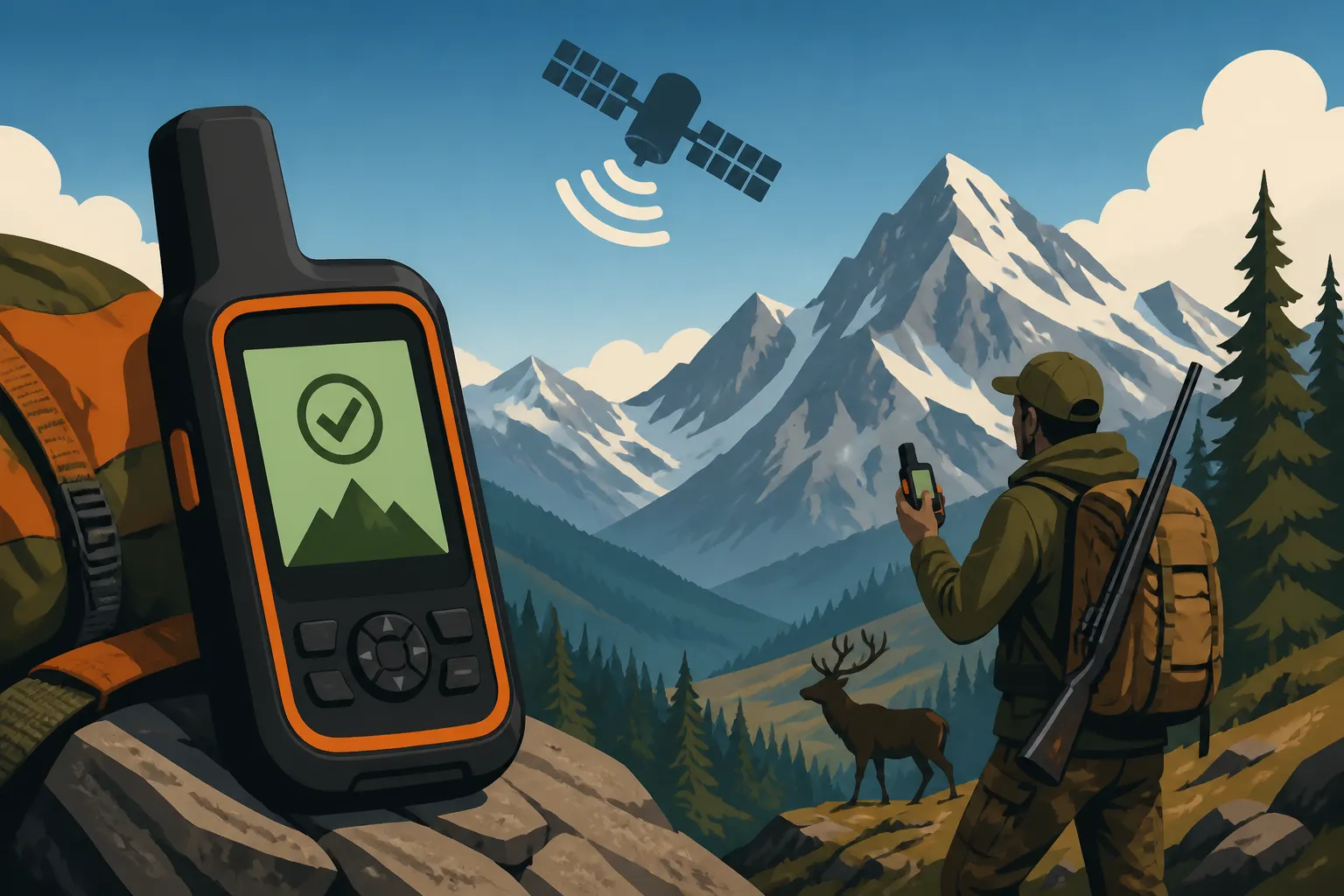
Satellite Messengers in the Backcountry
Venturing into British Columbia's vast wilderness for a hunting trip is an incredible experience, but the sheer remoteness of much of our province often leaves hunters in a precarious spot: completely out of cell service. That feeling of isolation, knowing that a twisted ankle, a sudden weather change, or a wildlife encounter could leave you stranded without a way to call for help, is a real and valid concern for anyone heading into the backcountry. This guide is here to shed light on satellite messengers, crucial tools that bridge that communication gap and offer peace of mind when you're far from any signal tower.
The Critical Need for Communication Beyond Cell Service
It’s easy to get caught up in the excitement of planning a hunt – scouting maps, gear lists, ammunition choices – but one of the most overlooked, yet vital, pieces of equipment is often the ability to communicate. British Columbia’s wilderness is stunning, but it’s also vast, rugged, and unforgiving, and relying solely on a cell phone is a gamble you really shouldn't take.
Why Traditional Methods Fall Short
Think about it: how many times have you been just a few kilometres outside a small town, or even on the edge of a major highway, and watched your cell service bars drop to nothing? Now imagine yourself 50 or 100 kilometres up a deactivated logging road, deep in an interior mountain range, or on a remote coastal inlet. Your smartphone, an indispensable tool in daily life, becomes little more than a camera and a GPS device (if you’ve downloaded your maps offline, that is).
Two-way radios are great for communicating with your hunting partners within line of sight, or a few kilometres in good terrain, but they won't reach civilization. Spot devices, while useful for sending pre-programmed "I'm OK" messages or limited SOS signals, often lack the two-way communication that's truly needed in a developing emergency. The frustration of being unable to describe your situation, or receive clear instructions, when you're in trouble is something no hunter wants to experience. This gap in reliable communication isn't just an inconvenience; it can be the difference between a manageable situation and a full-blown crisis. You absolutely need a robust plan for Emergency Planning in British Columbia's Backcountry.
The Reality of British Columbia's Remote Terrain
British Columbia is a province of extremes. We have dense coastal rainforests where the canopy blocks signals, towering mountain ranges that create vast dead zones, and expansive interior plateaus where infrastructure is sparse. When you're Hunting British Columbia's Logging Road Network or packing into high alpine, your cell phone is typically useless for communication. Even if you're on a guided hunt, your guide will have their own satellite communication, but having your own personal device is an excellent backup and personal safety measure. Many hunters choose to explore areas Where British Columbia Cell Coverage Ends is practically the default state.
The sheer scale of our wilderness means that help can be a long way off. Search and rescue operations can take hours, or even days, to reach remote locations. Having the ability to accurately relay your precise location, the nature of your emergency, and even provide updates on your condition, dramatically cuts down response times and improves the effectiveness of any rescue effort. It’s not about being paranoid; it’s about being prepared for the genuine challenges our wild spaces present.
Understanding How Satellite Messengers Work
At their core, satellite messengers are about connectivity when terrestrial networks aren't available. They leverage satellite constellations orbiting the Earth to send and receive messages, offering a lifeline far beyond cell towers.
GPS vs. Satellite Communication: The Key Difference
It's common to conflate GPS with satellite communication, but they serve distinct purposes. Your smartphone's GPS functionality, even offline, uses signals from GPS satellites to pinpoint your location on a map. This is a one-way communication: your phone receives data. However, it cannot send data back out via those GPS satellites.
Satellite messengers, on the other hand, incorporate a transceiver that can both send and receive data to and from communication satellites. This two-way capability is what makes them so powerful. When you send a message, it travels from your device, up to an orbiting satellite, down to a ground station, and then typically routes through traditional cellular or internet networks to reach its destination. The reverse happens when you receive a message. This process, while seemingly complex, happens relatively quickly, enabling true two-way text communication even in the most remote areas. This is the essence of Satellite Communication on a Remote Hunt.
The Types of Satellite Messengers Available
The market for satellite messengers has expanded quite a bit, offering various options depending on your needs and budget. Generally, they fall into a few categories:
- Basic Text Messengers: These devices focus primarily on sending and receiving short text messages, often to pre-set contacts or an emergency monitoring centre. They usually have an SOS button, GPS tracking, and sometimes basic mapping capabilities. They are lightweight and often the most affordable in terms of initial purchase and subscription.
- Feature-Rich Messengers with Mapping: Stepping up, these devices combine robust two-way messaging with detailed topographic mapping, often accessible via a colour screen on the device itself or through a paired smartphone app. They might offer weather forecasts, more extensive tracking options, and longer battery life.
- Satellite Phones: While distinct from messengers, satellite phones offer voice communication capabilities, much like a regular cell phone, but via satellite. They are generally more expensive, bulkier, and have higher subscription costs. For most hunters, a satellite messenger provides sufficient communication for emergencies and check-ins without the added expense and complexity of a full satellite phone.
Each type has its place, and the "best" one for you will depend on your specific hunting style, destinations, and personal comfort level with technology. If you're pondering what else to bring, consider What to Bring on a British Columbia Guided Hunt.
Features to Look For in a Backcountry Device
When you're sifting through the options, consider these key features:
- Two-Way Messaging: Absolutely essential. The ability to describe your situation and receive replies is invaluable.
- SOS Functionality: A dedicated button that connects you directly to a 24/7 emergency monitoring centre, who will coordinate with local search and rescue (SAR). This isn't just a convenience; it's a lifesaver.
- GPS Tracking and Location Sharing: Allows loved ones to track your progress and provides precise coordinates to SAR in an emergency.
- Battery Life: Critical for extended trips. Look for devices that offer long battery life, often measured in days or weeks, with options for power-saving modes.
- Durability and Water Resistance: Your device needs to stand up to the rigours of the backcountry – drops, rain, snow, and mud.
- Mapping Capabilities: While not strictly necessary if you have a dedicated GPS or a smartphone with offline maps, integrated mapping can be a huge bonus, especially if you pair it with a smartphone.
- Subscription Plans: All satellite messengers require a subscription plan to function. These vary widely in cost, message allowances, and features. Understand the monthly or annual fees before committing.
- Ease of Use: In a stressful situation, you don't want to be fumbling with complex menus. A user-friendly interface is paramount.
Integrating a Satellite Messenger into Your Hunt Plan
Having a satellite messenger is only half the battle; knowing how to integrate it effectively into your overall trip planning and using it correctly in the field is just as important. It's a tool, and like any tool, its effectiveness depends on proper use.
Pre-Trip Setup and Contact Management
Before you even leave your driveway, your satellite messenger needs to be fully set up and tested. This isn't something you want to figure out in a remote spike camp.
- Activate and Test: Activate your subscription plan well in advance. Send test messages to your emergency contacts to ensure the device is working and they receive your communications. Make sure they understand how the messages will appear and what information they should expect.
- Programme Contacts: Input all critical contacts – hunting partners, family members, your guide (if applicable), and any emergency contacts – directly into the device or its paired app. Make sure these contacts know your itinerary and your emergency plan.
- Establish a Check-in Schedule: Agree upon a regular check-in schedule with your contacts. This could be a simple "I'm OK" message every evening, or a more detailed update every few days. This routine establishes a baseline, so if a check-in is missed, your contacts know to start investigating. Many outfitters list their services on platforms like BookYourHunt, and they often have specific communication protocols you'll need to follow in conjunction with your personal device.
- Practice: Get comfortable sending and receiving messages. Know how to access all the features, especially the SOS function, without having to consult a manual. Imagine trying to do this with numb fingers in a cold rain when you're under stress. This practice is vital for your Emergency Planning in British Columbia's Backcountry.
Real-Time Communication and Emergency Protocols
In the backcountry, every message counts. You'll want to be concise and clear.
- Check-ins: Use your messenger for regular, brief check-ins. "Camp set at N50.123 W120.456. All good. Weather holding." This keeps your contacts informed and confirms your location.
- Non-Emergency Updates: Need to tell your partner that you’ve decided to move camp due to better sign? Or maybe Weather Windows in British Columbia's Mountains forced a change in plans? A satellite messenger allows you to share these updates, preventing unnecessary worry or miscommunication.
- SOS Activation: This is the most critical function. If you activate the SOS, be prepared to describe the nature of your emergency as clearly as possible. Is it a medical emergency? A lost hunter? A broken down vehicle? Provide details like the number of injured parties, types of injuries, and any immediate dangers. Stay by your device, as the monitoring centre will try to communicate with you for more information.
A common table for message types and suggested content might look like this:
| Message Type | Purpose | Suggested Content |
|---|---|---|
| Check-in | Confirm safety and location | "All good. Lat/Long: coordinates. Camp set/Moving." |
| Update | Share non-critical info, plan changes | "Saw fresh tracks. Heading N for day. Back at camp by dark." |
| Minor Issue | Seek advice, not immediate rescue | "Twisted ankle, can walk slowly. Need extra day. OK for now." |
| Urgent Assistance | Immediate need, but not life-threatening SOS | "Stuck vehicle at coordinates. Need help with extraction." |
| SOS | Life-threatening emergency, requires SAR | "Medical emergency: compound fracture, Name. Need immediate SAR." |
Remember, using your device for casual chats can quickly deplete your message allowance or battery life, so be judicious.
Battery Life and Power Management in the Field
Battery life is a constant concern on any extended backcountry trip. Modern satellite messengers have impressive battery longevity, but careful management is still key.
- Charge Fully: Always start with a fully charged device.
- Power Down or Conserve: When not actively using it, either power the device off or put it into a low-power, interval tracking mode. Many devices offer customizable tracking intervals (e.g., track every 10 minutes vs. every 4 hours), which significantly impacts battery drain.
- External Power Banks: Carry a robust power bank designed for outdoor use. These can provide multiple recharges for your messenger, GPS, and other electronics. Solar chargers can also be useful, though their effectiveness varies with weather and tree cover.
- Cold Weather Considerations: Batteries drain faster in cold temperatures. Keep your messenger insulated, perhaps in an inner pocket close to your body, when not in use.
- Anticipate Needs: If you know you'll be in an area with particularly challenging terrain or expected poor weather, like Hunting in British Columbia's Coastal Rain, conserve battery life even more stringently, ensuring you have enough power for potential emergencies. Knowing that What Happens If Weather Ruins the Hunt can impact your communication needs is essential for planning.
Choosing the Right Device for Your British Columbia Adventure
Selecting the right satellite messenger requires a blend of practical considerations and understanding your personal hunting style. There's no one-size-fits-all answer, but by evaluating your needs against available options, you can make an informed decision.
Weighing Size, Durability, and Subscription Costs
These three factors are often the most crucial when making your final decision.
- Size and Weight: For backpack hunters heading into areas like Setting a Spike Camp Above Timberline or those navigating steep, rugged terrain where Getting Meat Out of Steep British Columbia Country is the priority, every gram matters. A compact, lightweight device is preferable. For hunters operating closer to a vehicle or base camp, a slightly larger device with more features might be acceptable.
- Durability: British Columbia's environment is tough on gear. Your messenger needs to be rugged, impact-resistant, and ideally waterproof or at least highly water-resistant. Dropping it on rocks or having it get drenched in a sudden downpour shouldn't render it useless. Look for devices with high IP ratings (Ingress Protection).
- Subscription Costs: This is where many hunters get surprised. Beyond the initial purchase price, all satellite messengers require a monthly or annual subscription. These plans vary widely. Some offer flexible month-to-month options, perfect for seasonal hunters, while others are annual contracts. Carefully compare message allowances, tracking intervals, and the cost of emergency rescue insurance (sometimes offered as an add-on). Think about how many months you'll actually be using it, and whether a yearly plan makes sense for your hunting frequency. Resources like GoHunt, which often have gear reviews and comparisons, can be a great place to start researching the different models and their associated plans.
Popular Satellite Messenger Brands and Their Offerings
A few brands dominate the satellite messenger market, each with its loyal following and unique strengths. While I won't dive into specific models or prices (as these change frequently), understanding the general offerings of these brands can help.
- Garmin inReach: These devices are widely popular due to their robust two-way messaging, excellent mapping capabilities (especially when paired with the Earthmate app on a smartphone), and reliable SOS function through the GEOS monitoring center. They come in various models, from basic to feature-rich.
- Zoleo: Zoleo offers a seamless messaging experience that intelligently switches between satellite, cellular, and Wi-Fi networks. This means you can use the same app for all your messages, and it will automatically use the cheapest available network. Their devices are typically compact and focus heavily on reliable two-way messaging.
- Spot Global Phone/Spot X: While Spot is known for its original one-way messengers, the Spot X offers two-way messaging with a full QWERTY keyboard, making it easy to type messages. They also connect to a dedicated emergency response center.
It's wise to visit the manufacturers' websites or reputable outdoor gear retailers to see the latest models and compare their features and subscription plans directly.
Practice Makes Perfect: Getting Comfortable Before You Go
No matter which device you choose, the most crucial step is to get thoroughly familiar with it before your hunt. This isn't just about sending a test message; it's about making its use second nature.
- Simulate Scenarios: Imagine different emergency situations. How would you send an SOS? How would you update your family on a minor delay? How would you find your coordinates to relay to someone? Walk through these steps using your device.
- Learn the Interface: Whether it has a small screen and buttons or relies heavily on a smartphone app, know how to navigate its menus quickly and efficiently.
- Understand Limitations: Be aware of potential signal blockages (dense canopy, steep canyon walls) and how to overcome them (move to an open area). Satellite messengers usually need a clear view of the sky to connect.
- Educate Your Party: If you're hunting with partners, ensure everyone knows where the messenger is, how to use it, and what the emergency plan is. In a crisis, the person who needs to use it might not be the one who owns it. This level of preparedness should be part of any group's approach to Bear Safety While Hunting in British Columbia or any other backcountry hazard.
A satellite messenger is an investment in your safety and peace of mind. For serious British Columbia hunters, it's quickly becoming as essential as a good rifle or a sharp knife.
Disclaimer
This article is for general informational purposes only and does not constitute professional advice. Laws, prices and regulations vary by location and change over time. Consult a qualified professional for guidance on your specific situation.