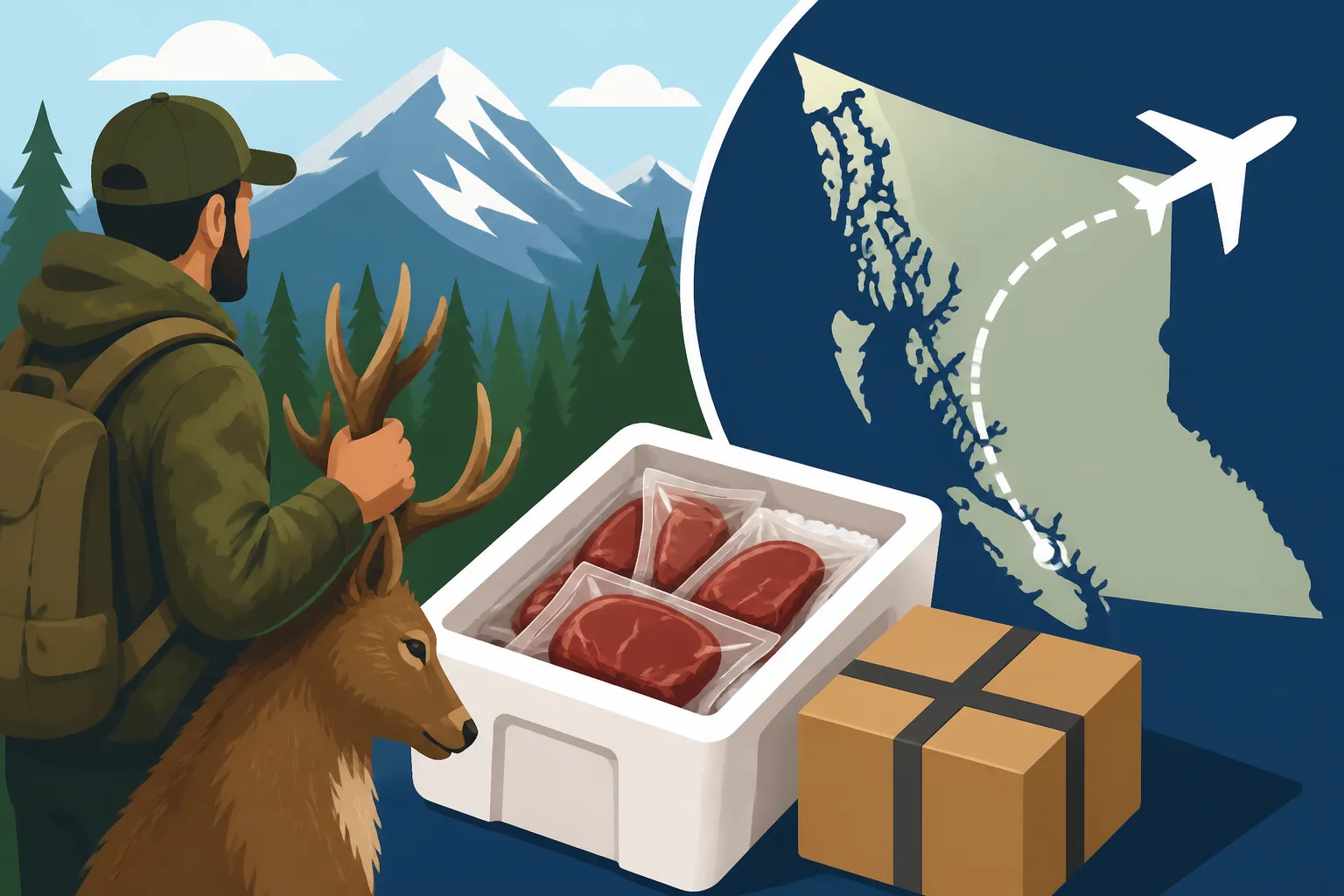
Shipping Meat Home From British Columbia
After the exhilaration of a successful hunt in the stunning landscapes of British Columbia, there's often a fresh challenge that hits you like a cold blast of mountain air: getting your hard-earned game meat home. Whether you're a resident travelling across the province, or a non-resident heading south of the border, the logistics of properly caring for, packaging, and transporting your wild game can feel daunting. This guide is here to demystify that process, offering practical, empathetic advice to ensure your meat arrives in prime condition, ready for the freezer and your dinner table.
The Journey Begins: Field Care and Initial Processing
The quality of your game meat, and indeed the ease of its journey home, starts the moment the animal is on the ground. There’s no skipping steps here; proper field care is the absolute foundation. Overlooking these initial critical steps can compromise your meat, making all subsequent efforts futile, and that's a heartbreak no hunter wants to experience.
Why Proper Field Dressing is Non-Negotiable
Rapid cooling of game meat is the single most important factor in preserving its quality, especially during British Columbia's warmer early seasons. Think about a September elk hunt in the Kootenays, or an early fall deer hunt in the Okanagan; temperatures can still be surprisingly high. As soon as an animal is down, the internal body temperature needs to drop quickly to inhibit bacterial growth. This means getting the entrails out as swiftly as possible. A clean, quick gutting job will allow the carcass to begin cooling immediately, a crucial step for meat that might have a long trip ahead.
Beyond simply removing the guts, proper field dressing involves cleaning the cavity. Many hunters instinctively want to wash the cavity out with water, but often, a clean wipe with game bags or even dry leaves is better. Water, especially if not perfectly clean or if it can’t dry completely, can actually introduce bacteria or create a moist environment for it to thrive. After gutting, prop the carcass open, perhaps with a stick or two, to maximize air circulation. This airflow is your best friend for radiating heat away from the meat. For more detailed advice, you can revisit Keeping Meat Cool in an Early Season and Meat Care in British Columbia's Warm Early Seasons.
Quartering and Boning Out for Transport Efficiency
Once field dressed and initially cooled, the next step depends heavily on the size of the animal and your transportation method. For any significant distance, especially across provincial or international borders, quartering and boning out your animal is usually the most efficient and often required method. Boning out means separating the muscle groups from the bone, which dramatically reduces weight and volume. Imagine packing out a large moose from a remote region of the Omineca; boning it out turns a multi-person struggle into a more manageable, albeit still challenging, task.
There's a constant debate in hunting circles about leaving meat bone-in versus boning it out. While bone-in cuts might be preferred by some for cooking, the practicalities of shipping often lean heavily towards boned-out. Removing the bone not only saves space and weight but also helps with even freezing and can simplify compliance with various regulations, particularly those related to Chronic Wasting Disease (CWD) if you're crossing into areas where such rules apply, even though BC is currently CWD-free. The goal here is to get compact, clean muscle tissue. When boning out, carefully separate the primal cuts – shoulders, hindquarters, backstraps, tenderloins – and trim away any excessive fat or damaged tissue. This also includes the diaphragmatic meat and neck meat, which are often overlooked but are perfectly good for grinding or stewing. For large animals, thinking about how to get the animal out of the bush is often the primary driver for boning out. Quartering a Moose in Grizzly Country is a great resource if you're tackling something substantial.
Preparing Your Harvest: Packaging for the Journey
Once your meat is boned out and cleanly cut, it's time to prepare it for travel. This stage is all about protecting the quality you've worked so hard to preserve. Improper packaging can lead to freezer burn, contamination, or spoilage, negating all your efforts in the field.
The Critical Role of Proper Wrapping and Freezing
The gold standard for packaging game meat destined for long-term storage or shipping is vacuum sealing. A good vacuum sealer removes all air from around the meat, which is the primary cause of freezer burn and spoilage. This creates an airtight barrier that can keep meat fresh in the freezer for a year or more. For shipping, vacuum-sealed packages are also less prone to leakage as they thaw slightly, which can save you a lot of headache with airlines or shipping carriers.
If vacuum sealing isn't an option, a robust alternative involves heavy-duty freezer paper, often combined with an outer layer of plastic wrap or heavy-gauge freezer bags. The key is to eliminate as much air as possible around the meat, then wrap it tightly and completely. Double-wrapping is always a good idea for an extra layer of protection. Once wrapped, the meat must be frozen solid. This is non-negotiable for shipping. Meat that is still partially thawed or just chilled won't maintain its temperature for long during transit. Give your meat ample time in a deep freezer, ideally several days, until it's frozen solid throughout. This firm, frozen block of meat will be far more resilient to temperature fluctuations during its journey.
Choosing the Right Cooler or Shipping Container
For short distances or car travel, a high-quality cooler, like those rotomolded ones with thick insulation, will serve you well. These are designed to hold ice for days, meaning they can keep your frozen meat solidly frozen for extended periods. Make sure the cooler is clean and well-sealed.
For air travel or commercial shipping, specialized insulated shipping boxes are often the best choice. These typically consist of a thick styrofoam inner liner within a sturdy cardboard outer shell. They are designed to maintain temperature and protect the contents from physical damage. Regardless of the container type, clearly mark it with your contact information, the contents ("Wild Game Meat – Perishable"), and any other relevant details. This helps in identification and ensures proper handling.
When it comes to keeping things cold, you have choices: dry ice or gel packs. Dry ice is remarkably effective, reaching extremely cold temperatures and sublimating (turning directly from solid to gas) without leaving water behind. However, it's heavy, can be hard to find, requires ventilation (as it releases carbon dioxide), and needs careful handling to avoid frostbite. Gel packs are less extreme in temperature but are reusable, widely available, and generally safer to handle. Your choice will depend on the duration of travel, the quantity of meat, and your access to these materials.
| Feature | Dry Ice | Gel Packs |
|---|---|---|
| Temperature | Much colder (-78.5°C / -109.3°F) | Colder than regular ice (around 0°C / 32°F) |
| Effectiveness | Excellent for deep freezing and long transit | Good for keeping already frozen items cold |
| Duration | Lasts longer if well-insulated, sublimates over time | Shorter duration, eventually thaws |
| Availability | Can be harder to find; specialized retailers | Widely available at outdoor stores, groceries |
| Safety | Requires ventilation (CO2); can cause frostbite | Generally safe; non-toxic options exist |
| Weight/Volume | Adds significant weight; needs ample space | Less dense than dry ice; minimal added weight |
| Cost | Typically more expensive per pound | Generally more affordable and reusable |
| Ease of Handling | Requires gloves, special handling, ventilation | Easy to handle, no special precautions (if non-toxic) |
Navigating Shipping Regulations and Logistics
This is where things can get a little tricky, especially when crossing borders. Regulations are in place for good reasons, primarily to prevent the spread of diseases and to ensure legal harvest. Being prepared and informed will save you immense stress. For a comprehensive overview, read Transporting Game Meat in British Columbia.
Canadian Internal Travel Regulations
If you're shipping or driving your game meat within British Columbia or to another Canadian province, the rules are generally more straightforward than international travel. For personal vehicle transport, ensure your meat remains frozen or at least well-chilled throughout the drive. This might mean topping up coolers with ice, especially if you’re driving for multiple days from, say, the Peace Region back down to Vancouver Island. Always carry your hunting license, species tags, and any harvest reports with you. This documentation proves legal ownership and origin.
When flying domestically within Canada, airlines have specific rules for perishable goods and checked baggage. Generally, frozen meat is treated like any other checked luggage, but you must adhere to weight and size limits. It's crucial to declare your contents and ensure your packaging is robust enough to withstand handling and prevent leakage. Airlines will often require specific types of coolers or insulated boxes. Remember that the overall weight of a large animal, even boned out, can be substantial – a good-sized British Columbia moose can easily yield hundreds of pounds of meat. What a British Columbia Bull Moose Weighs gives an idea of the scale.
Crossing the US Border with Game Meat
This is arguably the most complex scenario, and it requires meticulous preparation. Rules regarding bringing wild game meat into the United States from Canada are primarily focused on disease prevention, particularly Chronic Wasting Disease (CWD). While British Columbia is currently free of CWD, US Customs and Border Protection (CBP) and the USDA's Animal and Plant Health Inspection Service (APHIS) have stringent regulations. The golden rule here: boned-out meat only. You typically cannot bring in brain, spinal cord, lymph nodes, or any part of the nervous system, as these are the tissues most likely to harbor CWD prions.
Before you even pack your vehicle or shipping container, you must check the most current regulations. These can change. Consult both the Canada Border Services Agency (CBSA) for export rules and the US Customs and Border Protection (CBP) and USDA/APHIS websites for import rules. You will need to present your hunting license, species tags, and a completed harvest report (often called a "confirmation of legal kill" or similar documentation). This proves you legally harvested the animal. Without these documents, your meat may be confiscated. Imagine harvesting a beautiful deer near the Fraser Canyon and having it seized at the border because of missing paperwork; it's a gut-wrenching thought. For a dedicated resource on this, see Taking Meat Across the Border.
Using Commercial Shipping Services
For hunters with significant distances to cover, or who simply prefer not to deal with the logistics themselves, commercial shipping services are an option. Companies like FedEx or UPS can ship perishable goods, but they come with their own set of rules and costs. You'll need to use their approved packaging for perishables, which typically involves specialized insulated boxes. They will also require clear labeling and adherence to their specific guidelines for frozen items.
The cost for shipping large quantities of frozen meat can be substantial, often requiring overnight or 2-day air services to ensure the meat remains frozen. It’s wise to compare prices and services carefully. Some outfitters or local meat processors in British Columbia may also offer services or have established relationships with shippers, which could simplify the process for you. When planning a remote hunt, say in northern British Columbia, understanding these options beforehand can be a game-changer for your post-hunt logistics. While not directly about meat, Shipping a Cape and Horns Costs gives an idea of the costs associated with transporting other parts of your harvest.
Post-Hunt Reporting and Documentation
Your responsibility doesn't end when the meat is packaged. British Columbia has specific requirements for reporting your harvest and ensuring compliance with regulations.
Compulsory Reporting and Evidence of Sex
British Columbia has compulsory reporting requirements for many species, including most big game animals. This means that after a successful hunt, you are legally required to report your harvest within a specific timeframe – often within 30 days of the kill. This is not just a formality; it's vital data for wildlife management and conservation efforts. Failing to report can result in fines and impact your ability to hunt in the future. Check British Columbia's Compulsory Reporting Rules and The Thirty Day Reporting Deadline for detailed information.
Furthermore, for certain species, there are "evidence of sex" requirements. This means you must leave a specific anatomical part attached to the carcass or a portion of the meat until it is processed or stored at your primary residence. This allows wildlife officers to verify the sex of the animal harvested, especially for antlered or horned species where specific regulations apply (e.g., spike-fork elk, certain ram curl requirements). Always review the current regulations synopsis to confirm these specific rules for the species you are hunting. Without this evidence, even legally harvested meat can cause issues during inspection. See Evidence of Sex Requirements for more. It's also worth remembering your obligation to avoid Rules on Wasting Game Meat, meaning proper care and transport are also part of ethical hunting.
Maintaining Records and Peace of Mind
Beyond the mandatory reporting, it's always a good practice to keep meticulous records of your hunt. This includes copies of your hunting license, species tags (with confirmation of kill if applicable), and any submitted harvest reports. If you're crossing borders, keep copies of customs declarations or any inspection certificates.
These records serve as your proof of legal acquisition and can be invaluable if questions ever arise during transport, storage, or even later when sharing your bounty with friends and family. Having everything organized provides peace of mind and demonstrates your commitment to responsible hunting. There's no feeling quite like knowing you've done everything by the book, from the field to the freezer.
Disclaimer
This article is for general informational purposes only and does not constitute professional advice. Laws, prices and regulations vary by location and change over time. Consult a qualified professional for guidance on your specific situation.