Wall Tent and Cabin Camps in British Columbia
The desire to immerse yourself in British Columbia's incredible wilderness, far from the crowds and pavement, often clashes with the reality of roughing it completely. For many hunters, the thought of a frigid night in a flimsy tent after a long day in the mountains just isn't appealing. That's where wall tent and cabin camps shine, offering a fantastic middle ground that blends the rugged authenticity of a backcountry hunt with a much-needed level of comfort and shelter. This guide will walk you through what these unique camps offer and how to choose the right one for your next British Columbia adventure.
The Appeal of Wall Tent and Cabin Camps in British Columbia
There's something uniquely satisfying about venturing deep into British Columbia's hunting grounds, knowing you have a solid, warm shelter waiting for you. It’s not about luxury, but about sustainability and enjoyment in a demanding environment. These camps allow hunters to push further and stay longer, making the most of the diverse terrain and abundant game British Columbia has to offer.
Bridging Comfort and Wilderness Immersion
For many hunters, a wall tent or cabin camp strikes the perfect balance. You're far enough from civilization to feel truly immersed in the wild, experiencing the raw beauty and challenge of the backcountry, but you still have a comfortable base to return to each evening. Imagine being miles from the nearest road, perhaps nestled in a subalpine basin or alongside a roaring river, with only the sounds of the forest for company. Yet, after a day of Glassing an Alpine Basin for Rams or stalking Mule Deer Across British Columbia's Interior, you can shed your wet gear, stoke a wood stove, and enjoy a warm meal in a dry, sheltered space.
This setup is particularly appealing for those planning longer hunts, or for groups where varying levels of outdoor comfort are present. A family hunt, for example, might benefit immensely from the added security and warmth a cabin provides compared to lightweight backpacking tents. It allows you to focus more on the hunt itself and less on battling the elements, ensuring everyone in the party remains rested and ready for the next day's adventure. It’s a game-changer when you’re facing a stretch of Hunting in British Columbia's Coastal Rain or unexpectedly cold weather in the high country.
A Taste of Traditional Backcountry Hunting
Wall tents and cabin camps harken back to a simpler, more traditional style of hunting. They evoke images of frontier trappers, prospectors, and early explorers. There's a certain romance in the smell of woodsmoke, the glow of a lantern, and the camaraderie shared around a small fire in a canvas tent. This isn't your average car camping trip; it's a genuine step into the wilderness, albeit with a robust roof over your head.
The experience often means less time spent on setting up and tearing down camp each day, especially with a cabin. This efficiency can translate directly into more time hunting, scouting, or simply enjoying the peaceful solitude of the backcountry. Guides often set up wall tent camps in strategic locations, allowing access to prime hunting areas for Moose in British Columbia's Interior and North or even Elk Hunting in British Columbia. When you choose a traditional camp, you’re not just picking a place to sleep; you’re embracing a heritage, living the hunt in a way that respects both the land and the classic methods of accessing it. It’s about being deeply connected to your surroundings, without having to endure the full rigours of ultralight backpacking if that's not your style.
What to Expect from Wall Tent and Cabin Setups
The term "camp" can mean many things, but in British Columbia's hunting context, wall tents and cabins usually imply a more established, semi-permanent base than merely pitching a backpacking tent. These camps are designed to withstand the elements and provide a functional, comfortable space for hunters and guides.
Wall Tents: Rustic Charm with Practical Advantages
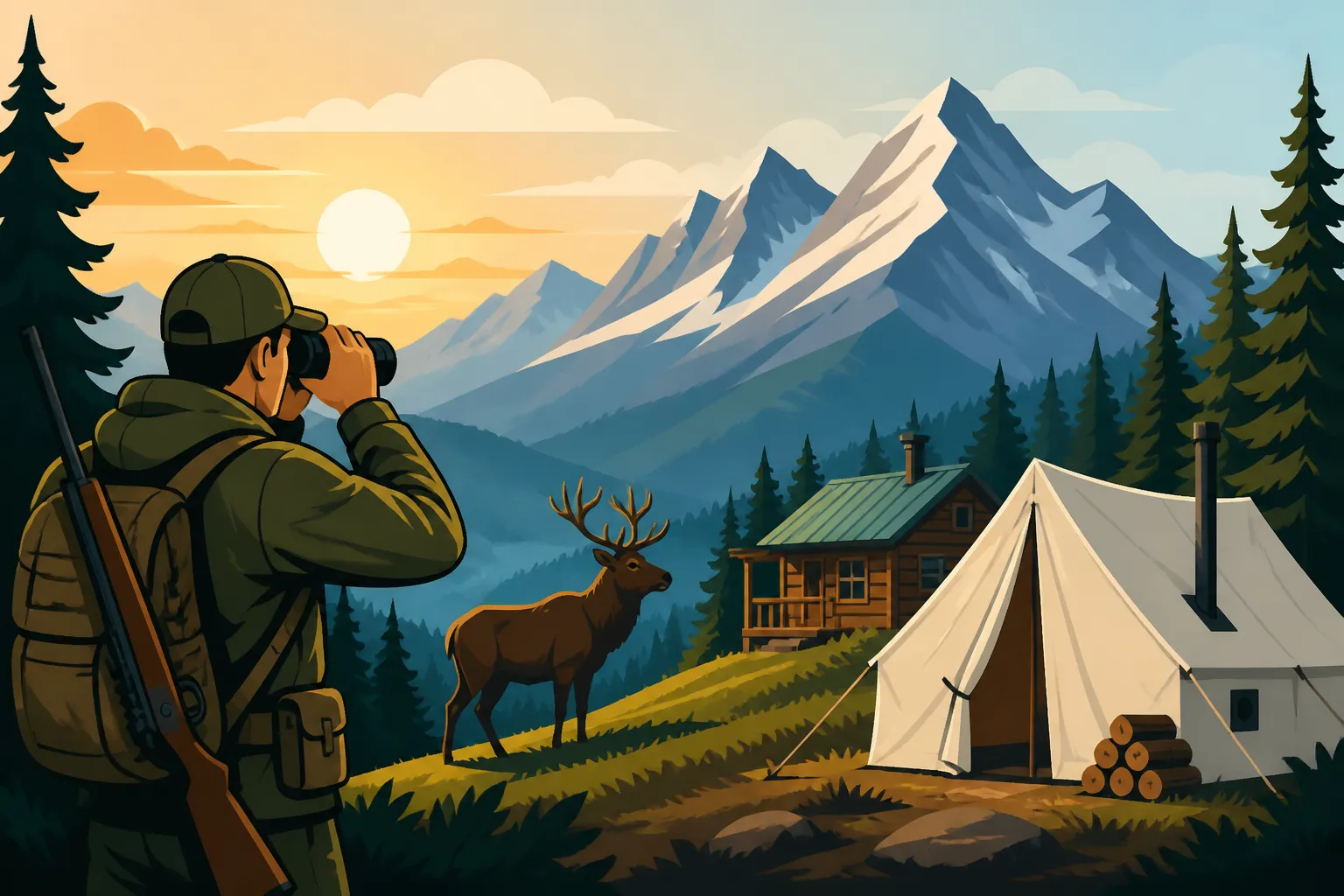
Wall tents are arguably the quintessential hunting camp shelter. Picture a heavy-duty canvas structure with vertical walls, typically supported by an internal frame or external poles and guy lines. Inside, you'll almost always find a wood-burning stove, which is the heart and soul of a wall tent camp. This stove provides not only warmth, which is crucial during crisp mornings or late-season snowfalls, but also a means to dry clothes and cook meals. Imagine the feeling of peeling off damp outerwear and hanging it near the stove, watching steam rise as the canvas walls keep the wind and rain at bay.
These tents often feature cots or sleeping pads, a central table for eating or planning the next day's route, and ample space for gear. While they are still tents, their robust construction and heating capabilities elevate them far beyond a typical dome tent. Guides often transport these tents via pack horses, ATVs, jet boats, or even small aircraft to establish remote camps. This portability allows them to be set up in prime hunting locations that would be inaccessible to more permanent structures. However, it's still a tent: insulation is limited to the canvas, and you'll rely heavily on that wood stove to stay truly warm, especially if temperatures drop significantly overnight. They can get noisy in high winds, and they don't offer the same level of security as a hard-sided structure.
Cabin Camps: Enhanced Shelter and Logistics
Cabin camps, on the other hand, offer a more permanent and robust solution. These can range from simple, rustic log cabins built by hand to pre-fabricated plywood structures flown into remote locations. The key difference is the hard-sided construction, which provides superior insulation, protection from wind, and often a greater sense of security. Cabins often feel more like a small, remote home than a temporary shelter. They typically feature more amenities, such as built-in bunks, sturdy tables and chairs, and a more defined cooking area, sometimes with a dedicated cooking stove in addition to a wood-burning heater.
The enhanced structure of a cabin means less concern about extreme weather. A howling gale that might rattle a wall tent will barely be noticed inside a solid cabin. This increased comfort can be a huge benefit on longer hunts or during colder, wetter seasons. Cabins are generally fixed in location, often chosen for their strategic access to specific game units or excellent hunting areas like the Itcha-Ilgachuz Range for moose or caribou (where seasons are open). While they lack the portability of wall tents, their permanence allows for more elaborate setups, potentially including separate cooking facilities, outhouses, or even a small shed for gear storage. For an outfitter, a cabin camp represents a significant investment and commitment to a particular hunting area, often allowing them to offer a more comfortable, predictable base camp experience.
Amenities and Services Provided
The level of amenities and services in a wall tent or cabin camp can vary significantly depending on the outfitter and the specific hunt package. Generally, you can expect a functional place to sleep, cook, and dry out.
Typical Inclusions:
- Sleeping Arrangements: Cots with foam pads, or bunks in a cabin. You'll almost always be expected to bring your own sleeping bag rated for the expected temperatures.
- Heating: A wood-burning stove is standard in both types of camps, and your guide will typically ensure a supply of firewood.
- Cooking Facilities: Basic cooking equipment (pots, pans, utensils) is usually provided, along with a stove top (either on the wood stove or a dedicated propane burner). Meals are often prepared by the guide or a camp cook, but this should always be confirmed when booking.
- Lighting: Lanterns, often propane or LED, will illuminate the camp during dark evenings.
- Water: Water is typically sourced from a nearby stream or lake and may be filtered or boiled.
- Game Care: Guides will assist with field dressing, quartering, and Keeping Meat Cool in an Early Season or preparing it for transport.
Beyond these basics, outfitters offering cabin camps might provide slightly more: perhaps a small refrigerator or propane freezer, a more robust kitchen area, or even limited solar power for charging small electronics. Always have a clear discussion with your outfitter about what exactly is included, especially regarding food, personal gear expectations, and any specific services like Packing Meat With a Frame Pack or assistance with Getting Meat Out of Steep British Columbia Country. Don't assume anything beyond the very basics.
| Feature | Wall Tent Camp | Cabin Camp |
|---|---|---|
| Structure | Heavy-duty canvas, internal or external frame | Log, wood, or pre-fab hard-sided structure |
| Portability | High; can be set up in various remote locations | Low; fixed location, permanent infrastructure |
| Insulation | Moderate; relies heavily on wood stove | High; better thermal retention, protection |
| Wind/Weather | Can be noisy/flappy in high winds, less weather-tight | Very sturdy, excellent protection from elements |
| Security | Limited physical security | Higher security for gear and personal items |
| Amenities | Basic: wood stove, cots, cooking area | Enhanced: bunks, tables, dedicated kitchen often |
| Typical Use | Backcountry spike camps, mobile operations | Base camps for longer stays, family hunts |
| Atmosphere | Rugged, traditional, deep wilderness feel | Comfortable, secure, more established feel |
Choosing the Right Camp Experience for Your BC Hunt
Deciding between a wall tent and a cabin, or even choosing one of these over a more traditional lodge or backpacking trip, comes down to your personal hunting style, the specifics of your target species, and the duration of your adventure. It's a choice that can significantly impact your overall experience in British Columbia's vast hunting landscapes.
Factors to Consider: Location, Species, and Duration
When planning your hunt, the characteristics of your target animal and the terrain you'll be hunting often dictate the type of camp that makes the most sense. For instance, if you're chasing Stone's Sheep in Northern British Columbia high in the alpine, your base camp might need to be a sturdy wall tent packed in by horses, allowing you to establish a spike camp even higher up. A fixed cabin, while comfortable, might not offer the flexibility to move with the animals. Conversely, a hunt for Moose Hunting British Columbia's Interior might benefit greatly from a comfortable cabin camp located near river bottomlands or vast willow flats, allowing you to return to a warm, dry base after a day of calling or still-hunting.
Consider the duration of your hunt as well. For a quick, intense 3-4 day hunt, a wall tent might be perfectly adequate. But for a longer, 7-10 day expedition, particularly if weather is unpredictable, the added comfort and amenities of a cabin can make a significant difference in your morale and endurance. Think about the physical demands: if you're doing a strenuous Backpack Hunting British Columbia's Sheep Country, a light wall tent might be appropriate as a base, but if you're primarily hunting from a vehicle and then walking short distances, a cabin could be ideal. Hunting a General Open Season Management Unit in more accessible areas might open up more cabin opportunities, whereas truly remote regions will often rely on wall tent setups.
Finding and Booking These Unique Camps
The key to a successful hunt out of a wall tent or cabin camp is finding the right outfitter. Many British Columbia outfitters specialize in these types of experiences, offering everything from rustic DIY-style drop camps where you manage most of your own logistics, to fully guided hunts with cooks and wranglers. The best way to start your search is to be specific about what you're looking for.
Online platforms like BookYourHunt and GoHunt can be invaluable resources for exploring outfitters across British Columbia that offer wall tent or cabin-based hunts. You can often filter by species, region, and type of accommodation, allowing you to quickly narrow down your options. However, these platforms are just a starting point. Once you identify a few potential outfitters, the most crucial step is direct communication. Call them, email them, and ask detailed questions about their camps, including:
- What specific amenities are included in the camp (e.g., generator, running water, dedicated outhouse)?
- How far is the camp from the main hunting areas?
- What is the typical guide-to-hunter ratio for this type of camp?
- What kind of meals are provided, or are you expected to cook your own?
- What gear should you bring, specifically regarding sleeping systems and personal comfort items?
- What are their contingency plans for extreme weather or emergencies? (This is especially important in remote locations. You'll want to know about their Emergency Planning in British Columbia's Backcountry and use of Satellite Communication on a Remote Hunt.)
Getting these details sorted out upfront will prevent surprises and ensure your expectations align with what the outfitter provides.
Preparing for a Wall Tent or Cabin Camp Hunt
Even with the added comfort of a wall tent or cabin, you're still hunting in the rugged British Columbia wilderness. Proper preparation is essential for a safe and enjoyable trip. Don't assume that because you have a solid shelter, you can skimp on essential gear.
Key Preparation Points:
- Sleeping System: Your sleeping bag needs to be rated for the coldest temperatures you might encounter, plus an extra buffer. While the wood stove will warm the camp, it won't be stoked all night, and temperatures can drop significantly. A good sleeping pad is also crucial for comfort and insulation from the ground.
- Clothing System: Layers are paramount. You'll be transitioning between warm, active hunting and potentially cold, static periods in camp. Pack waterproof outer layers, insulating mid-layers, and moisture-wicking base layers. Remember, even in a warm tent, wet clothing can be a huge liability. If you're Hunting British Columbia's Coastal Rain, extra attention to waterproofing is a must.
- Footwear: Sturdy, waterproof boots are non-negotiable. Break them in well before your trip. Pack an extra pair of camp shoes or warm, dry socks for evenings to give your feet a break.
- Personal Items: Headlamps with extra batteries, a small first-aid kit, toiletries, and any personal medications are vital. Consider a portable power bank for charging small electronics, as outlets may be scarce even in cabins.
- Understanding Expectations: Clarify with your outfitter if there are any camp duties you're expected to help with, such as fetching water, chopping firewood, or assisting with meal prep. This is part of the experience for many, but it's good to know beforehand.
- Safety: Regardless of the camp type, you're in the backcountry. Review Bear Safety While Hunting in British Columbia and ensure you understand the outfitter's protocols for wildlife encounters. Always carry a personal emergency signaling device if you plan to venture away from camp on your own.
A well-prepared hunter is a successful and happy hunter. Embrace the unique blend of comfort and wilderness that wall tent and cabin camps offer, and you're in for an unforgettable British Columbia hunting adventure.
Disclaimer
This article is for general informational purposes only and does not constitute professional advice. Laws, prices and regulations vary by location and change over time. Consult a qualified professional for guidance on your specific situation.