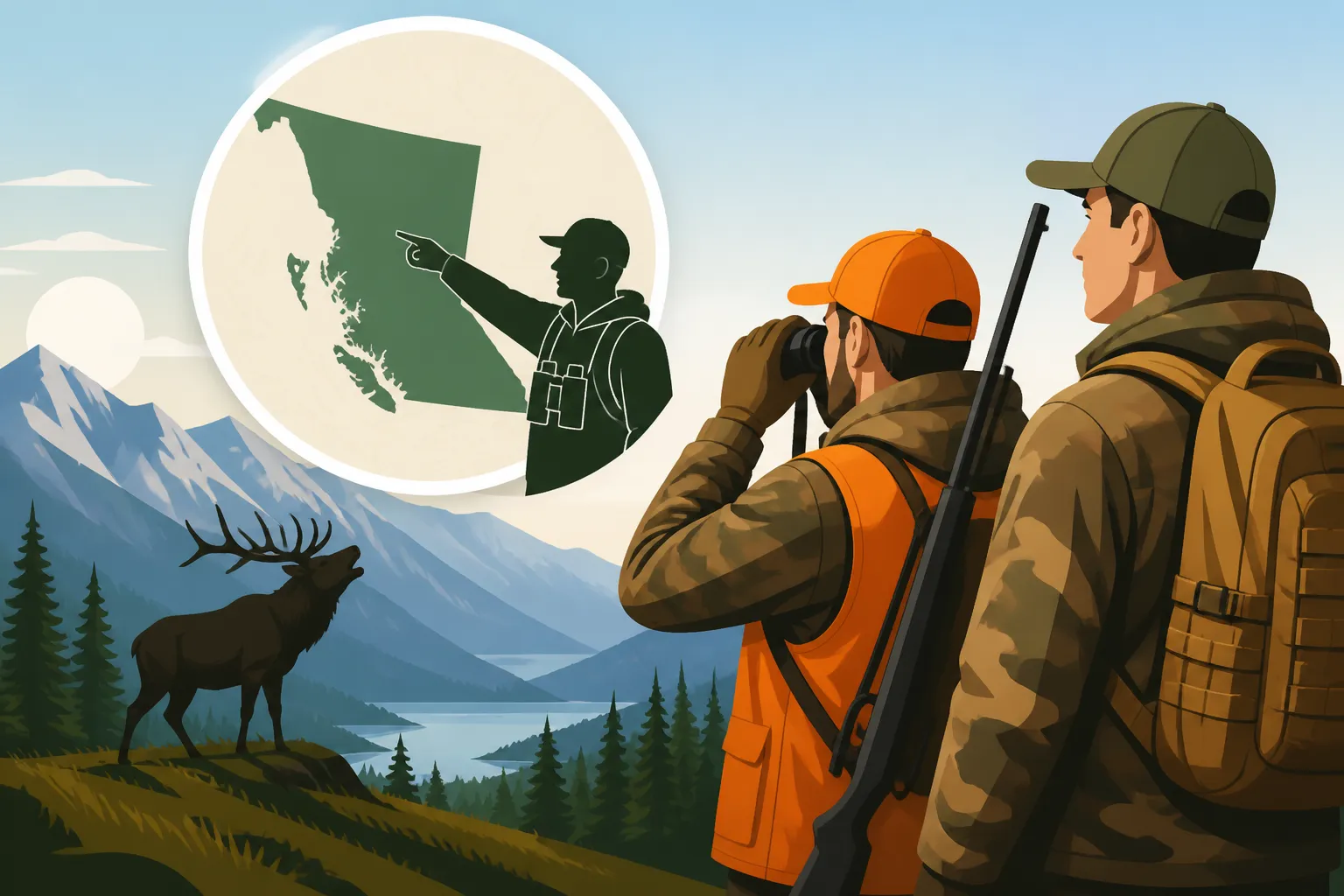
Why Non-Residents Need a Guide in British Columbia
For many non-resident hunters, the dream of pursuing big game in British Columbia conjures images of vast wilderness and incredible opportunities. However, the reality of navigating the province's hunting regulations can quickly turn that dream into a frustrating maze. This guide is here to untangle the complexities, specifically shedding light on why non-residents almost always need to hunt with a licensed guide or under a specific permit.
The Core Rule: Non-Resident Requirements in British Columbia
It's a common misconception that if you're an experienced hunter, you can just show up in British Columbia, buy your licenses, and head into the bush. Unfortunately, for most non-residents, that simply isn't the case. British Columbia has specific regulations designed to manage wildlife populations, ensure safety, and support its robust guiding industry. These rules are in place not to make things difficult, but to provide a structured approach to hunting within the province's unique landscape.
Understanding the "Accompanied" Mandate
The fundamental rule for non-resident hunters in British Columbia is straightforward: you cannot hunt big game or certain furbearers unless you are "accompanied." This isn't just a suggestion; it's a legal requirement. Being accompanied means you must be in the immediate presence of either a licensed British Columbia Guide Outfitter or a resident of British Columbia who holds a valid Permit to Accompany Explained. This regulation is a cornerstone of BC's wildlife management framework and has been for a very long time. It ensures that those unfamiliar with the local terrain, wildlife behaviour, and regulatory nuances have knowledgeable assistance, which, in turn, contributes to responsible hunting practices and safety for everyone in the field.
Imagine arriving from a different state or country, eager to chase a majestic moose or a challenging mountain goat. Without prior experience in BC's diverse ecosystems—from dense coastal rainforests to vast interior plateaus and rugged alpine peaks—it would be incredibly easy to get lost, misidentify game, or run afoul of specific local regulations. The accompanying individual acts as your local expert, providing guidance on everything from ethical shot placement to navigating treacherous terrain. This mandate helps protect both the hunter and the hunted, promoting fair chase and sustainable harvesting practices across the province.
Who Qualifies as a "Resident" for Hunting Purposes
Understanding who counts as a "resident" in British Columbia for hunting license purposes is crucial, especially if you're considering the Permit to Accompany route. It's not just about living here temporarily; there are specific criteria that must be met. Generally, a resident is someone who has lived in British Columbia for the immediately preceding six months and is a Canadian citizen or a permanent resident of Canada. This definition is quite clear-cut and is strictly enforced. It ensures that only those with a significant, established connection to the province and a deep understanding of its local environment and hunting culture can act as an accompanying hunter.
For instance, if you have a friend who lives in Calgary, Alberta, they are a Canadian resident, but they are not a British Columbia resident for hunting purposes. Therefore, they cannot obtain a British Columbia resident hunting licence and cannot host you under a Permit to Accompany. The same applies to someone who owns property in BC but doesn't primarily reside there for the specified duration. The provincial government wants to ensure that the individual accompanying a non-resident has a vested interest in British Columbia's wildlife resources and a deep familiarity with the specific regional conditions and rules. This distinction is paramount and often trips up non-residents who might have Canadian friends or relatives outside of BC. You can find detailed information on these requirements in the provincial regulations, often available in the British Columbia's Two-Year Regulations Synopsis.
The Historical Context of the Rule
The "accompanied" rule isn't some arbitrary modern imposition; it has deep historical roots in British Columbia's approach to wildlife management and resource allocation. For decades, the province recognized the immense value of its wildlife and the significant interest from both local residents and international hunters. To balance these interests, particularly after the post-war boom saw an increase in hunting pressure, regulations were put in place to ensure that non-residents contributed to the local economy and benefited from the expertise of professional guides, while also safeguarding the resource.
This system effectively created two distinct pathways for hunting: one for residents, who have long had access to general open seasons across vast tracts of Crown land, and one for non-residents, who, by law, engage with the province's guide outfitting industry. This structure supports local businesses, creates employment in rural areas, and fosters a professional class of hunters who are highly invested in conservation and ethical practices. The rule also reflects a broader philosophical stance: that access to British Columbia's unique wildlife resource comes with a responsibility, and for those less familiar with the local context, that responsibility is best exercised with the guidance of a seasoned local expert. It’s a framework that has been refined over many years, reflecting the province's commitment to sustainable hunting for future generations.
The Permit to Accompany: An Alternative for Non-Residents
While many non-residents immediately think of booking a fully guided hunt, British Columbia offers a specific alternative for those who have a close resident friend or family member: the Permit to Accompany. This option can be a fantastic way to experience hunting in BC, offering a more personal and often more affordable experience than a commercial outfitter. However, it comes with its own set of strict rules and significant responsibilities for both the non-resident and their resident host. It's not a loophole, but a carefully regulated pathway.
What is a Permit to Accompany?
A Permit to Accompany is exactly what it sounds like: a special authorization issued by the province that allows a qualified British Columbia resident hunter to accompany a non-resident hunter for the purpose of hunting big game or certain furbearers. This permit essentially grants the resident host the legal authority to fulfill the "accompanied" requirement for their non-resident guest. It's designed for genuine recreational hunting experiences where a resident is truly hosting and guiding a friend or family member, not for commercial purposes. The resident host is essentially vouching for the non-resident's hunting ethics and skills, and taking on a significant legal and practical responsibility for the duration of the hunt.
Unlike booking a professional guide, where the financial transaction is clear and expected, the Permit to Accompany is fundamentally about sharing a hunting experience. The resident host is prohibited from charging a fee for their services as an accompanying hunter. This is a critical distinction that underscores the spirit of the permit: it’s about camaraderie and sharing, not a hidden commercial guiding operation. The permit ensures that the non-resident is still under the watchful eye of a knowledgeable local, who understands the game, the terrain, and the specific regulations for the British Columbia's Management Units and Regions they are hunting in, thereby maintaining the integrity of the "accompanied" mandate without requiring a commercial transaction.
Eligibility and Restrictions for a Permit to Accompany
The eligibility criteria for obtaining a Permit to Accompany are quite strict, primarily focusing on the resident host. First and foremost, the host must be a bona fide resident of British Columbia, meeting the six-month residency requirement, and hold a valid BC resident hunting license and appropriate species tags for the hunt. They must also be at least 19 years of age. Critically, a resident can only obtain one Permit to Accompany per calendar year. This limitation is in place to prevent residents from effectively running unlicenced guiding operations and to maintain the recreational, non-commercial intent of the permit.
Furthermore, the resident host is limited in how many non-residents they can accompany at one time. Typically, one resident can accompany only one non-resident hunter for big game. This ensures that the resident can adequately supervise and guide their guest, maintaining safety and compliance. The types of game that can be hunted under a Permit to Accompany also have specific rules. For example, some species or specific Limited Entry Hunting (LEH) authorizations may be excluded from the Permit to Accompany system, or have additional requirements. It’s absolutely vital for both the resident host and the non-resident guest to thoroughly review the current British Columbia hunting regulations for the specific year they plan to hunt, as these details can change. Any deviation from these rules, even unintentional, can lead to severe penalties for both parties, including hefty fines and loss of hunting privileges.
The Responsibilities of the Host Hunter
If you're a British Columbia resident considering hosting a non-resident under a Permit to Accompany, understand that you are taking on a significant legal and ethical responsibility. Your role is far more than just pointing out where to shoot. You are, in essence, the non-resident's guide, mentor, and legal guardian in the field. This includes ensuring the non-resident hunter understands and adheres to all British Columbia hunting regulations, including season dates, bag limits, antler point restrictions (like British Columbia's Four-Point Antler Restriction), and mandatory reporting requirements. You must also ensure the non-resident has all their valid British Columbia Hunting Licences and Fees and species tags.
Beyond the legalities, there are immense practical responsibilities. As the host, you are expected to possess a deep knowledge of the hunting area, including animal behaviour, safe hunting practices, tracking, field dressing, and meat care. If a non-resident harvests an animal, you are responsible for ensuring proper care of the meat and trophy, especially in challenging backcountry conditions. Furthermore, you are directly accountable for the non-resident's actions in the field. If your guest commits a violation, you, as the host, could also face fines or other legal repercussions. This level of responsibility requires a resident host to be experienced, ethical, and fully committed to a safe and legal hunting experience. It's a commitment that should not be taken lightly, as it reflects on the entire hunting community in British Columbia.
Navigating the Guided Hunt System
For many non-residents, particularly those without a close resident contact or seeking a truly specialized experience, a guided hunt is the primary and most straightforward pathway to hunting in British Columbia. The province has a world-renowned guide outfitting industry, with operators specializing in everything from high-country sheep hunts to coastal bear expeditions. Understanding how this system works is key to making an informed decision and ensuring a successful, legal, and ethical hunt.
What Constitutes a Licensed Guide in British Columbia
In British Columbia, "guide outfitter" isn't just a title; it's a specific professional designation. A guide outfitter is a highly regulated and licensed professional who is authorized to provide hunting services to non-resident hunters within a specific geographical area known as a Guide Outfitter Territory. These territories are exclusive, meaning only one licensed outfitter can operate within its boundaries for the purpose of guiding non-residents. This system ensures accountability, promotes sustainable management within specific areas, and provides economic stability for the outfitting businesses.
To become a licensed guide outfitter, an individual must meet stringent requirements, including demonstrating extensive knowledge of wildlife, hunting regulations, first aid, and backcountry skills. They are also often required to have a substantial financial investment in their operation, including equipment, horses, boats, and camps, depending on the type of hunts they offer. Furthermore, they employ assistant guides, who also must be licensed and meet specific criteria. When you book a guided hunt, you're not just hiring someone with a truck and a rifle; you're engaging with a professional business operating under strict provincial oversight, dedicated to providing a legal, safe, and successful hunting experience. This regulatory framework contributes significantly to British Columbia's reputation as a premier big game hunting destination.
The Role of Guide Outfitter Territories
The concept of guide outfitter territories is fundamental to British Columbia's guided hunting system. As mentioned, these are exclusive geographical areas where a specific guide outfitter holds the sole right to guide non-resident hunters for certain species. These territories can be vast, often encompassing thousands of square kilometers of diverse terrain, from dense forests to expansive alpine ranges. The exclusivity of these territories helps prevent overcrowding, ensures that outfitters have a vested interest in the long-term health of the wildlife populations within their area, and provides a framework for consistent management and conservation efforts.
When you book with a guide outfitter, your hunt will take place entirely within their designated territory. This means the outfitter is intimately familiar with the land, the wildlife patterns, and the best strategies for successful hunting in that specific locale. They know the migration routes, the bedding areas, the water sources, and the local challenges like weather patterns or difficult access points. This local knowledge is invaluable. Furthermore, these territories contribute to data collection; outfitters often provide harvest data and observations to the provincial government, aiding in wildlife management decisions. This system, while seemingly restrictive, actually enhances the quality of the hunting experience for non-residents by ensuring they benefit from unparalleled local expertise and access to well-managed hunting grounds.
Benefits of Hiring a Professional Outfitter
The advantages of hiring a professional guide outfitter for your British Columbia hunt are numerous and extend far beyond simply meeting the legal "accompanied" requirement. Foremost is the unparalleled expertise and local knowledge they bring. These individuals live and breathe hunting in their territories. They know the nuances of the terrain, the seasonal movements of game, and how to adapt to changing weather conditions. This significantly increases your chances of a successful hunt, whether you're after a trophy British Columbia's Record Mule Deer or a massive moose.
Beyond expertise, outfitters provide all the logistics, which can be a huge relief for non-residents. This often includes everything from transportation to camp (sometimes requiring float planes or jet boats, like Jet Boat Access on British Columbia Rivers), comfortable accommodations, delicious meals, and all the necessary equipment for a safe and efficient hunt. They handle the complex process of British Columbia Species Licences and Tags and often assist with meat processing and trophy preparation and export, streamlining what can be a daunting process for an international hunter. Moreover, outfitters prioritize safety, providing experienced staff and emergency communication in remote areas, which is critical in British Columbia’s vast wilderness. Their commitment to ethical hunting practices and conservation also means you're contributing to the long-term health of the wildlife populations you're pursuing. This comprehensive service allows you to focus purely on the hunting experience, knowing all the intricate details are expertly managed.
Planning Your Non-Resident Hunt: Guided vs. Permit
Deciding between a guided hunt and a Permit to Accompany is one of the biggest choices a non-resident will face when planning their British Columbia adventure. Both options are legal pathways, but they offer vastly different experiences, costs, and levels of logistical support. Your decision will likely hinge on several factors: your budget, your relationship with a BC resident, your desired level of comfort, and your own hunting experience.
Cost Considerations for Guided Hunts
Let's be realistic: a guided hunt in British Columbia is an investment, often a significant one. The What a British Columbia Guided Hunt Costs can vary wildly depending on the species you're pursuing, the duration of the hunt, the remoteness of the territory, and the type of experience offered (e.g., horseback, fly-in, boat-based). Trophy species like Stone's sheep or mountain goat, which require specialized skills and access to remote alpine regions, will naturally command higher prices. These costs typically cover not only the guide's services but also accommodation, food, transportation within the territory, and often initial trophy preparation.
However, it's crucial to understand that the quoted price usually doesn't include everything. You'll still need to budget for your actual British Columbia Hunting Licences and Fees, species tags, potential government taxes, travel to and from British Columbia, tips for your guide and camp staff, and potentially unexpected costs like additional meat processing or expedited trophy shipping. While a Permit to Accompany removes the guiding fee, the non-resident is still responsible for all their personal hunting costs, travel, and might contribute to shared camp expenses. When evaluating a guided hunt, ask for a detailed breakdown of all potential costs upfront, so there are no surprises. Websites like BookYourHunt and GoHunt can be excellent resources for comparing different outfitter packages and understanding the general price ranges, though specific figures will always need to be confirmed directly with the outfitter.
The Application Process for a Permit to Accompany
The Permit to Accompany application process primarily falls to the British Columbia resident host, but the non-resident needs to be prepared to provide necessary information. The resident applies to the provincial government, usually through their online recreational fishing and hunting licence system. This application will require details about both the resident host and the non-resident guest, including personal information, hunting licence numbers, and the specific species and dates of the intended hunt. It’s a formal process, and incomplete or incorrect applications will be rejected.
Timing is important here. Permits are typically issued well in advance of the hunting season, and it's not something you can usually secure last minute. The resident host needs to apply with sufficient lead time to allow for processing. Once approved, the permit specifies the non-resident it covers and the duration of the hunt. Crucially, as the non-resident, you need to ensure your host has indeed secured this permit before you even travel to British Columbia, let alone enter the field. Without a valid permit in hand (or proof of a guided booking), you legally cannot hunt big game in British Columbia. This process underscores the province's commitment to regulated access, ensuring every non-resident hunter is legally accounted for.
Assessing Your Skill Level and Comfort with Backcountry
Your own experience and comfort level are huge factors in this decision. Are you an experienced backcountry hunter, comfortable with navigating rugged terrain, unpredictable weather, and potentially dangerous wildlife? Or are you looking for a more supported experience? If you're considering a Permit to Accompany, remember that your resident host is providing the guidance, but you still need to be capable of handling the physical and mental demands of the hunt. British Columbia's wilderness is vast and unforgiving, and even an experienced resident might struggle to effectively guide a novice non-resident in challenging conditions.
For example, a high-country mountain goat hunt or a multi-day backpack hunt for Stone's sheep demands a high level of physical fitness, resilience, and specific gear. If your experience is primarily road-hunting whitetails in flatter terrain, jumping into a remote British Columbia mountain hunt without the comprehensive support of a professional outfitter might be overwhelming, even with a resident friend. Outfitters are set up for these challenges; they have the gear, the logistics, and the seasoned staff to manage complex backcountry operations safely. Consider honestly whether you and your resident host possess the combined skills, equipment, and experience necessary to safely and successfully undertake your desired hunt without professional assistance. This self-assessment is key to choosing the right path for your British Columbia hunting adventure.
Finding and Vetting a British Columbia Outfitter
So, you've decided a guided hunt is the right path for you. That's a great step! Now comes the critical part: finding the right outfitter. British Columbia has a diverse and highly reputable outfitting industry, but like any service, quality can vary. Doing your due diligence is essential to ensure you book an experience that matches your expectations and budget.
Resources for Locating Reputable Guides
The first step in finding a British Columbia outfitter is knowing where to look. One of the best starting points is the Guide Outfitters Association of British Columbia (GOABC). This organization represents the vast majority of licensed outfitters in the province and serves as a great resource. Their website often features a directory of members, allowing you to search by species, region, or hunting method. Membership in the GOABC often indicates a commitment to professional standards and ethical practices.
Beyond the GOABC, online platforms like BookYourHunt and GoHunt have emerged as popular tools for hunters to research and compare outfitters globally. These sites often provide detailed profiles, photos, videos, and, importantly, client reviews and success rates. While these platforms can be incredibly helpful for initial research and comparison, always remember to cross-reference information and conduct your own thorough vetting. Forums and social media groups dedicated to hunting can also be a source of recommendations, but take anecdotal advice with a grain of salt and always verify information directly with the outfitter. Attending hunting expos and conventions is another excellent way to meet outfitters in person, ask questions, and get a feel for their operation before committing.
Key Questions to Ask Prospective Outfitters
Once you've narrowed down a few potential outfitters, it's time to start asking tough questions. Don't be shy; a reputable outfitter will welcome your inquiries. Here's a table of essential questions to guide your conversations:
| Category | Key Questions to Ask | Why It Matters |
|---|---|---|
| Experience | How long have you been operating in this territory? What's your experience with target species? | Longevity suggests stability and deep local knowledge. Species-specific experience is crucial for success. |
| Logistics | What's the typical travel plan to/from camp? What are the accommodations like? How are meals handled? | Understand the remoteness and comfort level. Know if it's a spike camp, lodge, or wall tent. |
| Success Rates | What are your typical success and harvest rates for this species? | Differentiate between seeing game (success) and harvesting it (harvest). Be wary of "guaranteed" hunts. Ask for historical data. |
| Pricing | What exactly is included in the price, and what are the additional costs? | Avoid surprises! Understand fees for licenses, tags, taxes, trophy prep, meat handling, tips, and travel. |
| References | Can you provide recent references from hunters who hunted similar species with you? | Speaking to past clients is invaluable for getting an unbiased perspective on the experience, guide quality, and actual success. |
| Safety & Staff | What are your safety protocols? What's the guide-to-hunter ratio? What's the experience of your guides? | Your safety is paramount. A good ratio (often 1:1 for sheep/goat) ensures personalized attention. Experienced guides enhance the hunt. |
| Trophy & Meat | How is meat handled and processed? What assistance is provided for trophy export? | This is often complex for non-residents. Know the steps, costs, and assistance you'll receive for getting your harvest home legally. |
| Contingencies | What happens if I wound an animal? What if weather delays or cancels the hunt? | Understand the outfitter's policies on wounded game (ethical recovery) and unforeseen circumstances. |
These questions, detailed in a post like Choosing the Right British Columbia Outfitter, will help you gain a comprehensive understanding of what to expect and ensure you're comfortable with the outfitter's operation.
Understanding What's Included (and Excluded) in a Package
This is where many hunters get tripped up, leading to unexpected costs and frustration. A "package price" from an outfitter can be comprehensive, but rarely does it cover absolutely everything. It’s imperative to get a clear, written agreement detailing precisely what is included in your hunt package and what is explicitly excluded. Typically, a guided hunt package will include the guide's services, camp accommodation, meals during the hunt, and transportation within the hunting territory (e.g., horseback, ATV, boat). It may also include initial field dressing and caping of your animal.
What is almost never included? Your British Columbia hunting license, specific species tags (British Columbia Deer and Elk Tags, Moose Species Licence Cost, etc.), the federal migratory bird stamp (if applicable), government taxes (like GST), travel to and from British Columbia, hotel stays before or after your hunt, alcoholic beverages, satellite phone rentals, meat processing beyond field care, taxidermy services, and, crucially, tips for your guide and camp staff. Trophy export fees and any necessary CITES permits for certain species (like sheep or goat) are also almost always extra. Always ask for a written list of exclusions and factor these into your total budget. A reputable outfitter will be transparent about these additional costs, ensuring you can plan accordingly and avoid any unpleasant surprises once you're in camp.
Legalities and Logistics for Non-Residents
Hunting in a different country, even one as close as Canada for many US residents, involves a unique set of legal and logistical hurdles. Ignoring these details can quickly turn a dream hunt into a nightmare. From crossing the border with firearms to navigating species tags and trophy export, careful planning is paramount for non-resident hunters in British Columbia.
Firearms Importation and Declaration
One of the most critical steps for non-residents, especially those from the United States, is legally importing your firearm into Canada. This is not a casual process, and failure to comply can lead to serious legal consequences, including confiscation of your firearm and fines. You cannot simply cross the border with a gun without proper documentation. You will need to complete a Non-Resident Firearm Declaration form (RCMP 5589) in triplicate. This form acts as a temporary registration for your firearm during your stay in Canada. It's highly recommended to complete this form before arriving at the border, but do not sign it. You must sign it in front of a Canadian customs officer.
Expect a fee for this declaration, and it's valid for up to 60 days. You must declare all firearms to the Canadian Border Services Agency (CBSA) officer upon entry. Only non-restricted and restricted firearms are generally allowed for hunting purposes; prohibited firearms are not. Ensure your firearms are unloaded and securely stored in a locked container, separate from ammunition, during transport. It's always a good idea to bring proof of ownership, such as registration papers or a hunting license that lists your firearm. For more detailed information, refer to The Non-Resident Firearm Declaration and any current CBSA guidelines before you travel.
Licences, Tags, and Compulsory Reporting
Just like residents, non-residents must possess a valid British Columbia hunting license and the specific species tags for the animals they intend to hunt. These are separate from any guiding fees or permits. Your outfitter will typically advise you on which tags to purchase, and you can often buy them online through the BC government's hunting portal. Remember that What Non-Residents Pay for a British Columbia Licence and tags can be significantly different from resident costs. Some species, like sheep or mountain goat, may be "Limited Entry Hunting" (LEH) only, meaning you'd need to draw a tag, which your outfitter would typically handle as part of your package, or you could apply for yourself.
Beyond purchasing licences and tags, British Columbia has strict compulsory reporting rules. For certain species (like moose, sheep, goat, and grizzly bear, if hunting was open), you are required to report your harvest within a specific timeframe, often within 30 days of the kill. For some species, compulsory inspection of the skull and/or hide is also mandatory. Your guide outfitter will be well-versed in these requirements and will help ensure you comply, but ultimately, the responsibility rests with you, the hunter. Failure to report or inspect can result in fines and refusal of future licenses. This ensures that valuable data is collected for wildlife management purposes, contributing to the health of BC's herds. The Thirty Day Reporting Deadline is a critical detail every hunter must know.
Trophy Export and Meat Processing
After a successful hunt, the excitement quickly shifts to the logistics of getting your trophy and meat home. This process can be complex, especially for international hunters, and requires careful planning. For meat, you'll need to arrange for processing. Many outfitters have arrangements with local butchers or can facilitate basic butchering in camp. If you plan to take meat across international borders, understand the regulations of your home country regarding the importation of wild game meat. This can vary, and proper documentation from British Columbia's Ministry of Forests, Lands, Natural Resource Operations and Rural Development is often required.
Trophy export involves a separate set of rules. For species like deer, elk, or bear, the process typically involves proper caping and salting of the hide, cleaning of the skull (if applicable), and potentially a visit to a taxidermist in BC or shipping to your preferred taxidermist at home. You'll need proof of lawful possession (your cancelled tag) and potentially a shipping manifest. For certain species, like Stone's sheep or mountain goat, international trade is governed by the Convention on International Trade in Endangered Species of Wild Fauna and Flora (CITES). This means additional CITES export and import permits will be required, which can be a lengthy process. Your outfitter will be invaluable in guiding you through Exporting a Trophy From British Columbia and ensuring all paperwork is correctly handled, but be prepared for potential delays and additional costs associated with these services and permits.
Beyond the Guide: What to Expect in British Columbia
Even with the best guide or the most prepared resident host, hunting in British Columbia is an experience unlike many others. It's a land of incredible diversity, profound challenges, and immense beauty. Understanding the broader context—the terrain, the wildlife, and the hunting culture—will enhance your appreciation and preparedness for what lies ahead.
The Diverse Terrain and Challenges
British Columbia is a province of staggering geographical diversity, and this directly impacts your hunting experience. From the temperate rainforests and rugged fjords of the Coast to the expansive, dry grasslands of the Okanagan, the vast pine and spruce forests of the Interior Plateau, and the towering, remote peaks of the Northern Rockies, the landscape demands respect. Each region presents its own set of challenges. Coastal hunts often involve dense vegetation, incessant rain (Hunting in British Columbia's Coastal Rain), and boat access. Interior hunts can mean extreme temperature swings, dry conditions, and long drives on forest service roads (Hunting British Columbia's Logging Road Network). Mountain hunts require exceptional physical fitness, comfort with high altitudes, and the ability to navigate steep, rocky terrain, often above timberline (Hunting British Columbia's Alpine in September).
This diverse terrain means that what works in one area might be entirely ineffective in another. It also influences animal behavior; deer on the coast will act differently than their interior counterparts, and moose in a northern muskeg have different habits than those near a valley lake. Being prepared for a wide range of conditions, both physically and with appropriate gear, is crucial. Your guide will be intimately familiar with these local nuances, but your own readiness to adapt and embrace the challenges will ultimately define your experience. British Columbia truly tests a hunter, but the rewards are often commensurate with the effort.
Wildlife Management and Conservation Efforts
British Columbia takes its wildlife management seriously, and hunting plays a vital role in funding and informing these efforts. The province employs science-based approaches to manage its diverse wildlife populations, aiming for sustainable harvest levels that ensure healthy herds for future generations. Revenue generated from hunting licenses and tags directly contributes to conservation initiatives, habitat protection, research, and enforcement. Additionally, organizations like the Guide Outfitters Association of British Columbia, along Columbia Wildlife Federation, and local rod and gun clubs actively participate in conservation projects, advocating for wildlife and their habitats.
Hunters themselves are often the first line of defense for conservation. Through compulsory reporting, they provide critical data on harvest numbers, animal condition, and observations in the field, which helps wildlife biologists monitor populations. The presence of hunters in remote areas also acts as a deterrent to poaching and other illegal activities. While British Columbia has faced its share of wildlife challenges, including declines in some caribou herds and debates over grizzly bear management (the hunt for which is currently closed, as detailed in Why Grizzly Hunting Ended in British Columbia), the commitment to conservation remains strong. As a non-resident hunter, your participation, adherence to regulations, and financial contribution directly support these vital efforts, making you a part of British Columbia's conservation legacy.
Embracing the British Columbia Hunting Ethos
Beyond the legalities, the gear, and the logistics, there's an underlying ethos to hunting in British Columbia that's worth embracing. It's a culture deeply rooted in respect for the land, the animals, and the traditions of fair chase. This isn't just about punching a tag; it's about the journey, the challenge, and the connection to the wilderness. Whether you're slogging through coastal rain, silently still-hunting through a dense timber block, or glassing a vast alpine basin, the experience is often more about the process than just the outcome.
British Columbia hunting demands patience, resilience, and a deep appreciation for wild places. It's about earning your animal, often through hard physical effort and strategic thinking. Embrace the early mornings, the long days, the unpredictable weather, and the quiet moments in untouched wilderness. Listen to your guide, learn from their experience, and soak in the natural beauty that surrounds you. When you enter British Columbia's hunting grounds, you're stepping into a tradition that values stewardship and ethical conduct above all else. By honoring these principles, you not only ensure a more rewarding personal experience but also contribute positively to the rich heritage of hunting in this incredible province.
Disclaimer
This article is for general informational purposes only and does not constitute professional advice. Laws, prices and regulations vary by location and change over time. Consult a qualified professional for guidance on your specific situation.