Driving Into British Columbia With Firearms
Driving into British Columbia for a hunting trip with your firearms can feel like a daunting gauntlet of regulations and paperwork. Many hunters worry they'll unknowingly make a mistake at the border, leading to significant delays or even worse outcomes. This guide aims to demystify the process, ensuring you understand the requirements for bringing your firearms across the border and transporting them within British Columbia for a stress-free hunting adventure.
Navigating Canadian Firearm Laws: What You Need to Know at the Border
Before you even think about packing your rifle, it's absolutely crucial to understand Canada's firearm classification system. Unlike some jurisdictions, Canada has a very specific set of rules, and ignorance is definitely not bliss when dealing with border services. Your hunting trip begins long before you reach the actual border crossing, with meticulous preparation of your paperwork and understanding of what is, and isn't, allowed.
Understanding Firearm Classifications for Hunters
Canada categorizes firearms into three main classes: Non-restricted, Restricted, and Prohibited. For the vast majority of hunters driving into British Columbia, you'll be dealing almost exclusively with Non-restricted firearms. These typically include most common bolt-action and lever-action rifles, as well as pump-action and semi-automatic shotguns, provided they meet specific barrel length and overall length requirements. These are the workhorses of the hunting world, perfectly suited for pursuing deer, moose, or bear in BC's diverse landscapes.
What causes significant confusion for many visitors, especially those from the United States, is the "Restricted" and "Prohibited" categories. Handguns, for instance, are generally classified as Restricted firearms in Canada, and their import by non-residents for hunting purposes is typically not permitted. Similarly, many semi-automatic rifles, often referred to as "assault-style" firearms (such as AR-15s), are classified as Prohibited and cannot be brought into the country under any circumstances. It's really important to check if your firearm falls into one of these latter categories before you even consider packing it, as attempting to bring one across can lead to confiscation, fines, and potentially a ban from future entry into Canada. Another often-overlooked detail is magazine capacity. For non-restricted rifles, magazines are generally limited to five rounds, and for shotguns, five rounds for semi-automatics and ten rounds for pump-action, depending on the gauge and type of shell. Make sure any magazines you bring comply with these limits.
The Non-Resident Firearm Declaration Form (CAFC 909)
This form is your golden ticket for bringing your hunting firearm into Canada. The Non-Resident Firearm Declaration, also known as CAFC 909, is essentially a temporary license that allows you to possess your declared firearms while you are a visitor in the country. It is absolutely paramount that you complete this form correctly and present it to the Canadian Border Services Agency (CBSA) officer when you arrive. You'll need to fill out the form in triplicate, providing detailed information about yourself and each firearm you intend to bring.
Now, here's the absolute critical part: DO NOT SIGN THE FORM until you are physically standing in front of a CBSA officer at the port of entry. The officer must witness your signature for the declaration to be valid. You'll also need to pay a processing fee for this declaration, which covers the administrative costs of validating your temporary firearm permit. Failing to declare your firearms, or providing incorrect information, can lead to serious consequences, including the seizure of your firearms, significant fines, and potential legal charges. Some outfitters, and resources like those you might find on BookYourHunt, will often provide clear guidance or even pre-filled sections of this form to help ensure their clients arrive prepared.
Preparing for Your British Columbia Border Crossing
Once you've wrapped your head around the Canadian firearm laws and completed your declaration form (remember, unsigned!), the next step is to physically prepare your firearms and ammunition for transport and the actual border crossing itself. This involves specific storage requirements designed for safety and security.
Proper Firearm and Ammunition Storage for Travel
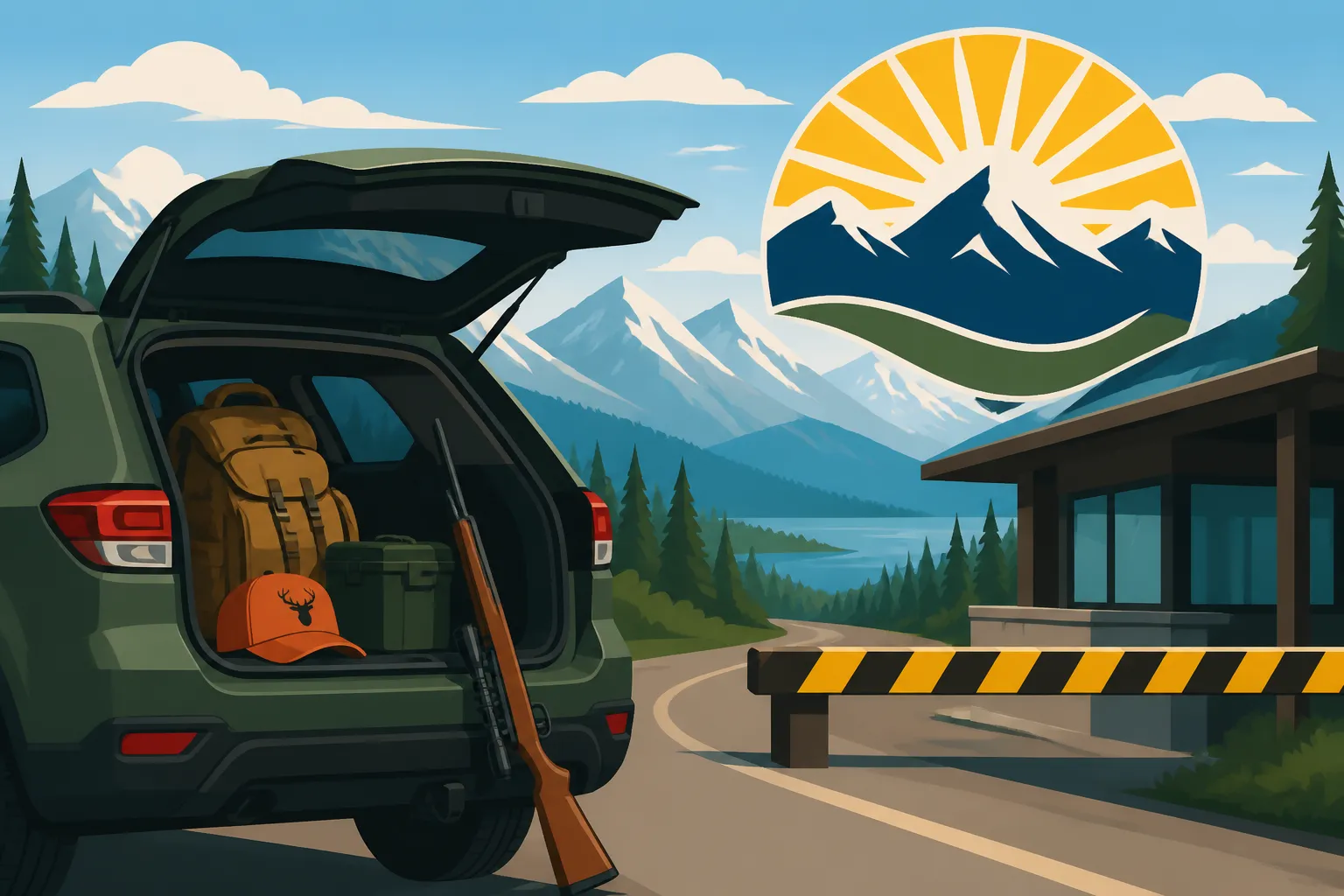
When driving into British Columbia, and indeed across all of Canada, there are strict rules for how firearms and ammunition must be stored during transport. All firearms must be unloaded. This isn't just a suggestion; it's a legal requirement. Beyond being unloaded, non-restricted firearms must also be securely locked. This means using a trigger lock, a cable lock, or having the firearm secured in a hard-sided, locked case that cannot be easily opened. The goal is to render the firearm inoperable and inaccessible during transit.
Furthermore, firearms should be placed in a non-transparent case or container. Simply throwing your rifle in the back seat with a trigger lock isn't good enough. It needs to be out of sight and secured. Ammunition must be transported separately from your firearms, preferably in its own locked container or a separate compartment of your vehicle, not readily accessible from the driver's or passenger's seat. Think of it this way: if you get pulled over, you want there to be absolutely no doubt that your firearms are safely stored and inoperable. For an overview of how your firearms might be used once you're hunting, you might want to review resources like Legal Rifle Calibres for Big Game or Muzzleloader Rules for Big Game.
What to Expect at the Border
Arriving at a Canadian border crossing can be a nerve-wracking experience for first-timers, especially when you're declaring firearms. The key to a smooth process is honesty, cooperation, and patience. As you approach the customs booth, immediately declare your purpose for entering Canada (e.g., "I am here for a hunting trip") and state that you are bringing firearms and ammunition. This immediate declaration is vital. Have all your documentation readily available: your passport, your British Columbia hunting license (if you already have it, which is highly recommended), any invitation letters from an outfitter, and your unsigned CAFC 909 forms.
The CBSA officer will likely ask you to pull over for a secondary inspection. This is standard procedure, so don't be alarmed. They will review your paperwork and may ask to physically inspect your firearms to ensure they are unloaded and stored correctly. Be polite, answer all questions truthfully, and follow their instructions precisely. This is not the time to joke around or be evasive. Any perceived lack of cooperation or honesty can lead to delays and problems. While some hunters plan their trips through platforms like GoHunt, which can offer insights into the overall trip planning, it's always the individual hunter's responsibility to understand and comply with border regulations. Remember to remain calm, patient, and respectful throughout the process, and you’ll typically find the officers to be professional and helpful.
Post-Border: Transporting and Using Firearms in British Columbia
Congratulations, you’ve cleared customs! While the most challenging part of bringing firearms into British Columbia is often the border crossing itself, the rules for transportation and storage don't disappear once you're in the province. British Columbia has its own set of regulations that complement federal laws, especially concerning how firearms are handled in vehicles and at your hunting camp.
In-Vehicle Transportation Within British Columbia
Once you've successfully entered British Columbia with your declared firearms, the rules for in-vehicle transportation ease slightly compared to the border crossing requirements, but they remain strict. Non-restricted firearms must still be unloaded at all times when in a vehicle. This is a non-negotiable safety rule that protects everyone. While you might not always need them to be trigger-locked in a case while driving between your lodging and a hunting area within the province, it is still highly recommended to keep your firearms securely stored, locked, and out of sight to prevent theft and avoid any misinterpretation by law enforcement. A soft case might be acceptable for short distances, but a locked, hard case is always the safest and most compliant option.
It's absolutely critical to understand that under no circumstances is it legal to have a loaded firearm in or on a vehicle in British Columbia, even if it's just leaning against the seat next to you. This rule applies whether the vehicle is moving, stopped, or even parked. Violating this can lead to severe penalties, including fines and potential revocation of your hunting privileges. For more detailed information on this, especially concerning how and where you can hunt in relation to roads, check out British Columbia Rules on Hunting From a Vehicle. Remember, common sense and safety are your best guides here.
Storage at Camp and During Your Hunt
When you arrive at your hunting camp, whether it's a rustic wall tent, a cabin, or a designated recreation site, the responsible storage of your firearms remains paramount. While you'll be actively using your rifle or shotgun during the day, when you're back at camp or leaving your vehicle unattended, they should again be securely locked and unloaded. Keeping them in a locked case, out of sight, is always the best practice. This not only complies with regulations but also greatly reduces the risk of theft, which can be a heart-wrenching end to a hunting trip. Ammunition should also be stored separately and securely, away from your firearms.
During the actual hunt, of course, your firearm will be loaded and ready for use. However, even then, strict adherence to firearm safety rules is essential. Always know where your muzzle is pointed, keep your finger off the trigger until you're ready to shoot, and be absolutely certain of your target and what's beyond it. In British Columbia's diverse wilderness, you might encounter large predators like grizzly bears. While you'll have your firearm for hunting game animals, it's worth reviewing Bear Safety While Hunting in British Columbia to understand how to handle such encounters responsibly and safely, always within legal parameters. If you ever need to leave your vehicle for a short hike and cannot safely carry your firearm, ensure it is unloaded, locked, and out of sight.
Here's a quick overview of the key points to remember:
| Aspect | Requirement/Guidance |
|---|---|
| Firearm Classification | Non-restricted only for most hunting purposes (e.g., bolt-action rifles, shotguns). Handguns/AR-15s generally prohibited. |
| Declaration Form | CAFC 909 (Non-Resident Firearm Declaration), filled out in triplicate, unsigned. |
| Signing CAFC 909 | ONLY sign the CAFC 909 in front of a CBSA officer at the border. |
| Firearm Condition (Border) | Unloaded, trigger/cable locked, in a non-transparent, secure case. |
| Ammunition Storage (Border) | Separate from firearms, securely stored, not easily accessible. |
| At the Border | Declare all firearms immediately, be cooperative, expect inspection, have all documents (passport, licenses, invitation). |
| In-Province Transport | Unloaded, locked (highly recommended), out of sight. Never loaded in or on a vehicle. |
| Cost (CAFC 909) | Expect a processing fee for the CAFC 909. Check official sources for current figures. |
| Declaration Duration | The CAFC 909 is typically valid for 60 days and can be renewed if your stay is longer. |
Driving into British Columbia with your firearms for a hunting trip can be incredibly rewarding. The landscapes are stunning, and the hunting opportunities are diverse. By taking the time to understand and adhere to the Canadian and provincial firearm regulations, completing your paperwork meticulously, and practicing safe handling and storage, you can ensure your focus remains on the incredible experience of hunting in this magnificent province, rather than worrying about regulatory missteps. Proper preparation is truly the foundation of a successful and stress-free adventure.
Disclaimer
This article is for general informational purposes only and does not constitute professional advice. Laws, prices and regulations vary by location and change over time. Consult a qualified professional for guidance on your specific situation.