Hunting a Ridge Above Timberline
Hunting a ridge above timberline in British Columbia is a truly unique challenge, one that tests your physical limits, mental fortitude, and hunting skill against some of the province's most unforgiving yet rewarding landscapes. Many hunters dream of the majestic vistas and elusive game found in the high country, but the reality of steep ascents, sudden weather shifts, and the sheer vastness of the alpine can quickly turn that dream into a grueling struggle if you're not properly prepared. This guide will walk you through the specifics of how to approach, navigate, and successfully hunt those breathtaking ridges above the treeline, giving you the insights you need to turn an intimidating expedition into a memorable and successful high-country adventure.
Understanding the Alpine Ridge Environment
The alpine environment in British Columbia is a world unto itself, drastically different from hunting timber or valley bottoms. Ridges above timberline are characterized by their exposed nature, thin air, dramatic elevation changes, and sparse vegetation. It's a place where the weather can turn on a dime, where a clear, calm morning can rapidly give way to a whiteout blizzard or a pounding rainstorm. Understanding these inherent qualities is the first step to planning a successful hunt.
The Unique Challenges of Hunting Above the Trees
When you push past the last scraggly firs and into the true alpine, you're entering an arena where your body works harder, and your gear becomes critically important. The air is thinner, meaning every step, especially on an incline, demands more from your lungs and muscles. Dehydration is a constant threat, even in cool weather, due to increased respiration and exertion. The sun's UV rays are also far more intense at higher altitudes, leading to sunburn and eye strain if you're not adequately protected.
Furthermore, the terrain itself is often a brutal mix of scree slopes, boulder fields, sheer rock faces, and hidden crevasses. Every step must be deliberate, as a misstep can lead to serious injury in an area where rescue might be hours or days away. It's not uncommon to find yourself scrambling over broken rock for miles, often with a heavy pack, just to gain a vantage point. The exposure to wind is relentless, constantly trying to sap your body heat, and when rain or snow hits, there's often little to no natural shelter to be found. Hunting British Columbia's Alpine in September can be an incredible experience, but it requires respect for these conditions.
Reading the Landscape: Identifying Key Features
Successfully hunting above timberline isn't just about spotting game; it's about understanding how game uses the terrain, and how you can use it to your advantage. Ridges aren't just continuous lines; they are complex structures with subtle nuances that can hold animals or provide crucial cover for an approach. You'll find areas where the ridge widens into a bench, offering prime feeding or bedding habitat. Look for saddles, which are low points connecting two higher peaks or ridges. These often serve as natural travel corridors for animals moving between feeding and bedding areas, or from one basin to another.
Pay close attention to gullies, chutes, and drainages that cut down from the ridge. These features provide shelter from the wind, pockets of more lush vegetation, and often hold snow and water longer into the season, attracting game. South-facing slopes, for instance, often melt out earlier and green up quicker, offering crucial forage, while north-facing slopes might hold snow well into late summer, providing cooler bedding spots during warm spells. Using topographic maps and satellite imagery (like with onX Hunt) is crucial for identifying these features before you even step foot in the mountains. Taking the time to scout the terrain, even if just virtually, is an absolute game-changer. Scouting a British Columbia Management Unit Online will give you a major head start.
Essential Gear and Preparation for High-Altitude Hunts
Heading above timberline without the right gear is not just uncomfortable; it's genuinely dangerous. The margin for error shrinks considerably when you're miles from the nearest road, exposed to the elements. Your gear needs to be reliable, lightweight, and capable of performing in extreme conditions.
Specialized Clothing and Layering Systems
The golden rule for mountain hunting clothing is layering. Forget heavy, bulky single garments. You need a system that allows you to add or shed layers instantly to adapt to the wildly fluctuating temperatures and activity levels. Start with a moisture-wicking base layer next to your skin, ideally merino wool or a synthetic blend, to pull sweat away from your body. Next comes a mid-layer for insulation – a fleece jacket or a lightweight puffy jacket works well. For your outer layer, you absolutely need a bombproof rain and wind shell. This piece is your first line of defense against the elements and should be completely waterproof and breathable.
Don't forget leg protection; good quality hunting pants that are durable and offer some water resistance are key, often paired with rain pants that can be quickly donned over top. A second, warmer puffy jacket, perhaps with synthetic insulation that performs well even when damp, is vital for glassing sessions or when temperatures drop significantly, especially if you're Hunting Above Timberline in Cold Weather. Always carry a warm hat, gloves, and a neck gaiter or balaclava, even if the forecast looks mild. Hypothermia can set in quickly in the mountains, and a sudden drop in temperature combined with wind and moisture is a recipe for disaster.
Navigation and Communication in Remote Terrain
Navigating above timberline can be incredibly disorienting, especially when fog rolls in or snow starts to fall, obscuring familiar landmarks. A reliable GPS device or a smartphone app with downloaded maps is non-negotiable. Platforms like onX Hunt are incredibly valuable here, allowing you to mark waypoints, track your route, and see property boundaries (though mostly a US feature, the mapping capabilities are still excellent for Crown land navigation in BC). Always carry a physical map and compass as a backup, and know how to use them. Electronics can fail due to battery drain, extreme cold, or damage.
Communication in these remote areas is another critical concern. Cell service is virtually non-existent once you leave populated valleys. A satellite messenger or satellite phone is highly recommended for emergency communication and for letting loved ones know you're safe. Devices like the Garmin inReach or the Zoleo provide two-way messaging and SOS capabilities, offering peace of mind. Even a simple whistle can be a lifesaver if you need to signal a hunting partner or alert potential rescuers. Always ensure these devices are fully charged and that you understand their operation before heading out. Satellite Communication on a Remote Hunt is not just a luxury; it's a safety essential.
Strategies for Hunting Ridges Above Timberline
Successfully hunting above timberline demands a strategic approach, blending patience, observation, and meticulous planning. It's less about crashing through the bush and more about calculated movements and careful glassing.
Glassing Techniques for Expansive Views
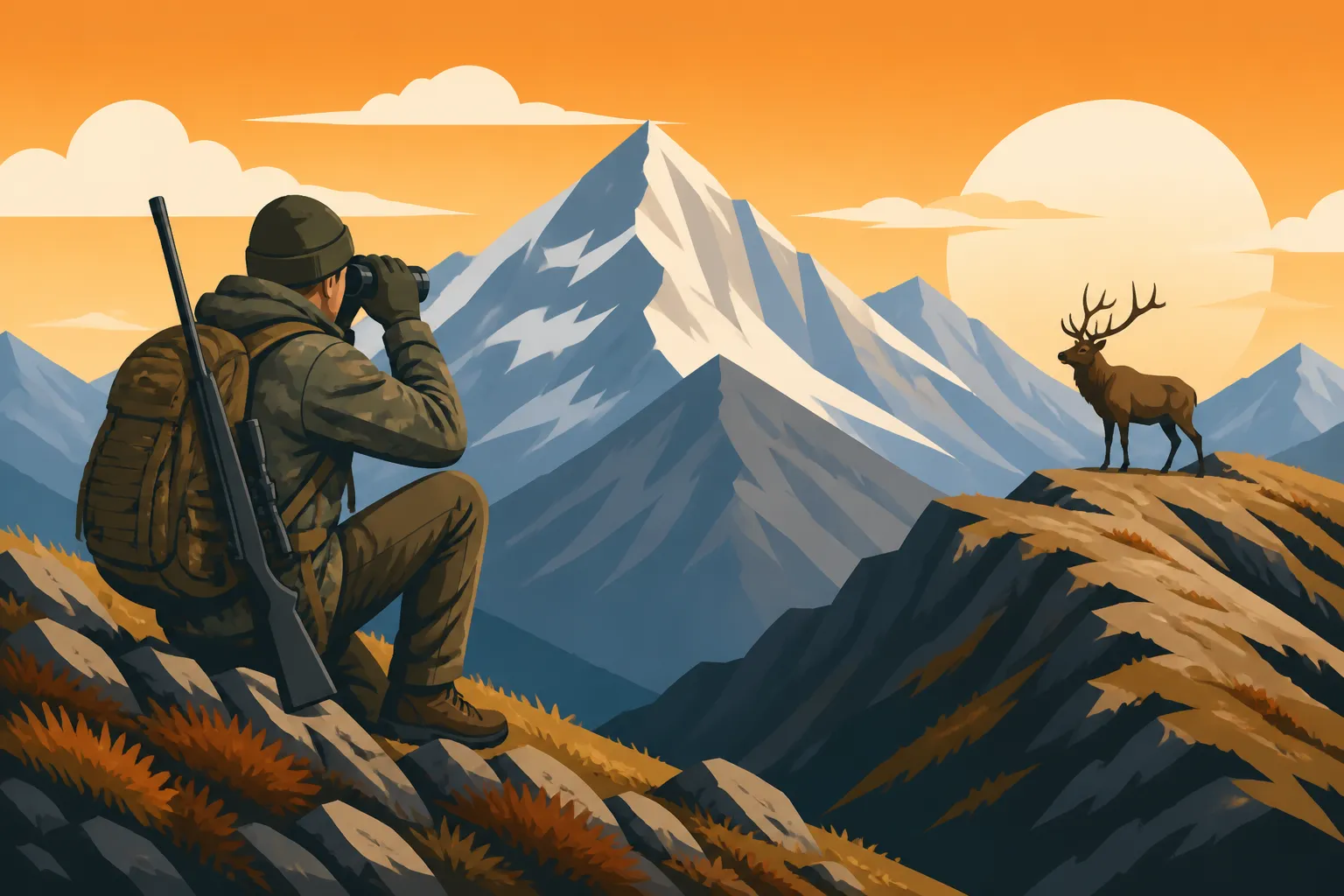
The vast, open terrain above timberline lends itself perfectly to glassing, making your optics your most important hunting tool after your rifle or bow. Don't just scan casually; settle into a comfortable position, ideally with a tripod for your binoculars or spotting scope, and systematically grid out the landscape. Start close and work your way out, then move your grid across the entire area, repeating the process over and over. Animals, especially sheep and goats, can blend in incredibly well with the rock and snow. Look for anything that seems "out of place" – a horizontal line in a vertical world, a patch of different color, or the glint of an antler.
Dedicate significant time to glassing. This isn't a quick scan; it's hours of methodical searching. Animals often move at first and last light, so position yourself on a high vantage point before dawn and stay until well after dusk. During the middle of the day, animals will often bed down, so focus your attention on shady slopes, benches, or hidden pockets where they might be seeking shelter. Don't forget to look up as well; sheep and goats are masters of using cliff faces and impossible-looking ledges. Glassing an Alpine Basin for Rams takes patience and practice.
Stalking and Approach Tactics
Once you've spotted an animal, the real challenge begins: the stalk. Unlike timber hunting where thick cover might aid your approach, above timberline, you're often exposed. You must become an expert at using what little cover is available – folds in the terrain, large boulders, small clumps of subalpine vegetation, or even the shadows cast by the sun. Wind direction is paramount; always approach into the wind or with a crosswind to keep your scent from reaching the animal.
Patience is your best friend. A stalk can take hours, even for what looks like a short distance on the map. Move slowly and deliberately, taking care not to dislodge loose rocks or make any sudden movements. If the animal looks up, freeze immediately and remain absolutely still until it goes back to feeding or bedding. Sometimes, the best approach isn't a direct one, but a long, circuitous route that keeps you out of sight, even if it adds significant time and effort. High-country mule deer can be incredibly wary; Stalking a Bedded Buck in Open Timber requires supreme stealth, and above timberline, it's even more critical.
Animal Behavior and Where to Find Them
Knowing where to look is just as important as how to look. Different species behave differently in the alpine, and understanding their habits will significantly increase your odds of success.
Species Commonly Found Above Timberline
British Columbia's high country is the exclusive domain of some of the province's most sought-after big game animals. Mountain goats and mountain sheep (Bighorn, California, and Stone's) are perhaps the most iconic residents of the true alpine. You'll find mountain goats often on the steepest, most rugged rock faces, seemingly defying gravity as they navigate sheer cliffs. Sheep tend to prefer more open, rolling alpine terrain interspersed with rocky outcrops, often feeding on sparse grasses and forbs.
Beyond these specialized alpine dwellers, high-country mule deer are also frequent visitors to the ridges above timberline, particularly during the late summer and early fall. Older, mature bucks will often seek refuge from hunting pressure and heat in the cooler, less accessible high country, only dropping back into lower elevations later in the season. Black bears will also venture into the alpine, especially in late summer and fall, to feast on berry patches found on open slopes before denning. Keep an eye out for signs of Hunting Fall Bears on British Columbia Berry Slopes.
Identifying Bedding Areas and Travel Routes
Understanding where these animals prefer to bed and how they move is crucial. Mountain goats, being almost fearless on rock, will often bed on narrow ledges or in small depressions on steep, broken ground, offering them a clear view below and protection from above. Sheep will often bed on small benches or elevated knolls, particularly those with good visibility, allowing them to spot predators from a distance. Both species typically prefer bedding spots with sun exposure in cool weather and shade in warmer conditions.
Mule deer in the alpine will often bed in small pockets of stunted timber or behind large rocks, using the sparse cover to break up their outline. During the heat of the day, they might seek shade under cliff overhangs or on north-facing slopes. Travel routes are often dictated by the terrain; animals will use saddles to cross from one ridge to another, follow benches along a mountainside, or use game trails that weave through boulder fields. Look for well-worn trails, fresh droppings, and rubbed vegetation as indicators of active travel corridors. Hunting a Mountain Pass in British Columbia can be incredibly productive if you understand these movements.
Here's a quick reference for gear and considerations:
| Category | Essential Items | Key Considerations |
|---|---|---|
| Clothing | Base layers (wool/synthetic), Mid-layers (fleece/puffy), Waterproof/breathable outer shell, Rain pants, Warm hat, Gloves, Balaclava | Layering for variable weather, Durability, Breathability, Quick-drying |
| Footwear | Sturdy, waterproof mountaineering boots, Gaiters | Ankle support, Traction on loose rock, Break-in period, Proper fit |
| Navigation | GPS device/app (onX Hunt, GoHunt), Physical map, Compass, Power bank | Redundancy, Battery life, Weather resistance, Familiarity with tools |
| Communication | Satellite messenger/phone, Whistle | Emergency contact, Two-way messaging, SOS function, Charge before hunt |
| Optics | Binoculars (10x-15x), Spotting scope, Tripod | Light gathering, Clarity, Stability, Field of view |
| Safety/Survival | First-aid kit, Bear spray, Fire starter, Headlamp, Emergency shelter, Water filter, High-energy food | Self-sufficiency, Accessible emergency items, Water source, Protection against wildlife |
| Hunting Specific | Rifle/Bow, Ammo/Arrows, Pack (frame pack for meat), Knife, Game bags | Practice with gear, Meat care in the field, Lightweight yet robust |
Safety and Environmental Respect in the Alpine
The British Columbia alpine is a wild, beautiful, and potentially dangerous place. Safety must always be your top priority. Beyond having the right gear, having the right mindset and knowledge of safety protocols is critical. Always let someone know your detailed itinerary, including your planned route and expected return time. Be prepared for any emergency, from minor injuries to severe weather events. Emergency Planning in British Columbia's Backcountry is not something to take lightly.
Bear safety is paramount; both black bears and grizzly bears inhabit the high country. Carry bear spray and know how to use it. Be vocal while hiking, especially through dense vegetation, to avoid surprise encounters. When you harvest an animal, plan your meat care meticulously. Packing Out of British Columbia's Steep Country is often the hardest part of the hunt, and ensuring your meat stays clean and cool is essential.
Respect for the environment is equally important. Practice Leave No Trace principles: pack out everything you pack in, minimize your impact on vegetation, and leave the landscape as you found it. This ensures that these incredible alpine hunting opportunities remain for future generations. Hunting a ridge above timberline is a profound experience that connects you deeply with nature, offering unparalleled views and a true sense of accomplishment. It's tough, yes, but the rewards are absolutely worth the effort.
Disclaimer
This article is for general informational purposes only and does not constitute professional advice. Laws, prices and regulations vary by location and change over time. Consult a qualified professional for guidance on your specific situation.