Hunting the Boundary Country Uplands
The Boundary Country Uplands of British Columbia present a unique and often overlooked hunting experience, a true blend of challenges and rewards for those willing to explore its vast, rolling landscape. Many hunters find themselves scratching their heads, wondering where to even begin in this mix of open grasslands, timbered ridges, and deep draws. This guide is here to unravel the complexities, offering a practical approach to successfully navigate and hunt this distinctive region, turning your frustrations into fruitful backcountry adventures.
Understanding the Unique Landscape of the Boundary Country Uplands
The Boundary Country is a fascinating part of British Columbia, far removed from the dramatic coastal mountains or the dense forests of the interior north. What you’ll find here is a mosaic of habitats, shaped by a drier climate and a history of ranching, logging, and mining. It’s a place where the landscape doesn't scream "big game," but quietly holds it in its folds.
Geographical Features and Habitat Diversity
Picture rolling hills, often covered in open Ponderosa pine and Douglas fir forests, interspersed with expansive grasslands and sagebrush flats. This isn't dense, dark timber for miles, nor is it wide-open prairie. Instead, it’s a constant transition, with benches and draws, small creek bottoms, and occasional clearcuts creating varied pockets of cover and forage. You'll encounter areas that feel almost like a park, with widely spaced trees and clear understories, which can be fantastic for glassing, contrasting sharply with dense thickets along a drainage or a north-facing slope that holds snow later in the year. Understanding this patchwork is key to finding game. It's not about finding one perfect spot, but rather understanding how animals use this diverse terrain throughout the day and across the seasons.
The uplands here often mean elevations that aren't extreme, but still offer significant vertical relief. You might climb a few hundred feet to get a vantage point over a large basin or follow a logging road that winds through a series of benches. This elevation change, combined with the mix of cover, dictates how game moves and where they bed down. For instance, deer might feed in an open grassland draw in the cooler hours, then slip into a thick stand of timber on an adjacent north slope for bedding during the heat of the day. Recognizing these patterns and reading the subtle changes in vegetation and topography is fundamental to effective hunting here.
Climate and Environmental Factors
The Boundary Country generally experiences hotter, drier summers and colder, snowier winters compared to the coast. This semi-arid climate deeply influences game behaviour and habitat. Drought conditions, while not constant, can significantly impact water sources and forage quality, pushing animals to areas with reliable water or greener feed. When you're planning a hunt, especially in the early seasons, water availability for both you and the game is a critical consideration. Animals will often be concentrated around creeks, springs, or even ephemeral puddles after rain.
Snowfall in the uplands often dictates late-season hunting success. While early snow can push animals down from higher elevations into more accessible areas, too much snow can close roads and make travel difficult or impossible. Monitoring weather patterns and road conditions is crucial. A hunter might plan a late-season deer hunt hoping for a tracking snow, but a heavy dump could mean the difference between getting into your planned area and being stuck at a closed gate. The resilience of the game here, adapting to these fluctuating conditions, is truly something to respect, and understanding these environmental cues will give you a significant advantage. What Drought Does to British Columbia Game is a highly relevant read for understanding these dynamics.
Targeting Key Species: What You'll Find Here
The Boundary Country Uplands might not boast the same sheer numbers of certain species as some other regions, but it offers quality hunting opportunities for several iconic British Columbia big game animals. It’s a place where you might focus on one species but easily encounter another, adding an element of surprise to every outing.
Mule Deer: The Primary Quarry
Mule deer are arguably the flagship species of the Boundary Country Uplands. These magnificent animals thrive in the mixed forest and open country, using the scattered timber for cover and the grasslands for feeding. Finding them often involves a lot of glassing, patiently scanning the sagebrush flats, the edges of clearcuts, and the timbered slopes. They're masters of using broken terrain to their advantage, often appearing and disappearing as if by magic.
Successful mule deer hunting here often means dedicating time to scouting, both physically and with mapping tools like onX Hunt, to identify key habitat features. Look for benches with good forage, sheltered draws, and north-facing slopes where they might bed down. The rut in late October and November can be an exciting time, as bucks become more active and less cautious, often following does into more open areas. Early season hunts, however, will require keen eyes and a more strategic approach, focusing on food and water sources. Hunting a Grassland Draw in the Okanagan or Hunting a Sagebrush Flat for Mule Deer can provide valuable insights into specific tactics for these types of habitats, which are common here.
Black Bears: Abundant and Opportunistic
Black bears are common throughout the Boundary Country Uplands, utilizing the diverse food sources available from spring greens to fall berries. While they might not be the primary target for all hunters, they offer an excellent opportunity to fill a tag, especially during the spring season. After emerging from hibernation, bears are often found foraging in open clearcuts, along logging roads, and in avalanche chutes, seeking out fresh grass and other vegetation.
Fall bear hunting can be equally productive, with bears concentrating on berry patches and other mast crops to put on weight before winter. Scouting for these food sources is crucial. Keep an eye out for fresh sign – overturned rocks, ripped-apart stumps, and scat – which indicates recent bear activity. Understanding their feeding patterns and preferred habitats at different times of the year is essential. Always remember bear safety, particularly when hunting in areas with thick cover or near natural food sources. British Columbia Black Bear Season Dates will help you plan your hunt.
White-Tailed Deer: Expanding Opportunities
While historically less common in parts of the Boundary Country, white-tailed deer have been expanding their range and numbers in many areas of British Columbia's interior, including sections of the uplands. They tend to prefer denser cover than mule deer, often sticking to creek bottoms, brushy draws, and agricultural fringes. This means that while you might be glassing for a muley on an open slope, a whitetail might bust out of a nearby thicket.
Hunting whitetails in this mixed environment requires a different approach, often involving still-hunting or stand hunting along known travel corridors. Look for fresh rubs and scrapes, especially during the rut, to pinpoint active areas. Their shy and elusive nature, combined with their preference for dense cover, makes them a challenging but rewarding quarry. Identifying areas with a good mix of dense cover and accessible forage will increase your chances of encountering these expanding populations.
Other Potential Species
Depending on the specific management unit and local conditions, you might also encounter elk and moose in certain pockets of the Boundary Country. Elk, particularly Rocky Mountain elk, are more common in the eastern reaches, but smaller, scattered herds can be found. Moose are generally associated with more northern or wetter habitats, but some areas with suitable willow bottoms or beaver ponds may hold them. Coyote and various upland birds are also prevalent, offering additional hunting opportunities. Hunting British Columbia's Grouse Season is a great resource if you're looking to diversify your hunt. Always check the current regulations for your specific management unit, as seasons and bag limits can vary dramatically even within relatively close proximity.
Here’s a quick overview of potential species and their typical habitat in the Boundary Country Uplands:
| Species | Primary Habitat | Hunting Approach | Key Sign to Look For |
|---|---|---|---|
| Mule Deer | Open timber, grassland edges, clearcuts | Glassing, spot-and-stalk, still-hunting | Tracks, beds, browsed shrubs |
| Black Bear | Clearcuts, logging roads, berry patches, draws | Spot-and-stalk, still-hunting, baiting (where legal) | Scat, tracks, turned rocks, rubs |
| White-Tailed Deer | Dense riparian areas, brushy draws, timber | Still-hunting, stand hunting, tracking | Rubs, scrapes, fresh tracks |
| Elk (limited) | Open timbered slopes, valley bottoms | Bugling (rut), spot-and-stalk | Tracks, wallows, rubs, droppings |
| Moose (limited) | Willow flats, beaver ponds, wet areas | Calling (rut), still-hunting | Tracks, browsed willows |
Navigating Access and Regulations in the Boundary Country Uplands
One of the biggest hurdles for any hunter, especially those new to a specific area like the Boundary Country Uplands, is figuring out where you can actually hunt and what the rules are. British Columbia has a complex tapestry of Crown land, private holdings, and various designations that can make planning a hunt feel like solving a puzzle.
Understanding Crown Land and Private Property
The good news is that much of the Boundary Country Uplands, like the rest of British Columbia, is Crown land, meaning it's generally open to public access for hunting. However, this isn't always a simple distinction. Crown land can be intermingled with private parcels, active logging operations, or other tenures. It's not uncommon to find a block of timber that starts as Crown land, transitions through a private woodlot, and then opens up to more Crown land further in. This requires meticulous attention to detail when planning your route and hunting areas.
This is where digital mapping tools become absolutely indispensable. Applications like onX Hunt allow you to clearly see property boundaries, distinguishing between public and private land. This is a game-changer for avoiding accidental trespass, which can quickly ruin a hunt and land you in legal trouble. Before you even leave home, you can scout potential areas, identify access points, and plan your routes to stay on legal ground. Always cross-reference with physical maps if possible, and be aware that property lines aren't always marked on the ground. When in doubt, it’s always best to assume an area is private unless you can confirm it’s public and respect all posted signage. British Columbia Trespass and Private Land Law is a must-read for any hunter.
Forest Service Roads and Access Challenges
The Boundary Country is crisscrossed by an extensive network of Forest Service Roads (FSRs), many of which provide crucial access to hunting areas. These roads range from well-maintained mainlines suitable for 2WD vehicles to rough, overgrown tracks that require high-clearance 4x4s. Many FSRs may also be seasonally deactivated, meaning gates are locked, bridges are removed, or culverts are pulled, making vehicle access impossible. This doesn't necessarily mean you can't hunt these areas, but it will require hiking or potentially using ATVs where allowed beyond the gate.
Active logging operations are also a frequent consideration. These areas often have radio call-in protocols for active haul roads, and some sections may be temporarily closed to public access for safety reasons. Always be aware of active industrial traffic and drive defensively. Check local road condition reports, especially during spring thaw or after heavy rains, as FSRs can quickly deteriorate or become impassable due to washouts. Using resources like the FSR status updates provided by forestry companies or government websites, in conjunction with mapping apps that might show road conditions, is vital for planning your approach. Finding Open Forest Roads in British Columbia will give you excellent guidance on how to research this.
Understanding British Columbia's Management Units (MUs)
British Columbia is divided into numerous Management Units (MUs), and each MU has specific regulations regarding hunting seasons, bag limits, and species restrictions. The Boundary Country spans several MUs, and the rules can change dramatically from one unit to the next, sometimes just across a road or a drainage. It's imperative that you identify the exact MU you intend to hunt and thoroughly review the regulations for that specific unit in the most current British Columbia Hunting and Trapping Synopsis.
This includes checking for general open seasons versus Limited Entry Hunting (LEH) zones. Some areas might have a general open season for antlerless deer, while an adjacent MU only allows antlered bucks under a draw. Pay close attention to antler restrictions, such as the "four-point" rule for mule deer in many areas, and specific dates for archery, muzzleloader, or rifle seasons. A tool like GoHunt, while primarily geared towards US draws, can still be a valuable general research resource for understanding species distribution and behaviour, which can inform your MU selection, but always verify specific BC regulations directly from the provincial synopsis. Reading a British Columbia MU Map will teach you how to decipher these critical boundaries.
Strategic Hunting Approaches for Success
Hunting the Boundary Country Uplands isn't about one-size-fits-all tactics. It demands adaptability, keen observation, and often, a willingness to put in the miles on foot. The diverse terrain means you'll need a range of strategies in your toolkit.
Spot-and-Stalk in Open and Semi-Open Terrain
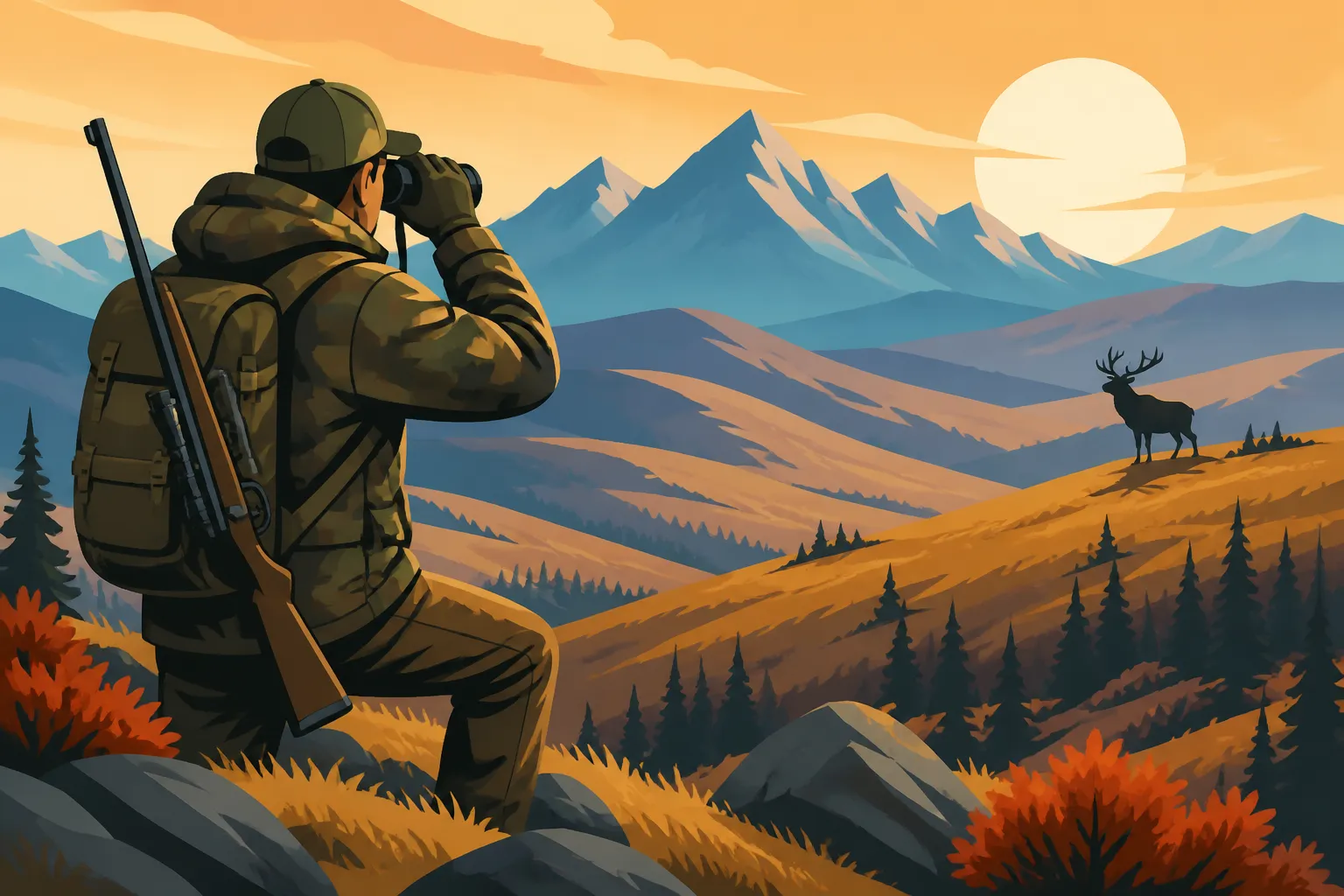
For mule deer and bears, especially in the more open Ponderosa pine forests, grasslands, and clearcuts, spot-and-stalk is often the most productive method. This involves finding a good vantage point – a prominent ridge, a knob, or even an elevated section of a deactivated logging road – and spending extended periods glassing the landscape. Quality binoculars (10x or 12x) and a spotting scope on a tripod are essential tools for this.
Once you spot an animal, the real challenge begins: planning your approach. This requires careful consideration of the wind, terrain, and cover available. You'll need to move slowly, deliberately, using every fold in the land, every clump of trees, and every piece of brush to conceal your movement. Often, the stalk will take far longer than the initial glassing, sometimes hours, as you navigate silently to get into a shooting position. Patience is truly a virtue here. Getting within range without being detected is a skill honed over many hours in the field, and the Boundary Country offers ample opportunity to practice it. Spot-and-Stalk Mule Deer in British Columbia goes into this technique in much greater detail.
Still-Hunting and Tracking in Timbered Areas
When the terrain transitions to denser timber, especially in creek bottoms or on heavily treed north slopes, still-hunting becomes a more effective strategy for species like white-tailed deer and black bears. This involves moving incredibly slowly and quietly through the woods, pausing frequently to listen and scan. Your senses become your primary tools – listening for subtle sounds like rustling leaves, snapping twigs, or the distant stomp of a deer.
Tracking can also be effective after a fresh snowfall. The ability to read tracks – determining species, direction of travel, and how recently the animal passed – can lead you directly to game. Pay attention to the animal's pace; a walking track is often a relaxed animal, while a bounding track suggests it's been spooked. This method requires a deep understanding of animal behaviour and the ability to move through the forest with minimal disturbance. It's a challenging but deeply rewarding way to hunt, connecting you intimately with the landscape and its inhabitants.
Using Deactivated Roads and Trail Systems
Many deactivated logging roads in the Boundary Country become excellent foot access routes into otherwise hard-to-reach areas. While vehicles might be restricted, these old roads often provide relatively easy walking, allowing you to cover significant ground. They also act as natural travel corridors for game, and the edges of these roads, where new growth often flourishes, can be prime feeding areas.
Hunting along these deactivated roads involves a combination of strategies. You can still-hunt them, keeping an eye on the edges and adjacent timber. They also provide elevated vantage points in some areas for glassing. Just remember that while you're likely to see fewer other hunters beyond a locked gate, you're also further from assistance should an emergency arise. Always carry an emergency kit and a reliable communication device, like a satellite messenger. Emergency Planning in British Columbia's Backcountry is essential reading before venturing far off the beaten path. These areas are truly where you get to experience the wilder side of the Boundary Country.
Essential Gear and Preparation for the Uplands
Going into the Boundary Country Uplands prepared can make all the difference between a memorable hunt and a miserable one. The weather can be unpredictable, the terrain varied, and help can be hours away.
Navigation Tools and Maps
Even with excellent local knowledge, technology is your friend here. A GPS device or a smartphone app like onX Hunt is crucial for navigation. Download offline maps before you leave cell service, as connectivity is often non-existent in the backcountry. These apps help you pinpoint your exact location, track your movements, mark waypoints (such as animal sightings, tracks, or your vehicle), and most importantly, identify public and private land boundaries. Don't rely solely on electronics, however; a good old-fashioned paper map and compass, and the knowledge of how to use them, are non-negotiable backups.
Beyond basic navigation, a detailed map helps you understand the topography, identify potential bottlenecks for game movement, and plan strategic glassing positions. Researching the specific management unit online and using tools like GoHunt for general terrain analysis or historical data can give you an edge, but always ensure your mapping tools are up-to-date for property boundaries and road access.
Clothing, Footwear, and Shelter
Layering is key for the variable weather of the Boundary Country. Mornings can be crisp, days warm, and evenings cool, even in early fall. A good base layer, insulating mid-layers, and a waterproof/windproof outer shell will keep you comfortable. Avoid cotton, as it retains moisture and loses its insulating properties when wet. Wool or synthetic materials are far superior.
Sturdy, comfortable, and broken-in hiking boots are paramount. You’ll be covering varied terrain, from rocky slopes to grassy flats, and good ankle support and waterproofing are essential. Consider carrying a lightweight tarp or emergency shelter, even for day hunts, as unexpected weather changes or an overnight stay due to injury can happen. A well-stocked first-aid kit is also a non-negotiable item for any backcountry excursion.
Optics and Other Essentials
As mentioned, quality optics are vital for spot-and-stalk hunting. A pair of 10x or 12x binoculars are standard, and a spotting scope (15-45x or 20-60x) will greatly enhance your ability to pick apart distant hillsides and identify game. A rangefinder is also highly recommended for accurate shot placement in open country.
Beyond these, remember the basics: plenty of water, high-energy snacks, a knife, rope, headlamp, fire-starting materials, and bear spray. While the Boundary Country isn't known for its grizzly population like some northern regions, black bears are prevalent, and bear spray is a prudent safety measure. Always ensure your firearm is properly sighted in and that you are proficient with it under various field conditions.
The Boundary Country Uplands offers a rewarding hunting experience for those who approach it with respect, preparation, and a willingness to adapt. It's a place where careful planning and patient observation often lead to the most memorable successes.
Disclaimer
This article is for general informational purposes only and does not constitute professional advice. Laws, prices and regulations vary by location and change over time. Consult a qualified professional for guidance on your specific situation.