Hunting a Subalpine Meadow
Hunting a subalpine meadow in British Columbia can feel like staring at a vast, beautiful canvas with no clear path to your quarry. The sheer openness can be intimidating, making it tough to figure out where to even start looking, let alone how to approach an animal without being busted from a mile away. This guide is all about helping you demystify these high-country gems, offering practical strategies and insights to transform those daunting meadows into productive hunting grounds.
Understanding the Subalpine Meadow Ecosystem
Subalpine meadows are these incredible, often overlooked transition zones in British Columbia's mountains. They sit right below the true alpine, where the trees start to thin out and dwarf, before giving way to wide-open rock and tundra. Knowing what makes these areas tick is your first step to success.
Defining the Subalpine Zone and Its Appeal
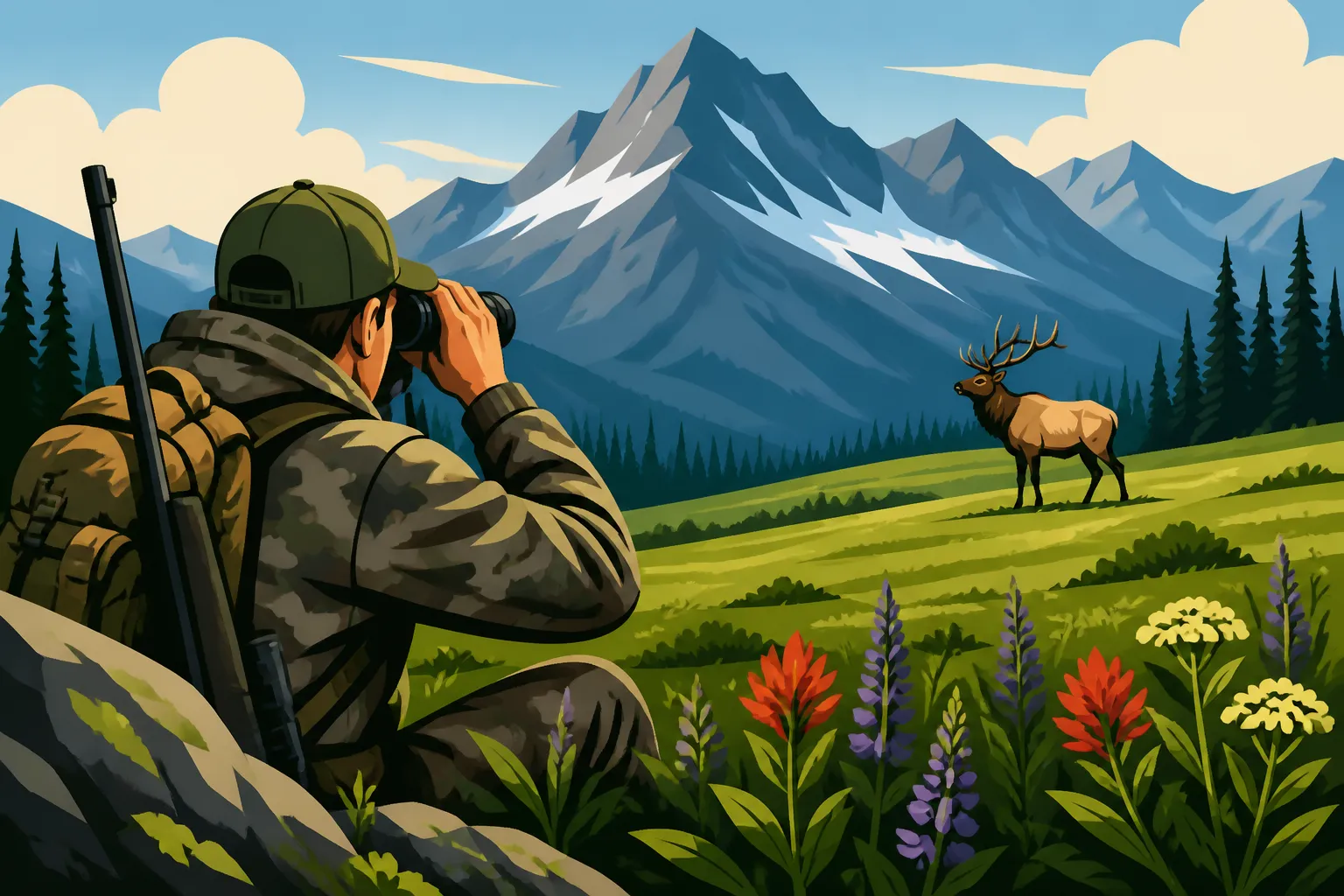
Imagine standing on a ridge, looking out over a mosaic of scattered evergreens – often stunted firs and spruces – interspersed with vibrant green grasses, wildflowers, and low-lying shrubs. That's the subalpine zone. It generally kicks in around 1,800 to 2,000 meters (about 6,000 to 6,500 feet) in most BC ranges, though this varies significantly with latitude and proximity to the coast. The appeal for both animals and hunters is clear: it's a zone of rich forage, relatively good cover compared to the exposed alpine, and typically fewer people than the lower valley bottoms. These meadows act as critical feeding areas, especially in the early and late parts of the day, offering a buffet of succulent plants that are more palatable than the tougher alpine vegetation. For animals needing a bit more security than the full alpine provides, but still wanting to escape summer heat or find solitude, these meadows are ideal. They offer escape routes into thicker timber nearby or quick access to rugged, broken terrain above, making them perfect transit points.
Key Species You'll Find Here
Subalpine meadows are prime habitat for a variety of big game animals in British Columbia. You'll often find mule deer bucks, particularly those mature ones looking to escape hunting pressure in the lower country, browsing on lush forbs or bedding down in the scattered timber at the meadow's edge. Elk, especially smaller bachelor herds or cows with calves, will utilize these areas for grazing, enjoying the cooler temperatures and abundant feed. If you're chasing sheep or goats, these meadows are often crucial staging areas or travel corridors between different bands of alpine habitat. Mountain goats might traverse them to access mineral licks or move between rocky outcrops, while sheep might drop down from higher elevations to graze. And of course, where there's abundant forage and game, there are bears. Both black bears and grizzlies frequent subalpine meadows, feasting on berries, roots, and sometimes even preying on unwary fawns or calves. Knowing which species are likely to be present helps you focus your scouting efforts. Mule Deer Across British Columbia's Interior and Elk Hunting in British Columbia can give you more details on these animals.
Seasonal Changes and Animal Movement
The subalpine meadow isn't static; it's a dynamic environment that shifts dramatically with the seasons, and so do the animals that call it home. In early spring, as the snow recedes, these meadows are among the first high-elevation areas to green up, attracting hungry animals keen on fresh forage after a long winter. This can make for excellent bear hunting opportunities. By mid-summer, the bug hatches and lush growth keep animals like elk and deer high, often moving between feeding in the meadows and bedding in the adjacent timber. As fall approaches, especially during the September archery seasons, Hunting British Columbia's Alpine in Early September conditions can still be ideal, with animals enjoying the last of the rich feed before the snows push them down. Come late fall, with the first significant snowfalls, animals will begin their migration to lower winter ranges, although a mild spell can keep them higher than expected. Understanding these migratory patterns is key. For example, a sudden cold snap might push mule deer off an exposed meadow and into the thermal cover of a nearby timber patch, while a period of warm weather could draw them back out.
Pre-Hunt Planning and Scouting for Subalpine Meadows
You wouldn't just wander into a new office building expecting to know where everything is, right? The same goes for a subalpine meadow. Effective pre-hunt planning and digital scouting are absolutely critical to success, especially in British Columbia's vast and often challenging backcountry.
Interpreting Topographic Maps and Satellite Imagery
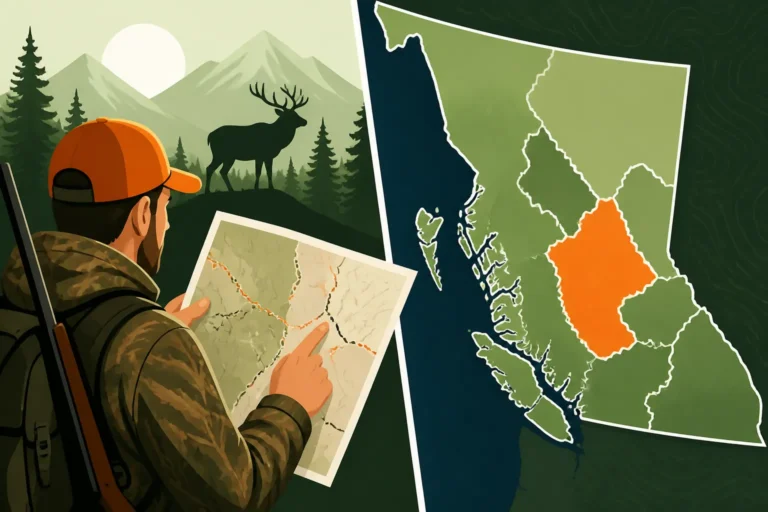
Before you even think about lacing up your boots, you need to spend some serious time with good maps. Digital tools have revolutionized this. Services like onX Hunt or GoHunt allow you to virtually explore these high-country areas from your couch. Look for large, relatively flat or gently sloped areas above the continuous timberline but below the highest, most rugged peaks. Pay close attention to contour lines – are there subtle benches, saddles, or draws that funnel game? Identify potential access points, whether it's an old logging road that peters out, a game trail leading up a drainage, or a ridgeline you can hike. Look for darker green patches within or adjacent to the meadow – these indicate thicker timber that provides cover and bedding. Bright green areas often suggest open, lush grazing. By overlaying satellite imagery with topographic maps, you can identify hidden pockets of feed, isolated stands of timber for bedding, and crucial escape routes that animals will instinctively use. Mark these points digitally; they'll be invaluable in the field. Scouting a British Columbia Management Unit online is a must, and this level of detail is exactly what you need for a subalpine hunt.
Identifying Key Features
Once you've got a handle on the overall layout, zoom in on the specifics. Key features dictate where animals spend their time. Water sources are paramount, especially in drier regions of the interior; look for small springs, seepages, or ephemeral ponds. These are natural magnets. Bedding areas will often be just inside the timber edge, offering shade, thermal cover, and a vantage point. Animals rarely bed in the wide open unless it's very cold or windy and they need thermal relief from sunlight in a depression. Travel corridors are subtle but crucial – these might be faint game trails along benches, saddles connecting two basins, or lines of least resistance through broken timber. Understanding how game moves between feeding, bedding, and watering sites is the puzzle you need to solve. Natural funnels, like narrow passes between rock outcroppings or tight draws, can concentrate animal movement, offering excellent ambush opportunities if you can predict their timing.
Accessing Remote Subalpine Terrain
Getting to these beautiful subalpine meadows often involves a significant physical commitment. You might be Horseback Hunting British Columbia's Backcountry, using a jet boat for river access, or simply facing a long, steep hike from the nearest road. The challenge of access is often what keeps these areas from being overrun with hunters. Always consider your physical fitness. A mile in the subalpine with a pack feels a lot different than a mile on a flat trail. Plan your route carefully, estimating time and elevation gain. Remember that British Columbia's mountains can be incredibly unforgiving, and even a relatively "easy" hike can turn into an epic if you're not prepared. Factor in weather changes, potential for thick brush, and the likelihood of deactivated roads or overgrown trails. Knowing how to pack out of British Columbia's steep country is something you need to consider before you even head in, especially if you're envisioning packing out an entire elk or a heavy mule deer buck.
Hunting Strategies for British Columbia's Subalpine Meadows
Okay, you've done your homework and found a promising subalpine meadow. Now what? The wide-open nature of these areas demands a blend of patience, skill with optics, and careful movement.
Glassing Techniques from a Distance
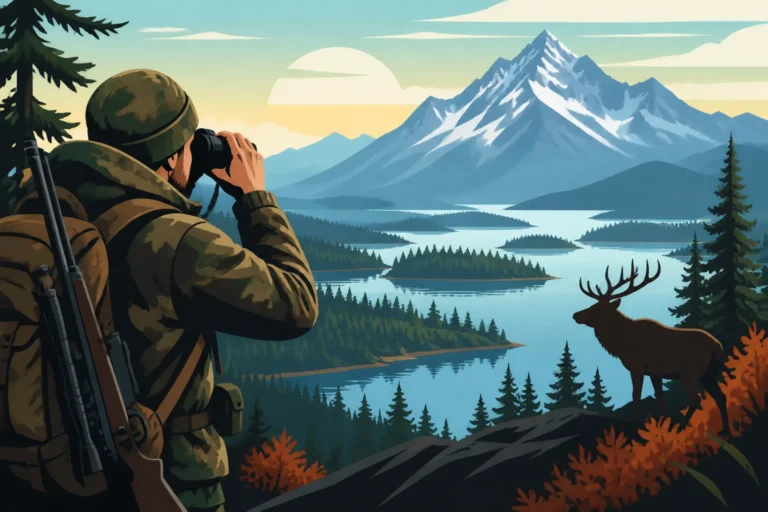
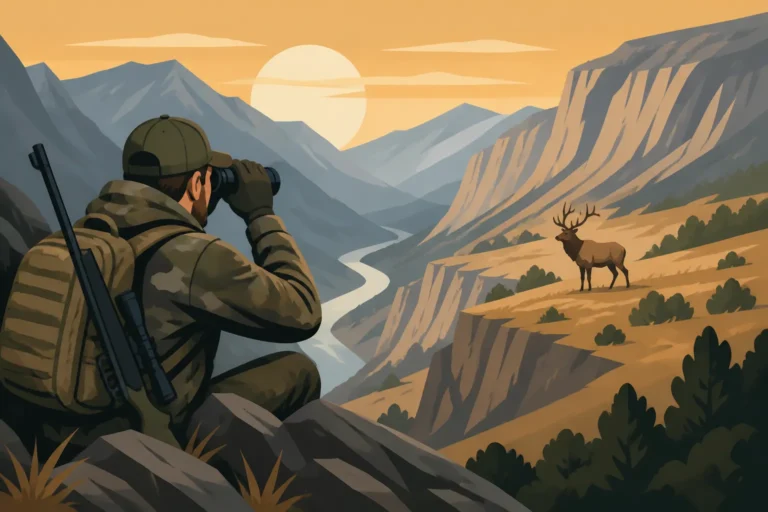
This is arguably the most critical skill for hunting subalpine meadows. You simply cannot walk around aimlessly hoping to stumble upon an animal. Instead, you need to find a high-point vantage that offers an expansive view of the meadow and its edges. Set up your spotting scope and binoculars on a tripod – this is non-negotiable for sustained, shake-free glassing. Don't just scan; methodically pick apart the landscape. Divide the meadow into grids, examining every timber patch, every draw, every rock outcropping. Look for subtle movements, a flicker of an ear, a patch of hide that looks "out of place." Pay special attention to the early morning and late evening, when animals are most active and out in the open. Glassing an Interior Hillside for Mule Deer offers more tips that apply perfectly here. Spend hours doing this; patience is your best friend. Many hunters give up too soon. I've often seen an animal only after the fifth or sixth pass over the same section of hillside, where it was previously obscured by a shadow or camouflaged against the background.
| Species | Typical Subalpine Meadow Use | Peak Activity Times | Notes |
|---|---|---|---|
| Mule Deer | Grazing on forbs, bedding in timber edges, travel corridors. | Early morning, late evening | Mature bucks often use timbered fingers for security. |
| Elk | Grazing, moving between timber and open areas. | Early morning, evening | Bulls may bugle during the rut, revealing location. |
| Mountain Goat | Traversing between rocky areas, grazing. | Mid-day | Often found on steep, broken terrain adjacent to meadows. |
| Bighorn/Stone's | Grazing, resting, moving between high points. | Mid-day | Look for them on south-facing slopes, often in groups. |
| Black Bear | Foraging for berries, roots, grubs. | All day, especially spring/fall | Found where food sources are abundant; look for scat. |
| Grizzly Bear | Foraging, using meadows as travel routes. | All day | Avoid surprising them; be aware of wind. |
Stalking and Approaching Game
Once you spot an animal, the real challenge begins: the stalk. Subalpine meadows often offer limited cover, making a successful approach tricky. First, assess the wind. This is paramount. A change in wind direction can ruin your entire stalk in an instant. Use a wind checker constantly. Next, study the terrain: are there depressions, rock formations, or low-lying patches of stunted trees you can use for cover? Plan your route to stay out of sight, using every fold in the landscape. Move slowly, deliberately, and silently. A good rule of thumb is to take twice as long as you think you need. Be prepared to crawl, duck, and use any available feature to break up your silhouette. If the animal is feeding, time your movements when its head is down. If it's bedded, be extra cautious; animals often pick beds with great vantage points. Remember, the goal isn't just to get close, it's to get into a solid shooting position without the animal knowing you're there. Stalking a Bedded Buck in Open Timber provides excellent principles that apply to stalking in subalpine meadows.
Dealing with Weather and Elevation
British Columbia's subalpine environment is notorious for its rapidly changing weather. One moment it can be sunny and calm, the next, a white-out blizzard or a torrential downpour. This isn't just an inconvenience; it can be a significant factor in your hunting success and safety. Animals react to weather, often seeking shelter in timber during storms or becoming more active after a cool-down. Always be prepared for anything, carrying extra layers, waterproof gear, and emergency shelter. The elevation itself also presents challenges. The thinner air means you'll tire faster, and your heart rate will be higher. Stay hydrated, take breaks, and listen to your body. Weather windows in British Columbia's mountains are crucial to watch for and capitalize on. A clear, calm morning after a storm can be incredibly productive, as animals emerge to feed. Conversely, heavy fog can drastically reduce visibility, making glassing impossible but potentially aiding a stealthy stalk if you know the terrain intimately.
Essential Gear and Safety for Subalpine Meadow Hunts
Hunting high in the British Columbia mountains is demanding, and your gear needs to be up to the task. Beyond that, personal safety is non-negotiable in these remote environments.
Optics, Clothing, and Footwear
Your optics are your most important tool in a subalpine meadow. Invest in quality binoculars (10x or 12x) and a good spotting scope (20-60x or 20-70x) with a stable tripod. These will literally multiply your vision and save your legs. For clothing, layering is key. Start with good base layers that wick moisture, add insulating mid-layers like fleece or puffy jackets, and top it off with a durable, waterproof and windproof outer shell. Conditions can change from freezing wind to warm sun in minutes. As for footwear, nothing is more critical than your boots. You need sturdy, waterproof, high-ankled boots with excellent ankle support and a stiff sole for navigating rocky, uneven terrain. Break them in well before your hunt to avoid blisters, which can quickly end a trip in the backcountry. A comfortable, well-fitting pack capable of hauling meat is also essential; consider a frame pack if you're serious about taking large game.
Navigation and Communication
Getting lost in British Columbia's vast subalpine can be life-threatening. Always carry multiple forms of navigation. A good GPS unit loaded with detailed topographic maps is a must. Modern apps like onX Hunt can turn your phone into a powerful GPS, but don't rely solely on a phone; batteries die. Carry a traditional map and compass and know how to use them, even if you never have to. Mark your camp, critical waypoints, and escape routes. For communication, cell service is often non-existent in these high, remote areas. A satellite messenger or satellite phone is a crucial safety item. Devices like Garmin inReach or Zoleo can send and receive texts, track your movements, and, most importantly, send an SOS signal in an emergency. Satellite Communication on a Remote Hunt is not just a luxury; it's a lifeline. Tell someone your plans, your route, and your expected return date, and stick to them.
Bear Safety and Emergency Preparedness
You're in bear country, plain and simple. Both black bears and grizzlies frequent subalpine meadows, especially during berry season or when they're feeding on carrion. Always carry bear spray, know how to access it quickly, and understand how to use it effectively. Carry it on your hip or chest rig, not buried in your pack. Make noise when moving through thick timber or areas with limited visibility to avoid surprising a bear. Be familiar with Bear Safety While Hunting in British Columbia. Beyond bears, general emergency preparedness is vital. A comprehensive first-aid kit, fire-starting materials, a headlamp with extra batteries, an emergency shelter (like a lightweight tarp or bivy sack), and enough extra food and water for at least an extra day are minimal requirements. The weather can trap you, or an injury could delay you significantly. Being self-sufficient for a short emergency could save your life or prevent a bad situation from becoming tragic. Having a detailed Emergency Planning in British Columbia's Backcountry strategy is not optional.
Disclaimer
This article is for general informational purposes only and does not constitute professional advice. Laws, prices and regulations vary by location and change over time. Consult a qualified professional for guidance on your specific situation.