Hunting British Columbia’s Great Bear Rainforest
Dreaming of heading into British Columbia's legendary Great Bear Rainforest for a hunt? It's a wilderness that stirs the soul, a place of unparalleled beauty and daunting challenges. Many hunters find themselves overwhelmed by the sheer scale, the relentless weather, and the unique logistics required to navigate this coastal temperate rainforest. This isn't your typical interior mule deer hunt; this is an adventure into one of the wildest places left on earth, and it demands respect, preparation, and a deep understanding of its unique character. This guide is here to walk you through what it really takes to hunt this magnificent, yet formidable, landscape.
Embracing the Majesty and Challenge of the Great Bear Rainforest
The Great Bear Rainforest, stretching along British Columbia's central and north coast, is more than just a hunting area; it's an experience. It’s a place where ancient forests meet the Pacific, where grizzlies and black bears roam salmon-rich estuaries, and where the rain often feels like a constant companion. For a hunter, it’s an opportunity to connect with a truly wild system, but it's also a test of grit, planning, and adaptability.
What Makes the Great Bear Unique for Hunters
This isn't an area you "drive through" to find game. The Great Bear Rainforest is defined by its fjords, inlets, islands, and a dense, wet, coastal ecosystem. This means most hunting access is by boat, setting it apart from almost any other hunting experience in British Columbia. You're not just looking for an animal; you're navigating a marine environment, tracking tides, and reading the weather that rolls in off the ocean. The scale of the wilderness is immense, offering isolation that many hunters crave, but it also amplifies every challenge. Unlike much of the interior, game populations here are often tied directly to the health of salmon runs and the availability of coastal browse.
The Coastal Temperate Rainforest Ecosystem
Imagine towering red cedars and Sitka spruce, moss-draped branches, and a perpetual dampness that seeps into everything. That's the Great Bear. This unique temperate rainforest thrives on abundant rainfall, creating a dense, often impenetrable landscape. The undergrowth can be thick, making still-hunting a test of patience and stealth. Rivers and creeks are abundant, often roaring with glacial melt or autumn rains, and they're the lifeblood of the ecosystem, bringing salmon inland and drawing bears to their banks. Understanding this ecosystem isn't just about admiring its beauty; it's about recognizing how it dictates animal movement, food sources, and ultimately, your hunting strategy.
Why This Region Demands Special Preparation
Hunting in the Great Bear Rainforest isn't something you decide to do on a whim. The remoteness means help is often hours, if not days, away. The weather can change from calm to tempestuous in an instant. This demands a level of self-sufficiency and preparation far beyond what's needed for many other hunts. Your gear needs to be top-tier, designed for constant moisture and rugged use. Your navigation skills must be impeccable, and having reliable communication is non-negotiable. Furthermore, dealing with harvested game in such a humid, remote environment requires specific knowledge and quick action to prevent spoilage. You'll truly appreciate why Emergency Planning in British Columbia's Backcountry is so critical here.
Prime Species and Their Habitat in the Rainforest
While the Great Bear Rainforest is home to an incredible array of wildlife, from coastal wolves to the elusive Kermode bear (which is strictly protected), hunters primarily focus on black bears and black-tailed deer. These species are well-adapted to the coastal environment and offer rewarding, albeit challenging, hunting opportunities.
Black Bears: Masters of the Coastal Zone
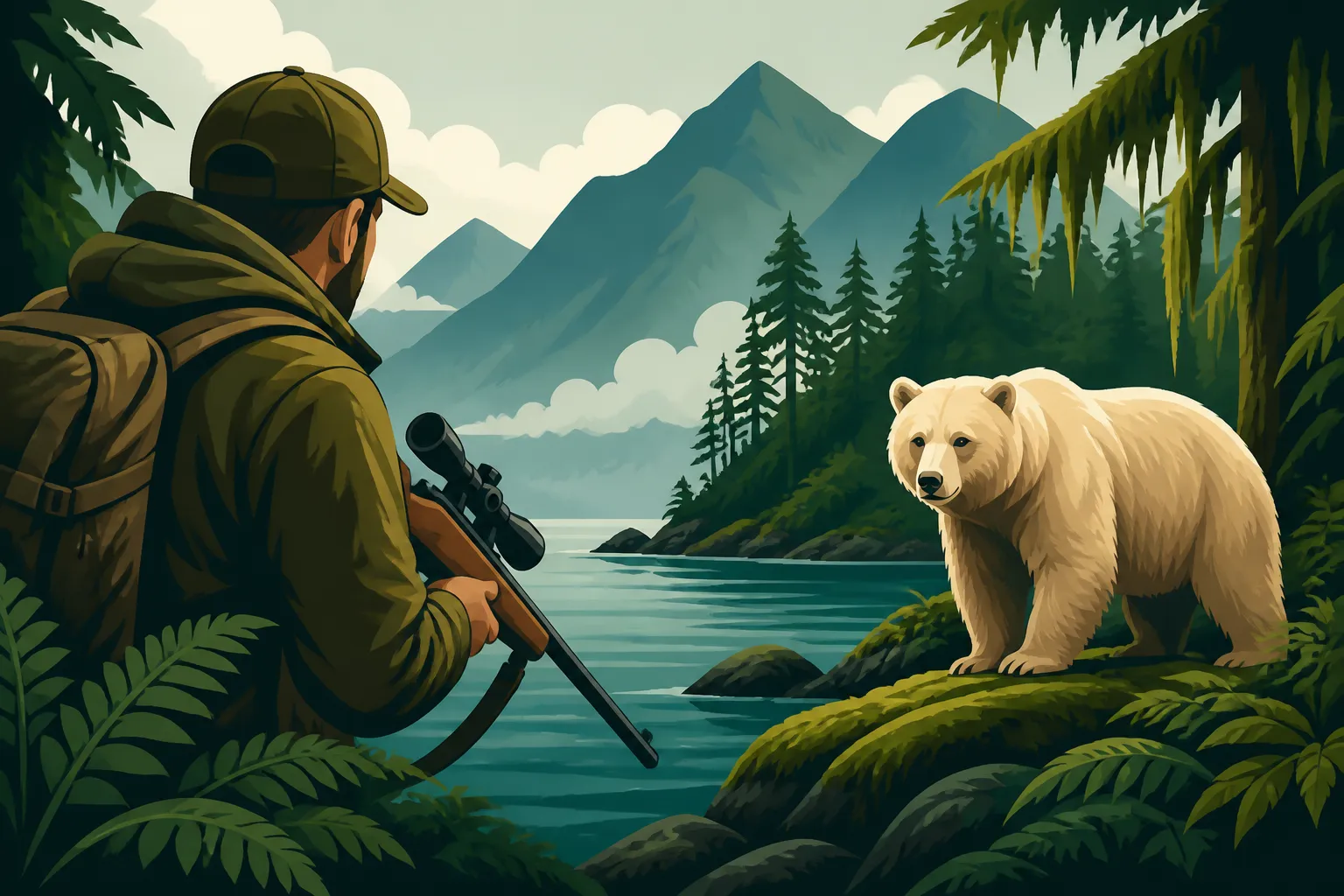
British Columbia is renowned for its black bear populations, and the Great Bear Rainforest is no exception. These bears are often large, well-fed from abundant salmon runs, and come in a variety of colour phases, from jet black to cinnamon and even blonde. You won't find the Kermode "Spirit Bear" on your tag, as they are protected, but other black bears are plentiful. They are masters of their coastal domain, often found foraging along estuaries, beach lines, and river mouths, especially during spring green-up and the fall salmon runs. British Columbia's Coastal Black Bears are particularly unique in their behaviour, often feeding on intertidal delicacies when salmon aren't running. Spot-and-stalk from a boat along the shoreline or working up an estuary is a common and effective method. You'll spend hours glassing vast areas, looking for that tell-tale black shape against the greens and greys of the coast.
Coastal Black-Tailed Deer: Elusive Rainforest Dwellers
The black-tailed deer in the Great Bear Rainforest are a subspecies well-adapted to the dense, wet forests of the coast. These aren't the big-bodied mule deer of the interior; they are smaller, incredibly wary, and adept at disappearing into the thick cover. Hunting blacktail here is often about still-hunting very slowly through old-growth or recently logged areas, looking for subtle flickers of an ear or movement in the underbrush. They'll use the dense cover for security and feed on the lush vegetation found along forest edges, recent cutblocks, and in productive bogs. Understanding How Coastal Rain Changes Animal Behaviour is crucial, as these deer are masters of using the sound-dampening qualities of the rain to their advantage. Patience is a virtue when pursuing these elusive creatures, as they can be incredibly difficult to spot in their natural habitat. What a Coastal Blacktail Weighs might surprise those used to bigger deer, but don't let their size fool you; they offer a challenging and rewarding hunt.
Other Opportunities: Wolves and Waterfowl
While less frequently targeted by general hunters, the Great Bear Rainforest does offer opportunities for wolves and various waterfowl. Coastal wolves are a fascinating population, often darker in colour and frequently observed along the same shorelines and estuaries that attract bears and deer. They follow the deer and salmon, making their presence known through tracks and howls that echo through the misty fjords. Hunting them requires immense patience and often opportunistic encounters. For waterfowl, the intricate network of inlets and river mouths provides staging areas for a variety of ducks and geese. While specific hot spots require local knowledge, jump-shooting a secluded bay or setting up decoys on a tidal flat can yield results for the adventurous bird hunter.
Navigating the Great Bear: Access and Terrain
Getting into, and around, the Great Bear Rainforest is one of the biggest logistical puzzles hunters face. Forget extensive road networks; this is a place dominated by water and rugged, undeveloped land.
The Critical Role of Boat Access
To put it simply: if you're hunting the Great Bear Rainforest, you're hunting from a boat, or at least using one as your primary mode of transportation. This might be a larger cabin cruiser that serves as a floating base camp, a sturdy aluminum skiff capable of navigating shallower waters, or even a kayak for ultra-stealthy access. The countless inlets, fjords, and islands are your highways. This means you need excellent marine navigation skills, a well-maintained vessel, and a deep understanding of tides, currents, and weather patterns. Launching from a coastal community like Bella Coola, Bella Bella, or Prince Rupert, you'll venture out into vast stretches of water, hugging the coastline, and exploring the countless nooks and crannies. Hunting From a Boat on the Coast isn't just a technique; it's the fundamental access strategy here.
Understanding Coastal Topography: Inlets, Estuaries, and Old Growth
The terrain is dramatically varied, even within a single inlet. You'll encounter steep, rocky slopes plunging directly into the sea, deep, protected fjords, and expansive, muddy estuaries where rivers meet the ocean.
Estuaries are often goldmines for game, particularly bears and blacktail, as they provide lush feed and easy access to fresh water. Hunting these tidal flats at low tide requires careful planning, as the mud can be incredibly deep and treacherous.
Beyond the immediate shoreline, you'll find ancient old-growth forests, dense with massive trees and often choked with ferns, mosses, and downed timber, making movement extremely difficult. Higher up, subalpine zones might offer different browse, but accessing them typically means a grueling climb through thick underbrush. Hunters need to understand how animals utilize these different zones based on the season and tide. For example, bears might be on the beach at low tide, then retreat into the heavy timber as the water rises.
Limited Road Systems and Remote Access Points
Unlike much of interior British Columbia where logging roads crisscross vast areas, the Great Bear Rainforest has very limited road infrastructure, especially once you get away from larger communities. What roads exist are often short, spur roads off main highways, or private logging roads that may be gated or deactivated. Even with tools like onX Hunt, which is fantastic for understanding land status and mapping in general, you'll quickly see how little human infrastructure penetrates this core wilderness. This lack of roads is part of what preserves its wild character, but it also means hunters looking for road access will be severely limited. For most areas, Hunting British Columbia Without a Truck is the reality; your truck just gets you to the boat launch. This is where remote access points, often just a muddy beach or a small dock, become critical jumping-off points for boat-based expeditions.
Essential Gear, Safety, and Logistics for Coastal Hunts
The Great Bear Rainforest will test your gear and your preparedness like few other places. The constant moisture, rugged terrain, and isolation demand a thoughtful approach to what you bring and how you plan for contingencies.
Weatherproofing Your Hunt: The Relentless Rain
This is a rainforest, and it lives up to its name. You will get wet. Your gear needs to be capable of shedding water hour after hour, day after day. Forget "water-resistant"; you need truly waterproof outerwear, pants, and footwear. Layering is key, as temperatures can fluctuate, but your outer shell is your first line of defense. Keeping optics, electronics, and your sleeping bag dry requires multiple layers of waterproofing – dry bags, sturdy stuff sacks, and even garbage bags can be your best friends. Think about how to dry clothes if you're stuck in a persistent downpour for days. A good quality shelter that can withstand coastal winds and rain is non-negotiable, whether it's a sturdy tent or a well-equipped cabin on your boat. Understanding Hunting British Columbia's Coastal Rain goes beyond comfort; it's about staying safe and effective in the field.
Communication and Emergency Preparedness
Cell service is virtually non-existent in the vast majority of the Great Bear Rainforest. This is where satellite communication becomes not just a convenience, but a critical safety tool. A satellite messenger or satellite phone is essential for checking in, getting weather updates, and, most importantly, calling for help in an emergency. Telling someone your detailed float plan, including your intended route and expected return, is paramount. Always carry a comprehensive first-aid kit, and know how to use it. Given the prevalence of bears, bear spray and a thorough understanding of bear safety protocols are mandatory. The remote nature of the region means that any accident or unexpected turn of weather can quickly escalate into a serious situation.
Meat Care and Preservation in Wet Conditions
Once you've harvested an animal, the real work begins, and in the Great Bear, it's compounded by the environment. The high humidity and often mild temperatures, even in fall, can accelerate spoilage. Getting the hide off quickly, quartering the animal efficiently, and cooling the meat down as fast as possible are crucial steps. You'll need game bags that breathe but also offer some protection from insects and dirt. Hanging meat in a cool, shaded, and breezy spot is ideal, but finding such a place that's also bear-proof can be a challenge. If you're boat-based, having a good cooler with plenty of ice is invaluable, and you'll need a plan for getting that meat to a processor or home quickly. Don't underestimate the challenge of Meat Care in British Columbia's Warm Early Seasons if you're hunting in the spring or early fall here.
Understanding Regulations and Guided Opportunities
Hunting in British Columbia, especially in a specialized region like the Great Bear Rainforest, comes with its own set of rules and considerations, particularly for non-residents.
Specific Rules for This Unique Management Unit
The Great Bear Rainforest falls under specific Management Units (MUs) and may have unique regulations regarding season dates, bag limits, and legal methods of harvest. It's absolutely vital to consult the current British Columbia's Two-Year Regulations Synopsis before planning any hunt. Pay close attention to any regional restrictions, antler point requirements for deer, or specific rules for black bears, especially regarding colour phases or minimum skull sizes. Some areas might have specific closures or special draw opportunities. Using digital mapping tools like onX Hunt can help you visualize these boundaries and ensure you are always aware of your location relative to regulatory lines, even without cell service if maps are downloaded.
Non-Resident Requirements and the Permit to Accompany
For non-residents of British Columbia, the rules are very clear: you must be accompanied by a licensed British Columbia Guide Outfitter or a resident who holds a valid Permit to Accompany Explained. This is not merely a suggestion; it is a legal requirement. This rule is in place to ensure ethical hunting practices, promote safety in the backcountry, and manage wildlife resources effectively. If you're a non-resident planning to hunt in the Great Bear, you will either be booking a trip with a professional outfitter or relying on a resident friend to act as your accompanying hunter. Understanding What a Permit to Accompany Allows is key to planning your trip.
Working With a Specialized Coastal Outfitter
Given the logistical complexities, specialized boat-based operations, and the deep local knowledge required, many non-resident hunters choose to book with a British Columbia Guide Outfitter who operates in the Great Bear Rainforest. These outfitters have the vessels, the camps, the experienced guides, and the permits to navigate this challenging terrain. They know the inlets, the tides, the bear patterns, and the deer haunts. While not inexpensive, the cost often covers significant logistical hurdles, from transportation and accommodation (often on a live-aboard vessel) to expert guidance and game retrieval. When researching, ask about their experience in the specific MUs you're interested in, their success rates, and what their typical Boat-Based Coastal Hunts in British Columbia entail. Don't be afraid to ask for references!
Planning Your Expedition: Timing and Strategy
A successful hunt in the Great Bear Rainforest hinges on meticulous planning, a flexible mindset, and a deep respect for the wild.
Best Times for Different Species
Timing is everything, especially in a coastal environment where animal behaviour is often dictated by seasonal food sources and weather patterns.
- Spring Black Bear (April-June): This is a popular time for black bear hunts. Bears emerge from hibernation and are drawn to the protein-rich green-up along estuaries, beach fronts, and avalanche chutes. Salmonberries and other early growth provide crucial forage. This period often offers longer daylight hours but can also be incredibly wet. Timing a British Columbia Spring Bear Hunt to coincide with early green-up can be very productive.
- Fall Black Bear and Black-Tailed Deer (September-November): The fall brings the salmon runs, a magnet for bears looking to put on weight for winter. Hunting them along these salmon streams and river mouths can be very exciting. For black-tailed deer, the fall provides opportunities as they move around, often less impacted by the dense canopy as leaves begin to drop. The rut for blacktail usually peaks in late October to early November, making those periods prime for bucks. Remember, When British Columbia's Blacktail Season Runs can vary by MU, so check your regulations.
Pre-Season Scouting and Local Knowledge
True "pre-season scouting" in the traditional sense is challenging given the remoteness. However, modern technology offers some fantastic tools. Satellite imagery can help identify potential estuaries, old logging roads (even if deactivated), clearcuts, and avalanche paths that might hold game. Offline mapping applications, like onX Hunt, allow you to download detailed topographic maps of entire regions, marking points of interest, potential glassing spots, and safe anchorage points for your boat. While it's not the same as putting boots on the ground, this virtual scouting is invaluable for understanding the lay of the land before you even leave home. Supplement this with any available local knowledge from fellow hunters, forums, or especially your chosen outfitter. They have spent countless hours on the water and in the woods, and their insights into specific inlets and prevailing weather patterns are gold.
Embracing the "Unpredictable" Nature of Coastal Hunting
The Great Bear Rainforest is a place of wild beauty and wild weather. You must be prepared for the unpredictable. A calm, sunny morning can quickly turn into a gale-force wind and pouring rain. Tides can shift dramatically, exposing vast mudflats or rendering certain areas inaccessible. Game movement can be influenced by everything from a passing pod of orcas to a sudden spike in a salmon run. Hunters who thrive here are those who are flexible, patient, and prepared to adapt their plans on the fly. This isn't a factory farm; it's true wilderness, and it will humble you and reward you in equal measure. Bring a positive attitude, embrace the journey, and understand that success isn't just about punching a tag, but about the profound experience of being in this incredible part of the world.
| Species | Primary Habitat | Best Hunting Months | Typical Hunting Method | Key Challenge |
|---|---|---|---|---|
| Black Bear | Estuaries, beach fronts, river mouths, avalanche chutes | April-June (Spring), Sept-Nov (Fall) | Spot-and-stalk from boat, still-hunting | Dense cover, unpredictable salmon runs, rain |
| Black-Tailed Deer | Second-growth timber, old-growth edges, coastal bogs, clearcuts | Sept-Nov (Fall, esp. Oct-Nov rut) | Slow still-hunting, glassing cuts, calling | Extreme wariness, dense visibility, constant moisture |
| Wolf | Shorelines, estuaries, following deer/salmon | Year-round (opportunistic) | Opportunistic, calling, trail cameras | Very elusive, large territories |
| Waterfowl | Coastal estuaries, sheltered bays, river mouths | Sept-Jan (seasonal variation) | Decoying, jump-shooting, pass-shooting | Weather, tides, specific local knowledge |
Disclaimer
This article is for general informational purposes only and does not constitute professional advice. Laws, prices and regulations vary by location and change over time. Consult a qualified professional for guidance on your specific situation.