Hunting Inside a Guide Outfitter Territory
For British Columbia resident hunters, the concept of a "guide outfitter territory" can often feel like a confusing, almost invisible barrier, leading to frustration and uncertainty about where you can legally hunt. Many assume these vast areas are off-limits, creating unnecessary anxiety when planning a trip. This guide will clarify what guide outfitter territories truly mean for resident hunters, helping you understand your rights and navigate these unique landscapes with confidence.
The Reality of Guide Outfitter Territories in British Columbia
It's easy to look at a map, see a massive section of Crown land designated as a "guide outfitter territory," and immediately assume it's private or restricted for residents. This simply isn't the case, but the misunderstanding is widespread. These territories are a unique aspect of British Columbia's hunting landscape, designed primarily to manage non-resident hunting opportunities, not to exclude residents.
What Exactly is a Guide Outfitter Territory?
A guide outfitter territory in British Columbia is essentially a designated geographical area where a licensed guide outfitter holds the exclusive commercial right to guide non-resident hunters for specific species. Think of it less as a private land claim and more as a business concession granted by the province. These territories are vast, often covering thousands of square kilometres of diverse terrain, from coastal rainforests to interior mountains and northern plateaus. The outfitter invests heavily in these areas, building camps, maintaining trails, and often conducting their own scouting and game management over decades.
For a non-resident hunter, booking a hunt within one of these territories with the designated outfitter is the primary legal avenue to hunt many big game species in British Columbia. This system ensures that non-residents contribute significantly to the local economy and that their hunting activities are managed under professional oversight. However, it's crucial to distinguish this commercial guiding right from public land access. The land itself, in most cases, remains Crown land, accessible to the public, including resident hunters, for recreational purposes. This distinction is where much of the confusion arises, and it's important to grasp that the outfitter's exclusivity pertains to guiding services for non-residents, not to the physical land use by residents.
How These Territories Originated and Why They Exist
The system of guide outfitter territories in British Columbia has a long history, evolving over many decades to regulate the burgeoning demand for guided hunts, particularly from international clients. Initially, guiding was less structured, leading to potential conflicts and unmanaged exploitation of game resources. The establishment of defined territories brought order to the industry, assigning specific areas to individual outfitters. This provides outfitters with an incentive to manage their territories sustainably, as their livelihood depends on the health of the wildlife populations within their designated areas.
The primary reason these territories exist is to provide a framework for non-resident hunting, which is a significant economic driver for many remote communities in British Columbia. Non-residents, whether from other Canadian provinces or international destinations, are generally required by provincial law to hunt certain big game species with a licensed guide or under a specific permit (the Permit to Accompany, which we'll discuss later). This ensures safety, ethical hunting practices, and conservation efforts are maintained, while also generating revenue that supports wildlife management programs. So, while you, as a resident, might perceive these areas as complex, they serve a vital role in British Columbia's broader wildlife and economic management strategy, ensuring a balance between commercial interests, conservation, and resident hunting opportunities. You can learn more about the specifics in British Columbia Guide Outfitter Licensing Rules.
What This Means for Resident Hunters
This is the big question on everyone's mind: can a British Columbia resident hunt inside a guide outfitter territory? The answer, unequivocally, is yes. However, there are nuances that every resident hunter needs to understand to avoid misunderstandings or inadvertently interfering with guided operations.
Your Right to Hunt as a BC Resident
As a resident of British Columbia, you generally have the right to hunt legally on Crown land, provided you hold the appropriate licences and tags, and adhere to all provincial hunting regulations, including season dates, bag limits, and specific management unit rules. This right extends to land designated as guide outfitter territories. These territories do not privatize Crown land; they simply grant exclusive commercial guiding rights for non-residents to a specific outfitter.
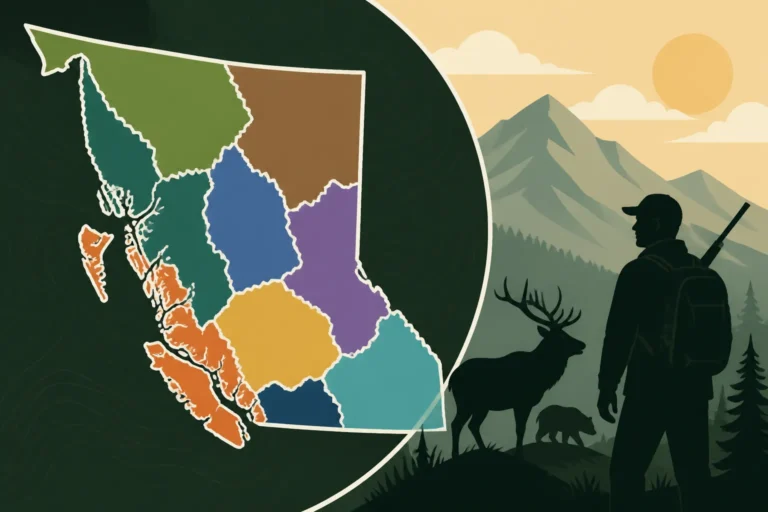
What this means for you is that you can drive, hike, camp, and hunt within these areas just as you would any other piece of accessible Crown land, subject to the usual regulations. You are not required to seek permission from the guide outfitter, nor are you expected to pay a fee. It's your province, and as a resident, you have access to these public lands for recreational hunting. This fundamental right is often misunderstood, leading many residents to self-restrict their hunting opportunities. Knowing this should empower you to explore more of British Columbia's incredible wilderness. Just be sure you're familiar with the specific British Columbia's Management Units and Regions for the area you plan to hunt.
Differentiating Resident Hunting from Guided Non-Resident Hunts
While your right to hunt in a guide outfitter territory is clear, it's important to understand the practical differences between your activities as a resident hunter and the operations of a guide outfitter. The outfitter is running a business, often with clients who have paid substantial fees for a specific hunting experience.
Your role as a resident hunter is to adhere to all regulations and, ideally, to be respectful of existing guided operations. You are hunting for your own recreational purposes, not for commercial gain. A non-resident, on the other hand, is usually bound by stricter regulations, often tied to their specific guide's licence and the species allocations within that territory. For instance, an outfitter might have specific tags or quotas for certain species that are different from the general open seasons available to residents.
The key distinction is that while you both share the same physical land, your legal frameworks and intents are different. Your hunting is governed by the general open season rules for residents, while the outfitter's operations are governed by their guiding licence, commercial arrangements, and non-resident regulations. This difference is critical. You are not taking business away from an outfitter by legally hunting on Crown land; you are simply exercising your resident rights. However, being aware of their commercial operation can help you make considerate choices in the field, which we'll discuss in more detail shortly. For general rules on who needs a guide, look at Rules for Non-Residents Hunting British Columbia.
Finding and Navigating These Zones
Knowing you can hunt in these territories is one thing; actually figuring out where they are and how to navigate them effectively is another. Thankfully, modern tools and good old-fashioned map reading can make this much simpler.
Tools and Resources for Identifying Boundaries
Identifying the exact boundaries of guide outfitter territories is crucial for responsible hunting. While they aren't marked with fences or signs, their locations are publicly available through official sources.
The primary source for this information is the provincial government's hunting regulations and mapping tools. The British Columbia government provides online mapping applications that overlay various land designations, including guide outfitter territories, onto topographical maps. These official resources are your first and most reliable point of reference. They often show not just the territory boundaries but also management unit lines, parks, and other restricted areas. When you're planning a trip, taking the time to review these maps thoroughly is essential.
Beyond official government sites, several excellent third-party mapping applications have become indispensable for modern hunters. Platforms like onX Hunt and GoHunt offer digital mapping solutions that often integrate guide outfitter boundaries, along with property lines, access roads, and topographical features. These apps, accessible on your phone or tablet, can be incredibly useful in the field, providing real-time GPS tracking against these critical boundaries. They allow you to drop waypoints, measure distances, and even identify land ownership, ensuring you stay within legal hunting areas and avoid trespassing onto private parcels or, in this case, inadvertently stumbling into a guided hunt's primary area of operation without awareness. Always cross-reference any third-party app information with the official government maps, as boundaries can sometimes be adjusted. A good starting point for learning more about using digital tools is Scouting a British Columbia Management Unit Online.
| Resource Type | Description | Key Benefits |
|---|---|---|
| Official BC Gov Maps | Online mapping portals provided by the provincial government, often linked from the BC Hunting and Trapping Regulations Synopsis website. | Most authoritative and up-to-date source for guide outfitter boundaries, management units, park zones, and other restrictions. |
| Third-Party Apps | Mobile applications like onX Hunt or GoHunt that overlay guide outfitter boundaries, property lines, forest service roads, and topographical data onto intuitive maps. | Excellent for in-field navigation with GPS, real-time location tracking, marking waypoints, and quickly visualizing multiple layers of land ownership and designation. |
| Paper Maps | Traditional topographical maps (e.g., from GeoGratis or local outdoor stores) are still valuable for overall situational awareness, especially where digital signals are unreliable. | No reliance on battery life or cell signal. Good for big-picture planning and as a backup. Requires manual plotting of territory boundaries from official sources. |
Best Practices for Hunting Near or Within a Territory
Once you've identified a guide outfitter territory you plan to hunt in, adopting a few best practices can make your experience smoother and help you avoid any potential issues. First and foremost, do your homework on the specific management unit you intend to hunt. Understand the local regulations, season dates, and bag limits. The more knowledgeable you are, the more confident you'll be.
When planning your approach, consider areas of high pressure for guided hunts. Outfitters often operate from established camps, use specific access points, or focus on known game hotspots. If you can, try to find alternative access routes or hunt areas that are less likely to be the primary focus of guided groups. This isn't a legal requirement, but a courtesy that helps prevent accidental interference. Remember that many of these areas are accessed via British Columbia's Forest Service Road Network, which means shared access is the norm.
Consider times of day and week. Guided groups often hunt during peak times, particularly early morning and late evening. If you're flexible, hunting during mid-day or on weekdays might increase your chances of having an area to yourself. Always be prepared for an encounter, and maintain a friendly, respectful demeanour. You are within your rights, but a positive interaction goes a long way. Carry your maps (both digital and paper backups) and know exactly where you are at all times. This preparedness will serve you well, whether you're dealing with an outfitter's staff or navigating challenging terrain, like that found in Hunting British Columbia's Alpine in September.
Preventing Conflicts and Ensuring a Smooth Hunt
While residents have every right to hunt within guide outfitter territories, a little common sense and respect can go a long way in ensuring a positive experience for everyone sharing these wild spaces. Avoiding conflict isn't just about legality; it's about being a good steward of the land and a respectful member of the hunting community.
Respectful Conduct and Avoiding Interference
Imagine you've spent months planning a guided hunt, paid a significant sum, and travelled a long distance, only to have your experience impacted by another hunter. While you're not legally obligated to avoid guide outfitter operations, being mindful of their activities is a sign of good sportsmanship. This means trying to avoid "crowding" an active guided hunt. If you notice an outfitter's camp, vehicles, or clients actively hunting a specific area, consider whether there's another equally promising spot you could explore.
This isn't about giving up your hunting rights, but about exercising them thoughtfully. Sometimes, a guided group might be stalking an animal or setting up a call sequence. Disrupting this, even unintentionally, can be frustrating for all involved. Ethical behaviour often extends beyond the letter of the law. It's about recognizing that guide outfitters play a role in conservation and local economies, and fostering a spirit of co-existence. Remember, British Columbia's wilderness is vast, and often there's room for everyone. Focus on hunting a British Columbia management unit in its entirety, rather than just the parts that overlap with a guided operation.
What to Do if You Encounter a Guided Group
It's inevitable that if you spend enough time hunting in British Columbia's more remote areas, you'll eventually cross paths with a guided hunting group. When this happens, a courteous approach is always best. Here's a quick guide:
- Be Visible and Announce Your Presence: If you see a guided party from a distance, make your presence known in a non-threatening way. A wave, a friendly call, or simply walking openly can prevent any alarm.
- Maintain Distance: Try to give them space. If they are actively hunting an animal, do not interfere or attempt to approach their quarry. If you're heading in the same general direction, consider altering your course slightly.
- Engage Respectfully: If a guide or client approaches you, be polite and clearly state your intentions as a resident hunter. You are not required to leave, but a brief, friendly conversation can clear up any misunderstandings. "Good morning, just out for a resident hunt in this area, like yourselves. Hope you're having some luck!" is a perfectly fine opener.
- Know Your Rights (and Limits): Be confident in your understanding of the regulations, but don't be confrontational. If a guide implies you shouldn't be there, politely reiterate your right to hunt Crown land as a resident. However, if they point out a specific, localized safety concern (e.g., they have a shooter set up in a certain direction), heed that advice.
- Report Issues if Necessary: While rare, if you encounter aggressive or intimidating behaviour, or if you witness any illegal activity, document it (without escalating the situation) and report it to the Conservation Officer Service after the fact. However, most interactions are generally professional and cordial.
Understanding the "Permit to Accompany"
This is a specific type of permit that often causes confusion when discussing non-resident hunting and guide outfitter territories. The "Permit to Accompany" allows a non-resident hunter (often a friend or family member) to hunt specific species in British Columbia without a licensed guide outfitter, provided they are accompanied by a qualified British Columbia resident who holds the permit and takes responsibility for the hunt. This is a very specific arrangement.
For clarity, if you are a BC resident hunting on your own or with other BC residents in a guide outfitter territory, the "Permit to Accompany" does not apply to you. You are exercising your inherent right as a resident. It only comes into play if you, as a resident, decide to host a non-resident friend or family member who wishes to hunt specific big game species in British Columbia. In such a scenario, the permit would then dictate where and how that non-resident could hunt, and it would not allow them to hunt in a guide outfitter's exclusive territory unless specific arrangements were made with that outfitter. This permit helps define a different pathway for non-resident access, separate from commercial guiding. For more details on this, be sure to read What a Permit to Accompany Allows.
Disclaimer
This article is for general informational purposes only and does not constitute professional advice. Laws, prices and regulations vary by location and change over time. Consult a qualified professional for guidance on your specific situation.