What a British Columbia Cougar Weighs
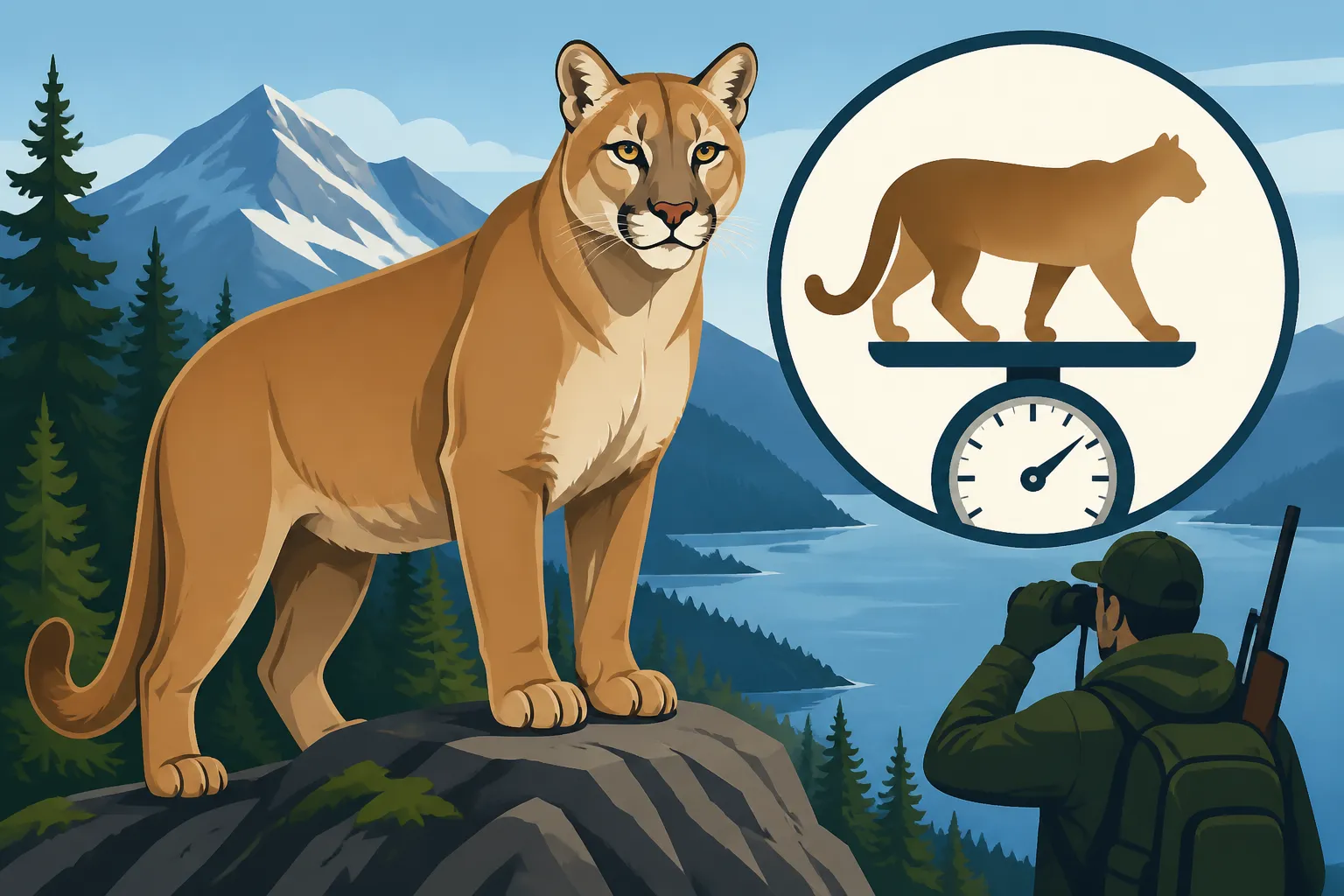
Figuring out the true size of a cougar when you’re out in the British Columbia wilderness can be incredibly difficult, often leading to underestimations or overestimations that impact your decision-making, from shot placement to how you plan to pack it out. This guide will dive deep into what British Columbia cougars truly weigh, the factors that influence their size, and practical tips for hunters to better understand these elusive predators in the field.
Understanding Cougar Weight: More Than Just a Number
When we talk about cougar weight, it’s not just a statistic; it’s a crucial piece of information for hunters, from gauging the animal's age and health to mentally preparing for the incredible challenge of retrieving it from rugged terrain. British Columbia is home to a robust cougar population, and while they might appear sleek and agile, these big cats can pack on serious pounds.
Average Weights and Range for British Columbia Cougars
On average, a mature male cougar in British Columbia typically weighs between 140 to 180 pounds (63 to 82 kg). However, it's not uncommon to encounter truly large males pushing well over 200 pounds (90 kg), with some exceptional specimens hitting the 220-pound mark or even heavier. I've heard tales from old-timers in the Cariboo and even on Vancouver Island of cats that taped out much larger, though those are certainly the rare giants. For females, the range is considerably smaller, usually between 80 to 120 pounds (36 to 54 kg). They are, by nature, more slender and less muscled than the males, especially outside of pregnancy or prime hunting condition.
It's important to understand that these are averages. Just like people, cougars come in all shapes and sizes. A young, healthy male might be lean at 120 pounds, while an older, well-fed female could easily tip the scales at 130 pounds. The true measure often comes down to their overall body condition and the specific environment they inhabit. When you're researching potential hunting areas, a tool like GoHunt can sometimes offer insights into general game health in a region, which might indirectly suggest the potential for larger animals.
Factors Influencing a Cougar's Size and Weight
Several interconnected factors play a significant role in determining how much a British Columbia cougar weighs. It's not just random; there's a science to their size.
First, sex and age are paramount. As mentioned, males are consistently larger than females. Young cougars are still growing, so a 1-2 year old cougar will naturally weigh less than a fully mature 4-6 year old tom. Once they hit their prime, usually around 5-8 years old, they are at their peak physical condition and maximum weight. Older cougars, especially those past their prime or with injuries, might start to lose weight.
Second, prey availability and diet are huge. A cougar living in an area with an abundance of prey, like a healthy deer population (which British Columbia has in many regions, including British Columbia's Mule Deer Across the Interior and Black-Tailed Deer on British Columbia's Coast), will naturally be healthier and heavier than one struggling in a lean territory. Their diet is almost exclusively meat, primarily deer, but they'll also take elk, moose calves, bighorn sheep, goats, and smaller animals like beaver, porcupines, and even grouse. A consistent, rich diet fuels growth and maintains body mass.
Third, genetics and geographic location also contribute. Some cougar populations might simply have a genetic predisposition for larger size, similar to how certain deer herds grow bigger racks. While specific genetic studies on BC cougars are complex, anecdotal evidence from hunters suggests that certain regions might consistently produce larger animals. For instance, Where Cougars Are Most Common often includes areas with dense prey, which can foster bigger cats. The cougars found in the coastal rainforests, potentially feasting on abundant blacktail deer, might exhibit different characteristics than those in the arid Okanagan.
The Challenge of Field Judging Cougar Weight
Every hunter who has pursued cougars can attest to the difficulty of accurately judging their size and weight in the field. It's a skill that takes years to hone, and even then, experienced hunters can be fooled. The "big cat illusion" is a real phenomenon.
Visual Cues and What They Tell You
When you're trying to size up a cougar, whether you're behind hounds or spot-and-stalking, there are a few visual cues that can help, though none are foolproof.
- Body Length and Proportionality: Look at the overall length of the cat, especially compared to surrounding objects like trees or brush. A truly big tom will have a long, thick body. Also, observe how the head and neck size relate to the rest of its body. Larger, more mature males often have a proportionally bigger head and a thicker neck, giving them a more "blocky" appearance than the sleeker females.
- Muscle Mass and Depth: Pay attention to the animal's musculature. A heavy male will have deep chest and shoulder muscles, a thick loin, and powerful hindquarters. You'll see less of their ribs or hip bones, even when they stretch. Females, while powerful, often appear more lithe.
- Tail Length and Thickness: While less indicative of exact weight, a very long, thick tail can be a sign of a mature animal. The tail often accounts for a significant portion of their total length.
- Tracks: Before you even see the cat, its tracks can tell you a lot. Large, well-defined tracks, especially those without claws showing (a key cougar identifier), can indicate a heavy animal passing through. Remember, a bigger track usually means a bigger cat.
Why Estimating Weight in the Field is Tricky
It’s often said that "all game animals get bigger after the shot," but with cougars, this can be particularly true. There are several reasons why field judging their weight is so challenging.
Firstly, perspective and lack of reference points. Cougars are masters of stealth, often appearing and disappearing quickly. You might only get a glimpse through heavy cover, making it hard to compare their size to anything else. When they are treed (especially when Hunting Cougar Behind Hounds), they often appear smaller than they actually are because they're curled up or stretched in an unnatural way, minimizing their bulk. The angle and distance can severely distort your perception.
Secondly, their muscular build. Cougars are incredibly athletic animals, built for explosive power. Even a relatively lighter cougar can look incredibly substantial due to its dense musculature. They don't have the same overall bulk of a bear or moose, so hunters accustomed to judging those animals can be caught off guard. What a British Columbia black bear weighs or What a British Columbia Bull Moose Weighs might seem like a more straightforward estimation because of their sheer mass.
Thirdly, lighting and camouflage. Cougars are perfectly adapted to their environment. Their tawny coats blend seamlessly with the forest floor, rock faces, and shadows, making it difficult to discern their true dimensions, especially in low light or dappled sun. This excellent camouflage, combined with their stealthy nature, means you rarely get a long, clear look at a relaxed animal that allows for accurate sizing.
Practical Implications for Hunters
Understanding cougar weight isn't just for bragging rights; it has very real, practical implications for a successful and ethical hunt.
Handling and Packing Out a Cougar
Let's be realistic: even a smaller female cougar at 80-90 pounds is a solid animal to handle, especially if you're alone and in challenging terrain. A mature tom pushing 180-200 pounds? That's a significant amount of dead weight to move. This is why having a plan for recovery is just as important as the hunt itself.
When you've successfully harvested a cougar, the first steps involve proper field dressing and skinning. This can be surprisingly difficult due to their thick hide and muscle density. Their fur is incredibly short, which means keeping the meat cool in milder temperatures is a priority. If you’re deep in the backcountry, you'll likely need to skin and quarter the animal to make it manageable. Even then, you'll be dealing with substantial packs of meat and hide. Hunters often underestimate the physical exertion required to pack out any large animal, and cougars are no exception. If you're hunting in steep country, like many parts of interior British Columbia, you'll quickly realize why Packing Out of British Columbia's Steep Country is a topic deserving of its own detailed discussion. You might want to consider breaking the animal down into smaller, more manageable loads, especially if you're solo or your hunting partner isn't used to heavy lifting.
Trophy Considerations and Record Books
For many cougar hunters, the head and hide are the primary trophies. While weight isn't a direct scoring criterion for record books like Boone and Crockett (which primarily focus on skull measurements), a heavier cougar generally indicates a larger, more mature animal with a proportionally larger skull. So, while you won't get "points" for weight, it often correlates with a high-scoring trophy.
It's a hunter's responsibility to understand the regulations surrounding cougar harvest, including British Columbia Cougar Season Dates and British Columbia Cougar and Wolf Rules. There are typically no antler point restrictions like there are for deer, but ethical hunting often means targeting mature animals. The weight and overall size of the cougar you harvest reflect the health of the population and the success of your hunting efforts. When you do harvest an animal, remember to fulfill all compulsory reporting rules, which for cougars, is standard practice.
Regional Variations in British Columbia
British Columbia is a massive province with incredibly diverse ecosystems, and these environments can influence the local cougar populations in fascinating ways, sometimes leading to variations in average size.
Coastal vs. Interior Cougars
It's often debated whether coastal cougars or interior cougars are generally larger. On the Coast, particularly areas like Vancouver Island (Why Vancouver Island Has So Many Cougars), cougars often have an abundant and consistent food source in the form of black-tailed deer. The milder climate and dense cover can also create prime conditions for these predators. Anecdotally, many hunters report that coastal cougars can be incredibly robust and powerful, a testament to their healthy diet and fierce competition.
In the Interior regions, cougars range from the dry grasslands of the Okanagan to the vast forests of the Cariboo and the rugged Rockies. Here, their diet might be more varied, including mule deer, bighorn sheep, and even elk calves. While the average size might not drastically differ, there are certainly pockets within the interior known for producing very large animals, often tied to localized prey booms. The sheer vastness of the interior means less human interaction in some areas, potentially allowing older, larger cats to thrive.
Notable Hotspots for Larger Animals
While cougars are found throughout British Columbia, certain regions have gained reputations among hunters for producing larger-than-average specimens. These are often areas with high prey density and mature forest or rugged, undisturbed terrain.
- Vancouver Island: As mentioned, the island is renowned for its dense deer populations and robust cougar numbers. Many of the largest recorded cougars have come from this region. The wet, dense forests provide excellent cover and hunting opportunities for these cats.
- Kootenay Region: The southeastern part of British Columbia, with its mix of mountains, valleys, and healthy deer and elk populations, is another area where substantial cougars are regularly harvested. The ruggedness of the terrain makes hunting challenging, but it also allows large predators to grow old and big.
- Cariboo and Chilcotin Plateaus: These vast interior regions, characterized by rolling hills, timber, and expansive grasslands, support healthy ungulate populations. This in turn sustains a good number of cougars, some of which grow to impressive sizes.
- Peace River Region: Up in the northeast, where the boreal forest meets agricultural lands, cougars thrive on deer and moose calves. This remote and less-pressured area can also produce some very large animals, especially males.
It's worth noting that while these areas might be known for larger cats, a truly exceptional cougar can turn up almost anywhere in British Columbia. The thrill of the hunt often lies in the unknown. Remember, proper Calling Predators in British Columbia techniques can bring these elusive animals in, no matter the region.
Comparing Cougar Weights: Males vs. Females
To give you a clearer picture, here's a general comparison of male and female cougar weights in British Columbia. Keep in mind these are averages, and individual animals can always defy the typical range.
| Characteristic | Male Cougar (Tom) | Female Cougar (Queen) |
|---|---|---|
| Average Weight | 140 – 180 lbs (63 – 82 kg) | 80 – 120 lbs (36 – 54 kg) |
| Maximum Reported | 200+ lbs (90+ kg), rarely 220+ | 130 – 140 lbs (59 – 63 kg) |
| Body Build | Larger, more muscular, stocky head and neck | Smaller, more slender, lithe, proportionally smaller head |
| Prime Age (Size) | 5 – 8 years | 4 – 7 years |
| Territoriality | Larger territories, often overlapping with females | Smaller territories, focused on denning areas |
This table illustrates the significant size disparity between the sexes, which is a key factor in identifying and judging cougars in the field. When you're out hunting and you glimpse a cougar, trying to mentally place it within these ranges can help you determine if it's the animal you're looking for.
No matter where you choose to pursue these incredible animals, or what size you hope to find, being prepared for the weight of a harvested cougar is crucial. Understanding their biology and regional differences only adds to the respect we hold for British Columbia's top predator.
Disclaimer
This article is for general informational purposes only and does not constitute professional advice. Laws, prices and regulations vary by location and change over time. Consult a qualified professional for guidance on your specific situation.