British Columbia Cougar and Wolf Rules
The allure of British Columbia's wild places is undeniable, but navigating the specific rules for hunting predators like cougars and wolves can feel like deciphering an ancient scroll. Many hunters express frustration with the sheer volume and regional variation of regulations, making it difficult to plan a successful and legal hunt. This guide is designed to cut through that complexity, providing you with a clear, comprehensive understanding of British Columbia's cougar and wolf hunting rules, season dates, legal methods, and essential considerations to ensure your next predator hunt is both rewarding and compliant.
Understanding Predator Management in British Columbia
British Columbia is a vast province with diverse ecosystems, and managing predator populations like cougars and wolves is a critical, often complex, aspect of wildlife conservation. These animals play vital roles in their habitats, but their populations also need careful oversight to maintain ecological balance and manage interactions with other species and human activities.
The Role of Predators in BC Ecosystems
Cougars and wolves are apex predators, sitting at the top of their respective food chains. Their presence is fundamental to the health and vitality of British Columbia's wilderness. Wolves, for instance, are known to regulate ungulate populations such as moose, elk, and deer, helping to prevent overgrazing and the spread of disease, ultimately leading to stronger, healthier herds. Similarly, cougars exert pressure on deer populations, particularly blacktail and mule deer, often targeting the weak or old, which also contributes to the genetic health of prey species. This natural selection process is a cornerstone of a robust ecosystem, ensuring that prey animals remain alert and resilient. The intricate dance between predator and prey shapes the landscape, influencing everything from plant growth to the movement patterns of game.
Provincial Management Objectives for Cougar and Wolf
The provincial government's approach to cougar and wolf management is multifaceted, aiming to strike a balance between ecological health, human safety, and the interests of hunters and other stakeholders. For wolves, management objectives often focus on sustaining viable populations across their traditional ranges while, in some specific areas, also addressing concerns about their impact on vulnerable ungulate populations or livestock. This means you might find very generous, long seasons or higher bag limits in certain regions where wolf populations are robust or where they are impacting other species of concern. For cougars, the focus is generally on maintaining healthy numbers, while also managing localized conflicts with domestic animals or concerns about human safety, especially in areas bordering human settlements. The aim isn't eradication but rather a dynamic stewardship that allows for healthy predator populations within the context of a broader wildlife management strategy. Hunters play a significant role in this strategy by participating in regulated harvests, which helps collect crucial data for wildlife biologists and can contribute to localized population control when deemed necessary.
Cougar Hunting Regulations in British Columbia
Hunting cougars in British Columbia is a challenging and rewarding pursuit, but it demands a thorough understanding of the specific regulations. These rules are in place to ensure sustainable harvesting and the conservation of this elusive predator.
Season Dates and Bag Limits for Cougars
Cougar season dates in British Columbia typically run from late fall through winter and into early spring, generally aligning with periods when snow cover makes tracking more feasible. However, these dates are not uniform across the entire province; they vary significantly by region and even by specific Management Unit (MU). For example, some areas might open in September and run until March, while others may have shorter, more restricted windows. Generally, the bag limit for cougars is one animal per hunter per licence year. This 'one animal' rule reinforces the idea of a careful, considered harvest, recognizing the cougar's position as a top predator. It is absolutely crucial to consult the most current British Columbia Hunting and Trapping Regulations Synopsis each year. This document, available online through the provincial government's website, will detail the exact opening and closing dates for cougar hunting in every MU, ensuring you don't accidentally violate seasonal restrictions. Always double-check your intended hunting location against the synopsis to confirm specific dates.
Mandatory Reporting and Inspection for Cougars
Unlike some other game species, cougars have specific compulsory reporting and inspection requirements that hunters must adhere to. After harvesting a cougar, hunters are typically required to report the kill within a specific timeframe, often within 72 hours, and then present the skull and hide (with proof of sex naturally attached) to a designated Compulsory Inspection (CI) station or a Conservation Officer within a further specified period, usually 30 days. This process is not just a formality; it's a vital tool for wildlife management. Biologists use the submitted skulls and hides to collect critical data on the age, sex, and health of harvested animals. This information helps them monitor population trends, assess management strategies, and ensure the long-term sustainability of cougar populations. Failing to report or present your cougar for inspection within the prescribed timeframes can lead to significant penalties, including fines and potential loss of hunting privileges. Always plan for this requirement before your hunt, knowing where the nearest CI stations are located and how to properly preserve the hide and skull in the field. This also ties into the broader subject of British Columbia's Compulsory Reporting Rules, which cover other species as well.
Legal Hunting Methods and Restrictions for Cougars
British Columbia allows several methods for hunting cougars, but there are strict rules to ensure fair chase and ethical harvesting. The most common and often most effective method is hunting with trained hounds, which are used to track and tree the cougar. This method is legal in BC and is a traditional way to pursue these elusive animals. If you're interested in this method, you might find valuable insights in a guide dedicated to Hunting Cougar With Hounds in British Columbia. Other legal methods include still-hunting or spot-and-stalk, though these are considerably more challenging given the cougar's secretive nature. When it comes to firearms, hunters must adhere to the legal rifle calibres and bow draw weight rules in British Columbia, which are designed to ensure humane kills. Generally, centrefire rifles are used, and archery equipment must meet minimum draw weight and arrow weight requirements. Electronic calls are generally permitted for cougars, unlike some other big game, but hunters should confirm this specific detail in the current regulations as rules can change. Prohibitions include hunting from a motor vehicle, using artificial light, or using bait. Understanding these methods and restrictions is paramount to staying legal and maintaining ethical hunting practices.
Wolf Hunting Regulations in British Columbia
Wolf hunting in British Columbia is often viewed differently from hunting other big game species, primarily due to their ecological role and population dynamics. While challenging, it offers unique opportunities for hunters.
Season Dates and Bag Limits for Wolves
Wolf hunting seasons in British Columbia are typically quite extensive, often running for many months, and in some regions, they can even be open year-round. This is a reflection of current provincial management strategies in areas where wolf populations are robust or where they are managed to alleviate pressure on vulnerable prey species or livestock. However, just like cougars, these seasons are not universal across the province. You'll find variations in opening and closing dates, and even bag limits, depending on the specific Management Unit (MU) you intend to hunt. For instance, in some areas, the bag limit might be quite liberal, allowing for multiple wolves per hunter, while in others, it could be more restrictive. It is absolutely imperative to consult the official British Columbia Hunting and Trapping Regulations Synopsis for the current year. This document provides precise dates and bag limits for each MU, ensuring you are compliant. Neglecting to check the synopsis can inadvertently lead to illegal harvesting, emphasizing the importance of detailed pre-hunt research.
General Open Seasons Versus Regional Closures
Many areas of British Columbia offer a "General Open Season" (GOS) for wolves, meaning that any licensed hunter can pursue them during the specified dates and within the bag limits without needing a Limited Entry Hunting (LEH) authorization. This contrasts sharply with species like moose or elk in many units, which often require a successful draw. However, it's crucial not to assume that GOS means "open everywhere, all the time." There are indeed regional closures, specific MUs, or even portions of MUs where wolf hunting might be restricted or completely closed. These closures are often implemented for conservation reasons, such as protecting recovering caribou herds or other sensitive wildlife populations that wolves might prey upon. To fully grasp the nuances of where you can hunt, you need to know how British Columbia's Management Units and Regions are structured and how to read those maps carefully. Always consult the detailed maps and regulations for your specific hunting area to identify any no-hunting zones or restricted periods within what might otherwise appear to be a generally open season.
Permitted Hunting Methods for Wolves
When it comes to hunting wolves in British Columbia, a variety of methods are permitted, offering hunters flexibility in how they pursue these intelligent animals. Common techniques include still-hunting, spot-and-stalk, and calling. Using predator calls, whether electronic or mouth calls, can be highly effective for wolves, drawing them in from considerable distances. If you're looking to refine your calling techniques, the guide on Calling Wolves in British Columbia offers excellent advice. Unlike cougars, hunting wolves with dogs is generally not a common practice in BC, and specific rules apply to Rules on Hunting With Dogs for certain species, so always verify if you plan to incorporate dogs into your wolf hunt strategy. As with all big game, firearms must meet minimum legal calibre requirements, and bows must meet draw weight and arrow specifications as detailed in British Columbia Legal Firearms and Bows. Baiting for wolves is generally permitted in British Columbia, unlike for some other species, but it's vital to check the current synopsis for any regional restrictions or specific rules surrounding baiting practices, such as proximity to roads or residences. Trapping is also a legal method for harvesting wolves under a separate trapping licence. However, hunting from a vehicle, using artificial light, or any method that is deemed unsafe or unethical is strictly prohibited.
Gear, Ethics, and Safety for Predator Hunters
Predator hunting, particularly for cougars and wolves in British Columbia's rugged terrain, demands not only legal knowledge but also appropriate gear, unwavering ethical principles, and a strong commitment to safety.
Essential Gear for Cougar and Wolf Hunting
Hunting these elusive and intelligent predators often takes you deep into the backcountry, far from immediate assistance. Therefore, your gear selection is paramount. For cougar hunting, especially if utilizing hounds, a good pair of durable, waterproof boots with excellent ankle support is essential for navigating varied terrain and often snow-covered slopes. Binoculars (10×42 or 12×50) are crucial for spotting tracks or animals at a distance, particularly in more open country where wolves might be found. A reliable rifle chambered in a suitable calibre (e.g., .270, .30-06, .300 Win Mag) with quality optics is non-negotiable for an ethical kill. For wolf calling, specialized predator calls (both open-reed and closed-reed, or electronic) can significantly increase your success rate. Beyond hunting-specific gear, standard backcountry essentials like a GPS or satellite communication device (e.g., Garmin inReach, Zoleo), a first-aid kit, fire-starting materials, extra layers of clothing, and plenty of food and water are critical. Given the typically colder seasons for cougars and the often remote nature of wolf hunts, proper insulated clothing layers are vital. A sturdy pack capable of carrying out meat is also a must, especially if you're fortunate enough to harvest a wolf far from a road.
Ethical Considerations and Fair Chase Principles
Ethical hunting is at the core of British Columbia's hunting culture, and it’s especially important when pursuing predators. The principle of fair chase dictates that hunters should not have an unfair advantage over the animal. This means avoiding the use of vehicles to pursue game, respecting private property boundaries, and ensuring a clean, humane kill. For cougars, this translates to accurately identifying your target and ensuring a clear shot, especially when they are treed by hounds. For wolves, this means taking careful shots, often at considerable distances, as they are notoriously wary. Responsible hunters also understand the value of the animal beyond a trophy; they ensure proper meat care, even for species sometimes considered purely predatory, and follow all reporting and inspection requirements diligently. Ethical hunting extends to respecting the environment, minimizing your impact, and leaving no trace. Understanding and upholding these principles not only honours the animal but also safeguards the future of hunting for everyone.
Bear Safety While Hunting in British Columbia
Regardless of whether you are specifically hunting bears, anyone venturing into British Columbia's wilderness, especially for predators like cougars and wolves, must be acutely aware of bear safety. Both black bears and grizzly bears are present across much of the province, and encounters are a distinct possibility. Being prepared is not just good practice; it’s essential for survival. Always carry bear spray and know how to use it effectively. Store food and scented items securely away from your sleeping area, preferably in bear-resistant containers or hung from a tree. Make noise while hiking to avoid surprising a bear. Understand the difference in behaviour between a defensive sow with cubs and a predatory bear, and know how to react appropriately to each scenario. Carrying a firearm for self-defence is also an option for many hunters, but proficiency in its use and understanding its limitations are critical. For a deeper dive into this vital topic, consult resources like Bear Safety While Hunting in British Columbia, which provides comprehensive advice for navigating bear country safely.
Navigating British Columbia's Regulatory Landscape
The dynamic nature of wildlife management means that regulations can and do change. Staying informed is key to a successful and legal hunt in British Columbia.
Where to Read the Regulations Synopsis
The single most authoritative source for British Columbia's hunting regulations is the annual British Columbia Hunting and Trapping Regulations Synopsis. This document is published by the provincial government, usually in late spring or early summer, and it outlines all the rules, season dates, bag limits, and specific conditions for hunting various species across all regions and Management Units. You absolutely must consult the current year's synopsis, as regulations can change. Simply relying on last year's information or hearsay from a friend can lead to serious legal issues. The synopsis is readily available online as a downloadable PDF through the BC government's hunting website. Many physical copies are also distributed at various licence vendors and Service BC centres. Remember, ignorance of the law is not an excuse, and as a hunter, it is your responsibility to know and understand all applicable regulations. This includes understanding why The Two-Year Synopsis Changed recently, if applicable, to ensure you're on top of any updates.
Utilizing Online Resources and Planning Tools
In today's digital age, hunters have access to an incredible array of online resources that can simplify the complex task of planning a British Columbia hunt. Beyond the official government synopsis, several mapping applications and hunting platforms can be invaluable. Tools like GoHunt, for example, offer detailed mapping overlays that can display land ownership, forest service roads, and even hunting unit boundaries, making it much easier to visualize where you can legally hunt. GoHunt can help you scout a British Columbia Management Unit Online, allowing you to identify potential access points, terrain features, and critical habitat from the comfort of your home. These platforms often integrate regulation summaries, although they should always be cross-referenced with the official synopsis. Using these tools allows you to plan routes, identify potential campsites, and understand the lay of the land before you even step foot in the bush. Furthermore, online forums and dedicated hunting groups can provide real-time updates on conditions, road closures, or other pertinent information from fellow hunters on the ground.
Here's a quick comparison of key aspects for cougar and wolf hunting in BC:
| Feature | Cougars | Wolves |
|---|---|---|
| Typical Season | Fall, Winter, Early Spring | Often extensive, some areas year-round |
| Bag Limit | Typically 1 per licence year | Varies, often higher (multiple) or unlimited in some MUs |
| Mandatory Reporting | Yes, skull and hide inspection | Yes, harvest report (inspection generally not required) |
| Hunting with Hounds | Common and effective, legal | Generally not common practice, verify rules |
| Baiting | Generally prohibited | Generally permitted, verify regional rules |
| Electronic Calls | Generally permitted | Generally permitted |
| Primary Habitat | Dense cover, rocky outcrops, deer winter ranges | Diverse, from open plains to dense forests |
| Non-Resident Requirement | Guided or Permit to Accompany | Guided or Permit to Accompany |
Understanding Management Units and Regions
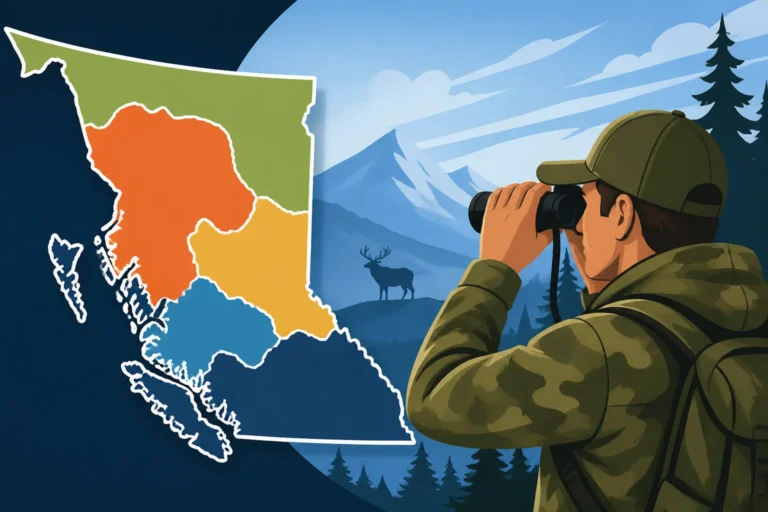
British Columbia is divided into nine administrative hunting regions, and within these regions are numerous Management Units (MUs), each identified by a unique number. These MUs are the fundamental building blocks of BC's hunting regulations, as season dates, bag limits, and specific rules are almost always tied to these geographic areas. For instance, the rules for wolf hunting in the Peace Region (Region 7) can be vastly different from those on Vancouver Island (Region 1), and even within Region 7, specific MUs will have their own unique regulations. It's not enough to know you're hunting in "the Interior"; you need to pinpoint the exact MU. The provincial government provides detailed maps of these MUs, and many online hunting applications like GoHunt also feature these boundaries. Taking the time to understand your chosen MU's boundaries and its specific rules is non-negotiable for any hunter. This detailed understanding ensures you comply with the law and accurately interpret the regulations synopsis for your intended hunting grounds.
Common Misconceptions and Challenges
Even with detailed regulations, some aspects of cougar and wolf hunting in British Columbia can still lead to confusion or pose significant challenges for hunters. Addressing these directly can help avoid pitfalls.
The Nuances of Hunting Near Private Land
One of the most frequent sources of confusion for hunters across British Columbia, especially for those new to a specific area, involves the boundaries and rules pertaining to private land. It’s a common misconception that if land isn't explicitly fenced or marked with "No Trespassing" signs, it must be public. This is simply not the case in BC. Many areas of private land, including substantial timber company holdings and ranch lands, may not be overtly signed, yet hunting on them without permission is illegal and considered trespass. While much of British Columbia is Crown land and thus open to public hunting, patches of private property are often interspersed throughout popular hunting areas, particularly in the southern and central parts of the province. It is the hunter's responsibility to know exactly where they are at all times and to obtain explicit permission from landowners before venturing onto private property. Using detailed mapping tools like those offered by GoHunt, which often show property boundaries, can be incredibly helpful in this regard. Always carry a current map and GPS device, and if in doubt, err on the side of caution and avoid the area or seek permission beforehand. This also ties into the broader subject of British Columbia Trespass and Private Land Law.
Dealing with Changing Conditions and Emergency Planning
British Columbia's wilderness is vast, rugged, and its conditions can change dramatically and rapidly, presenting significant challenges, especially for those pursuing cougars and wolves in the more remote or mountainous terrain. Weather can shift from clear skies to heavy snowfall or torrential rain in a matter of hours, impacting travel, visibility, and safety. Forest service roads, often the only access into prime hunting areas, can become impassable due to snow, mud, washouts, or active logging. Hunters need to be prepared for these dynamic conditions. This means monitoring weather forecasts closely, having contingency plans for road closures, and ensuring your vehicle is equipped for challenging terrain. Furthermore, emergency planning is critical. Accidents can happen, from sprained ankles on steep slopes to unexpected equipment failures. Carrying a satellite communication device is not just a luxury; it's a necessity in areas without cell service, allowing you to call for help if needed. Understanding basic first aid, carrying appropriate emergency supplies, and ensuring someone back home knows your exact hunting plans and expected return date are all vital components of Emergency Planning in British Columbia's Backcountry. Being self-sufficient and prepared for the unexpected is paramount to a safe and successful predator hunt.
Disclaimer
Please remember that hunting regulations in British Columbia can change. This guide provides general information and insights but should not be considered a substitute for the official British Columbia Hunting and Trapping Regulations Synopsis. Always consult the most current synopsis, available from the provincial government, before planning and undertaking any hunting activity. It is the hunter's responsibility to know and follow all applicable laws and regulations.