Charter Flights to a British Columbia Camp
For many British Columbia hunters, the dream involves chasing game deep in the wilderness, far from the roar of trucks and the faint scent of campfire smoke from the last roadside pullout. But getting into those truly untouched areas, where big animals often thrive with less pressure, presents a significant challenge. This guide will walk you through everything you need to know about utilizing charter flights to access remote hunting camps in British Columbia, turning those distant dreams into a tangible plan.
Why Consider a Charter Flight for Your BC Hunt?
Heading into the British Columbia backcountry is an experience unlike any other, but the truly wild places aren't always accessible by truck or even by robust 4×4. This is where charter flights become not just a convenience, but often a necessity. They open up a world of possibilities that ground travel simply can't match, providing access to areas that see far less human pressure.
Accessing Untouched Territory
Imagine a vast, pristine landscape, teeming with wildlife, where the only tracks you'll likely find are those of game animals. This isn't a fantasy in British Columbia; it's a reality, but it's a reality that exists far beyond the end of the logging road. These remote areas, often nestled deep within mountain ranges or vast plateaus, are precisely where charter flights shine. They allow you to bypass the heavily hunted front country and drop directly into prime habitat that most hunters can only dream of reaching. Think of the excitement of Hunting British Columbia's Northern Rockies or accessing a secluded subalpine basin – these are the places where a charter can land you.
The benefits here are huge. Less hunting pressure often means older, larger animals and a more natural hunting experience. You're not competing for spots, nor are you constantly wondering if another hunter just spooked that bull elk you've been stalking. Instead, you're immersed in true wilderness, relying on your skills and the raw environment. This isn't just about escaping crowds; it's about pursuing a quality hunt in an environment where the game isn't constantly harassed.
Saving Precious Hunting Time
Let's face it, hunting time is a precious commodity. For many of us, it's limited to a week or two out of the year, and every single moment counts. Driving for days on rough, unmaintained forest service roads, navigating washouts, and dealing with potential vehicle breakdowns can eat up a significant portion of your valuable hunting window. A charter flight drastically cuts down on this travel time, often reducing a multi-day journey into a few hours.
Consider a scenario where you might spend two full days driving to a remote trailhead, followed by another day or two packing in by foot or horse. That's three to four days of travel before you even get a chance to hunt! With a charter, you can be dropped off at your camp, unpack, and be scouting within hours of leaving your departure point. This efficiency means more boots-on-the-ground hunting days, which directly increases your chances of success and makes the most of your investment of time and resources. It allows you to maximize your opportunity in the field, turning what would be a long, arduous trip into a focused, high-value hunt.
Specialized Gear and Meat Transport
Packing out an animal from remote country is one of the most physically demanding aspects of backcountry hunting. When you're kilometres from the nearest road and deep in rugged terrain, every pound of meat, hide, and antlers feels like a ton. Charter flights dramatically simplify this logistical challenge. Not only can they fly your initial camp setup and gear in, but more importantly, they can get your hard-earned harvest out efficiently and safely. Getting Meat Out of Steep British Columbia Country can be a brutal task on your back; a helicopter or a larger fixed-wing aircraft can be a game-changer.
This is particularly critical in British Columbia's early seasons, where warm temperatures can quickly spoil meat. Getting your quarters into a cooler environment or to a processor fast can be the difference between a successful harvest and a heartbreaking loss. Additionally, if you're targeting large species like moose or elk, the sheer volume of meat and hide can be overwhelming for a foot-powered pack out. Charter services are accustomed to transporting game, often equipped with specialized cargo nets or bays to handle large loads. This ensures your trophy and sustenance make it out in excellent condition, preserving the quality of your hard-won meat and providing peace of mind.
Types of Aircraft and Services Available
When you're planning a remote hunt in British Columbia, understanding the different types of aircraft and charter services available is crucial. Each has its own strengths, limitations, and cost implications, tailored to different kinds of terrain and access needs. Choosing the right one can make or break your trip, ensuring you get to your destination and your harvest gets out safely.
Fixed-Wing Aircraft for Airstrips
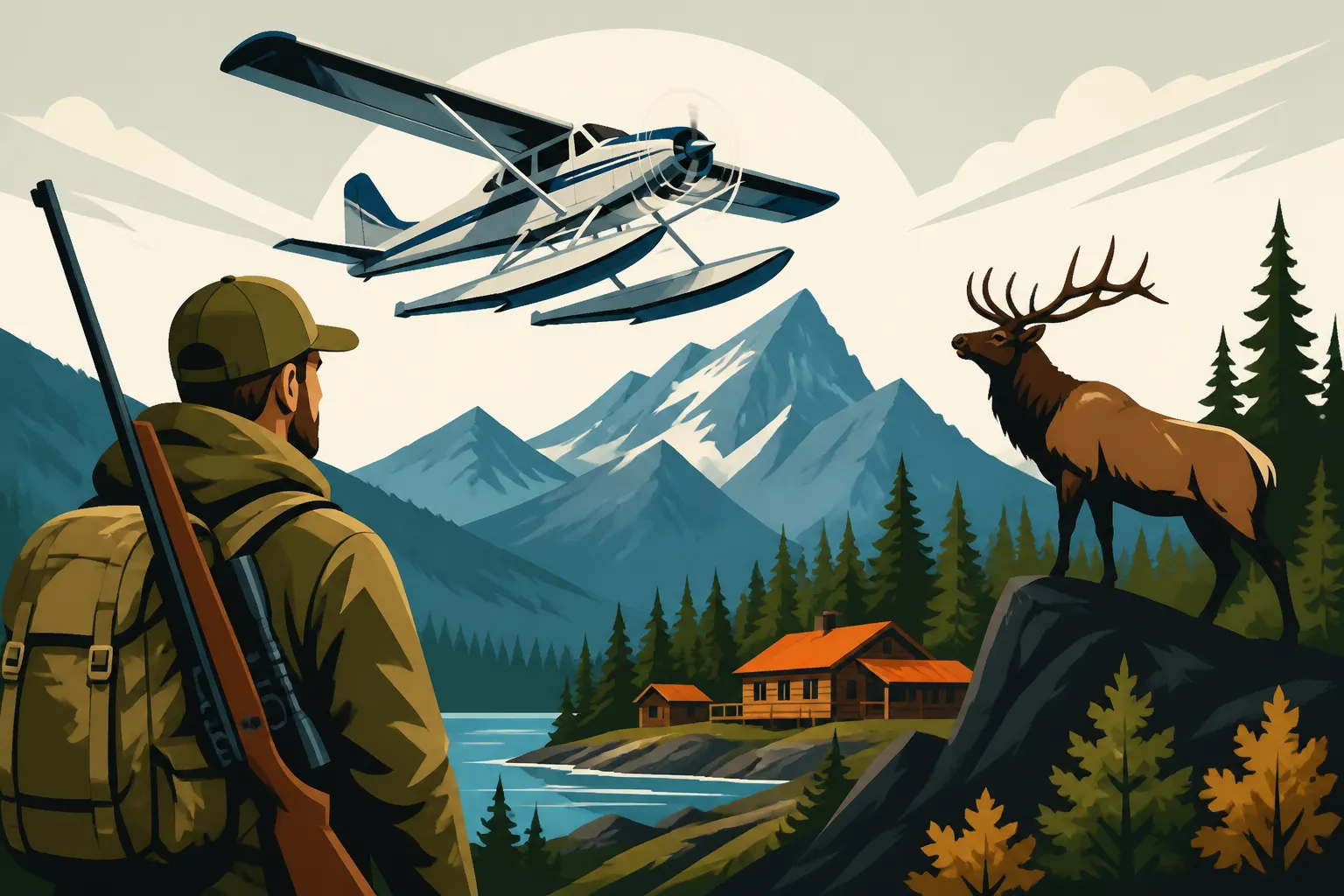
Fixed-wing aircraft, like the iconic De Havilland Beaver or smaller Cessna bush planes, are often the go-to for hunters accessing remote areas that have suitable landing strips. These strips might be old logging roads, natural gravel bars along a river, or even purpose-built, unmaintained backcountry runways. The key here is "strip" – they need a relatively flat, clear stretch of ground for takeoff and landing.
These planes are fantastic for covering long distances efficiently and carrying substantial payloads. A Beaver, for instance, can haul a surprising amount of gear, multiple hunters, and even quarters of a harvested animal. They are generally more economical per pound-mile than helicopters for longer flights. However, their reliance on a suitable landing strip means your camp location is dictated by the availability of these sites. If your dream spot is deep in a valley without any flat ground or an old road, a fixed-wing might not be an option. Still, for many remote areas with existing access points, they provide a robust and cost-effective solution for getting you and your equipment to where you need to be.
Helicopters for True Bush Access
If fixed-wing aircraft are limited by airstrips, helicopters are the kings of true bush access. They don't need a runway; they can land and take off vertically from almost any reasonably flat, obstacle-free spot big enough to accommodate their rotors. This capability opens up vast tracts of British Columbia's rugged terrain that are otherwise completely inaccessible. Imagine being dropped on a secluded alpine ridge for Sheep and Goat Hunting in British Columbia, or into a high mountain meadow for a remote mule deer hunt – that's helicopter territory.
Helicopters offer unparalleled flexibility in terms of drop-off and pickup locations, allowing you to establish a camp precisely where you want it, often right in the heart of excellent game habitat. They are also incredibly valuable for sling-loading heavy items like large game quarters or even entire ATVs (though the latter is a specialized and very costly service). The trade-off, however, is cost. Helicopters are significantly more expensive to operate per hour than fixed-wing planes, making them a premium option. You'll need to weigh the incredible access and convenience against the higher price tag, especially if you're trying to Book a British Columbia Sheep Hunt where precision drop-offs are key.
Specialized Charters and Outfitters
Many British Columbia guide outfitters incorporate charter flights directly into their hunt packages, especially for sheep, goat, moose, or high-country elk hunts. They often have established relationships with specific air carriers and can coordinate the logistics seamlessly as part of your guided experience. If you're booking a guided hunt, ask what's included and how access to camp is handled. Some outfitters own their own aircraft, further streamlining the process. You can find many reputable operators through resources like BookYourHunt, which often detail their access methods.
For those planning a self-guided or unguided resident hunt, you'll be booking directly with a charter company. British Columbia has several reputable air charter services specializing in remote access for hunters, prospectors, and wilderness adventurers. These companies are experts in flying into challenging terrain and understanding the unique needs of hunters, from managing odd-sized cargo like rifle cases and bows to handling game meat. It's always a good idea to check their specific services, aircraft types, and experience with hunting parties. They can often provide invaluable advice on landing zones, weather patterns, and weight restrictions, which are crucial for a safe and successful trip.
Planning and Booking Your Charter
Booking a charter flight for your British Columbia hunting trip isn't quite like booking a commercial airline ticket. It involves careful planning, clear communication, and a thorough understanding of the logistics involved. This isn't just about getting from Point A to Point B; it's about orchestrating a critical component of your wilderness adventure.
Estimating Your Charter Costs
Let's address the elephant in the room: charter flights aren't cheap. The cost is highly variable and depends on several factors, including the type of aircraft, the distance to your drop-off point, the duration of the flight, the amount of cargo, and any potential wait times or multiple stops. Helicopters, as discussed, are generally more expensive than fixed-wing planes. Longer flights into very remote areas will naturally incur higher costs. Many companies charge by the hour, and this includes both flight time and any time the aircraft spends waiting for you at your departure point or pickup location.
It's crucial to get a detailed quote from your chosen air service. They typically provide an estimate based on your proposed route, passenger count, and anticipated gear weight. Always build a buffer into your budget for unforeseen circumstances, such as weather delays that might require an extra night of lodging or additional flight time if a landing zone needs to be scouted. Remember, this is a specialized service providing access to otherwise unreachable areas, and the costs reflect that. Don't be afraid to ask for a breakdown of charges so you understand exactly what you're paying for. Checking current rates directly with operators is essential, as these can fluctuate based on fuel prices and operational costs.
Communicating with Your Air Service
Clear, precise communication with your charter company is paramount for a successful trip. They need to know everything to plan properly and ensure your safety and satisfaction. This means providing accurate details about your party size, the exact weight and dimensions of all your gear, your desired drop-off and pickup locations (including GPS coordinates if possible), and your intended dates and times. It's often helpful to itemize your gear and weigh it at home, rather than guessing.
Discuss your hunting objectives openly. Are you targeting a large animal like a moose? This will impact the weight calculations for your extraction flight. What are your contingencies for bad weather? Will you have satellite communication? Being transparent about your plans allows the air service to advise you on the most suitable aircraft, potential challenges, and necessary preparations. Good communication builds trust and helps avoid costly surprises or safety issues in the backcountry. Companies like those listed on GoHunt or BookYourHunt often emphasize clear communication channels with their partner air services.
Permits and Land Use Considerations
Just because you can fly into an area doesn't mean you automatically have the right to land there, especially on Crown land. Depending on the specific management unit and the type of land, you may need special permits or approvals for aircraft landings. Always check the current British Columbia hunting regulations and consult with the charter company about any necessary permits for landing in your chosen area. This is particularly important if you plan to land in or near protected areas, private land, or areas with specific land-use designations.
Your air service often has experience with these regulations and can advise you on the requirements or even assist in securing necessary permissions. It's your responsibility as the hunter to ensure all land access and landing regulations are met before your flight departs. Ignoring these details could lead to fines, trip disruptions, or even revocation of your hunting privileges. Understanding British Columbia's Management Units and Regions is a critical first step in identifying these potential land-use restrictions.
| Type of Aircraft | Advantages | Disadvantages | Typical Use Cases |
|---|---|---|---|
| Fixed-Wing (e.g., Beaver, Cessna) | More economical for longer distances; higher payload capacity; faster cruise speed. | Requires a suitable airstrip (gravel bar, old road); less flexible for pinpoint drop-offs. | Accessing remote lakes, major rivers with gravel bars, established backcountry camps. |
| Helicopter (e.g., AStar, Bell 206) | Vertical takeoff/landing; precise drop-offs; unparalleled access to rugged terrain; sling load capabilities. | Higher operational cost per hour; smaller passenger/internal cargo capacity; slower cruise speed. | Alpine hunts for sheep/goat, remote elk/moose camps in steep terrain, quick game extraction. |
Preparing for Your Flight and Camp
Once your charter is booked, the real work of preparation begins. This phase is crucial for ensuring a smooth flight, a safe and comfortable stay in camp, and a successful hunt. Overlooking details here can lead to frustrating delays, unexpected costs, or even compromise your safety in the remote British Columbia wilderness.
Strict Weight and Dimension Limits
This is arguably the most critical aspect of preparing for a charter flight. Aircraft, especially smaller bush planes and helicopters, have very strict weight and balance limitations. Exceeding these limits is not only illegal but extremely dangerous. Your charter company will provide you with a maximum payload and cubic foot allowance. You must adhere to these. This means being meticulous about what you bring.
Start by laying out all your gear, including your rifle, bow, camping equipment, food, and personal items. Weigh everything, individually and collectively. Prioritize essentials: safety gear, food, shelter, clothing layers for variable Hunting British Columbia's Alpine in Early September weather, and hunting equipment. Non-essential luxuries need to be cut. If you're close to the limit, look for lighter alternatives for every item. Soft-sided duffel bags are almost always preferred over hard cases as they conform better to irregular cargo spaces. Remember, you'll also need to account for the weight of your game on the return trip, so plan for that capacity in advance if possible.
Packing Your Gear for Air Travel
How you pack your gear directly impacts ease of loading, aircraft safety, and the condition of your equipment upon arrival. Think robust, contained, and protected. Rifles should be unloaded and ideally stored in a sturdy, soft-sided case that can be easily manipulated into tight spaces. Hard cases might be too bulky for smaller aircraft. Bows also need good protection. Ammunition should be in its original packaging or a secure container, often separated from the firearm itself as per airline and charter regulations.
All your other gear should be packed in durable, waterproof duffel bags or dry bags. Avoid loose items. Label everything clearly with your name and contact information. If items are going into external cargo pods or sling loads, ensure they are absolutely secure and watertight, as they will be exposed to the elements. Imagine everything being tossed around a bit, and pack accordingly. Consider what you need immediately upon landing (e.g., shelter, warm layers, water filter) and pack it accessibly. Don't forget critical items like a repair kit, first-aid, and Satellite Communication on a Remote Hunt.
Safety Protocols and Emergency Plans
Hunting in remote British Columbia backcountry, especially when accessing it via charter, means you are largely on your own once the plane leaves. Therefore, robust safety protocols and a comprehensive emergency plan are non-negotiable. Before your flight, your pilot will give you a safety briefing, covering things like emergency exits, how to don a life vest if flying over water, and what to do in case of an unplanned landing. Pay close attention; this isn't just routine information.
In camp, your group needs a clear plan for various emergencies: medical evacuation, lost hunter, severe weather, or wildlife encounters (especially with bears – review Bear Safety While Hunting in British Columbia). This includes carrying essential survival gear, a well-stocked first-aid kit, and reliable communication devices like a satellite messenger or phone. Ensure someone outside your hunting party knows your itinerary, including your flight details, drop-off/pickup locations, and expected return date. This "check-in" person should have instructions on when to initiate a search if they don't hear from you. Always leave a detailed trip plan with your air service as well; they are often the first point of contact if you miss a scheduled pickup.
Disclaimer
This article is for general informational purposes only and does not constitute professional advice. Laws, prices and regulations vary by location and change over time. Consult a qualified professional for guidance on your specific situation.