Stone’s Sheep in Northern British Columbia
The dream of a Stone's sheep hunt often feels like the pinnacle for many mountain hunters, yet the sheer scale and remoteness of Northern British Columbia's rugged peaks can make planning such an expedition feel utterly daunting. From pinpointing these elusive animals in their vast, vertical domain to understanding the unique challenges of a true wilderness hunt, it's a quest that demands meticulous preparation and deep knowledge. This comprehensive guide will peel back the layers, offering a detailed look at Stone's sheep, their northern strongholds, the specialized strategies required for a successful hunt, and how to responsibly plan for one of British Columbia's most iconic big game experiences.
Stone's Sheep An Overview and Identification
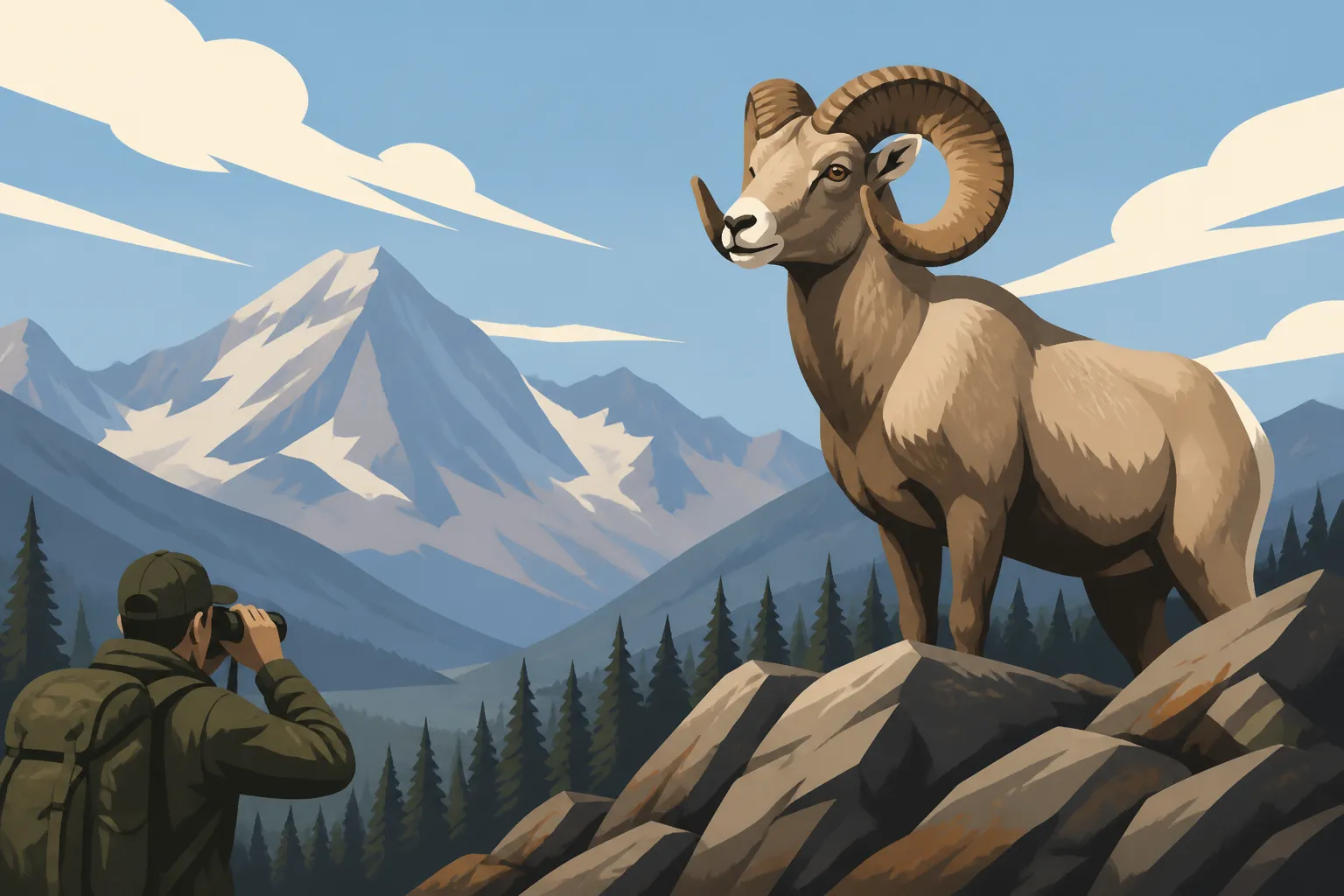
Stone's sheep, a subspecies of thinhorn sheep, represent a truly majestic sight in the remote alpine regions of Northern British Columbia. Their stunning dark coats, often contrasting sharply with white patches on their belly, rump, and sometimes neck, make them instantly recognizable among the wild sheep species. These animals are a symbol of pristine wilderness, inhabiting some of the most inaccessible terrain on the continent. Understanding their unique features and behaviors is the first step toward appreciating the monumental challenge and immense reward of pursuing them.
Distinguishing Features of Stone's Sheep
When you're glassing a distant mountainside, trying to discern a ram from a ewe, or even a Stone's from other thinhorn sheep, knowing the key identifiers is crucial. Stone's sheep are generally darker than their close relatives, the Dall's sheep, which typically sport much lighter, often pure white coats. While a Fannin sheep is often considered a transitional colour phase between Dall's and Stone's, displaying a mix of white and grey, true Stone's sheep present with a predominantly dark, almost black, body coat. The distinct white markings on their rump, the inside of their hind legs, and sometimes a white muzzle or neck patch are consistent. Their horns are typically a yellowish-brown, growing in a tight curl, and are generally lighter and less massive than those of Bighorn sheep.
Judging a ram's age and legality in the field, particularly concerning curl regulations, is one of the most critical skills a sheep hunter must develop. Regulations often specify a "full-curl" or larger for legal harvest, meaning the tip of the horn must have grown past a line drawn across the base of the horn to the back of the skull. Experienced hunters learn to assess this quickly and accurately, often relying on high-quality optics and careful observation. The dark body, which provides excellent camouflage against the dark shale and rock faces they frequent, coupled with those striking white accents, makes them particularly captivating. Observing these details carefully through your spotting scope is paramount, especially when facing the decision of a lifetime.
Life Cycle and Behavior
Stone's sheep are creatures of habit, yet their movements are dictated by the harsh realities of their mountain environment and the changing seasons. During the summer months, they can be found at very high elevations, often above the timberline, grazing on the lush alpine grasses and forbs. This is when they are building up their fat reserves for the lean winter ahead. Ewes will typically lamb in late May to early June, seeking out steep, rugged slopes that offer protection from predators like wolves and grizzlies. The lambing grounds are often inaccessible to most land-based predators, providing a vital nursery for the vulnerable newborns.
As fall approaches, leading into the rut in November and early December, rams, which typically spend the summer in bachelor groups, will descend to lower elevations to join the ewes. This is a period of intense competition, with rams butting heads in spectacular displays of dominance to secure breeding rights. However, for hunters, the Stone's sheep season in British Columbia typically runs from August into October. During the early season, in August and September, sheep are still high in the alpine. As snow starts to fall in late September and October, they may begin to move down slightly into subalpine zones, following feed and seeking shelter. Understanding these seasonal movements and behaviours is key to effective scouting and executing a successful hunt. They are highly attuned to their surroundings, possessing incredible eyesight and an uncanny ability to navigate treacherous terrain, making them one of North America's most challenging big game animals to pursue.
Where Stone's Sheep Roam Northern British Columbia Habitats
The allure of Stone's sheep hunting is intrinsically tied to the wild, untamed landscapes of Northern British Columbia. This region offers vast, spectacular terrain where these resilient animals thrive. Pinpointing their typical hangouts and understanding the specific geographic features that draw them is essential for any hunter dreaming of pursuing these magnificent creatures. This isn't just about finding sheep; it's about immersing yourself in some of the most remote and breathtaking wilderness on Earth.
Alpine and Subalpine Zones
Stone's sheep are quintessential high-country inhabitants, spending the majority of their lives in the alpine and subalpine zones. These areas, characterized by rocky outcrops, open meadows, and sparse tree cover, provide the ideal mix of food, security, and visibility they need to survive. During the warmer months, you'll find them grazing on nutrient-rich grasses and forbs in open bowls and on steep, south-facing slopes. These south-facing slopes often melt out earlier, providing the first green growth of spring and remaining productive longer into the fall. The steepness of these slopes also offers an escape route from predators; sheep can navigate rocky cliffs with astounding agility, often leaving predators in their dust.
The subalpine, just below the tree line, serves as a crucial transition zone. While sheep prefer the open alpine for visibility, they will dip into the subalpine for cover during foul weather or to access specific forage. This transition zone, with its scattered clumps of stunted trees and dense brush, provides shelter from strong winds and heavy snow, particularly as the seasons change. Hunters often focus their glassing efforts where these two zones meet, as it's a natural corridor for sheep movement and offers a mix of bedding and feeding areas. Understanding How Elevation Moves British Columbia Game is crucial here, as sheep will shift vertically with snow lines and feed availability. The relentless wind, often a companion at these elevations, keeps insects at bay and helps carry the scent of potential threats, though it can also carry your scent to a wary ram.
Specific Northern British Columbia Ranges
While Stone's sheep are found across a broad swath of Northern British Columbia, certain regions are particularly renowned for their populations and for offering a truly wild sheep hunting experience. The Cassiar Mountains and the Spatsizi Plateau Wilderness Park are perhaps the most famous and sought-after destinations. These remote, rugged ranges boast extensive high-alpine habitat, limited human access, and healthy sheep numbers, making them prime territory. Other significant areas include the Stikine River country, the Toodoggone River area, and portions of the Northern Rockies Foothills, though these are often accessed through licensed guide outfitters due to their remoteness and the specific regulations for non-residents.
The Spatsizi, in particular, is often referred to as "the Serengeti of the North" due to its incredible wildlife diversity and vast, untouched wilderness. It's a place where you can ride for days on horseback or fly in by bush plane, truly disconnecting from civilization. These areas are characterized by towering peaks, deep valleys, and endless basins – the very definition of sheep country. Access can be incredibly challenging, often requiring fly-in charters, horseback packing, or extensive backpacking trips. When planning a hunt, resources like GoHunt's mapping tools can be invaluable for identifying potential access points, terrain features, and management unit boundaries in these vast, roadless expanses, helping you visualize your approach to where British Columbia's Stone's Sheep Live. For many, the journey into these remote mountains is as much a part of the hunt as the sheep itself.
Hunting Stone's Sheep Strategies and Challenges
Hunting Stone's sheep in Northern British Columbia is not just a hunt; it's an expedition, a test of physical and mental fortitude that few other pursuits can match. The challenges are immense, from the sheer difficulty of the terrain to the elusive nature of the animals themselves. Success in these mountains requires more than just skill with a rifle; it demands unwavering determination, meticulous planning, and a deep respect for the wilderness.
Scouting and Accessing Sheep Country
Effective scouting for Stone's sheep begins long before you even set foot in British Columbia. Online mapping tools, satellite imagery, and aerial photos are indispensable for identifying promising basins, potential access routes, and areas with good sheep habitat. You'll be looking for steep, broken country with a mix of open slopes, benches, and escape terrain. Often, these areas are characterized by rock slides, scree slopes, and minimal timber. Websites like GoHunt can provide overlays with land ownership, historical harvest data, and even topographical maps that help you narrow down potential areas. Understanding Scouting a British Columbia Management Unit Online is a fundamental skill for these hunts.
Physical access to these remote areas is often the biggest hurdle. Many prime Stone's sheep regions are roadless, requiring bush planes to fly into remote lakes or gravel bars, or long, arduous treks on foot or horseback. For those considering Horseback Access to British Columbia's Alpine, hiring a packer or an outfitter with horses can significantly expand your range and hauling capacity for meat and camp. Once in the general vicinity, the real work begins. You'll spend countless hours behind your spotting scope, meticulously picking apart distant hillsides. This methodical Glassing an Alpine Basin for Rams is where sheep are found, not by simply walking. Backpacking into British Columbia's Sheep Country means carrying everything you need for weeks, often traversing incredibly steep and uneven terrain. Patience, perseverance, and strong optics are your best friends.
The Stalk and Shot Placement
Once a legal ram is spotted, the real chess match begins: the stalk. This is where your skills as a mountain hunter are truly tested. Sheep have incredible eyesight and can spot movement from astonishing distances. The wind is always a factor; you must constantly monitor it to keep your scent from drifting to the sheep. A successful stalk often involves hours of slow, deliberate movement, using every available piece of terrain for cover – ridges, rock formations, creek beds, or sparse timber. Sometimes, you'll need to gain significant elevation above the sheep, then drop down into position. This often means traversing treacherous ground, sometimes requiring scrambling or even light climbing.
Distance judgment in the mountains can be deceptive, so rangefinders are critical. When you finally get into position, shot placement is paramount. Sheep are tough animals, and a wounded animal in this terrain is a nightmare. Ethical hunters practice extensively to make a clean kill, often shooting from unconventional positions that mimic real-world scenarios in the mountains. Aim for the vitals, typically the shoulder-chest area, ensuring a quick and humane harvest. The high winds and elevation can affect bullet trajectory, so knowing your rifle and ballistics intimately is non-negotiable. After the shot, the work isn't over. Getting to the animal, field dressing it, and initiating the laborious pack-out are all part of the extraordinary effort involved in a Stone's sheep hunt.
Conservation Efforts and Population Status
The pursuit of Stone's sheep is not merely about the harvest; it's deeply intertwined with a commitment to conservation. These animals face a myriad of challenges in their remote habitats, and hunters play a vital role in ensuring their future. Understanding the current health of these populations and the mechanisms in place to protect them is essential for any responsible hunter.
Population Trends and Management
British Columbia's Stone's sheep populations are generally considered stable, though local populations can fluctuate due to factors like harsh winters, disease outbreaks, and predation. Unlike some other big game species, sheep populations grow relatively slowly, making them more sensitive to over-harvest or habitat disruption. The provincial government, in collaboration with wildlife biologists, Indigenous communities, and conservation organizations, actively manages these herds through a combination of limited entry hunting (LEH) draws and strict regulations, such as full-curl requirements and season dates.
Harvest numbers are carefully monitored to ensure sustainability. Researchers employ various methods, including aerial surveys, collaring programs, and DNA analysis from fecal samples, to estimate population sizes, track movements, and assess herd health. These scientific insights are critical for adaptive management, allowing adjustments to hunting regulations as needed. While specific numbers can vary by management unit, the overall goal is to maintain healthy, viable populations across their traditional range. Any changes in habitat due to factors like climate change, wildfire, or industrial development are closely watched, as sheep are very particular about their preferred steep, open habitat.
The Role of Hunter Funding
Hunters are, without a doubt, among the most dedicated conservationists, and their financial contributions are a cornerstone of wildlife management in British Columbia. Every time a hunter purchases a hunting licence, species tag, or applies for a Limited Entry Hunt, a portion of those funds goes directly into programs that benefit wildlife. The Habitat Conservation Trust Foundation (HCTF) is a prime example of an organization that channels hunter and angler dollars into critical wildlife research, habitat restoration, and conservation projects across the province.
Specifically for thinhorn sheep, these funds support initiatives like habitat enhancement, predator management studies, and disease research, all aimed at bolstering sheep populations. Organizations like the Wild Sheep Foundation also play an enormous role, raising significant capital through auctions and memberships to fund on-the-ground projects that directly benefit wild sheep. For anyone dreaming of a Stone's sheep hunt, understanding that the fees and efforts involved directly contribute to the long-term health of these magnificent animals adds another layer of meaning to the pursuit. It's a powerful reminder that hunting is not just a recreational activity but a vital component of science-based wildlife conservation, helping to ensure that future generations will also have the opportunity to experience Why Stone's Sheep Draw Hunters Worldwide.
Planning Your Northern British Columbia Hunt
Embarking on a Stone's sheep hunt in Northern British Columbia is a monumental undertaking, requiring extensive preparation, the right gear, and a realistic understanding of the physical and logistical demands. Whether you plan to hire an outfitter or go it alone as a resident, thorough planning is the key to a safe and potentially successful adventure.
Essential Gear and Physical Demands
The gear list for a Stone's sheep hunt is extensive and highly specialized, designed to withstand the brutal conditions of the high mountains. Quality optics are non-negotiable: a high-power spotting scope (20-60x or 25-75x), sturdy tripod, and 10x or 15x binoculars are essential for glassing vast terrain. Your rifle should be accurate, reliable, and chambered in a cartridge suitable for mountain hunting, capable of ethical shots at longer ranges. Lightweight, durable camping gear, including a four-season tent, sleeping bag rated for extreme cold, and a reliable cooking system, are crucial for survival in exposed alpine camps. Navigation tools like a GPS, satellite messenger, and detailed maps are not just helpful; they are lifelines in areas with no cell service. For a deep dive into preparations, consider Emergency Planning in British Columbia's Backcountry.
| Gear Category | Essential Items | Why It's Crucial |
|---|---|---|
| Optics | Spotting scope (20-60x or 25-75x), sturdy tripod, 10x or 15x binoculars, rangefinder | Locate distant sheep, assess legality, range shots. |
| Rifle & Ammo | Accurate, reliable rifle (e.g., .270 Win, .30-06, 7mm Rem Mag, .300 Win Mag), quality hunting ammunition, cleaning kit | Ethical harvest at varying ranges, reliability in harsh conditions. |
| Backpacking Gear | Lightweight four-season tent, -20°C+ sleeping bag, insulated sleeping pad, frame pack (60L+), stove & fuel, water filter/purifier | Survival in alpine weather, comfort for rest, capacity for meat. |
| Clothing | Layered system (base, mid, outer shell – waterproof/windproof), warm hat, gloves, synthetic/wool socks, gaiters, quality mountaineering boots | Adapt to rapidly changing mountain weather, stay dry and warm, protect feet on rough terrain. |
| Navigation & Safety | GPS with loaded maps, satellite messenger/inReach, compass, physical maps, first-aid kit, bear spray, signaling mirror, headlamp | Prevent getting lost, communication in emergencies, bear defense, visibility in darkness. |
| Miscellaneous | Knife, sharpening tool, game bags, cordage, trekking poles, high-energy food, sunscreen, insect repellent, trekking poles | Field dressing, packing meat, injury prevention, sustenance, personal comfort. |
Beyond gear, the physical demands are extreme. Stone's sheep hunting is a marathon, not a sprint. You'll be climbing thousands of feet of elevation daily, traversing unstable scree and boulder fields, all while carrying a heavy pack at high altitudes. Training for Fitness for a British Columbia Sheep Hunt should begin months in advance, focusing on cardio, strength, and endurance, especially for your legs and core. Long hikes with a weighted pack, stair climbing, and general mountaineering exercises will prepare you for the rigours of the hunt. Many experienced hunters say that if you think you're fit enough, you probably need to train harder.
Engaging an Outfitter or Self-Guiding
For non-residents of British Columbia, the law mandates hunting Stone's sheep with a licensed British Columbia guide-outfitter, or through a Permit to Accompany a BC resident. This requirement exists to manage access and ensure responsible hunting practices in remote areas that require specialized knowledge and logistical support. If you're considering Booking a British Columbia Sheep Hunt with an outfitter, it's a significant investment, often costing tens of thousands of dollars, making it one of the most expensive hunts in North America. These hunts typically include experienced guides, horses or aircraft for access, camp accommodations, and all logistics. Researching reputable outfitters is paramount; look for those with a strong track record, excellent references, and a deep understanding of the specific areas they hunt. Organizations like the Guide Outfitters Association of British Columbia can be a valuable resource.
For British Columbia residents, self-guiding is an option, though it requires an immense amount of personal planning, knowledge, and experience. You'll need to secure your own access, whether that's arranging a float plane or planning a multi-day horseback trip. You'll also be responsible for all your gear, food, navigation, and emergency preparedness. Self-guided resident hunts often require even more physical conditioning and wilderness survival skills, as you won't have the support network of an outfitter. Whether guided or self-guided, understanding What a British Columbia Sheep Hunt Costs is crucial. Regardless of your chosen path, the journey to hunt Stone's sheep will challenge you, test you, and ultimately, reward you with an unforgettable experience in some of British Columbia's wildest country.
Disclaimer
Please be aware that hunting regulations, seasons, and access rules in British Columbia can change frequently. Always consult the official British Columbia Hunting and Trapping Synopsis published by the Ministry of Forests, Lands, Natural Resource Operations and Rural Development for the most current and accurate information before planning any hunt. This guide is for informational purposes only and does not supersede official government regulations.